Remember when pulling a pitcher in the middle of a no-hitter was a big deal? Like, it was so unusual that there was a whole passage in The Baseball Codes about Padres manager Preston Gomez doing it to Clay Kirby in 1970, and I’ve blogged about the topic again … and again and again. And again, andthenanotherfivetimes.
Boy have things changed. Welcome to Baseball 2021, where starting pitchers average 5.1 innings and complete games are a near-impossibility. Take Saturday, for example, when Corbin Burns no-hit Cleveland through eight innings, and was pulled prior to the ninth owing to having thrown a career-high 115 pitches. In his second full years as a starter, Burnes is one of the NL’s best pitchers. He’s averaging six innings per start. With Milwaukee on the cusp of the playoffs, management figured that his long-term health was not worth the risk.
Think about that for moment. Burnes was at 115 pitches, not a huge number for a stress-free game, generally speaking. With three outs to go he was virtually there. Burnes was, in fact, the first pitcher EVER to have been pulled while allowing no hits and only one baserunner across the first eight innings of a start. (That stat courtesy of The Athletic, which offered a nine-point list explaining why Burnes was yanked. One detail not mentioned in the Athletic: Major League pitchers have reached the 120-pitch threshold all of five times this season.)
When Burns’ manager told him that he would not be going out for the ninth he didn’t even seem to view it as unusual. Maybe it was such new territory for him that Burns didn’t have an instinctive frame of reference. Maybe the Brewers just really respect manager Craig Counsell’s decision-making. Or maybe this is the way baseball is now.
This is interesting mainly because of how little interest it actually holds. This kind of thing is the new normal.
This one had it all—flexing after home runs, mocking the opposing dugout mid-HR trot and even the ultra-rare pause during a different trot so said trotter might have some words with a fielder. We saw emptying dugouts and the highest order of New York drama.
All because of a whistle.
The Yankees and Mets beat the stuffing out of each other all weekend, with the Yanks’ 8-7 Saturday victory built atop a five-run second inning. The Mets suspected foul play.
“Something out of the ordinary was going on,” said Francisco Lindor, discussing the incident with reporters after Sunday’s game. Whatever it was, he said, “I took it personal.”
What he took personal was a series of whistles coming from the Yankees’ dugout, which the Mets took to be pitch signaling—particularly against Saturday’s Mets starter Taijuan Walker, who gave up three homers in that fateful second frame. Jonathan Villar went so far as to call a mound meeting because he thought that Walker might be tipping pitches and that the dugout whistles could be keyed to that detail.
Jonathan Villar told me that he called a mound meeting last night because he thought Taijuan Walker was tipping pitches when the Yankees took a 5-0 lead. He realized during an Aaron Judge at bat that the Yankees dugout seemed to use different whistles to identify pitches.
With this in mind, the Mets were paying attention on Sunday. Sure enough, there was reliever Wandy Peralta, whistling away in their dugout in the early innings. When reporters asked about it later, Yankees players did not even try to hide it. Their excuse: Peralta was just trying to “bring some noise.”
Giancarlo Stanton said that the Yankees were not whistling to relay signs/pitches. Instead, Stanton said that Wandy Peralta was the one whistling in the dugout the first few innings "to bring some noise." https://t.co/CiLzQ2ALCb
Joey Gallo: "It's just Wandy trying to liven up the dugout. It's definitely not for pitch-tipping or anything like that. It's just him trying to bring energy to the dugout. It's been hurting my ears, honestly."
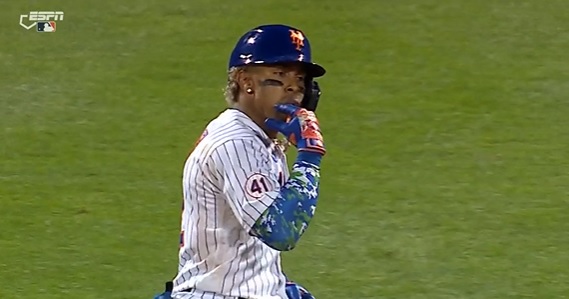
Lindor was having none of it. When he connected for his second homer of the game in the sixth inning—notably, against Peralta—he stared directly into the Yankees dugout while rounding the bases, and mimed a whistling motion.
Last night the Mets thought the Yankees were stealing pitches by whistling so after hitting his second home run tonight Francisco Lindor was doing a whistling motion toward the Yankees as he rounded the bases pic.twitter.com/gZEjss59RM
In the scope of possible responses to signaled pitches, this one was mild. Nobody was thrown at and no on-field shouting matches ensued. Still, the Yankees were displeased. So displeased, in fact, that when Giancarlo Stanton hit his own homer in the seventh, he all but stopped between second and third base to give Lindor a piece of his mind. The players never came into physical contact—Lindor was out near the grass when it happened—but dugouts and bullpens emptied in response. Lindor and Javy Baez made keep-on-chirping puppet signals with their hands toward the Yankees’ scrum.
Today’s focus is on the fireworks, but the lasting import from yesterday’s game is that the Yankees’ upcoming opponents will now pay extra attention to possible signals from the New York dugout. If it exists, such a relay system doesn’t break any rules, but it’s certain to raise hackles in the opposing dugout.
For a team on the outside of the wild-card picture looking in, the Yankees need every advantage they can get. If similar whistling helped them at all during their 21-8 August, it’ll be a blow for them to curtail the practice now.
We frequently talk about baseball’s unwritten retaliation rules as having become outdated, an artifact from another era. Which is largely accurate; guys intentionally drilling each other makes less sense today than it ever has.
But set aside that construct for a moment. Today, let’s view things from the viewpoint of a struggling pitcher, desperate to prolong his time in the major leagues. Let’s view things through Sean Nolin’s eyes.
Nolin is a left-hander who prior to this season has had three cups of coffee in the big leagues, each so short that he continues to maintain his rookie status. The last of those stints came in 2015.
The six intervening years have seen two seasons wiped out by shoulder issues, and time spent in Mexico, Japan and the independent Atlantic League. Nolin began this season with the High-A Wilmington Blue Rocks, in the Washington Nationals system. He is now 31 years old.
On July 30, the Nats traded Max Scherzer to LA, Jon Lester to St. Louis and Daniel Hudson to San Diego, opening some spots on their pitching staff. Nolin made his debut for them on Aug. 12.
Sean Nolin is not anyone’s idea of a star. Before yesterday he had appeared in four games for Washington, all starts, going 0-2 with a 5.71 ERA. Whatever impression he made did not include much in the way of mound dominance.
Yesterday’s impression was different. Yesterday he defended a teammate.
Let’s go backward for a moment to Tuesday’s game against Atlanta, when Braves closer Will Smith drilled Juan Soto. Atlanta held a three-run lead with nobody on and one out in the ninth when it happened, and there’s enough history between the two to make it appear intentional.
In August of last season, Smith was taking his warm-up tosses after entering in the middle of the eighth inning, when Soto, the on-deck hitter, sidled behind the plate to get a better scouting angle. Smith cussed him out for it.
Soto came to bat an inning later, at which point he blasted Smith’s first pitch deep over the left-center field fence. He watched it. Then he watched the pitcher. Then Smith said something to him so unkind that Nationals manager Dave Martinez felt the need to intervene.
Looks like Juan Soto has some beef with Will Smith. Absolutely pimped the home run and stared him down. pic.twitter.com/eTJ7HmibpY
Since then, Smith has faced Soto six times. The first five came in games Atlanta led by two runs or fewer. On Tuesday the margin was three—enough wiggle room for the pitcher to take some liberties. With his second pitch, he drilled Soto in the small of the back.
Literally one pitch later the game was over, pushing Washington’s response, should they choose to make one, to yesterday. The man to shoulder that burden: Sean Nolin.
There is nothing to indicate that Nolin was ordered by management to take action. Indeed, such a thing is quite rare in the modern game. There is everything to indicate that Nolin had much more to gain by standing up for his young teammate than he had to lose by risking an early ejection.
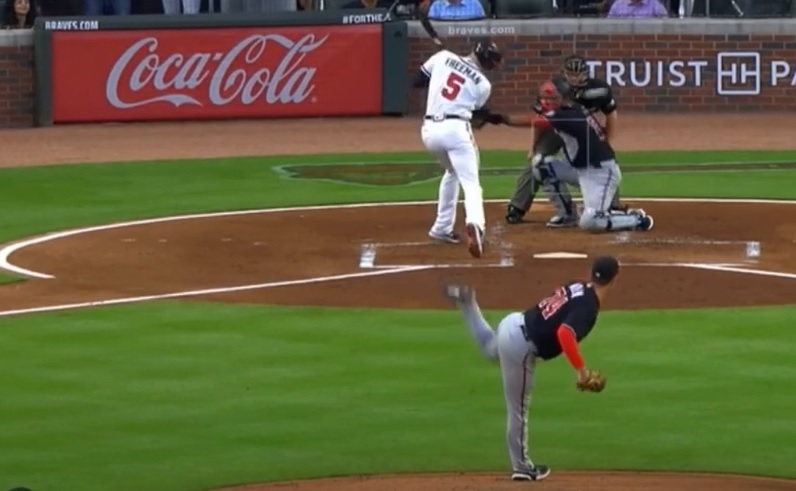
Sure enough, in the first inning, Nolin—playing by the ages-old adage, “You drill my No. 3 hitter, I’ll drill your No. 3 hitter”—threw his first pitch to Freddy Freeman behind the hitter’s back. With his second pitch he drilled him, and was subsequently ejected.
There’s an essay to be written about the part of baseball’s code that gives Nolin one chance to even the score, and that once he’d missed Freeman accounts should have been considered settled. (Indeed, Freeman said later that he told plate ump Lance Barksdale, “That’s all he gets,” after the first pitch missed.) There’s also one about the class Freeman showed by going to the Washington dugout to talk things over with Martinez, and about how he and Soto took their drillings with grace. Those aren’t this essay, though.
This essay is about the clubhouse standing of a middle-aged man looking to do whatever he can to stick around the big leagues for as long as possible. Nolin’s baseball ability has proven to be a marginal commodity in this regard, placing him squarely inside the realm of ballplayers for whom being a good clubhouse guy might carry outsized importance when it comes to securing his next contract.
In this age of fungible pitching staffs, where the bottom three guys in any bullpen are shuffled back and forth to the minors on a weekly basis, there’s value in having a reputation as somebody willing to stand up for teammates, of a proven willingness to throw the kinds of darts from which some pitchers might shy away. Bottom-of-the-rotation guys must feel the need to prove their value every day, in any way they can.
Sean Nolin knows this. He proved it yesterday. It’s strange to think that a start lasting one-third of an inning might be consequential to somebody’s career prospects, but that may well be the case here. Sean Nolin’s counting on it.
Mark Canha is a pest. Like, the Athletic had a whole thing last week about how Canha is a pest, and A’s manager Bob Melvin was asked about Canha being a pest, and although he refuted the word itself, he went on to describe Canha with sentiments that can be boiled down to a single word: “Pest.”
“He can get under people’s skin,” said Melvin, who talked about how long Canha takes to get ready in the box and how he sees a ton of pitches and, oh yeah, how he crowds the plate. “It can be a little unnerving when you have a guy like that that isn’t afraid to get [hit by a pitch],” he added.
Which brings us to today’s topic: Why Melvin was asked about Canha in the first place. Last Thursday, Canha leaned into a pitch from LA’s Dylan Bundy, taking it off of his sizeable elbow guard. There’s a rule about batters making an effort to avoid a pitch in order to be awarded first base, but even though Canha literally did the opposite of that, the rule was not invoked here. He’s tied for the major league lead with 18 HBPs this season—six of which have come against the Angels.
Dylan Bundy and Mark Canha shared some words after Canha leaned into this one pic.twitter.com/7eeovxkflo
— The Rickey Henderson of Blogs (@RickeyBlog) July 30, 2021
Bundy was angry. In fact, Bundy had precedent. Back on June 14, the right-hander hit Canha in the same spot on the same elbow guard in a strikingly similar fashion. Canha did not lean into that one quite as much, though he made similarly little effort to get out of the way.
At this point it’s safe to assume that Bundy is not a fan. He offered some thoughts as Canha trotted to first, and Canha offered some of his own. Few of them were G-rated.
— The Rickey Henderson of Blogs (@RickeyBlog) July 30, 2021
Did it have an effect? Bundy walked the next two batters, and proceeded to give up three runs—the first scored by Canha himself—in the inning.
When Canha came up again in the second, Bundy offered a clear-cut message: a fastball behind Canha’s head, which would have hit him flush had he not nodded out of the way. Somehow, this response, far more egregious than anything Canha had done, escaped further notice from both the umpires (no warnings were issued) and from the A’s themselves (that was more or less the end of the confrontation).
— The Rickey Henderson of Blogs (@RickeyBlog) July 30, 2021
Oakland won that game, and three of four in the series, and is 12-4 against the Angels this year. Hell, maybe LA isn’t angry enough. The teams will face each other three more times this season, in Anaheim in September. Count on Canha getting drilled again, one way or another.
The Cardinals believed that Mike Yastrzemski was stealing signs from second base yesterday. Yastrzemski knew this because the pitcher, rookie right-hander Johan Oviedo checked the card in his pocket to make sure that he was on the same page with catcher Andrew Kinzner. Then he checked it again. And again.
At that point, Yastrzemski decided to play the part, shifting and shuffling in ways that could easily be construed as signaling the hitter. Which was the point. Oviedo, thoroughly rattled, finally spun and yelled at Yastrzemski to “shut the fuck up.”
Thanks to the Astros, baseball has dealt with a lot of sign-stealing drama over the last couple of years, but nobody, then or now, has taken too much issue with a guy at second picking up whatever he can from his unique vantage point.
The great part about this is that Yastrzemski denied everything, saying that he figured that the Cardinals were getting paranoid, and so played it up.
“I didn’t want it to get to that extent,” said Yastrzemski in his postgame press conference. “I just wanted him to throw a fastball down the middle so [the hitter, Wilmer Flores] could hit a homer.”
Sure enough, Oviedo threw a fastball about as down the middle as a pitch can be. Flores flied out to end the inning.
“You just got to sell it sometimes,” Yastrzemski said. “We’re in the entertainment business. It’s just another way you can impact the game.”
Mike Yastrzemski said he figured the Cardinals thought he was stealing signs so he played it up on second base.
Whether or not Yaz was actually stealing signs, this is wonderful. It’s reminiscent of Gaylord Perry fidgeting like mad on the mound, going to his cap, to his sleeve, to his mouth, to his collar and to his cap again, pitch after pitch, even when he wasn’t trying to load up the baseball. Perry knew that every ounce of energy a hitter devoted to figuring out whether or not he was reaching for some grease was an ounce of energy not devoted to an optimal hitting approach. And damned if it didn’t work.
It worked for Yastrzemski, too. Sort of. Oviedo lasted four innings and the Giants won the game.
Gamesmanship has always had a role in baseball. With a sport so deliberate, psychological ploys can find space to breathe, and those that work go down in lore. I devoted an entire chapter to the topic in The Baseball Codes, covering everything from deking runners to the hidden-ball trick.
A favorite story that didn’t make the book involved Pete Rose showing up to the 1978 All-Star Game with a batch of Japanese baseballs provided by his sponsor, Mizuno. The foreign balls were slightly smaller and more tightly wound than their North American counterparts, and traveled farther when hit. Rose convinced his NL teammates to use them during batting practice, and to keep it a secret. He then talked a number of American League players into watching their opponents take some cuts.
Using the smaller balls, the National Leaguers put on a show, blasting drive after drive over the spacious outfield in San Diego. When they were done, they took care to collect all the balls and return them to their clubhouse. Using standard major league baseballs for their own batting practice, the American Leaguers had a much rougher go of things.
How much impact the psyche job had is unknown, but one thing is definite: Rose and his NL teammates won their seventh All-Star Game in a row, 7-3.
***
Today, we are in a new era of gamesmanship based around baseball’s recent obsession with sticky stuff. Not long ago—like, even a week—managers hewed strongly to a tradition that prevented them from asking umpires to inspect the opposing pitcher for hidden substances like pine tar. Because umps did not possess the power to initiate such examinations on their own, this was the only way that pitchers could be checked.
Because every team had players who utilized similar tactics, checking the opponent was a surefire way to have your own pitcher tossed from the game at some point in the future. Restraint from the practice was a matter of self-preservation.
No longer.
Now that umpires are required to examine every pitcher, sometimes at multiple points during a game, managers seem to have eased up when it comes to their own approach to the issue. At least Phillies skipper Joe Girardi has.
On Tuesday, after Washington’s Max Scherzer had already been checked twice by umpires, per league mandate, Girardi stepped up the attention in the fourth inning after he noticed the pitcher run his hand through his hair while on the mound. The manager’s postgame explanation involved the suspicion that Scherzer was hiding some sort of substance there, based in part on Girardi never having noticed Scherzer self-toussle like that.
In many corners, however, people suggested that Girardi was merely trying to rattle the pitcher, who had been visibly annoyed during his previous searches.
Gamesmanship.
***
Grover Cleveland Alexander’s strikeout of Tony Lazzeri to snuff out a bases-loaded rally in Game 7 of the 1926 World Series is an iconic baseball moment. Less remembered is the detail that when Alexander—39 years old and having pitched a complete-game victory over the Yankees only a day earlier—was called in from the bullpen, he took his time getting to the mound. Like, he really took his time.
By that point in his career, Alexander was unflappable. He also knew that Lazzeri, while coming off of an excellent season, was a 22-year-old rookie who had never before faced such pressure. As Les Bell said in Peter Golenbock’s Spirit of St. Louis, “At that moment, [Lazzeri] was a youngster up against a master.”
Alexander’s extra-languorous stroll to the mound very intentionally gave Lazzeri extra time to think. And as we all learned from Bull Durham, thinking is not a ballplayer’s ally. It was pure gamesmanship, intended to get an opponent off of his mark, and it worked. Lazzeri fanned, rally snuffed and lead maintained, Alexander pitched two more shutout innings to clinch the title for St. Louis.
***
For Scherzer, the reality was that he had just inadvertently thrown a 1-2 pitch toward the head of Nationals hitter Alec Bohm, which Bohm had only narrowly managed to avoid, and was desperate to find some extra tack to help him grip the ball. Rosin is legal on a big league mound, but without a mixing agent Scherzer was stuck. It was a cool night, and the right-hander wasn’t sweating much. In fact, the only place he could find some accumulated moisture was under his cap. So he ran his hand through his hair.
After the right-hander threw two straight strikes to whiff Bohm, Girardi pounced.
Joe Girardi asks the umps to check Max Scherzer for foreign substances in the middle of an inning.
Here’s the thing about gamesmanship: It works best when an opponent has a weakness to exploit. For Scherzer, it was twofold. One is that he’s an avowed supporter of tack, and has already been named in an ongoing drama that involves Angeles clubhouse man Bubba Harkins providing sticky substances for players around the league. The other part has to do with a groin injury that cost the pitcher nearly two weeks, during which time MLB announced its no-tolerance policy. Monday’s start was Scherzer’s first since June 11, and he’d had only one bullpen session to prepare for his new, tack-free reality.
Was Girardi pointedly trying to exploit these details? He vehemently denied it, but the Nationals don’t seem to believe him.
***
On May 29, 1974, Minnesota’s Jerry Terrell came to the plate at Fenway Park with runners at the corners and one out in the top of the 13th inning. The score was 4-4. As Red Sox pitcher Diego Segui went into his windup, Terrell bent down to grab some dirt from the batter’s box—a trick he’d learned as an amateur to lure a pitcher into halting his delivery. Such a tactic isn’t legal in the big leagues, with rule 4.06(a)—falling under the Unsportsmanlike Conduct category—specifically prohibiting the calling of time while a ball is in play “for the obvious purpose of trying to make the pitcher commit a balk.”
On that day, umpires didn’t catch it. Segui paused, the balk was called, and what would be the winning run crossed the plate.
Gamesmanship won again.
***
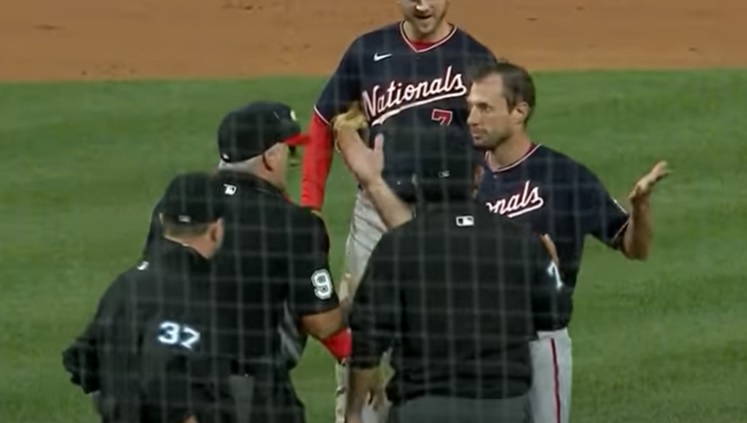
As Scherzer finished the inning, Nationals coaches—clearly unimpressed with Girardi’s strategy, be it gamesmanship or a genuine suspicion that Scherzer was cheating—unloaded on the manager. So too did Scherzer, who stared daggers into the Phillies dugout as he walked off of the field. Upon reaching his bench, he repeatedly showed Girardi his cap and glove, shouting, “They’re clean! They’re clean!” as he mockingly ran his hand through his hair.
When Washington hitting coach Kevin Long—formerly on Girardi’s staff with the Yankees—continued the verbal assault, Girardi stormed the field ready to fight, and ended up ejected. Later, Nationals GM Mike Rizzo called Girardi “a con artist.”
There is an old story from the early part of the 20th century involving a fastball pitcher for the St. Louis Cardinals who was giving the Pirates fits. Pittsburgh shortstop Honus Wagner’s solution was, while batting, to catch one of those fastballs barehanded and insouciantly toss it back to the mound. With two strikes in the count the umpire called Wagner out, but the tactic worked. According to legend, anyway, the pitcher walked the next five hitters.
Girardi’s ploy, whatever its motivations, did not have a similar effect. Scherzer walked the next batter following his mound inspection, but retired five straight after that to earn his sixth win of the year in a 3-2 Nationals victory.
The main question we’re faced with now is whether Girardi’s con (if it actually was a con) will take root. Max Scherzer is too stout a pitcher, both mentally and physically, to be trapped by such shenanigans (if they actually were shenanigans), but other pitchers—especially in a league dominated by 20-something-year-old relievers—are more suspect.
Just as MLB rules prohibit a hitter from calling time in order to discombobulate a pitcher, so too do they prohibit a manager from executing a substance check for similar reasons. The umpire’s in Tuesday’s game, in fact, conferred before checking Scherzer, to confirm the validity of Girardi’s point.
That alone is an endorsement for the purity of the manager’s motivation. Whether he should have done what he did is a different story, however, as is the fact that such a tactic has now been inexorably planted into the heads of every coaching staff in baseball. If Billy Martin can wait until the right moment to have the umpires check George Brett’s bat, you can bet that there’s somebody out there right now anticipating a key spot in an upcoming pennant race to pull this particular card from his back pocket.
We can only sit back and watch the fireworks explode when he does.
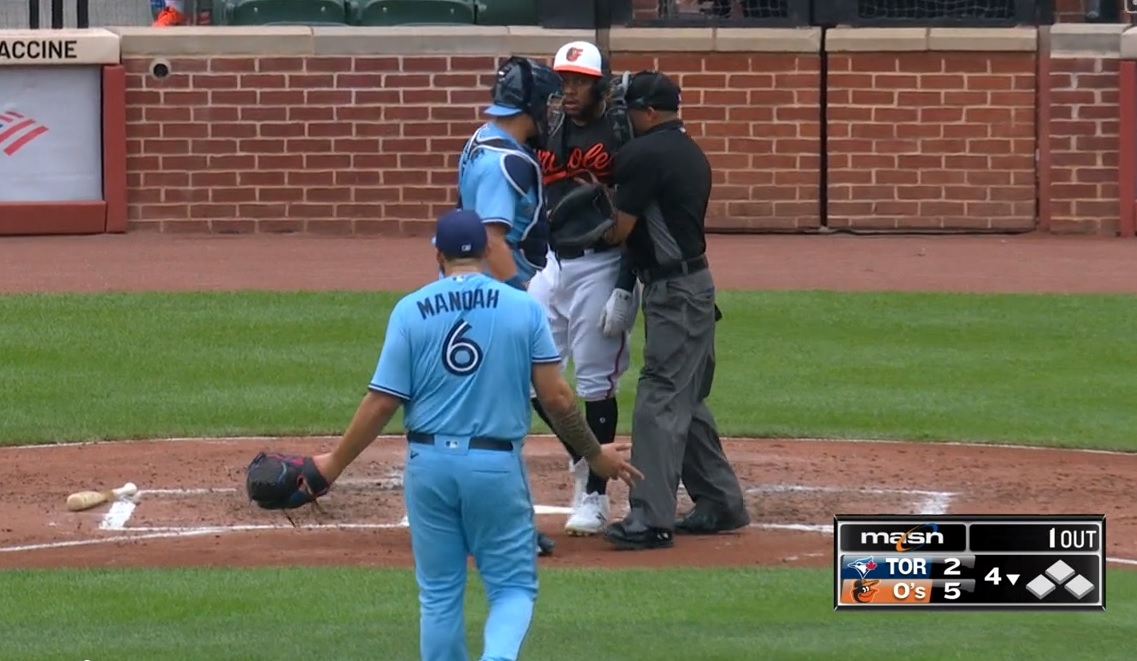
The Orioles say that he did it on purpose. He himself said that the pitch got away. Either way leads to the same conclusion: This is what happens when pitchers pitch angry.
Alek Manoah had just given up back-to-back homers in the fourth inning of Saturday’s game, to Baltimore’s Ryan Mountcastle and DJ Stewart, following earlier homers by Mountcastle and Cedric Mullins. The Blue Jays, preseason favorites to contend for a playoff spot, were in fourth place and had lost five in a row, all within their division. The Orioles are the worst team in the American League, yet somehow were beating Manoah all over the field.
Of course he was pitching angry.
Whether he hit the next batter, Maikel Franco, on purpose is unknown, though that certainly appears to be the case. Either way, he did it with his very next pitch after those home runs, and he did it with a fastball, and he did it with the intent of running the pitch inside. Whether that all amounts to good policy is up for debate, but the 23-year-old rookie clearly had some issues to work through.
Maybe it was because of the HBP, maybe it was because Manoah took the extra step of approaching the plate with arms out, in a what-are-you-going-to-do-about-it pose, but benches quickly emptied. Strangely, each team’s coaching staff—particularly Blue Jays manager Charlie Montoyo, who appeared to say something that set off Orioles skipper Brandon Hyde and coach Fredi Gonzalez—ended up at the heart of the escalation.
Once things settled, umpire Roberto Ortiz tossed Manoah. The decision to do so without prior warning allowed Baltimore a chance to respond in kind—there is zero chance that Ortiz will ever reveal whether this was intentional—which did not end up happening. Given Montoyo’s verbal combativeness during the dustup, this actually comes as something of a surprise.
Before Sunday’s game, a cadre of Blue Jays and Orioles—notably Franco (who’d told reporters a day earlier that he believed his plunking was intentional) and Vlad Guerrero—made a point of hugging it out on the field. The game was played without incident.
Is this harkening in a new era of understanding and appreciation? Not likely, but we sure can enjoy it when we see it.
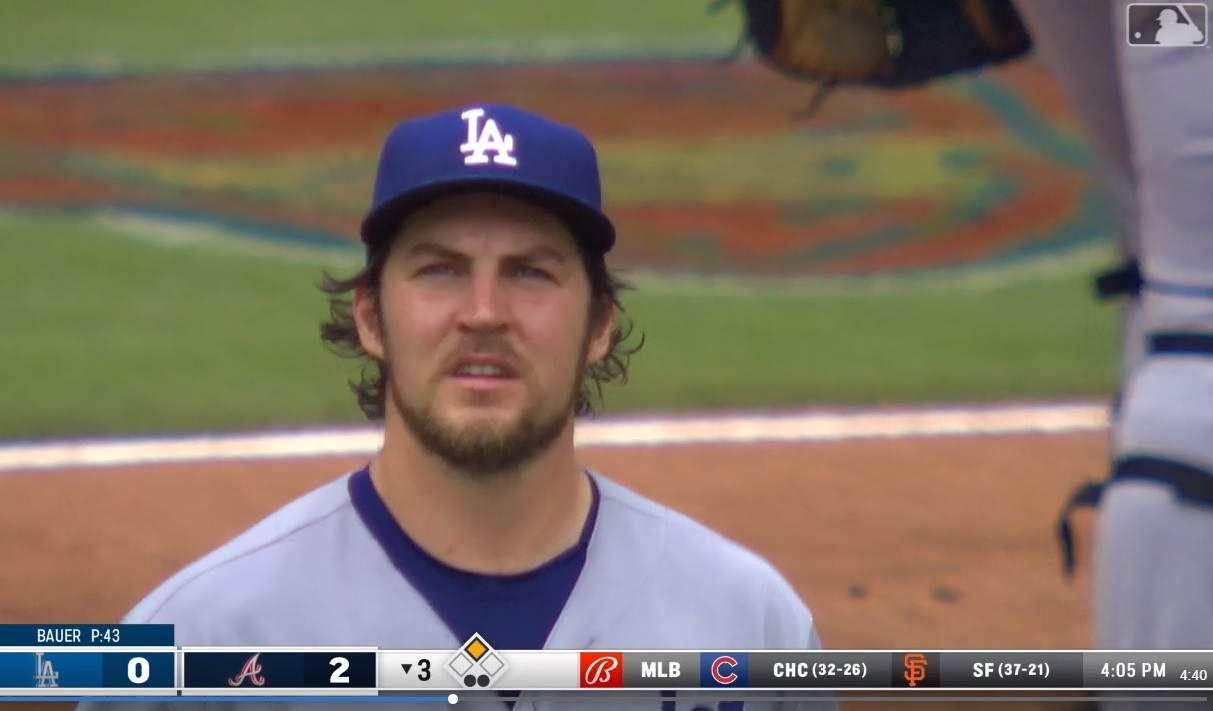
Trevor Bauer seemed to have it all figured out. He spent years haranguing Major League Baseball about its substance-abuse problem—the substance in question being pine tar and other, more powerful tack—that enables pitchers to increase spin rate to astronomical degrees. He went so far as to write about it in the Players’ Tribune.
When baseball effectively ignored him, Bauer announced publicly that he would try the tactic himself, for an inning in April 2018, and found immediate success.
When baseball continued to not give a shit, the right-hander adopted the practice whole hog last year, winning a Cy Young Award and $100 million over three seasons from the Dodgers.
Bauer’s stated plan: Continue to tack up for as long as baseball ignores it, and stop once effective policing begins. Which is what he wanted in the first place.
Accordingly, details came down over the weekend about MLB’s new stance toward pitcher tack, and the policy, if reports are accurate, seems to have teeth.
According to ESPN’s Buster Olney, proposals include eight-to-10 random checks of pitchers per game, with starters being checked at least twice as they depart the field so as to minimize disruption. Position players might also be checked, though not in so prevalent a fashion. Current penalties involve 10-game suspensions, which are still on the table.
Those who pay attention to such things could see this coming. Earlier this season MLB confiscated a number of balls from one of Bauer’s starts. In May, umpire Joe West took Giovanny Gallegos’ cap due to a discoloration on the brim. This week, Sports Illustrated published a cover story calling sticky stuff “The new steroids,” and hittersacrosstheleague have been speaking out on the topic.
Are pitchers paying attention? Let’s turn back to Bauer, who yesterday faced Atlanta with what we can assume to be a diminished supply of sticky stuff on his person. The tell: Entering the game, the average spin rate of Bauer’s four-seam fastball was 2,835 RPM; yesterday he averaged only 2,612 RPM.
Between 2017 and 2019—the seasons prior to what appears to be to be Bauer’s headfirst dive into stickiness—his spin rate climbed from 2,227 to 2,410. Yesterday’s diminished numbers were still significantly higher than that. Does this indicate the right-hander is still using tack, only not as heavily or as frequently as before? Could be. Also noteworthy: Since 2019, Bauer has all but abandoned his changeup, which spins the least of any of his pitches, and which he once considered a useful tool against left-handed batters.
This was all in evidence yesterday, when Bauer yielded three runs on six hits over six innings. It was the most hits he’s allowed this year, and tied for the most earned runs. Notably, Bauer also issued four walks, double his season average, while striking out seven, less than his season average. Opponents had hit .150 against him on the year; yesterday, Atlanta batters hit .250.
Also, Bauer had at least occasional trouble finding the zone.
Afterward, reporters brought up the topic of sticky stuff with the pitcher. “I’ve made a lot of public comments,” Bauer replied. “If you want to go research it and make your own decision, go for it.” When asked about the cause for the RPM drop, the pitcher was cagey in his response: “I don’t know. Hot, humid day in Atlanta.”
This is the reason most pitchers give for adding illegal tack. In humidity, as well as in cold weather, gripping a baseball becomes more difficult, and pitchers—those who admit to it, anyway—say that an extra dollop of pine tar or the like can help bring them back to normal. For a guy like Bauer, it can help transform a 4.48 ERA in 2019 to a 1.73 ERA in 2020.
Bauer’s hardly alone. On Thursday, Gerritt Cole—who appears to be a personal target of Bauer, and who has been named in court about this stuff—allowed five runs over five innings against the Rays. His spin rate was down across the board, especially on his fastball, which dropped from 2,552 RPM on the season to 2,436. (In 2017, Cole’s last year in Pittsburgh, his four-seam spin averaged 2,164. His first season with Houston he improved that by about 200 RPM. The following year he improved it again by a similar amount.)
Bauer and Cole, of course, are merely two prominent representatives of a widespread practice that has driven offense into a hole. This season, major leaguers are hitting a collective .237, a development that nobody apart from active pitchers can fully embrace.
“I just want to compete on a fair playing field,” Bauer said yesterday, in an Orange County Register report that contains a host of vibrant quotes. “I’ll say it again. That’s been the point this entire time.”
Should Trevor Bauer become human again, that’d be just fine—so long as the rest of baseball’s superman pitchers do, too.
The stain was right there for all to see, on television no less, an outlawed substance used by pitchers to help them grip—and spin—baseballs. The pitcher in question had been dominant of late, and Tony La Russa had seen enough. He asked the umpires to do something about it.
Sound familiar?
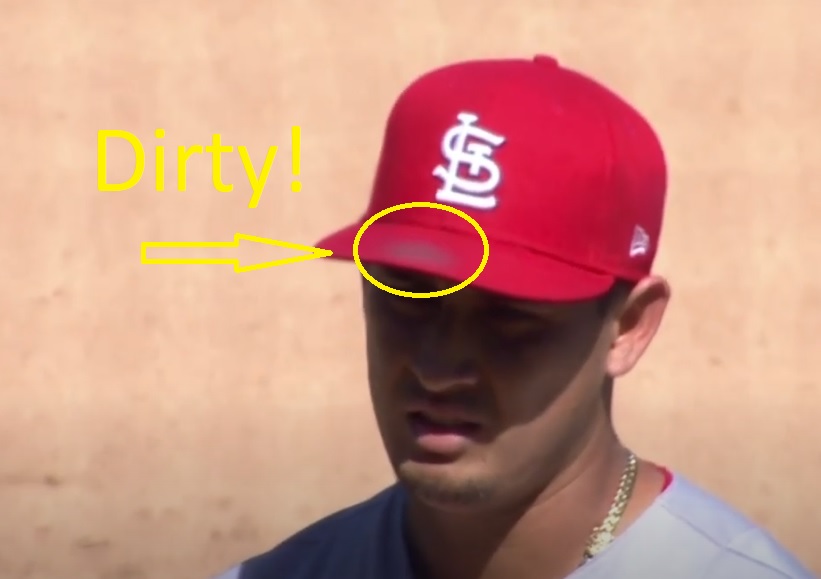
La Russa was in the opposite dugout yesterday when St. Louis reliever Giovanny Gallegos was stopped by umpire Joe West before he could throw a pitch after entering the game against the White Sox in the seventh inning. At issue was the right-hander’s cap, which bore a visible smudge atop the brim—pine tar, to judge by the educated guesses to follow. West took the cap, Gallegos got a new one and the game continued apace.
That’s not what we were talking about in the first paragraph, though. What we were talking about in the first paragraph happened in 2006, during the second game of the World Series. La Russa was managing the Cardinals at the time, and his opponent—Detroit Tigers pitcher Kenny Rogers—had some literally shady things going on.
The tell—a brown-hued discoloration on Rogers’ palm—was so obvious that Joe Buck and Tim McCarver discussed it at length on the telecast. It wasn’t long before La Russa got involved.
The consequences were enormous. At age 41, Rogers had dominated opponents throughout those playoffs despite an All-Star career that had come to be defined by postseason failure. From The Baseball Codes:
“In five wretched playoff starts prior to 2006, Rogers was 0-2, with a 10.26 ERA (plus another loss pitching in relief for the Mets in 1999, when he walked in the winning run of the NLCS), not once making it out of the fifth inning. So it was something of a surprise when, in 2006’s earlier rounds, Rogers ran off fourteen consecutive scoreless frames against the Yankees and Athletics. When footage from those starts was reviewed, the same brown smudge showed up on the same spot on his palm. What else could it be?”
The Rogers controversy begins at the 6:47 mark.
Only two seasons earlier, La Russa’s own pitcher, Julian Tavarez, had been suspended 10 games for having pine tar on his cap. The manager, clearly willing to accept a certain level of cheating, was unwilling to turn those particular tables. Rather than have Rogers checked—which could have led to ejection and suspension—La Russa, decrying what he later termed “bullshit baseball,” merely requested that umpires have the pitcher clean his hands. Which he did.
At that point, Rogers did the only thing he could reasonably do—15 postseason shutout innings with an obvious foreign substance were followed by seven shutout innings without it. After washing up he allowed only two hits over eight shutout innings in a Tigers victory, evening the Series at a game apiece.
Maybe we’d remember it better if that hadn’t been Rogers’ only appearance of the Series—the Cardinals won the next three to take the title in five—but the core components are similar to those spurring Wednesday’s controversy. Pitchers continue to use tacky, illegal substances to increase grip and, subsequently, spin. The primary difference is that they’re doing it more frequently and with less impunity and—this part is key—far more effectively than ever. It has become Trevor Bauer’s league, with artificially induced spin rate leading to an unending stream of 97-mph fastballs with unhittable movement, supplemented by equally unhittable sliders and other breaking stuff.
To Gallegos’ credit, he earned five outs in the span of 16 pitches against Chicago, even without his suspect cap.
This year the commissioner’s office said that it would be cracking down on such things, but apart from pulling a few balls from an early-season Bauer start for examination—about which we have subsequently heard not a peep—Wednesday’s Great Cap Confiscation was pretty much the first sign that anybody in charge is paying attention.
Afterward, Cardinals manager Mike Shildt went off on the discrepancy.
“This is baseball’s dirty little secret,” he told reporters. “And it’s the wrong time and the wrong arena to expose it.”
* Pitchers throughout the league use a sunscreen/rosin combination, or something similar, to increase their grip on the baseball. Hitters don’t mind because it helps with control, and nobody wants to get inadvertently drilled. What hitters don’t like, he said, is “the stuff that’s making the ball do wiffle ball stuff.” Based on yesterday’s action, some hitters are themselves starting to speak up.
* Some pitchers are getting away with far more devious things, in far more overt manners and to far greater effect, and haven’t been stymied by the league at all. The manager didn’t call out Bauer by name, but Bauer is clearly who Shildt was talking about.
Some highlights of the manager’s rant:
“Gio wears the same hat all year. Hats accrue dirt. Hats accrue substances, stuff. We pitched him in a day game. Did Gio have some sunscreen at some point in his career to make sure he doesn’t get some kind of melanoma? Possibly. Does he use rosin to help? Possibly. Are these things baseball really wants to crack down on? No. It’s not. I know that completely firsthand from the commissioner’s office. That is not anything that is going to affect his ability to compete.”
“There are people that are effectively not even trying to hide, essentially flipping the bird at the league with how they’re cheating in this game with concocted substances. There are players that have been monetized for it. There are players that are obviously doing it, going to their glove. There’s clear video of it. You can tell the pitchers that are doing it because they don’t want to go to their mouth, which Gio does off the rubber.”
“Major League Baseball is trying their best to [police] this in a manner that doesn’t create any black eyes for the integrity of the game that we love. But speaking of integrity, how about the integrity of the guys that are doing it clean? How about the guys that are pitching their tails off in MLB that are doing it clean and have an unfair competitive advantage for the guys who are clearly loading up concoctions that they actually advertise, don’t do anything to hide, even in plain view? That’s the guys I’m speaking for. I’m speaking the hitters who have a living to make based against stuff that’s already very, very good.”
Ultimately, this is exactly what Bauer wanted. He came out against overt cheating a couple of years back, complained that MLB wasn’t doing anything to curb it, began overtly cheating himself in order to prove his point, and ended up winning a Cy Young Award. If baseball continues to do nothing, Bauer seems content to continue his domination. If baseball cracks down, then the pitcher will have achieved what he asked for in the first place.
Yesterday, Tony La Russa had nothing to do with Gallegos’s cap being confiscated. That was all Joe West, with an assist from second-base umpire Dan Bellino, who initially spotted the discoloration. In fact, La Russa’s position seems to be entirely consistent with where he stood 15 years ago regarding Kenny Rogers. He is an old-school manager, and the old school says that there’s nothing wrong with a little pine tar on a baseball.
What we still don’t know, based on this season’s withering response, is whether MLB agrees.
This is how I concluded yesterday’s post about Yermin Mercedes hitting a 3-0 homer off of Willians Astudillo with two outs in the ninth inning of a game that the White Sox led by 11 runs:
If the Twins for some reason decide to retaliate tonight, or if [Tony] La Russa benches Mercedes in some misbegotten stab toward outdated honor, then we’ll be talking about this again tomorrow. More realistically, the enduring optics of one fat guy hitting a homer off of another fat guy, plus the ridiculous nature of the pitching itself, means that this controversy will not likely endure beyond last night’s news cycle. Nor should it.
Guess who’s talking about this again today—so much talk!—for every wrong reason imaginable. When it comes to misbegotten stabs, Tony La Russa has managed to lap the field.
When was the last time a manager slagged his own player to the press, gave tacit approval for the other team to retaliate, and, after said retaliation occurred, claimed publicly that he had no problem with it? More pertinently to the White Sox, when was the last time a manager did any of those things and still had his job at the end of the season?
It started when La Russa shared some thoughts before Tuesday’s game. No surprise: He was upset.
“That’s not a time to swing 3-0,” the manager told reporters before the game, according to an MLB.com report. He called it “sportsmanship and respect for the game and respect for your opponent.” He said that Mercedes “made a mistake.” He called Mercedes “clueless.” Most brazenly, La Russa also said that “there will be a consequence that [Mercedes] has to endure here within our family.”
What the fuck is that about? La Russa was intentionally vague. Could the Twins have taken it as a green light to respond? Of course they could have. Did La Russa know that his comments might be taken as such? If he didn’t, he’s a fool. More likely, that was his intent from the beginning.
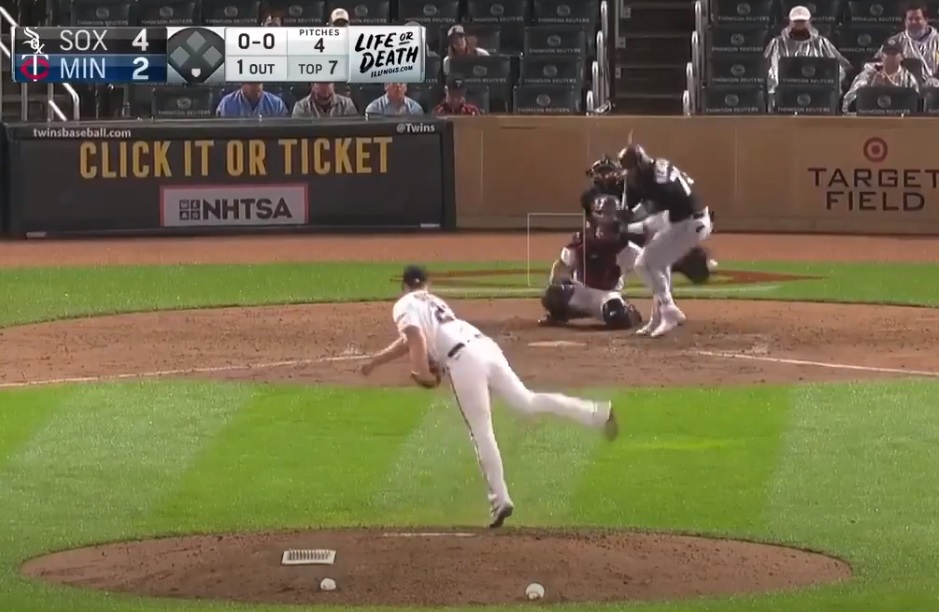
With that as the background, it should surprise nobody that, with one out and nobody on in the top of the seventh in a game that the White Sox led, 4-2, Minnesota reliever Tyler Duffey threw a pitch behind Mercedes’ legs. It was clearly intentional. Was he acting alone? Was he following orders? Either answer reflects some overt thuggery. Most enduring was the impression that the most old-school guy in the building, Tony La Russa, orchestrated the entire thing against his own player.
If that actually was his goal—or even if a critical mass of White Sox players think that was his goal—La Russa should just resign now. Few people in that room will listen to him again. Not helping the manager’s cause were postgame comments in which he said things like “I don’t have a problem with how the Twins handled that” and “I didn’t have a problem with what the Twins did.” He outright excused the pitch, saying, “The guy might have just been trying to get a sinker in,” when the guy was clearly not just trying to get a sinker in.
Yes, there’s the fact that Mercedes swung through a take sign on his fateful homer, which is enough to piss off any manager, but come on—managers don’t discuss missed signs during press conferences. La Russa was angry at one thing and one thing only. By leaving things intentionally vague, he gave the Twins all the leeway they needed to respond however they saw fit. (La Russa is 76. Twins skipper Rocco Baldelli is 39, and was born two years after La Russa’s managerial debut. Somehow, they both ended up looking comparably stodgy after this one.)
For those who doubt whether this series of events will cost La Russa in the long run, know that the inevitable avalanche of doubt within the White Sox clubhouse has already begun. After the game, Lance Lynn—Chicago’s best and most veteran pitcher, who’s been around long enough to have played for La Russa in his last managerial job a decade ago—spoke out. While Lynn didn’t overtly criticize his manager, he took a clear position against the La Russa’s entrenched stance.
“The more I play this game, the more those [unwritten] rules have gone away, and I understand it,” the pitcher said in an MLB.com report. “The way I see it is, for position players on the mound, there are no rules. Let’s get the damn game over with. And if you have a problem with whatever happens, then put a pitcher out there. Can’t get mad when there’s a position player on the field and a guy takes a swing.”
And so it begins. La Russa is well on his way to losing that clubhouse, if he hasn’t already.
If there’s a saving grace for him it’s that the White Sox are 25-16, the best record in the American League. Then again, in the first game after the Mercedes Incident, the same one in which Minnesota gratefully accepted La Russa’s offer to throw freely at his own player, Chicago coughed up a four-run lead to the team with baseball’s worst record, and lost, 5-4.
White Sox players deserve to feel better about things than they inevitably do this morning.
Update (5/20): Guess who doesn’t agree with La Russa? Tim Anderson for one. Lucas Giolito for another. For players to publicly contradict their manager on the most visible point he’s made since taking over the club is an ominous sign. And it’s only the beginning.
Update (5/21): Tyler Duffey and Rocco Baldelli were suspended three games for their roles in this. The best part about it was when a guy on Twitter said, “Tony La Russa appealed the decision.”
Update (5/21): CC Sabathia has thoughts, which normally wouldn’t be worth a dedicated update but boy howdy these ones are.



 The Baseball Codes