Sign stealing, Toronto Blue Jays

Accusations Against the Blue Jays Explode: Sign Stealing at the Rogers Centre?

Back in July, when Joe Girardi intimated that the Blue Jays might be employing some beyond-the-field methods of acquiring other teams’ signs at the Rogers Centre, people didn’t pay much attention.

When Hardball Talk suggested that the Red Sox felt similarly, based on the fact that catcher Jarrod Saltalamacchia was putting down complex signs for Clay Buchholz in Toronto, even with nobody on base, it made barely a ripple. Jorge Posada did something similar when the Yankees came to town, but still, not much was said.

Now that ESPN.com has given us more than 2,000 words on the topic, however, featuring an anonymous reliever threatening to hit Jose Bautista “in the fucking head” if the Blue Jays don’t knock off their sign stealing, eyes are starting to settle on happenings north of the border.

In the piece, by Amy Nelson, four unnamed relievers from the same team offered details: The guy doing the relaying was wearing a white shirt, for better visibility from the plate; he was positioned in the center field stands, just beyond the pitcher, to be easily seen by the batter without being detected; he put his arms over his head for any offering but a fastball; and he was stationed only 25 yards from the bullpen, which is how the relievers came to see him so clearly.

Some of the pitchers recalled seeing the guy doing something similar at the tail end of the 2009 season. They quickly called the dugout and had their catcher start mixing up his signs. An inning later the man in white departed.

Bautista confirmed the confrontation, but denied that A) it had been about sign stealing, and B) the Blue Jays do anything of the sort, highlighted by the phrase, “We do not cheat.” Later in the story, Blue Jays GM Alex Anthopoulos offers a similar denial.

So how to reconcile these viewpoints? The Blue Jays’ home record doesn’t reflect any improprieties—they’re 28-27 at home, 30-30 on the road—but other statistics appear to be damning. See the ESPN story for a full rundown, but here’s a smattering of examples:

  • Toronto’s home run rate on contact at home last season was 5.4 percent, about 50 percent higher than on the road, yet their opponents hit fewer homers in Toronto than at a neutral ballpark.
  • From 2005-09, the Rogers Centre saw .002 more home runs for every ball put in play than average. In 2010, that number shot up to .011—but only for the Blue Jays.
  • In 2010, the Blue Jays had the highest isolated power (slugging percentage minus batting average) of any team since 1954—most of which came at home. (The 150 homers they hit in Toronto were three shy of the all-time home record set by the Rangers in 2005.)
  • Seven Blue Jays regulars had an OPS at least 50 points higher at home than on the road; six of them were more than 100 points higher; three were 200 points higher.

This season, the Blue Jays have hit 71 homers at home and 57 on the road, despite having fewer than half their plate appearances at the Rogers Centre. They also have wide home/road splits for batting average (.261/.249), slugging percentage (.444/.389) and OPS (.770/.701). (All numbers are through Tuesday’s games.)

There’s also the case of Vernon Wells, as detailed by Hardball Talk. The slugger featured relatively equitable home-road OPS splits while playing for the Blue Jays—until last season, when he hit .991 at home, and .708 road. This number gathers momentum when combined with his .622 OPS this season with the Angels.

None of it, of course, is conclusive. Wells is in a new environment, has had his share of struggles as of late, and could simply be aging. The Blue Jays might simply be that much better at home than everybody else. For what it’s worth, J.P. Arencibia has denied everything, with some colorful language, on Twitter.

Ultimately, it comes down to this: Rare is the ballplayer or manager who sees sign stealing from the basepaths as anything more than an indication that it’s time to get better signs. When things move beyond the field of play, however, tempers can get testy, quickly.

(Wild home-road splits are a common indicator that something shady is going on. Though nothing was ever proved, the fact that the Rangers performed much better at home than on the road in recent years made them prime suspects around the American League.)

The Baseball Codes details the travails of pitcher Al Worthington, who in 1960 was traded to the White Sox—in part because he didn’t approve of the sign stealing done by his former team, the Giants. When he arrived in Chicago, however, he found an elaborate system in place in Comisky Park.

When the team played at home, Chicago’s pitching instructor and former Tigers standout, Dizzy Trout, watched the oppos­ing catcher from inside the recently installed Comiskey Park “exploding” scoreboard—a pyrotechnic exhibition unlike any seen in baseball up to that time. Trout then triggered a light hidden amid many others in the center-field display, that signaled hitters to the type of pitch about to be thrown—blinking meant breaking ball, solid meant fastball. It could be seen from both the plate and the White Sox dugout along the third-base line, but not from the visitors’ dugout near first. The scheme was incredi­bly effective, helping the Sox build a 51-26 record (.662) at home that year, even as they struggled to a 36-41 mark (.468) on the road.

Worthington complained to manager Al Lopez, who insisted that the system was morally acceptable. Said the pitcher: “I thought later, Well, if it’s okay to do it, why don’t they tell everyone?”

Toronto’s methods (if the allegations are true) are not nearly that complex, and aren’t even original. Former Tigers catcher Bill Freehan talked about similar situations during his own playing days:

You’d have a buddy on Oakland, and he’d tell you hey, we’ve got a guy out there in the background, so we aren’t looking at the pitcher, we’re looking over his head and somebody’s putting his right hand up for a fastball. As a catcher—especially when your team’s getting lit up—you start to think, “Uh-oh, have they got them here?” There would be guys in the wall at Fenway, and sometimes you had to make changes every inning.

So: Fenway, Oakland, Texas, San Francisco, Chicago. In the 1940s the Indians pinched signs with a military-grade gun sight brought back from WWII by Bob Feller. The New York Giants did something similar during the fabled 1951 season of The Shot Heard ‘Round the World. (Visiting teams, for that matter, were known to steal signs from the center field clubhouses of the Polo Grounds.) The Cubs spent much of the 1960s signaling hitters from the Wrigley Field scoreboard.

It’s safe to say that this kind of thing happens more than outsiders (or even insiders) care to imagine. The one commonality between all these accusations: Once they’re caught, the allegedly guilty parties are expected to stop.

So even though the league office has yet to field a complaint about the Blue Jays, expect extra vigilance from visitors to the Rogers Centre and an almost certain disappearance of the man in the white shirt. Should anybody see something suspicious, things have now reached the point at which hitting somebody “in the fucking head” (or, more appropriately, in the fucking hip), is a real possibility.

Update (8/11): Bautista says the team making accusations is the White Sox. (This was actually sussed out earlier by the Steal of Home blog, which not only fingered Chicago, but provided some screen caps of the possible man in white.)

Updated 2 (8/11): In Toronto to face the Blue Jays, A’s reliever Grant Balfour told the San Francisco Chronicle that he was aware of the rumors about the man in the white shirt, but has seen no evidence to support it. “If you’re [stealing signs like that], you’re going to wear it,” he said. “That’s the way it goes. Be prepared to get worn out. Go ahead, but know that that’s the unwritten rule.”

– Jason

Ramon Ramirez, Retaliation, Shane Victorino

Rollins Steals, Ramirez Stews, Victorino Fumes, Polanco Charges. Just Another Day at the Yard

Much of the intrigue in the Code is looking at something like last night’s brawl between the Phillies and Giants and being far more interested in the causation of the event than the event itself.

Images from the fight are vivid: Shane Victorino getting plunked in in the lower back in the top of the sixth, then taking steps toward the mound; catcher Eli Whiteside tackling a charging Placido Polanco around the legs; Victorino charging into the scrum and belting Giants hitting coach Hensley Muellens. (Watch it here.)

But what led up to it?

Well, the pitch from Ramon Ramirez that hit Victorino, for one. It certainly seemed intentional. But why?

Popular sentiment holds that Ramirez was spurred by Jimmy Rollins‘  steal of second base moments earlier, with his team holding an 8-2 advantage. In many cases, a six-run lead in the sixth inning is firmly within the Code’s gray area when it comes to propriety for such a play. But for these Giants, who are last in the National League in runs scored and who had scored more than twice in only four of their previous 14 games, a six-run deficit may as well be 12.

So why wait until after Polanco singled to drill a guy? Simple frustration, perhaps; Rollins advanced to third on the play, and second base was open with two outs.

In the clubhouse prior to today’s game, I asked a number of Giants players about whether Rollins’ steal garnered notice in the San Francisco dugout. While nobody was interested in fanning these particular flames, let alone implicating Ramirez as having intentionally drilled Victorino, the only guy to deny taking note of Rollins’ steal was Jeremy Affeldt, and that was because he was in the bullpen, warming up, when it happened.

“We noticed,” one player told me, referring to Rollins. “I don’t want to speak for everybody, but a lot of us noticed.”

Another player went so far as to say that Rollins’ steal was simply the final factor in a string of things “that you just don’t do in somebody else’s ballpark.” He declined to elaborate, but little happened prior to the steal to draw the notice of the broadcast crew or people in the press box. One guess is that the Phillies were doing their share of chirping, which was enough—combined with San Francisco’s frustration over its recent losing streak, and Ramirez’s frustration over giving up four hits, a walk, a wild pitch and three runs over two-thirds of an inning—to push the pitcher over the edge.

The fact that it was Jonathan Sanchez’s first start against Philadelphia since last year’s dustup with Chase Utley in the NLCS could also have raised the tension.

When it came to the fight itself, none of it would have happened had Victorino not started toward the mound. As it was, he quickly reconsidered his action, slowing up after an aggressive first step, then stopping altogether to wipe his mouth with his shirt. This was clearly not a man with violence on his mind.

(“He hit Vic, then he came after Vic. Vic almost has to go unless he wants his teammates to call him chicken,” said Phillies manager Charlie Manuel in an AP report. “I think (Ramirez) was getting hit and he got mad and he was going to plunk somebody. He was going to send a message.”)

Polanco, however, was racing toward the mound until being waylaid by Whiteside. That was the moment at which things got testy. (That Victorino charged into the scrum in a second wave of anger will not play in his favor in the league office, nor will the fact that he pushed aside umpire Mike Muchlinski in his quest to do so.)

One more item of interest from the fight: Giants outfielder Pat Burrell, while abiding by the unwritten rule mandating that all players take the field during a fight, broke an actual rule when he did so. (Players not on the active roster are barred even from the dugout during games.)

Today’s contest was quiet (especially from the standpoint of San Francisco’s offense), and the bad blood appears to have subsided. All it takes, however, is one angry reliever to reignite things as if they had never abated, and to possibly set the Hawaiian flyin’ again.

– Jason

Jason Motte, Retaliation, Ryan Braun, Tony La Russa

Hey Jered Weaver, this is Where Message Pitches are Meant to be Delivered

Ryan Braun: not happy with the way things played out.

As far as retaliation goes, it was awkward, it was ugly and if it wasn’t embarrassing to more than one party, then by all rights it should have been.

But at least it got the job done, within the boundaries of reason.

In the bottom of the seventh inning last night, Cardinals reliever Jason Motte wanted to deliver a message to Milwaukee. Brewers reliever Takashi Saito had drilled Albert Pujols a half-inning earlier, in his tender left wrist. It was clearly unintentional, as the rising fastball hit Pujols only after the hitter pulled his hands in to his chest and was spinning toward the backstop.

Sometimes intent doesn’t make a lick of difference. When Pujols goes down, reparations are frequently in order.

Never mind that it was a 7-7 score; when Ryan Braun led off the home half of the inning, Motte got right to it. And whiffed. Braun evaded Motte’s 98 mph inside fastball, which should, for practical purposes, have ended the hostilities. The pitcher had his shot and missed his mark.

This was plate ump Rob Drake‘s moment to step in and put an end to things. Players frequently appreciate some leeway when it comes to umpires’ warnings, at least to the point that each side is allowed their due shot. Drake, however, missed that mark by a mile.

Allowed a second chance, Motte drilled Braun in the ribs with a 97 mph four-seamer. Braun looked stunned after the first effort; when the second one found purchase without a peep from Drake he was downright flabbergasted.

Even at that point, Motte failed to get booted. (He did end up hitting the showers, but only because Tony La Russamade a pitching change. Based on La Russa’s history with these things, it seems likely that Motte started the inning solely because has the best fastball on the team, with the plan being to pull him after one hit batter. “We threw two balls in there real good just to send a message,” the skipper said afterward, in a semi-denial. “If he ducks them, it’s all over and we don’t hit him.”)

Only after Milwaukee skipper Ron Roenicke came out for a chat with Drake—presumably to fill the ump in on all he was missing—were warnings issued to both benches. (It was odd timing on Roenicke’s part; unless he was looking to get Motte retroactively bounced from the game, his discussion served little purpose beyond costing his own pitchers a chance to respond on Braun’s behalf.)

“That was ridiculous,” said Brewers catcher Jonathan Lucroy in the Milwaukee Journal-Sentinel. “We didn’t hit Albert Pujols on purpose. Are you kidding me? In that situation? If we wanted to put him on base, we would have walked him. That’s ridiculous. . . . We shouldn’t get punished for something we weren’t trying to do on purpose. Look at the situation. If we were getting beat by a lot or we were beating them by a lot and that happens, maybe we did it on purpose.  I mean, come on. We weren’t trying to hit anybody. It’s unbelievable.”

Lucroy is entitled to his opinion, but it’s tough to fault a pitcher for protecting his superstar. That Milwaukee’s best player led off the next inning made the timing perfect. That Motte was given two chances by an apparently clueless ump, however, is worth getting ticked off about. If the situation has anything working in its favor, it’s that, unlike Jered Weaver and Carlos Carrasco, Motte came nowhere near his target’s head.

The teams meet again today, then again at the end of the month.

– Jason

Appropriate Retaliation, Carlos Guillen, Jered Weaver, Retaliation

How Not to Retaliate, No Matter How Much a Guy Deserves it, Anaheim Edition

Yesterday’s Jered WeaverCarlos Guillen histrionics seemed to mesmerize the nation. I wrote about it for Sports Illustrated.com, tying it in to last week’s Carlos CarrascoBilly Butler fiasco. Both had the same trigger—a player watching a home run longer than the pitcher would have liked—and wildly inappropriate retaliation: head-high fastballs. (Watch Weaver-Guillen here.)

Also included: A quick roundup of other Code violations recently in the news.

Click over to SI for a nicely formatted version and a full-color photograph of Weaver and Guillen. Or, if you’re lazy, just scroll down.

– Jason

Jered, meet Carlos. Carlos, Jered.

Insult me once, shame on you. Insult me twice, duck and cover.

In Detroit on Sunday, Angels pitcher Jered Weaver took matters into his own hands after two incidents of Tigers showboating after hitting home runs. Weaver stewed after Magglio Ordoñez paused to admire his two-run homer in the third, going so far as to say something to Miguel Cabrera about it after retiring him for the inning’s third out.

Whatever message Cabrera relayed in the Detroit dugout did not earn Weaver the respect to which he felt entitled. In fact, it had the opposite effect. In the seventh inning, Carlos Guillen watched his blast for several beats, flipped his bat, then made glaring eye contact with Weaver as he took five slow steps toward first followed by two sideways hops. Only then did he start his trot — by which point he was already halfway up the line.

“I’ve never done that before like that,” Guillen said in an MLB.com report. “The way he reacted to Magglio, he’s my teammate. We’re a team.”

Weaver immediately began shouting at Guillen and home plate umpire Hunter Wendelstedt quickly stepped in and warned both benches against retaliation.

Weaver wasted little time ignoring him. The guy can’t be faulted much for wanting to take care of things quickly; he had already thrown 110 pitches and wasn’t going to be in the game much longer no matter what happened. The message he sent with his very next pitch, however, was anything but perfect. If Ordoñez and Guillen violated baseball’s unwritten rules with their increasingly provocative displays of showmanship, Weaver one-upped them with a 92-mph fastball aimed at the head of Alex Avila.

That Avila ducked under it was beneficial not just for himself, but for Weaver as well. Had the pitch connected, one of the AL’s top Cy Young candidates would now be bearing a label he might never be able to shed.

The move was all the more quizzical considering that just two days earlier, nearly identical circumstances precipitated nearly identical results — and a similar outcry against the pitcher.

The hitter was Kansas City’s Melky Cabrera, who after launching a grand slam off Indians starter Carlos Carrasco, watched it sail before he ran. Carrasco, already on the line for seven runs in 3 1/3 innings, threw his next pitch at — and over — the head of Billy Butler.

Carrasco was ejected and benches emptied. Royals outfielder Jeff Francoeur could be seen gesturing angrily toward his hip as he yelled at Carrasco, indicating where the pitch should have gone.

“I understand the game,” Francoeur told the Cleveland Plain-Dealer. “If he thought [Cabrera] pimped the home run, fine. Hit [Butler] in the side. Don’t hit him in the head. That’s why I was yelling at him.”

Francoeur was spot on. Several Royals, including Butler himself, said that an appropriately placed retaliatory pitch would have raised nary a hackle on their bench. Instead, Carrasco is now a marked man.

The same can be said for Weaver. The Angels and Tigers won’t see each other again this season unless they meet in the playoffs. The next time they do, however, Weaver will have to do some explaining to his teammates should Detroit pitchers decide that his action merits further response.

*****

Weaver and the Tigers’ twin showmen weren’t the only ones taking a run at the unwritten rulebook during the course of Sunday’s game. Justin Verlander was in the middle of a no-hitter when Erick Aybar led off the eighth inning with a bunt.

There are situations in which the unwritten rules forbid such a display. Had the Tigers’ 3-0 lead been a few runs greater, Aybar’s endeavor would have been universally assailed by Code adherents. As it was, even as he brought the tying run into the on-deck circle, he still surprised many.

The concept holds that a no-hitter deserves nothing less than a hitter’s best effort to break it up. In many cases, bunting does not qualify.

The best-known instance of this came in 2001, when Padres catcher Ben Davis ruined Curt Schilling’s perfect game with a bunt single in the eighth inning. Part of the reason Diamondbacks manager Bob Brenly was so vocally upset about the play is that bunting for hits was not part of Davis’ offensive repertoire; the one against Schilling was the first of his career.

Aybar, however, has 41 bunt hits since the beginning of the 2009 season. Not to mention the fact that he didn’t actually break up the no-hitter, as Verlander was charged with a throwing error on the play. Three batters later, Macier Itzuris punctured Verlander’s balloon by singling — on a full swing.

If Verlander is upset with anybody, it should be Guillen. The Code stipulates that nothing should change when a pitcher is racing toward perfection. There are many ways to view this rule, but one of the pitcher’s own teammates intentionally initiating bad blood with the opposition and disrupting the flow of the game is inexcusable.

Guillen likely hasn’t heard the last of this from the Angels. If he’s lucky, he won’t hear it from within his own clubhouse, as well.

Elsewhere in the unwritten rules:

• In Boston, John Lackey continues to lead the league in on-field gesticulations made in response to mistakes by his fielders. Spurred primarily by two miscues from shortstop Marco Scutaro — one of which was charged an error — Lackey alternately pounded his glove and threw his hands into the air as he gave up three first-inning runs to Tampa Bay on July 16.

• Also in Boston, Red Sox reliever Alfredo Aceves hit Kansas City’s Billy Butler on July 26 — possibly in response to a brushback pitch thrown to Dustin Pedroia earlier in the game; or possibly because Butler had homered, doubled and singled in the game. It also could have been unintentional. No matter; Blake Wood then drilled Adrian Gonzalez in apparent retaliation, both benches were warned and everybody went on their merry way. (Well, Boston went on its merry way in a 13-9 victory, in which Royals outfielder Mitch Maier was forced to take the mound.)

• In Florida, Mr. Marlin himself, Jeff Conine (currently a special assistant to the team president) said on the radio that Hanley Ramirez doesn’t play as hard as he should, and if it was up to Conine he’d probably trade the shortstop. Five days later Ramirez shot back in the Miami Herald, calling Conine “chicken” for not saying it to his face, and proclaiming that he would “make it to the Hall of Fame being in a Marlins uniform.”

• In Kansas City, Royals shortstop Alcides Escobar was on the business end of a hard slide by Tampa Bay’s Sam Fuld, and ended up taking spikes to the shin. “That’s a dirty slide, man,” he told the Kansas City Star.

• In Atlanta, Journal-Constitution columnist Mark Bradley recalled the time the retired former Braves ace Greg Maddux waited through parts of two seasons before he could retaliate against then-Diamondbacks pitcher Andy Benes.

Appropriate Retaliation, Carlos Carrasco, Retaliation

How Not to Retaliate When Getting Your Ass Kicked, Cleveland Edition

Duck, Billy, duck!

In baseball, retaliation is expected. Ill-timed stolen bases, drilled teammates, questionable slides: They all qualify for reciprocal strikes.

In the case of Melky Cabrera, showboating fits this particular bill. The Royals outfielder hit a grand slam against the Indians on Friday, then admired it in a manner battle-tested to effectively get under the skin of opposing pitchers. (Watch a little bit of hit here.)

At this point in the story, Indians pitcher Carlos Carrasco had three options: wait for the next time he faced Cabrera, when he could teach him a lesson; drill the following hitter, Billy Butler, because pissed-off teammates are frequently even more effective than direct retribution; or ignore the matter entirely.

Carrasco chose none of the above. What he did sort of resembled the second option, but although he threw at Butler, in so doing he violated an unwritten rule that holds far more weight than Cabrera’s theatrics.

The Cleveland right-hander threw at Butler’s head. It was a reaction borne of clear frustration: Cabrera’s blast served as the fourth, fifth, sixth and seventh runs Carrasco had given up in 3.1 innings. Two of those runs had come in the first, courtesy of a Butler home run.

That the pitch didn’t connect—Butler ducked underneath it—saved Carrasco even more trouble than he’d just earned, but not much. (Watch it here.)

Plate umpire Scott Barry immediately ejected the pitcher. Indians catcher Lou Marson cut off Butler in case he had thoughts of settling things then and there, and the benches quickly emptied. No punches were thrown, but as players filtered back to their dugouts, Carrasco got into a shouting match with Jeff Francoeur, who angrily pointed toward his hip, indicating where the pitch should have gone.

“I understand the game,” said Francoeur afterward in the Cleveland Plain Dealer. “If he thought [Cabrera] pimped the home run, fine. Hit [Butler] in the side. Don’t hit him in the head. That’s why I was yelling at him.”

Francoeur’s opinion was spot on. Several Royals indicated that an appropriate drilling of Butler—in the hip or thigh, well below the shoulders—would have been readily accepted. (“Be a man—throw at his back, not his head,” said Alex Gordon in the Kansas City Star.)

Even more importantly, just as such an action could have served to set Cabrera straight by angering his own teammate, Carrasco’s stupidity has put a similar onus on the Indians. Kansas City has every right to retaliate, but because of the DH it’ll be another member of the Indians who wears one on Carrasco’s behalf. There will likely never be a mention of it in the press, but when it happens it won’t be met kindly within Cleveland’s clubhouse.

After Carrasco’s display, Indians pitching coach Tim Belcher cornered him and elucidated the repercussions of what he’d done.

“We don’t condone those types of things,” said Cleveland manager Manny Acta after the game, in the Plain Dealer. “Whether the ball got away from him or not, we don’t condone throwing at people’s heads. That’s a dangerous situation.”

For his part, Butler responded in the best way he could; five innings later, he hit his second homer of the day. (The poor guy seems to be a magnet for this kind of thing; earlier in the week Butler was drilled by Red Sox reliever Alfredo Aceves, possibly in response to a brushback pitch thrown earlier to Dustin Pedroia.)

“I barely got out of the way,” he said after the game in the Star. “It was right at my head, and there was no way around it. I usually don’t react that way. If I get hit, I get hit. I don’t have anything to say. But in that situation, I’m going to open my mouth.”

The Indians, shockingly, perhaps felt further need to respond to Cabrera; when he came up with the bases loaded in the fifth, reliever Chad Durbin greeted him with a high, inside fastball. Even in the Royals clubhouse, players acknowledged that the center fielder will be instructed to speed up future home run trots.

Both the initial parties issued standard denials, with Carrasco saying the fastball got away from him (although he did admit to having noticed Cabrera’s pimp work), and Cabrera insisting that disrespecting the pitcher was the furthest thing from his mind.

That, of course, is hogwash. The Royals will almost certainly notify him of that at the next available opportunity.

– Jason

Don't Steal with a Big Lead

Davey vs. Rickey, Ten Years After

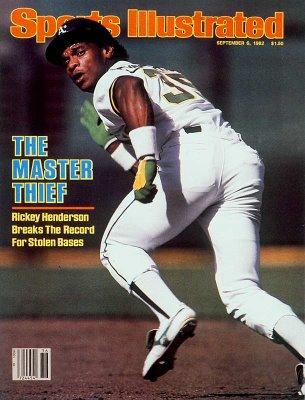
Ten years ago this weekend, Davey Lopes and Rickey Henderson had a little Code-related run-in. It would quickly turn into one of the most prominent kerfluffles in the recent history of the unwritten rules, sufficiently noteworthy to lead a chapter about when and when not to steal in a certain book devoted to the subject.

Similar situations still come up all the time. (Look no further than Carlos Gomez or A.J. Ellis earlier this year, or Nyjer Morgan‘s antics last season.) Still, in honor of the grandaddy moment of them all, it seems worth revisiting. From The Baseball Codes:

In July 2001, Rickey Henderson was forty-two years old and, by an enor­mous margin, baseball’s all-time stolen-base leader. The San Diego Padres outfielder was well over two decades into his major-league career and had long since been anointed the greatest leadoff hitter of all time. Then he stole second base against the Brewers, and Milwaukee manager Davey Lopes exploded.

It wasn’t just any steal that set Lopes off—it happened in the seventh inning of a game in which the Padres led 12–5, after Milwaukee’s defense had essentially cried “uncle” by positioning first baseman Richie Sexson in the hole behind Henderson instead of holding him on. The play was so borderline, as far as stolen bases go, that it was ruled defensive indiffer­ence, and Henderson wasn’t even credited with a steal. That wasn’t his goal, however. Henderson was approaching Ty Cobb’s all-time record for runs scored (which he would ultimately best in the season’s final week), and he had just put himself into scoring position.

Lopes could not have been less interested in the runner’s motivation. As soon as Henderson reached second, Lopes went to the mound, osten­sibly to talk to pitcher Ray King but really to direct a tirade up the middle. At top volume and with R-rated vocabulary, Lopes informed Henderson that he had just become a target for the Brewers pitching staff.

“I didn’t appreciate what he did,” Lopes told reporters after the game. “I know he’s trying to obtain a record for most runs scored, but do it the right way. If he keeps doing stuff like that he’s going to get one of his play­ers hurt. I just told him to stay in the game because he was going on his ass. We were going to drill him, flat out. I told him that. But he chose not to stay in the game; I knew he wouldn’t.”

Henderson was removed after the inning by Padres manager Bruce Bochy, which the skipper insisted had to do with the lopsided score, not Lopes’s threats. Afterward, Henderson said that he was reluctantly fol­lowing green-light orders given to him by third-base coach Tim Flannery and sanctioned by Bochy, and that showing anybody up was the last thing on his mind. “Davey and I argued, but I told him that on my own, in that situation, I wouldn’t go down and steal that base,” he said. (“Rickey said I gave him the sign?” said a surprised Flannery when he heard Henderson’s take. “Rickey didn’t even know the sign.”)

“To be blunt, what he did was bullshit,” said King after the game. “We weren’t holding him on. If he’s going to break the record that way, he doesn’t deserve it. The guy’s probably going in the Hall of Fame, but to try to get to second base just to score a run, that’s sorry. When he took off I said, ‘You’ve got to be kidding.’ ”

What Henderson had done was break one of the cornerstone entries in baseball’s unwritten rulebook: Don’t play aggressively with a big lead late in the game. It’s tantamount to running up the score in football, and no tenet of the Code is more simultaneously revered and loathed. It means the cessation of stolen-base attempts, sending runners in search of extra bases, swinging at 3-0 pitches, and an assortment of other tactics aimed toward scoring at all costs.

“There is no excuse that can be made up to justify trying to show some­one up,” said Hall of Fame manager Sparky Anderson, one of the Code’s staunchest practitioners in his twenty-five years at the helm of the Cincinnati Reds and Detroit Tigers. “There’s no excuse, and you can’t invent one.”

– Jason

Bert Blyleven, Hotfoots, Justin Verlander

Verlander Turns Up Heat in Tigers’ Dugout

You want old-school? You can’t handle old-school. At least not if you’re Don Kelly.

Actually, Kelly handled it pretty well last week, after Justin Verlander went about as old-school as modern ballplayers can go in setting his teammate’s shoes on fire. Kelly, in a spectacularly measured response, stamped out his flaming foot, then went about his business as if nothing had happened. (Watch it here.)

Hotfoots, once a clubhouse staple, have become increasingly rare in recent years. Whether coincidence or spectacular tribute, Verlander’s prank coincided with the Hall of Fame induction ceremony for Bert Blyleven, the undisputed master of the craft.

Verlander’s work was first-rate, but he still has a ways to go by Blyleven standards. From The Baseball Codes:

Bert Blyleven pitched in the major leagues for twenty-two years, and if Cooperstown applied the instigation of podiatric discomfort as one of its entry criteria, he would have been enshrined five years after his 1992 retirement. How good was he? For a time, the fire extinguisher in the Angels’ clubhouse read “In case of Blyleven. Pull.”

Ordinary hotfoot artists settle for wrecking their teammates’ cleats, but Blyleven was so good that he took the rare step of drawing the opposition into his line of fire. In 1990, the pitcher, then with the Angels, set his sights on Seattle manager Jim Lefebvre, who made the mistake of con­ducting an interview near the Anaheim dugout. Never mind that Lefebvre was there at the request of Angels analyst Joe Torre; Blyleven was deeply offended. There was, in the pitcher’s mind, only one appropriate response.

“I crawled behind him on my hands and knees,” Blyleven said. “And I not only lit one shoe on fire, I lit them both on fire.” Torre saw it all, but continued the interview as if nothing was happening. As Blyleven retreated to the dugout to enjoy the fruits of his labor, he was dismayed to see that Lefebvre refused to play along. “We all stood there and watched the flames starting,” said Blyleven. “The smoke was starting to come in front of [Lefebvre’s] face, but he was not going to back down. By God, he was going to continue this interview. And Joe was laughing, trying not to roll.”

Torre offered up an apology as soon as the interview wrapped, but Lefebvre was too busy trying to extinguish his feet to pay much attention. He also knew exactly whom to blame. Blyleven, the following day’s starter for the Angels, found out later that Lefebvre offered a hundred dollars to anyone on his team who could hit a line drive off the pitcher’s face. Part of the reason the manager was so angry was that he was deeply superstitious about his shoes; in fact, he continued to wear the scorched pair for several weeks, despite the damage.

In the end, Lefebvre wasn’t the prank’s only dupe. “Bert really screwed me up with that one, because Lefebvre thought I was in on it, and I wasn’t,” said Torre. “Lefebvre didn’t think it was very funny—they were brand-new shoes and he got embarrassed in public. Blyleven was nuts—absolutely nuts.”

So nuts that he made a point of getting people when they didn’t expect it. The dugout benches in the old Yankee Stadium, for example, had enough room for a 6-foot-3, 200-lb. man to crawl underneath them, the better to reach unsuspecting victims. Once, however, the plan backfired.

“I was all ready to give [Indians manager] Pat Corrales a hotfoot,” he said. “We had a nice lead and Corrales was a manager that you could have fun with, so I tried getting him. And just about when I was ready to get him, my feet started burning. Rick Sutcliffe was back there, lighting me up.”

At that point, even the mayor of mischief had to abandon his post. “What else could I do?” he said. “I was on fire.”

– Jason

Fan interaction

Not Among Friends: The Fine Art of Ignoring Hostile Crowds. Or: Nyjer Morgan, Come on Down!

Forget lefty-on-lefty matchups; there’s one battle a baseball player simply can not win: going nose to nose with any segment of the crowd, particularly on the road. One of the first things a player learns, even in the minors, is to avoid negative engagement at nearly any cost. Bleacher bums like nothing better than turning a minor on-field gesture into a mountain of grief.

This particular lesson continues to evade Nyjer Morgan.

On Friday night in San Francisco, Morgan made a series of running catches in the vast power alleys of AT&T Park to rob the Giants of several extra-base hits. With each grab, the jeering from the center-field bleachers got a little louder. Eventually, Morgan bit.

In the seventh inning, after ranging far to his right to track down a drive by Nate Schierholtz, Morgan ended up bouncing off the wall in left-center. As he jogged back to his position, he spun and made several gestures toward the bleachers widely perceived to be obscene. This served to inspire the crowd, which doubled down on whatever it had been yelling. Morgan spun to face them sporadically through the inning, gesturing all the while (though nothing any more conspicuous than arm waving, chest-thumping and head nodding).

He kept it up all the way to the dugout after the inning, bringing fans in different sections of the ballpark into the action. The act was blatant enough for umpire Joe West to have a word with Milwaukee manager Ron Roenicke. (Watch it all here.)

These kinds of interactions can end up one of two ways. The first example is from Jose Canseco, who was greeted by Boston fans during the 1988 American League Championship Series with chants of “STER-oids, STER-oids.” Canseco, like Morgan, didn’t let it go. He pulled up his sleeve and showed his bicep to the crowd. Then he hit three home runs over the course of Oakland’s four-game sweep.

On the other side of the equation is David Wells. He tells the story himself, in his book, Perfect I’m Not. The scene: the bullpen in Cleveland, where Wells is warming up as a member of the Yankees, prior to a start.

“You’re an asshole, Wells! You suck! Fuck you!” they shout, hanging over the bullpen like a bunch of drunken, potbellied baboons wearing acid-washed jeans. Standard stuff, really. I barely even notice . . . until they shift gears. “Hey, Wells! Your mother’s a whore!” they shout from above, lauhing, and at that point I can’t help but shoot them a glare. Bad move. They’ve struck a nerve, and they know it. Now the jackasses take it up a notch, laying out a long, steady, completely obnoxious string of mom-centered insults, none of which I’ll reprint for you here. I’m dying to break a nose.

More dick-heads join the glee club. More insults get thrown, and by the time I’ve finished my warm-ups, I’m astonished to find that a bunch of little kids, just eight or nine years old, are now mimicking the older morons, reshouting every bit of filth the alpha mooks dish out. The “adults” all crack up at the sight. Welcome to Cleveland, ass-wipe capital of the USA.

It really bothers me. I know it shouldn’t., but it does. Insults aimed at me just roll off with no effect. It’s part of the territory. But here, today, with the rifle sights shifting to my mom, I’ve become furious to the point of distraction. Minutes later, hands still balled into tight, homicidal fists, my head still spinning, I sit in the Yankees’ dugout, stewing and staring, barely cracking a smile, even as my teammates are jumping all over a wild Chad Ogea and gifting me with a quick, 3-0, first-inning lead. In just a few moments, I’ll give most of that back.

Taking the mound to my usual chorus of  boos, I’m now raging inside. Sweating, scowling, still looking to fracture a skull, I’m knocked off my game. I’m distracted. My mechanics are off. My delivery sucks, my fastball is up, and I pay for it all through the first. The assholes have won.

In Morgan’s defense, what was first taken to be an indecent gesture was actually a “T” symbol the outfielder made with his arms—something he does regularly to acknowledge his alter-ego, Tony Plush, or T-Plush.

He also flashed devil horns toward the bleachers, which happens to be the hand sign for two outs—which there were once he retired Schierholtz. He then flashed the sign toward the infield. Standard procedure.

“Just fans being fans, and me being an entertainer,” he told the San Jose Mercury News after the game.

Ultimately, Morgan is innocent of luridness and guilty of stupidity. His gestures, innocent though they may have been, were clearly intended to be provocative. Morgan should know better.

But he doesn’t. Last year, remember, Morgan was suspended for eight games and fined $15,000 after he cursed at Marlins fans in Florida, then initiated a fight with Marlins pitcher Chris Volstad. This came on the heels of a seven-game suspension (later waved) after he allegedly threw a ball at a fan in Philadelphia. (Morgan claimed he threw the ball to the fan.)

So never mind the fact that Morgan told MLB.com that he would alter his “T” sign to avoid future misunderstandings, saying that “we don’t want any controversial stories here.” The guy is a loose cannon, and likely always will be.  On Friday, that personality trait guaranteed him that he will not play another grief-free game in San Francisco in the foreseeable future.

Only he can decide whether it was worth it on a personal level, but institutionally it’s clear. The Code says no.

– Jason

Sign stealing

Sign-gate at the Rogers Centre, Day II: Are the Blue Jays Going Above and Beyond?

Well, things have officially gotten interesting. A day after Yankees catcher Russell Martin accused the Blue Jays of stealing New York’s signs, New York manager Joe Girardi injected some seriousness into the charge.

During the course of the Yankees’ 7-1 loss to Toronto, Girardi had Martin display complex sign sequences for pitcher Freddy Garcia even with the bases empty—a time during which catchers ordinarily utilize only the most basic signals. The only possible reason for this: the prospect that the Jays employ a comprehensive system for sign stealing, likely from somewhere beyond the field of play.

When questioned about it, Girardi didn’t hold much back.

“Sometimes we have inclinations that certain things might be happening in certain ballparks and we are aware of it and we try to protect our signs,” Girardi said in an ESPN.com report.

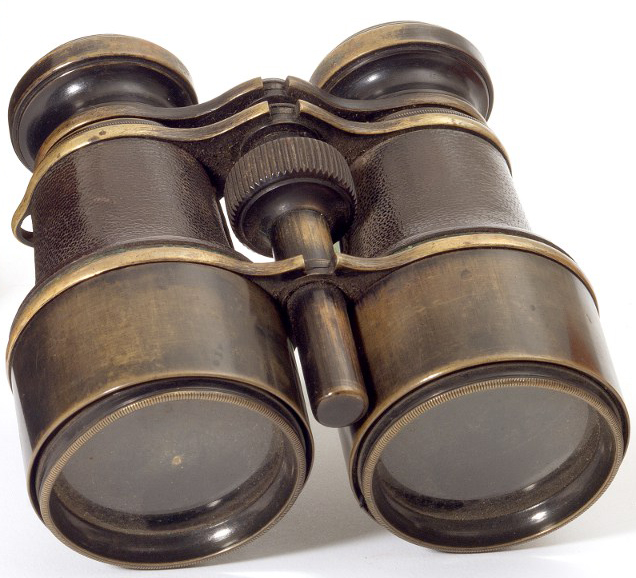
In response to a question about whether that could mean using foreign devices such as binoculars or even TV cameras, Girardi said, “Could be,” and added that “there are ballparks where you need to protect your signs.” The manager softened his stance somewhat by pointing out that he was “not accusing anyone” of impropriety.

Not directly, anyway.

Blue Jays manager John Farrell, of course, denied everything. “I have no idea what that might be referring to,” he said. “Honestly, why that would even come out, I don’t know. We play this game to compete every day and we don’t look to any other means than what takes place between the lines.”

Accusing a team of stealing signs from the basepaths is mild, usually serving merely as a preventative method against it happening again. When entire ballparks—and binoculars and relay systems and everything else associated with pilfering signs from beyond the field of play—are brought under scrutiny, things become significantly more charged. Rare is the player who won’t forgive a basepath sign stealer; even rarer is the manager willing to forgive an institutional breach of confidence such as the one to which Girardi alluded.

As referenced yesterday, this is hardly new territory, with the Phillies standing accused of similar tactics last season. They had a solid base on which to build; the Yankees themselves served as some of the first practitioners of off-field espionage. In 1905, back when they were still known as the Highlanders, the team rigged a hat-store advertisement on their outfield wall so that the crossbar in the letter “H” could be manipulated in accordance with the upcoming pitch. In 1909, Highlanders manager George Stallings rented an apartment behind the right-field fence of the team’s Hilltop Park, from which he had someone relay signs by flashing a mirror at the batter. (On cloudy days, a similar crossbar continued to come in handy—this time in a “Highlanders” sign.) When Detroit went to New York for a must-win series at the end of that season, Tigers manager Hughie Jennings—having heard the rumors and willing to take no chances—showed up to the ballpark early and, with some help from his team, tore down the scoreboard in which the New York spy—the guy relaying the signals—had been hiding.

A more modern implementation came courtesy of Billy Martin, during Game 1 of the 1976 World Series. A commotion was raised in the middle innings when three New York scouts were found in the ABC-TV booth, gathered around a television set and speaking into walkie-talkies. Cincinnati had previously granted permission for the scouts to assist with defensive alignments from on high, but watching them in action raised Red flags and they were removed from the premises.

Going public with his own complaints is a decent gambit for Girardi. Save for annoying Farrell and other members of the Blue Jays, there’s little downside to thinly veiled accusations—but by bringing the subject to the media, Girardi has insured vigilance not just from their own dugout, but from the public at large. Had the Blue Jays been stealing signs with a TV camera or some other such device, they’d be hard-pressed to continue the practice, at least in the short term.

The primary question with which we’re left: If Girardi feels that “certain things might be happening in certain ballparks,” where else might they be happening, and who else knows about it?

Which is all the Yankees really want.

– Jason

Related: Break Out the Binocs—There’s Thieving to be Done

Russell Martin, Sign stealing

Signs of the Times: Yanks Accuse Toronto of Signal Snatching

Russell Martin: Time for new signs.

It’s been a while since a good sign-stealing controversy erupted in the big leagues. That type of eruption, of course, is contingent on an eruption of offense, which is what the Blue Jays had against the Yankees on Thursday.

On its surface, Toronto’s 16-7 victory was little more than a solid whooping, as the Jays jumped on Bartolo Colon for eight first-inning runs and touched four New York relievers for at least a run apiece.

Then Russell Martin went and opened his mouth.

“You move your head one way it’s a fastball, you move your head the other way it’s a slider,” he said in an ESPN report. “It was pretty blatant.”

Martin was referring to Blue Jays baserunners, particularly the ones frequently camped at second, who he accused of looking in to his signs and signaling upcoming pitches to the men at the plate. These are the kinds of things that happen when one’s starting pitcher throws 42 pitches over two-thirds of an inning, resulting in six hits and eight runs (three earned).

Martin’s primary issue was that he (or anyone else in the dugout) didn’t catch on to the Jays’ system (if that’s indeed what it was) until the fourth inning, when he noticed Jose Bautista acting strangely (moving his head this way or that, perhaps) while at second base.

Turns out that Toronto has a bit of a history with the subject. From The Baseball Codes:

Marty Barrett played second base in Boston for nine seasons in the 1980s, every one of them with right fielder Dwight Evans. While playing the field, Evans liked to know the pitch that was coming in advance, to help him get an early break on balls hit his way, so Barrett would make a fist and put it behind his back. If his hand didn’t move, a fastball was imminent. If his arm wiggled, it would be something softer.

In Fenway Park, the bullpens for both teams are located in right field, allowing visiting relievers a clear view of Barrett’s machinations. The only club to pick up on his tactic, though, was the Toronto Blue Jays. Through much of the 1980s, bullpen coach John Sullivan would look over the fence at Barrett’s arm, then signal the hitter with a towel (draped over the fence meant fastball, off the fence meant curve). Sometimes, so as not to draw too much attention, Toronto pitchers would simply stand up or sit down, depending on the pitch type, in accordance with prearranged signals. During Barrett’s final two seasons as a full-time player in Boston, the Blue Jays went 13-0 in Fenway Park (as compared with 6-7 when the teams played in Toronto). “Haywood Sullivan [the Red Sox general partner] came down a couple of times and said, ‘I think they’re getting our pitch­ers’ pitches,’ ” said Bill Fischer, the Red Sox pitching coach at the time. “We would look at the videotape for hours, and we couldn’t find anything.”

“You’re taught to catch things on the field,” said Blue Jays manager Bobby Cox, who helmed the sign-stealing operation. “You watch body language with coaches at first and third, and runners with their body lan­guage when the hit-and-run and squeeze is on. There’s tip-offs and tells throughout a nine-inning ballgame. If you pay attention, you might catch something.”

Fischer eventually discovered the secret, but only after he joined Cox’s Braves staff in 1992, at which point the manager fessed up and told him that Toronto “had every pitch” the Red Sox had thrown.

The standard major league attitude toward these kinds of activities is that teams are expected to do whatever they can to get an edge within the boundaries of fair play, and if somebody’s getting his signs picked it means mostly that he needs better signs. Once a team is caught trying to pinch them, the activity is expected to cease (or at least be carried out more discreetly); should this happen, everybody tends to go on their merry way.

(This should not be confused with stealing signs via a telescope or any other equipment beyond one’s own observational power from field level—a tactic that is never sanctioned. When Phillies bullpen coach Mick Billmeyer was spotted pointing binoculars at Rockies catcher Miguel Olivo last year—followed shortly thereafter by Shane Victorino on the dugout phone, ostensibly to receive and relay whatever signs Billmeyer had picked up—the commissioner’s office stepped in to offer a watchful eye. The Yankees, in fact, had their own run-ins with the Phillies on this subject during Game 4 of the 2009 World Series, when catcher Jorge Posada visited pitcher CC Sabathia six times in the first inning, then eight more times in the fifth—because, said the rumors, New York had suspicions of Philadelphia stealing signs via in-house TV cameras.)

To his credit, the just-change-our-signs mentality is precisely the one Martin employed. “It’s up to us to catch it and change the signs,” he said. “I’m not blaming them for anything. . . . It’s one of those things you don’t really talk about, but it’s part of baseball. It’s always been.”

In an AP report, Yankees manager Joe Girardi detailed some of the ways to tell if a team might have your sign. “You watch some of the swings that clubs are taking,” he said. “Are they fooled on any of the pitches? Are they bailing when you’re throwing the ball in? There’s a lot of things that you watch for.”

Former Red Sox pitcher Al Nipper put it more bluntly in The Baseball Codes: “When you’re throwing a bas­tard breaking ball down and away, and that guy hasn’t been touching that pitch but all of a sudden he’s wearing you out and hanging in on that pitch and driving it to right-center, something’s wrong with the picture.”

In the fourth inning, Martin saw something along those lines, and responded by switching up his signs with pitcher Hector Noesi. The batter, Aaron Hill struck out swinging. (Changing signs is easier than it sounds; the signs themselves remain the same—only the indicator for which sign to pay attention to changes.)

Like Martin, Girardi failed to find fault with the Blue Jays for stealing his signs, if in fact that’s what they were doing.

The surest tell? When asked about it later, Toronto manager John Farrell didn’t flatly deny that it was happening, but claimed to be “unaware” of those types of activities.

Of course he was. Even Bobby Cox expressed outrage when asked about Toronto’s system utilizing Marty Barrett’s signals—about 20 years after the fact. He finally settled in and discussed the topic, but still refused to confirm many specifics.

His answers, however, left enough wiggle room to see exactly how much he knew. Which is all part of the espionage.

– Jason