Appropriate Retaliation, Carlos Carrasco, Retaliation

How Not to Retaliate When Getting Your Ass Kicked, Cleveland Edition

Duck, Billy, duck!

In baseball, retaliation is expected. Ill-timed stolen bases, drilled teammates, questionable slides: They all qualify for reciprocal strikes.

In the case of Melky Cabrera, showboating fits this particular bill. The Royals outfielder hit a grand slam against the Indians on Friday, then admired it in a manner battle-tested to effectively get under the skin of opposing pitchers. (Watch a little bit of hit here.)

At this point in the story, Indians pitcher Carlos Carrasco had three options: wait for the next time he faced Cabrera, when he could teach him a lesson; drill the following hitter, Billy Butler, because pissed-off teammates are frequently even more effective than direct retribution; or ignore the matter entirely.

Carrasco chose none of the above. What he did sort of resembled the second option, but although he threw at Butler, in so doing he violated an unwritten rule that holds far more weight than Cabrera’s theatrics.

The Cleveland right-hander threw at Butler’s head. It was a reaction borne of clear frustration: Cabrera’s blast served as the fourth, fifth, sixth and seventh runs Carrasco had given up in 3.1 innings. Two of those runs had come in the first, courtesy of a Butler home run.

That the pitch didn’t connect—Butler ducked underneath it—saved Carrasco even more trouble than he’d just earned, but not much. (Watch it here.)

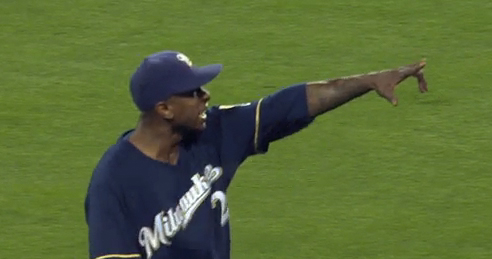
Plate umpire Scott Barry immediately ejected the pitcher. Indians catcher Lou Marson cut off Butler in case he had thoughts of settling things then and there, and the benches quickly emptied. No punches were thrown, but as players filtered back to their dugouts, Carrasco got into a shouting match with Jeff Francoeur, who angrily pointed toward his hip, indicating where the pitch should have gone.

“I understand the game,” said Francoeur afterward in the Cleveland Plain Dealer. “If he thought [Cabrera] pimped the home run, fine. Hit [Butler] in the side. Don’t hit him in the head. That’s why I was yelling at him.”

Francoeur’s opinion was spot on. Several Royals indicated that an appropriate drilling of Butler—in the hip or thigh, well below the shoulders—would have been readily accepted. (“Be a man—throw at his back, not his head,” said Alex Gordon in the Kansas City Star.)

Even more importantly, just as such an action could have served to set Cabrera straight by angering his own teammate, Carrasco’s stupidity has put a similar onus on the Indians. Kansas City has every right to retaliate, but because of the DH it’ll be another member of the Indians who wears one on Carrasco’s behalf. There will likely never be a mention of it in the press, but when it happens it won’t be met kindly within Cleveland’s clubhouse.

After Carrasco’s display, Indians pitching coach Tim Belcher cornered him and elucidated the repercussions of what he’d done.

“We don’t condone those types of things,” said Cleveland manager Manny Acta after the game, in the Plain Dealer. “Whether the ball got away from him or not, we don’t condone throwing at people’s heads. That’s a dangerous situation.”

For his part, Butler responded in the best way he could; five innings later, he hit his second homer of the day. (The poor guy seems to be a magnet for this kind of thing; earlier in the week Butler was drilled by Red Sox reliever Alfredo Aceves, possibly in response to a brushback pitch thrown earlier to Dustin Pedroia.)

“I barely got out of the way,” he said after the game in the Star. “It was right at my head, and there was no way around it. I usually don’t react that way. If I get hit, I get hit. I don’t have anything to say. But in that situation, I’m going to open my mouth.”

The Indians, shockingly, perhaps felt further need to respond to Cabrera; when he came up with the bases loaded in the fifth, reliever Chad Durbin greeted him with a high, inside fastball. Even in the Royals clubhouse, players acknowledged that the center fielder will be instructed to speed up future home run trots.

Both the initial parties issued standard denials, with Carrasco saying the fastball got away from him (although he did admit to having noticed Cabrera’s pimp work), and Cabrera insisting that disrespecting the pitcher was the furthest thing from his mind.

That, of course, is hogwash. The Royals will almost certainly notify him of that at the next available opportunity.

– Jason
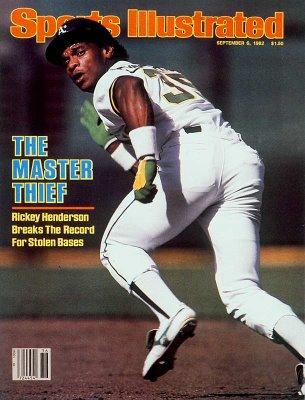
Don't Steal with a Big Lead

Davey vs. Rickey, Ten Years After

Ten years ago this weekend, Davey Lopes and Rickey Henderson had a little Code-related run-in. It would quickly turn into one of the most prominent kerfluffles in the recent history of the unwritten rules, sufficiently noteworthy to lead a chapter about when and when not to steal in a certain book devoted to the subject.

Similar situations still come up all the time. (Look no further than Carlos Gomez or A.J. Ellis earlier this year, or Nyjer Morgan‘s antics last season.) Still, in honor of the grandaddy moment of them all, it seems worth revisiting. From The Baseball Codes:

In July 2001, Rickey Henderson was forty-two years old and, by an enor­mous margin, baseball’s all-time stolen-base leader. The San Diego Padres outfielder was well over two decades into his major-league career and had long since been anointed the greatest leadoff hitter of all time. Then he stole second base against the Brewers, and Milwaukee manager Davey Lopes exploded.

It wasn’t just any steal that set Lopes off—it happened in the seventh inning of a game in which the Padres led 12–5, after Milwaukee’s defense had essentially cried “uncle” by positioning first baseman Richie Sexson in the hole behind Henderson instead of holding him on. The play was so borderline, as far as stolen bases go, that it was ruled defensive indiffer­ence, and Henderson wasn’t even credited with a steal. That wasn’t his goal, however. Henderson was approaching Ty Cobb’s all-time record for runs scored (which he would ultimately best in the season’s final week), and he had just put himself into scoring position.

Lopes could not have been less interested in the runner’s motivation. As soon as Henderson reached second, Lopes went to the mound, osten­sibly to talk to pitcher Ray King but really to direct a tirade up the middle. At top volume and with R-rated vocabulary, Lopes informed Henderson that he had just become a target for the Brewers pitching staff.

“I didn’t appreciate what he did,” Lopes told reporters after the game. “I know he’s trying to obtain a record for most runs scored, but do it the right way. If he keeps doing stuff like that he’s going to get one of his play­ers hurt. I just told him to stay in the game because he was going on his ass. We were going to drill him, flat out. I told him that. But he chose not to stay in the game; I knew he wouldn’t.”

Henderson was removed after the inning by Padres manager Bruce Bochy, which the skipper insisted had to do with the lopsided score, not Lopes’s threats. Afterward, Henderson said that he was reluctantly fol­lowing green-light orders given to him by third-base coach Tim Flannery and sanctioned by Bochy, and that showing anybody up was the last thing on his mind. “Davey and I argued, but I told him that on my own, in that situation, I wouldn’t go down and steal that base,” he said. (“Rickey said I gave him the sign?” said a surprised Flannery when he heard Henderson’s take. “Rickey didn’t even know the sign.”)

“To be blunt, what he did was bullshit,” said King after the game. “We weren’t holding him on. If he’s going to break the record that way, he doesn’t deserve it. The guy’s probably going in the Hall of Fame, but to try to get to second base just to score a run, that’s sorry. When he took off I said, ‘You’ve got to be kidding.’ ”

What Henderson had done was break one of the cornerstone entries in baseball’s unwritten rulebook: Don’t play aggressively with a big lead late in the game. It’s tantamount to running up the score in football, and no tenet of the Code is more simultaneously revered and loathed. It means the cessation of stolen-base attempts, sending runners in search of extra bases, swinging at 3-0 pitches, and an assortment of other tactics aimed toward scoring at all costs.

“There is no excuse that can be made up to justify trying to show some­one up,” said Hall of Fame manager Sparky Anderson, one of the Code’s staunchest practitioners in his twenty-five years at the helm of the Cincinnati Reds and Detroit Tigers. “There’s no excuse, and you can’t invent one.”

– Jason

Bert Blyleven, Hotfoots, Justin Verlander

Verlander Turns Up Heat in Tigers’ Dugout

You want old-school? You can’t handle old-school. At least not if you’re Don Kelly.

Actually, Kelly handled it pretty well last week, after Justin Verlander went about as old-school as modern ballplayers can go in setting his teammate’s shoes on fire. Kelly, in a spectacularly measured response, stamped out his flaming foot, then went about his business as if nothing had happened. (Watch it here.)

Hotfoots, once a clubhouse staple, have become increasingly rare in recent years. Whether coincidence or spectacular tribute, Verlander’s prank coincided with the Hall of Fame induction ceremony for Bert Blyleven, the undisputed master of the craft.

Verlander’s work was first-rate, but he still has a ways to go by Blyleven standards. From The Baseball Codes:

Bert Blyleven pitched in the major leagues for twenty-two years, and if Cooperstown applied the instigation of podiatric discomfort as one of its entry criteria, he would have been enshrined five years after his 1992 retirement. How good was he? For a time, the fire extinguisher in the Angels’ clubhouse read “In case of Blyleven. Pull.”

Ordinary hotfoot artists settle for wrecking their teammates’ cleats, but Blyleven was so good that he took the rare step of drawing the opposition into his line of fire. In 1990, the pitcher, then with the Angels, set his sights on Seattle manager Jim Lefebvre, who made the mistake of con­ducting an interview near the Anaheim dugout. Never mind that Lefebvre was there at the request of Angels analyst Joe Torre; Blyleven was deeply offended. There was, in the pitcher’s mind, only one appropriate response.

“I crawled behind him on my hands and knees,” Blyleven said. “And I not only lit one shoe on fire, I lit them both on fire.” Torre saw it all, but continued the interview as if nothing was happening. As Blyleven retreated to the dugout to enjoy the fruits of his labor, he was dismayed to see that Lefebvre refused to play along. “We all stood there and watched the flames starting,” said Blyleven. “The smoke was starting to come in front of [Lefebvre’s] face, but he was not going to back down. By God, he was going to continue this interview. And Joe was laughing, trying not to roll.”

Torre offered up an apology as soon as the interview wrapped, but Lefebvre was too busy trying to extinguish his feet to pay much attention. He also knew exactly whom to blame. Blyleven, the following day’s starter for the Angels, found out later that Lefebvre offered a hundred dollars to anyone on his team who could hit a line drive off the pitcher’s face. Part of the reason the manager was so angry was that he was deeply superstitious about his shoes; in fact, he continued to wear the scorched pair for several weeks, despite the damage.

In the end, Lefebvre wasn’t the prank’s only dupe. “Bert really screwed me up with that one, because Lefebvre thought I was in on it, and I wasn’t,” said Torre. “Lefebvre didn’t think it was very funny—they were brand-new shoes and he got embarrassed in public. Blyleven was nuts—absolutely nuts.”

So nuts that he made a point of getting people when they didn’t expect it. The dugout benches in the old Yankee Stadium, for example, had enough room for a 6-foot-3, 200-lb. man to crawl underneath them, the better to reach unsuspecting victims. Once, however, the plan backfired.

“I was all ready to give [Indians manager] Pat Corrales a hotfoot,” he said. “We had a nice lead and Corrales was a manager that you could have fun with, so I tried getting him. And just about when I was ready to get him, my feet started burning. Rick Sutcliffe was back there, lighting me up.”

At that point, even the mayor of mischief had to abandon his post. “What else could I do?” he said. “I was on fire.”

– Jason

Fan interaction

Not Among Friends: The Fine Art of Ignoring Hostile Crowds. Or: Nyjer Morgan, Come on Down!

Forget lefty-on-lefty matchups; there’s one battle a baseball player simply can not win: going nose to nose with any segment of the crowd, particularly on the road. One of the first things a player learns, even in the minors, is to avoid negative engagement at nearly any cost. Bleacher bums like nothing better than turning a minor on-field gesture into a mountain of grief.

This particular lesson continues to evade Nyjer Morgan.

On Friday night in San Francisco, Morgan made a series of running catches in the vast power alleys of AT&T Park to rob the Giants of several extra-base hits. With each grab, the jeering from the center-field bleachers got a little louder. Eventually, Morgan bit.

In the seventh inning, after ranging far to his right to track down a drive by Nate Schierholtz, Morgan ended up bouncing off the wall in left-center. As he jogged back to his position, he spun and made several gestures toward the bleachers widely perceived to be obscene. This served to inspire the crowd, which doubled down on whatever it had been yelling. Morgan spun to face them sporadically through the inning, gesturing all the while (though nothing any more conspicuous than arm waving, chest-thumping and head nodding).

He kept it up all the way to the dugout after the inning, bringing fans in different sections of the ballpark into the action. The act was blatant enough for umpire Joe West to have a word with Milwaukee manager Ron Roenicke. (Watch it all here.)

These kinds of interactions can end up one of two ways. The first example is from Jose Canseco, who was greeted by Boston fans during the 1988 American League Championship Series with chants of “STER-oids, STER-oids.” Canseco, like Morgan, didn’t let it go. He pulled up his sleeve and showed his bicep to the crowd. Then he hit three home runs over the course of Oakland’s four-game sweep.

On the other side of the equation is David Wells. He tells the story himself, in his book, Perfect I’m Not. The scene: the bullpen in Cleveland, where Wells is warming up as a member of the Yankees, prior to a start.

“You’re an asshole, Wells! You suck! Fuck you!” they shout, hanging over the bullpen like a bunch of drunken, potbellied baboons wearing acid-washed jeans. Standard stuff, really. I barely even notice . . . until they shift gears. “Hey, Wells! Your mother’s a whore!” they shout from above, lauhing, and at that point I can’t help but shoot them a glare. Bad move. They’ve struck a nerve, and they know it. Now the jackasses take it up a notch, laying out a long, steady, completely obnoxious string of mom-centered insults, none of which I’ll reprint for you here. I’m dying to break a nose.

More dick-heads join the glee club. More insults get thrown, and by the time I’ve finished my warm-ups, I’m astonished to find that a bunch of little kids, just eight or nine years old, are now mimicking the older morons, reshouting every bit of filth the alpha mooks dish out. The “adults” all crack up at the sight. Welcome to Cleveland, ass-wipe capital of the USA.

It really bothers me. I know it shouldn’t., but it does. Insults aimed at me just roll off with no effect. It’s part of the territory. But here, today, with the rifle sights shifting to my mom, I’ve become furious to the point of distraction. Minutes later, hands still balled into tight, homicidal fists, my head still spinning, I sit in the Yankees’ dugout, stewing and staring, barely cracking a smile, even as my teammates are jumping all over a wild Chad Ogea and gifting me with a quick, 3-0, first-inning lead. In just a few moments, I’ll give most of that back.

Taking the mound to my usual chorus of  boos, I’m now raging inside. Sweating, scowling, still looking to fracture a skull, I’m knocked off my game. I’m distracted. My mechanics are off. My delivery sucks, my fastball is up, and I pay for it all through the first. The assholes have won.

In Morgan’s defense, what was first taken to be an indecent gesture was actually a “T” symbol the outfielder made with his arms—something he does regularly to acknowledge his alter-ego, Tony Plush, or T-Plush.

He also flashed devil horns toward the bleachers, which happens to be the hand sign for two outs—which there were once he retired Schierholtz. He then flashed the sign toward the infield. Standard procedure.

“Just fans being fans, and me being an entertainer,” he told the San Jose Mercury News after the game.

Ultimately, Morgan is innocent of luridness and guilty of stupidity. His gestures, innocent though they may have been, were clearly intended to be provocative. Morgan should know better.

But he doesn’t. Last year, remember, Morgan was suspended for eight games and fined $15,000 after he cursed at Marlins fans in Florida, then initiated a fight with Marlins pitcher Chris Volstad. This came on the heels of a seven-game suspension (later waved) after he allegedly threw a ball at a fan in Philadelphia. (Morgan claimed he threw the ball to the fan.)

So never mind the fact that Morgan told MLB.com that he would alter his “T” sign to avoid future misunderstandings, saying that “we don’t want any controversial stories here.” The guy is a loose cannon, and likely always will be.  On Friday, that personality trait guaranteed him that he will not play another grief-free game in San Francisco in the foreseeable future.

Only he can decide whether it was worth it on a personal level, but institutionally it’s clear. The Code says no.

– Jason

Sign stealing

Sign-gate at the Rogers Centre, Day II: Are the Blue Jays Going Above and Beyond?

Well, things have officially gotten interesting. A day after Yankees catcher Russell Martin accused the Blue Jays of stealing New York’s signs, New York manager Joe Girardi injected some seriousness into the charge.

During the course of the Yankees’ 7-1 loss to Toronto, Girardi had Martin display complex sign sequences for pitcher Freddy Garcia even with the bases empty—a time during which catchers ordinarily utilize only the most basic signals. The only possible reason for this: the prospect that the Jays employ a comprehensive system for sign stealing, likely from somewhere beyond the field of play.

When questioned about it, Girardi didn’t hold much back.

“Sometimes we have inclinations that certain things might be happening in certain ballparks and we are aware of it and we try to protect our signs,” Girardi said in an ESPN.com report.

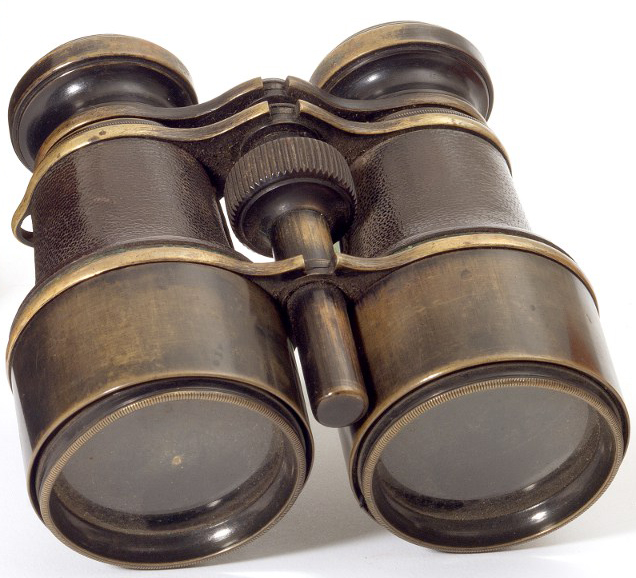
In response to a question about whether that could mean using foreign devices such as binoculars or even TV cameras, Girardi said, “Could be,” and added that “there are ballparks where you need to protect your signs.” The manager softened his stance somewhat by pointing out that he was “not accusing anyone” of impropriety.

Not directly, anyway.

Blue Jays manager John Farrell, of course, denied everything. “I have no idea what that might be referring to,” he said. “Honestly, why that would even come out, I don’t know. We play this game to compete every day and we don’t look to any other means than what takes place between the lines.”

Accusing a team of stealing signs from the basepaths is mild, usually serving merely as a preventative method against it happening again. When entire ballparks—and binoculars and relay systems and everything else associated with pilfering signs from beyond the field of play—are brought under scrutiny, things become significantly more charged. Rare is the player who won’t forgive a basepath sign stealer; even rarer is the manager willing to forgive an institutional breach of confidence such as the one to which Girardi alluded.

As referenced yesterday, this is hardly new territory, with the Phillies standing accused of similar tactics last season. They had a solid base on which to build; the Yankees themselves served as some of the first practitioners of off-field espionage. In 1905, back when they were still known as the Highlanders, the team rigged a hat-store advertisement on their outfield wall so that the crossbar in the letter “H” could be manipulated in accordance with the upcoming pitch. In 1909, Highlanders manager George Stallings rented an apartment behind the right-field fence of the team’s Hilltop Park, from which he had someone relay signs by flashing a mirror at the batter. (On cloudy days, a similar crossbar continued to come in handy—this time in a “Highlanders” sign.) When Detroit went to New York for a must-win series at the end of that season, Tigers manager Hughie Jennings—having heard the rumors and willing to take no chances—showed up to the ballpark early and, with some help from his team, tore down the scoreboard in which the New York spy—the guy relaying the signals—had been hiding.

A more modern implementation came courtesy of Billy Martin, during Game 1 of the 1976 World Series. A commotion was raised in the middle innings when three New York scouts were found in the ABC-TV booth, gathered around a television set and speaking into walkie-talkies. Cincinnati had previously granted permission for the scouts to assist with defensive alignments from on high, but watching them in action raised Red flags and they were removed from the premises.

Going public with his own complaints is a decent gambit for Girardi. Save for annoying Farrell and other members of the Blue Jays, there’s little downside to thinly veiled accusations—but by bringing the subject to the media, Girardi has insured vigilance not just from their own dugout, but from the public at large. Had the Blue Jays been stealing signs with a TV camera or some other such device, they’d be hard-pressed to continue the practice, at least in the short term.

The primary question with which we’re left: If Girardi feels that “certain things might be happening in certain ballparks,” where else might they be happening, and who else knows about it?

Which is all the Yankees really want.

– Jason

Related: Break Out the Binocs—There’s Thieving to be Done

Russell Martin, Sign stealing

Signs of the Times: Yanks Accuse Toronto of Signal Snatching

Russell Martin: Time for new signs.

It’s been a while since a good sign-stealing controversy erupted in the big leagues. That type of eruption, of course, is contingent on an eruption of offense, which is what the Blue Jays had against the Yankees on Thursday.

On its surface, Toronto’s 16-7 victory was little more than a solid whooping, as the Jays jumped on Bartolo Colon for eight first-inning runs and touched four New York relievers for at least a run apiece.

Then Russell Martin went and opened his mouth.

“You move your head one way it’s a fastball, you move your head the other way it’s a slider,” he said in an ESPN report. “It was pretty blatant.”

Martin was referring to Blue Jays baserunners, particularly the ones frequently camped at second, who he accused of looking in to his signs and signaling upcoming pitches to the men at the plate. These are the kinds of things that happen when one’s starting pitcher throws 42 pitches over two-thirds of an inning, resulting in six hits and eight runs (three earned).

Martin’s primary issue was that he (or anyone else in the dugout) didn’t catch on to the Jays’ system (if that’s indeed what it was) until the fourth inning, when he noticed Jose Bautista acting strangely (moving his head this way or that, perhaps) while at second base.

Turns out that Toronto has a bit of a history with the subject. From The Baseball Codes:

Marty Barrett played second base in Boston for nine seasons in the 1980s, every one of them with right fielder Dwight Evans. While playing the field, Evans liked to know the pitch that was coming in advance, to help him get an early break on balls hit his way, so Barrett would make a fist and put it behind his back. If his hand didn’t move, a fastball was imminent. If his arm wiggled, it would be something softer.

In Fenway Park, the bullpens for both teams are located in right field, allowing visiting relievers a clear view of Barrett’s machinations. The only club to pick up on his tactic, though, was the Toronto Blue Jays. Through much of the 1980s, bullpen coach John Sullivan would look over the fence at Barrett’s arm, then signal the hitter with a towel (draped over the fence meant fastball, off the fence meant curve). Sometimes, so as not to draw too much attention, Toronto pitchers would simply stand up or sit down, depending on the pitch type, in accordance with prearranged signals. During Barrett’s final two seasons as a full-time player in Boston, the Blue Jays went 13-0 in Fenway Park (as compared with 6-7 when the teams played in Toronto). “Haywood Sullivan [the Red Sox general partner] came down a couple of times and said, ‘I think they’re getting our pitch­ers’ pitches,’ ” said Bill Fischer, the Red Sox pitching coach at the time. “We would look at the videotape for hours, and we couldn’t find anything.”

“You’re taught to catch things on the field,” said Blue Jays manager Bobby Cox, who helmed the sign-stealing operation. “You watch body language with coaches at first and third, and runners with their body lan­guage when the hit-and-run and squeeze is on. There’s tip-offs and tells throughout a nine-inning ballgame. If you pay attention, you might catch something.”

Fischer eventually discovered the secret, but only after he joined Cox’s Braves staff in 1992, at which point the manager fessed up and told him that Toronto “had every pitch” the Red Sox had thrown.

The standard major league attitude toward these kinds of activities is that teams are expected to do whatever they can to get an edge within the boundaries of fair play, and if somebody’s getting his signs picked it means mostly that he needs better signs. Once a team is caught trying to pinch them, the activity is expected to cease (or at least be carried out more discreetly); should this happen, everybody tends to go on their merry way.

(This should not be confused with stealing signs via a telescope or any other equipment beyond one’s own observational power from field level—a tactic that is never sanctioned. When Phillies bullpen coach Mick Billmeyer was spotted pointing binoculars at Rockies catcher Miguel Olivo last year—followed shortly thereafter by Shane Victorino on the dugout phone, ostensibly to receive and relay whatever signs Billmeyer had picked up—the commissioner’s office stepped in to offer a watchful eye. The Yankees, in fact, had their own run-ins with the Phillies on this subject during Game 4 of the 2009 World Series, when catcher Jorge Posada visited pitcher CC Sabathia six times in the first inning, then eight more times in the fifth—because, said the rumors, New York had suspicions of Philadelphia stealing signs via in-house TV cameras.)

To his credit, the just-change-our-signs mentality is precisely the one Martin employed. “It’s up to us to catch it and change the signs,” he said. “I’m not blaming them for anything. . . . It’s one of those things you don’t really talk about, but it’s part of baseball. It’s always been.”

In an AP report, Yankees manager Joe Girardi detailed some of the ways to tell if a team might have your sign. “You watch some of the swings that clubs are taking,” he said. “Are they fooled on any of the pitches? Are they bailing when you’re throwing the ball in? There’s a lot of things that you watch for.”

Former Red Sox pitcher Al Nipper put it more bluntly in The Baseball Codes: “When you’re throwing a bas­tard breaking ball down and away, and that guy hasn’t been touching that pitch but all of a sudden he’s wearing you out and hanging in on that pitch and driving it to right-center, something’s wrong with the picture.”

In the fourth inning, Martin saw something along those lines, and responded by switching up his signs with pitcher Hector Noesi. The batter, Aaron Hill struck out swinging. (Changing signs is easier than it sounds; the signs themselves remain the same—only the indicator for which sign to pay attention to changes.)

Like Martin, Girardi failed to find fault with the Blue Jays for stealing his signs, if in fact that’s what they were doing.

The surest tell? When asked about it later, Toronto manager John Farrell didn’t flatly deny that it was happening, but claimed to be “unaware” of those types of activities.

Of course he was. Even Bobby Cox expressed outrage when asked about Toronto’s system utilizing Marty Barrett’s signals—about 20 years after the fact. He finally settled in and discussed the topic, but still refused to confirm many specifics.

His answers, however, left enough wiggle room to see exactly how much he knew. Which is all part of the espionage.

– Jason

David Ortiz, David Ortiz, Don't Showboat, Don't Play Aggressively with a Big Lead, Everybody Joins a Fight, Swinging 3-0

Pride, Punches and Papi: Things to do when Your Team is Getting Hammered

David Ortiz charged the mound on Friday. What he thought he was doing was putting an end to some half-baked intimidation tactics from Orioles pitcher Kevin Gregg. What he actually did, however, held significantly more interest. With one inspired charge the guy tore open baseball’s unwritten rulebook, giving us a good look inside; before the game was done, the Red Sox and Orioles touched on no fewer than five distinct sections of the Code.

To recap: Boston hammered the O’s for eight first-inning runs, highlighted by Ortiz’s three-run homer. By the time Ortiz batted in the eighth, the score was 10-3. Gregg—Baltimore’s closer, in the game to get some reps—threw three inside fastballs to him, two of which forced Ortiz to jump backward.

After the third, Ortiz took a few steps toward the mound, pointing and shouting. Dugouts emptied, but no punches were thrown. Once order was restored and the at-bat resumed, Ortiz popped up Gregg’s next pitch to right field. As he ambled toward first, Gregg lit into him verbally, inspiring Papi to cut short his trot in favor of a sprint toward the mound. (Watch it here.)

Enter the unwritten rules.

When your pitching staff can’t seem to slow down the opposition, make things uncomfortable. Boston had abused Baltimore pitchers to that point, scoring 20 runs over two games. (It was part of a five-game streak in which the Orioles gave up 10 or more runs four times.) A pitcher can hardly be blamed for trying to gum up a roll like that.

What’s unknown is whether Gregg requested entry into the game specifically for this purpose. As it was, the right-hander did everything by the book. Drilling a hitter for his team’s success is usually unnecessary. The pitcher’s job in such a situation is to move a hitter’s feet, make him uncomfortable, get him out of his groove. Gregg wanted Ortiz to think about something other than hitting another homer, and in that regard he was wildly successful.

“I take offense to every run scored off every one of our pitchers . . .” Gregg said after the game, in an AP report. “You get tired of getting your butt kicked every night when you come in here, and I’m going to stick up for what’s ours and try to get the plate back.”

This leads to a corollary rule, exhibited here on a purely theoretical basis owing to the fact that Gregg probably wasn’t trying to hit Ortiz (but presented in case he was):

Hitting a guy intentionally is harder than it looks. “As a pitcher, your preparation and your mechanics all prepare you to throw the ball to a spot, usually to the catcher’s glove, and that’s where your focus is,” said former pitcher Shawn Estes, who famously missed Roger Clemens while trying to retaliate for the Rocket’s shenanigans against Mike Piazza in the 2000 World Series. “Well, it’s tough to take your focus off that and try to hit a moving object. . . . It’s not as easy as it looks.”

If Gregg missed his target—three times—he wouldn’t have been the first to do so.

Other pieces of the Code in question on Friday:

Don’t swing at a 3-0 pitch with a big lead late in the game. The fastball that Ortiz popped up came on a 3-0 count, with his team holding a seven-run in the eighth. That’s domain in which a pitcher unequivocally expects a freebie. (With such a lead, say the baseball Gods and Kevin Gregg, it’s the least a hitter can do.) “It’s 3-0, they’re up seven, and I think there are some ethics to this game and guidelines that you have to stay within,” Gregg said in the Boston Herald.

There’s little question that the pitcher was sending a message with his inside fastballs. With that swing, Ortiz sent one of his own.

Run to first base like you care. This is where things got sticky. Ortiz, clearly unhappy to have hit a short fly ball, took a few sad steps toward first before starting to trot. Had Gregg not been predisposed to friskiness, it’s unlikely he would have taken umbrage. But keyed up as he was after Ortiz’s 3-0 swing, the slight delay provided all the provocation necessary for the right-hander to profanely urge Papi to step it up.

Plate ump Mike Estabrook tossed Gregg immediately, but it wasn’t enough to keep Ortiz from turning and charging. He ended up throwing several punches (none of which connected), and benches again cleared. Ejections (primarily Ortiz and Gregg) followed.

Everybody joins a fight. This is a no-brainer. From The Baseball Codes: “Most of the Code is about respect for the opponent, but this rule is about respecting teammates. It’s the most basic of sacrifices, and the fact that the majority of baseball fights don’t involve much actual fighting is almost incidental; it’s a matter of loyalty that can’t be ignored. Hall of Famer Ernie Banks called a player’s failure to join a fight ‘the ultimate violation of being a teammate.’ ”

On Friday, Boston’s Josh Reddick took this rule to an extreme. He was on third base when Ortiz hit the ball, and tagged up. Once hostilities erupted, however, he headed for the mound rather than the plate. That was enough for the umpires to declare him to be the third out of the inning.

As if to take things a step further, Red Sox infielder Marco Scutaro—all 5-foot-10 of him—was the first guy to reach Gregg (6-foot-6, 230 pounds), and as such was tasked with trying to slow the big fella down. It can only be seen for a moment in the game footage, but Gregg offers an inadvertently impressive show of strength, tossing around a clinging Scutaro basically by waving his arm.

We could also get into the concept of waiting for retribution, as Sunday’s series finale featured three HBPs and one near-HBP, most of which were likely unintentional. (It was Red Sox pitcher Kyle Weiland’s first big league start, and neither of his hit batsmen bore any hallmarks of intention; also fitting that bill was Orioles pitcher Jeremy Guthrie, who hit Kevin Youkilis with a changeup.) If there was a message pitch, it came from Mike Gonzalez, who in the sixth threw a fastball behind Ortiz.

After that, though, all remained quiet. Gregg had his say, Ortiz had his own, each club followed up and everybody moved on. Wildness has its time, but so too does order. It’s the Code at work, and it’s a beautiful thing.

Don't Play Aggressively with a Big Lead

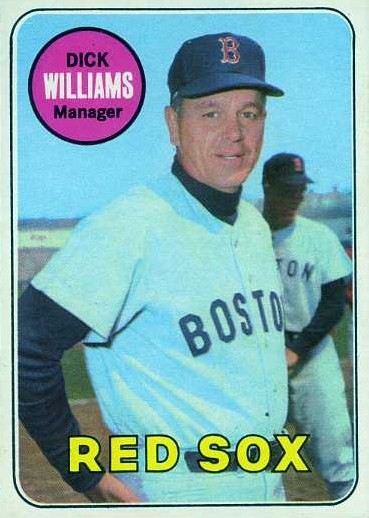
Dick Williams, RIP

Dick Williams, who passed away yesterday at age 82. In addition to being a Hall of Fame manager, he was also a stickler for the Code, and never afraid to retaliate when he felt it appropriate. He was at the helm of the San Diego Padres for their one-game war with the Braves in 1984, which Kurt Bevaqua called “the Desert Storm of baseball fights.”

That episode is detailed in The Baseball Codes. The following passage, however, was cut from the final edition. It details Williams’ understanding of the unwritten rules, even if his use of it was not always by the book. In honor of Williams, we present it here.

Dick Williams took over the Red Sox in 1967 as a 38-year-old rookie skipper, and guided a club that was coming off of back-to-back ninth-place finishes to the World Series. Still, amid acrimony and injuries to two key starting pitchers, Williams was fired before he could complete his third season—something about which he harbored resentment for years. Once Williams assumed managerial duties for other teams, he didn’t just want to beat the Red Sox, he wanted to destroy them.

Williams bunted whenever he could to advance runners into scoring position, even when games were well in hand. His baserunners tagged up from second on fly balls, even when leads relegated such tactics as unnecessary. And he squeezed.

If stealing second base with a big lead is enough to make an opponent’s head spin, squeezing is enough to blow it clean off his neck. There is no surer statement of we’re-going-to-pull-out-every-last-calculated-measure-in-our-playbook-to-push-another-run-across.

Williams took over the Angels in 1974, and during a game against Boston the following season his club used a hit, a walk and an error to extend its lead to 6-2 in the eighth inning. The manager knew just what to do. With runners on second and third and second baseman Jerry Remy at the plate, Williams called for a squeeze that extended the Angels’ lead.

“You do what the manager says,” said Remy, “but I knew it was the wrong thing to do.”

The next day, Boston pitcher Roger Moret threw at Remy with his first pitch of every at-bat, a subtle message that the squeeze was not appreciated. Fortunately for Remy, he missed all four times. “After the game, (Williams) said to me, ‘I guess I got you thrown at,’ ” said Remy. “I said, ‘I guess you did.’ ”

Andres Torres, Chad Qualls, Showing Players Up

One Man’s Celebration is Another Man’s Disrespect, Chad Qualls Edition

The play that started it all.

There’s a reason that baseball doesn’t have the chest-thumping of the NBA, or the equivalent of a football player leaping up after a two-yard carry with a first-down signal.

Baseball doesn’t have much tolerance for that kind of thing. Save for game-winning plays, look-at-me moments are nearly universally frowned upon.

Which is part of the reason that Andres Torres and the Giants aren’t looking at Chad Qualls in a friendly light today.

With the Giants trailing 5-3 in the seventh, Torres won his first battle with Qualls, working back from a 1-2 count to see 16 pitches—fouling off 11 of them in an at-bat that took more than eight minutes—before drawing a base on balls. He then stole second, and advanced to third on an infield grounder.

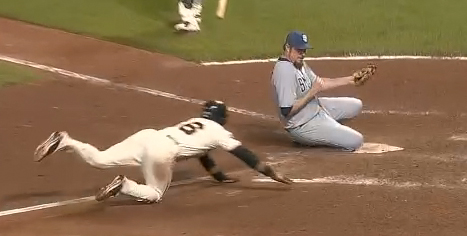
That’s where he was when a Qualls pitch squirted away from catcher Nick Hundley; after delaying to assess the situation, Torres belatedly broke for home.

Hundley’s toss to Qualls, covering the plate, was in plenty of time. Qualls went into a bit of a slide while making the tag and essentially sat on the plate to keep Torres from touching it; the putout ended the inning with San Francisco’s best hitter, Pablo Sandoval, up to bat and the tying run at second. (Watch it here.)

It’s understandable that Qualls was pleased with the development, especially in light of the frustration he must have felt after Torres’ marathon at-bat. Which doesn’t diminish the fact that he spiked the baseball and yelled at Torres on his way back to the dugout.

“That’s not professional,” Torres told reporters after the game. “I don’t believe in making a show on the field.”

Torres talked about respect, both for the game itself and for one’s opponents. He got passionate when discussing his own protracted path to the big leagues, intoning that he’s come to far, at too great a price, to be disrespected like that on the field. (Watch the entire exchange here.)

Direct payback for Qualls is unlikely, since, as a reliever, it’s a longshot that he’ll come to bat against the Giants. Retaliation against one of the Padres’ hitters isn’t out of the question but is similarly unlikely unless San Francisco breaks through with a passel of early runs today, giving their pitchers a bit of leeway when it comes to things like settling scores.

Then again, these teams face each other 14 more times this year. There is, as the saying goes, a lot of baseball yet to be played.

Update: This just in from Dan Brown of the San Jose Mercury News, who tracked down Qualls before today’s game: The reliever doesn’t feel good about what he did. “I’m sorry that it happened,” he said. “I meant no disrespect. That’s not what I intended. I play this game with passion and to, me, that situation was as elevated as it gets for my type of inning.”

– Jason