Retaliation

Spring Drill Exchange in Arizona Sets Tone for D-Backs

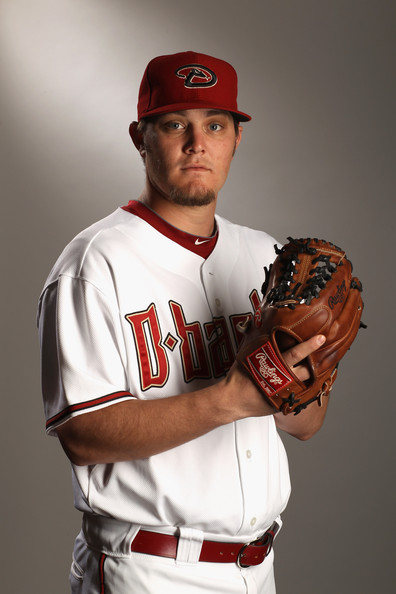
Wade Miley
Mr. Miley

There are benefits to blanket warnings that your team will no longer tolerate opposing pitchers throwing at your players. Say it enough, and back it up once or twice, and maybe people will believe it to be true.

Of course, should your pitcher, under said blanket, hit somebody unintentionally, cries of innocence tend to fall on deaf ears.

This is part of what made last week’s HBP exchange between the Diamondbacks and Rockies so confusing. Perhaps Arizona pitchers are training up their tough-guy attitude, which would help explain Wade Miley putting a fastball into Troy Tulowitzki’s calf on Wednesday.

It sure seemed like retaliation, coming as it did after  Rockies farmhand Tommy Kahnle hit Arizona’s Mark Trumbo in the back—which itself came after Diamondbacks GM. Kevin Towers said on his local radio show last October that “Come spring training, it will be duly noted that it’s going to be an eye for an eye,” and that pitchers who don’t agree “probably don’t belong in a Diamondbacks uniform.”

Unless there’s some unknown beef between Kahnle—whose lack of control has contributed to his never having pitched above the Double-A level—and Trumbo, the initial volley was almost certainly a case of a misplaced pitch. Was Miley out to prove that his team won’t tolerate wildness from farmhands?

But Towers’ statement—along with the facts that Miley has excellent control and Tulowitzki is an obvious retaliatory target—eliminates the perception that the drilling was a mistake. Even if the drilling was a mistake.

It was almost certainly a mistake when, later in the game, Arizona pitcher Jimmie Sherfy—a 22-year-old whose career consists of 17 1/3 innings at or below A-ball—hit Colorado’s Michael McKenry. Again, however, thanks to Towers’ decree, it didn’t matter. The Rockies responded in kind, right-hander Raul Hernandez throwing a pitch behind Jesus Montero in the eighth, at which point plate ump Doug Eddings finally saw fit to warn both dugouts.

It barely matters that Towers followed up his initial statement to clarify that he wasn’t in support of hitting guys on purpose, but rather if “our hitters are being made uncomfortable at the plate, we need to be the same way.” He added that his point was “about pitching inside effectively with purpose.”

Yeah, but still. Damage done.

Spring training is a great place to settle old scores—atone for injustices of the past when the games don’t count and tee times await those who get thumbed from ballgames early. Turning it into a proving ground for new scores, however, is reckless. Tulowitzki left that game and had not returned to the lineup as of the end of last week.

If Miley was throwing at Tulo, he was out of line. If the pitch legitimately got away from him, he can thank his GM for causing the rest of us to doubt that to be true.

(H/T to Troy Renck, who shares his own terrific insight at the Denver Post.)

Oakland A's, Retaliation

1971: On the Invention of the Dugout Brushback

Chuck Dobson Research for my next book, about the Oakland A’s dynasty of the 1970s, to be published by Houghton Mifflin in 2015, has turned up boundless examples of unwritten rules from that bygone era. Turns out that hot-headed pitchers of the time weren’t limited to the pantheon of Bob Gibson and Don Drysdale. From the Oakland Tribune, June 25, 1971:

It was just another rainout until Oakland’s Chuck Dobson threw a brushback pitch at Minnesota manager Bill Rigney.

Rigney was standing in the Twins’ dugout at the time.

“He didn’t roll it in there,” Minnesota coach Vern Morgan said afterward. “What is he, crazy?

Dobson was angry for historical reasons, and because Rigney made him change his pants. Dobson ripped his trousers sliding into a tag at home plate for the last out in the top of the third yesterday.

With the game still scoreless, Dobson went out to the mound to pitch the bottom of the inning, his right trouser leg taped together and mud rubbed on the tape to cover the whiteness.

Rigney yelled a protest at plate umpire Nestor Chylak and Dobson had to go inside and change. By the time he returned to the field, it was raining again—there had been a 39-minute delay in the firs tinning—and the game eventually was called without another pitch thrown.

Dobson took two steps off the mound, turned, and either lobbed or fired the ball into the Twins’ dugout, depending on who told the story. In any case, the ball bounced into the dugout.

“I wanted him to have the game ball,” Dobson said. “I don’t have much patience with him. He called us a bunch of garbage collectors the last year he managed the Angels (1969), and this year he said his team could beat us any time they wanted to. I probably shouldn’t have done it, but he called us too many bad names to just lay down and take it.”

“I didn’t see it,” Rigney said. “I was just turning around to sit down. I guess it almost hit (pitching coach Marv) Grissom. I heard it. It hit the wall. It sounded kind of like ‘splat.’ ”

Grissom charged out of the dugout and wagged a warning finger at the departing Dobson.

“He just fired it in there,” Grissom said. “That’s bush league. That should be an automatic ejection.”

 Dobson faced Minnesota once more during Rigney’s tenure—the following week, in Oakland—and was not hit by a pitch.

Retaliation

1976: Reggie Unhappy with Baltimore Protection

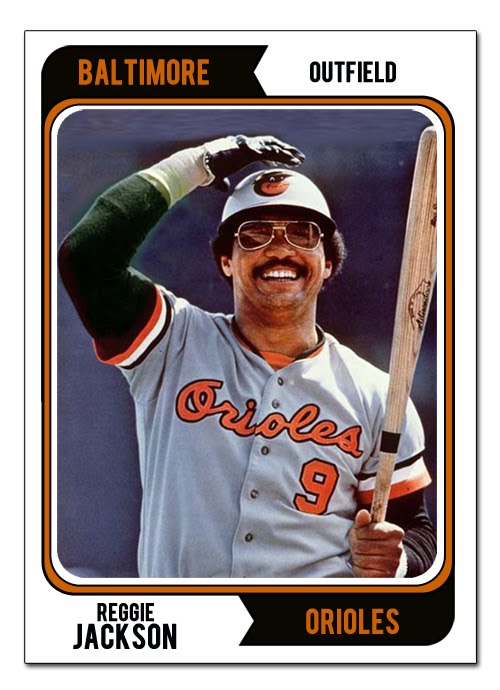
Reggie O'sResearch for my next book, about the OaklandA’s dynasty of the 1970s, to be published by Houghton Mifflin in 2015, has turned up boundless examples of unwritten rules from that bygone era. The latest concerns Reggie Jackson, freshly traded to the Baltimore Orioles in 1976, who was unappreciative of the fact that his teammates were getting knocked down, seemingly free of repercussion.

There’s little to tout  about a you-hit-my-guy-so-I’ll-hit-your-guy mentality, but the reality—more prevalent in 1976 than in the modern game—is that if pitchers are given the leeway to command the inner part of the plate without constraint, they frequently will. That command coming at the cost of a few hit batters is a built-in cost … until an opponent entices them to knock it off. Which was Jackson’s point. 

From the Associated Press, June 13, 1976:

Kansas City — An angry Reggie Jackson declared Saturday that if Orioles pitchers don’t hit a Kansas City batter this Sunday, “then, by God, I’m walking off this team.”

“But first, I’m going to fight them all myself,” he said, gesturing toward the Royals locker room. “So I get whipped… So what?”

Jackson stalked back and forth in front of a row of silent, dejected Baltimore players who had just lost, 7-6, on national television, for their eighth setback in a row.

Jackson’s anger — evidently shared by many of his teammates as well as manager Earl Weaver — stemmed from Lee May’s being hit in the head by a pitch from Royals reliever Marty Pattin in the ninth inning.

May was hit in the arm but not hurt in the first inning by Steve Busby. He was the first batter up in the ninth following Jackson’s three-run homer and was struck behind the left ear by Pattin.

The veteran slugger was helped off the field and taken to a hospital for x-rays. His condition was not immediately known.

“If we don’t hit somebody tomorrow, I just won’t believe it,” Jackson said. Still pacing and talking in a low growl, he unraveled the tape which bandaged his injured right wrist and spat expletives.

“But, Reggie, you know Earl’s philosophy on these things,” said a teammate.

“The hell with his philosophy. They hit him in the first inning and the manager says, ‘let’s not do anything.’ And look what happened. It’s time to change that philosophy,” Jackson said.

Weaver was told in his office moments later that his philosophy had been placed under fire.

“I’m beginning to wonder myself,” said the Baltimore skipper, adding, “I have no more to say.”