Matt Cain, No-Hitter Etiquette

Cain Conquers Code, Overcomes Slew of Jinxes to Reach Perfection

There are some lines Bruce Bochy is willing to cross, and some that he’s not.

Case in point: Matt Cain’s perfect game Wednesday night. Bochy was willing to make some small changes: Emmanuel Burriss replaced Ryan Theriot at second base in the sixth, and in the seventh, Joaquin Arias slid from shortstop to third base, replacing Pablo Sandoval, with Brandon Crawford inserted at shortstop.

The Burriss substitution, said Bochy after the game, was aimed at giving playing time to one player and rest to another during a 10-0 blowout. The seventh-inning switches, however, were made with perfection in mind, Bochy putting the best defense possible behind Cain. Sure enough, the first batter of the eighth, J.D. Martinez, hit a slow roller to third, which Arias charged, gloved cleanly, and threw on a line to nip the runner. And with two outs in the ninth, Arias fielded a sharply hit ball down the line and made the long throw in plenty of time to preserve Cain’s perfection. (Watch it here. Full highlights here.)

“We went against every unwritten rule in the book, I know, but Boch and I just thought we had to have our best defense in there at the end, and it worked out,” said Giants bench coach Ron Wotus. “Panda [Sandoval] would have a tough time making those two plays as easily as Arias made them.”

When it came to warming up a pitcher, however, Bochy was significantly more sly. With a comfortable lead, he wanted a reliever ready should Cain—whose pitch count through seven was 103—give up a hit. The manager was cognizant, however, of the emotional toll the sight of bullpen activity can take on a nerve-wracked starter, so he had reliever Shane Loux warming up “down underneath,” either in the batting cage or in the tunnel below the stands.

“We had somebody ready,” he said. “You couldn’t see him, but he was there.”

Far less tactful was first baseman Brandon Belt, who looked up from his seat in the dugout in the seventh inning, and was startled to see Cain in front of him.

“I sat down and Cainer just stopped and stared at me,” Belt told CSN Bay Area‘s Andrew Baggarly, referencing the superstition that nothing in the dugout order can change under such circumstances. “Yeah, I guess everything was OK until I sat in his seat.”

As if to follow suit, not only was the Giants television broadcast crew more than happy to reference the no-hitter, but prior to the ninth inning showed a “Giants No-Hit History” graphic, featuring each of San Francisco’s five previous no-hitters.

Just goes to show that dominant pitching trumps jinxes every time.

Update (6-15-12): Cain’s family is full of Code adherents.
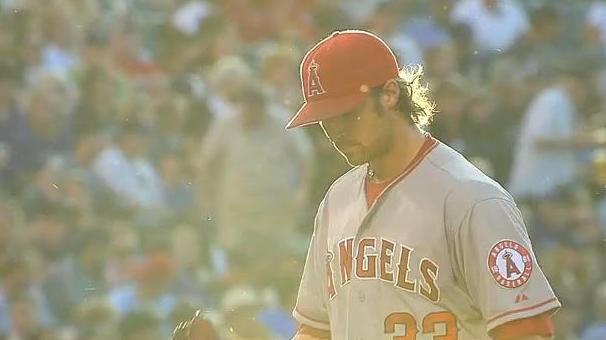
C.J. Wilson, No-Hitter Etiquette

Wilson ‘Bummed’ by CarGo’s Bunt

Just a few days back, Dee Gordon tried to bunt for what would have been his team’s first hit against the Mariners.

Because it was only the fourth inning, and because speed is such an integral part to Gordon’s game, and because Seattle led only 1-0, none of the Mariners gave it much thought.

The same couldn’t be said regarding Carlos Gonzalez, who last Friday—the same day as Gordon’s effort—bunted for Colorado’s first hit against the Angels. The circumstances were remarkably similar: It was the fourth inning, it was a tack he regularly uses (he’d already had one bunt single this year, and tallied six last season), and his team trailed only 2-0.

The primary difference: The attitude of the pitcher he was facing.

“Anytime a guy like him drops a bunt down, it’s a little shocking,” said Angels starter C.J. Wilson in an MLB.com report. “I was bummed about that from a competitive standpoint. I guess he just wanted to get on base.”

Sure, Gonzalez is known for his power more than his speed, which in turn causes third basemen to play deeper than they might for somebody like Gordon. Ultimately, however, if there’s a defensive hole to exploit, one can hardly fault a hitter for trying.

“He was throwing nasty pitches, so why would you take that away from me?” Gonzalez said. “That’s part of my game. . . . We were only down by two runs. Maybe in a different situation, I would try to swing the bat because I know how hard it is for pitchers to give up the first hit with a bunt. But I wanted to get my team going and he was dominating.”

The Angels won, 7-2, and there was no retaliation against Gonzalez. Using Wilson’s own vernacular, “bummed” doesn’t necessarily mean “angry,” which may have had to do with the fact that Gonzalez didn’t exactly break up a game for the ages—CarGo’s was one of five hits Wilson gave up on the day.

Then again, the pitcher did see fit to address the matter after the game, even while he should have been basking in an outstanding (one run over eight innings) performance.

Seems there’s just no pleasing some people.

Cheating, Jose Valverde

Spit-Gate Underway: Did Valverde Hock? More Importantly: Does it Matter?

Well, it sure looked like Jose Valverde spat onto the ball—or at least into his glove, which contained the ball—in Sunday’s game against Cincinnati. A clip distributed (over and over again via Twitter) by a Reds fan named Justin Tooley shows Valverde, on the mound facing Devin Mesoraco, pursing his lips and doing something that looks an awful lot like spitting into his glove.

Chatter around the Internet concerns the possibility of Major League Baseball taking action against him. The quick response: No chance.

The first reason for this is plausible deniability. Implausible as it might seem, Valverde might simply have been sneezing. There’s also the fact that his ensuing pitch was a high-and-tight four-seam fastball, not the typical diver that pitchers look for from spitters. As Yahoo’s Kevin Kaduk noted, “Valverde is well known for throwing a split-fingered fastball, which makes you wonder why he passed on throwing that pitch if he did indeed spit on the ball.”

Writer/pitcher Dirk Hayhurst (who’s graced these pages before) weighed in on his blog with the notion that spitting on the baseball is, in the pantheon of ball-doctoring methodology, “like trying to kill an antelope with a sharp stick.” He also ran down the assortment of goops found in bullpen bags across the land:

Sun screen combined with rosin make for on the fly finger Fixodent. Firm Grip, found in every training room, makes the ball hang from your finger tips. Well rubbed in shaving gel gives a little extra tack, but no to so much that your hands suck up dirt and dust like chicken getting battered for deep fry.

Vasilene does the opposite. The ball slides out of your hand like a splitter and drops significantly more. If Vaseline is to advanced for you, try Skin Lube, it’s the gunk trainers stick under tape wraps so players don’t chafe while playing. It doesn’t gleam like Vasilene so you can smear it under your hat bill with out worry.

Umps really watching you? Try Kramergesic or Red Hot. Burns a little, but it also leaves a nice slime in it’s wake. If you get asked about it, you can say it’s medicinal. Plus, a mixture of lube and sweat works far better than spit or snot . . . Unless you prefer snot, in which case, rub a little Red Hot in your nose and get it running good. Just don’t get it in your eyes or you’ll leave the game in tears regardless of your performance.

Heck, in the case of Ted Lilly, it wasn’t even about substances he used, but where he (allegedly) stood atop the mound. With all this stuff at his disposal, it doesn’t make a lot of sense for a pitcher to expectorate in obvious ways as the center of attention on a baseball diamond. (Then again, very little about Jose Valverde actually does make sense.)

If you’re wondering whether any of the pitchers who utilize those methods have been caught, the answer is a resounding yes—a lot of them do it, and it’s impossible that they could all avoid detection. Their collective penalty, outside of the rogue moundsman every decade or so whose viscous  pursuits are so obvious as to leave no choice but punishment once they’re discovered : virtually nothing. Baseball has avoided punitive action with far more damning evidence in hand than Valverde just offered up. Take Red Munger, a pitcher for the Cardinals in the 1940s. From The Baseball Codes:

Munger was known by opponents and umpires alike to load up balls with tobacco juice. After umpire Larry Goetz called the second strike of an at-bat on one of Munger’s doctored pitches, the hitter complained that the pitch had been a spitter. “Yes it was,” Cardinals catcher Joe Garagiola recalled Goetz saying. “Strike two.”

A cheating pitcher may simply be a hornets’ nest that most umpires don’t appear inclined to poke. For something more recent, there’s this, also from The Baseball Codes:

In April 1973, Yankees outfielder Bobby Murcer exploded to the press after facing Cleveland’s greaseball king Gaylord Perry in the pitcher’s second start of the season, yelling: “Just about everything he throws is a spitter. . . . The more he knows you’re bothered by him throw­ing it the better he is against you. He’s got the stuff behind his ear and on his arm and on his chest. He puts it on each inning. I picked up the balls and they’re so greasy you can’t throw them.” Murcer went so far as to call commissioner Bowie Kuhn “gutless” for refusing to respond—and this was after the outfielder had recorded a three-hit game against Perry. When the pitcher was confronted with Murcer’s accusations, however, he said that Murcer hit “fastballs and sliders,” not spitballs. It would have been a more credible excuse had Perry been on the same page as his catcher, Dave Duncan, who in a separate contrived denial said that Murcer had hit “off-speed stuff.”

To further the argument, The New York Times hired an unnamed Yan­kees pitcher to chart Perry’s every pitch throughout the game, marking those he thought to be spitballs. When the resulting pitch chart was com­pared with a replay of the game, the Times noted that, before every pitch identified as a spitter by the Yankees operative, Perry tugged at the inside of his left sleeve with his right (pitching) hand—an action he did not take for the rest of his repertoire. Yankees second baseman Horace Clarke, according to the chart, struck out on a spitter that, on replay, was seen to drop at least a foot. In the fourth inning, Thurman Munson asked to see the ball twice during his at-bat—during which, said the chart, Perry threw four spitters. . . .

Partly in reaction to the uproar Perry caused, a rule was implemented in 1974 that removed the mandate for hard proof in an umpire’s spitball warning, saying that peculiar movement on a pitch provided ample evi­dence. It didn’t take long—all of six innings into the season—before Perry earned his first warning under the new rule. Not that it mattered; by the end of the season he had won twenty-one games, was voted onto the All-Star team, finished fourth in the Cy Young balloting, and was thrown out of exactly zero games for doctoring baseballs.

In fact, Perry wasn’t docked for throwing a spitter until 1982, when he was 43 years old and in his 21st big league season—eight years after his autobiography, Me and the Spitter, was published.

Hayhurst made the excellent point that some of the greatest pitchers of all time cheated. Greg Maddux’s name has come up repeatedly during the course of this particular conversation. Nolan Ryan, Don Drysdale and Whitey Ford either admitted to or were regularly accused of scuffing balls or loading them up. When Commissioner Ford Frick lobbied to have the spitball re-legalized in 1955, Pee Wee Reese responded with the classic comment, “Restore the spitter? When did they stop throwing it?”

So even if you don’t afford Valverde the benefit of the doubt; even if you’re outraged that a pitcher would resort to such underhanded tactics; try to get over it. You’ll be receiving no satisfaction from baseball’s response—if baseball responds at all.

Update (7-12-12): Valverde says he was just wiping sweat from his face.

Update (7-13-12): MLB has spoken with the Tigers, with no apparent ramifications.

No-Hitter Etiquette

No-No-No-No-No-No in Seattle Leaves at Least a Couple People Confused

Remember all those conversations people were having just last week about whether one could justifiably pull a pitcher in the middle of his own no-hitter? Sometimes it’s a moot point.

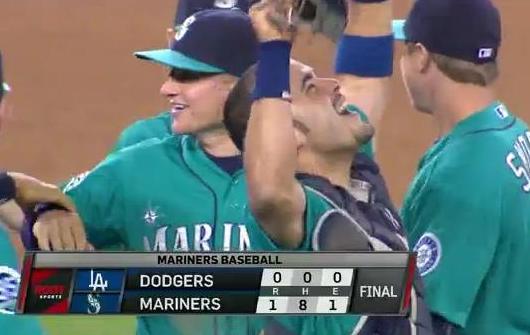
On Friday, Seattle’s Kevin Milwood tossed six no-hit innings against the Dodgers, then strained his groin while warming up prior to the seventh. Five Mariners relievers followed with three more innings of no-hit ball. (It was the 10th combined no-hitter in big league history; the latest—Houston’s defeat of the Yankees in 2003—also had six, and also had a starter, Roy Oswalt, depart early after an injury.)

Several noteworthy slices of Code cropped up in the process. One of the most popular refrains from those decrying the dreaded no-hitter jinx stipulation, which mandates that the feat must not be spoken about until it is completed, is that there’s no way a pitcher in the middle of a no-hitter has somehow failed to realize that he’s in the middle of a no-hitter.

Improbably, though, Seattle reliever Tom Wilhelmsen failed to realize exactly that. Wilhelmsen, who closed out the game for the Mariners, was eventually informed of the circumstances by his catcher.

“I told him, ‘Man, you threw a no-hitter!'” said Jesus Montero, in an ESPN report. “And he didn’t know! Unbelievable.”

Wilhelmsen tried to add some nuance to the claim. “Well, I mean, I knew what was going on,” he said. “But no, I have a brain fart every so often and just focused so hard on getting one thing done. It’s not like you forget, but it’s like you put it off to the side. And then it’s like, ‘Holy cow, we just did it,’ and Montero is in my arms.”

To be fair, five pitching changes can distract from the execution of a fairly unique feat; Wilhelmsen wasn’t the only one who lost track of things.

“Coming into the ninth, it wasn’t really on my mind . . .” said Seattle shortstop Brendan Ryan, who entered in the ninth as a defensive replacement. “It kind of took five seconds or so to sink in. ‘Wait a minute. Wait a minute. There were no hits. That’s a no-hitter!'”

That said, not everybody was so clueless. Reliever Stephen Pryor (who was credited with the victory after pitching to all of one batter recording all of one out), told the Seattle Times that, Wilhelmsen apparently aside, they were aware of it in the bullpen. “We knew, but we weren’t talking about it,” he said. “We didn’t want to jinx it.”

Someone who very clearly didn’t mind jinxing it was Dodgers shortstop Dee Gordon, who tried to bunt for a hit in the fourth inning. While some take this topic—breaking up a no-hitter with a bunt—very seriously, Gordon has facts on his side. For one, it was only the fourth inning—far to early to consider the deed sacrosanct, even for the likes of Bob Brenly. For another, speed makes up nearly the entirety of Gordon’s offensive game; beating out bunts is what he does, so to assume he’d suddenly table one of his strengths in a close game is far from reasonable. The score was only 1-0, so even if Gordon had tried it in the eighth, he would likely have not drawn much protest from the Mariners.

No word yet about whether Seattle players took it upon themselves to avoid all six pitchers in the dugout for fear of the mighty jinx. Seems like a tall order.

Learning the Code

Unwritten Rules 101: The Things One Learns in College

Baseball’s unwritten rules are frequently the domain of the major league. In the minors, players are working on skills more so than etiquette, and at lower levels than that most pitchers lack the type of control that can indicate intention behind a hit batter.

That doesn’t prevent issues from cropping up, however.

Last week, a Stony Brook University player stole a base in the eighth inning of a regional tournament game against Miami, while his team led 9-2.

How to respond to such an action? Stony Brook coach Matt Senk addressed it directly, at the beginning of his postgame press conference.

“I’d like to apologize to coach Jim Morris and his fine Miami team for the miscommunication that took place,” Senk said in a Newsday report. “I felt compelled to take action and pull [the offending] player. . . . We were not interested in stealing at that point. We were going to go station to station. We have a sign to not steal. [The runner] missed the sign.”

It was a heck of an opening statement after a convincing 10-2 win over a high-profile opponent. Senk is in his 22nd season as coach at Stony Brook, and is obviously big into teachable moments.

The Sea Dogs went on to win three of their next four games—by the book, it seems safe to assume—to move on to the best-of-three Baton Rouge Super Regional against LSU on Friday.

Jarrod Parker, No-Hitter Etiquette

On the Dreaded Power of the No-Hitter Jinx

When A’s starter Jarrod Parker gave up an eighth-inning single to Michael Young Monday, it saved his manager some headaches. Parker is a rookie, had already exceeded his closely monitored pitch count, and, until Young reached safely, had not yet given up a hit to the Rangers.

Bob Melvin had already told himself that the eighth would be Parker’s final frame, regardless of the outcome. He was prepared to do what Terry Collins wouldn’t, just days earlier: capsize a no-hitter in progress.

Because it never came to pass, however, and because intentions are far less fun to criticize or defend than actions, we’ll turn our attention to Ray Ratto of CSNBay Area. Never one to subscribe to superstition (or even buy it off the newsstand), Ratto set about needling those on the collective edge of their seat during Parker’s gem.

In the seventh inning, he took some notice of folks on Twitter trying to draw attention to Parker’s feat without actually coming out and saying it, for fear of the dreaded jinx. From Ratto’s ensuing column:

Superstition lives in baseball, at least among the devout and experienced. Well, I am a man of science, in that I believe in evolution for some people. So I blurted out in response to one such devotee of tradition, “You mean JARROD PARKER’S NO-HITTER THROUGH SEVEN INNINGS? IS THAT WHAT YOU’RE TRYING NOT TO REFER TO?”

Did he jinx anything? Parker gave up his first hit two pitches later.

For those of you unfamiliar with Ratto’s style from his years at the San Francisco Chronicle and Examiner, his response to the ensuing fallout paints a fairly accurate picture:

So it was my fault, except for the following things. Jinxes don’t exist, and superstitions are idiotic. There are no baseball gods minding the store for etiquette violations, and if there were baseball gods, they still haven’t fully explained the color line to my satisfaction, so to hell with them anyway. Plus, Parker wasn’t reading my Twitter feed at the time, plus nobody else in the dugout was, plus, they already knew very well he had a no-hitter, plus shut up.

Other than that, yes, it was my fault.

In Ratto’s mind, even if there was a jinx, he should be doubly thanked for sparing Melvin the fallout from having to remove a pitcher from his own no-hitter.

Seems like perfect logic from here.

Drew Hutchison, Kevin Youkilis, Retaliation

The Professor is In: Youkilis Offers Impromptu Code Lecture at Home Plate for Toronto Rookie

When it comes to the unwritten rules, the primary takeaway from Sunday’s game between the Red Sox and Toronto was not Boston starter Daniel Bard hitting two members of the Blue Jays within the span of three batters, nor Toronto pitcher Drew Hutchison drilling two Boston hitters, ostensibly in response.

Those were noteworthy events, sure, but Toronto’s 5-1 victory anointed a new king of the Code—a guy who not only knows how things are supposed to work and is willing to abide by the rules even when it’s his own hide on the line, but has the presence of mind and the strength of character to give impromptu instruction, on the field, to his opponent.

Ladies and gentlemen, Kevin Youkilis.

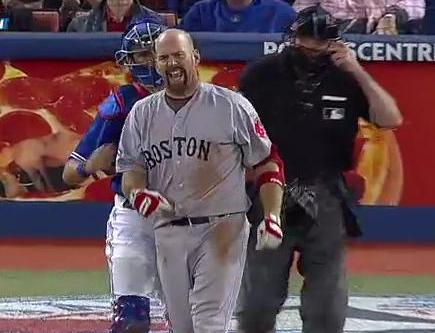
The third baseman was hit high on the shoulder during his sixth-inning at-bat, and if he didn’t know it was coming, he was at least ready for the possibility. Based on his reaction, he took no umbrage with getting drilled, but was irate over the pitch’s location, too near his head.

Youkilis spun toward the mound, pointed toward his hip, and yelled at Hutchison to “keep it down.” He then gathered his batting helmet and made his way to first base. The closest he came to rubbing the spot was when he pointed to it in response to the Boston trainer’s question about where he had been hit. (Watch it here.)

That Hutchison had a mandate to retaliate in the first place was questionable—though well within the boundaries of reason—given that Bard had never been more wild. The first batter he hit, Yunel Escobar, loaded the bases; the second, Edwin Encarnacion, drove in a run. Bard also issued five bases on balls over the course of one-and-two-thirds innings, along with five earned runs on just one hit. He managed to throw all of six fastballs for strikes. The guy was obviously not making any kind of statement short of the fact that he may well prefer working out of the bullpen, but Encarnacion was sufficiently hurt after being hit on the hand to be pulled from the game before his next turn at bat.

Hutchison saw fit to stand up for his mates—an impressive display for a guywho six weeks ago was working in Double-A. Things could have ended after he hit Kelly Shoppach—Boston’s first hitter after the dual drillings in the third. It’s likely that when Encarnacion left the game in the fifth that further action appeared merited to the pitcher.

“I was trying to go away,’’ Hutchison said after the game, denying intent. “I tried to put a little bit extra on it and I just missed. That’s it.’’

Where this all ends up is Daniel Bard. Because Youkilis expected his drilling, he no doubt pins its point of origin squarely on his teammate. Hutchison’s message was on point—Don’t hit our batters, and we won’t hit yours—and Boston heard it loud and clear. Ten more Blue Jays came to the plate after Youkilis was drilled, and they all emerged unscathed.

As if Bard wasn’t feeling enough pressure to perform, he now has this to chew on, as well.

Johan Santana, No-Hitter Etiquette, Terry Collins

Johan’s No-No Keeps Collins on Edge

Whenever a pitcher for the New York Mets throws a no-hitter, it’s inevitably vivisected in every conceivable fashion by the American sporting media.

Okay, so it’s happened all of once, now that Johan Santana turned the trick against St. Louis on Friday. The event’s rarity, especially within the context of the ballclub, put all the more pressure on manager Terry Collins, who faced some tough decisions. One of them centered on the unwritten rule that says not to change anything during a no-hitters. Not the defensive alignment behind the pitcher, not the seating order on the bench. Not anything.

Because this piece of Code is based almost entirely on superstition, logic doesn’t play much of a factor. In Collins’ case, however, he had a pair of very real considerations as the game reached the late innings. On one hand, Santana was coming as close to the deed as anyone in the 8,019-game history of the organization. On the other, the left-hander was pushing the upper limits of his pitch-count threshold (which Collins had listed at 115 prior to the game). Santana missed all of last season following shoulder surgery, and had never topped 125 pitches in a game in his career, even when fully healthy. This wasn’t a superstitious decision for Collins, but a tactical one.

When Santana hit 115 pitches in the eighth while walking Rafael Furcal, Collins visited him on the mound. Ultimately, of course, the manager opted against change, and left his star in to determine his own fate.

“I just couldn’t take him out,” Collins said in Newsday. “I just couldn’t do it.”

Ultimately, of course, Santana finished the game—in 134 pitches—and New York rejoiced. “To a man, we all agreed that he’d have to rip the ball out of our hands,” pitcher R.A. Dickey told Newsday.

“I went against just about everything I stand for, and that’s taking a chance to hurt your whole ballclub for the next four months for an instant decision of glory in one inning,” Collins said in an MLB.com report. “Is it worth it? I believe in the organization and I believe in the team, and I’m not here to destroy any of it. . . . . If this guy goes down, it would be pretty drastic for us. But also to understand there’s history in the making and in the moment, in that particular moment, he wasn’t coming out. I wasn’t taking him out.”

Even if Code adherents applaud Collins for his lack of action when it came to pitching changes, there’s no getting around his seventh-inning breach of the unwritten rule that stipulates a no-hitter in progress must never be referenced out loud, directly or otherwise. That’s when he approached Santana in the dugout and, according to the pitcher, “told me that I was his hero.” Santana responded by telling his manager he would not be coming out of the game.

Were there a jinx, needless to say that it was ineffective.

Santana’s no-hitter left just one team remaining without a no-hitter in the books: the Padres. This is relevant, because San Diego might actually have had a no-hitter by now were it not for the fact that, unlike Collins, then-Padres manager Preston Gomez changed something during the course of Clay Kirby’s masterpiece in 1970: the pitcher himself.

It was the bottom of the eighth inning, and although Kirby was coasting, a first-inning walk, followed by two stolen bases and a fielder’s choice, left him with a 1-0 deficit. When he was scheduled to hit with two outs and nobody on, Gomez pulled him for pinch-hitter Cito Gaston, who promptly struck out to end the inning.

The other detail that ties Kirby to Santana’s no-hitter: His opponent was none other than the New York Mets—Bud Harrelson broke up the no-hitter as the first batter to face reliever Jack Baldschun. (In fact, according to Baseball Reference, 13 pitchers have tossed at least seven no-hit innings without being allowed to finish the game. One pitcher who doesn’t qualify is longtime Mets stalwart Sid Fernandez, who threw five no-hit frames against the Giants in 1987, but had to exit after injuring his hamstring while legging out a triple.)

Ultimately, all’s well that ends well—or at least it will if Santana suffers no lasting repercussions from his exertion. Even if he does, David Wright hit it squarely in his manager’s defense when he said, “I don’t think anybody had the courage to go and take the ball from him.”

Sign stealing, Toronto Blue Jays

Somebody Else Has Accused the Blue Jays of Stealing Signs from the Rogers Centre

Another year, another pitcher making veiled accusations that the Blue Jays are stealing signs from the far reaches of the Rogers Centre.

Okay, that’s not entirely fair. Some of the accusations aren’t veiled at all.

The latest came from Orioles starter Jason Hammel, who gave up nine hits and four runs over 6.2 innings Wednesday in a 4-1 loss at Toronto. He entered the game with a 6-1 record and 2.78 ERA, having allowed three home runs all season. Wednesday, he gave up four.

“They’re a very potent offense and if you don’t make your pitches down they’re going to get them out,” Hammel said in a Baltimore Sun report. “They were taking some pretty big hacks on my breaking stuff too, which leads me to believe it was something else. It is what it is. I need to keep the ball down.”

Last August, ESPN ran a fairly extensive piece detailing a man in a white shirt who would signal upcoming pitches to the plate from the stands. The Yankees also had some things to say about possible shenanigans north of the border.

The rule here is simple: If a team is stealing your signs from within the field of play, it means mostly that you need better signs. (The Orioles were themselves accused of this somewhat recently.) But if the theft is being done via spyglasses or TV monitors (which is against the actual rules, not just the unwritten ones), it’s game on.

A quick look at the stats doesn’t helpToronto’s cause.

As a team, the Blue Jays are hitting .262 with a .471 slugging percentage and .803 OPS at home, where they’ve hit 42 homers in 828 at-bats. On the road, those numbers are .231/.369/.660, with 30 homers in 937 at-bats. Edwin Encarnacion has 12 homers and a .311 batting average in 25 home games, but is batting .243 with 5 homers in 26 games on the road. Last year the Blue Jays hit 10 points higher at home than on the road, with 20 more homers.

Meanwhile, Toronto’s team ERA is more than a quarter-run better at home than on the road—3.98 to 4.26—so it’s not like visiting teams are experiencing that same type of success inToronto.

Then again, Jose Bautista is playing significantly better away from the Rogers Centre. Either he’s an indicator that nothing is amiss, or he doesn’t like to receive stolen signs.

“When you’re locating your fastball, you’re going to give up some home runs there, but the swings they were taking on he breaking stuff, it was pretty amazing to me,” Hammel said. “I don’t think you can take swings like that not knowing they’re coming. I don’t know. That’s all I can say.”

In Toronto’s defense, all four of their homers Wednesday came on fastballs.

ESPN’s man in white is apparently no longer anyplace to be seen, but the methods a team can use to pilfer and relay signs via in-stadium technology is virtually limitless. From The Baseball Codes:  Indicators range from the digital clock at Kansas City’s Municipal Stadium (“You know the two vertical dots which separate the hour from the minutes?” asked groundskeeper George Toma. “One dot for a fastball, two for a curve”) to dummy TV cameras reportedly placed in center-field wells at places like Candlestick Park and Dodger Stadium that would signal hitters with phony “on air” lights.

So it’s not like teams haven’t done this before. The difference is, the others all stopped—or at least the accusations against them did. That hasn’t been the case in Toronto, and we’re left wondering how far the organization is willing to go to win a baseball game.

A.J. Pierzynski, Ben Zobrist, Retaliation

Tit-for-Tat . . . for Tit Makes for Interesting Headline, Describes That Which Shouldn’t Have Upset Ken Harrelson Quite so Much as it Did

Robin Ventura and Mark Wegner discuss current events at the Trop.

What’s being talked about is the spectacle. What the spectacle entails is raw, flashing emotion, unconstrained by things like logic or reason. The emotion’s place of origin was the mouth of Ken Harrelson, White Sox broadcaster. Yesterday, it absolutely captivated the baseball-viewing public.

What are you doing? He threw him out of the ballgame? You’ve got to be bleeping me. What in the hell are you doing? What are you doing, Wegner?

Yes, he actually said, “bleeping.” Hear the Hawk rock the rant, everyone. Good times for all.

The money shot involves Harrelson’s homer-centric howls, directed at plate ump Mark Wegner in response to White Sox starter Jose Quintana’s fourth-inning ejection, after the left-hander threw a pitch behind Tampa Bay’s Ben Zobrist. Like many money shots, of course, it feels kind of empty without some relevant prelude to bring it alive.

Why, for instance was Hawk so riled up?

The answer is somewhat involved, and begins in the sixth inning of Tuesday’s game, also between the White Sox and Rays. A.J. Pierzynski, at first base with one out, was forced at second on a ground ball by Dayan Viciedo. It’s standard procedure for runners in that situation to go in hard at second, trying to prevent a double play. Pierzynski, however, went in late and spikes high, spearing second baseman Zobrist well behind the bag.

“There was no chance for a throw to first base, and he came way over the bag to try and get me,” said Zobrist. “I don’t know what his motivation was in doing that.”

The two shared some choice sentiments after the play, but each eventually went peaceably on his way, and the issue appeared to die there. Pierzynski batted three more times in the game, once with nobody on and two out, another time as the leadoff hitter while his team held a 6-2 lead, and wasn’t so much as brushed back.

You gotta be kiddin’ me. That is so bad. That is absolutely brutal. That is unbelievable. I’ll tell you what—they have got to start making guys be accountable.

Given an evening to think it over, however, the Rays apparently decided that they wanted a piece of Pierzynski after all. In the third inning Wednesday, with one out and first base open, Rays starter Alex Cobb drilled the catcher in the right shoulder blade. According to the Code, Pierzynski offered cause, Cobb retorted with effect, and things should have ended right there.

Except that they didn’t. The next time Zobrist came to the plate—six batters after Pierzynski was hit—Quintana threw his first pitch so far behind him that Zobrist didn’t even have to move his feet to avoid it. This is where Wegner delivered ejections—one each for Quintana and manager Robin Ventura—and Harrelson temporarily lost control of his senses. (Watch it here.)

That is totally absurd! That just tells you—here’s an umpire in the American League that knows nothing about the game of baseball. That’s unbelievable.

When it comes to bloviation such as Harrelson’s, details matter. And in this case, the details validate Wegner. Quintana was making just his second career start, and by appearances had been coached in his actions. Prior to the pitch, Pierzynski set up almost mindlessly over the middle of the plate, and as the fastball sailed wildly inside, the catcher didn’t so much as make a stab at it—almost as if he knew in advance where it was headed. Pitchers usually miss by inches; Quintana’s shot was close to four feet from Pierzynski’s target. Zobrist called it “painfully obvious” in a Tampa Bay Times account.

Ventura expressed shock at the ejection, less for the causality than the lack of warning from Wegner. Quintana offered some odd detail about Pierzynski having changed signs on him and not wanting to mix things up. Pierzynski said he had set up away, but Quintana threw it in. Difficult as it is to believe them, at least it’s the type of thing they’re supposed to say.

Ultimately, the White Sox had taken an extra, unnecessary shot, and a warning from Wegner at that point would have validated their strategy, giving them a freebie by stifling the Rays.

They have got to do something about this, I’ll tell you. They have got some guys in this league who have no business umpiring. They have no business umpiring because they don’t know what the baseball is about. And he is one of them. . . . He ought to be suspended and if they want to keep him as an umpire, send him back to school and teach him what this game is about.

Even as Harrelson ranted, Zobrist simply stood in the batter’s box, a slight smile tracing his lips. It could have been relief at avoiding what might otherwise have been a painful message. Or perhaps he was delighting in the fact that Chicago would be going to its bullpen earlier than expected. Maybe it was simply that justice had been served, and he knew it.

It’s certainly more than one could say for the Hawk at that moment.

This article also appeared, in slightly different form and with an actual photo of Pierzynski’s questionable slide, at Sports Illustrated.com.