Looks like Diamondbacks starting pitchers learned a lesson. In talking to Arizona radio station Sports 620, Daniel Hudson touched upon the fact that Justin Upton was hit by 19 pitches last season—second most in baseball.
“If it’s a starting pitcher [who hit Upton], remember, he’s got to hit,” Hudson told the station, according to ArizonaSports.com, the station’s Web site. “They either have to hit their spots, or expect something in return.”
Okay, that makes sense. What’s interesting is how Hudson and the rest of the staff came upon this realization. The right-hander said that the subject was raised “halfway through the year.”
There are some obvious follow-up questions: Who brought the subject up with him, and how? Was it an order (or at least a suggestion) from manager Kirk Gibson, or somebody else on the staff? Was it Upton himself, or another of the hitters? Were the pitchers called out in a group setting, or did it happen through individual conversations on the side?
This is all interesting stuff. The way a team communicates information like this can be as vital—if not more so—than the information itself. It should be noted that, for a staff chided halfway through the season for the dearth of protection it offered its own hitters, Diamondbacks pitchers drilled either nine or 10 batters in every month of the season, save for September, when they hit only six; they actually declined in that category in the second half. Even so, their total of 53 HBPs—28 by starters, 25 by relievers—ranked fourth in the National League.
There’s also the fact that Upton stands notoriously close to the plate, which certainly had something to do with the frequency of his drillings. (The next closest Arizona player was Miguel Montero, who was hit eight times; nobody else was touched more than four times.) Upton intoned at the team’s FanFest earlier this month that he’ll continue to stand atop the dish, so one can reasonably expect the frequency of his drillings to continue.
Was Hudson just blustering to try to make opposing pitchers a little more wary of pitching inside to Arizona’s best hitter? When the D-Backs make their way to San Francisco later this season, I’ll see if I can’t track down some answers.
So Dirk Hayhurst got hazed. In an interview with the Toronto Star, the former big league pitcher—and author of The Bullpen Gospels and Out of My League, which comes out later this month—expresses dismay at the reaction of some of his Blue Jays teammates when it came to his role as a part-time writer:
But then you had guys that were jackasses. And every team has them. These are the guys that look at baseball as a religious thing, and you never break the code. And nobody knows where the code came from, but you just can’t break it. So here comes Dirk Hayhurst, fringy guy on a search for meaning and purpose and maybe big-league fame if I could get it, and I’m just writing down stories and asking big, uncomfortable questions about the validity of our existence as ballplayers, and guys were not happy about that. And as long as you’re playing well, they’re not going to call you out about it, and I was pitching well. But then I got hurt and the gloves came off, and it was like, “Dirk, you need to apologize to the team. You need to bring everybody together and tell them you’re out of line for what you’re doing.”
He goes on to quote anonymous teammates who told him that he was making the team uncomfortable by writing about his baseball experience.
Well, of course he was.
Hayhurst should know more than most about the insular nature of a big league clubhouse, how even players who are media-friendly—by no means in the majority—frequently keep their distance from the press.
He should also know that a clubhouse is sacrosanct in the minds of its occupants. It’s the one place they can be loud, loose and raunchy, as ballplayers are, with nobody to judge them because nobody outside the team knows the true depth of what goes on.
Hayhurst must understand that an insider who starts to take notes, regardless of his intentions, will invariably make his teammates uncomfortable. Never mind that The Bullpen Gospels—a fine book, it should be mentioned—hardly burned any bridges. Hayhurst was tactful and respectful with his execution, telling stories in which nobody (save occasionally for Hayhurst himself) came out much the worse for wear.
Still, if he had no inkling that his literary aspirations would be interpreted poorly by at least some of his teammates—and that a few guys is all it takes to turn a clubhouse—he was willfully ignorant. A squeaky-clean publication record doesn’t count for a whole lot in a group that doesn’t count reading as one of its favorite pursuits.
Jim Bouton went through similar travails after Ball Four came out, but by that point he was a former 20-game winner very close to the end of his career. Hayhurst, in contrast, had pitched all of 10 big league games prior to that season in Toronto, with a 9.72 ERA. Stars get away with things that average players do not, and veterans have more leeway than rookies; Hayhurst was neither star nor veteran.
Hayhurst’s mistake was in approaching the situation rationally, as a normal human being would. He expected that because he was open about his plans, and made his work public for teammates to review, that he would subsequently be afforded a modicum of leeway, and that his literary endeavors would not affect his clubhouse standing.
Had Hayhurst approached the situation from the perspective of a ballplayer—not an intellectually inquisitive one, like himself, but an overgrown kid who gets to live the frat-house life into his 20s and 30s, and whose natural enemy is anyone who might impede upon his unique lifestyle—he might have been more cautious. At the very least, he wouldn’t have been surprised at the reaction he ultimately received.
Mike Cameron gets congratulated after his fourth homer on the day.
We got word Sunday that Mike Cameronwas retiring after 17 seasons of largely productive baseball. He hit 278 home runs during that span, four of them in a single game (watch the glory here). A four-homer day is noteworthy for many reasons, of course, but it turns out the Code was involved in this one.
It was recounted in the original draft of The Baseball Codes, but the passage was cut for space considerations. In honor of Cameron, here it is:
On May 4, 2002, Seattle’s Mike Cameron stepped to the plate in the top of the ninth inning with two on, nobody out and his team leading the Chicago White Sox, 15-4. When reliever Mike Porzio started him off with three straight balls, Cameron knew just what to do—his manager, Lou Piniella, was a stickler for the unwritten rules and had taught his players well.
Cameron watched the fourth pitch split the plate for a called strike. It didn’t even occur to him that he’d already hit four home runs on the day, and couldn’t have asked for a pitch served up more nicely to give him a record fifth. As Cameron proved, however, should players let it, the Code even trumps history.
Talk about setting a tone. There’s a new order on the south side of Chicago, and one of those taking charge, White Sox bench coach Mark Parent, wasted little time in establishing the team’s tenor this season.
“You hit our guy, we’ll hit your guy,” he said in response to a fan’s question at the team’s fan fest on Sunday, according to the Chicago Tribune.
Well, okay. Parent was a big league catcher for 13 years and has opinions. And what better way to fire up the base than with an inflammatory statement that also serves to let the opposition know exactly how you operate?
Well, you could start with not talking about it at all. Blanket statements like Parent’s—and years’ worth of those by previous White Sox manager Ozzie Guillen—don’t do a lot to stem a practice that’s not particularly popular, even among its practitioners. Go ahead and stand up for a teammate who’s been wronged, but the La Russa Standard—revenge for its own sake, regardless of intent—does few favors for anybody.
Baseball retaliation is all about the message. You mess with my guy, you’ll hear from me. Few are those still in the game, however, who think that a hitter clipped by a running fastball late in a close game receives any message beyond the fact that his opponent is trying to win. To seek retribution for that type of situation is as outdated as stirrup socks and double-headers.
Few in baseball today have more hands-on experience in this particular matter than Parent’s boss, new White Sox manager Robin Ventura—who, you might recall, had a bit of a Code-based kerfluffle with Nolan Ryan during his playing days, some years back. The first six pages of The Baseball Codes are devoted to the event, which was predicated on Ryan’s propensity for intimidating the White Sox with inside fastballs.
“It’s not going to be a necessary order, but … if we feel it’s necessary, obviously the game takes care of itself and guys take care of their own teammates.,” Ventura said Sunday. “That’s important for the guys on our team and staff to know we’re standing behind each other and protecting each other.”
That’s rock-solid reasoning. Hell, it’s why he charged Ryan in the first place. That one phrase—“If we feel it’s necessary”—is the basis for The Baseball Codes. To reduce it to “You hit our guy, we’ll hit your guy,” is a disservice to those who embrace the notion of respect on a baseball diamond, and measure appropriate levels of response should it be less than forthcoming. Ventura seems willing to let his pitchers handle their business on a case-by-case basis, which is exactly how it should be.
For the moment, let’s give Parent the benefit of the doubt, and attribute his remark to simple capitulation to populist sentiment in a fan-focused environment.
Here’s hoping it doesn’t play out that way on the field.
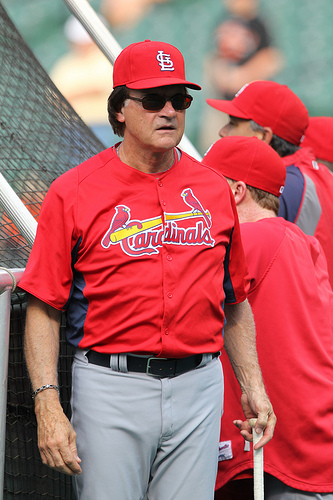
They say retirement softens people. It remains to be seen whether Tony La Russa might fall into this category, but in the short term, his newfound freedom seems to have loosened his lips.
While managing the Cardinals last season, La Russa was in no position to discuss the detailed merits of various incidents that were widely construed to be retaliation on the part of the St. Louis pitching staff. Now that he’s beyond repercussions from the commissioner’s office, however, state secrets may be beginning to spill.
It started Friday, when La Russa opened up a bit about a game last year in which Cardinals reliever Jason Motte drilled Ryan Braun, an inning after the Brewers had—unintentionally, by all indications—hit Albert Pujols. Looking back, the ex-manager said, according to the St. Louis Post-Dispatch, that it had been his “responsibility” to respond.
It shouldn’t be all that surprising, really. Even at the time of the incident, La Russa pressed the boundaries of what he could get away with, saying, “We threw two balls in there real good just to send a message. If he ducks them, it’s all over and we don’t hit him.” If anybody in baseball has a deeper love of eye-for-an-eye on-field justice, he has yet to be found.
Heck, an entire book—Buzz Bissinger’s Three Nights in August—is devoted to intricate detail about La Russa’s inner machinations as he pondered whether or not response was merited in various situations. To believe the book, the guy likes to ponder. A lot.
La Russa has yet to go into too much detail about anything untoward, and his consideration for a VP post within Major League Baseball could well change everything, but at the very least, Friday gave us an inkling about what it could be like should the reigning master of retaliation ever decide to truly speak freely on the topic.
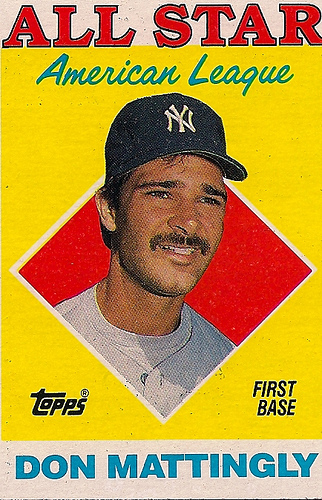
Don Mattingly talked Codes in Los Angelesthis week, suggesting to ESPN that Dodger outfielder Matt Kemp did not win the NL MVP Award at least in part due to an unwritten rule mandating that such players come from winning teams.
It’s certainly not a written rule. As Anna McDonald reported at the Hardball Times, “The rules of the voting remain the same as they were written on the first ballot in 1931: (1) actual value of a player to his team, that is, strength of offense and defense; (2) number of games played; (3) general character, disposition, loyalty and effort; (4) former winners are eligible; and (5) members of the committee may vote for more than one member of a team.”
The Code to which Mattingly referred has been truly flaunted only once, in 1987, when Andre Dawson took the honor, despite playing for the last-place Cubs. (In 1997, Larry Walker’s Rockies were a third-place team, and in 1989 the Brewers and Robin Yount finished in fourth. Neither, however, was a losing club, although Milwaukee finished at an even.500.)
In the wake of Ryan Braun’s PED investigation, Mattingly said he thinks Kemp should’ve won the award in the first place.
“You guys (the media) always ask me about unwritten rules, about catchers and stuff like that,” he said. “Then we have the unwritten rules about voting, because (Kemp) wasn’t on a winning team. You guys gotta get your unwritten rules together.”
The argument here is obvious: How valuable can a player on a last-place team actually be? This conversation occurs every winter—not only as it pertains to the validity of star players on losing squads, but pitchers’ eligibility for the MVP as well. It’s why some advocate for a “Most Outstanding Player Award,” and why some say that none of it matters—it’s all just a popularity contest, anyway. How else could Ted Williams bat .406, lead the league in home runs … and finish second to Joe DiMaggio? Or winning the triple crown twice—and losing the MVP both times, first to Joe Gordon, then again to DiMaggio.
For what it’s worth, all three of those Williams-led Red Sox teams finished with winning records, in either second or third place in an eight-team league.
Must have been the Code that handed those awards to members of the pennant-winning Yankees. Don Mattingly would not have approved.
Just because baseball’s not around, it doesn’t mean that the discussion of unwritten rules must similarly disappear. Hockey is still in season, and offers its own array of codes. I’m neither a hockey expert nor particularly inclined to document the ice-bound version of The Baseball Codes, but one incident in particular stood out last week. Whereas many of hockey’s unwritten rules pertain to decorum while fighting, this one was strictly about the lack of respect a team can feel while watching a showboater.
After New York Rangers forward Artem Anisimov scored a shorthanded goal against the Lightning, he lifted his stick like a rifle and unloaded a pantomime round into the Tampa Bay net. Whereas the equivalent celebratory action on a baseball diamond might get Anisimov drilled in his next at-bat, the NHL has little need for such restrictions on timing; Lightning captain Vinny Lecavalier quickly went after the Russian rookie, sparking a number of brawls that resulted in a total of 38 penalty minutes—including an unsportsmanlike penalty for Anisimov.
It didn’t take Anisimov long to recognize his error. He apologized to his teammates after the game, and to the Lighting the following day.
“I just want to apologize to Tampa,” Anisimov told reporters after practice on Friday, according to the Tampa Tribune. “I didn’t mean something by it. It’s just my celebration, and when I score goals I want to do something unusual. I apologize toTampa. . . . I never do that celebration again. It’s a good lesson for me. No more shooting.”’
The view shared by members of the Brewers' traveling party?
Between the name-calling and the occasional hit batter and the Beast Mode, this Brewers-Cardinals NLCS has not been short on tempestuous fun.
Wednesday, however, things took a bit of a different turn. Whether it’s a bizarre form of institutional retaliation or simply shoddy planning, St. Louis’s decision to forgo the standard seating section for the families of Brewers players and staff—opting instead to spread them out around the ballpark—has been met with considerable anger.
“It’s bush,” said Nyjer Morgan in an ESPN.com report. “Our families, they’ve got to be secured. It’s kind of garbage. We put their [families] in a secure section and then they want to spread ours out. I don’t know why they play the mental games, but that right there, they shouldn’t play the games right there because that’s our family and our family has got to be secure. But that’s just them, that’s how they operate right there I guess.”
Leading to the theory that the decision was directly influenced by the team’s dislike for the Brewers is the fact that St. Louis reserved precisely such a section for its opponent in the NLDS, the Phillies. Cardinals GM John Mozeliak denied that gamesmanship was behind the decision, but at the very least, the club has some precedent on which to build.
During the 1987 NLCS against San Francisco, Giants players were dismayed to find out that their families had been relegated to the far reaches of the ballpark. The incident was referenced briefly in The Baseball Codes; here’s a more robust version of the story:
Giants slugger Jeffrey Leonard introduced the phrase “one flap down” into the American lexicon during the playoffs in 1987. That was the name of the peculiar home-run trot he had devised (but rarely used) the previous season, during which he let his left arm dangle limply at his side while dipping his inside shoulder into the turn at each base. The slugger decided to resurrect the practice after he and teammates noticed that the Cardinals organization placed Giants family members and friends in nosebleed seats for the first playoff game in St. Louis.
“We peeked out of the [Busch Stadium] dugout and saw where they were sitting, and we all got angry,” he said. “So I said to myself, if I hit a home run I’m just going to clown this fool out there.”
Leonard had plenty of opportunities to clown plenty of fools in the coming days, as he hit four homers over the seven-game series—a performance so dominating that he was named series MVP, even though his team lost. For each of those homers, his arm hung low to his side, which infuriated the Cardinals and their fans. (As did the fact that Leonard’s teammate Chili Davis called St. Louis a “cow town” to the press, a comment that got considerable run near the Gateway Arch.)
Leonard had come upon his trot by accident during a 1986 game, after he hit a home run against Chicago’s Scott Sanderson. First base coach Jose Morales, who usually met passing runners with an arm raised for a high-five, this time had his hands at his sides. It wasn’t until Leonard was atop the bag, ready to turn toward second, that Morales’ arm shot into the air in a belated attempt at congratulation. Leonard’s instinctive response was to duck under it, dropping his left shoulder in the process and letting his arm dangle as he rounded the base. Then, for reasons he can’t much explain, he held the pose as he continued the circuit.
The Brewers have plenty of ready-built responses of their own to call upon, starting with various permutations of Beast Mode and ending with Morgan’s T-Plush signs.
They should be wary, however: Leonard was drilled for his actions by Bob Forsch in Game 3 back in ’87; a similar response from Tony La Russa’s Cardinals would hardly be unusual.
Update (10-18): Apparently that wasn’t all of it. Now that the NLCS is complete, we hear that Zack Greinke‘s wife, Emily, was none too pleased with her seats, tweeting during a game in St. Louis that she’d been relegated to a spot down the left-field line. The tweet has since been deleted, but Larry Brown Sports saved the accompanying picture, allegedly shot on location.
Last week I got an e-mail from Tyler Hinman, the five-time American Crossword Puzzle champion, who co-designed the crossword that was the basis of my Brian Wilson feature in the New York Times back in March.
“If you haven’t done this,” he wrote, “you should.”
I had rediscovered crosswords as I reported the Times piece, with Hinman, Times crossword editor Will Shortz and others providing newfound inspiration. The Times’ Sunday crossword has since become an essential part of any given week.
Acrostics, however, were new to me.
Suffice it to say, it was tough. One fills in answers to clues, then correlates those answers to a crossword-like grid to spell out, in this instance, a quotation. It took me the better part of three days to get it all, but I finally decoded an interesting remark about inside pitching.
Cool, I thought. This is why Tyler sent it to me.
SPOILER ALERT. If you’re an acrostic devotee working through a backlog of Wall Street Journal back issues, continue reading at your own risk.
Only then did I turn to the final part of the puzzle. “When you’re finished,” read the instructions, “the initial letters of the answers in the word list will spell the author’s name and the source of the quotation.”
Working my way down, my eyes got increasingly wider. T-U-R-B-O-W-T-H-E-B-A-S-E-B-A-L-L-C-O-D-E-S.
I guess this means I’ve officially arrived. (Seriously, how cool is that?)
I dashed off a note to acrostic editor Mike Shenk, asking how he came upon li’l old me as a subject.
His response: “I thought it would be nice as the baseball season wound down to run a baseball quote in the acrostic, so I headed to the sports section of the bookstore looking for possibilities. There are a few constraints on the quotation itself. The author’s name and title must contain about 20 to 26 letters, the quotation must contain about 250 letters and spaces and must of course include all the letters of the author’s name and title. . . .
“With those restraints in mind, I started looking for good quotes—and quickly discovered that most writers of baseball books aren’t very lively writers. Needless to say, I was happy when I discovered that your book was an exception, with just the sort of attitude I was looking for.”
(Okay. It just got even cooler.)
After having written an entire story about one man’s quest to become a crossword puzzle clue, I’ve now received a similar honor. And it might just be the best review I’ve received.
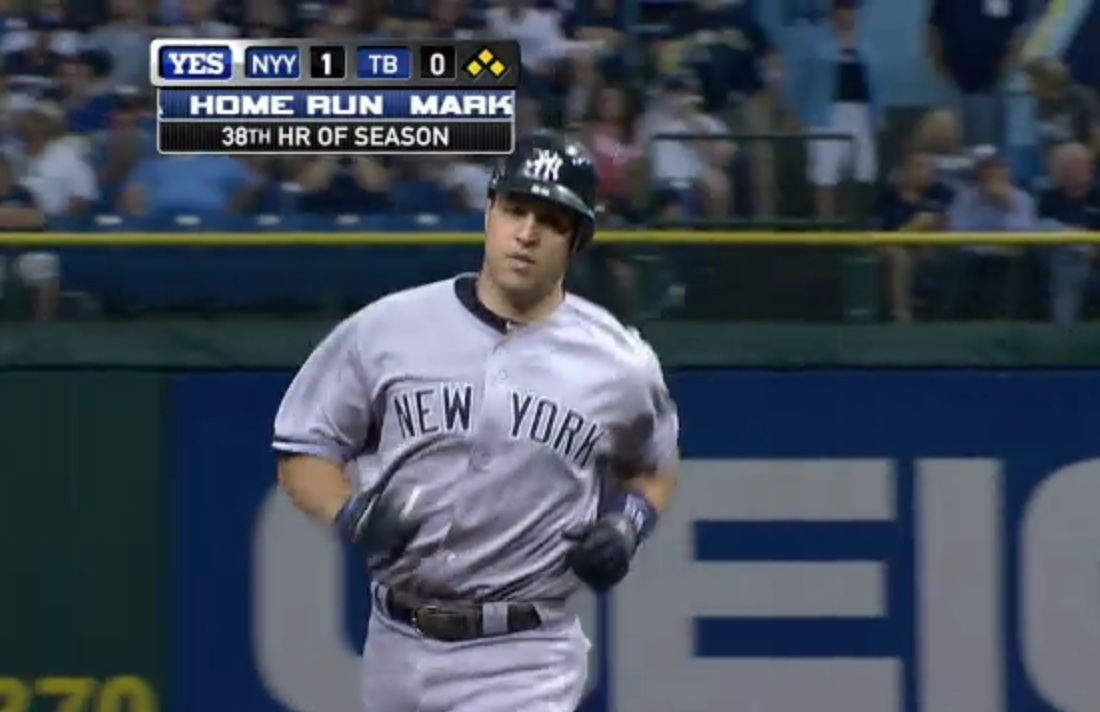
Mark Teixeira started -- and homered (twice) -- before everything fell apart for New York.
Prior to Wednesday’s game against Tampa Bay, Yankees manager Joe Girardi found himself in a terrifically sweet position. The Yankees had little to play for; they would finish with the American League’s best record regardless of the outcome.
A loss, however, would give the Rays a leg up on the American League wild card. More pertinently, it would provide a possible knockout shot to the Red Sox—and what Yankee wouldn’t enjoy that?
With so much on the line for his opponent, however, Girardi was, under the auspices of baseball’s unwritten rules, obligated to utilize his best players. So the question became, Would it be okay if he didn’t?
The answer: Of course. Winning, or putting your team in a position to win, trumps nearly every facet of the Code. It’s safe to assume that Girardi—a Yankees catcher for four years before taking over as manager in 2008—takes joy in any opportunity to stick it to Boston. On Wednesday, he could do so under cover of getting his own team ready for the postseason. The skipper had a playoff series to prepare for, and resting his players may well be vital to that preparation.
In fact, Girardi did exactly that against the Rays on Sept. 22, resting Curtis Granderson, Alex Rodriguez, Robinson Cano, Russell Martin and Brett Gardner in a game New York would lose, 15-8.
But with the season on the line for Tampa Bay on Wednesday, Girardi started what’s essentially been his regular lineup, and stuck with it until rain delayed the game in the seventh.
With New York holding a 7-0 lead, the skipper went to his bench: Eric Chavez replaced Mark Teixeira in the lineup, and took over at third base. Brandon Laird moved from third to first. Chris Dickerson took over for Nick Swisher in right field. Heck, A.J. Burnett—A.J. Burnett!—saw action in the seventh.
That strategy, of course, is covered by its own set of unwritten rules. With the game comfortably in hand, Girardi could have been accused of running up the score had he continued to play aggressively. Such a full utilization of his role players was definitely not that.
As it was, of course, we all realized exactly how far behind us the days in which a 4-0 lead was considered safe actually are. Tampa Bay tied the game with six in the eighth and one in the ninth, and won it—and the wild card—on Evan Longoria’s 12th-inning homer.
Boston fans might bemoan Girardi for his late-game lineup manipulations, but their manager didn’t. “They can do whatever they want,” said Terry Francona in a MassLive.com article published Monday. “They have played themselves into that position; they’ve earned the luxury. I have never had a problem with that.”
* * *
The piece of Code mandating that managers utilize their best lineups when playing contenders late in the season really comes into play when an also-ran rests its regulars against a club with playoff hopes—”to get a look at the kids,” or some such. Few issues will be taken should the occasional prospect be utilized for evaluation purposes, but generally speaking the rule is firm: Play the rookies against Pittsburgh; sit ’em against St. Louis.
Take 2004, for example. Going into the season’s final series, the Giants and Houston were tied for the wild card lead with 89-70 records. The Astros closed with three home games against Colorado, while the Giants visited Los Angeles.
Suffice it to say that members of the San Francisco clubhouse took note when Rockies manager Clint Hurdle trotted out a series-opening lineup featuring six rookies—Aaron Miles, Clint Barmes, Garrett Atkins, Jorge Piedra, Brad Hawpe and JD Closser.
The Giants managed to take two of three from the Dodgers, but it wasn’t enough; the Astros swept punchless Colorado.
“All we needed was for Houston to lose one game,” said then-Giants reliever Matt Herges. “We were watching that, yelling, ‘This is a joke.’ We couldn’t stand Clint Hurdle after that.”
“If we’re in that position, it means we stunk all year,” said Hall of Fame manager Sparky Anderson. “Well, let’s stink a little more if we have to, but we’re going to give them the best shot we’ve got.”
That, however, is not a universal view. For the flip side of the argument, we turn to Tigers manager Jim Leyland.
“Goddammit, if I’m that far out of the pennant race, the players I was playing weren’t worth a shit, anyway,” he said. “You might as well take a chance and look at some new players for next year.”
Which brings us back to Joe Girardi, who doesn’t have to worry about any of that. His players don’t stink, he could have gotten away with virtually anything he wanted in this regard during yesterday’s game and, as a bonus, he helped kill Boston’s season.
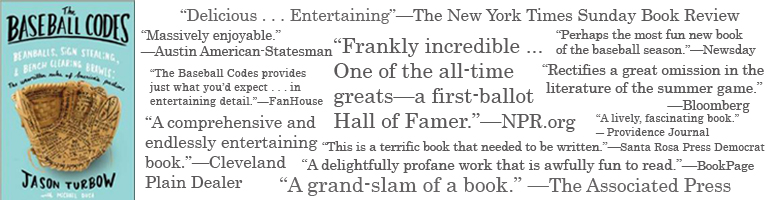
 Looks like Diamondbacks starting pitchers learned a lesson. In talking to Arizona radio station Sports 620, Daniel Hudson touched upon the fact that Justin Upton was hit by 19 pitches last season—second most in baseball.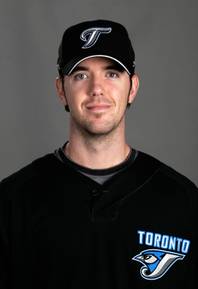





 The Baseball Codes