John Danks, Jose Bautista, Showing Players Up

Frustration Night in Canada: Bautista Sparks Showdown of the Irritated

Jose, meet John. John, Jose.

If John Danks’ girlfriend broke up with him last season, when he won 15 games for the White Sox with a 3.72 ERA and finished seventh in the American League in WAR, he probably would have taken it a lot better than if she broke up with him sometime in the last two months.*

Which is to say, dealing with adversity is much easier when you’re on top of the world than it is when you’re getting your head kicked in every five days.

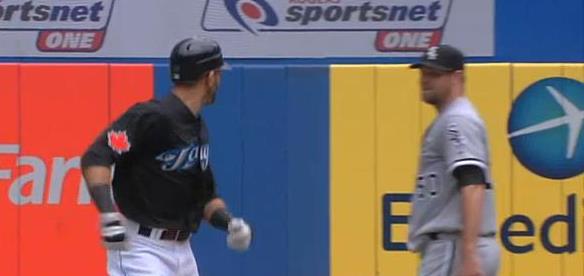
The latter scenario pretty aptly describes Danks this season, especially after giving up nine earned runs over four innings to Toronto on Sunday to run his record to 0-8 with a 5.25 ERA. Which is why it shouldn’t be too surprising that he’d show some thin skin when, having just retired the best hitter in baseball on a 3-2 pitch, said best hitter in baseball gave him an earful.

Never mind that Jose Bautista was cursing at himself, not Danks. He was cursing, and Danks was the pitcher, so of course Danks took it poorly. (Watch it here.)

Toughen up, one might tell Danks; Bautista didn’t mean to disrespect you. But think about it this way: Was Bautista frustrated by hitting a popup because he consistently expects better from himself, or was he frustrated because he had just seen two fat two-seamers from a pitcher who had given up four runs over the course of the previous two hitters, including a two-run homer to Corey Patterson—only to have watched the first for a called strike, then failed to hit the second past shortstop?

In other words, is Bautista that ferocious a competitor, or was he saying—in an extremely visible way—I can’t believe this chump just got me out?

It’s clearly possible that it’s the latter, which is all Danks needs to be justified in his reaction. Danks started shouting down Bautista from the moment he spiked the bat, and Bautista had a word or two in response.

“He was out there acting like a clown,” Danks said after the game. “He’s had a great year and a half—no doubt. He’s one of the best players in the league. But he’s out there acting like he’s Babe Ruth or something. . . . He isn’t that good to be acting like he needs to hit every ball out of the ballpark.”

Retaliation in the future: Likely.

This isn’t always the case, of course. Last May, Carlos Lee reacted similarly after popping up against Chris Carpenter, and heard about it from the St. Louis pitcher. One difference: Carpenter was 4-0 with a 2.80 ERA at the time, and though he was clearly frustrated in having just given up the game’s first run a batter earlier, he was (and still is) too good to take things as personally as he did (and does). Danks, at least right now, is nowhere near that point.

The lesson of the day: Play it safe and keep your frustrations to yourself, big leaguers, at least until you find your way back to the dugout.

– Jason

* I should probably note that I don’t have the foggiest idea if John Danks even has a girlfriend, let alone if he’s married, and certainly possess no information about his potential relationship issues outside of the purely hypothetical situation described above. I wish John Danks nothing but many years of avid bachelorhood or wedded bliss, whichever suits him better.

Felipe Lopez, Retaliation

ChiSox Refrain from Retaliation, Lopez Exceedingly Happy About It

It may be over; it may be just beginning.

After the White Sox took notable and on-field exception to the blatant bat flip by Tampa Bay’s Felipe Lopez last week, the teams squared off yesterday for the first time since the incident.

Most of the game was too close to reasonably expect retaliation, were it forthcoming. Through Lopez’s first three at-bats the Rays led by three or fewer runs—not nearly enough for the Sox to give them free opportunities to pad their lead.

When Lopez came to the plate in the eighth inning, however, it was 4-0. And with an 0-2 count, he blasted a pitch from Matt Thornton over the wall in left. (In all he went 3-for-4 with a double and the home run, the stat line of a clearly unmarked man.)

Perhaps 4-0 was too close for Ozzie Guillen’s tastes, or perhaps Thornton opted against furthering the confrontation, especially once he got two quick strikes on the batter. It’s possible that Lopez’s apology after the initial act diffused the situation entirely.

Still, there’s enough gray area here to merit keeping an eye on the situation through the rest of the series.

– Jason

A.J. Pierzynski, Felipe Lopez, Joe Maddon, Ozzie Guillen, Retaliation

Lopez Bat Toss Sparks Quick Confrontation, String of Ludicrous Denials and, Ultimately, an Apology

A.J. Pierzynski is less than appreciative of Felipe Lopez's bat toss Saturday.

Most baseball retaliation looks the same: a pitcher throwing a ball as hard as he can at the backside, legs or ribs of an opposing batter.

Sometimes, though, batters get theirs, too. Unfortunately for them, their actions rarely hold the same weight; whereas a vengeance-minded pitcher can be seen as sticking up for his teammates, his counterpart at the plate is often looking out only for himself. Such displays frequently resemble hot-headed reaction far more than they do retaliation.

Case in point: Felipe Lopez. On Saturday, the Rays’ third baseman took an inside pitch in the ninth inning from White Sox reliever Chris Sale that apparently didn’t meet his liking.

Lopez hit the next pitch out of the park, and as part of his follow-through whipped his bat toward the mound. (Watch it here.)

Needless to say, this was not taken well by pretty much anybody on the field. Chicago catcher A.J. Pierzynski was waiting for him when he crossed the plate, delivering a sternly worded message while gesturing toward the mound. Lopez’s body language looked as if he was trying to deny intent; had he been aggressive, it’s not difficult to picture a fight breaking out.

The Sox weren’t the only ones upset.

“That’s not who we are. That’s not how we play,” Rays manager Joe Maddon said Sunday in the St. Petersburg Times . “I’m not into the end zone demonstration that much. I think we’ve really morphed into this, I believe, very classy group over the last several years and I want to maintain that kind of thought about us. I don’t even want to say image—you think about the Rays, you think these guys handle themselves in a certain way. So we don’t do that here.”

It’s a point that Maddon had to make. Forget the image he’s trying to maintain—outbursts like Lopez’s can lead not just to his own potential peril, but can put his teammates in danger, as well.

It’s difficult to believe that Lopez, who’s in his 11th season, didn’t understand the potential repercussions of his actions. Then again he’s with his eighth team (not counting two stints with St. Louis), and was cut by the Cardinals last year after ongoing bouts of unprofessionalism. With that in mind, selfish behavior shouldn’t come as too much of a shock. (He couldn’t have had much of an issue with Sale, who’s in just his second season and who has now faced Lopez all of twice.)

Such is the power of Joe Maddon that Lopez took the surest available path to absolution, calling Ozzie Guillen after the game to apologize. (Maddon even went also recalled that Roy Halladay once called him to apologize after some inflammatory comments he inadvertently made, and that the gesture was appreciated.)

If any part of this affair went according to the Code, it was the entire array of responses. As in, outside of Maddon decrying the general spectacle of it all, everybody denied pretty much everything.

“It was unfortunate, but I wasn’t trying to do that,” Lopez said in the St. Petersburg Times. “I wasn’t mad at anything. The bat, it slipped, and it went over there. I think if I tried to do that, it wouldn’t happen.”

Pierzynski denied there was a confrontation at the plate, saying, “I don’t know what you are talking about. I just said hi. He lives down the street from me in Orlando, and I was asking how his house was.”

Guillen, after receiving Lopez’s call: “I don’t think he meant to throw (the bat) to the pitcher.”

Still, in order to give heads some time to cool, Maddon held Lopez out of yesterday’s game. It only buys about a week; the Rays visit Chicago on April 18.

– Jason

Thanks to reader Russ Buker in St. Petersburg for the heads up.

Omerta Code, Oney Guillen, Ozzie Guillen

Oney Tweets, Ozzie Deflects, Baseball Stews

The primary reason that more players don’t talk about baseball’s unwritten rules is the first one on the list prohibits just such action. The clubhouse is a sanctified space, the rare—the only—place that ballplayers can communicate with each other, air grievances, goof around, act like teenagers and not worry a bit about repercussions from the outside world.

Unless, of course, one of their own starts blabbing.

We’re speaking of course about Oney Guillen, who last week took up for his father, White Sox manager Ozzie, when former Chicago closer Bobby Jenks (who recently signed with Boston) made mildly disparaging remarks to MLB.com:

I want to play for a manager who trusts his relievers, regardless of what’s going on. With the way Ozzie was talking this winter and the way he treated me, I don’t want to fight with the guy. How many times did he question my ability, and then saying how he would love to have me back, but I would have to come to spring training and fight for the closer’s role like anyone else?

Why would I come back to that negativity? I’m looking forward to playing for a manager [Terry Francona] who knows how to run a bullpen.

Necessary? No. But mild enough. People in all walks of life are usually well served to avoid burning bridges, but as far as Jenks statements are concerned, they could have been a whole lot worse.

Like Oney’s response, for example. In a stream of tweets, the younger Guillen didn’t just weigh in on Jenks’ quotes, but proceeded to spill many of the beans, real or imagined, he had on the guy. Several items from a wide selection:

•    hahah memo to bobby jenks get a clue u drink to much and u have had marital problems hugeee ones and the sox stood behind u
•    they did not air out ur dirty laundry, u came to srping not drinking and then u sucked and started srinking again be a man
•    u cried in the managers office bc u have problems now u go and talk bad about the sox after they protected u for 7 years ungrateful.
•    and u self diagnosed urself bc u didnt want to pitch un real i hope the sox let this guiy fucking have it
•    oh and yes i remember clearly u blowing a hugee game in 09 and u laughing ur bearded ass off while everyone busting there tail
•    one little story remember when u couldnt handle ur drinking and u hit a poor arizona clubby in the face i do. and later u covered it with

He also called Jenks a “fat ass,” a “yellow beard dipping idiot” and wished that AL pitchers came to bat so “they” (assumed to be members of the Chicago staff) “can drill that ass.”

This is bad. Very, very bad. Oney Guillen doesn’t have to answer to anybody, but he has to realize that his father could well absorb negative repercussions  for this, both within the clubhouse and from around the league.

This isn’t to say that Ozzie Guillen will lose the trust of his own players going forward, or that every free agent who gets an offer from the White Sox will let this incident color his decision on whether to play there, but it would hardly be surprising if those things happen.

If Ozzie was discussing sensitive clubhouse business with family members—and drinking problems and assault on clubbies fall under that category—he was entirely out of line.

The one thing that Ozzie has going for him is the fact that Oney Guillen was employed by the White Sox until March, and could well have picked up all his information first-hand, without a word from his father. (That said, Oney was forced out of his job in the scouting and video department after tweeting disparaging remarks about White Sox GM Kenny Williams.)

Oney again tweeted criticism of Williams in August, for having too few relievers available during a series with the Royals. Even then fingers started pointing toward Ozzie in response to his son’s behavior.

“What am I going to do, get fired because my kid said something?” the elder Guillen told USA Today at the time. “Anybody can say whatever they want. I never talked to Oney. I understand his point. He’s a fan. As my kid, sometimes you wish he doesn’t say that. But how many times do I say something people wish I don’t say it?”

(Oney defended himself on Chicago radio station WSCR Wednesday, saying that “there are millions of things that happen [in the clubhouse] that haven’t ended up on his kid’s Twitter account. You can’t say, off one minor incident, that everything that happens is going to end up on his kid’s Twitter account.” That’s not necessarily a threat to divulge more, but it could certainly be taken like one.)

Ultimately, whether Ozzie gave too much information to Oney, or whether Oney gathered it himself; whether Oney is telling the truth or making things up simply to lash out at Jenks; whether Ozzie should be culpable, even if he had nothing to do with it . . . none of it matters.

What’s left after the details settle is the impression that Ozzie Guillen can’t control the information coming out of his clubhouse, and his own son is the primary reason for that. White Sox pitcher Matt Thornton said as much on Chicago’s ESPN 1000.

“Anytime you bring clubhouse stuff out in the open, I don’t care what it is, it’s that person’s personal business and also the clubhouse’s personal business,” he said. “That’s the first time all this stuff has really irritated me. It doesn’t matter what’s true and what’s not true, I don’t care about that. The fact that anything was said at all is ridiculous. It’s definitely gotta be addressed and taken care of real quick around here.”

Thornton is an Ozzie Guillen guy (at least as long as they’re both employed by the White Sox).

One can only imagine what non-Ozzie Guillen guys are saying.

– Jason

Mark Buehrle, Ozzie Guillen, Retaliation, The Baseball Codes

Buehrle Drills Cuddyer (Yawn), then Almost Admits Intent (Really?)

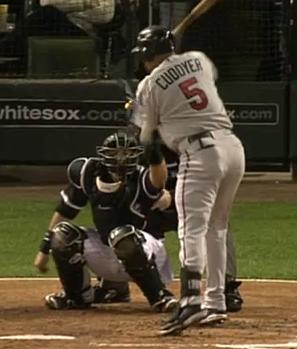
That Mark Buehrle intentionally drilled Michael Cuddyer yesterday is hardly unusual. White Sox first baseman Paul Konerko had been hit on the upper lip by Carl Pavano in the first, and Cuddyer was Minnesota’s leadoff hitter in the second.

Umpire Jerry Crawford delayed his warnings, Buehrle hit Cuddyer in the shoulder blade, and, as is proper when this sort of thing happens, everybody moved on. (Watch it here.)

Until after the game, anyway, when Buehrle actually talked about his motivation.

“When I’m told to do something I try to go out there and do it to the best of my ability,” he told reporters. “Obviously you got to protect your guys.”

Rare is the instance when a pitcher admits to something like this, even in as roundabout a way as Buehrle. It’s tantamount to public confession, and, although Buehrle’s statement is probably too vague to fall into this category, frequently leads to discipline from the league.

Of course, Buehrle knows a thing or two about following Ozzie Guillen’s orders when it comes to things like this. I’ve excerpted this section before, but it bears repeating. From The Baseball Codes:

In 2006, Ozzie Guillen quickly identified Texas’s Hank Blalock as a target for retaliation after Rangers pitcher Vicente Padilla twice hit Chicago catcher A. J. Pierzynski during a game. That was the plan, anyway. Filling the space between conception and exe¬cution, however, was Guillen’s choice of executioner: rookie Sean Tracey.

The right-hander had appeared in all of two big-league games to that point and was understandably nervous. Even under optimal circumstances he didn’t have terrific control, having led the Carolina League in wild pitches two years earlier, while hitting twenty-three batters. When Tracey was suddenly inserted into a game at Arlington Stadium with orders to drill the twentieth major-league hitter he’d ever faced, it was hardly because he was the best man for the job. To Guillen, Tracey was simply an expendable commodity, a reliever whose potential ejection wouldn’t much hurt the team, especially trailing 5–0, as the Sox were at the time. . . .

When the right-hander’s first pitch to Blalock ran high and tight but missed the mark, Tracey did what he’d been taught in the minors, sending his next pitch to the outside corner in order to avoid suspicion. Blalock tipped it foul. When Tracey’s third effort was also fouled back, for strike two, the pitcher altered his strategy and decided to go after the out, not the batter.

According to his manager, it was the wrong decision. After Blalock grounded out on the fifth pitch of the at-bat, Guillen stormed to the mound and angrily yanked Tracey from the game. He didn’t let up after they returned to the dugout, berating the twenty-five-year-old in front of both his teammates and a television audience. With nowhere to hide, Tracey sat on the bench and pulled his jersey up over his head, doing his best to disappear in plain sight. Two days later, without making another appearance, he was returned to the minor leagues, and during the off¬season was released. . . .

Ultimately, Tracey shouldered the responsibility for his actions, saying he “learned from it,” but the lesson was lost on his more tenured teammate, Jon Garland, a seven-year veteran en route to his second consecutive eighteen-win season. Before Padilla’s next start against the White Sox, Guillen launched a pre-emptive verbal sortie, positing to members of the media that if the Rangers right-hander hit any Chicago player, retribution would be fast and decisive. His exact words: “If Padilla hits somebody, believe me, we’re going to do something about it. That’s a guarantee. I don’t know what’s going to happen, but something’s going to happen. Make sure [the Rangers] know it, too.” Padilla did, in fact, hit Chicago shortstop Alex Cintron in the third inning, at which point it didn’t take much predictive power to see that a member of the Texas lineup would soon be going down. The smart money was on the following inning’s leadoff hitter, second baseman Ian Kinsler.

The smart money was correct, but the payoff left something to be desired. Garland’s first pitch sailed behind Kinsler, a mark clearly missed. Plate umpire Randy Marsh, well versed in the history between the clubs, opted against issuing a warning, effectively granting Garland a second chance. The pitcher didn’t exactly seize the opportunity, putting his next pitch in nearly the same place as the first. At this point, Marsh had no choice—warnings were issued and hostilities were, willingly or not, ceased. Guillen rushed to the mound for a vigorous discussion about the merits of teammate protection. Kinsler ultimately walked, and after the inning Guillen reprised his dugout undressing of Sean Tracey, spewing invective while Garland listened and the White Sox batted.

Buehrle was with the White Sox at the time, and is all too aware of the repercussions that come with failing to follow his skipper’s orders. (Not that he wouldn’t have done it on his own, anyway.)

He still has to work on keeping these things to himself, but at least Guillen— the league’s poster child for saying far more than he should—has little to hold over him in this regard.

– Jason

Felix Pie, Mark Buehrle, Sign stealing

Sign Stealing on the South Side?

As White Sox pitcher Mark Buehrle headed to the mound for the sixth inning against Baltimore Wednesday, he had more than just pitching on his mind.

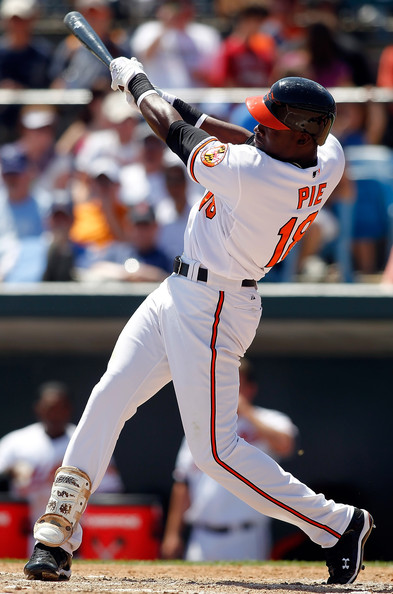
Perhaps it’s that he’d given up two runs to the Orioles in the previous frame. Maybe it was because outfielder Felix Pie was 5-for-7 with a walk to that point over the series’ two games, and Buehrle was fed up.

Or maybe he doesn’t like players stealing his team’s signs.

The Baltimore Sun reported that Buehrle started yelling at Pie (and, by proximity, it appears, Corey Patterson, as well) as he was heading back to the dugout—an exchange that several Orioles players confirmed had to do with the stealing of signs, and the ramifications therein.

How Pie was stealing them was more difficult to discern. He had walked in the fifth, then scored on Matt Wieters’ double, but was never stationed at second base to get a good look at the catcher or the pitcher’s grip on the ball. (While it’s possible to steal signs from first base, it happens far less frequently. Pie could conceivably have been signaling location from there based on the catcher’s setup.)

Prior to that moment, Pie had been all over the basepaths for Baltimore, but the only time he he had been stationed at second, Wieters followed with an inning-ending fly ball.)

Sign stealing from the field of play is an inextricable part of baseball, and occurs with both frequency and consistency throughout the season. The unwritten rules do nothing to prevent somebody from trying to gain this particular edge.

“Stealing signs is part of the game—that’s not the problem,” said Dusty Baker. “The problem is, if you get caught, quit. That’s the deal. If you get caught you have to stop.”

In Buehrle’s case, he or his teammates had clearly seen something amiss, and he took it upon himself to inform the opposition that it was time to put a stop to whatever it was they were doing. It was likely a repeat offense that spurred him to act.

Pie was lucky that it was Buehrle’s barbs that stung him, not his fastball.

“I’d just go up to them and say, ‘Come on, now, you’ve got to be a little bit more discreet—it’s too obvious,’ ” said shortstop Shawon Dunston, discussing his own methods of operation during his playing career. “They just give you a dumb look, but the next time the behavior changes. You’ve got to get every edge and I don’t have a problem with that, but don’t be too obvious. And be prepared to get drilled if you get caught. Period. That’s how it is.”

Jack Morris once took things a step further. Rather than waiting until an inning ended to deliver his message, he simply spun on his heel and, taking steps toward second, informed the started runner that he did not appreciate what was going on.

Then he said, “I’m throwing a fastball and it’s going at him. Make sure you tell him that.”

After doing precisely that, knocking the hitter down, Morris made a second trip toward the runner. “Did you tell him?” he yelled. “Did you?”

– Jason