Retaliation, Waiting

Good Things Come To Those Who Wait (If By ‘Things’ You Mean ‘The Chance To Scream At An Opponent Over A Weeks-Old Issue’)

Romo Yells

The Tampa Bay Rays have a young roster. None of their regular starters are 30 years old. Perhaps this has something to do with the fact that their pitchers didn’t seem to notice when Washington’s Michael Taylor stole third base against them while his team was leading 9-2 in the sixth inning back on June 6. It was a questionable decision, but when Taylor came up again in the eighth and grounded out against reliever Jose Alvarado, the matter appeared to be closed. (Taylor also came to bat four times the next time the teams played, this past Monday—three of which came with the Rays leading by seven or more runs, a perfect opportunity to drill a guy if a pitcher is so inclined—with nothing of note coming to pass.)

Usually, when a team passes up opportunities to respond to something like Taylor’s steal, it means they don’t much care.

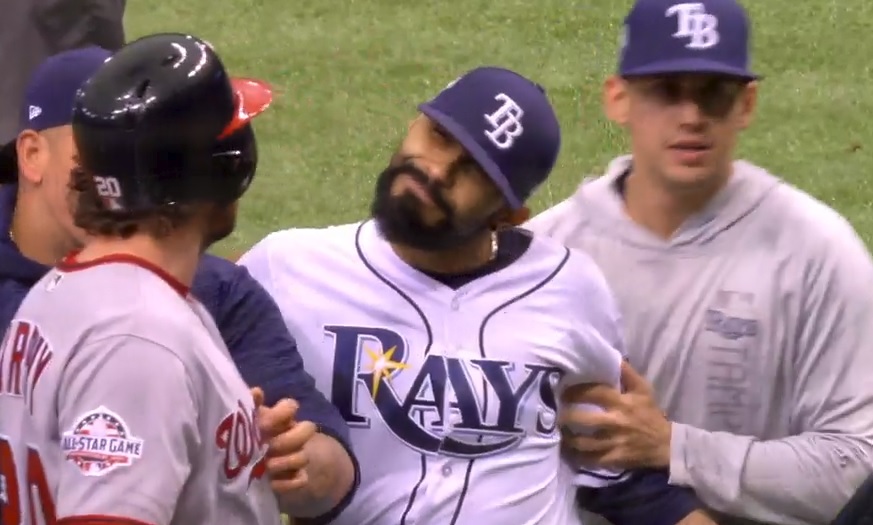
But Sergio Romo cares. On Tuesday, Romo—at 35, the old man of Tampa Bay’s staff—let Taylor know exactly what he thought of his three-week-old steal. Romo couldn’t exactly drill the guy; a closer’s role involves pitching exclusively in games too close to cede free baserunners. Instead, the right-hander struck Taylor out to end the Rays’ 1-0 victory, then unloaded on him verbally before leaving the field.

It’s probably a better option than one of Romo’s colleagues planting a fastball into Taylor’s body, but it nonetheless served to empty the dugouts.

Romo was upset about Taylor’s steal, but he may also have been upset that other guys on his own pitching staff failed to respond to it. Either way, an awful lot of frustration was unleashed there at Tropicana Field.

The enduring question is, why should anybody care? It’s an ages-old conundrum, long memories in baseball, with copious examples from some historical greats. I’ve written in this space about waits endured by various pitchers before they exacted revenge. Bob Gibson and Stan Williams were noteworthy for it. Hell, Nolan Ryan used the occasion of the 1985 All-Star Game to settle a pair of grudges—against Rickey Henderson, who had hot-dogged his trot after homering against the right-hander in 1979, the year before Ryan moved to the National League; and against Dave Winfield, who had charged Ryan’s mound while with San Diego in 1980. Six years was nothing for the master of grudge-settlement, who put a message fastball underneath both hitters’ chins that day, both on 0-2 counts.

A passage in my most recent book, Dynastic, Bombastic, Fantastic, pertains to this very topic:

In a May 18 [1973] game against the Royals at the Coliseum, Bill North let slip his bat on a swing against reliever Doug Bird, the lumber sailing harmlessly between the mound and third base. While going to retrieve it, however, North took an unexpected right turn and pounced upon the unsuspecting pitcher, peppering him with as many punches as he could land before being tackled away by players from both teams. The only guy in the building who wasn’t confused as hell was the guy swinging his fists.

The feud dated back to 1970, when North played for the Quincy (Illinois) Cubs of the Single-A Midwest League. Bird, pitching for Waterloo (Iowa), had given up homers to the two players preceding North in the lineup, and responded (in North’s opinion) by brushing the hitter back. “Hey, man, I didn’t hit those homers,” he snapped at the catcher before settling back into the box. The next pitch, a fastball, hit him in the head with such velocity that North required hospitalization.

“My ear was swollen for two weeks,” the center fielder said by way of explanation following his attack on the pitcher. “Two inches more and I would have been dead.” He’d been keenly waiting for revenge ever since, paying close attention to the transaction wire for the moment that Bird was called up from the minors. The fight occurred during the pitcher’s fourth major league appearance. “I don’t think I could live with myself and not challenge that dude,” North said.

Such certainty did not grip his teammates. “We were all looking at each other going, ‘What the hell is happening?’ ” said Joe Rudi. Added Ray Fosse, “We’re trying to win a championship, and when we found out this guy’s doing something to redress a problem from the minor leagues, we couldn’t believe it.” Joe Cronin suspended North three games and fined him $100.

In that vein, Sergio Romo getting some things off his chest is a feather in the wind. The teams don’t meet again this season, and it sure seems like something that won’t carry over like to next year, those other precedents be damned.
Don't Play Aggressively with a Big Lead, Retaliation

Profar Learns The Hard Way That Some Teams Are Sensitive Creatures When It Comes To Stolen Bases

Profar drilled

Perhaps the trickiest of baseball’s unwritten rules has to do with when to take one’s foot off the gas pedal.

Everybody agrees that it’s bad form to pile on when sitting on a big lead late in a game, with aggressive tactics like stealing bases. It’s just that nobody can seem to agree upon when that point is.

Once, a four-run lead was considered somewhat safe. That was a long time ago. As offense has increased over the years, so has the margin. Now, it’s upward of six or more.

The precise number hinges on numerous factors—primarily how far along the game is, but also things like the strength of a team’s bullpen and its ability to come back from a given deficit. A four-run lead in the ninth is generally considered to be safer than a six-run lead in the fifth.

All that being said, seven runs seems about right as a point at which to call off the big dogs. Just like a football team putting in second-teamers when sitting on a five-touchdown margin, teams can reasonably be expected to cool it on overt scoring attempts while holding such a big lead. Players still try to get hits and score runs, of course, but at some point tactics trend toward station-to-station baseball—runners taking one base on a single, two on a double, etc. If a play necessitates a slide, then it’s probably best not to attempt it.

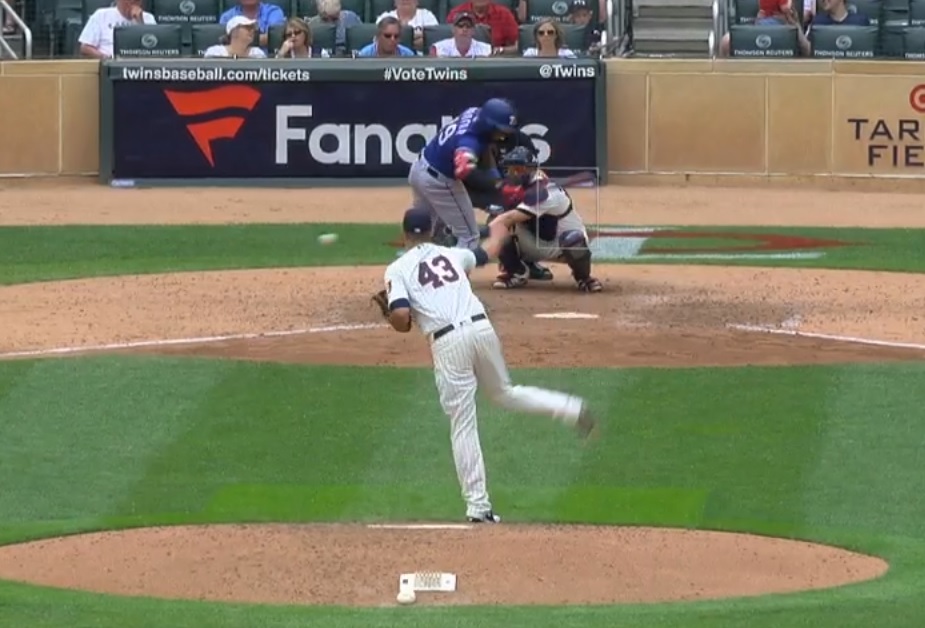
On Saturday, Jurickson Profar stole a base while the Rangers held a seven-run lead over Minnesota. In his next at-bat, Twins reliever Addision Reed threw two pitches inside, then drilled Profar in the leg with the third. (Watch it here.)

Which is where we get to mitigating circumstances. For one, Profar had already been hit twice on the day, his contested steal coming after the second HBP. For another, it was only the fourth inning, by any count too early in the game to consider shutting things down.

That didn’t stop the Twins from crying foul—literally, from their dugout—to the point that Profar expected the drilling he eventually received.

“I thought it was after the fifth inning that you shut it down,” Profar said after the game in an MLB.com report. “They almost came back at the end. They thought it was bad. It is what it is. It’s baseball, I’ll learn from it.”

It’s unclear what Profar thinks he’ll learn, since he’s spot-on about everything else. The Twins, down 9-2 at the time he stole the base, scored the game’s final four runs and brought the tying run to the plate before losing, 9-6.

For evidence that Minnesota did not actually deem it too late in the game, know only that they were still holding Profar on prior to his contested steal. If a team expects an opponent to play by blowout tactics, they themselves should, too. In this case, that would have involved playing first baseman Logan Morrison in the hole, with the understanding that Profar would not take advantage by stealing the base. This did not happen. (Nor should it have, given that it was the fourth inning.)

“The thought process between the unwritten rules of the game is not clearly defined,” said Twins manager Paul Molitor after the game in a Dallas News report. “What I might think and what he might think might be different things. I was surprised that [Profar] ran with the score the way it was, when he did. And getting hit there was something that Banister felt wasn’t appropriate.”

The likely reason that Bannister felt it wasn’t appropriate is because it wasn’t appropriate. A lack of clear definition when it comes to this stuff doesn’t override the fact that the fourth inning is too freaking early under nearly any imaginable circumstance to take offense at something like a stolen base. The Twins aren’t presenting a good look, here, and not for the first time this season.

Despite expressed displeasure from manager Brian Bannister, the Rangers opted not to retaliate. At least somebody in this story possesses a clear head about these things.

Retaliation

When Bad Things Happen Because Nitwit Pitchers Respond To Perceived Slights In Ways That Are Detrimental To The Winning Of Games: The Hunter Strickland Experience

Brinson drilled

This is what it looks like when retaliation goes wrong. Or maybe it’s what it looks like when a guy takes things too seriously. Or maybe it’s just what it looks like when one of baseball’s premier chowderheads is allowed to let loose his inner id at multiple touchpoints between mound and clubhouse.

We’re speaking, of course, about the Giants and Marlins, specifically of San Francisco’s chowderheaded closer Hunter Strickland. To get into any of it, of course, necessitates a review of the recent history between these teams.

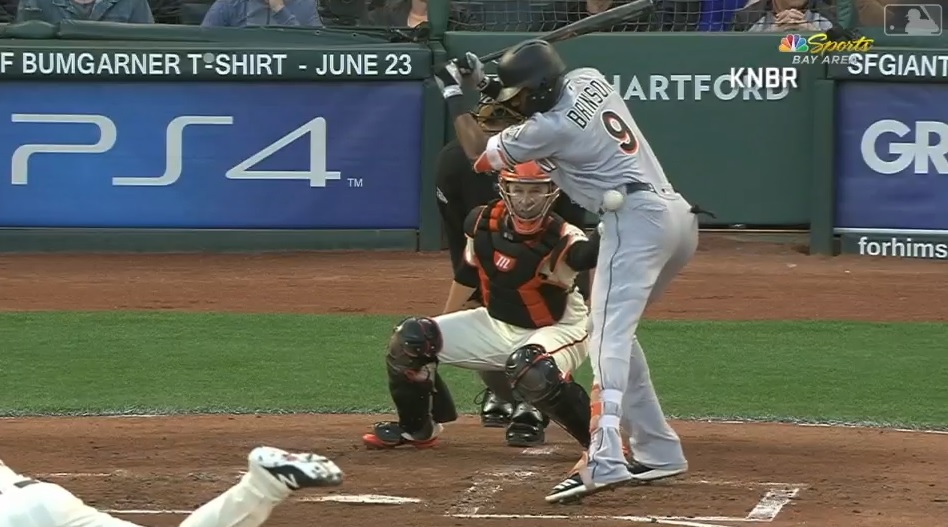
It may have started with Miami pitcher Dan Straily breaking Evan Longoria’s finger with a pitch on June 14, but that seems specious given that Hunter Strickland does not need external motivation like teammate injures to come completely unhinged. He does that plenty capably on his own. In the ninth inning of that very game, Strickland blew the save when Marlins rookie Lewis Brinson—batting .172—tied things up, 3-3, with a sacrifice fly. (The Giants ended up winning in 16, 6-3.)

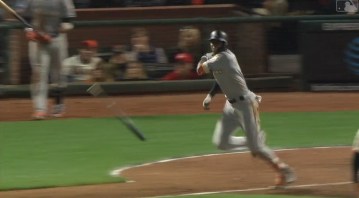
Brinson tossesThe closer didn’t like that. The next time he faced Brinson, four days later in San Francisco, he buzzed the rookie’s tower with an up-and-in fastball. Brinson responded with a game-tying single, making him directly responsible for both of Strickland’s blown saves in the span of three appearances. Brinson gave a take-that flip of the bat as he motored toward first, and the Marlins ended up scoring three times against the closer to erase a two-run deficit and win, 5-4. That should have effectively been that.
It wasn’t, of course. Strickland was yanked after giving up three hits and two walks to the six batters he faced, and shared some thoughts with Brinson as he departed the field. Then he proceeded to into a fight with a clubhouse door … which he lost. Strickland, with a broken pinky on his throwing hand, will be out for up to eight weeks.

Because Baseball Men stick up for each other, and because pitchers’ fraternities are strong and frequently mystifying, the following night, Tuesday, Giants starter Dereck Rodriguez drilled Brinson. Maybe we should have expected this, given the proclamation from reliever Mark Melancon that Brinson “was disrespecting the game.” More pertinently, Rodriguez is not only a rookie looking to gain acceptance from his veteran teammates, but is the son of a Hall of Fame catcher who no doubt called his fair share of intentional HBPs. The guy was raised on old-school lessons about how to approach this very kind of scenario.

The thing about old-school approaches, of course, is that they frequently elicit equal-and-opposite responses. So in the process of protecting a hotheaded teammate whose actions toward Brinson (or his own damn pitching hand) were in no way justified, Rodriguez reignited what should have by that point been a dormant feud. This led, an inning later, to Straily drilling Buster Posey. (Frustration could also have played a factor. With one out in the second inning, Straily had allowed more baserunners—six, via two walks, a single, a double and two home runs, one by Posey himself—than outs he’d recorded.)

Since the umpires had issued warnings following Rodriguez’s HBP—to which Marlins skipper Don Mattingly took exception, given that his own pitchers weren’t given a chance to respond—Straily was tossed (as was Mattingly). Giants broadcasters Mike Krukow and Duane Kuiper speculated on the air (as per The Athletic) that after Brinson was drilled, Mattingly emerged from the dugout, pointed at Posey and declared, “You’re next.” (Posey later denied that such a thing happened. Watch most of it here.)

The Giants, of course, denied any sort of intent behind Rodriguez’s pitch (which couldn’t have looked more intentional), but denial is part of the game. Just ask Joe Musgrove, who was recently docked $1,000 for admitting to just such a tactic in a game against Arizona.)

That Posey absorbed the blow and the Giants won help obscure the not-insignificant detail that San Francisco’s best player was thrown at for reasons that could have been avoided entirely had his team not opted to respond on behalf of a meathead pitcher who’d artificially escalated tensions in the first place. Had Posey been injured, a hefty portion of the blame could have been put on the Giants themselves.

There is much to admire about baseball’s old school. There’s even a place for appropriate response when an opponent’s recklessness puts somebody into physical peril. But the tactic of defending a teammate who merits no defense—while well-established through baseball’s annals—is one tenet that could stand to be revisited.

Update (6/21): Straily was suspended for five games, Mattingly one.

Retaliation

Retaliatory Smackdown Comes Back To Bite Pirates

Musgrove drills

Wait for it.

That’s a prime directive when it comes to baseball retaliation, instructing pitchers hell-bent on drilling a guy to delay their vengeance until the time is right. What that means, of course, is up for interpretation, and sometimes players interpret wrong.

Joe Musgrove is one of those guys.

In the top of the seventh inning, Arizona’s Braden Shipley buried a 96-mph fastball into the top of Josh Harrison’s shoulder blade, just missing his head. The blow eventually knocked Harrison from the game. Shipley then sent another fastball near Austin Meadows’ head before getting him to fly out to center field.

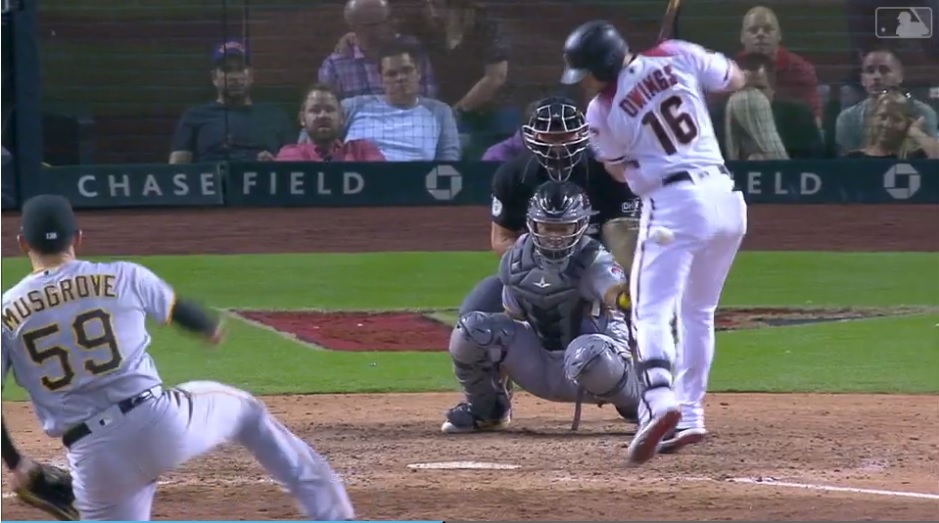
That was enough for Musgrove, who responded in kind in the bottom half of the frame. What the Pirates right-hander had working in his favor was a 5-0 lead, plus the fact that he’d given up only four hits and no walks to that point. Musgrove was cruising, and so felt little need to wait until two were out, as is standard operating procedure in these types of situations.

He drilled leadoff hitter Chris Owings (appropriately, below the belt), and everything went immediately to hell. Musgrove then wild-pitched Owings to second. Nick Ahmed singled in Owings, cutting Pittsburgh’s lead to 5-1. Shipley, hitting for himself, reached on a throwing error by third baseman David Freese (who inexplicably rushed his throw), and that was all for Musgrove. Reliever Edgar Santana was greeted with an RBI single by Daniel Descalso. Now the score was 5-2. One out later, Jake Lamb hit a three-run homer, tying the game. Arizona scored four more in the eighth to win it, 9-5.


“That’s how the game is played,” said Musgrove after the game, straddling the line of self-incrimination in an MLB.com report. “You’re willing to go out and hit somebody, you’ve got to be willing to deal with what might come with that, putting the leadoff runner on base, especially late in the game like that. You don’t want to start a rally.”

At least his manager had his back. “You play the game and you protect your teammates,” said Clint Hurdle. “It’s been going on for 135 years or so.” (It also appeared that the umpires had the pitcher’s back, failing to issue warnings after Musgrove drilled Owings in clear retaliation.)

The fateful HBP was actually one of five in the game, two coming from Arizona relievers, and three from Musgrove. Save for the final one, to which the pitcher all but admitted, intent behind the preceding four is strictly conjecture. Even if Shipley’s two pitches (the fateful one to Harrison, and the nearly fateful one to Meadows) were strictly accidental, the idea of a pitcher taking liberties around the head with a blazing fastball over which he has little control is rightly infuriating to opponents. Calmer pitchers than Musgrove have been inspired toward retaliation by less.

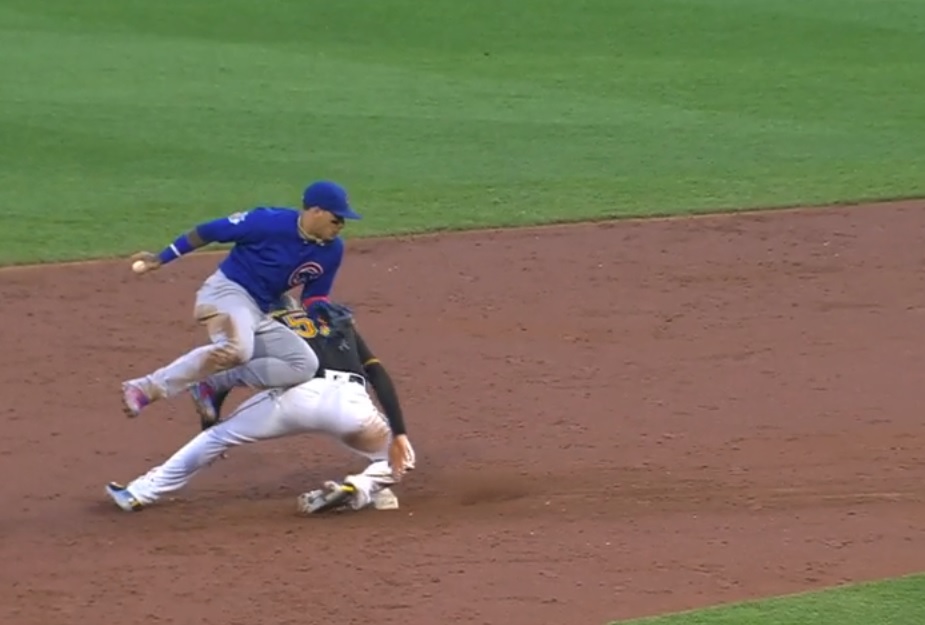
This actually has been a theme of sorts around the Pirates clubhouse of late. Two weeks ago, Anthony Rizzo took out Pittsburgh catcher Elias Diaz with a wide slide. After reliever Richard Rodriguez didn’t so much as pitch inside to Rizzo during his next at-bat, Musgrove took things into his own hands the following day, barreling into Cubs second baseman Javier Baez with a retaliatory slide into second.  “Trust me, we’ve talked about it,” said Pirates pitcher Jameson Taillon in the Athletic. “We’ve had internal discussions.”

Taillon spent a few minutes after the game discussing the merits of retaliation. He doesn’t necessarily speak for the Pirates as a whole, but as of right now he’s the guy going on the record in any kind of depth.

“They can say the ball slipped, but it’s not our job to judge intent,” he said. “All I can tell you is J-Hay [Harrison] gets pitched in a lot. And even if it’s not on purpose, J-Hay gets hit way too much. I get sick of seeing him get spun around up there—sick of it. Something needs to be done by the staff, and Joe did it for us.”

That, of course, doesn’t much matter in the face of the ensuing meltdown by Pittsburgh’s bullpen.

“I don’t really know what’s going on inside their dugout, but if it was retaliation, it certainly cost their pitcher a couple of runs and it might have cost them a win,” Arizona manager Tory Lovullo said in an Arizona Republic report. “We were lying flat and dormant and being dominated by him, and I felt like it gave our dugout a lot of energy.”

That much is certain. Musgrove might not change a thing if he had it all to do over again, but given the results of his approach, it’s tough to deny that one can never be too careful in this type of situation.

Retaliation

Giancarlo Has A Long Memory, And Why The Hell Shouldn’t He?

Stanton flipped

Is there an unwritten rule for PTSD?

That’s what it had to be, after Mike Fiers hit Giancarlo Stanton in the upper arm on Monday. It was obviously unintentional—runners were at the corners with one out in the third inning of a 1-1 game, and the right-hander had little interest in loading the bases for Gleyber Torres, who leads baseball’s best offensive team in slugging.

That the pitch didn’t hurt Stanton—it bounced off his arm shield—didn’t prevent some overt feelings on his part. It was Fiers, after all, who drilled Stanton in the face in September 2014, breaking bones and ending his season. Stanton has worn a face-guard extension on his helmet ever since.

So Stanton reacted with a response natural to somebody who’s been triggered: He got angry.

Lingering in the batter’s box, the slugger yelled, “Get it over the plate,” at Fiers, among other choice terms. Fiers, treating the incident as he would any other mistake pitch, wanted no part of unnecessary drama. He shouted something back about not meaning to do it, with the tension lasting just long enough to draw both teams to the edges of their dugouts before Stanton finally ambled down to first.

“I’m not trying to stir this up, that just is what it is, obviously,” Stanton said after the game in an MLB.com report. “Anything like that that happens, no matter how many years it is, I’m not going to be happy. I’m not going to just walk to first and be OK, but it is what it is.”

For his part, Fiers had been deeply apologetic after drilling Stanton the first time around, both to the media and via Twitter.

Monday, though, he was markedly less reticent.

“The way [Stanton] handled it, I think it was kind of childish,” the pitcher told reporters after the game. “Anybody knows I’m not throwing at him. He’s gonna act how he’s gonna act. It kind of shows his character, because obviously I wasn’t throwing at him.”

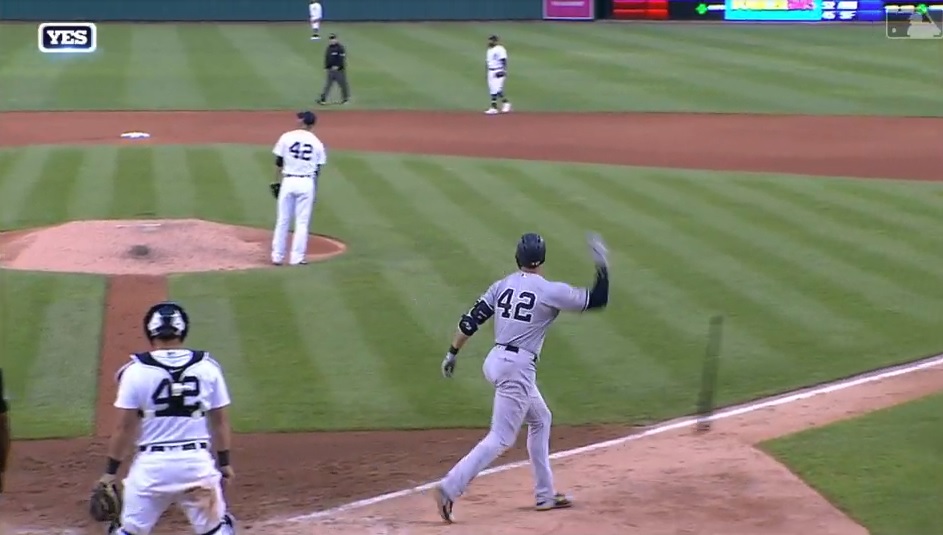
Rather than charge the mound, Stanton retaliated in the most effective fashion possible, waiting until the sixth inning, when he pounded an 0-2 Fiers curveball into the left field bleachers, punctuating the feat by taking four slow steps out of the batters box on his way to first, flipping his bat, then pointing at the mound upon crossing the plate.

Some memories die hard. Now we get to see how long Fiers’ last. The teams next play in late August.


Basepath Retaliation, Collisions, Retaliation

Pittsburgh Responds To Rizzo Takeout: You Slide Into Mine, I’ll Slide Into Yours

Musgrove slides

They were back at it in Pittsburgh on Wednesday, the Cubs and Pirates coming to a head over the second questionable slide in a three-game span. This time it was the Pirates hitting the dirt, as pitcher Joe Musgrove powered into second with a blatantly late slide in an effort to disrupt a double play. (Watch it here.)

This time it was Javy Baez on the receiving end, and though the slide did no damage, he wasn’t pleased. Musgrove leaped so late that he landed virtually atop the bag, his momentum carrying him straight past it. In so doing he violated two of the four tenets of Rule 6.01(j), which we’ve heard an awful lot about recently. It reads:


If a runner does not engage in a bona fide slide, and initiates (or attempts to make) contact with the fielder for the purpose of breaking up a double play, he should be called for interference under this Rule 6.01. A “bona fide slide” for purposes of Rule 6.01 occurs when the runner: (1) begins his slide (i.e., makes contact with the ground) before reaching the base; (2) is able and attempts to reach the base with his hand or foot; (3) is able and attempts to remain on the base (except home plate) after completion of the slide; and (4) slides within reach of the base without changing his pathway for the purpose of initiating contact with a fielder.


Baez knew that Musgrove’s slide wasn’t by the book, and as the pitcher started back toward Pittsburgh’s dugout, let him know about it. Things hardly grew heated—Baez gently put a hand on the Musgrove’s hip in a “there, there” kind of way—and though benches cleared, players never came close to fighting.


For a blog about unwritten rules, we’ve sure spent a lot of time recently on the written ones. Still, there’s an awful lot of subtext here. Musgrove’s slide was about much more than hard-nosed baseball—it was about retaliation for Anthony Rizzo’s disputed takeout of Pittsburgh catcher Elias Diaz on Monday. Musgrove admitted as much, telling reporters after the game: “I was trying to go in hard like their guy did. [Baez] should’ve got out of the way, I guess.”

Not enough? The pitcher elaborated.

“We’re not trying to fight anybody here,” he said in an MLB.com report. “We’re not trying to cause any problems, but you blindside our catcher when he’s got no chance to defend himself … That’s something that I feel like is part of baseball. I don’t think he was happy that I went after their guy or anything like that, but yeah, you try to pick up your teammates where you can. I didn’t hurt him. I easily could have made a dirty slide, but I feel like I made a clean slide and went in hard.”

It’s a simple message. The cleanliness of Musgrove’s slide is up for debate, but his claims about not wanting to injure anybody are valid. Baez himself believed them, telling reporters after the game: “I’m not saying it was a bad slide, but he just went hard. I asked him, ‘What was that about?’ He said, ‘Sorry,’ and the conversation was over.”

Musgrove sent a message, to the Cubs and his own team alike, that plays like Rizzo’s will be answered. It was a canny decision. As a pitcher, Musgrove easily could have conveyed the sentiment with a message pitch, but by going slide-for-slide, he was able to provide tangible support for his teammates in an aboveboard fashion.

Musgrove—a third-year pitcher trying to establish himself after coming over from Houston in the Gerrit Cole trade—earned a measure of clubhouse standing with seven innings of one-run ball on Wednesday. He may have earned even more with his slide.

Retaliation

K.C.’s Baltimore Jacks Leave Bundy With Hungry Heart

Bundy jacked

I’d like to recall something that happened a couple weeks ago, which serves as a barometer for where baseball is, in relation to where it used to be.

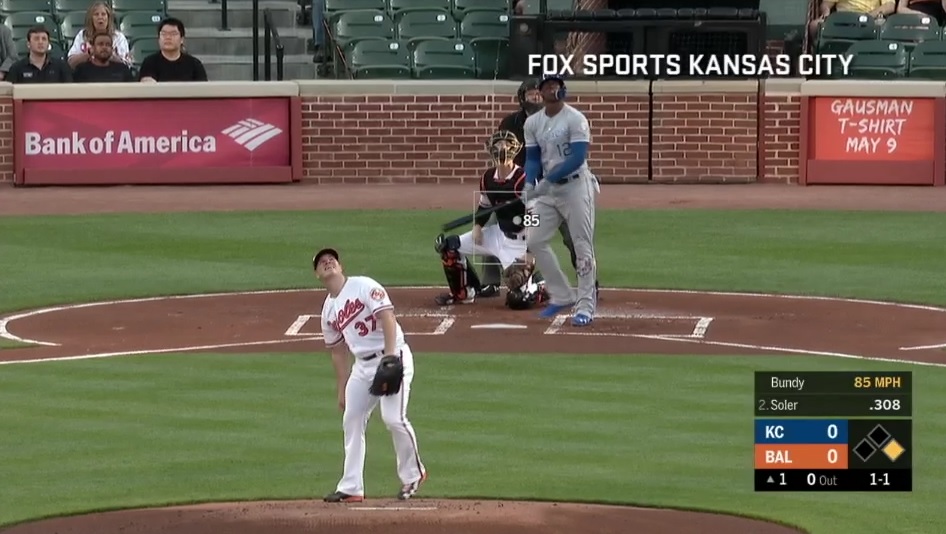
On May 8, Baltimore starter Dylan Bundy gave up a single to Kansas City’s first batter of the game, then coughed up three straight homers, walked two guys, and gave up another jack. Seven hitters, seven runs and 15 total bases surrendered without recording an out. It was by any measure among the worst performances in baseball history.

The question here: Beyond simply pitching better, should Bundy have done anything differently?

Once, the obvious response would have been for Bundy to knock a hitter or two down—if not drill them outright— somewhere amid that chain of carnage. Some small examples:

  • 1944, St. Louis vs. Cincinnati. Walker Cooper, Whitey Kurowski and Danny Litwhiler hit consecutive homers against Clyde Shoun. Shoun knocked the next batter, Marty Marion, on his backside with an inside pitch.
  • After Cleveland scored three runs in the first inning and eight in the second against three Twins pitchers in 1975, Minnesota reliever Mark Wiley opened the third by drilling Rick Manning in the leg.
  • In 1985, Bob McClure gave up two homers to the A’s in the span of six batters, which struck the southpaw as especially egregious given that both were hit by left-handers. His first pitch sent the next batter, Dave Kingman, sprawling.

There was a point to those reactions beyond simple frustration. If a team is clearly comfortable in the batter’s box—as was the case against Bundy, and in all three examples above—it behooves the pitcher to disrupt the emerging pattern. This doesn’t mandate hitting anybody, of course, so much as making an opponent move his feet to avoid an inside pitch. In two of the above examples, this is precisely what happened. Marion’s at-bat ended with a popup to shortstop, Kingman’s with a popup to short right field. The hitter after Manning, George Hendrick, struck out. Bundy, however, kept pumping strikes, even as those strikes were getting hammered, and the result was self-evident.

Hell, Manning’s manager back in ’75 was the man with the reddest ass in the history of baseball, Frank Robinson. What did he think of Wiley plunking his guy? “When you’re getting your ass kicked, you’ve got to do something like that,” Robinson said in Making of a Manager.

That era has passed. Intentionally placed inside fastballs are frowned upon like never before. It does not even occur to many pitchers that disrupting a hitter’s comfort zone is actually a viable strategy. We saw it last year when the Nationals went deep four times in the span of five batters against Milwaukee. We saw it in 2010, when four straight Diamondbacks homered against Brewers right-hander Dave Bush.

For the clearest distinction between then-and-now responses, look to 1963, when Angels pitcher Paul Foytack gave up four consecutive jacks to Cleveland in a game that inspired a passage cut from the final draft of The Baseball Codes:

In a 1963 game, Foytack, a Los Angeles Angels pitcher in his 10th big league season, allowed consecutive home runs to Cleveland’s Woody Held, Pedro Ramos and Tito Francona. They were the fourth, fifth and sixth homers the right-hander had given up on the day. To make matters worse, Ramos was the opposing pitcher, sported a .107 batting average, and it was his second round-tripper of the game. Foytack had had about enough, and decided to knock down the next batter, rookie Larry Brown. But even that didn’t work out too well.

Foytack’s first offering tailed over the plate, and Brown hit the Indians’ fourth straight homer. It was the first of his career, and made Foytack the first pitcher in major league history to give up back-to-back-to-back-to-back home runs.

“Today,” said Foytack a few years back, “if you throw close to a guy, they want to take you out.”

There’s a lot to be said for this latest, gentlest iteration of baseball. Some of the things that are getting lost, however, are actually pertinent to the playing of quality baseball. 

Retaliation

Nolan Arenado Does Not Appreciate Your Message Pitch, Sir

Arenado charges

Remember back in 1990, when Dave Stewart threw a no-hitter—and then had it upstaged only a few hours later when Fernando Valenzuela threw a no-hitter of his own?

Wednesday was kind of like that for mound charges.

Tyler Austin’s assault on Boston pitcher Joe Kelly garnered more headlines, but Nolan Arenado’s charge of San Diego pitcher Hunter Renfro came first. Also, it was interesting.

The genesis came on Tuesday, when Rockies pitcher Scott Oberg drilled San Diego center fielder Manuel Margot in the ribs with a 95-mph fastball that pretty clearly lacked intent. (Oberg himself tried to relay as much to Padres coach Glenn Hoffman while he was still in the field.)

Still, the damage was such that Margot was placed on the 10-day disabled list. When it comes to teams harboring grudges, that kind of detail matters.

On Wednesday, the Padres drilled Trevor Story in the first inning, and the Rockies responded by drilling Hunter Renfro in the second. (Both pitches came in two-out situations that would suggest the pitchers had some inclination toward the results they achieved.)

Things came to a head in the third, when Padres right-hander Luis Perdomo ran directly counter to his team’s rock-steady plan of pitching Nolan Arenado away, instead sending a fastball directly at his ribs—as clear a response to Margot’s drilling as could be imagined. Arenado avoided the pitch, barely, then wasted no time in lighting out to get him a piece of pitcher. A backpedaling Perdomo tried to blunt the charge by tossing his glove at the furious batter, which, apart from being highly comical, sort of worked—the glove missed, but so did Arenado, and the fight ended up like so many others, with lots of shoving and not much in the way of actual brawling.

The teams meet again, also in Colorado, on April 23.


Retaliation, Slide properly

Fists Fly in Boston After Austin Powers Toward The Mound

Kelly punchesTyler Austin should have known better.

He should have known the pitch was coming as soon as he took out Red Sox shortstop Brock Holt with a questionable slide in the third inning, especially after Holt called him on it when it happened.

He should have known that leading with his foot raised several inches off the ground and well inside the bag, leaping late so that he all but landed on the fielder, would draw the opposition’s ire, even if he intended no malice.

He should have known that wearing one in that situation, even a 97-mph fastball—especially a 97-mph fastball—was his duty as the guy at the wrong end of the previous confrontation. It was on Austin to understand that his play looked bad, independent of whether he thought it actually was bad. Wear it with dignity, and everyone can go about their day.

That’s not what happened.

Boston reliever Joe Kelly held up his end of the bargain, planting a fastball into Austin’s ribcage, at which point the hitter spiked his bat and raced toward the mound. Kelly beckoned him almost gleefully, and proceeded to land multiple blows after Austin’s momentum took him to the ground. The rest of the fight— Austin punching Red Sox coach Carlos Febles by mistake while swinging at Kelly; Aaron Judge seeming to hold off half of Boston’s roster by himself—was no less fraught.

Still, there’s plenty of grey area for quibbling from both sides of the Yankees-Red Sox divide. Austin’s first at-bat following his slide came leading off the fifth, with Boston leading, 8-1. Starter Heath Hembree opted against squaring the hitter’s debt at that point, instead striking the hitter out on four pitches. It’s not incumbent upon Hembree to respond, of course, but were the Red Sox to address Austin’s slide on the field, that seemed like the obvious spot to do so.

By the time Kelly took matters into his own hands two innings later, New York had trimmed its deficit to 10-6. There’s also the fact that Kelly missed on his first attempt, Austin backing out of the way of an inside fastball two pitches prior to the one that ended up drilling him. Austin was correct in his postgame assessment when he said, “I thought it was over after that. They missed with the first one. In baseball, once it happens, it’s over after that.”

It’s important to understand, though, why Kelly did what he did. When an opponent takes liberties with a player’s on-field safety—as Austin did with Holt, independent of severity or intent—pitchers can be compelled to respond. Former Diamondbacks manager Bob Brenly elucidated the notion in The Baseball Codes, and though he was talking about it in reverse—using his baserunning to counter a HBP, not the other way around—the logic holds:

“I’ve gotten on first base when I’ve been hit by a pitch and told the first baseman, ‘If there’s a ground ball hit I’m going to fuck up one of your middle infielders, and [pointing to the mound] you can tell him that it was his fault.’ That’s a way you can get them to police themselves. A pitcher drills somebody just because he feels like it, and if one of the middle infielders gets flipped out there he’s going to tell the pitcher to knock it off. Ultimately, that’s all we want anyway—just play the game the right way.”

Tellingly, in Austin’s postgame comments, he seemed about to say, “I play the game the right way,” but caught himself. Instead the phrase he used was, “I play the game hard.”

No matter how one feels about his actions, there’s no denying that.

The Yankees and Red Sox conclude their series tonight.

Retaliation, spring training

Dyson Deals, Davis Ducks: Spring Dustup Has Giants, A’s in Midseason Form

Dyson-Hundley

Intent is everything. If a pitcher wants to hit a batter, and then hits that batter, you can be certain that the batter knows what happened, and why.

When the pitcher didn’t mean to do it, though, things are usually different. Balls slip, plans go sideways, and sometimes hitters have to wear one just because that’s the way the game sometimes works. For the most part, everybody understands this and moves right along without devoting too much energy to the proceedings.

Usually.

Spring training is, by design, a place for players to work the winter kinks out of their games, so it should come as little surprise when the occasional fastball gets away from the occasional pitcher and ends up someplace it oughtn’t. Such a thing happened yesterday, and the A’s weren’t at all pleased.

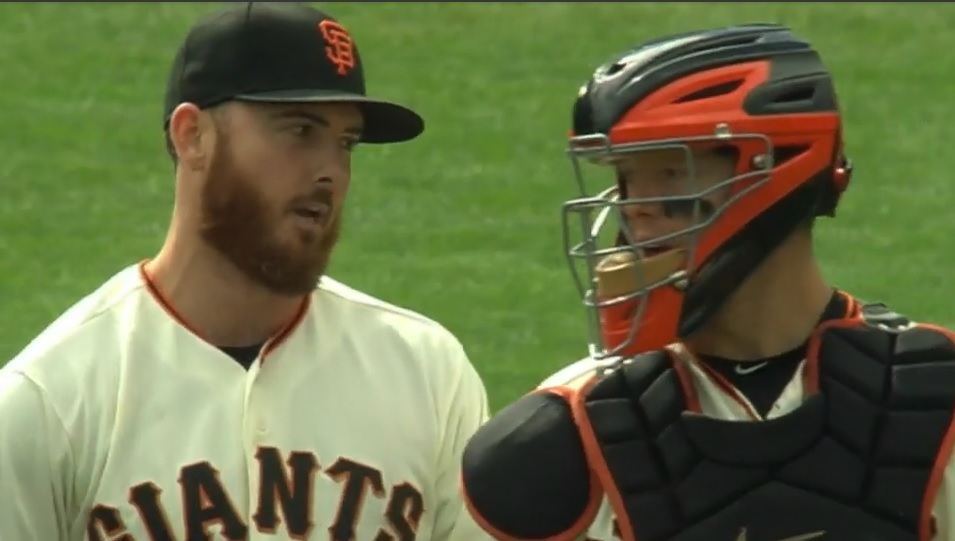
Giants reliever Sam Dyson didn’t even have to hit the batter, Oakland slugger Khris Davis, to ignite anger. He only brushed him back with something high and tight.

Then again, Dyson had just given up three straight hits, including a double, an RBI single, and a two-run homer to Franklin Barreto, before Davis came to the plate, so perhaps the pitcher was acting in frustration. Ultimately, whether he meant it doesn’t really matter. The plausibility of intent was undeniable, and optics are everything when it comes to this kind of stuff.

Davis immediately had words for Dyson, and Giants catcher Nick Hundley had words for the A’s dugout. Dyson ended up rocked for four runs in two-thirds of an inning.

So a maybe-he-meant-it-but-probably-he-didn’t HBP went from nothing to something based on Davis’ reaction to Dyson, and Hundley’s ensuing reaction to Davis’ teammates. Things grew further inflamed when Roberto Gomez, the pitcher to follow Dyson, hit the first batter he faced, A’s prospect Ramon Laureano, on the hand. At that point intent ceased to matter. The Giants were officially throwing at Oakland, and Oakland felt the need to respond.

The mantle was taken up by right-hander Daniel Gossett, who got into 18 games for the A’s last year as a rookie and is hoping to land a rotation spot this season. After retiring the first four batters he faced, he planted a fastball into the back of Orlando Calixte, inspiring umpire Mike DiMuro to warn both benches against further such displays.* Calixte appeared to want a piece of the pitcher after scoring on Jarrett Parker’s double, but was instead directed to the dugout with no small urgency by teammate Mac Williamson.

Afterward, Giants manager Bruce Bochy didn’t want to talk about the confrontations, and A’s manager Bob Melvin dismissed the entire affair with the sentiment, “Boys will be boys.”

The Giants and A’s face each other six times this (and every) season (and once more in a split-squad game on Saturday), but this kind of thing will almost certainly be left behind in Arizona.

* When it comes to Gossett and Laureano alike, there’s no better way for a new pitcher to earn respect in a clubhouse than by standing up for his teammates. And there’s no more obvious way to stand up for teammates than a well-timed message pitch in response to some perceived injustice.