Last weekend brought us this season’s first incident of a foreign player being brought quickly up to speed with this country’s baseball mores. It also brought us the lesson that reticence doesn’t always count for a whole lot.
The student: Oakland outfielder Yoenes Cespedes, who on Friday pummeled a Jason Vargas fastball 462 feet, the ball landing above the luxury suites in left-center field at Oakland-Alameda County Coliseum—a blast impressive enough to inspire the hitter to stand and watch it fly. (Watch it here.)
The teacher: Seattle’s Felix Hernandez, who drilled Cespedes the following day. First base was open, and the Mariners led 7-0 at the time.
Deserving or not, this was a lesson that Cespedes—a recent immigrant from Cuba—did not require. The guy had played in all of three major league games when he went deep, and seemed to quickly recognize his error.
“I followed the ball, but I don’t like that to do that again,” he said in the San Francisco Chronicle, following Friday’s game. “I come from Cuba, where it’s a little less quality games, so we do that. But here I don’t want to do that.”
That didn’t seem to matter to Hernandez. Although the right-hander denied it, Cespedes said he was “100 percent for sure” that the drilling was intentional, according to the San Jose Mercury News.
In the end, it doesn’t much matter. The lesson was sent, intentional or not, and the American League’s early home run leader came away just a bit wiser.
Prince Fielder connects for the first of his homers on Sunday. Phil Coke did not approve.
On Saturday, Prince Fielder launched two home runs off of Boston’s Josh Beckett within the game’s first five innings. In the bottom of the seventh, he was hit on the calf by Red Sox reliever Matt Albers.
Phil Coke came out of the Detroit bullpen a half-inning later with the perfect opportunity to exact retribution: He faced Fielder’s first-base counterpart and fellow superstar, Adrian Gonzalez, with a 10-run lead. Instead of sending a message, however, he struck Gonzalez out.
There may be great power in hindsight for Phil Coke, or he may have had the finer points of the “We’ve seen enough of this crap” method of pitching explained to him by teammates or coaches after the game. That would explain his appearance on Sunday, when, in the seventh inning, the left-hander made up for opportunities lost. With Dustin Pedroia on second and two outs in a game the Tigers trailed 9-7, Coke—a day late—went gunning for his man.
His aim was as poor as his timing, however, as Coke’s pitch sailed up near Gonzalez’s head, without any real danger of hitting him. Which is where the umpiring at Comerica Park comes into question.
At this point, plate ump Dan Iassogna should have been all over Coke. Ejection would have been justified even without the previous day’s action, based only on the location of the pitch, but Iassogna did nothing. (In his defense, even Gonzalez didn’t take the pitch too seriously, joking with Iassogna and Tigers catcher Alex Avila about whether he should start to get scared.)
It might have been a good idea. With his next offering—and two bases open, after Pedroia took third on the previous pitch—Coke hit Gonzalez in the back. Bobby Valentine raced out for a chat involving, among other things, disbelief that the pitcher had not yet been ejected. It didn’t have much effect; only after crew chief Dale Scott consulted with Iassogna were warnings even issued. Coke remained in the game.
Iassogna has some history with this type of thing, having notably erred on the reactionary side earlier in his career, much to his own detriment. In 2002, before he had even reached full-time status with MLB, Iassogna was behind the plate for a game in which the Dodgers led the Reds 4-0 going into the ninth inning. After Los Angeles closer Eric Gagne gave up a bloop single and a two-run homer, he hit Adam Dunn with his next pitch. That was all Iassogna needed to see; he tossed Gagne on the spot.
The details of this particular story matter, however. Gagne’s pitch to Dunn was clearly unintentional; it only grazed the bottom of the slugger’s jersey, failing even to hit flesh. When Gagne was ejected, Dogers manager Jim Tracy lost his mind.
“I went crazy,” he said. “I’ve been very upset a few times as a big league manager, but that was maybe the most upset I’ve been on a baseball field, because of what I perceived to be as a lack of understanding as to exactly what it was that was going on. . . . I don’t know of any pitcher in baseball, after a home run has preceded the at-bat and you’re in the ninth inning trying to win, who’s going to hit the next guy and bring the tying run to the plate.”
Gagne and Tracey were both ejected, the Reds tied the game with two more runs off three more pitchers, and Cincinnati won it in the 13th against Omar Daal, who had been scheduled to start for the Dodgers the following day.
It’s enough to make an ump gun shy, which Iassogna might be these days. That certainly appeared to be the case on Sunday.
“They should’ve given a warning after the one at (Gonzalez’s) head, the first pitch,” said Valentine in the Boston Herald.
Gonzalez, too, worried about the lasting effects of the umpire’s decision.
“You know it’s going to happen,” he said of potential future retribution, in an ESPN Boston report. “We’ve all got seven more years here. It might not happen the next series, but eventually it’s going to happen. . . . I just think it’s a bad call on their end because now it’s putting Miggy’s (Miguel Cabrera) and Prince’s careers at risk. You know it’s going to happen eventually.”
Next chance: May 28, in Boston. No word yet on the whereabouts of Dan Iassogna that week.
The season’s first lesson on sensitivity awareness was given yesterday in Cleveland, when benches emptied after Shin-Soo Choo was forced to duck under a head-high fastball from Toronto reliever Luis Perez in the 15th inning.
While no hitter in baseball would react well to an inside pitch above his shoulders, Choo was particularly sensitive. He missed six weeks last season after having his thumb broken by a pitch. He had been drilled earlier in Wednesday’s game by Ricky Romero. So when he was forced to the dirt by Perez in the 15th, he responded by jumping up and taking angry steps toward the mound, spurring the benches to empty. (Watch it here.)
Which is where intent comes into the equation.
Perez’s pitch arrived after warnings had already been issued by plate ump Tim Welke in the fourth, after Cleveland’s Justin Masterson came inside twice against Kelly Johnson, apparent retaliation for Choo’s HBP an inning earlier.
Perez was Toronto’s seventh pitcher of the day. That left one guy in the pen—closer Sergio Santos—to go the rest of the way, were Perez ejected, in a game that looked as if it might never end. There were two possibilities for Perez’s motivation—he’s a baseball imbecile, with no shred of insight into the appropriate time to respond to something; or the pitch simply got away from him.
The smart money’s on the latter; Welke’s certainly was. Despite the earlier warnings, Perez was not ejected, and it’s not difficult to see why.
Even Choo came around to that viewpoint, saying after the game in the Cleveland Plain Dealer, “I was hit by a pitch last year and broke my thumb. Maybe that’s why I’m sensitive right now. But I know it’s part of the game. Pitchers have to go inside. I understand it.”
And so we move on. Teams play again Saturday; we’ll see how Toronto reacts once the timing is right.
Isn’t it great when scientists give serious consideration to things they probably shouldn’t be giving serious consideration to? Case in point: the recent study from researchers out of Brown, Hofstra and Boston universities, which determined that while fans don’t think a guy drilled in retaliation necessarily deserved it, they enjoy it anyway.
The study itself is behind a paywall, but the good folks at Miller-McCune have excerpted it for our enjoyment and edification. What we learn from the surveys, conducted outside Fenway Park and Yankee Stadium, and online:
Fans were asked in general terms about how appropriate they felt it would be for a pitcher to drill a member of the opposing team in response to an injury suffered by one of his teammates as the result of being hit by a pitch.
Turns out that just short of half the fans surveyed felt it would be acceptable.
Somehow, 19 percent of Red Sox fans thought it was okay for a pitcher to retaliate against a third, unrelated team, despite the fact that such a scenario makes absolutely no sense.
More fans—70 percent—felt that retaliation is appropriate if the drilling victim was the pitcher responsible for the HBP that started it all.
The labspeak summary of this concept is, “Endorsement of collective punishment is widespread, but not as widespread as endorsement of individual punishment.”
Only 25 percent of the fans who approve of retaliation feel that the target of said retaliation is responsible for the situation. In other words, the guy getting beaned in response to a prior kerfluffle has nothing to do with it.
Still, more than a third want to see him drilled anyway.
Two key takeaways here. Between the four surveys, researchers interacted with only a few hundred people—not exactly a huge sample size. More importantly, the vast majority of respondents were fans of either the Yankees or Red Sox, so how representational can they be? (More knowledgeable than your average fan, sure, but also more bloodthirsty.)
Ultimately, this kind of thing is the reason that players don’t much like to talk about this section of the unwritten rulebook. Things like retaliation, that make sense to them within the context of the game, strike a large portion of the fanbase as vulgar and irresponsible. Ballplayers have known about this divide forever, without benefit of scientific studies. Maybe they’re smarter than us, after all.
Anybody wondering why the Colorado Rockies never considered Ubaldo Jimenez to be in the same stratosphere as Troy Tulowitzki and Carlos Gonzalez got their answer today.
Turns out the guy is hot-headed, and possibly a touch delusional.
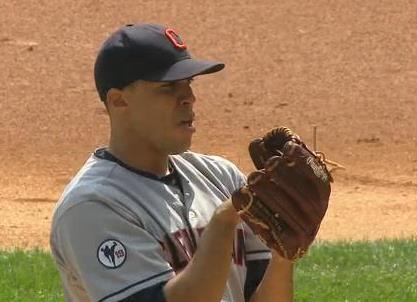
Jimenez, who publicly steamed last week about the lack of respect shown him by the Rockies when they traded him to Cleveland rather than sign him long term, got his first chance to face his former team on Sunday. Before long, he had sent Tulowitzki to the hospital.
The right-hander’s first move was to drill Colorado’s All-Star shortstop in the elbow (test results came back negative). His second was to race toward the plate, daring an enraged Tulowitzki to come at him. After at first refusing to speak to the media after the game, Jimenez said that his post HBP histrionics were merely a reaction to Tulowitzki’s anger. “He was calling me out,” he said in a Denver Post report. “I mean, I’m a man. If somebody calls me out, I have to go.”
Tulowitzki’s drilling follows a time-tested tradition of players being punished for their teammates’ actions, be it the next hitter in the lineup dodging fastballs following a home run, or a slugger going down as part of a pitcher protesting a big inning.
Those tactics, however, are long outdated, and Jimenez knows it. Tulowitzki might have worn it because he’s the face of theRockies—not to mention the guy who got a big contract when Jimenez did not. (Tulowitzki and Gonzalez both signed monster deals after the 2010 season, the former for $134 million, the latter for $80 million, both over seven years. Jimenez signed for $10 million over four years prior to the 2009 campaign.)
Or he might have worn it for the statement he made in response to Jimenez’s initial cries of disrespect. “(Jimenez) had signed his deal and had years left on it,” the shortstop said. “Why would we give him something new when we didn’t see anything out of him?”
Jimenez said that his pitch was unintentional (it “got away,” he said), but that’s clearly not the case. Rockies pitcher Jeremy Guthrie—in his first season with Colorado—said he knew what was coming based on where the catcher was setting up.
The umps, clueless, did not issue an ejection.
Two things worth noting:
Jimenez was 6-9 with a 4.46 ERA when the Rockies traded him last season.
Jimenez is 1-4 with a 7.43 this spring.
The guy gave the Rockies scant reason to lock him up last season, let alone rework his contract long before it was set to expire. He currently appears to be working his way out of the Cleveland rotation altogether. He should focus on things other than misplaced anger directed at guys who don’t deserve it.
Colorado and Cleveland don’t face each other this season, so the two won’t meet again short of the World Series. Should Jimenez face his old mates next year, however, it’s pretty certain that today’s activities will be revisited, with vigor.
 Last weekend brought us this season’s first incident of a foreign player being brought quickly up to speed with this country’s baseball mores. It also brought us the lesson that reticence doesn’t always count for a whole lot.

 The Baseball Codes