Gamesmanship

If a Hitter Calls Time and Nobody Hears Him, Did He Make a Sound?

Quick pitch!

Kevin Slowey quick-pitched Sean Rodriguez on Monday. Sean Rodriguez did not approve … especially after he struck out. He had words for Slowey after the inning, and then again at the start of the next inning.

The devil here is in the details. Rodriguez asked for time … but did so after Slowey had begun his windup. Plate ump Chad Fairchild did not grant it and called a strike on the pitch. That last fact has everything to do with the hitter’s poorly timed request—and Fairchild’s option to deny poorly timed requests—and little to do with Slowey. Hell, baseball seems desperate to speed up its games. Let’s celebrate the guys who appear willing to help. (Watch it all here.)

“If you want to take it out back, meet me in the parking lot,” Rodriguez told the pitcher, outing himself as a rock-headed bully. The quote was relayed in an MLB.com report by Phillies first base coach Juan Samuel, who was himself ejected, along with Pirates third base coach Rick Sofield, after the two got into their own shouting match following the altercation. Neither Slowey nor Rodriguez was tossed from the game.

(Slowey, on the other hand, had this to say: “It surprises me to be that upset, and challenging somebody to a physical altercation hardly seems like the best way to resolve your frustrations. I was kind of taken by surprise at his animosity after his at-bat. I know the kind of guy that he purports to be. That surprised me that that would be his choice of words and reaction. I guess I understand the frustration of a singular failure. It’s a game of failures. But to react that way to me was very surprising.” Altercation. Animosity. Purports. Look at the big brain on Kevin. Bully? Who knows. Rock-head? Definitely not.)

Spring training is traditionally a time for players to settle old scores, under circumstances in which they feel free to drill opponents with relative impunity since the games do not count in the standings. It is not, however, an environment to invent new scores, especially ones that are probably your own fault to begin with.
Billy Martin, Sign stealing

On the Radio: Who Needs Signs When One Has Bluetooth?

Billy MartinIn his ESPN column on Sunday, Buster Olney discussed a proposal to speed up play: outfitting players and managers with earpieces and microphones, obviating the need for signs:

If pitchers, catchers and infielders worked with wireless earpieces — say, the size of a hearing aid — and catchers could speak a code word into a microphone inserted into the heel of their gloves, rather than giving signs, then the issue of having a runner at second base would be circumvented. Pitchers could hear a sign, and if they wanted something different, they could shake it off, as they do now.

Similarly, managers could communicate with their catchers in this way, and perhaps coaches at third and first base could speak to baserunners. This would greatly reduce the need for mound conferences between players, and in turn, it would improve pace of play.

An interesting idea, but not exactly new territory. From The Baseball Codes:

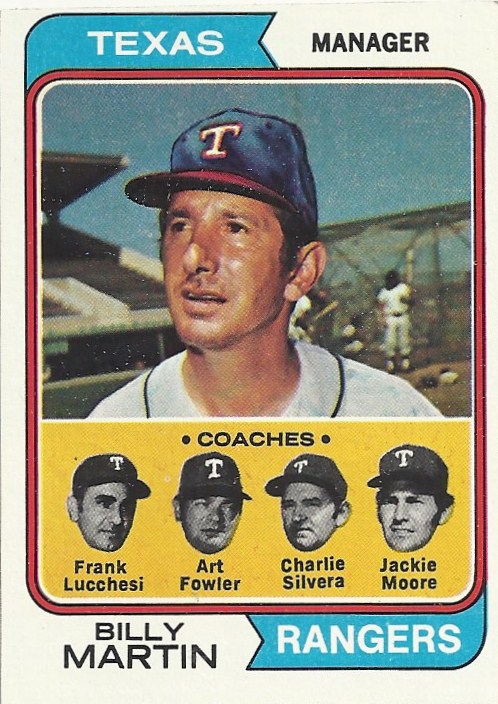
While managing the Texas Rangers in 1974, Billy Mar­tin came up with what he felt was a surefire way to safeguard his signals— he installed a transmitter in the dugout that broadcast his orders to earpiece receivers worn by each of his base coaches, eliminating signs entirely. Such technology has since been outlawed, but even then it wasn’t always useful. With a runner on third and Cesar Tovar at the plate against the Red Sox, for example, Martin told third-base coach Frank Lucchesi to give the suicide-squeeze sign. The transmission was fuzzy, however, and Lucchesi couldn’t make out Martin’s order.

“Billy says, ‘suicide squeeze,’ ” recalled Rangers catcher Jim Sund­berg, “and Frank hits his ear like he can’t hear Billy’s command. Billy says it a little bit louder: ‘Suicide squeeze.’ And Frank’s tapping his ear again and shaking his head like he can’t hear.” Finally, Martin yelled into the microphone, “Suicide squeeze!” It didn’t matter; Lucchesi couldn’t hear a word. Red Sox pitcher Luis Tiant, however, could. He stepped off the mound, looked at Lucchesi, and said, “Frank, Billy said he wants the sui­cide squeeze.”

Sign decoding is a high art, and men like Joe Nossek, while unknown to most of the baseball world, are revered for their abilities in that arena. For all the potential benefits of going to an electronic system, such a move would deprive baseball of one of its most fascinating (if checkered) facets. Worth it? Who knows. Regrettable on many levels? Undeniably.

Retaliation

Break Out the Red Cards: Dodgers and D’Backs at it Again

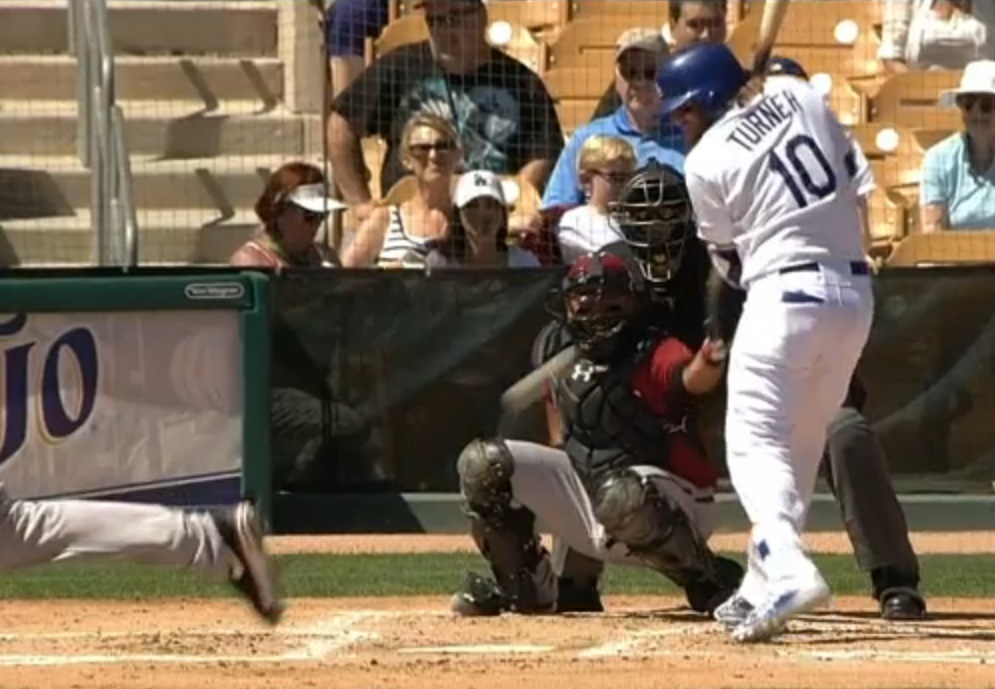
Turner drilledSo the Dodgers and Diamondbacks are drilling each other. Welcome to baseball season.

In a continuation of the bad blood we’ve seen between these teams over recent years—the lowlight being a protracted brawl at Dodger Stadium in 2013, followed by some shameful disrespect after Los Angeles beat the D’Backs in the playoffs a few months later—the teams went tit-for-tat-for-tit-for-tat on Monday, in a Cactus League game that saw four hit batters and four ejections.

This is becoming something of a spring tradition for Arizona, which made sense in recent years given the perpetual macho posturing of General Manager Kevin Towers. But Towers is out this year, canned shortly after Tony La Russa took over. Thing is, La Russa’s own track record when it comes to eye-for-an-eye justice is no softer than that of Towers—he’s just a bit more judicious in how he talks about it.

Each of Monday’s incidents can be broken down piecemeal (watch ’em all over at CBSsports.com), but can be summarized in a few key points:

  • Intent seems almost incidental here. After Chris Anderson drilled Mark Trumbo in the first inning, Arizona’s response was pro forma.
  • Because, of course it was. Tony La Russa’s in charge. The king is dead. Long live the king.
  • The fact that the drilling was done largely by a bunch of farmhands is one explanation for their collective lack of control, but so too can it be used to explain intent. What better way to garner attention in a system that favors on-field justice than to mete out some of your own?
  • Both managers denied everything. This is their job, regardless of veracity. “We wouldn’t start something in spring training, said Don Mattingly in an MLB.com report, “and if we did, never around the head.” [Emphasis mine.]
  • Spring training is the time to settle old scores on both personal and institutional levels. When the games don’t count, extra baserunners don’t matter. The Diamondbacks in particular have some history with using this detail to their nefarious advantage.

So: Did they mean it, either of them? Ultimately it doesn’t matter. Multiple gauntlets were thrown on Monday, and multiple responses offered. For a couple of teams that already didn’t like each other coming into the game and which play each other 19 times this season, this portends for more interesting dynamics in 2015.

Teammate Relations

Going, Going, Gone … Or Not

On Saturday, in the process of trying to reel back a home run, Yankees outfielder Chris Young lost his glove over the center field wall at George M. Steinbrenner Field in Tampa. Brett Gardner leaped into action, literally, scaling the fence to go get it. Joe Girardi was not pleased (“We’ve seen guys hit a home run, jump up and land on the plate and break an ankle,” he said in a Newsday report), but all’s well that ends well.

Girardi, of course, had the downside of such an action in mind. There is immeasurable upside to such a plan, however, as Rex Hudler—who was seeking a ball, not a glove—related in The Baseball Codes.

In 1996, Angels utility man Rex Hudler viciously lit into rookie teammate Todd Greene for boarding the team plane ahead of some veterans. It didn’t make much difference to Hudler that Greene couldn’t have been greener—it was his first day as a major-leaguer—but the following evening, when the young catcher connected for his first-ever home run, Hudler atoned. The game was at Detroit’s Tiger Stadium, and as soon as the inning ended, Hudler—out of the game and with a baseball in each hand—dashed to the outfield fence near the bleachers where the ball landed and offered a two-for-one deal to whoever caught Greene’s homer. Before he could get a response, though, the inning break ended and Hudler found himself urged back to the dugout by center fielder Jim Edmonds. Rather than give up his quest, however, the player vaulted into the stands and watched the Tigers’ half of the inning from the bleachers. It was more than enough to win over the locals, and Greene’s ball was offered up in short order. “When I came back in, everyone was going, ‘What the hell were you doing out there?’ ” said Hudler. “I went up to Greene and said, ‘Greenie, I got your ball for you, man!’ You’d have thought I gave him a ten-carat diamond. And now every time I see him he tells someone, ‘Hud went out into the center-field stands and got my ball for me.’ He never forgets—it’s a form of love.”

[HT/Big League Stew]

Gamesmanship

Al Rosen, RIP

Al Rosen

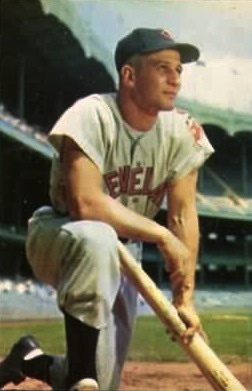
Former AL MVP and longtime big league GM Al Rosen passed away Friday at age 91. Rosen offered one of my favorite interviews for The Baseball Codes, presenting a breakfast invitation to visit him at his country club in Rancho Mirage, just outside Palm Springs, where we dined on oatmeal and orange juice while he spun stories of Cleveland and Houston and New York. Everybody there called him “Mr. Rosen.” He smiled at all of them.

His MVP season in 1953 was noteworthy for his missing out on a triple crown, as The New York Times put it on Saturday, “by a step.” The batting race was so close that what may have been a blown call during Rosen’s final at-bat of the season gave the crown to Washington’s Mickey Vernon. There was more to the story, however, than one simple call. From The Baseball Codes:

Heading into the final day of the season, Rosen already held a slight edge in the home-run race and had the RBI title locked up. His most precarious category was batting average, in which he was tied for the league lead with Senators first baseman Mickey Vernon.

In Cleveland’s game against Detroit, the Tigers took a page from the Jack O’Connor playbook and positioned their infield very deep—an invi­tation for the well-liked Rosen to bunt.

Jack O’Connor was the manager of the St. Louis Browns, who, in 1910, gifted the AL batting title to Cleveland’s Nap Lajoie. Not wanting Ty Cobb to win it, he ordered his infielders to play remarkably deep on the season’s final day, allowing Lajoie to accumulate seven bunt singles over the course of a doubleheader and nearly close a sizable gap with Cobb. The crown was awarded to Lajoie decades later when a scorekeeping error was found to have credited Cobb with two extra hits on the season.

Rosen, however, harboring an abiding sense of fair play, chose instead to swing away and went 3-for-5 with two doubles.

In the Senators’ game against the Philadelphia Athletics, Vernon col­lected two hits in his first four at-bats. Shortly thereafter, Rosen’s game in Cleveland ended, giving Vernon a razor-thin lead heading into his final plate appearance. Having been notified of Rosen’s line, every player on the Washington bench understood the situation: A hit would cement the crown for Vernon, and an out would hand it to Rosen. The Senators decided to go with option three: Don’t give Vernon the chance.

The slugger was scheduled to bat fourth in the ninth inning, and when Washington catcher Mickey Grasso doubled with one out, it seemed like a certainty that Vernon would again reach the plate. Grasso, however, man­aged to get picked off at second, a development observers attributed to the fact that he more or less wandered away from the base. Kite Thomas fol­lowed with a single, but when he tried to stretch it to a double without benefit of running hard, he was easily thrown out for the third out of the inning.

Whatever instincts Vernon may have had toward justice became irrele­vant; he never made it to the plate and Rosen missed his triple crown by .0011 points.

Playing the game the right way was as great a legacy as Rosen could have hoped for. He will be missed.

Showboating

Maddon Preaches in Cubs Camp: Thou Shalt Not Pimp

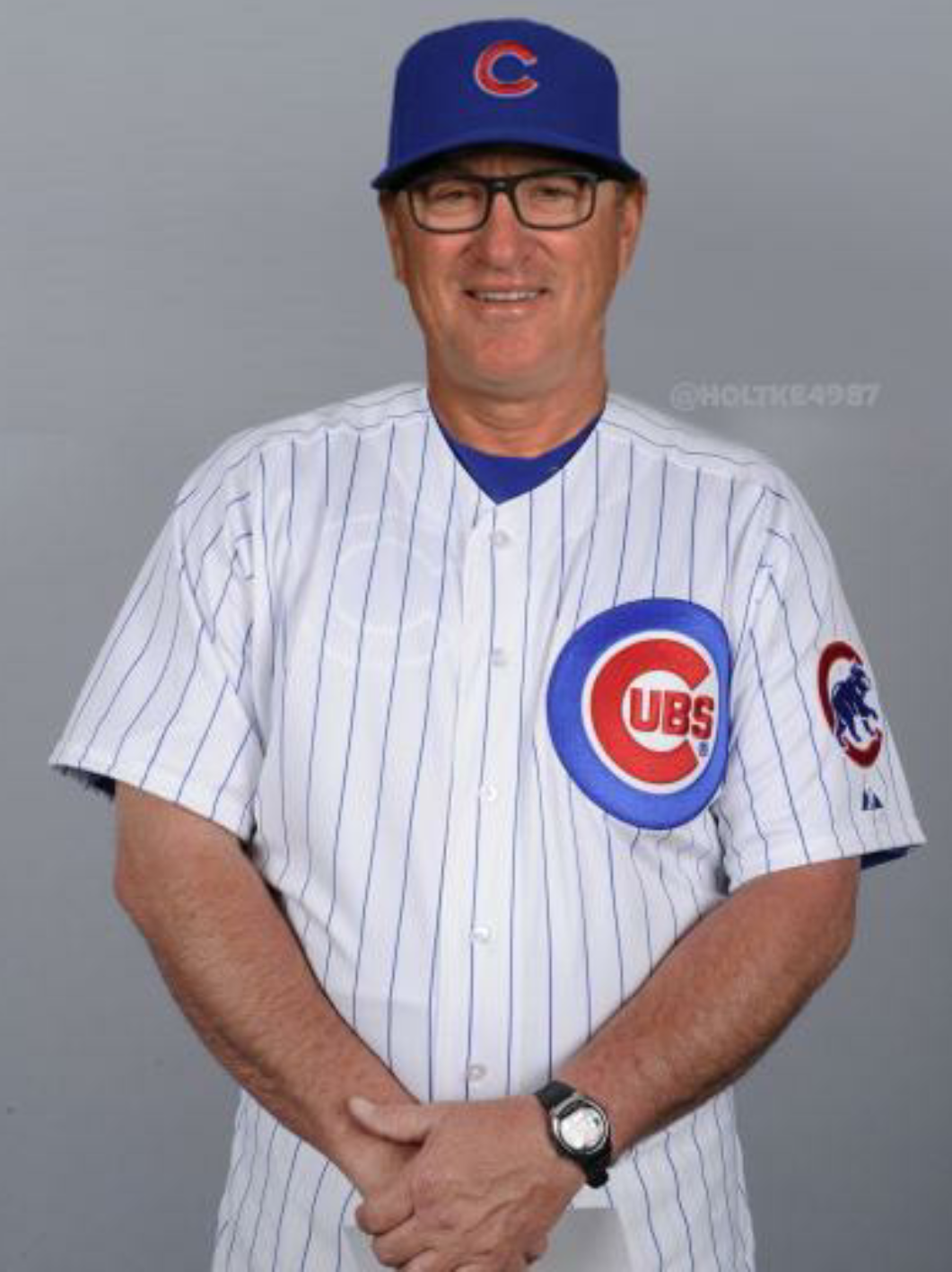
Joe MaddonWelcome to the North Side, Grandpa Maddon.

The new Cubs manager was quoted in the Chicago Sun Times expressing the antiquated notion that he’d, you know, prefer his players not take excessive pimping liberties following home runs. Doesn’t he know that such actions are now the status quo?

“Act like you’ve done it before and you can do it again,” the manager said. “The touchdown celebration, all that stuff, pounding your chest after dunking a basketball, all this stuff that’s become part of today’s generation of athletes – whether you agree with it being right or wrong doesn’t matter. I would just prefer that our guys would act like they’ve done it before and that they’re going to do it again.”

At question was third-string catcher Welington Castillo, who not only admired his homer from the batter’s box on Tuesday, but upon returning to the dugout sought out coach Manny Ramirez, saying, according to Javy Baez, “”Where’s Manny? I pimped that one.”

Joe Maddon: Not pleased.

Just because the game has embraced a look-at-me ethos to a greater degree at any time in its history, it does not mean that there is no room for those pushing back against it. Hell, it’s better cause than ever for the traditionalists to speak up.

Maddon might be the perfect guy for the job. Being soft-spoken, widely respected and wildly successful is great, but even better is that the guy has a track record of having fun with his team. This isn’t Connie Mack we’re talking about. So when Maddon intones that these types of celebrations are beneath his sensibilities, it carries some weight.

Over recent seasons with the Rays, of course, Maddon let guys like Yunel Escobar (be it celebratory gestures or ill-timed base thefts) and Fernando Rodney do their thing. But as Craig Calcaterra correctly points out over at Hardball Talk, those guys were veterans, on veteran teams. Now Maddon has a batch of youngsters, and the lessons he imparts can go a long way.

So accept the fact that baseball has changed, and that not only are the overly showy inmates running the asylum, but that the asylum isn’t all that much worse for it. As you do so, however, appreciate the likes of Joe Maddon all the more, because the guys who let their success speak for them—no matter how diminished their numbers—seem to end up speaking the loudest.

Rookie Treatment

Rookie Lesson: Mealtime is for Meals, Baseball Time is For Baseball

Noah SyndergaardSo Noah Syndergaard thought he’d grab a between-meals bite during a Mets scrimmage in Florida. David Wright and Bobby Parnell thought better, tossing his food into the trash and pointing him back toward the dugout.

A big deal, this refusal to let rookies eat during games in which they’re not even participating? More of the hazing upon which society has so firmly turned? Hardly. As a rookie, Syndergaard has a lot of baseball to learn, and, as the Mets vets so ably demonstrated, he’s not going to learn much of it indoors with his nose in a plate of baked beans. On their own the young pitcher’s actions are hardly offensive, but Wright and Parnell have taken the admirable tack of setting tone in the clubhouse, making it clear to young players and veterans alike that full effort is more than just a suggestion. That includes paying attention during games; one never knows what one might pick up.

It’s a throwback move. Ron Fairly told his own story about coming up with the Dodgers: “You had to show Pee Wee [Reese] you wanted to play this game of baseball—show him how badly you wanted to play. Pee Wee said he’d take a guy of lesser ability who really wants to play than a guy with a lot of ability who doesn’t give it a good effort all the time. Pee Wee was the captain, the one that controlled that, and if he ignored you, the other players would ignore you.”

Show you want it. It’s the least any veteran should ask.

Teammate Relations

Alex Johnson, RIP

Alex JohnsonWord just came down that longtime outfielder and 1970 AL batting champ Alex Johnson passed away Saturday at age 72 after battling cancer. He was the subject of a brief chapter in The Baseball Codes that didn’t make the final cut, mostly because it neither celebrates the game nor does it do much to explain attitudes about the unwritten rules. Still, it revisits a long-forgotten incident back in the days when baseball was undeniably less constrained than the modern iteration.

Don’t carry guns in the clubhouse. This should be an obvious rule. So when, on June 13, 1971, Alex Johnson accused Angels teammate Chico Ruiz of threatening him in the clubhouse with a pistol, people’s ears perked up. It was just the latest episode in a protracted soap opera of controversy that seemed to embody Johnson’s career, but even so, this was noteworthy.

For his part, Johnson was no stranger to clubhouse altercations. He scrapped with a variety of teammates, including a drawn-out brawl with Angels outfielder Ken Berry, and was saved from a braining at the hands of teammate Clyde Wright only when other members of the Rangers raced to disarm the pitcher of the stool he was about to swing.

Chico Ruiz, however, was different. Johnson and Ruiz had been close friends since their two-year stint together on the Cincinnati Reds in the late 1960s. Johnson had enlisted Ruiz as godfather to his daughter. But in 1971, for reasons his teammates had trouble discerning, Ruiz became a target for Johnson’s barbs. It became a regular occurrence around the Angels locker room that year to hear Johnson berating Ruiz with profanity and insults.

On that June day, both players served as pinch-hitters against the Senators, and had each repaired to the clubhouse prior to game’s end. This is where Johnson claimed that things got dangerously weird. With nobody to corroborate his story, however, and with Ruiz denying everything, an already disgruntled media turned even further against Johnson. One fed-up teammate said that if Ruiz did have a gun, his only mistake was not pulling the trigger. Shortly thereafter, Los Angeles Times columnist John Hall wrote that at least three players were “carrying guns and several others are known to have hidden knives—to use as protection in case of fights among themselves.”

Three months later, in a grievance hearing to challenge the club’s suspension of Johnson (which stemmed less from his accusation against Ruiz than a string of belligerent encounters with teammates and consistent incidents of failure to hustle), Angels general manager Dick Walsh finally admitted that Johnson’s allegations were valid and that Ruiz had, indeed, waved a pistol in his direction. This didn’t do much to help Johnson’s already diminished reputation, but it managed to lend a new layer of dysfunction to the Angels clubhouse.

Ultimately, things didn’t go well for either man. Johnson played his final game of the season on June 24, then was traded to the Indians. Ruiz, after being released during the winter, drove his car into a sign pole in the early morning hours of Feb. 9, 1972, and was killed instantly. Johnson was one of the few ballplayers to attend the funeral.