Cheating, Pine Tar

Cards Cap Controversy Causes Shildt to Decry Crooked Criteria

The stain was right there for all to see, on television no less, an outlawed substance used by pitchers to help them grip—and spin—baseballs. The pitcher in question had been dominant of late, and Tony La Russa had seen enough. He asked the umpires to do something about it.

Sound familiar?

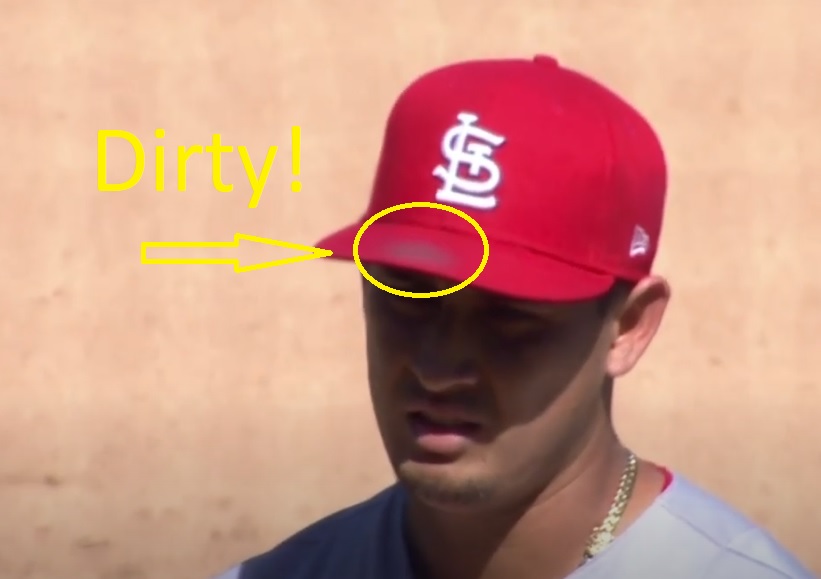
La Russa was in the opposite dugout yesterday when St. Louis reliever Giovanny Gallegos was stopped by umpire Joe West before he could throw a pitch after entering the game against the White Sox in the seventh inning. At issue was the right-hander’s cap, which bore a visible smudge atop the brim—pine tar, to judge by the educated guesses to follow. West took the cap, Gallegos got a new one and the game continued apace.

That’s not what we were talking about in the first paragraph, though. What we were talking about in the first paragraph happened in 2006, during the second game of the World Series. La Russa was managing the Cardinals at the time, and his opponent—Detroit Tigers pitcher Kenny Rogers—had some literally shady things going on.

The tell—a brown-hued discoloration on Rogers’ palm—was so obvious that Joe Buck and Tim McCarver discussed it at length on the telecast. It wasn’t long before La Russa got involved.

The consequences were enormous. At age 41, Rogers had dominated opponents throughout those playoffs despite an All-Star career that had come to be defined by postseason failure. From The Baseball Codes:

“In five wretched playoff starts prior to 2006, Rogers was 0-2, with a 10.26 ERA (plus another loss pitch­ing in relief for the Mets in 1999, when he walked in the winning run of the NLCS), not once making it out of the fifth inning. So it was some­thing of a surprise when, in 2006’s earlier rounds, Rogers ran off fourteen consecutive scoreless frames against the Yankees and Athletics. When footage from those starts was reviewed, the same brown smudge showed up on the same spot on his palm. What else could it be?”

The Rogers controversy begins at the 6:47 mark.

Only two seasons earlier, La Russa’s own pitcher, Julian Tavarez, had been suspended 10 games for having pine tar on his cap. The manager, clearly willing to accept a certain level of cheating, was unwilling to turn those particular tables. Rather than have Rogers checked—which could have led to ejection and suspension—La Russa, decrying what he later termed “bullshit baseball,” merely requested that umpires have the pitcher clean his hands. Which he did.

At that point, Rogers did the only thing he could reasonably do—15 postseason shutout innings with an obvi­ous foreign substance were followed by seven shutout innings without it. After washing up he allowed only two hits over eight shutout innings in a Tigers victory, evening the Series at a game apiece.

Maybe we’d remember it better if that hadn’t been Rogers’ only appearance of the Series—the Cardinals won the next three to take the title in five—but the core components are similar to those spurring Wednesday’s controversy. Pitchers continue to use tacky, illegal substances to increase grip and, subsequently, spin. The primary difference is that they’re doing it more frequently and with less impunity and—this part is key—far more effectively than ever. It has become Trevor Bauer’s league, with artificially induced spin rate leading to an unending stream of 97-mph fastballs with unhittable movement, supplemented by equally unhittable sliders and other breaking stuff.

To Gallegos’ credit, he earned five outs in the span of 16 pitches against Chicago, even without his suspect cap.

This year the commissioner’s office said that it would be cracking down on such things, but apart from pulling a few balls from an early-season Bauer start for examination—about which we have subsequently heard not a peep—Wednesday’s Great Cap Confiscation was pretty much the first sign that anybody in charge is paying attention.

Afterward, Cardinals manager Mike Shildt went off on the discrepancy.

“This is baseball’s dirty little secret,” he told reporters. “And it’s the wrong time and the wrong arena to expose it.”

Shildt spoke for the better part of 10 minutes, all of which are worth watching. His primary points included:

* Pitchers throughout the league use a sunscreen/rosin combination, or something similar, to increase their grip on the baseball. Hitters don’t mind because it helps with control, and nobody wants to get inadvertently drilled. What hitters don’t like, he said, is “the stuff that’s making the ball do wiffle ball stuff.” Based on yesterday’s action, some hitters are themselves starting to speak up.

* Some pitchers are getting away with far more devious things, in far more overt manners and to far greater effect, and haven’t been stymied by the league at all. The manager didn’t call out Bauer by name, but Bauer is clearly who Shildt was talking about.

Some highlights of the manager’s rant:

  • “Gio wears the same hat all year. Hats accrue dirt. Hats accrue substances, stuff. We pitched him in a day game. Did Gio have some sunscreen at some point in his career to make sure he doesn’t get some kind of melanoma? Possibly. Does he use rosin to help? Possibly. Are these things baseball really wants to crack down on? No. It’s not. I know that completely firsthand from the commissioner’s office. That is not anything that is going to affect his ability to compete.”
  • “There are people that are effectively not even trying to hide, essentially flipping the bird at the league with how they’re cheating in this game with concocted substances. There are players that have been monetized for it. There are players that are obviously doing it, going to their glove. There’s clear video of it. You can tell the pitchers that are doing it because they don’t want to go to their mouth, which Gio does off the rubber.”
  • “Major League Baseball is trying their best to [police] this in a manner that doesn’t create any black eyes for the integrity of the game that we love. But speaking of integrity, how about the integrity of the guys that are doing it clean? How about the guys that are pitching their tails off in MLB that are doing it clean and have an unfair competitive advantage for the guys who are clearly loading up concoctions that they actually advertise, don’t do anything to hide, even in plain view? That’s the guys I’m speaking for. I’m speaking the hitters who have a living to make based against stuff that’s already very, very good.”

Ultimately, this is exactly what Bauer wanted. He came out against overt cheating a couple of years back, complained that MLB wasn’t doing anything to curb it, began overtly cheating himself in order to prove his point, and ended up winning a Cy Young Award. If baseball continues to do nothing, Bauer seems content to continue his domination. If baseball cracks down, then the pitcher will have achieved what he asked for in the first place.

Yesterday, Tony La Russa had nothing to do with Gallegos’s cap being confiscated. That was all Joe West, with an assist from second-base umpire Dan Bellino, who initially spotted the discoloration. In fact, La Russa’s position seems to be entirely consistent with where he stood 15 years ago regarding Kenny Rogers. He is an old-school manager, and the old school says that there’s nothing wrong with a little pine tar on a baseball.

What we still don’t know, based on this season’s withering response, is whether MLB agrees.
Don't Play Aggressively with a Big Lead, Retaliation, Swinging 3-0

Tony La Russa Endorses Retribution Against His Own Team, Minnesota Obliges

This is how I concluded yesterday’s post about Yermin Mercedes hitting a 3-0 homer off of Willians Astudillo with two outs in the ninth inning of a game that the White Sox led by 11 runs:

If the Twins for some reason decide to retaliate tonight, or if [Tony] La Russa benches Mercedes in some misbegotten stab toward outdated honor, then we’ll be talking about this again tomorrow. More realistically, the enduring optics of one fat guy hitting a homer off of another fat guy, plus the ridiculous nature of the pitching itself, means that this controversy will not likely endure beyond last night’s news cycle. Nor should it.

Guess who’s talking about this again today—so much talk!—for every wrong reason imaginable. When it comes to misbegotten stabs, Tony La Russa has managed to lap the field.

When was the last time a manager slagged his own player to the press, gave tacit approval for the other team to retaliate, and, after said retaliation occurred, claimed publicly that he had no problem with it? More pertinently to the White Sox, when was the last time a manager did any of those things and still had his job at the end of the season?

It started when La Russa shared some thoughts before Tuesday’s game. No surprise: He was upset.

“That’s not a time to swing 3-0,” the manager told reporters before the game, according to an MLB.com report. He called it “sportsmanship and respect for the game and respect for your opponent.” He said that Mercedes “made a mistake.” He called Mercedes “clueless.” Most brazenly, La Russa also said that “there will be a consequence that [Mercedes] has to endure here within our family.”

What the fuck is that about? La Russa was intentionally vague. Could the Twins have taken it as a green light to respond? Of course they could have. Did La Russa know that his comments might be taken as such? If he didn’t, he’s a fool. More likely, that was his intent from the beginning.

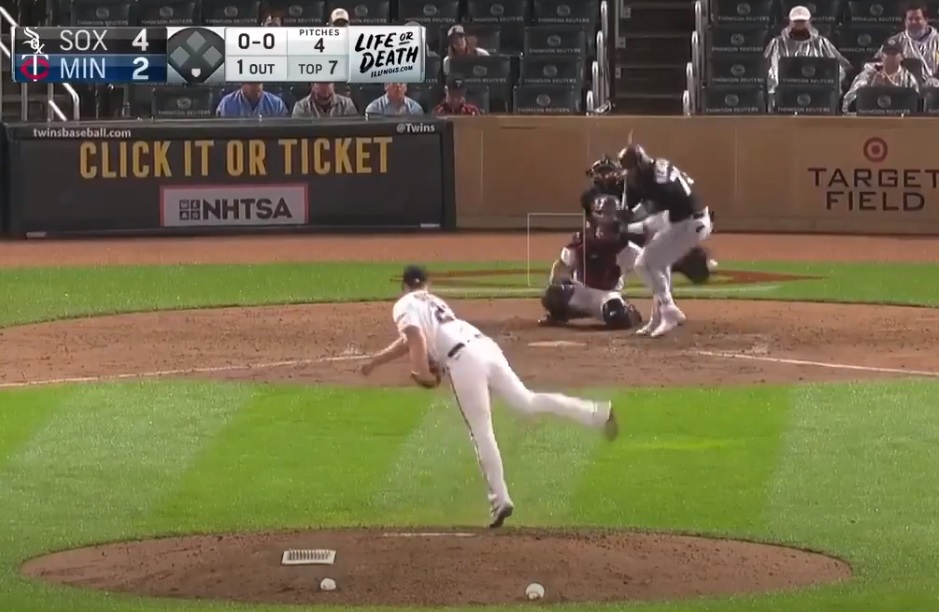
With that as the background, it should surprise nobody that, with one out and nobody on in the top of the seventh in a game that the White Sox led, 4-2, Minnesota reliever Tyler Duffey threw a pitch behind Mercedes’ legs. It was clearly intentional. Was he acting alone? Was he following orders? Either answer reflects some overt thuggery. Most enduring was the impression that the most old-school guy in the building, Tony La Russa, orchestrated the entire thing against his own player.

If that actually was his goal—or even if a critical mass of White Sox players think that was his goal—La Russa should just resign now. Few people in that room will listen to him again. Not helping the manager’s cause were postgame comments in which he said things like “I don’t have a problem with how the Twins handled that” and “I didn’t have a problem with what the Twins did.” He outright excused the pitch, saying, “The guy might have just been trying to get a sinker in,” when the guy was clearly not just trying to get a sinker in.

Yes, there’s the fact that Mercedes swung through a take sign on his fateful homer, which is enough to piss off any manager, but come on—managers don’t discuss missed signs during press conferences. La Russa was angry at one thing and one thing only. By leaving things intentionally vague, he gave the Twins all the leeway they needed to respond however they saw fit. (La Russa is 76. Twins skipper Rocco Baldelli is 39, and was born two years after La Russa’s managerial debut. Somehow, they both ended up looking comparably stodgy after this one.)

For those who doubt whether this series of events will cost La Russa in the long run, know that the inevitable avalanche of doubt within the White Sox clubhouse has already begun. After the game, Lance Lynn—Chicago’s best and most veteran pitcher, who’s been around long enough to have played for La Russa in his last managerial job a decade ago—spoke out. While Lynn didn’t overtly criticize his manager, he took a clear position against the La Russa’s entrenched stance.

“The more I play this game, the more those [unwritten] rules have gone away, and I understand it,” the pitcher said in an MLB.com report. “The way I see it is, for position players on the mound, there are no rules. Let’s get the damn game over with. And if you have a problem with whatever happens, then put a pitcher out there. Can’t get mad when there’s a position player on the field and a guy takes a swing.”

And so it begins. La Russa is well on his way to losing that clubhouse, if he hasn’t already.

If there’s a saving grace for him it’s that the White Sox are 25-16, the best record in the American League. Then again, in the first game after the Mercedes Incident, the same one in which Minnesota gratefully accepted La Russa’s offer to throw freely at his own player, Chicago coughed up a four-run lead to the team with baseball’s worst record, and lost, 5-4.

White Sox players deserve to feel better about things than they inevitably do this morning.

Update (5/20): Guess who doesn’t agree with La Russa? Tim Anderson for one. Lucas Giolito for another. For players to publicly contradict their manager on the most visible point he’s made since taking over the club is an ominous sign. And it’s only the beginning.

Update (5/21): Tyler Duffey and Rocco Baldelli were suspended three games for their roles in this. The best part about it was when a guy on Twitter said, “Tony La Russa appealed the decision.”

Update (5/21): CC Sabathia has thoughts, which normally wouldn’t be worth a dedicated update but boy howdy these ones are.

Don't Play Aggressively with a Big Lead, Swinging 3-0

A Ridiculous Pitch In A Ridiculous Setting Leads To Another Conversation About Swinging 3-0 During A Blowout

The stringency of baseball’s unwritten rules has been slipping for the better part of a generation now. Players care less about how to play the game than ever, at least from the standpoint of decorum, a shift that has largely worked out pretty well for the sport.

One of the stodgiest of the unwritten rules is also one of my favorites when it comes to representing the old-school mentality. Nothing says “don’t do what you’re paid to do in an ideal situation in which to do it” like not swinging at a 3-0 pitch while your team is leading big.

The idea behind the rule is actually kind of sweet. Relief pitchers called in at the tail ends of blowouts tend not to be world-beaters, and the last thing either team wants is for them to extend the game by walking guys. So when the count runs to 3-0, baseball’s code urges hitters to allow the opponent a moment to get straight with a courtesy fastball down the pipe. The war has already been won; ceding a minor point during an inconsequential battle is the gentlemanly thing to do. It is how ballplayers approached such at-bats for the better part of a century.

The argument against such behavior is simple: Ballers gonna ball. Guys get paid on stats, so why short them based on game score? Fans want offense.

Both of these viewpoints were trotted out last season when Fernando Tatis homered on a 3-0 pitch with a big lead against the Rangers. It was a thing for weeks thereafter, based largely on the fact that Tatis’ own manager publicly came out against the swing.

Yesterday it happened again, this time with wrinkles.

The event in question was Yermin Mercedes’ homer on a 3-0 pitch while Chicago led the Twins 15-4 with two outs in the ninth. Everybody, even the White Sox, were ready for that game to end.

One wrinkle came via the guy who threw the ball. Willians Astudillo is a catcher by trade (it’s the position he’d been playing in this one since the fourth inning), and at 5-foot-9, 225 pounds, might be the most perfectly round player in baseball. Astudillo had already made one mound appearance already this season, in which he breezed through the Angels for an inning in April throwing nothing but junk. This time would be different.

The righty lobbed eephus after eephus to Mercedes, none close enough for the hitter to even consider. The fourth pitch of the at-bat was mostly a batting practice meatball that Mercedes could not refrain from hammering.

Which leads one to question how much seriousness should be afforded an at-bat that the opposition is clearly not taking seriously. Does Astudillo deserve more respect for trying to help his team by performing out of his element? Or do the Twins deserve whatever Mercedes gave them for making a relative mockery of the sport? Hell, the fateful offering was the slowest home-run pitch—47.1 mph—ever measured by Statcast.

Another wrinkle: Mercedes’ manager, Tony La Russa, was the subject of an entire book—Buzz Bissinger’s Three Nights in August—devoted largely to his deep consideration of the unwritten rules. La Russa did not appear to address Mercedes’ swing during his postgame press conference, which left the bulk of the commentary to the Twins broadcast, featuring former big leaguer Roy Smalley saying, “I don’t like it. At 15-4, I don’t like it. You’re gonna get the same pitch after this. I don’t like it.”

If the Twins for some reason decide to retaliate tonight, of course, or if La Russa benches Mercedes in some misbegotten stab toward outdated honor, then we’ll be talking about this again tomorrow. More realistically, the enduring optics of one fat guy hitting a homer off of another fat guy, plus the ridiculous nature of the pitching itself, means that this controversy will not likely endure beyond last night’s news cycle. Nor should it.

Update, 5/19: Yeah, we’re still talking about it. And for the stupidest reasons possible.

Intra-Team Fights

Rat, Racoon Or Bad Blood: Who Cares? The Mets Won

If one is to believe Francisco Lindor and Jeff McNeil, a four-legged invader found its way into the tunnel behind the Mets dugout at Citi Field on Friday night. Whether it was a rat or a raccoon continues to be a matter of speculation … at least among those who believe Lindor and McNeil.

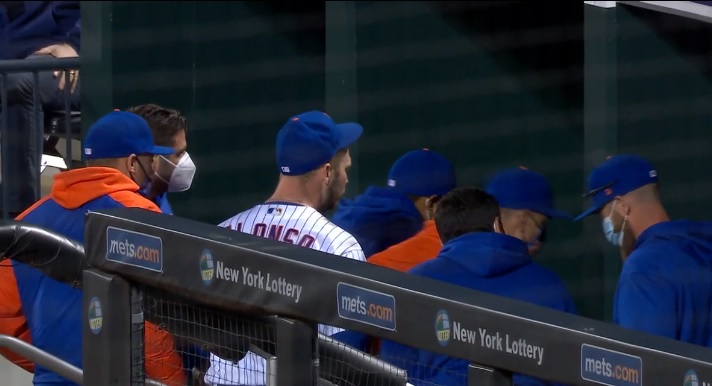
Why this had to be addressed at all was that in the bottom of the seventh inning New York’s bench virtually emptied, players racing to the stairs to see whatever was happening below. This did not escape the attention of the TV broadcast.

What was happening below, of course, is up for debate.

Despite Lindor smiling through his description of the incident (it was a rat, he said), and McNeil doing similarly (might have been a raccoon), there is ample reason to believe that they’re both full of hooey.

Only moments earlier, Arizona’s Nick Ahmed had hit a ground ball up the middle, with Lindor and McNeil—the shortstop and second baseman, respectively—pausing in deference to the other before Lindor finally corralled it. By then, however, it was too late to get the runner. Something had gone wrong, a detail confirmed after the game by Mets manager Luis Rojas, when he said in a New York Post report, that “It’s happened a couple times where they both go into the same lane and they have to put on the brakes and the ball gets through.”

Despite Lindor faulting himself to reporters and McNeil calling it a miscommunication, it seems likely that emotions grew heated as soon as the inning ended, at which point the pair took their argument to a location hidden from view.

Coming up with alternative storylines is a time-tested method for diverting attention from intra-team squabbles. This very topic is covered in the introduction to The Baseball Codes:

That potential for discord exists within a clubhouse is hardly a secret—any group of twenty-five guys that spends as much time together as does a baseball team is bound to have conflicts—nor is it a secret that any leaks from within spell open season for the media. For proof of this, one has only to look at the rare instance when tempers boil over in the open, such as Jeff Kent pushing Barry Bonds in the Giants dugout, or Darryl Strawberry and Keith Hernandez coming to blows in front of a phalanx of reporters during Mets spring training. Stories deconstructing team strife followed each of those incidents for weeks; years after combat­ants have put their differences aside the press continues to look at any rec­onciliation with skepticism.

Among the stories recounted in the book is a 1973 hotel-room brawl between Davey John­son, then a star second baseman for the Atlanta Braves, and his manager, Hall of Famer Eddie Matthews.

The way Johnson tells it, after an initial verbal disagreement the manager invited him into his room and chal­lenged him to a fight. Johnson, reluctant at first, changed his mind when Matthews wound up for a roundhouse punch, then knocked the older man down. Matthews charged back, and as the sounds of the scrape flooded the hallway, players converged on the scene. In the process of breaking things up, several peacemakers were soon bearing welts of their own.

“The next day at the ballpark we looked like we had just returned from the Revolutionary War,” wrote pitcher Tom House (a member of the team, who, true to the code of silence, left all names out of his published account). “Every­body had at least one black eye, puffed-up lips, scraped elbows, and sore hands. It had been a real knockdown battle.”

This was something that couldn’t be hidden from the press. Matthews called the team together, and as a unit they came up with a story about a game that got carried away, in which guys took good-natured beatings. Flimsy? Maybe. Accepted? Absolutely.

“You can ask Hank Aaron and others on that team,” Johnson said, laughing. “Eddie said his biggest regret [in his baseball career] was not having it out with me again. That one never got out. It never made the papers.”

That Lindor and McNeil did their best to give similar treatment to whatever happened in that tunnel was not appreciated by Mets GM Zack Scott. At least not enough for him to support the ruse.

“You’d have to ask the players that, why they chose to handle it that way,” he said in the Post. “It’s definitely not how I’d go. … The best way to handle these things is be as transparent as you can be without divulging things that people don’t want out there, to address it, to hit things head on. I’m not saying that to criticize what the players did [Friday] night. Wouldn’t be my recommendation, and no one in the organization would make that recommendation to handle it that way, but what’s what they chose to do for whatever reason.”

Well, the reason is obvious. Its utility might be dubious—especially with messaging from team brass running counter to that from players—but things seem to have settled down since that point. Lindor homered just moments after the “rat sighting,” and New York beat the D’Backs 5-4 in 10 innings. Then the Mets won both of the weekend games to put them at 16-13 and one game up in the National League East.  

They already have a faux hitting coach. Maybe the Mets should thank their faux rat for their recent win streak, as well.

Celebrations

Garrett Suspension Shows Exactly What Kind Of Celebration MLB Is Promoting, And What Kind Of Celebration It Is Not

By handing down a seven-game suspension to Amir Garrett, Major League Baseball has thoroughly muddied the waters about what it wants to see from players when it comes to celebrations.

On Saturday, Garrett punctuated a strikeout of Anthony Rizzo by yelling at the batter, a one-on-one confrontation taken by those in the Cubs dugout as disrespectful. It’s not difficult to understand where they were coming from. It was disrespectful. So disrespectful that Javy Baez vaulted the dugout railing and charged the field.

Given that Garrett was subsequently suspended for seven games and Baez only ended up with a fine, MLB is clear in who it holds culpable. Except that Garrett didn’t put anybody in danger; the physical confrontation was prompted by Baez. MLB ruled similarly earlier in the month when it suspended Nick Castellanos for flexing over pitcher Jake Woodford, punishment that would have almost certainly been absent had not Yadier Molina reacted by pushing Castellanos from behind. For that, Castellanos was suspended for two games while Molina got off scott free.

Garrett’s suspension leads to a question similar to those raised following the Castellanos incident: Had Baez not responded, and had Rizzo returned to the dugout as he was already doing, would the league have handed down any discipline at all? Not damn likely.

So we’re left to guess. Bat flips have recently gone mainstream, in no small part because the league officially adopted them as part of its play-up-the-personalities campaign. A decade ago, however, they were seen as disrespectful. Had an incensed opponent charged the field in response to one, who would the league have held to account? According to the current structure, it’d be the bat flipper himself.

At least the decision to suspend Garrett more or less lines up with the way players see things on the field. Pitchers mostly don’t take offense to bat flips, and hitters mostly do take offense to being yelled at after they strike out. That’s because what Garrett did is genuinely offensive, and bat flipping is not.

People keep talking about how reactions like Garrett’s and Castellanos’ are standard fare in the NBA, and wonder why baseball so breathlessly tries to tamp down such behavior. There are a few reasons for this. For one thing, short of starting a fight there’s no such thing as retaliation in the NBA—not in the sense of a pitcher throwing at a hitter, anyway. Also, action waits for no man, and there’s not much time during a basketball game to consider somebody’s words. Guys can jaw all they want, but by the time the guys they’re insulting have formulated a response they’re already heading back down the floor. In the NFL, end-zone dances have become commonplace, but teams continue to get flagged for taunting should they cross that particular line.

What MLB wants here is obvious: Feel-good celebrations that can be marketed to a baseball-centric crowd. Even Garrett’s own “rock the baby” motion, which he does after getting a big out—putting the opponent to sleep or whatnot—has not been taken too personally by opponents.

What MLB does not want is just as obvious: A turn toward the NBA. How do we know? Because if this was really about guys stoking dangerous situations, then the players responsible for physical confrontations—Baez and Molina, respectively—would be punished in ways similar to or exceeding the revelers. That didn’t happen.

The league office has spoken, so listen up. Keep it clean, baseballers, and celebrate at your own pace so long as you stay on the proper side of the league-designated line.

And if by chance you don’t know where that line is drawn, they’ll be sure to tell you.

Celebrations

As April Ends, Pitchers Take Celebrations To New, Infuriating Level

On one hand, there’s Let the Kids Play, wherein major league hitters are given leeway by the home office to preen and bat flip, free of judgement and repercussion. Pitchers have responded to this informal edict by beginning in increasing numbers to celebrate similarly, particularly following big strikeouts.

The equity of the system is logical, although observing logic has never been a strong suit for ballplayers. The topic has come up several times over the last week alone.

It started with Trevor Bauer vs. Fernando Tatis, which set the bar pretty high. After Tatis doubled down against Bauer, making fun of the pitcher’s previous antics as part of two home run trots in the same game, Bauer credited him publicly for his efforts. (Tatis’ alleged peeking: not so much.)

When the celebrations spun in the opposite direction, however, things got salty.

Start on Friday, when Philadelphia pitcher Jose Alvarado rejoiced after fanning Mets left fielder Dominic Smith to end the eighth inning in what would be a 2-1 Phillies victory. Alvarado spun toward second base and did a couple of low-slung flex pumps, then turned back to the plate and continued the act. Smith took exception and benches cleared.

On Saturday, Cincinnati’s Amir Garrett acted similarly, so angering the Cubs that Javier Báez —who wasn’t even on the field—hopped the railing to approach the pitcher, spurring another dugout-emptying incident.

There is, of course, one notable difference between the Tatis incident and the latter two.

Start with Alvarado, who came into the game irked after being chirped at by the Mets on April 13 for two pitches to Michael Conforto—one of which ended up near Conforto’s head, the other of which hit him. Among the loudest voices in New York’s dugout that day was Dominic Smith.

So when the pitcher fanned Smith in a big moment, he let Smith know all about it. Alvarado shouted at the hitter as they walked off the field, then did a you-talk-too-much pantomime with his hand when Smith responded. At that point, the two approached each other with an abundance of macho posturing and not much will to actually fight. (After the game, Smith did offer to meet Alvarado under the stands “if he really wants to get after it.”)

Garrett’s incident was similar. After fanning Anthony Rizzo, Garrett pounded his chest and yelled directly at the hitter. Again, history fueled his decision. Garrett, for whom displays of emotion are commonplace, pulled a similar act with Báez in 2018, and spurred a similar incident with Chicago’s Kyle Schwarber in 2019.

This is where we delve further into the gray area that is Major League Baseball in 2021. Are celebrations to be tolerated? According to the league, as well as to the majority of pitchers tasked with enforcing decorum, they are. So now we must ask what types of celebrations are to be tolerated.

What Tatis pulled against Bauer is apparently kosher, mostly because the pitcher deemed it so. The reasons he did this are obvious: Bauer has long been an outspoken proponent of bringing life to the sport via personal flair, and is even-handed with his opinions about who gets to exhibit said flair, even when he’s on the wrong end of it. Even more importantly, Tatits’ stylings, while aimed at Bauer, were also playful and firmly rooted in memes that the pitcher himself had started.

Alvarado and Garrett, on the other hand, were firmly focused on showing up the opposition. Their intentions were obvious and petty, and the responses they elicited should not have been difficult to predict. Which may have been the point.

Báez, a man known for his own celebratory prowess, laid down the opinion for his caucus after Saturday’s game.

“I’m not going to let [Garrett] or anyone disrespect my teammates or my team,” Báez said in a Chicago Tribune report. “It was not a big situation. I’m going to try to stay professional with this but … he needs to respect the game. If you don’t respect the game and if you don’t respect us, then that’s going to happen. Because he’s doing it to us. He’s not doing it to his teammates to pump them (up).”

So it seems that the answer to the question about where we are, exactly, on this topic is … we still don’t know. The underlying tenet of baseball’s unwritten rules, be they the modern-day version or the buttoned-up overkill from generations past, is respect. The threshold has changed markedly, but it still exists, and lines continue to be crossed. With attitudes shifting so quickly, it’s now mostly a matter of keeping up with where things stand at any given moment.

The Phillies and Reds gave us some clear-cut examples. Hitters have achieved so much celebratory leeway that it’s now pitchers who tend to give us pause. This might be because they don’t have a home run to admire or a trot to enact; their focal point for strikeout success is and will forever be the plate. Frequently their theatrics don’t mean anything more than the theatrics from their offensive counterparts … but sometimes they do. To judge by last week, some pitchers may hav trouble distinguishing bat flips from direct, one-on-one showdowns. (For what it’s worth, MLB agrees that what Alvarado did was not Letting the Kids Play: the pitcher was subsequently suspended for three games.)

In this context, I can’t help thinking that Báez’s response to Garrett sounds remarkably similar to comments from players of previous generations who were busy decrying things like sideburns or pants being worn too long. You know: Kids these days.

The more things change, it seems, the more they stay the same.