Major League baseball is reporting that the Blue Jays aren’t much interested in bringing back Carlos Delgado for a second stint with the club. General Manager Alex Anthopoulos has cited a desire to chase long-term success with a young corps of players, a strategy that doesn’t exactly embrace a fading 37-year-old slugger.
Delgado came to prominence with the Blue Jays as one of the game’s great first basemen, but his most significant appearance in The Baseball Codes has less to do with his hitting than with his baserunning. It concerns a specific play from 2004, in which Delgado took out Red Sox first baseman Doug Mientkiewicz with a forearm shiver. The following excerpt has more.
One problem with the play, at least to Mientkiewicz, was that he wasn’t playing first base at the time, but had volunteered to man second after Boston experienced an unforeseen shortage of players at the position. The infielder had, at that point, played all of one inning there in his seven-year major league career and was by no means comfortable.
There was also the fact that in Mientkiewicz’s opinion, such takeouts weren’t a regular part of Delgado’s repertoire. “I’d seen him veer off on double plays for five years and not even slide into second,” he said. “Yet he sees somebody playing second who’s never played there before and he took full advantage of it. If Aaron Rowand had knocked me on my ass I don’t think I’d have been that mad, because Aaron goes full tilt from the word go. . . . If I were to always see Carlos taking guys out at shortstop, I never would have said a word.”
When Mientkiewicz got up screaming, the pair had to be separated. Red Sox pitcher Derek Lowe drilled Toronto’s All-Star during his next at-bat, and Delgado was forced to avoid several other pitches during the course of the three-game series. (“Curt Schilling missed him once and came to me and apologized,” said Mientkiewicz.)
Not in the book but no less interesting is the following, from our interview with Mientkiewicz:
“I was mad for a split-second, but when I came back I said, “You know, he did what he was supposed to do.” But the fact that he doesn’t play that way all the time, that’s when I got mad. . . . I remember the remark I made to him: ‘You know, if you played in a game like this every day, you wouldn’t be 17 games back.’ . . . I never had a problem with Carlos before that, and I still talked to him afterward. But there are veteran guys in Boston, and every time he came up for the next four games, he got drilled. And he didn’t start a big ruckus—he just took his hit-by-pitch and went to first base.”
Mark McGwire, here hitting one of nearly 700 career homers, wishes he'd not played during the steroid era.
Now that Mark McGwire has performed his highly public act of contrition in front of all of America (or at least, those discerning enough to watch the MLB Channel in early January), there’s again a public discussion, if not outcry, over the steroid era, and whether it has tainted the record book forever.
Probably not. It’s certainly not the first time baseball players have been proponents of “better living through chemistry.”
Two anecdotes we weren’t able to get into the book serve to illustrate how pervasive the use of amphetamines–a.k.a “uppers,” “greenies” and “beans”–were in the “Era Just Before The Steroid Era, Except it Leaked Into the Steroid Era” :
We talked to a successful pitcher, who not only used greenies on a fairly regular basis, but it was their use that helped him decide when to quit the game. “I realized one day that I was actually afraid, fearful of taking the field without at least two greenies under my belt,” he told us. “That’s when I knew it was time to get out–while I still had some sanity.”
But even getting out didn’t solve the problem for everyone. At the 2007 All Star Game festivities in San Francisco, one easily-recognized former MVP came into the locker room, walked into the training room and erupted, yelling, “Where the hell is the bowl of beans?”
The player was adamant that he was not going to “go out on that field in front of people” without “beaning up,” and he was clearly serious about the matter.
It’s noteworthy that he was talking about taking the field for the Celebrity Softball Game, and that he’d already been retired from the game for a number of years.
As the players say, “If you’re not cheating, you’re not trying.”
Last week, former Padres second baseman Edgar Gonzalez—brother of San Diego star Adrian Gonzalez—ditched the big leagues for a contract with the Yomiuri Giants of Japan’s Central League.
There will be a number of things for him to learn, of course, apart from an increased appreciation of sushi. Baseball might be baseball, but baseball in Japan isn’t played quite like it is in the States.
The extensive practice habits of Japanese teams are well-noted, as is the fact that there are cheerleaders at games. But how, we wondered, are the unwritten rules different? What about baseball’s code in Japan surprises Americans who go there to play, and what about baseball’s code in America surprises Japanese players?
Most pertinently, with the influx of Asian players in the major leagues, have any foreign codes permeated domestic clubhouses?
It’s an interesting topic, but with so many American codes to deconstruct, we didn’t have space for an in-depth examination of the game’s morals on foreign shores.
That doesn’t mean we didn’t research the topic, however. The following are excerpts from interviews we did with an assortment of players who spent time in Japan. The goal isn’t to paint a complete picture, but to offer up a taste of what baseball there is like. (For a comprehensive look at the subject, check out “You Gotta Have Wa,” by Robert Whiting.)
Good luck, Edgar.
* * *
On the physicality of play: Rex Hudler: “They didn’t come after me on double plays. They didn’t like to break up double plays. They weren’t real physical in their game. I was a physical guy, I liked contact. I had to ask the Americans on the other teams to come get me. I said, ‘come on, let’s make it fun, let’s make it exciting.’ ”
Rod Allen: “(Japanese infielder) Tad Iguchi’s first couple of months here he just about got killed because he didn’t know that the American players came in that hard at second base.”
On retaliation: Mac Suzuki: “I never saw a guy hit a batter on purpose. Ever. Even if we got beat by 15-0, or whatever. When they do hit a batter (accidentally) they tip their cap. But I didn’t do it. [Suzuki, who is Japanese, learned baseball in the U.S. and came up through the American minor league system.] We almost got in a fight. I hit two hitters and I didn’t tip my hat, and they yelled at me. I almost got fired from the (Seibu) Lions.”
Allen: “Absolutely you get thrown at more. I charged the mound one day. I had run over the other team’s catcher—something else you don’t do over there—and their manager was very irate and very upset. I knew they were going to throw at me. The next time I got up, they threw at me but they missed. I had already prepared two innings ahead in my mind that, if they did throw at me, I was going to the mound.
“So, I did do that, and the guy ran. It was hilarious. I’m doing a lot of dodging and weaving through his teammates to get to where I wanted to get to. I chased him all the way to the warning track in left-center field. Nothing much happened when I caught him. There were some other guys there, pushing and shoving, there were no other punches thrown.
“Obviously, I got booed, kicked out of the game, and it’s still played on the blunder shows on the video boards all over Japan.”
On dealing with records: Ken Macha: “The last game of the season my first year over there, the leadoff hitter on the other team was hitting .351. Our guy was hitting .350. Their player did not play. They needed to win that game to win the league; if they lost that game, the Giants would win the league.
“They walked our leadoff hitter every at-bat, so I came up with guys on base every time up. I told our player to just throw his bat at the ball and something might bloop in. He thought that wouldn’t be proper, so he just stood there and took the walk. And the other team just took a 9-0 loss—with the Giants sitting in the stands.”
On preparation: Allen: “Everything is done to excess over there, whether it’s taking ground balls, throwing from the outfield, etc. Teams don’t take infield here, but over there, your pregame routine, you make five throws to second, five throws to third, five throws home, so by time you got to the game, your arm was pretty much gassed.
“Also, the younger players would have to practice at night. The hotel you are staying at, there would be a room set aside where the young players either had to bring their bats, or towels. If you are a position player, you take your bat and take swing after swing after swing—dry swinging. If you were a pitcher, you put a towel in your hand and simulated a bullpen session.”
On running up the score: Goose Gossage (from “The Goose is Loose”): “Japanese teams delight in running up the score. Here in the states, when a team gets way ahead, it generally calls off the dogs. . . . Not so in Japan.
“In one of my first outings I found out about the Japanese way of doing things. The hawks were trailing something like 9-1 late in a game when Tabuchi sent me in for a little bit of work. The other team immediately proceeded to start bunting.
“With my big windup and delivery, I wasn’t exactly a model of nimbleness and grace coming off the mound, which the opponents quickly grasped. Time after time a batter would push the ball down the third-base line and beat my throw to the bag.
“I got pissed. The madder I became, the more the other team bunted. And, as runner after runner crossed home plate, the opposing players sat in their dugout roaring with laughter. They were having a ball at my expense.
“When I finally got the third out of the inning—after giving up six or seven runs—I came down into he Hawks dugout, slammed down my glove, and headed for the tunnel below the grandstand that connected the two dugouts. I was ready to kick ass. . . . Several hawks coaches came running up and restrained me before I could do anyone harm. They settled me down and explained they had no problem with the other team’s tactics.
“In America the other team would have been guilty of showing me up. There it was standard procedure.”
News came out over the weekend that Derek Jeter will end his status as baseball’s most eligible bachelor. The Yankees shortstop will wed actress Minka Kelly on Nov. 5, according to Newsday.
Jeter might be a newby to the wedding game, but he won’t be blindsided when it comes to monitoring his wife’s interactions with his teammates. This is part of the clubhouse code, in which players protect each other from forces outside the clubhouse: management, media . . . and women.
The rule in question is designed to keep the worlds of wives and girlfriends at a safe distance, especially among players who have a toe in each pool. It’s the basis for wives and girlfriends having their own seating sections in a given ballpark, the better to reduce chances that they’ll inadvertently run into each other.
This isn’t to say that Jeter will be anything but faithful, but at the very least he’ll know enough to protect teammates who might not measure up to that standard. It is, after all, an unwritten rule.
The following excerpt from The Baseball Codes has more.
For ballplayers, protecting teammates from the women in their lives can be complex, especially when it comes to possible trysts on the road. The crux of the problem with this particular endeavor is that it involves ballplayers—the most visible people in virtually any public environment—trying to stay as invisible as possible. The bond between players is strong, however, and they do what they can to maintain each others’ anonymity.
It’s why players whose wives show up during road trips make clear to their teammates where on the town they’ll be that night, to avoid the chance of running into a married player on a “date” with someone other than his wife. (Mets pitcher Doug Sisk was once guilty of this when he brought his wife Lisa to the team’s hotel bar, where she saw a number of his married teammates getting friendly with strange ladies.)
This is why some players implement an ignorance rule at home. “My policy with my wife is this: don’t ask me,” said one longtime pitcher who vowed fidelity but didn’t want to incriminate his teammates. “First of all, I don’t want to lie to you. Second of all, I don’t want to tell you that this guy’s cheating on his wife. You’re her friend, you’re going to be sitting next to her at games, your heart will be breaking for her—you can’t do it. Please, just don’t ask me. Don’t ask me, because I don’t want to put you in that situation.”
Not everybody is so virtuous. Players have been known to prattle to their wives about the extra-marital adventures of their teammates in an effort to mask their own infidelities. Wives inevitably talk to each other, and when word gets out about where it all started, clubhouses can fracture. When a player is inexplicably traded over the off-season for less than full value, there’s a reasonable chance that he betrayed his teammates in this or another regard (or, in turn, that he was betrayed by a less-expendable star).
The best story we found on this topic was told by Negro Leagues star Buck O’Neil. But we don’t want to give too much away here. You’ll have to wait for that one until the book comes out.
Once again, Bert Blyleven found himself on the cusp of Cooperstown. Once again, he came up short. Even if the fact that he won more than 19 games only twice and made only two All-Star teams over the course of a 22-year career is enough to deter Hall of Fame voters, there’s one area in which Blyleven was baseball’s undisputed king: the hotfoot.
There are myriad ways to set a teammate’s cleats on fire while he’s still wearing them, and Blyleven mastered them all. The following excerpt from The Baseball Codes has more:
If Cooperstown utilized the instigation of podiatric discomfort as part of its entry criteria, Bert Blyleven would have been enshrined five years after his 1992 retirement. How good was he? For a time, the fire extinguisher in the Angels’ clubhouse read, “In case of Blyleven. Pull.”
Ordinary hotfoot artists settle for wrecking their teammates’ cleats, but Blyleven was so good that he took the rare step of drawing the opposition into his line of fire. In 1990, the pitcher, then with the Angels, set his sights on Seattle manager Jim Lefebvre, who made the mistake of conducting an interview near the Anaheim dugout. Never mind that Lefebvre was there at the request of then-Angels analyst Joe Torre; Blyleven was deeply offended. There was, in the pitcher’s mind, only one appropriate response.
“I crawled behind him on my hands and knees,” Blyleven said. “And I not only lit one shoe on fire, I lit them both on fire.” Torre saw it all, but continued the interview as if nothing was happening. As Blyleven retreated to the dugout to enjoy the fruits of his labor, he was dismayed to see that Lefebvre refused to play along. “We all stood there and watched the flames starting,” said Blyleven. “The smoke was starting to come in front of (Lefebvre’s) face, but he was not going to back down. By god, he was going to continue this interview. And Joe was laughing, trying not to roll.”
Torre offered up an apology as soon as the interview wrapped, but Lefebvre was too busy trying to extinguish his feet to pay much attention. He also knew exactly who to blame. Blyleven, the following day’s starter for the Angels, found out later that Lefebvre offered $100 to anyone on his team who could hit a line drive off the pitcher’s face. Part of the reason the manager was so angry was that he was deeply superstitious about his shoes; in fact, he continued to wear the scorched pair for several weeks, despite the damage.
In the end, Lefebvre wasn’t the prank’s only dupe. “Bert really screwed me up with that one, because Lefebvre thought I was in on it and I wasn’t,” said Torre. “Lefebvre didn’t think it was very funny—they were brand-new shoes and he got embarrassed in public. Blyleven was nuts—absolutely nuts.”
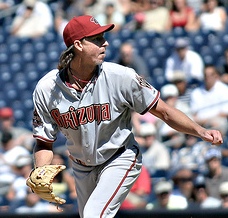
Randy Johnson retired yesterday. The highlight of his soon-to-be-Hall of Fame career was the perfect game he tossed in 2004 — a great moment for Johnson, the Arizona Diamondbacks and baseball in general. His manager, Bob Brenly, however, didn’t enjoy things quite as much as the rest of us.
Read on, in the following excerpt from The Baseball Codes:
* * *
“Same seats, same thoughts—that’s the mantra,” said Bob Brenly, manager of the Arizona Diamondbacks when Randy Johnson threw his perfect game in 2004. “From about the fourth inning of that ballgame on I found myself sitting on the bat rack at Turner Field. (Second baseman) Matt Kata’s bat was sitting right next to my right leg, and before every pitch I would tap that bat just to knock wood for luck. The deeper we got into the game, I was afraid to stop doing it. I’m a firm believer in the baseball gods—you show them their due respect and they will reward you. So I didn’t move off that bat rack. I knocked on that bat on every pitch. My knuckles were raw by the end of the game, but I just felt that you can’t change anything.”
Of course, late in the 2-0 contest, Brenly wanted to insert a defensive substitute for left fielder Luis Gonzalez, but his superstition left him hesitant to disrupt the game’s rhythm. He also considered having a pitcher warm up as the 40-year-old Johnson’s pitch count climbed in the late innings, but didn’t want the pitcher to even glimpse such a thing.
“What should have been one of the easiest games to manage, I was losing my hair over,” he said. “I had never been involved in a game like that before, and I just didn’t want to do anything to screw it up. That was one of the most stressful games I’ve ever been involved with in my life.”
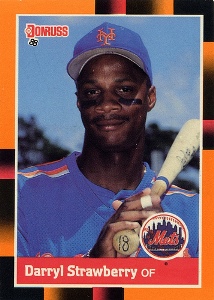
The cast for the upcoming season 3 of Celebrity Apprentice was recently announced, and Darryl Strawberry is among the contestants.
Straw, of course, hopes to avoid many of the same conflicts that got him in repeated trouble over the course of his 17-season career. One thing’s certain: If he inspires boardroom attacks like he inspired ballpark attacks, things likely won’t go well.
Need an example? A passage deleted from the final edit of The Baseball Codes has more:
* * *
There are many reasons a pitcher may have to postpone punishment he’s dying to deliver. It’s often a matter of game situation; regardless of how inherently a pitcher feels an opponent deserves a fastball to the ribs, it’s simply not going to happen in the late innings of a close game, especially if it moves a runner into scoring position. If response to personal vendettas could hurt their teams, most pitchers are happy to handle business another day, another series—or, if it comes down to it, another season.
“How long do you wait?” asked one big-league manager. “As long as it takes. If it takes a month, you wait a month. If it’s the last game of a series and you’re not going to see that club again for awhile, you wait.”
Take Game 7 of the 1986 World Series, when Darryl Strawberry of the New York Mets hit a mammoth home run off Boston’s Al Nipper, the ball caroming off the center-field scoreboard at Shea Stadium. Strawberry proceeded to take one of the slowest home run trots in the history of postseason play, a deed that was unequivocally intended to send a message. That the message was more likely meant for Mets manager Davey Johnson—who pulled Strawberry from Game 6 in a late-game double-switch, outraging his volatile superstar—didn’t matter a bit to Nipper, who barely tried to hide his contempt for the moment and the player behind it.
Strawberry described the moment in his book, Darryl: “Okay, so I put it in his face when I pounded that homer in game seven and then took—what was it?—five or so minutes to walk around the bases while the fans went crazy. It was my first Series, my first Series game-winner, and my last home run of 1986. So maybe I wasn’t cool about it. But then I’m not always Mr. Cool.”
With that in mind, when the Mets and Red Sox next met—in St. Petersburg the following spring—it wasn’t much of a secret that Nipper sought payback. The ballpark was packed with media members from New York and Boston who weren’t so much hoping for fireworks as expecting them. This was the era before interleague play, and Nipper knew he wouldn’t get the chance to face Strawberry during the regular season.
With his first pitch, Nipper hit Strawberry on the right hip. It was hardly a blazing fastball, and, in proper retribution fashion, connected well below the shoulders. Still, it was enough to incite the batter to charge the mound, leading players from both teams to flood the field.
“There are times when, yes, you send a message and go, okay, we’re getting you right now, we’re letting everyone know,“ said Nipper. “And there are times when everyone knows you’re going to get him.”
(In fact, Nipper did get to face Strawberry again, as a member of the Chicago Cubs in 1988. In three at-bats, Strawberry was intentionally walked, reached on an error and, in his third at-bat . . . was hit by Nipper in the calf. This time Strawberry merely glared at the mound before taking his base.)
Even with the details in dispute, rumors that Gilbert Arenas and Javaris Crittentonpulled guns on each other in the Washington Wizards’ locker room are disturbing. It’s easy (and incorrect) to dismiss the incident as indicative of NBA culture — partly because it’s happened in baseball, too.
The following is an excerpt from another chapter that didn’t make the final cut of The Baseball Codes, largely because there wasn’t too much more to say on the subject, but mostly because “don’t pull guns on people” is an unwritten rule of life, not just the major leagues.
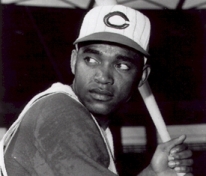
It happened in 1971, and involved Alex Johnson and Chico Ruiz, teammates on the California Angels. Ruiz, claimed Johnson, threatened him in a gun within the confines of the clubhouse.
* * *
For his part, Johnson was no stranger to clubhouse violence. He scrapped with a variety of teammates, among the most notable of which was a drawn-out brawl with Angels outfielder Ken Berry. Another time, teammate Clyde Wright had to be restrained after threatening to hit Johnson with a stool. Johnson and Ruiz, however, had been close friends for years, ever since their two-year stint together on the Cincinnati Reds in the late-1960s. They were tight enough for Johnson to ask Ruiz to act as godfather to his daughter, Jennifer.
But in 1971, for reasons his teammates could never discern, Ruiz became a target for Johnson’s barbs. It was a regular occurrence around the Angels locker room that year to hear Johnson berating Ruiz with profanity and insults.
The two had both served as pinch-hitters the night of June 13, and were alone in the clubhouse at the time of the alleged incident. And with nobody to corroborate his story and Ruiz denying everything, an already disgruntled media turned even further against Johnson. One fed-up teammate said that if Ruiz did have a gun, his only mistake was not pulling the trigger. Shortly thereafter, Los Angeles Times columnist John Hall wrote that at least three players were “carrying guns and several others are known to have hidden knives — to use as protection in case of fights among themselves.”
Chico Ruiz
Three months later, Johnson was suspended from the team (owing less to his accusation against Ruiz and more to an additional string of belligerent encounters with teammates and a consistent failure to hustle). At a grievance hearing to challenge the suspension, Angels general manager Dick Walsh finally admitted that Ruiz had, indeed, waved a pistol at Johnson after both had been removed from the game in question, a revelation that served mostly to lend yet another level of dysfunction to the team’s clubhouse.
Ultimately, things didn’t go well for either man. Johnson was traded to the Indians after the season, and Ruiz, after being released during the winter, drove his car into a sign pole in the early morning hours of Feb. 9, 1972, and was killed immediately.
Few ballplayers turned up amid the mourners at his funeral. Johnson was one of them.
The Mets just signed Kelvim Escobar to a one-year deal. At least in the National League he won’t have to deal with A.J. Pierzynski.
The following is an excerpt from the “Tag Appropriately” chapter of The Baseball Codes that didn’t make the final cut. (All told, 250,000 words from the initial manuscript were trimmed to about 100,000 for the final edition.) This tale involves as its primary characters Escobar, Pierzynski and Pierzynski’s infuriating personality.
* * * * *
In the deciding contest of the 2005 American League Championship Series it seemed as if Angels pitcher Kelvim Escobar disliked White Sox catcher A.J. Pierzynski more than he liked winning playoff games. In the eighth inning, with the game tied 3-3, two outs and a runner on first, Pierzynski hit a comebacker to Escobar, which ricocheted off the pitcher and toward the first-base line. The reliever pounced on the ball and tagged the runner . . . with an empty glove. The baseball, still in his throwing hand, never touched Pierzynski, who looked back at the pitcher as he ran past, as if to indicate that very point.
Escobar then threw to first in a futile attempt to make a play. After initially calling Pierzynski out, the umpiring crew deliberated, and decided he was safe after all. Joe Crede followed with a run-scoring single to give the White Sox the lead and, an inning later, the game and the series.
It was more than just a bone-headed move by Escobar, however. It was borne of equal parts anger and frustration with Chicago’s catcher.
“It had to be me in that situation,” said Pierzynski after the game in an Agence France Presse report, “because I’m the only person it would happen to.”
Pierzynski was the only person it would happen to at least in part because of his propensity for ending up in the middle of controversial plays that went the White Sox’s way.
During Game 2, in a 1-1 tie with two outs in the ninth inning, Escobar struck Pierzynski out, but umpires ruled that the ball hit the ground before Anaheim catcher Josh Paul caught it. Paul rolled the ball back to the mound and Pierzynski raced safely to first base as a stunned Angels defense looked on. Crede followed with a game-winning double that enabled Chicago to tie the series.
In Game 4, a second-inning Angels rally was killed when outfielder Steve Finley grounded into an inning-ending double play with runners on first and third. Pierzynski later admitted that his mitt tapped Finley’s bat, which should have been ruled catcher’s interference, sending Finley to first base and loading the bases for Adam Kennedy. It should have, but it involved Pierzynksi, and it wasn’t.
All of this might have been a bit more palatable for Escobar and the rest of the Angels had it been anyone but Pierzynski, whose frat-boy attitude and incessant chirping behind the plate made the catcher one of the least popular players in the league. (“If you play against him, you hate him,” said Pierzynski’s manager, Ozzie Guillen in ESPN the Magazine. “If you play with him, you hate him a little less.”)
Escobar was so angry that he tried to inflict a little physical pain in return for the collective emotional misery Pierzynski doled out to his team.
“Escobar wanted to hit him so hard that he forgot the ball was in the wrong hand,” said Guillen in Playboy. “If you look at the replay, you see he went after Pierzynski to hit him hard. If it were another player, it would have been different. He would have been tagged easy. But they want to beat the shit out of Pierzynski.”
Tim Raines deserves a spot in Cooperstown, wrote Rob Neyer today on ESPN.com. One of Neyer’s arguments had to do with the fact that Raines was an elite base stealer, yet his success rate was much higher than that of Lou Brock (and Rickey Henderson, for that matter).
Part of that differential had to do with the fact that Raines rarely ran to pad his stats, as did several of his contemporaries. A few years ago, we discussed the unwritten rule that forbids stealing bases with a big lead late in the game. Here’s what he had to say:
I remember the year that Rickey (Henderson) stole 130 bases; I remember Vince Coleman stealing over 100 bases. In those situations, guys just took off. They could be up 10 runs, down 10 runs, and they’d just take off for their own special reasons.
I’m sure some guys got hit for it, but that was the way they played that game. I just never played the game that way. I never really was one of those players who was concerned more about my numbers than the team. I didn’t play the game to stack up numbers, to be the all-time baserunning leader. I did it to win games. Every base I stole was toward winning ballgames. It wasn’t just me, it was about the team.
 Major League baseball is reporting that the Blue Jays aren’t much interested in bringing back Carlos Delgado for a second stint with the club. General Manager Alex Anthopoulos has cited a desire to chase long-term success with a young corps of players, a strategy that doesn’t exactly embrace a fading 37-year-old slugger.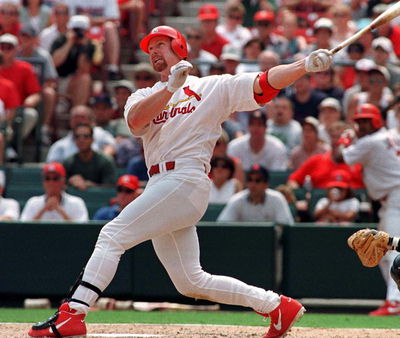





 The Baseball Codes