Cheating, Spitballs

Perry Gets Greasy in Mid-Summer Classic

Gaylord PerryResearch for my next book, about the OaklandA’s dynasty of the 1970s, to be published by Houghton Mifflin in 2015, has turned up boundless examples of unwritten rules from that bygone era. The latest concerns the 1972 All-Star Game, in which Hank Aaron touched Gaylord Perry for a go-ahead homer in the sixth inning. Because it’s Gaylord Perry, the topic is cheating (of course). From the Associated Press: 

Hank Aaron, sitting on 659 career home runs, hit a two run homer in the sixth inning, putting the National League up, 2-1, in front of a hometown crowd in Atlanta Stadium. …

“The pitch I hit off him was a spitter. It wasn’t one of his best spitters, but it was a spitter,” Aaron said.

Of course, this was followed shortly by a pro forma denial.

“Man, don’t you know that pitch is illegal? I don’t have any such pitch in my arsenal,” Perry declared.

If ever it was possible to see somebody wink through a 40-year-old statement to the sporting media, this is it.

Managers Protect Their Players

1973: Billy Goes to Bat for his Boys

Billy MartinResearch for my next book, about the OaklandA’s dynasty of the 1970s, to be published by Houghton Mifflin in 2015, has turned up boundless examples of unwritten rules from that bygone era. The latest is from September 5, 1973, and has to do the Detroit Tigers. The topic is ostensibly cheating, but, if we take it at face value, actually concerns managers protecting their players. From the Associated Press:

Billy Martin claims he lied about the incident which led to his being fired as manager of the Detroit Tigers.

Martin says he never told pitchers Joe Coleman and Fred Scherman it to throw spitballs in a game last week against Cleveland.

Coleman and catcher Duke Sims, meanwhile, also say Martin didn’t order spitters thrown.

“They had gotten together with Duke Sims in the dugout and decided to prove to the umpires that they (umpires) didn’t know what a spitter was,” Martin told one reporter. “The first I knew about it was when I saw Coleman wetting his fingers on the mound.”

“Once that happened I had to stand behind my players,” he continued. “I knew they’d be fined or suspended for what they had done, and I couldn’t let that happen. I needed them to pitch.”

Martin told newsmen after last Thursday’s 3-0 loss to the Indians’ alleged spitball specialist Gaylord Perry that he had ordered the illegal pitches to bring controversy “to a head.”

“I’m admitting it,” he said then. “We threw spitters tonight. Obvious spitters. On purpose.”

He said it was at his order.

Friday, Martin was suspended by American League President Joe Cronin, who said the action was taken “for directing your pitchers to throw illegal pitches and publicly stating that you have done so.”

Sunday, Martin was fired by Jim Campell, Tigers general manager, who said the spitball incident wasn’t the sole reason but the final straw in a long line of incidents leading to the sacking.

Bonus fun: Figure out how Martin created controversy with his 1972 baseball card, above!

Gamesmanship, Oakland A's

1972: Bucking Wood’s Knuckler

Wilbur WoodResearch for my next book, about the OaklandA’s dynasty of the 1970s, to be published by Houghton Mifflin in 2015, has turned up boundless examples of unwritten rules from that bygone era. The latest is from July 4, 1972, in which a future Hall of Famer discusses some possible gamesmanship in Chicago. From the Oakland Tribune:

After his two-hitter against California, Catfish Hunter made some allegations against the White Sox. In his previous start, in Chicago, Hunter was beaten, 4-0, by White Sox knuckleballer Wilbur wood.

“The baseballs are bigger in Chicago when you pitch against Wood,” Catfish charged. “You can tell that when you get the ball in your hand. When you pitch 200 to 220 innings a year, you can tell by just holding one. The seams are a lot higher. I talked to [Angels left-hander] Clyde Wright before the game, and and he said he noticed the same thing pitching against Wood in Chicago. He said he threw six baseballs back and couldn’t find one the right size. All they’ve got to do is wet them and then dry them out. That makes them bigger.”

Larger seams on the baseball would add flutter to Wood’s knuckler.

Wood won 24 games for the White Sox that year, pitching a modern-era record 376.2 innings and finishing second in the Cy Young Award voting.

Don't Bunt to Break Up a No-Hitter, Oakland A's, The First Hit of a Game Must be Clean

1972: A’s Unhappy Over Bunt that Broke up Vida’s No-No

Vida TimeResearch for my next book, about the Oakland A’s dynasty of the 1970s, to be published by Houghton Mifflin Harcourt in 2015, has turned up boundless examples of unwritten rules from that bygone era. The latest is from Oakland Tribune beat writer Ron Bergman, on Aug. 1, 1972. Of note is that A’s players did not appear to be upset over a bunt as the game’s first hit so much as the official scorer’s unwillingness to call it an error:

Vida Blue retired the first 17 men he faced before opposing pitcher Rich Hand [of the Texas Rangers] laid down a bunt with two out in the sixth inning. The score was 1-0 at the time. Third baseman Sal Bando swooped in to pick up the ball, stumbled off balance when it landed in his glove and then couldn’t extract it. By the time he plucked it out for an errant throw to first base, it was too late.

Official scorer Joe Sargis of UPI called it a hit, which took some courage. A line drive single by pinch-hitter Toby Harrah on the first pitch of the ninth didn’t mitigate the anger in the A’s clubhouse.

Blue seem to be the least disturbed.

“A hit is a hit, “Vida said. “No hits or 55 hits, you’ve still got to get 27 outs.”

“It should have been an error,” Bando declared. “I couldn’t get the ball out of my glove. I threw it over there to give them a chance to call it an error. I’ve seen games in which something like that is called an error, and if there’s another hit they go back and change the first call. The first hit is supposed to be a clean hit. I think that if that was called an error, Vida would have pitched a no-hitter.”

“We all were sure it would be called an error,” A’s manager Dick Williams told Sargis.

Hand said he saw Bando back up after the first pitch, “so I decided to give the bunt a whirl. It was a hit all the way, as clear as it’s going to be. I don’t see what they’re yelling about over there. They won, didn’t they?”

Don't Enter the Opponent's Clubhouse

Noah’s No-No in the NBA Translates Nicely to Baseball

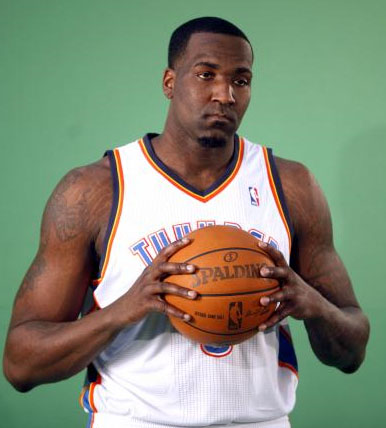
Kendrick PerkinsA generation ago, the unwritten rule banning fraternization inside the opposing clubhouse was rock solid. Reds manager Bob Boone once ejected former Reds player Lenny Harris while the latter was trying to visit some old teammates on the Cincinnati side of the building. Dan Gladden kicked White Sox outfielder Bo Jackson—Bo Jackson!—out of the Twins clubhouse while he was trying to visit Kirby Puckett. Pedro Martinez received an earful for stopping to greet some compatriots on the Blue Jays in the visiting clubhouse at Fenway Park, despite the fact that he had been led into the space by security guards trying to give him an unobstructed path to the field from a pre-game promotion he had been attending.

Apparently this ethic carries over to the NBA, as well. According to Anthony Slater, who covers the Thunder for the Oklahoman, the following exchange took place when Chicago’s Joakim Noah made camp in the Thunder locker room following last night’s game:

Perkins: “They just let anybody in the locker room?”
Noah: “C’mon man.”
Perkins: “I’m just asking though.”
Noah: “C’mon man.”
Perkins: “Just let anybody in the locker room now?”
Noah: “You want me to wait outside?”
Perkins: “I’m just saying, though.”
Noah: “If you want me to wait outside, I’ll wait outside.”
Perkins: “Get your ass up outta here.”
Noah: “Aight.”

So Noah left, apparently with the full approval of a majority of Perkins’ teawmmates. (Read a far more robust report here.)

Even though in baseball this rule, like so many others, has grown lax over the years, the incident calls to mind an occasion that served to introduce the topic in the first draft of The Baseball Codes. (The entire chapter was later cut for space considerations.)

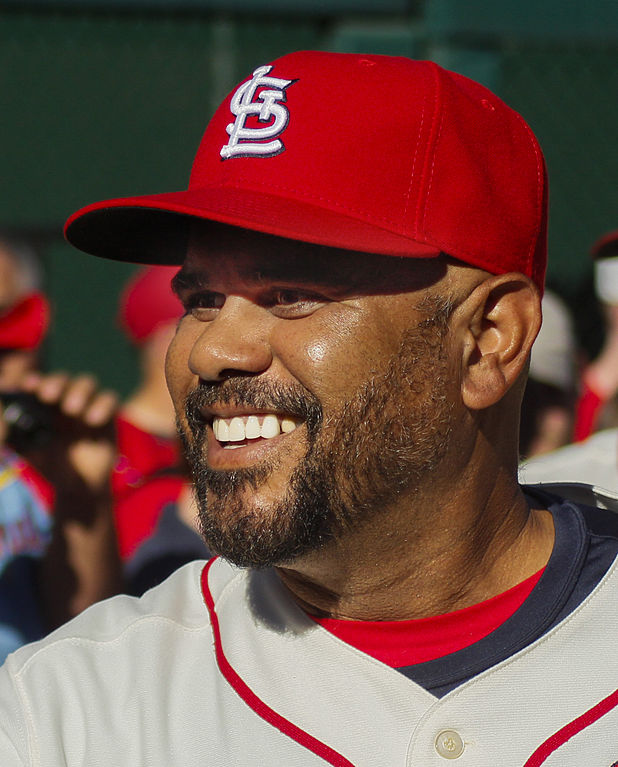
Unlike Noah, there were places that former A’s catcher Jason Kendall refused to go.

Kendall had some time to kill. Wearing jeans, a t-shirt and a nondescript baseball cap, he leaned against a wall in the bowels of the Oakland Coliseum. And waited.

That night’s game against the Kansas City Royals had ended an hour earlier, time enough for the A’s catcher to shower and dress. His father was in town and the two had dinner plans. The younger Kendall was clearly early.

It wasn’t like his father was far away. In fact, Fred Kendall was less than 20 feet removed, on the other side of a door just steps from where his son stood waiting. But Jason Kendall wasn’t about to go get his old man.

Because Fred Kendall, a former big-league catcher himself, was Kansas City’s bullpen coach. A member of the other team. And as easy as it would have been to kill some time by walking through the door to the visitor’s clubhouse for a chat with some of the few people on the planet as devoted to baseball as himself, it was something that Jason Kendall could not do. He knew the rule, and the guy who taught him the rule, Fred, would hardly tolerate such behavior.

Had it been either of Fred’s other two grown children, a ballpark visit would be no big deal. But Jason wore green and gold for a living, not blue and white.

So he stood in a hallway, waiting.

Not sure how this translates to the NBA at large, but it seems like something with which  Kendrick Perkins can get right on board.

Oakland A's, Retaliation

1972: On Making Moon Mad

Blue Moon OdomResearch for my next book, about the Oakland A’s dynasty of the 1970s, to be published by Houghton Mifflin in 2015, has turned up boundless examples of unwritten rules from that bygone era. The latest, from Oakland Tribune beat writer Ron Bergman,  July 10, 1972: 

Jim Longborg threw a pitch in the first inning that bounced in back of Reggie Jackson. Blue Moon Odom retaliated by throwing behind Dave May, the first batter in the Milwaukee second. The ball nicked him in the back.

On the way to first, May exchanged words with Odom. Later in the inning, with May on third, Odom picked up Rick Auerbach’s attempted squeeze bunt and ran down May. A few more words were heard.

“Odom was saying that he didn’t think he hit May,” said plate umpire Don Denkinger. “At that point, I said if anything more happened, I’d have to warn both managers.”

Jackson said he thought Longborg was throwing behind him deliberately, and added, “It’s no fun, a pitch like that. It pleased me what Odom did. We like to play behind a guy like that.”

Longborg said he wasn’t throwing behind Jackson deliberately. Odom wouldn’t say that.

“That pitch didn’t get away from him that much,” Moon said. “He’s got pretty good control. It was intentional. They asked me why I threw behind May. I told them to ask their pitcher. It didn’t matter who’d been up first the next inning — my mother, or the manager — I still would’ve thrown at him. I meant to throw behind him. I didn’t try to hit him. I didn’t think I hit him until [A’s catcher Dave] Duncan told me later that I ticked his shirt. I told [Brewers first baseman] George Scott that I would’ve thrown at him if he’d been the first up. And he’s one of my big buddies.”

Over in the Milwaukee clubhouse, Scott shook his head from side to side.

“Man throw behind you, you got to throw at somebody else,” Scott said. “I’m glad I wasn’t the first one up.”

May walked in from the shower and said that “I definitely will remember this. It will stick in my mind. Lonborg wasn’t throwing at Jackson. I told Odom after he threw at me that I was coming out to get him. I went out to see what he was going to say. He didn’t have anything to say. When a guy throws behind you, he’s got something in mind.”

Sign stealing

Mattingly No Fan of Cards’ Pryin’ Eyes

Jose OquendoSo Don Mattingly is peeved that the Cardinals were apparently interested in his team’s signs during last year’s NLCS. They were looking into the Los Angeles dugout, he told ESPN LA at the winter meetings. Runners at second may have been picking off catcher A.J. Ellis.

This is a weird one. This kind of thing not only happens all the time, to the extent that it’s accepted practice, but virtually every team does it to some extent. It’s a near certainty that the Dodgers do it themselves.

It’s weird because Mattingly doesn’t decry it outright, instead saying things like “We felt like we had to be sure we kept an eye on their first-base coach and their third-base coach,” and “[Third base coach Jose Oquendo] is a guy at third who’s always looking for my signs from our dugout.” Mattingly said it was on the Dodgers to stop it if was happening.

But if one possesses such entirely mainstream attitudes, why bring up the subject in the first place? These are the comments of a guy who says he has no axe to grind, even while he’s looking up from the axe grinder.

That said, let’s look at Oquendo for a moment. Back in 2008 or so, I interviewed him for The Baseball Codes. (He has been the St. Louis third base coach since 2000, and was the bench coach the season before that.) He addressed many of these issues, minus the part where he’s actually maximizing his team’s advantage:

“I steal signs every day as a coach. But one thing I don’t do, I don’t tell the hitters. Now, when somebody’s on base, I’m going to say to my runner when to run and when not to run. That’s part of the game. But I would never tell a hitter what’s coming. It’s respect. If a player asked me to do it, I would never do it. That’s my personal opinion, I respect the game in that way.”

So you sit on the coaching line and get the signs and use them to tell guys when to run?

“If I see a breaking ball, I know to have our guys steal. Or if a pitcher has a tell when he’s going to first, that stuff you take advantage of. To tell a hitter what’s coming, that’s never been my style. …”

How easy is it to steal signs, particularly if there’s a runner on?

“If nobody’s on base, I don’t even look at the signs. I don’t care with nobody on. Now with somebody on base, I might want to know if he is going to throw a pitchout, when they are going to throw to first, stuff like that. …

“I don’t “steal” the signs, I just see them. It’s pretty easy a lot of time—you see it from the catcher or from the pitcher. I’d say half of the catchers in the National League, I can see the signs from third base. [Mike] Matheny [then the Cardinals catcher, now the Cardinals manager] knows about it—he looks at me every time he’s going to put signs down. I drive him nuts at third base, but he knows that I’ll get it from him or from the pitcher. I’m gonna get it somewhere.

Draw your own conclusions.
Don't Steal with a Big Lead

A Tale of Spit and Run

Al KalineResearch for my next book, about the Oakland A’s dynasty of the 1970s, to be published by Houghton Mifflin in 2015, has turned up boundless examples of unwritten rules from that bygone era. The latest installment, from May 14, 1966:

Nobody threatens retaliation, but it is on record that Alvin Dark hung the label of “bush” on Al Kaline.

It was Dark’s first visit to Tiger Stadium as Kansas City manager. Kaline was on first with two out in the eighth and Detroit leading by nine runs. Kaline took off and stole second base on pitcher John Wyatt.

“Do you all steal when you’re nine runs ahead?” Dark asked a reporter in the clubhouse. “That was pretty bush. I heard about this fellow (Kaline) for years and years. What if he broke his leg? Detroit might finish sixth.”

Kaline’s explanation was that he was showing up Wyatt for being shown up himself.

“Wyatt threw me a spitball,” said Al. “I don’t mind if it means the game. But he was way behind. Normally I wouldn’t have done it. But when I had the chance to steal, I took off.”

Manager Charlie Dressen said Kaline did the right thing.

“I always say when you have 13 runs, get 14,” declared Charlie. “Let Dark say something to me if he doesn’t like it.”

Oakland A's, Sign stealing

Hey Brother, Can You Spare Some Binocs?

Research for my next book, about the Oakland A’s dynasty of the 1970s, to be published by Houghton Mifflin in 2015, has turned up boundless examples of unwritten rules from that bygone era. The latest installment, from Ron Bergman of the Oakland Tribune, June 30, 1972:

binocsThe A’s have accused the White Sox of stealing catcher’s signals from the scoreboard on another vantage point in the park. “We switched signals every inning tonight,” [manager Dick] Williams said. “I had a message delivered to [Chicago manager] Chuck Tanner saying I’d sure hate to see a batter get messed up on a sign and end up flat on his back with a baseball in his ear. He sent back a message asking if we had any high-powered binoculars because his guy had dropped his and broken them.”

This was hardly the first time an opponent had accused the White Sox of nipping signs from their scoreboard. (We’ve touched on some of them previously in this space.) For more current examples of sign thievery, go here.)

Tanner, of course, ended up helming the A’s himself in 1976. No word yet about sign-stealing schemes he may or may not have enacted at the Oakland Coliseum.

Don't Steal with a Big Lead, Oakland A's

Bad Blood Easier to Stomach With Beef to Back it Up

Reggie and Epstein II
Mike Epstein (right, with Reggie Jackson): Sizable human.

Research for my next book, about the Oakland A’s dynasty of the 1970s, to be published by Houghton Mifflin in 2015, has turned up boundless examples of unwritten rules from that bygone era. The latest installment, from Ron Bergman of the Oakland Tribune, Sept. 8, 1972, touches on stolen-base propriety and a catcher’s right to block the basepath if he’s not holding the ball:

The bad feeling between the Athletics and White Sox won’t die. It bubbled to the surface again last night when Campy Campaneris stole two bases in the eighth inning with the A’s down by the eventual final score of 6-0.

Campy tried to score on a fly ball to right by Matty Alou. But Chicago catcher Ed Herrmann blocked the plate long before the ball got there, and Campaneris spiked him on the right thigh.

When the A’s took the field, White Sox manager Chuck Tanner yelled to Campy from the dugout that Herrmann was going to get him on any play at second base. A’s manager Dick Williams yelled back that the next time Herrmann tried to block the plate, his runner would come in higher.

“I told campy he should have come in higher and put those spikes right in Herrmann’s chest,” Williams said. “Any time a catcher blocks the plate like that without the ball he’s fair game, lunchmeat. I don’t think Herrmann would have done that with [six-foot-three, 230-pound] Mike Epstein as the runner.

“Herrmann told Reggie Jackson when he was at-bat that it was bush of Campy to steal those bases with us down the six runs. I say anytime you can move up 90 feet, take it. They weren’t holding Campy on at all. They were filling the holes to try to stop base hits.”

Campaneris, now second in the league and stolen bases to Dave Nelson of the Texas Rangers, said he’s trying to regain the King of Thieves crown he lost last year.

“I want to win the title every year,” Campy said. “If they don’t hold me, I still the base.”

In the clubhouse, both Tanner and Herrmann said they didn’t see anything wrong with Campaneris’ thefts. That’s what they said in the clubhouse. Winning pitcher Wilbur wood was more honest in his comments.

“It shows his stupidity,” Wood remarked about Campy’s 37th and 38th steals. “Suppose he gets thrown out at second base? Or third? Then he runs them right out of an inning. As things turned out, he did run them out of the inning because he got thrown out at the plate on a questionable fly.”

Both the A’s and White Sox remember an incident last year at the Coliseum when Chicago reliever Bart Johnson, now a minor-league outfielder, threw at two A’s and paid for it when Epstein hammered him down in a fight that brought all the players onto the field.

The White Sox have murmured about revenge since then, but then they don’t have any players as large as Epstein.