A.J. Pierzynski, Addison Reed, Retaliation

Pierzynski Drilled, Indignant and Just Maybe Scheming for Future Benefit

AJP (1)It didn’t take long—one at-bat, as a pinch hitter in the ninth inning Wednesday—for the A.J. Pierzynski roadshow, Texas Rangers edition, to roar to life.

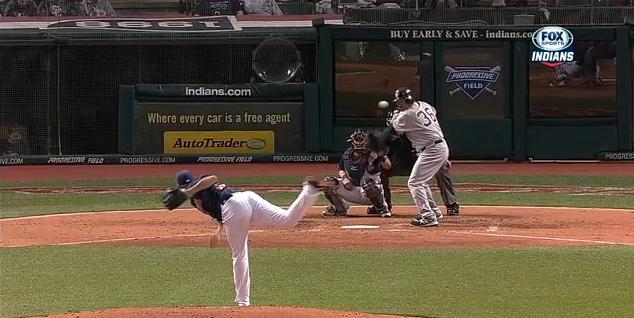
After eight seasons with the White Sox, Pierzynski signed with Texas during the off-season, and in facing his old team for the first time was plunked on the right elbow by ex-teammate Addison Reed. Pierzynski didn’t much try to avoid it (indeed, he threw his elbow into it), and was saved from significant discomfort by the pad he was wearing. Reed appeared upset with himself from the moment it became apparent that pitch would connect with batter.

None of it mattered. The catcher started barking toward the mound as he trotted to first, clearly upset with the development. (Watch it here.)

“I was mad,” Piezynski said in a Chicago Tribune account. “(Reed) threw it up and in and shoulder high. It’s fine if you’re going to pitch me in, but don’t come up and in, shoulder high.” (Reed, White Sox manager Robin Ventura and catcher Tyler Flowers all offered standard denials of intent.)

Ultimately it made no difference, coming as it did with two outs in the ninth. Pierzynski did not score, and Chicago won, 5-2. The real reason any of this is of interest is that it’s A.J. Pierzynski, the man about whom his former White Sox manager, Ozzie Guillen, famously said, “If you play against him, you hate him. If you play with him, you hate him a little less.”

In honor of A.J. being A.J., I offer a selection from the original draft of The Baseball Codes, which did not make it into the final edit. It involves Pierzynski, some of the reasons why opposing players hate him, and another pitcher named Reed.

When Pierzynski was catching for San Francisco in 2004, the Giants built a 9-2 lead in the eighth inning of a game at Colorado. With the bases loaded and two out, Pierzynski poked his elbow pad into the path of a Steve Reed fastball, taking a dubious hit-by-pitch and driving in what would be the first of six runs in the inning that turned a Giants romp into a full-fledged blowout. Reed was incensed, saying later that the pitch would have been a strike had the Giants catcher not gotten in its way. There was even some debate as to whether it hit Pierzynski at all, with Reed and Rockies catcher Charles Johnson denying there was contact, and Pierzynski himself going so far as to say he never felt it hit him.

But the only opinion that mattered was that of plate umpire Bruce Dreckman, and when Dreckman sent Pierzynski to first, Reed exploded. He was thrown out of the game during the ensuing argument.

Pierzynski knew he had done wrong—willingly getting hit by a pitch that should not have hit him, in a game in which an extra run did not matter—and that Reed had been ejected as a result. He also knew that there would be a price to pay down the road.

With the game well in hand, Giants manager Felipe Alou offered to pull Pierzynski and save him from imminent retaliatory damage. The catcher, however, understood that if he didn’t get it that day, he’d be waiting—uncomfortably—until the time that the Rockies had a chance to even the score. So he demurred, opting get it over with quickly.

Trouble was, when Pierzynski came to bat in the ninth inning, it was against right-hander Allan Simpson, pitching in just his eighth major league game. With a 7.36 ERA, Simpson was far less worried about sticking up for his teammates than he was about simply getting out of the inning with a minimum of damage. (With Reed in the clubhouse, Simpson  may not even have been briefed about Pierzynski’s lack of propriety, or the appropriate response.)

Seeing a pitch to hit, Pierzynski doubled in the Giants’ 16th and final run of the game.

The catcher didn’t start the next day, the final game of the series, and by the time he made a ninth-inning appearance as a pinch-hitter, the 7-5 score was too close for Rockies pitcher Marc Kroon to take any action. (Also, because Pierzynski hadn’t been scheduled to hit, Rockies management may not have given advance notice to Kroon about what they’d like him to do.)

When the teams faced each other a month later, however, Rockies starter Aaron Cook wasted no time. When Pierzynski stepped to the plate for his first at bat, Colorado already held a 6-0 lead, and with little potential downside to allowing an extra baserunner, Cook hit Pierzynski in the leg with his second pitch.

Pierzynski may be insufferable, but he is also among the game’s wiliest players. He knew what was happening and why in 1992, and he likely knew it again on Wednesday. He may also be the only man in baseball to feign annoyance at an incidental action on the chance that such a precedent could help him or his team in the future.

Unless Pierzynski or somebody on the White Sox cares to discuss Wednesday’s events, of course, we’ll never know. The next time he faces Addison Reed, however, it seems likely that Wednesday’s events will be somewhere in the pitcher’s mind.

Retaliation

Here’s What I Think About You and your Timeout

Bryan Bullington

In the 1960s, Don Drysale gleefully drilled hitters who had the audacity to dig in on him. Seems that reports about the death of such mindsets have been premature.

The animated GIF above started making the rounds a couple days ago. Now, SportsGrid tells us that it’s former Royals/Blue Jays/Indians/Pirates pitcher Bryan Bullington (the No. 1 overall pick of the 2002 draft), currently of the Hiroshima Toyo Carp, showing an incredible level of distaste for opponents’ timeouts.

Sometimes pitchers must wait months to retaliate for something, sometimes moments.

Jonathan Sanchez, Retaliation, The Baseball Codes, Umpire Warnings, Umpires Knowing the Code

Toss Him Out! Let Him Play! The Importance of Understanding that not Every Situation is Exactly the Same

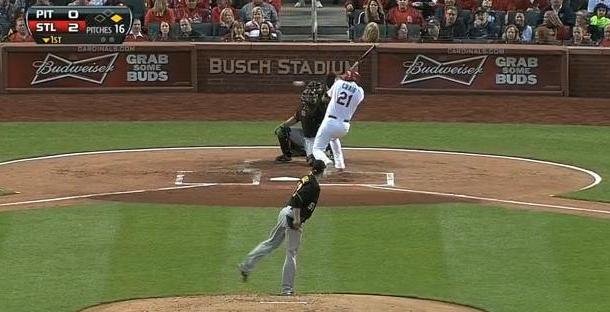
rsz_jonathan_sanchez (1)Jonathan Sanchez insists that the fastball he threw Friday—which nearly hit Cardinals first baseman Allen Craig in the head—was accidental. Sanchez was pitching inside, he said, quoting verbatim from the unofficial handbook of pitcher denials. The ball rose, he said. That was all.

Of course, given the pitcher’s recent struggles, not to mention his history with hot-headedness, questions abound. MLB certainly thought so, suspending him for six games on Saturday.

Sanchez opened Friday’s game against St. Louis by giving up back-to-back home runs to Matt Carpenter and Carlos Beltran, followed by a single by Matt Holliday. Sanchez sent his next pitch—apparently out of frustration—toward Craig’s head. (The ball ended up connecting with the spinning hitter’s shoulder.) Plate ump Tim Timmons didn’t hesitate, ejecting Sanchez without so much as a warning.

It was an abhorrent string of hitters in an abhorrent season of starts for Sanchez, who has thrown a total of only 11.3 innings over four outings, with a 12.71 ERA. Twenty-one hits and eight walks. He’s made it to the fifth inning only once. Well, of course he’s frustrated.

“You’ve got two home runs, and then you’ve got a line-drive single up the middle, and then the very first pitch is up around the shoulder and head area,” Timmons told a pool reporter at Busch Stadium. “He threw intentionally at him, and in that area I deemed that intentional, and he’s done. Very dangerous.”

“It surprised me,” Sanchez said in a Pittsburgh Tribune-Review report. “(Timmons) said it was obvious I wanted to hit him. I said no, I just missed my spot.”

Pirates manager Clint Hurdle was outraged at the quick hook, arguing vociferously enough to get tossed himself. After the game he said he was bringing his complaints to the commissioner’s office, although Sanchez’s ensuing suspension gave a pretty good indication about how much attention the commissioner was paying.

Any umpire who feels that a pitcher is intentionally head-hunting is justified in leveling ejections, with or without prior warnings. Timmons earned extra credit by keeping quiet after Cardinals pitcher Lance Lynn later hit Pirates outfielder Starling Marte not once but twice—each almost certainly incidental—even after warnings were issued. (One barely clipped Marte’s hand, the other sailed into his arm, just off the plate; the hitter barely tried to avoid either one.)

Lynn himself was brushed back by Pittsburgh reliever Jared Hughes in the eighth, avoiding a pitch that, because he was squatting while squared to bunt, came in head-high. Lynn ducked backward out of the way, ending up on his back in the batter’s box. Again, Timmons let it slide.

In the eighth, Cardinals pitcher Mitchell Boggs drilled Gaby Sanchez in the back. (This, too, may have been unintentional, given Boggs’s recent struggles and the fact that all three hitters he faced reached base.)

Watch a compendium of the action here. (In an unrelated Code note, watch Pirates catcher Russell Martin jump to get between batter and pitcher in the first clip, as A.J. Ellis wishes he had recently done.)

One takeaway from all this is that an umpire on top of his game can go a long way toward stemming future disturbances. Timmons and MLB seem to agree upon that even one head-hunting incident is too many, and there’s no better way to tamp down the practice than by making examples of pitchers who stray from the proscribed course.

By letting the rest of the game play out as it did—even what appeared to be an obvious message from Hughes to Lynn—Timmons further defused lingering resentment between the clubs. Neither of the weekend games between the team featured much of anything resembling Code-based drama, even with the ample opportunities presented by Pittsburgh’s 9-0 blowout on Sunday.

Ultimately, the situation appears to have been handled just right. The power of positive umpiring. 

Retaliation, Umpires Knowing the Code

Minor League Report: Head Hunter Skates, Twins Prospect Tossed

Miguel Sano card IIThe minor leagues exist in part as a proving ground for young players, an off-spotlight platform where they can learn from their mistakes. Baseball fundamentals comprise a significant portion of this learning, but there’s also a place for figuring out the ways of the game—specifically to this item, retaliation, and what is and is not appropriate.

Take, as an example, Palm Beach Cardinals pitcher Brandon Creath. Pitching in the Florida State League (Class-A Advanced) on Sunday, he threw a pitch at the head of Fort Myers Mircale third baseman Miguel Sano. According to Miracle manager Doug Mientkiewicz, the pitch was in response to an incident in Tuesday’s game between the same teams, when Sano hit a seventh-inning grand slam in Fort Myers’ 7-4 win.

“They were running their mouths at him,” Mientkiewicz said in an MiLB.com report. “Miguel hit a grand slam and kinda flipped his bat, and they took it the wrong way. He hit a big home run.”

Mientkiewicz—one of the staunchest Code adherents in the game during his 12 seasons as a big league first baseman—did not appear to be taking issue with the fact that the Cardinals retaliated, but rather how it went down.

“Hit him in the back,” he said. “I won’t like it, but it’s part of the game. Throw at his head and it messes with his future and I have a problem with it. It’s an embarrassment to the game of baseball.”

Sano didn’t take long to offer his own response, homering later in the at-bat. In so doing, however, he set up a situation in which it became clear that Creath wasn’t the only person needing to brush up on his unwritten rulebook. Sano rounded the bases with a flurry of fist-pumps and shouts toward the Palm Beach dugout, and plate ump Fernando Rodriguez ejected him before he reached the plate.

“I think, personally, it’s garbage,” Mientkiewicz said. “[Sano] did nothing wrong. He locks in and hits a home run. That’s what makes him so special.”

(It’s worth noting that two Palm Beach batters had been hit earlier in the game, which Mientkiewicz dismissed as accidental, and incidental to what eventually went down.)

While the most pertinent item here is head-hunting, that rule almost goes without saying. There’s never a valid reason for it, and every ballplayer who doesn’t inherently recognize that will be taught a lesson the moment his ignorance surfaces.

Umpires, however, have a more subtle task. Ball-strike-safe-out is the most prominent part of their job, but they also have a responsibility to understand recent events between the teams for which they’re responsible, in order to help them make informed judgments about whatever it is they’re seeing on the field.

Were Rodriguez up on his facts, he may well have ejected Creath, not Sano, and all of this would have been avoided.

A.J. Ellis, Catchers Protect Pitchers

Greinke Takes the Blame for Catcher’s Lack of Action

AJ EllisIn the aftermath of Zack Greinke’s shoulder injury at the hands of Carlos Quentin, some criticism arose of Dodgers catcher A.J. Ellis for not moving more quickly to step between the two—an essential part of a catcher’s job when it comes to such matters. Ellis was unprepared for Quentin’s sudden rush toward the pitcher—and by the time he caught up, it was too late.

Yesterday, Greinke absolved him of responsibility.

“Anyone with the White Sox has always labeled me as someone who does stuff,” Greinke said in a Los Angeles Times story, recounting his encounters with Quentin when he was a member of the Kansas City Royals and Quentin with the Chicago White Sox. “I didn’t think it would happen. Looking back, I should have warned him.”

Greinke also said that the eight-game suspension levied upon Quentin by Major League Baseball seemed appropriate. “To expect the league to do more than that would be pretty crazy,” he said.

(In related news, Padres President and CEO Tom Garfinkel blamed the incident on Greinke and compared the pitcher, who has dealt with social anxiety disorder, to Rainman. There’s an entire chapter of the unwritten rules dealing with restraint from calling out one’s opponent in the press—or even at a meeting of season ticket-holders, which is where Garfinkel made his remarks—although it usually pertains to players, not senior management.)

Don Mattingly, Retaliation

Waiting Game Begins for Dodgers, Padres

Don Mattingly IICredit Don Mattingly for his honesty.

Talking about the Dodgers’ series against San Diego, which starts today, the skipper said that his team will not be looking for retaliation regarding Zack Greinke’s broken collarbone. Then again, Padres outfielder Carlos Quentin will be elsewhere, having dropped his appeal of the eight-game suspension handed down for his role in the matter. One of Mattingly’s pitchers could make a perfunctory statement by drilling a random Padre (in Los Angeles, on Jackie Robinson day, no less), or they could wait until the teams meet later in the season and send a message directly to its intended target.

Which is precisely what Mattingly hinted might happen.

From the Los Angeles Times:

Asked if he expected the Dodgers to level the score down the road, Mattingly replied, “We’ll just play baseball. We’ll see how the games go. You’ll see.”

You’ll see?

“No, I mean, you can make decisions then,” Mattingly said. “I’m not going to sit here and talk hypotheticals like, ‘Yeah, we’re going to get him back.’ That’s not something you would talk about even if that was part of the deal. You never talk about that.

“We’re trying to win games and trying to win a pennant. Getting retaliation on something is different than protecting your guys.”

Besides, said catcher A.J. Ellis, “Our problem is with one guy, not with their team.”

The reality is that umpires will likely begin today’s series by warning both benches, preventing Dodgers starter Chad Billingsley from going after Padres hitters even if he wanted to, which he insisted he did not.

Billingsley, it should be pointed out, has been criticized in the past for failing to protect his teammates—specifically during the 2008 NLCS, after Philadelphia’s Brett Myers repeatedly came inside on Dodgers hitters.

He likely won’t have to worry about such a reputation following him regardless of what happens Monday. Once the guy the Dodgers want to see is in the lineup, the countdown will begin.

Carlos Quentin, Carlos Quentin, Fights, Retaliation, Zack Greinke

Know Thy Situation, Vol. 219: Quentin Charges Greinke for Reasons That Nobody Else can Quite Fathom, Yet

Quentin-Greinke IIIThe primary question after Carlos Quentin charged Zack Greinke yesterday was one of situational awareness: Was it incumbent upon Quentin to take action in response to a circumstance in which no right-thinking pitcher would intentionally drill an opponent?

Unless the primary question had to do with motivation: Was there something in the history between hitter and pitcher to inspire action in a situation which did not otherwise appear to call for it?

That is, unless the question we’re asking was one of provocation: Was it Greinke’s post-drilling stance—glove tossed, epithets hurled—that actually served as Quentin’s impetus?

In the end, because Greinke’s broken collarbone will extend the ramifications of this brawl for months, all these questions—and more—will continue to be asked for the forseeable future.

Pertinent details: Quentin, leading off the sixth inning of yesterday’s game in San Diego, was hit in the bicep with a Greinke pitch, dropped his bat, had a brief word with the pitcher, then charged. He threw Greinke to the ground; once the ensuing dogpile broke up, Greinke emerged with a broken collarbone. (Watch it here.)

More details: It was a full-count pitch, with the Dodgers holding a one-run lead, and, had Greinke not left the game, would have forced him to face San Diego’s four-five-six hitters from the stretch. Under no circumstances was this an appropriate situation for vendetta enforcement. (The closest thing to a response-worthy situation earlier in the game was the 0-2 pitch Padres starter Jason Marquis sent toward the head of Matt Kemp in the first inning, but it was easily avoided and tempers did not appear to flare.)

“We’re in a 2-1 game and on a 3-2 pitch to a guy that I see on the [score]board set a record for the Padres by getting hit, a guy who basically dives into the plate,” said irate Dodgers manager Don Mattingly after the game, in an MLB.com report. “In a 2-1 game, we’re trying to hit him, 3-2? It’s just stupid is what it is.”

Another pertinent detail pertains to what Greinke said between his pitch connecting and the batter charging. Quentin did not appear ready to head toward the mound until the pitcher responded to his bristling with what appears to be, based on the video, a solid “fuck you.” Regardless of Greinke’s innocence when it comes to the pitch itself, verbally provoking a guy who outweighs you by 45 lbs. is rarely somebody’s best option.

“It’s an unfortunate situation,” said Quentin. “Myself and Greinke have a history. It dates back a few years. You guys can look it up. It’s documented. It could have been avoided. You can ask Zack about that. For me, I’ve been hit by many pitches in my career. I think you guys know that. I can tell you I’ve never responded in that fashion, so you guys can do your homework on that.”

Because Quentin left the details vague, we can only assume that he’s talking about opening day in 2009, when Greinke, then with Kansas City, hit Quentin, then with the White Sox, in the back. Combined with a pitch earlier in the game that nearly hit Quentin in the head, it inspired the batter to step toward the mound, though not much came of it—until yesterday.

Greinke has hit Quentin three times, more than any other player, but Quentin is generally hit more than any other player—he led the National League in HBPs each of the last two seasons, with six top-5 finishes in his career. (From ESPN: Quentin has also been hit four times by Nick Blackburn, and three times each by Erik Bedard and Jon Lester. He’s also been hit twice by 18 guys. ) He didn’t quite lean into Greinke’s pitch, the topic should be well within his comfort zone.

“I’ve never hit him on purpose,” Greinke said. “I never thought of hitting him on purpose. He always seems to think that I’m hitting him on purpose, but, I mean, that’s not the case. I actually thought it was just a ploy to get people to not throw inside to him. I just feel like he’s trying to intimidate people to throw away. But I don’t know anyone who has hit him on purpose. I know I haven’t. Like I said, I hadn’t even thought about hitting him on purpose before.”

This isn’t the first time a pitcher has been injured in such a fashion. Red Sox pitcher Bill Lee was seriously injured after Yankees third baseman Graig Nettles dropped him on his shoulder during a brawl in 1976. (Lee didn’t even spark the fight—Lou Piniella did, by attempting to kick the ball out of Carlton Fisk’s glove in a play at the plate. Fisk responded by tagging the runner again, this time hard on the head, and things escalated from there.) Nettles picked up the pitcher on the outside of the scrum, but unlike Greinke’s injury it was Lee’s pitching shoulder that was injured; it took him years to recover fully. (Nettles was drilled by the Red Sox two days later, but because he was leading off the 10th inning of a scoreless game, it’d hard to think it was intentional.)

Tommy John suffered a similar injury while trying to fend off a charging Dick McAuliffe in 1968. John’s tweaked shoulder forced an alteration in his delivery that eventually led to an elbow blowout—which resulted in the pioneering surgery that still informally bears his name.

Details from Thursday’s fight—Quentin’s body slam, the Dodgers’ drawn-out anger, Kemp going after Quentin in the players’ parking lot after the game—are incidental.

What matters most to the Dodgers is the amount of time they’ll be without one of the game’s best pitchers, signed in the off-season to a six-year, $147 million contract. Mattingly suggested that Quentin be suspended for the duration of Greinke’s DL stay, but that almost certainly won’t happen. (A six-game suspension is likely, especially considering that Greinke’s injury could just as well have been triggered by the scrum of Padres on top of him in the aftermath as by Quentin’s initial throw-down).

The other question is how long this will linger, and to what extent. Quentin said that “for me, the situation is done,” but MLB is bound to have something to say on the matter.

So will the Dodgers. “There probably is [bad blood] now,” said Greinke. “I don’t know if there was before.” This despite the fact that numerous Padres players reportedly apologized to their Dodgers counterparts as the field cleared.

Also in the crosshair is San Diego’s backup catcher, John Baker, whose verbal delight following Greinke’s injury helped cause the skirmish to re-flare before all the players had even left the field.

San Diego visits the Dodgers on Monday for the first of what will be 15 more games between the teams this season.

Update (4-13): Quentin has drawn an eight-game suspension for his inability to read a game situation, or some such.

Appropriate Retaliation, Carlos Carrasco, Retaliation

Carlos Carrasco at it Again, After Getting Hammered, Again

Carrasco revisitedThe last time we heard from Carlos Carrasco, the Indians pitcher was throwing at Billy Butler’s head, for the inconsequential reason that Melky Cabrera had just gone deep as the latest in a string of Royals to pound the right-hander.

That was in 2011. Since then he has been ejected (for throwing at Butler), suspended (also for throwing at Butler) and injured (he blew out his elbow during his next appearance, unrelated to throwing at Butler, except possibly karmically).

Well, ‘Los is back. His previous line, against Kansas City in ’11, featured seven runs on seven hits, including three homers, in 3.1 innings. His latest line—his first since the injury—against the Yankees on Tuesday, featured seven runs on seven hits, including two homers, in 3.2 innings.

Also, he threw another beanball.

This one was at Kevin Youkilis, immediately after Robinson Cano—the latest in a string of Yankees to be pounding the right-hander—hit a two-run homer.  The ball connected with the spinning Youkilis high on the shoulder, just below the neck. (Watch it here.)

Youkilis knew what was going on, and glared toward the mound. Plate ump Jordan Baker also knew what was going on, and ejected Carrasco on the spot. Considering that the pitcher earned six games last time he did something like this, more severe consequences are likely headed his way.

“I slipped (on the pitch that hit Youkilis),” said Carrasco after the game in the Cleveland Plain Dealer. “That’s the truth. I was throwing 95 to 96 the whole game. I slipped and threw 90 mph.”

Except that’s not the truth. As noted in the broadcast, Carrasco’s follow-through was just fine until it occurred to him that a touch of subterfuge might be beneficial, and he belatedly dropped toward the ground.

“[The pitch] was right in the middle of [Youkilis’] back after a home run,” said an unimpressed Joe Girardi in an MLB.com report.

(In another coincidence, Butler homered after being thrown at by Carrasco; in his following at-bat, Youkilis did, too.)

Carrasco tracked down manager Terry Francona after the game to apologize, but at this point, and with his record (which now stands at 0-1 with a 17.18 ERA), it probably won’t do much good, with either the team or the league.

On one hand, Carrasco’s the kind of guy who gives the unwritten rules a bad name. On the other, he’s a perfect example of why they exist—because even if the league didn’t tamp down on his tired act, teammates and opponents alike are certain to take care of it in their own way.

Update, 4-10: The Indians, apparently having heard enough, have demoted Carrasco to Triple-A.

Update, 4-12: MLB, also having heard enough, suspended him for eight games.

Pete Rose, Unwritten-Rules

Pete Rose: ‘[The Unwritten Rules] Are Stupid’

Pete RoseSo the Hit King isn’t a fan of baseball’s unwritten rules. The first topic covered in the wide-ranging interview Pete Rose did with Grantland’s Jonah Keri last week cut right to the point:

I used to get screwed when we had a seven- or eight-run lead, because I couldn’t bunt for a single or I’m “showing up the opposition.” … Guys that are home run hitters can continuously just swing from their ass and trot around the bases. I remember one time we had a 7-1 lead in the sixth inning in Houston, and J.R. Richard was pitching. I hit a single to right-center and I went to second. He threw at the next two hitters because I was showing the team up! What am I supposed to do when I got a 10-run lead, just go up there and strike out?

Well, no. There are valid arguments to be made against expecting a player to dial back his intensity when a blowout reaches a certain point, but opting against aggressively taking an extra base while holding a six-run lead is not quite the same as going up there to strike out.

Love it or hate it, the Code is generally fair to hitters’ stat lines. Hit all you want, it says. Drive doubles and triples and home runs with impunity. Just don’t take advantage of a reeling opponent by doing things like bunting for hits, say, or stretching a single into a double while holding a 7-1 lead in the sixth against J.R. Richard.

Speaking of bunting for hits, Rose also had this to say about Ben Davis’ bunt to break up Curt Schilling’s perfect game in 2001:

[The unwritten rules] are stupid. Who cares if you bunt for a base hit? The only guys who criticize him on that are losers. Now if it had been 10-1, maybe. But down 2-0? I’d bunt, too.

Which is precisely the point. Rose selectively bemoans the unwritten rules, knowing as well as anybody that the Code is, in virtually every circumstance, overridden by the mandate to win. Any reasonable proponent of the unwritten rules will admit as much—even Schilling, who in The Baseball Codes said about Davis’ bunt that “if it’s 9-0, yeah, I think it’s a horseshit thing to do. But it was a 2-0 game and the bottom line is, unwritten rules or not, you’re paid to win games.”

It is the same reason that Rose’s decision to take out Ray Fosse in the 1970 All-Star Game continues to be questioned. Were it a regular-season contest, even a meaningless one, the play wouldn’t have so much as raised an eyebrow. It was clean and it was effective. But because it was an exhibition, because the win didn’t count in the standings, Rose’s crash-and-burn mentality came up for scrutiny, especially in light of the fact that the hit affected Fosse for the remainder of his career.

What Rose’s argument fails to recognize is that baseball’s Code sets it apart from other sports. It serves as institutional recognition that, over a 162-game season, every team will have a day in which it runs roughshod over its opponent, and that equanimity is hardly too much to ask in such a situation—especially in light of the fact that the roles could easily be reversed a day later. It is a gentlemanly aspect of an intensely competitive sport, a continuous reminder that, like life, the outcome of a play is not all there is—that motivation plays a part, as well.

Rose’s drive to play hard all the time is undeniably admirable. What he seems to be missing is that there is a marked difference between his success and his opponent’s failure. The recognition of such is part of what makes baseball great.