This Week in the Unwritten Rules

This Week in the Unwritten Rules

April 19
Vicente Padilla broke Aaron Rowand’s face with a pitch. Manny Ramirez came out for a curtain call while the opposing pitcher was in the middle of his delivery. Was either instance retribution-worthy? You decide.

April 20
One has to learn the unwritten rules at some point. To judge by this no-hitter story, high school is not the place where it happens.

April 20
Broadcasters talking about a no-hitter as it happens (or not talking about it, in many cases) continues to be a point of contention with fans.

April 22
Chris Carpenter became the first pitcher in memory to retaliate for an offense (in this case, D-Backs pitcher Edwin Jackson hitting him on the wrist with a pitch) not from the mound, but on the basepaths.

April 22
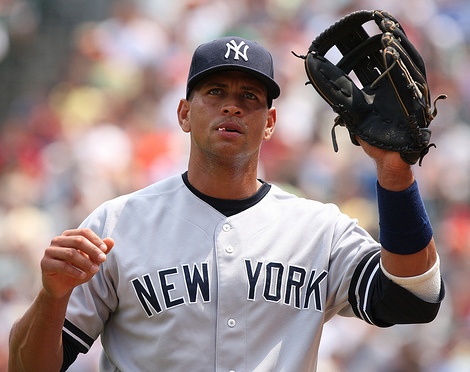
Alex Rodriguez crossed the pitcher’s mound in Oakland on his way back to first base. Pitcher Dallas Braden made sure that A-Rod knew exactly what he did wrong.

April 23
Does Dallas Braden even have the big league bona fides to call out a superstar like A-Rod? In some cases, absolutely not. In this case, yes.

April 24
Baseball writer Allen Barra disagrees with the assertions set forth in this blog. This blog attempts to set him straight.

– Jason

Review

FanHouse Weighs in on the Codes

Our old pal Jeff Fletcher of FanHouse offers the latest review of The Baseball Codes, offering this analysis: “The Baseball Codes provides just what you’d expect . . . In entertaining detail, hundreds of examples to show you how those who play the game believe it should be played.”

It’d be easy for a skeptic to dismiss the positivity as homer-ism between friends, but Fletcher provides a built-in caveat: “I wouldn’t be recommending a book I didn’t like, even if I knew the guys who wrote it. I’m not that nice of a person.”

He takes the time to break down the book far more than most reviews, offering detailed analysis on much of its contents. For those wondering what might be found within its pages, this review offers a great many answers.

– Jason

Alex Rodriguez, Dallas Braden, Don't Cross the Pitcher's Mound

Point-Counterpoint on the A-Rod/Braden Affair

Allen Barra, the author of a number of great baseball books, who has been praised within the pages of this very blog, saw fit to disagree with my opinions on the Alex Rodriguez/Dallas Braden affair via the Village Voice blog.

One of the reasons I take such delight in the A-Rod/Braden incident is that there are cogent and reasonable arguments to be made on both sides. I’ll stick firmly to my guns, but I can hardly fault those who disagree (at least those like Barra, who disagree coherently).

Exactly whose space is the pitcher’s mound anyway — I mean, when there isn’t a play in progress,” asks Barra in his blog post. “Whose space in baseball is inviolate? Braden is quoted in the New York Times saying, ‘I don’t go out over there and run laps at third base … I stay away.’ Now, as long as Rodriguez isn’t taking fielding practice or a throw around the horn, why would he give a flip what Braden did at third base?

The answer is simple: it’s Braden’s mound. And once he completes his inning’s work, it’s C.C. Sabathia’s mound. The pitcher’s mound is unlike any other space on a baseball diamond. Pitchers use it to literally survey the field from their vantage on high. Braden’s taken some flack for calling the mound the center of the universe, but that’s exactly what he was taught. It’s the point of origin for every play on a baseball diamond, a notion that can, for those who care to run this deep, lend a sacredness to it.

Agree or disagree with Braden, he lives as he preaches. “When I’m running across the back side of the field, I don’t ever run across home plate,” he told me this afternoon. “I don’t ever run on the catcher’s dirt, especially after the field is dragged. That’s not my area. It’s just little things, showing respect for the guys who prepared the field. Respect for the guys who go out and play on that field. Respect for the guys who are going to be busting their ass behind you on that field. Make it nice and clean for them. They’re the ones out there working on it—not you. If you’re a pitcher, stay on the mound.”

This serves to address Barra’s next point:

Precisely what standard is it that Braden is holding himself to?” he writes. “As an American League pitcher, he doesn’t even have to bat or run the bases, so he never comes in contact with fielder’s space. Does Braden, for instance, figure he would be violating A-Rod’s ‘space’ by throwing a pitch up and in that moved him out of the batter’s box? If the mound is Braden’s space, why isn’t the box A-Rod’s?

The difference is that a pitcher’s job description includes influencing batters’ strategy and positioning by moving them off the plate, as the pitcher sees fit. This is a function of pitching. A more appropriate comparison would have Braden walking over to smudge the lines of the batter’s box with his cleat while Rodriguez stood there, waiting. This, of course, would be ludicrous—a clear violation of the hitter’s space.

See where I’m going with this?

Part of Barra’s dilemma is that, despite an intricate knowledge of baseball, he (like many of his colleagues) hadn’t heard of the rule before this incident. “Where is this ‘unwritten rule’ that says you can’t cross the pitcher’s mound when running back to first from third?,” he wrote. “Rodriguez has 2181 big leagues games, and apparently he didn’t know it. Myself, I could have sworn I’ve seen that happen a thousand times over the years, and I’ve never seen a pitcher complain about it, much less throw a fit, or heard that there was an ‘unwritten rule’ to that effect.”

To be fair, I hadn’t heard of the rule either before I started researching this book. Suffice it to say that I’ve learned a few things over the last four years. A small sampling of opinions:

  • Bert Blyleven: “I used to really get pissed if a guy flew out, say, and he came back and stepped on my mound. I used to say something to some of the hitters. Just don’t run on my mound. That was my mound that day.”
  • Jamie Quirk: “Stay clear of the mound. It’s his area; don’t try to run across it or toward him. Just go back to your dugout and stay clear. That’s just courtesy of doing things the right way.”
  • Dave Roberts: “That’s his office, his domain. To run across it is disrespectful.”
  • Jim Price: “I’ve seen that happen, and then there was retaliation.”
  • Bob Gibson: “(Steve) Carlton and I shared one pet peeve relating to the office (the term Carlton used to refer to the mound). We hated when hitters crossed behind it on their way back to the dugout. We took down names.” (From Stranger to the Game.)
  • This is just a small sampling, but it makes my point. Of course, these guys played in the 1960s and ’70s (save for Roberts—the one who stole the key base for Boston in ’04, not his older big-league namesakes), which illustrates the increasingly quaint nature of this particular rule. Quaintness, however, does not equal extinction. Braden made sure of that on Thursday. Who knows—perhaps he’ll even spark a renaissance.

    Barra’s final point is actually one I agree with, at least in part. “Wasn’t Dallas Braden breaking some kind of unwritten rule by screaming from the mound like a nut both during and after the inning?” he asked.

    Well, yes. It was clearly an over-reaction, although not egregiously so. A-Rod carries the reputation of a guy who takes certain strange liberties on a baseball diamond, a fact that automatically sets some guys on edge. When those liberties infringe on a pitcher’s perceived territory, in the process diminishing the level of respect he demands as a professional, tempers can flare. Braden might have lost his cool after the inning, but he certainly didn’t on the mound. Three pitches after Rodriguez’s indiscretion, Braden elicited a double-play grounder from Robinson Cano to end the frame, and went on to pick up his third win of the season in a 4-2 contest.

    I’ll leave the closing statement to somebody who knows a thing or two about the unwritten rules, Tony La Russa.

    “I think the toughness of the pitcher,” he said, “determines whether he will enforce that rule about the mound.”

    Under that definition, Dallas Braden is one tough bastard.

    – Jason
    Alex Rodriguez, Dallas Braden, Don't Cross the Pitcher's Mound

    A-Rod to Braden: ‘You Talkin’ to Me?’

    In the substrata of yesterday’s blowup between Alex Rodriguez and A’s pitcher Dallas Braden—spurred when A-Rod crossed over the mound on his way back to first base after a foul ball—is the question about whether Braden even has the stature to challenge Rodriguez. (It’s been spurred in part by Rodriguez’s own comments: “I’ve never quite heard that, especially from a guy that has a handful of wins in his career. I thought he was talking to somebody else.”)

    A reader of this blog commented, “Regardless of whether there is some unwritten rule . . . Braden’s reaction was over the top. Besides, doesn’t it break the unwritten rule that young players give deference to veterans superstars(?)”

    There’s a valid point to this. Baseball is a game of hierarchy, from locker assignments to seating charts on team transportation to what a guy can get away with on the field. Without question, a lesser player trying to replicate the self-glorifying admiration provided by Barry Bonds for his own home runs would quickly be beaten down, be it physically or psychically—likely from the opposition and his own teammates.

    And when a star’s path crosses that of a lesser player, Darwinism almost inevitably wins out: the big fish eats the little one.

    Except here. I’ve been exchanging e-mail about the topic with FanHouse’s Jeff Fletcher (who’s been giving this incident a good deal ofquality attention); I wrote this to him last night:

    In general, there is a hierarchical structure to this type of thing. It’s partly what made Dickie Noles‘ flipping of George Brett in the ’80 World Series (remember that?) so brazen—unless a pitcher is a superstar himself, he has no business intentionally knocking down one of the five best third basemen of all time . . . and Noles wasn’t even a veteran, let alone a star.

    But that standard doesn’t really apply here.

    Noles’ move was all about intimidation and striking a tone. Braden’s motivation was strictly territorial. He made the point himself after the game, saying, “I don’t care if I’m Cy Young or the 25th man on a roster; if I’ve got the ball in my hand and I’m out there on that mound, that’s not your mound.”

    And he’s right. The stature of those who hold real estate is less important than the fact that they hold it at all. That Braden went so far as to equate A-Rod’s move not just with personal disrespect, but disrespect for the entire A’s organization, also says a lot. It probably wasn’t even intentional, but Braden just gave his team the best pep talk it could ever hope for: We’re every bit as good as the Yankees, and they will not walk over us, literally or figuratively.

    I might have a problem with a young hothead trying to intimidate a star, but that isn’t this. Braden wants only what’s rightfully his, and he has every right to do so.

    Some across the blogosphere have portrayed Braden as an insolent punk, but as someone who has had many conversations with the guy, I can say that he’s one of the most thoughtful people in the game—a player who gets it in a sport where many people don’t.

    Just because A-Rod didn’t know the rule doesn’t wipe it out of existence. Braden does know the rule, and is holding A-Rod to no less exacting a standard than he holds himself.

    – Jason

    Alex Rodriguez, Dallas Braden, Don't Cross the Pitcher's Mound

    A-Rod Crosses Braden – Literally – and Gets an Earful in Response

    Alex Rodriguez is one of two types of player: A guy who’s profoundly ignorant of much of the Code, or a guy who actively disdains it.

    This is someone who has been caught peeking at catchers’ signs, and who, as a baserunner, tries to distract fielders when they’re camped under fly balls.

    Today in Oakland, with Rodriguez on first base, Robinson Cano hit a foul ball so high that A-Rod had time to round second and get partway to third before it landed. Rather than going back the way he came, however, Rodriguez cut straight across the diamond and directly across the pitcher’s mound.

    It’s a direct violation of one of the lesser unwritten rules, and A’s pitcher Dallas Braden noticed.

    After the inning ended, Braden lit into A-Rod on the field, eventually being greeted by a dismissive wave from the superstar. “I was dumbfounded that someone of his status would let that slip his mind,” Braden told Jeff Fletcher of FanHouse after the game. “He understands that. I was just trying to convey to him that I’m still out there. The ball is in my hand. That’s my pitcher’s mound. If he wants to run across the pitcher’s mound, tell him to do laps in the bullpen.”

    It’s a rule that’s been around a long time.

    “That mound is the pitcher’s home, his office, and he doesn’t want anyone trampling over it,” said longtime outfielder Dave Collins. Luis Gonzalez called the mound “the Twilight Zone,” describing it as something to stay away from.

    Like any rule, a small handful of guys go out of their way to crap on it, if only to be annoying. It shouldn’t surprise anybody that A.J. Pierzynski is one of those players. According to multiple sources, he makes a habit of the practice, coming close enough to the pitcher to brush him on his way back to the base or the dugout.

    “He’s gotten hit a few times because of it,” said Tim Raines, Pierzynski’s former coach with the White Sox. “He’s been hit more than once.”

    “You’re always going to run across some guy who will fly out, round first, and cut as close as he can to you, just to either mutter something under his breath, just to piss you off as a pitcher,” said Jamie Quirk. “He’s gonna get as close as he can to you; he won’t bump you, but he’ll try to piss you off.”

    Is Rodriguez that kind of guy? It’s difficult to tell. The evidence against him, however, certainly does nothing to help his case.

    Update: There has also been some controversy about whether Braden even has the stature to challenge A-Rod. That issue is addressed here.

    Update II: Here’s the video:

    Update III: To hear audio of both players’ interviews, go here.

    Update IV: Author Allen Barra took issue with some of the points presented herein. In this post, I attempt to set him straight.

    Update V: I discussed some of these issues in a Q&A with the New York Times.

    Update VI: Turns out this issue is garnering some attention for the unwritten rules.

    Update VII: Braden hardly set the standard for young players speaking out of turn (if, in fact, that’s what he did).

    Update VIII: Catch video of Braden’s opinions on the affairs here.

    – Jason

    Arizona Diamondbacks, Basepath Retaliation, Chris Carpenter, Edwin Jackson, St. Louis Cardinals

    Respect, Response, Retaliation

    It started last night in Arizona, when D-Backs pitcher Edwin Jackson drilled Chris Carpenter in the left wrist with a high, inside fastball. It was the second inning, Jackson had struggled through the first, and Carpenter is as easy an out as can be found in the St. Louis lineup. It almost certainly wasn’t intentional.

    Still, Carpenter felt the need to exchange with Jackson some ideas about the propriety of such things as he made his way to first base. (Part of it had to do with the fact that Jackson had already drilled Ryan Ludwick, the second hitter of the game, an inning earlier.)

    Carpenter explained his thoughts to the St. Louis Post-Dispatch: “I hit .100. It’s not like I can hit. Throw the ball down and away. Throw a slider, whatever it is. It’s different if you’re Carlos Zambrano, Adam Wainwright, Dan Haren, guys that can hit. You throw 95 miles per hour, chucking balls up high, never mind you can’t control it. Come on. He’s missing by three feet. It’s not right.”

    “He wasn’t throwing at him. I know that,” said Tony La Russa. “But the fact is he was throwing up. That’s dangerous. If you can’t control it, then pitch down.”

    All of this is just prelude to Carpenter’s response. Rather than taking it out on Jackson once his counterpart came to the plate, Carpenter, racing to second one pitch later on a ground ball, went out of his way to throw a shoulder at second baseman Kelly Johnson, who had already released the ball on the front end of an inning-ending double-play. (Watch it all here.)

    Taking out a middle infielder in response to being drilled is classic basepath retaliation, but it’s rarely seen from a pitcher (who can usually deal with things more effectively from the mound, and who’s not necessarily comfortable running the bases).

    Another Code cropped up when the benches emptied around the spot of the incident, as shortstop Stephen Drew started yelling at Carpenter. Instead of jawing back, however, the St. Louis pitcher made a beeline to the dugout through milling players, leaving his teammates to pick up the pieces.

    The primary reason Carpenter didn’t draw more notice for this is that he picked up his hat and glove, and immediately returned to the field to take his warm-up pitches, effectively sending the message that, in his mind, anyway, the incident was over. (There’s also the notion that the repercussions of getting tossed in the second inning, should he have stuck around to fight, would have crippled the St. Louis bullpen for days to come.)

    Because it was a close game until the top of the ninth, there’s no way to tell if Arizona agreed. The teams next meet June 11, in St. Louis.

    – Jason

    Radio appearances

    On the Air in Canada

    Apparently, Canadians like baseball. I was interviewed by the CBC last week (the Canadian Broadcasting Corporation is the rough equivalent to NPR in the States), from the KQED studios in San Francisco.

    As soon as the spot aired over the weekend, traffic to The Baseball Codes blog tripled, and then some—and hasn’t let up. What’s this country doing with only one big league team?

    Hear my conversation with Michael Enright here. (It can be found in hour 2 of the program.)

    Thanks, Canada.

    – Jason

    Radio appearances

    In Studio at KNBR 1050

    Michael and I spent a half-hour in the KNBR 1050 studios with Damon Bruce yesterday, where we primarily discussed the topic of the day: Whether or not the Giants should have responded to either of the Dodgers’ Code violations over the weekend.

    Things we learned: Damon stands when doing his broadcast, and although he hasn’t yet read the book, he really likes the cover.

    Listen to the third hour of the program here. We’re on in the second half.

    – Jason

    Dave Sims, Larry Stone, No-Hitter Etiquette

    Don’t Talk About a No-Hitter, Chapter 4 (and We’re Still in April)

    Seattle pitcher Doug Fister took a no-hitter into the seventh inning last night against the Baltimore Orioles. On the television broadcast, Dave Sims and Mike Blowers refrained from referring to the feat through the first six frames—at which point Sims went to commercial with the comment, “14 straight scoreless innings for Fister, and a six-inning no-hit bid tonight.”

    Sure enough, the first Baltimore batter in the seventh, Nick Markakis, singled up the middle.

    Needless to say, Sims took some heat, particularly via Twitter. One need look no farther than his string of replies to get an idea about what kind of venom was being sent in his direction.

    Hey Mariners fans re: Fister no-hit bid–my job is telling the story, not cowering to jinx theories.Go Mariners!
    about 16 hours ago via web

    @PositivePauly Pauly, if the best anncr ever, Vin Scully, doesn’t
    subscribe to the no-hitter jinx stuff, it’s plenty good 4 me.
    about 16 hours ago via Echofon in reply to PositivePauly

    @REALPeterMag Pete, my job is to tell the game story, not adhere
    to jinx theories.
    about 16 hours ago via Echofon in reply to REALPeterMag

    @dpmiv Pete, jinx’ are not my concern, telling the story is my job.
    about 16 hours ago via Echofon in reply to dpmiv

    @PositivePauly Dude, relax!
    about 16 hours ago via Echofon in reply to PositivePauly

    @Hodepwns Fans’ jinx belong to them, not to b’casters!
    about 16 hours ago via Echofon in reply to Hodepwns

    @JrDub83 Thx for the heads up, but jinx’ aren’t my concern. Telling
    the story is my job!
    about 16 hours ago via Echofon in reply to JrDub83

    @JrDub83 My job is to tell the story, not adhere to your
    superstition. It’s not announcer’s fault Markakis hit a bullet thru the 5hole.
    about 16 hours ago via web in reply to JrDub83

    As far as I’m concerned, the best thing about the incident is that it inspired Larry Stone of the Seattle Times, the best chronicler of the unwritten rules in the newspaper business, to weigh in:

    I even took some heat myself last night (mostly good-natured. I think.) for blogging that Fister had a no-hitter going, and for talking about it in the press box. One, I don’t believe in no-hit jinxes, and I certainly don’t believe in them when it comes to a reporter covering the game. Pitchers lose no-hitters because it’s exceedingly hard to retire 27 batters without giving up a base hit, not because an announcer, or a sportswriter, had the audacity to talk about it.

    I, too, fall into this camp. I certainly don’t fault Blowers (a former player) and those like him, who find creative ways to work around actually mentioning those words during the course of a broadcast. But should should a play-by-play man decide to do his job and inform listeners in a clear voice about what’s going on, more power to him.

    After all, David Cone listened to Michael Kay talk about his 1999 perfect game over and over while in the clubhouse between innings, and it didn’t set back his cause any. Sims is in a similar situation; he’s not the one who gave up the hit to Markakis, and he shouldn’t be the one blamed for it.

    Find our other posts on the topic here, here and here.

    – Jason