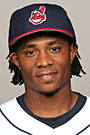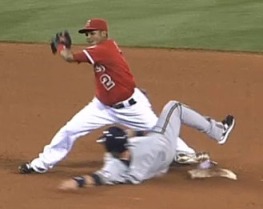
Casey McGehee, Erick Aybar, Slide properly

Takeout Order: One Knee, to Go

Baseball’s Code can be a tricky beast. Certain plays appear to be clear-cut violations . . . until they’re proven to be otherwise.

Let a play that happened Monday at Angel Stadium serve as an example.

With Milwaukee’s Casey McGehee on first, Carlos Gomez hit a grounder to first baseman Kevin Frandsen, who threw to shortstop Erick Aybar for the force at second. The throw, however, was well to the third-base side of the bag, forcing Aybar to stretch wide to field it, leaving him vulnerable to a takeout slide from McGehee. (Watch it here.)

In most situations, McGehee’s play would be entirely appropriate. It’s the job of the runner at first to prevent a double play, usually by taking out the covering infielder with a slide.

(Slide type is also governed by the unwritten rules. Barrel rolls and high spikes are not tolerated; flying through both base and fielder feet first and spikes down is expected.)

There were, however, other factors to consider. First, McGehee could well have been letting out some frustration; that he was at first base to begin with was because Angels reliever Trevor Bell had just drilled him in the ribs.

Moreover, Aybar was in no position to complete the play, even without interference. It was all he could do to merely record the out at second, and Gomez, was far too fast to be doubled up. Aybar was exposed—a fact that McGehee exploited to relatively disastrous results, hyperextending the shortstop’s left knee when he took him out with a slide slightly to the inside part of the bag, aimed directly at Aybar’s leg.

Aybar was removed from the game and hasn’t played since.

All of this when Milwaukee held a 9-2 lead.

It all goes to show, however, that even a seemingly clear-cut case of a Code violation might not be so. Two guys with a firm understanding of the unwritten rules dismissed any notion of impropriety—and they were in Aybar’s dugout.

“I thought it was a clean slide . . .” said Angels manager Mike Scioscia in the Los Angeles Times. “The slide was right over the bag, so I can’t find much fault with it.”

Angels center fielder Torii Hunter shared his manager’s sentiment in an ESPN Los Angeles report, calling that type of slide a “lost art,” and saying, “I like the way (McGehee) is playing the game.”

“Was I going in extra hard because I got hit?” asked McGehee. “No. Unfortunately, the guy was in an awkward position. Look at the video. I didn’t try to pop up on him or roll him. Unfortunately, he got hurt. . . . They’re known for playing hard-nosed, aggressive baseball, so hopefully they understand where I’m coming from. I play the game right.”

A compelling argument can be made that McGehee was in the wrong. Scioscia and Hunter, however, backed up their words with actions: McGehee came to bat 10 more times in the series, and was not drilled once.

When in doubt, defer to the experts.

– Jason
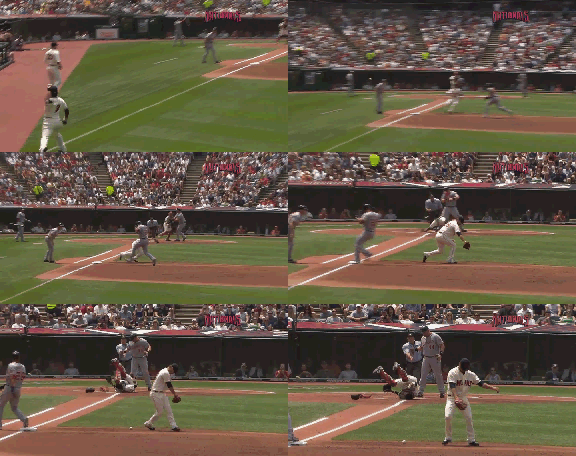
Adam Dunn, Carlos Santana, Running Into the Catcher

Freight Train Rolling; Dunn Offers Lesson to Rookie Catcher

We got to see Stephen Strasburg strike out eight Indians Sunday in his second major league start, but he wasn’t the only highly touted recent call-up to make an appearance.

Cleveland catcher Carlos Santana was playing in just his third big league game, and learned a valuable lesson in the process.

In the second inning, with Adam Dunn on second base, Washington’s Mike Morse hit a single to right field. Although the throw home was cut off by first baseman Russell Branyan, the 6-foot-6, 285-lb. Dunn thundered into Santana, flattening the catcher without so much as leaving his feet. (Watch it here.)

It called into question the unwritten rules regarding collisions at the plate, one of which says that a catcher has no business being in the baseline if he’s not holding the ball.

Could Dunn have avoided the collision had he been paying attention? Probably. Was it incumbent upon him to do so? Absolutely not.

In that situation, there’s no reason for Dunn to pay attention to anything but the space in front of him; if the catcher is standing there, Dunn has two choices—go around him or through him.

When Dunn was with Cincinnati in 2003, he found himself participating in another incident at the plate, which also involved questions about when it is and isn’t appropriate to flatten a catcher.

With the Reds holding a 10-0 lead over Philadelphia, Dunn was waved home from second on a single because the outfielder’s throw missed the cutoff man and the second baseman had to scamper to get to the ball.

In this type of situation, an acceptable interpretation of the Code says that runners can be sent home if there will be no play at the plate. There shouldn’t have been a play, so third base coach Tim Foli waved Dunn in.

From The Baseball Codes:

There was no way the throw would come close to beating Dunn. Except that the runner, sensing Foli’s lack of urgency, slowed down considerably, allowing the defense time to recover. By the time Dunn recognized his mistake, he was just steps away from catcher Mike Lieberthal, who was standing in the basepath, ball in hand. At that point, Dunn—a former football player for the University of Texas— reacted instinctively, putting everything he had into a brutal collision. And though he didn’t succeed—Lieberthal held on for the second out of the inning—when Dunn next came to bat he was thrown at by reliever Carlos Silva, and charged the mound.

“I don’t know what I’m supposed to do there,” said the slugger after the game. “Stop and let him tag me out? Slide? I think I did the right thing.”

In that situation, Lieberthal was entitled to the baseline, and Dunn was entitled to separate him from the baseball. (Or at least he would have been, had the score been closer.)

Against the Indians on Sunday, Santana had no business being in the baseline; intentionally or not, Dunn reminded him of that.

It’s a mistake that Santana will not likely make again.

(Thanks to SB Nation for the GIF.)

– Jason

Don't Bunt to Break Up a No-Hitter, Gordon Beckham, Ozzie Guillen, Ted Lilly

Bunt it Like Beckham; ChiSox Infielder Tries to Break up No-No with a Bunt

There was a chance for unprecedented greatness Sunday night at Wrigley Field, as White Sox pitcher Gavin Floyd no-hit the Cubs into the seventh inning, while Cubs pitcher Ted Lilly took a no-hitter of his own into the ninth.

The unwritten rules, however, were exploited in the eighth inning, when White Sox second baseman Gordon Beckham tried to get his team’s first hit . . . with a bunt.

The precedent for this is well established—one does not bunt for his team’s first hit, unless the game’s close enough to merit a baserunner by any means possible.

This game was a pitchers’ duel with a pitchers’-duel score—the Cubs led, 1-0—affording Beckham the leeway to do whatever he could to reach base.

That wasn’t enough to satisfy the Wrigley Field crowd, which booed the play with vigor. The fact that Beckham didn’t even get the bunt down (it went foul), and eventually popped out, didn’t make a lick of difference.

The most interesting take on the situation came from Ozzie Guillen (no surprise), who chose to avoid walking the appropriate line (don’t bunt to break up a no-hitter except in close contests), the hard line (don’t bunt to break up a no-hitter ever) and the apathetic line (bunt whenever you want, under any circumstances).

Instead, he spouted an unwritten rule that he could well have made up on the spot.

“If you bunt in the ninth that’s not professional, but in the eighth . . . but Wrigley Field people, that’s the only thing they can do is boo,” Guillen said in the Peoria Journal Star. “They boo for every freaking thing here. That’s part of the game, but the ninth, that’s kind of a different thing.”

Guillen did have something of a point in that a recent example of such a play—Ben Zobrist breaking up the 2006 no-hit attempt of Seattle pitcher Jarrod Washburn with a sixth-inning bunt—drew condemnation from neither Washburn or his manager, Mike Hargrove, owing to the fact that it came in the game’s middle innings, with a 2-0 score.

There was a guy on the White Sox bench, however, who appeared to be cognizant of the actual Code. Juan Pierre broke up Lilly’s gem with a clean single in the ninth (watch it here), and admitted that he had ruled out bunting as an option.

”I wasn’t going to bunt there, and there was some pressure there because that was the first time I was involved in something that late in a game where a guy has a no-hitter against a team I’m playing for,” he told the Chicago Sun-Times.

While it’s possible that Pierre was referencing something strategic, there’s a good chance he was simply being cognizant of the Code. (Inquiries have been lodged. Updates as new information becomes available.)

Heck, Pierre might have a better grasp of this than his manager.

– Jason

Manny Acta, Mound Conference Etiquette, Tony Sipp

Forget Godot; Wait for Your Manager

Tony Sipp

In the seventh inning of Friday’s game between Cleveland and Washington, Indians reliever Tony Sipp walked Adam Dunn, the first batter he faced, to load the bases. With that, Cleveland manager Manny Acta popped out of the dugout and signaled for Chris Perez to enter the game.

Sipp, clearly unhappy with the situation, descended the mound, ball in hand, and headed toward the dugout. He had better options.

The pertinent unwritten rule in this situation says that a pitcher must wait for his manager to reach the mound, then hand him the ball before being dismissed. Pitchers who fail to follow this pattern have found themselves in awkward and occasionally hostile situations.

A passage in The Baseball Codes describes Giants reliever Jim Barr, upset at being pulled from a game by manager Frank Robinson in 1983:

Frustrated, Barr didn’t wait for his manager to reach the mound before flipping him the ball—a clear act of insolence in the hard-edged presence of Robinson, who made it clear to his pitchers that they were to hand him the ball as they departed.

Barr planned on storming to the dugout, but was interrupted when Robinson caught the baseball, grabbed the pitcher by the arm as he tried to pass, spun him around, and dragged him back up the hill to await (reliever Greg) Minton’s arrival. Robinson had been the league’s most fiery player, and his managerial furnace burned nearly as hot.

As the duo waited for Minton to arrive, Robinson told Barr exactly what he thought of his stunt, poking a finger into the right-hander’s chest to emphasize his point. . . . On the mound at Shea, it was hard to miss the battle brewing, and the New York fans looked on in delight. All four members of the Giants infield raced in and surrounded the pair in an attempt to calm things down.

Barr didn’t help matters when he decided that if he wasn’t allowed to leave until Robinson gave him permission, he wouldn’t leave at all. This meant that when Minton arrived at the mound he found two people, Robinson and Barr, standing between himself and the catcher, which made it somewhat difficult to warm up. “It seemed like five minutes,” said Barr, “even though it was probably only ninety seconds.” Robinson finally led Barr back to the dugout, at which point both pitcher and manager had to be restrained from going after each other.

Unlike Barr, Sipp quickly recognized behavior that needed alteration. Unlike Robinson, Acta didn’t try to physically restrain his player.

All it took was a few steps for Sipp to realize that his manager was waiting for him on the mound, at which point he turned around and passed the ball off, as decorum dictated he should have in the first place.

The manager and pitching coach Tim Belcher sat down with Sipp after the game to discuss the issue and what’s expected of pitchers in that type of situation, but Acta ultimately came to Sipp’s defense.

”Tony’s not really a baseball-crazy guy off the field,” he said in the Akron Beacon Journal. ”He didn’t mean anything by it. . . . But we talked to him and told him it just doesn’t look good, that it gives the impression like, ‘you’re mad at me, even when you’re really not mad at me, and you’re just mad at yourself.’ It’s a part of unwritten baseball etiquette, some of these guys, at times, are just not as in tune with it.”

In six appearances since May 23, Sipp’s ERA has shot from 1.40 to 6.53. It’s pretty clear that Manny Acta is the least of his problems.

– Jason

This Week in the Unwritten Rules

This Week in the Unwritten Rules

June 7
Brandon Phillips pounds his chest in self-congratulation. The Nationals drill him for it. Discussion ensues.

June 8
A Cincinnati Enquirer columnist dismisses the importance of baseball’s Code. This space disagrees.

June 9
ESPN the Mag suggests that pitch tipping plagued Ben Sheets. Sheets disagrees.

June 9
Getting to the heart of Dallas Braden’s quest for respect takes us back to Stockton.

June 10
Baseball’s Code isn’t just for players. Umpires and fans have their own sets, as well.

June 11
It appears as if Pete Rose corked his bats in his run-up to 4,192. Does it matter? Depends who you ask.

– Jason

Bat corking, Cheating, Pete Rose

Rose Bat Corked? Evidence a Quarter-Century Later Suggests As Much

A participant at one of my recent book readings asked why people make such a big deal about pitchers cheating (scuffing, spitballs, etc.), while hitters (corked bats) slide under the radar, relatively speaking. Are there, he asked, that many more cheating pitchers than hitters?

My answer was that spitball practitioners (and their ilk) ply their trade in the middle of the field, under full scrutiny of fans and media. This lends a level of intrigue to the proceedings.

Bat doctors, however, do their preparation in closed workshops, away from public view. There might seem to be more illicit pitchers than hitter, but my feeling is that some of that perception is due to the fact that they’re simply more prominent.

That theory got a boost this week, when it was revealed at one of the bats Pete Rose used in his run to 4,192 hits has cork in it.

The bat, owned by a collector, has been corroborated against a photo of Rose holding it during that time. The model—the PR4192—was made by Mizuno specifically for the chase.

This isn’t even the first time Rose has been so accused. Former Rose confidant Tommy Gioiosa, who blew the whistle on Rose’s gambling habits, long ago claimed that Rose admitted to him that he corked his bats during his final season.

Does this invalidate Rose’s record? Not a bit.

It’s only cheating, after all, if you get caught. And Rose didn’t get caught until 25 years after the fact.

Whether he should have corked his bats in the first place is a terrific conversation topic, with valid points to be made on both sides. The fact remains, however, that none of the numbers put up by the likes of Graig Nettles, Norm Cash or Albert Belle were ever drawn into question once they were caught using corked bats.

Nor should those of Rose.

Update: Examination of subsequent game-used Rose bats found no evidence of cork.

– Jason

Unwritten-Rules

Unwritten Rules Not Just for Players

As is discussed in this space every day, baseball players have certain expectations placed upon their actions, and face consequences for failing to meet those expectations. They are not, however, the only people in the ballpark who play according to unwritten rules.

Umpires have their own Code, and not just as it pertains to interacting with players during the course of discussion. Former amateur ump Chris Conley recently detailed a variety of the unwritten rules he had to face. It’s a given that expectations at the amateur levels can be wildly different than those in the professional ranks, but several of his points ring true:

  • Regarding the “in the neighborhood” play at second base: “When turning a double-play, the second baseman gets to take his foot off the base a few moments before the ball arrives,” he wrote. “It keeps him from getting spiked by the base runner. It makes it less likely the base runner will get hit by the throw. Technically the runner shouldn’t be out . . . but he is.”
  • Catcher’s framing: Should a catcher be forced to move his glove to catch a pitch—meaning the pitcher missed his spot—it’s a ball. This isn’t universally true with major league umpires, but a catcher who can successfully make it seem as if he caught a pitch where it was intended to be thrown can earn his staff a lot of strike calls.
  • Conversely, should the catcher’s glove not move when catching a pitch that’s lined up slightly off the plate, he’s far more likely to get a strike than had he been forced to reach for it.

Conley details some rules that don’t have big-league carry-over, such as one that says a runner is out at second if the ball beats him to the bag, even if he manages to slide under the tag. One imagines rules like this have been implemented to keep umps from freelancing with their calls, and to prevent ill-informed managers and fans from growing irate when they fail to see the subtleties that informed a controversial decision.

* * *

On the other side of the outfield wall, fans have their own set of responsibilities. Those near the railing should get out of the way of a home-team player attempting to snare a ball over the wall, but should interfere as much as possible (on the proper side of the fence) with a visiting player.

Another rule was enacted Tuesday, during Stephen Strasburg’s well-hyped debut in Washington. Fan Bill Corey, sitting in the front row of Section 141 in right-center field, caught the first home run Strasburg gave up as a big leaguer, to Delwyn Young.

He threw it back.

“I’m just letting [Strasburg] know I have his back, as should everyone else here,” he told the Washington Post’s Dan Steinberg.

This move is hardly endorsed by Major League Baseball, and security officers descended on Corey—though they ultimately opted not to throw him out, a decision based at least partly on the impassioned pleas of people sitting around him, who appreciated what he did.

Steinberg subsequently called a variety of memorabilia dealers and was told that the ball could be worth $2,000, or more.

A small price to pay, for some fans.

– Jason

Articles, Dallas Braden

Braden’s Roots Inform Demand for Respect

Bay Citizen launched about two weeks ago, offering hope for a sustainable non-profit journalism model. A few days later, I wrote a story for the site about Dallas Braden, which touches on his run-in with Alex Rodriguez, and his perfect game.

The piece isn’t precisely unwritten-rules related, but it’s still relevant to the conversation.

The theme I was after concerned the topic of respect, and what it meant to Braden as he grew up in Stockton. Respect, after all, was the basis for his exchange with A-Rod, and I wanted to find out what about his past informed his perception of the concept.

He told me a number of good stories, several of which were stripped from the final edit. I offer up two of them here.

During the late 1990s, it didn’t take particularly deep insight to recognize that Stockton’s Amos Alonzo Stagg High School was not as well off financially as some of its athletic rivals. This fact was not easily hidden.

In spite of this—or maybe because of it—when a visiting team showed up one day with its own lawn chairs upon which to settle behind the dugout fence during a game, members of Stagg’s junior varsity baseball team felt both anger and embarrassment. The bench provided by the school, it seemed, was too old and splintery.

One of the Stagg pitchers that day was sophomore Dallas Braden, who to this day looks back on the moment with disbelief.

“Are you that much better than us that you can’t sit on our dugout bench, on our slab of wood?” said Braden, who, as a member of the Oakland A’s, has gained more name recognition over the course of this young season than perhaps anybody in baseball. “It’s a slap in the face, a lack of respect for our facility and for us kids. It was as if we just weren’t good enough; that we were almost lucky that they came down and spent the afternoon playing baseball against us.”

And this:

The pitcher tells a story from his youth, when he brought home a friend’s Whiffle Ball bat, only to have his dog chew the handle. Though the bat was hardly ruined, and though money was always tight, his mother insisted that he replace it.

“She said to me, ‘You’re going to go and get him a new bat, because that’s what you would want done for you,’ ” he said. “I was nine. It didn’t matter that it could be taped. It was the principle of the matter. . . . My mom didn’t want to go to bed with that on her mind, knowing that she didn’t teach me the right way to do things.” . . .

Wooden benches on a prep ballfield or a pitcher’s mound in the Oakland Coliseum; poor kids in poor cities or millionaires playing a child’s game for a living; in Stockton or Oakland or New York City, the concept of respect doesn’t change.

You break a kid’s bat, you buy him a new one. It’s as simple as that.

It’s insight into the mind of a guy who understands baseball’s code better than most of his contemporaries, despite being just 26 years old and in his fourth season as a big leaguer.

It also helps explains what the Code is all about.

– Jason

Ben Sheets, Pitch Tipping

Pitch Tipping, Real or Imagined, No Longer Plaguing Sheets

In the current issue of ESPN the Magazine, Buster Olney has a terrific column about pitch tipping, or the mannerisms a pitcher unknowingly exhibits that show the hitter exactly what type of pitch is about to be delivered.

For example, explains Olney, a splayed glove on a right-handed pitcher can be a giveaway for a changeup, because a pitcher usually has to dig his hand into the glove to get a proper grip on the ball. Similarly, some pitchers come set with their glove farther away from their bodies when preparing to throw a curve, to better articulate the proper wrist angle.

Other tells have nothing to do with preparation. From The Baseball Codes:

When Babe Ruth first came to the American League as a pitcher with the Red Sox, he curled his tongue in the corner of his mouth whenever he threw a curveball—a habit he was forced to break once enough hitters became aware of it. Kansas City’s Mark Gubicza was cured of his tendency to stick out his tongue when throwing a breaking ball under similar circumstances. Ty Cobb regularly stole bases against Cy Young, abetted, said the outfielder, by the fact that Young’s arms drifted away from his body when he came set before throwing to first; when he was preparing to pitch, he pulled his arms in.

Pitcher Todd Jones dished similar dirt on several competitors in an article he wrote for Sporting News in 2004: “When Andy Benes pitched, he always would grind his teeth when throwing a slider. In Hideo Nomo’s first stint in L.A., he’d grip his split-finger fastball differently than his fastball. Randy Johnson would angle his glove differently on his slider than on his fastball. I’ve been guilty of looking at the third-base coach as I come set when gripping my curveball. When hitters see this, word gets around the league. In fact, my old teammate Larry Walker was the one who told me what I was doing. He said he could call my pitches from the outfield.”

The problem with Olney’s article is that it’s centered on A’s pitcher Ben Sheets, who at the end of a strong April encountered consecutive rocky starts—eight earned runs in four innings against Tampa Bay on April 27, and nine earned runs in three-and-a-third against Toronto on May 2.

Speculation at the time said that Sheets was tipping his pitches, something Olney corroborates both circumstantially—Blue Jays manager Cito Gaston is a master at pitch-tip recognition—and actually—unnamed members of the “Oakland staff” determined via video that Sheets was tipping his curve by holding it differently than his fastball.

All of which sounds great, and might be true. Only Olney didn’t talk to Sheets (or if he did, he didn’t reference the conversation in his story).

When the rumors surfaced a few weeks ago, I asked Sheets if there was anything to them. He insisted that his pitching problems had far more to do with faulty mechanics than with any sort of tipping problem.

“I wish I could blame it on something that easy, but I don’t believe that was the reason I got hammered in two starts, by any means,” he said. “What I corrected wasn’t that. That was the big theory, but I made some mechanical adjustments that I think helped me get more outs than worrying whether I was tipping or not.” (He declined to provide specifics for his issues, or the adjustments he made.)

This could be a smokescreen, except for the fact that there’s not much need for one. By the time I spoke to Sheets, the problem—be it mechanical or tipping—had already been corrected, and the right-hander didn’t have much (if anything) to lose by copping to tipping, were that the case. (He faced Tampa Bay again on May 8, and held them to four hits over six-and-a-third innings.)

“Trust me, there was a lot more than tipping going on with my stuff,” he said. “It was just not good pitching. I wasn’t throwing the ball well. It had nothing to do with the hitter—it had to do with making a good pitch.”

Interestingly, Sheets did admit to having suffered from tipping problems in the past, although he wouldn’t specifically identify his tells, or when they happened.

Either way, he’s recovered at least part of his mojo. Since his disastrous outing on May 2, he’s thrown at least six innings in each of his seven starts, with a 3.56 ERA. During that time he’s lowered his overall ERA from 7.12 to 4.96.

Pitchers across the league suffer from any variety of tells, but this facet of the game is infrequently brought to the public’s attention. Sheets’ problem appears to have been fixed; all that’s left is to enjoy the discussion.

– Jason