Oakland A's

1974: Reggie vs. Ryan

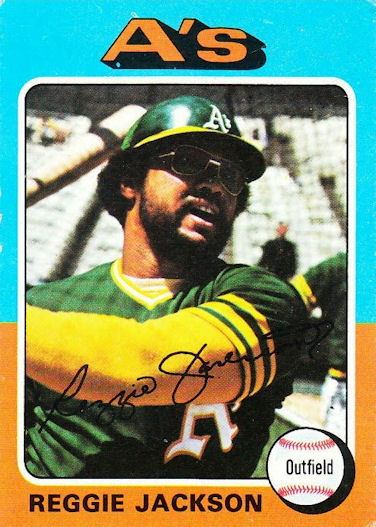
ReggieResearch for my next book, about the OaklandA’s dynasty of the 1970s, to be published by Houghton Mifflin in 2015, has turned up boundless examples of unwritten rules from that bygone era. Reggie Jackson tells of a showdown he had against Nolan Ryan in 1974, in which he congratulated Ryan—in his inimitable fashion—for a job well done. Ryan, of course—in his own inimitable fashion—appeared to take it in a way other than how it was intended. From Jackson’s account of the ’74 season, “Reggie: A Season with a Superstar”:

September 3: We knocked out Nolan Ryan in the fifth inning of a 7-0 win. …

I got a lot of heat because I patted him on the butt after I made out my second time up, but I didn’t tell anyone why. … The second time up, he called for the catcher, Ellie Rodriguez, and sent him back to the plate to tell me he was going to throw only fastballs right over the plate. He was losing 3-0 at the time, but he said he wanted to get the best fastball and the best power together and see who would win. I didn’t know whether to believe him, but he delivered. He just threw fastballs. Bam, bam. And I hit one, wham. I sent it on a line to left. I thought it was going to drill a hole through the seats and wind up outside the ballpark. But I didn’t get it high enough and it was caught in front of the fence. I was disappointed, but I called it a draw. He had got me out, though I had hammered the hell out of the ball. I knew he knew it. Running back to the dugout, I went by him and gave him a pat on the ass to let him know he had given me a display of guts I admired. He didn’t say anything. He didn’t have to.

The next time up, he wasn’t going to give me one I would hit out. He threw hard, but he didn’t throw a strike. He threw one right at my eye. You know, he cranks up and seems to get a running start and that ball is nothing but a blur. When he aims one at you, it freezes you with fear, because it could kill you. All I saw was this white blur coming right at me and it throws me for a split second before I got the hell out of there. I went down flat, just in time. I was burned by the heat of the ball as it went by.

I was so shook I thought that if he threw three straight strikes I’d let him have them. We were ahead and I wanted to wind up alive. But, you know, I figured, well, fuck him. I don’t want to back down. I don’t want to start a trend that will have every pitcher in the game going for my head to back me down. So, I grit my teeth and dug in and was ready to swing at anything good. He didn’t throw me anything good. He threw me two maybes that were called balls, which made it four balls, and gave me my walk. I never moved a muscle in that batters box, but I breathed a sigh of relief afterwards.
Don't Steal with a Big Lead, Oakland A's

1975: Sending a Message in One Easy Step (Beanball Not Included)

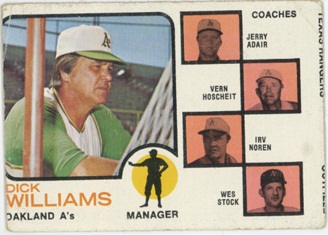
Dick WilliamsResearch for my next book, about the OaklandA’s dynasty of the 1970s, to be published by Houghton Mifflin in 2015, has turned up boundless examples of unwritten rules from that bygone era. Manager Dick Williams tells a tale of running up the score while at the helm of the California Angels, as a means of sending a message to A’s owner Charlie Finley—who had spent three seasons trying to keep his boot heel firmly affixed on the manager’s neck when Williams worked for him. From Williams’ autobiography, “No More Mr. Nice Guy”:

In April 1975, my Angels were leading the A’s 9-1 in the sixth inning of the second game of a doubleheader in Anaheim, and Mickey Rivers was on first base. I decided, up yours, Charlie. I sent Rivers to second base on a hit-and-run attempt. Our batter got a hit and Rivers scored all the way from first. And of course the A’s were angry. When you’re leading by a big margin, running like that is considered crass. Not just because you’re openly challenging the other team or making a comment on their ability to throw you out. Mostly, it’s because you don’t need to run. You’re winning by eight runs, you just need to keep your mouth shut and finish the game. You don’t need to run, and the losing team doesn’t appreciate it. You realize that more baseball fights start because of a needless steal than because of a stupid beanball.

I should mention here that it’s also considered crass for a team leading 9-1 to shout obscenities about the opposing team’s owner from the dugout. Particularly when the owner’s real name is being used, as in “Take that, Charlie, you son of a bitch!” Or perhaps even, “Fuck you, Charlie!” I must admit, that night I let a few such things slip. Was I looking for a fight? You decide. Oakland reliever Jim Todd thought so. He was already mad because, after not allowing an earned run all season, we had touched him up for five. Immediately after Rivers’ steal, Todd’s next pitch was directed at, and collided with, the top of Bruce Bochte’s head.

The first thing I did was run to home plate to check on Bochte. Every manager does that. I leaned down and saw that he still had both eyes. My job was done. Now I did something that most managers would not do. I charged the mound of a team I’d spent three wonderful years managing. I charged the mound and lunged at their 6-foot-2 pitcher, who was about 20 years younger than me but obviously without a gut in his body. He tried to run. I grabbed him by his belt and dragged him to the ground and started pounding on him. That’s right, I took on Jim Todd, and — you guessed it — soon I was rolling around with what seemed like 50 of my former players.

Anybody who knows Dick Williams and saw this scene would think, he’s a dead man. He’s lying on a pitching mound and is fair game for former players who truly are looking for his nuts with their cleats. But I guess the A’s liked me as much as I like them — or at least some of them did. My world darkened underneath a green and gold uniform, but the voice was friendly. “It’s Reggie,” the voice whispered. “I’m just going to lie here on you until this thing ends.” I laughed and he laughed, and we just lay there like two kids playing King of the Mountain while all hell was breaking loose on top of us.

Oakland center fielder Angel Mangual, with whom Williams had consistently feuded, did eventually sneak some kicks in to his former manager’s ribs, but it seems that, for Williams at least, all ended relatively well.

Oakland A's, Retaliation

1972: Clear-Headed and Hot-Headed Very Different States

Ken HoltzmanResearch for my next book, about the OaklandA’s dynasty of the 1970s, to be published by Houghton Mifflin in 2015, has turned up boundless examples of unwritten rules from that bygone era. On-field revenge was more institutionally prevalent then than it is now, leading some players to go to extremes. This tale of getting things done properly is brought to you via the Oakland Tribune, May 22, 1972:

[A’s pitcher] Ken Holtzman was sailing along with a 2-0 lead in the second inning when he grounded to Royals first baseman John Mayberry, 6-foot-3 and 220 pounds. Mayberry took the ball, ambled over to the bag to make the third out, but stopped instead of crossing over toward the dugout. The 165-pound Holtzman, running full speed, crashed into Mayberry and went down as if knocked out by Joe Frazier. When Lou Piniella led off the next inning, the still-shaken Holtzman threw the first ball over his head.

Holtzman: “I didn’t know where I was. I was so dizzy and so mad, I thought Piniella was Mayberry, so I threw the ball over his head. When I got back to the dugout, they told me what I’d done.” [Holtzman went on to say that he had hit the back of his head after falling, had bitten his tongue and was still dizzy upon being removed from the game in the sixth inning.]

Piniella is shorter and doesn’t weigh as much as Mayberry, and not only is Piniella white and Mayberry black, but Piniella bats right and Mayberry left.

By the time Mayberry came up again, Holtzman’s head had cleared. He threw a ball over HIS head and then struck him out.


Dallas Braden, Don't Cross the Pitcher's Mound

Braden, Protector of the Code, Hangs ‘Em Up

Dallas Braden SIDallas Braden gave up the ghost today, accepting that there is nothing left in his injured shoulder to help him recapture major league success, and called it a career. Based on my personal interactions with the guy—and there were many, including extensive talks for multiple features like this one—I can report that he was truly thoughtful, one of the good guys in a clubhouse full of good guys. (He remains the only active player to whom I have given a copy of The Baseball Codes.)

His primary epitaph will be the perfect game he threw against the Yankees Rays on Mother’s Day, 2010 (especially poignant, given that his grandmother, who raised him after his own mother passed, was in the stands). I will remember him best, however, for calling out Alex Rodriguez for an unwritten rules violation so obscure that because few people had ever heard of it, Braden was widely branded as some sort of arrogant nut.

This being my beat, however, I had heard of it, and understood exactly what the pitcher was trying to say.

In honor of a career too short, here’s the original post. Read it here, or click through to find links to the eight follow-up items at the bottom.

Alex Rodriguez is one of two types of player: A guy who’s profoundly ignorant of much of the Code, or a guy who actively disdains it.

This is someone who has been caught peeking at catchers’ signs, and who, as a baserunner, tries to distract fielders when they’re camped under fly balls.

Today in Oakland, with Rodriguez on first base, Robinson Cano hit a foul ball so high that A-Rod had time to round second and get partway to third before it landed. Rather than going back the way he came, however, Rodriguez cut straight across the diamond and directly across the pitcher’s mound.

It’s a direct violation of one of the lesser unwritten rules, and A’s pitcher Dallas Braden noticed.

After the inning ended, Braden lit into A-Rod on the field, eventually being greeted by a dismissive wave from the superstar. “I was dumbfounded that someone of his status would let that slip his mind,” Braden told Jeff Fletcher of FanHouse after the game. “He understands that. I was just trying to convey to him that I’m still out there. The ball is in my hand. That’s my pitcher’s mound. If he wants to run across the pitcher’s mound, tell him to do laps in the bullpen.”

It’s a rule that’s been around a long time.

“That mound is the pitcher’s home, his office, and he doesn’t want anyone trampling over it,” said longtime outfielder Dave Collins. Luis Gonzalez called the mound “the Twilight Zone,” describing it as something to stay away from.

Like any rule, a small handful of guys go out of their way to crap on it, if only to be annoying. It shouldn’t surprise anybody that A.J. Pierzynski is one of those players. According to multiple sources, he makes a habit of the practice, coming close enough to the pitcher to brush him on his way back to the base or the dugout.

“He’s gotten hit a few times because of it,” said Tim Raines, Pierzynski’s former coach with the White Sox. “He’s been hit more than once.”

“You’re always going to run across some guy who will fly out, round first, and cut as close as he can to you, just to either mutter something under his breath, just to piss you off as a pitcher,” said Jamie Quirk. “He’s gonna get as close as he can to you; he won’t bump you, but he’ll try to piss you off.”

Is Rodriguez that kind of guy? It’s difficult to tell. The evidence against him, however, certainly does nothing to help his case.

As a side note, the incident in question brought the game’s unwritten rules into the forefront of the national consciousness only months after The Baseball Codes came out, culminating in the No. 34 spot overall in Amazon’s sales rankings shortly thereafter. For that alone, I’m grateful.

Gamesmanship, Oakland A's

1972: Bucking Wood’s Knuckler

Wilbur WoodResearch for my next book, about the OaklandA’s dynasty of the 1970s, to be published by Houghton Mifflin in 2015, has turned up boundless examples of unwritten rules from that bygone era. The latest is from July 4, 1972, in which a future Hall of Famer discusses some possible gamesmanship in Chicago. From the Oakland Tribune:

After his two-hitter against California, Catfish Hunter made some allegations against the White Sox. In his previous start, in Chicago, Hunter was beaten, 4-0, by White Sox knuckleballer Wilbur wood.

“The baseballs are bigger in Chicago when you pitch against Wood,” Catfish charged. “You can tell that when you get the ball in your hand. When you pitch 200 to 220 innings a year, you can tell by just holding one. The seams are a lot higher. I talked to [Angels left-hander] Clyde Wright before the game, and and he said he noticed the same thing pitching against Wood in Chicago. He said he threw six baseballs back and couldn’t find one the right size. All they’ve got to do is wet them and then dry them out. That makes them bigger.”

Larger seams on the baseball would add flutter to Wood’s knuckler.

Wood won 24 games for the White Sox that year, pitching a modern-era record 376.2 innings and finishing second in the Cy Young Award voting.

Don't Bunt to Break Up a No-Hitter, Oakland A's, The First Hit of a Game Must be Clean

1972: A’s Unhappy Over Bunt that Broke up Vida’s No-No

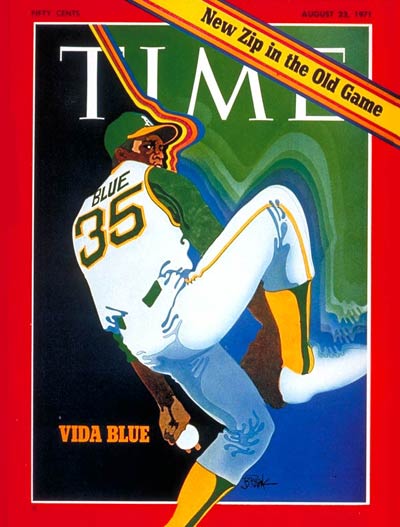
Vida TimeResearch for my next book, about the Oakland A’s dynasty of the 1970s, to be published by Houghton Mifflin Harcourt in 2015, has turned up boundless examples of unwritten rules from that bygone era. The latest is from Oakland Tribune beat writer Ron Bergman, on Aug. 1, 1972. Of note is that A’s players did not appear to be upset over a bunt as the game’s first hit so much as the official scorer’s unwillingness to call it an error:

Vida Blue retired the first 17 men he faced before opposing pitcher Rich Hand [of the Texas Rangers] laid down a bunt with two out in the sixth inning. The score was 1-0 at the time. Third baseman Sal Bando swooped in to pick up the ball, stumbled off balance when it landed in his glove and then couldn’t extract it. By the time he plucked it out for an errant throw to first base, it was too late.

Official scorer Joe Sargis of UPI called it a hit, which took some courage. A line drive single by pinch-hitter Toby Harrah on the first pitch of the ninth didn’t mitigate the anger in the A’s clubhouse.

Blue seem to be the least disturbed.

“A hit is a hit, “Vida said. “No hits or 55 hits, you’ve still got to get 27 outs.”

“It should have been an error,” Bando declared. “I couldn’t get the ball out of my glove. I threw it over there to give them a chance to call it an error. I’ve seen games in which something like that is called an error, and if there’s another hit they go back and change the first call. The first hit is supposed to be a clean hit. I think that if that was called an error, Vida would have pitched a no-hitter.”

“We all were sure it would be called an error,” A’s manager Dick Williams told Sargis.

Hand said he saw Bando back up after the first pitch, “so I decided to give the bunt a whirl. It was a hit all the way, as clear as it’s going to be. I don’t see what they’re yelling about over there. They won, didn’t they?”

Oakland A's, Retaliation

1972: On Making Moon Mad

Blue Moon OdomResearch for my next book, about the Oakland A’s dynasty of the 1970s, to be published by Houghton Mifflin in 2015, has turned up boundless examples of unwritten rules from that bygone era. The latest, from Oakland Tribune beat writer Ron Bergman,  July 10, 1972: 

Jim Longborg threw a pitch in the first inning that bounced in back of Reggie Jackson. Blue Moon Odom retaliated by throwing behind Dave May, the first batter in the Milwaukee second. The ball nicked him in the back.

On the way to first, May exchanged words with Odom. Later in the inning, with May on third, Odom picked up Rick Auerbach’s attempted squeeze bunt and ran down May. A few more words were heard.

“Odom was saying that he didn’t think he hit May,” said plate umpire Don Denkinger. “At that point, I said if anything more happened, I’d have to warn both managers.”

Jackson said he thought Longborg was throwing behind him deliberately, and added, “It’s no fun, a pitch like that. It pleased me what Odom did. We like to play behind a guy like that.”

Longborg said he wasn’t throwing behind Jackson deliberately. Odom wouldn’t say that.

“That pitch didn’t get away from him that much,” Moon said. “He’s got pretty good control. It was intentional. They asked me why I threw behind May. I told them to ask their pitcher. It didn’t matter who’d been up first the next inning — my mother, or the manager — I still would’ve thrown at him. I meant to throw behind him. I didn’t try to hit him. I didn’t think I hit him until [A’s catcher Dave] Duncan told me later that I ticked his shirt. I told [Brewers first baseman] George Scott that I would’ve thrown at him if he’d been the first up. And he’s one of my big buddies.”

Over in the Milwaukee clubhouse, Scott shook his head from side to side.

“Man throw behind you, you got to throw at somebody else,” Scott said. “I’m glad I wasn’t the first one up.”

May walked in from the shower and said that “I definitely will remember this. It will stick in my mind. Lonborg wasn’t throwing at Jackson. I told Odom after he threw at me that I was coming out to get him. I went out to see what he was going to say. He didn’t have anything to say. When a guy throws behind you, he’s got something in mind.”

Don't Steal with a Big Lead

A Tale of Spit and Run

Al KalineResearch for my next book, about the Oakland A’s dynasty of the 1970s, to be published by Houghton Mifflin in 2015, has turned up boundless examples of unwritten rules from that bygone era. The latest installment, from May 14, 1966:

Nobody threatens retaliation, but it is on record that Alvin Dark hung the label of “bush” on Al Kaline.

It was Dark’s first visit to Tiger Stadium as Kansas City manager. Kaline was on first with two out in the eighth and Detroit leading by nine runs. Kaline took off and stole second base on pitcher John Wyatt.

“Do you all steal when you’re nine runs ahead?” Dark asked a reporter in the clubhouse. “That was pretty bush. I heard about this fellow (Kaline) for years and years. What if he broke his leg? Detroit might finish sixth.”

Kaline’s explanation was that he was showing up Wyatt for being shown up himself.

“Wyatt threw me a spitball,” said Al. “I don’t mind if it means the game. But he was way behind. Normally I wouldn’t have done it. But when I had the chance to steal, I took off.”

Manager Charlie Dressen said Kaline did the right thing.

“I always say when you have 13 runs, get 14,” declared Charlie. “Let Dark say something to me if he doesn’t like it.”

Oakland A's, Sign stealing

Hey Brother, Can You Spare Some Binocs?

Research for my next book, about the Oakland A’s dynasty of the 1970s, to be published by Houghton Mifflin in 2015, has turned up boundless examples of unwritten rules from that bygone era. The latest installment, from Ron Bergman of the Oakland Tribune, June 30, 1972:

binocsThe A’s have accused the White Sox of stealing catcher’s signals from the scoreboard on another vantage point in the park. “We switched signals every inning tonight,” [manager Dick] Williams said. “I had a message delivered to [Chicago manager] Chuck Tanner saying I’d sure hate to see a batter get messed up on a sign and end up flat on his back with a baseball in his ear. He sent back a message asking if we had any high-powered binoculars because his guy had dropped his and broken them.”

This was hardly the first time an opponent had accused the White Sox of nipping signs from their scoreboard. (We’ve touched on some of them previously in this space.) For more current examples of sign thievery, go here.)

Tanner, of course, ended up helming the A’s himself in 1976. No word yet about sign-stealing schemes he may or may not have enacted at the Oakland Coliseum.

Don't Steal with a Big Lead, Oakland A's

Bad Blood Easier to Stomach With Beef to Back it Up

Reggie and Epstein II
Mike Epstein (right, with Reggie Jackson): Sizable human.

Research for my next book, about the Oakland A’s dynasty of the 1970s, to be published by Houghton Mifflin in 2015, has turned up boundless examples of unwritten rules from that bygone era. The latest installment, from Ron Bergman of the Oakland Tribune, Sept. 8, 1972, touches on stolen-base propriety and a catcher’s right to block the basepath if he’s not holding the ball:

The bad feeling between the Athletics and White Sox won’t die. It bubbled to the surface again last night when Campy Campaneris stole two bases in the eighth inning with the A’s down by the eventual final score of 6-0.

Campy tried to score on a fly ball to right by Matty Alou. But Chicago catcher Ed Herrmann blocked the plate long before the ball got there, and Campaneris spiked him on the right thigh.

When the A’s took the field, White Sox manager Chuck Tanner yelled to Campy from the dugout that Herrmann was going to get him on any play at second base. A’s manager Dick Williams yelled back that the next time Herrmann tried to block the plate, his runner would come in higher.

“I told campy he should have come in higher and put those spikes right in Herrmann’s chest,” Williams said. “Any time a catcher blocks the plate like that without the ball he’s fair game, lunchmeat. I don’t think Herrmann would have done that with [six-foot-three, 230-pound] Mike Epstein as the runner.

“Herrmann told Reggie Jackson when he was at-bat that it was bush of Campy to steal those bases with us down the six runs. I say anytime you can move up 90 feet, take it. They weren’t holding Campy on at all. They were filling the holes to try to stop base hits.”

Campaneris, now second in the league and stolen bases to Dave Nelson of the Texas Rangers, said he’s trying to regain the King of Thieves crown he lost last year.

“I want to win the title every year,” Campy said. “If they don’t hold me, I still the base.”

In the clubhouse, both Tanner and Herrmann said they didn’t see anything wrong with Campaneris’ thefts. That’s what they said in the clubhouse. Winning pitcher Wilbur wood was more honest in his comments.

“It shows his stupidity,” Wood remarked about Campy’s 37th and 38th steals. “Suppose he gets thrown out at second base? Or third? Then he runs them right out of an inning. As things turned out, he did run them out of the inning because he got thrown out at the plate on a questionable fly.”

Both the A’s and White Sox remember an incident last year at the Coliseum when Chicago reliever Bart Johnson, now a minor-league outfielder, threw at two A’s and paid for it when Epstein hammered him down in a fight that brought all the players onto the field.

The White Sox have murmured about revenge since then, but then they don’t have any players as large as Epstein.