Sign stealing, Toronto Blue Jays

Somebody Else Has Accused the Blue Jays of Stealing Signs from the Rogers Centre

Another year, another pitcher making veiled accusations that the Blue Jays are stealing signs from the far reaches of the Rogers Centre.

Okay, that’s not entirely fair. Some of the accusations aren’t veiled at all.

The latest came from Orioles starter Jason Hammel, who gave up nine hits and four runs over 6.2 innings Wednesday in a 4-1 loss at Toronto. He entered the game with a 6-1 record and 2.78 ERA, having allowed three home runs all season. Wednesday, he gave up four.

“They’re a very potent offense and if you don’t make your pitches down they’re going to get them out,” Hammel said in a Baltimore Sun report. “They were taking some pretty big hacks on my breaking stuff too, which leads me to believe it was something else. It is what it is. I need to keep the ball down.”

Last August, ESPN ran a fairly extensive piece detailing a man in a white shirt who would signal upcoming pitches to the plate from the stands. The Yankees also had some things to say about possible shenanigans north of the border.

The rule here is simple: If a team is stealing your signs from within the field of play, it means mostly that you need better signs. (The Orioles were themselves accused of this somewhat recently.) But if the theft is being done via spyglasses or TV monitors (which is against the actual rules, not just the unwritten ones), it’s game on.

A quick look at the stats doesn’t helpToronto’s cause.

As a team, the Blue Jays are hitting .262 with a .471 slugging percentage and .803 OPS at home, where they’ve hit 42 homers in 828 at-bats. On the road, those numbers are .231/.369/.660, with 30 homers in 937 at-bats. Edwin Encarnacion has 12 homers and a .311 batting average in 25 home games, but is batting .243 with 5 homers in 26 games on the road. Last year the Blue Jays hit 10 points higher at home than on the road, with 20 more homers.

Meanwhile, Toronto’s team ERA is more than a quarter-run better at home than on the road—3.98 to 4.26—so it’s not like visiting teams are experiencing that same type of success inToronto.

Then again, Jose Bautista is playing significantly better away from the Rogers Centre. Either he’s an indicator that nothing is amiss, or he doesn’t like to receive stolen signs.

“When you’re locating your fastball, you’re going to give up some home runs there, but the swings they were taking on he breaking stuff, it was pretty amazing to me,” Hammel said. “I don’t think you can take swings like that not knowing they’re coming. I don’t know. That’s all I can say.”

In Toronto’s defense, all four of their homers Wednesday came on fastballs.

ESPN’s man in white is apparently no longer anyplace to be seen, but the methods a team can use to pilfer and relay signs via in-stadium technology is virtually limitless. From The Baseball Codes:  Indicators range from the digital clock at Kansas City’s Municipal Stadium (“You know the two vertical dots which separate the hour from the minutes?” asked groundskeeper George Toma. “One dot for a fastball, two for a curve”) to dummy TV cameras reportedly placed in center-field wells at places like Candlestick Park and Dodger Stadium that would signal hitters with phony “on air” lights.

So it’s not like teams haven’t done this before. The difference is, the others all stopped—or at least the accusations against them did. That hasn’t been the case in Toronto, and we’re left wondering how far the organization is willing to go to win a baseball game.

Retaliation, Shin-Soo Choo

Opening Day + Extra Innnings = Beanball Drama in Cleveland

The season’s first lesson on sensitivity awareness was given yesterday in Cleveland, when benches emptied after Shin-Soo Choo was forced to duck under a head-high fastball from Toronto reliever Luis Perez in the 15th inning.

While no hitter in baseball would react well to an inside pitch above his shoulders, Choo was particularly sensitive. He missed six weeks last season after having his thumb broken by a pitch. He had been drilled earlier in Wednesday’s game by Ricky Romero. So when he was forced to the dirt by Perez in the 15th, he responded by jumping up and taking angry steps toward the mound, spurring the benches to empty. (Watch it here.)

Which is where intent comes into the equation.

Perez’s pitch arrived after warnings had already been issued by plate ump Tim Welke in the fourth, after Cleveland’s Justin Masterson came inside twice against Kelly Johnson, apparent retaliation for Choo’s HBP an inning earlier.

Perez was Toronto’s seventh pitcher of the day. That left one guy in the pen—closer Sergio Santos—to go the rest of the way, were Perez ejected, in a game that looked as if it might never end. There were two possibilities for Perez’s motivation—he’s a baseball imbecile, with no shred of insight into the appropriate time to respond to something; or the pitch simply got away from him.

The smart money’s on the latter; Welke’s certainly was. Despite the earlier warnings, Perez was not ejected, and it’s not difficult to see why.

Even Choo came around to that viewpoint, saying after the game in the Cleveland Plain Dealer, “I was hit by a pitch last year and broke my thumb. Maybe that’s why I’m sensitive right now. But I know it’s part of the game. Pitchers have to go inside. I understand it.”

And so we move on. Teams play again Saturday; we’ll see how Toronto reacts once the timing is right.

– Jason

Media

Hayhurst Takes Notes in the Clubhouse, Gets Offended When People Take Exception To his Taking of Notes in the Clubhouse

So Dirk Hayhurst got hazed. In an interview with the Toronto Star, the former big league pitcher—and author of The Bullpen Gospels and Out of My League, which comes out later this month—expresses dismay at the reaction of some of his Blue Jays teammates when it came to his role as a part-time writer:

But then you had guys that were jackasses. And every team has them. These are the guys that look at baseball as a religious thing, and you never break the code. And nobody knows where the code came from, but you just can’t break it. So here comes Dirk Hayhurst, fringy guy on a search for meaning and purpose and maybe big-league fame if I could get it, and I’m just writing down stories and asking big, uncomfortable questions about the validity of our existence as ballplayers, and guys were not happy about that. And as long as you’re playing well, they’re not going to call you out about it, and I was pitching well. But then I got hurt and the gloves came off, and it was like, “Dirk, you need to apologize to the team. You need to bring everybody together and tell them you’re out of line for what you’re doing.”

He goes on to quote anonymous teammates who told him that he was making the team uncomfortable by writing about his baseball experience.

Well, of course he was.

Hayhurst should know more than most about the insular nature of a big league clubhouse, how even players who are media-friendly—by no means in the majority—frequently keep their distance from the press.

He should also know that a clubhouse is sacrosanct in the minds of its occupants. It’s the one place they can be loud, loose and raunchy, as ballplayers are, with nobody to judge them because nobody outside the team knows the true depth of what goes on.

Hayhurst must understand that an insider who starts to take notes, regardless of his intentions, will invariably make his teammates uncomfortable. Never mind that The Bullpen Gospels—a fine book, it should be mentioned—hardly burned any bridges. Hayhurst was tactful and respectful with his execution, telling stories in which nobody (save occasionally for Hayhurst himself) came out much the worse for wear.

Still, if he had no inkling that his literary aspirations would be interpreted poorly by at least some of his teammates—and that a few guys is all it takes to turn a clubhouse—he was willfully ignorant. A squeaky-clean publication record doesn’t count for a whole lot in a group that doesn’t count reading as one of its favorite pursuits.

Jim Bouton went through similar travails after Ball Four came out, but by that point he was a former 20-game winner very close to the end of his career. Hayhurst, in contrast, had pitched all of 10 big league games prior to that season in Toronto, with a 9.72 ERA. Stars get away with things that average players do not, and veterans have more leeway than rookies; Hayhurst was neither star nor veteran.

Hayhurst’s mistake was in approaching the situation rationally, as a normal human being would. He expected that because he was open about his plans, and made his work public for teammates to review, that he would subsequently be afforded a modicum of leeway, and that his literary endeavors would not affect his clubhouse standing.

Had Hayhurst approached the situation from the perspective of a ballplayer—not an intellectually inquisitive one, like himself, but an overgrown kid who gets to live the frat-house life into his 20s and 30s, and whose natural enemy is anyone who might impede upon his unique lifestyle—he might have been more cautious. At the very least, he wouldn’t have been surprised at the reaction he ultimately received.

– Jason

Brett Lawrie, Rookie Etiquette

Lawrie Draws Buzz: One Kind from Teammates, Another from Opponents

Brett Lawrie celebrated, and Yunel Escobar was drilled as a result. (At least that’s the way it seems.)

In Wednesday’s game against Oakland, Lawrie hit the first grand slam of his nascent big league career, and was met with enthusiasm from teammates both as he crossed the plate and once he returned to the dugout, where he emphatically gave high fives and flung his helmet. (Watch it here.)

A touch too exuberant? Perhaps, but the kid is entitled to his moment. Even the A’s recognized that much, and let it go uncontested.

Two innings later, however, when Lawrie scored from second on a single to make it 8-4, then exulted as he crossed the plate, it appeared to cross the A’s line. Oakland reliever Jordan Norberto drilled Escobar with his next pitch, and dugouts emptied, though no punches were thrown.

The likely root of the problem is not so much the celebrations themselves as the tenure of the guy at their center. Lawrie has been in the big leagues less than a week, and the Code stipulates that players earn whatever leeway they’re given—a process that takes time. (Cincinnati’s Jordan Smith learned this lesson last year, as it pertains to umpires.) The fact that Lawrie is one of the game’s more heralded prospects probably works against him in this regard.

“I probably wouldn’t have chosen to celebrate it that way,” said reliever Craig Breslow, whose pitch Lawrie hit for the grand slam, in the San Francisco Chronicle.

It’s one of those things that doesn’t make much sense from the outside, and occasionally doesn’t make sense from the inside, either.

Steve Lyons recalls playing center field early during his rookie season, and calling off the right- and left-fielders on various fly balls, only to have them step in front of him to make the catch. Lyons was abiding by the rule of thumb that corner outfielders defer to the center fielder, but teammate Reid Nichols set him straight, telling Lyons that he had to “gain their respect.” Said Lyons: “I’m like, ‘While I’m gaining their respect, are we going to fuck up a few balls in left and right field?”

During Sparky Lyle’s rookie year with the Red Sox, he twice shook off catcher Elston Howard en route to walking a batter, and was promptly removed by manager Dick Williams. Recounted Lyle in “The Bronx Zoo”:  “After the game (Carl Yazstrzemski) cornered me in the locker room and said, ‘I want to know one thing. How can a guy who’s been in the big leagues two weeks shake off a guy who’s been catching fourteen years?’ ”

These are examples featuring teammates. When it’s an opponent who sees a rookie overstepping his bounds . . . well, suffice it to say that Yuni Escobar doesn’t end up all that pleased. Lawrie takes pride in his enthusiasm, and it’s certainly worked in his favor in his ascension through the minors.

Part of his initiation into the big leagues is learning that not everybody he encounters shares that view.

– Jason

Sign stealing, Toronto Blue Jays

Accusations Against the Blue Jays Explode: Sign Stealing at the Rogers Centre?

Back in July, when Joe Girardi intimated that the Blue Jays might be employing some beyond-the-field methods of acquiring other teams’ signs at the Rogers Centre, people didn’t pay much attention.

When Hardball Talk suggested that the Red Sox felt similarly, based on the fact that catcher Jarrod Saltalamacchia was putting down complex signs for Clay Buchholz in Toronto, even with nobody on base, it made barely a ripple. Jorge Posada did something similar when the Yankees came to town, but still, not much was said.

Now that ESPN.com has given us more than 2,000 words on the topic, however, featuring an anonymous reliever threatening to hit Jose Bautista “in the fucking head” if the Blue Jays don’t knock off their sign stealing, eyes are starting to settle on happenings north of the border.

In the piece, by Amy Nelson, four unnamed relievers from the same team offered details: The guy doing the relaying was wearing a white shirt, for better visibility from the plate; he was positioned in the center field stands, just beyond the pitcher, to be easily seen by the batter without being detected; he put his arms over his head for any offering but a fastball; and he was stationed only 25 yards from the bullpen, which is how the relievers came to see him so clearly.

Some of the pitchers recalled seeing the guy doing something similar at the tail end of the 2009 season. They quickly called the dugout and had their catcher start mixing up his signs. An inning later the man in white departed.

Bautista confirmed the confrontation, but denied that A) it had been about sign stealing, and B) the Blue Jays do anything of the sort, highlighted by the phrase, “We do not cheat.” Later in the story, Blue Jays GM Alex Anthopoulos offers a similar denial.

So how to reconcile these viewpoints? The Blue Jays’ home record doesn’t reflect any improprieties—they’re 28-27 at home, 30-30 on the road—but other statistics appear to be damning. See the ESPN story for a full rundown, but here’s a smattering of examples:

  • Toronto’s home run rate on contact at home last season was 5.4 percent, about 50 percent higher than on the road, yet their opponents hit fewer homers in Toronto than at a neutral ballpark.
  • From 2005-09, the Rogers Centre saw .002 more home runs for every ball put in play than average. In 2010, that number shot up to .011—but only for the Blue Jays.
  • In 2010, the Blue Jays had the highest isolated power (slugging percentage minus batting average) of any team since 1954—most of which came at home. (The 150 homers they hit in Toronto were three shy of the all-time home record set by the Rangers in 2005.)
  • Seven Blue Jays regulars had an OPS at least 50 points higher at home than on the road; six of them were more than 100 points higher; three were 200 points higher.

This season, the Blue Jays have hit 71 homers at home and 57 on the road, despite having fewer than half their plate appearances at the Rogers Centre. They also have wide home/road splits for batting average (.261/.249), slugging percentage (.444/.389) and OPS (.770/.701). (All numbers are through Tuesday’s games.)

There’s also the case of Vernon Wells, as detailed by Hardball Talk. The slugger featured relatively equitable home-road OPS splits while playing for the Blue Jays—until last season, when he hit .991 at home, and .708 road. This number gathers momentum when combined with his .622 OPS this season with the Angels.

None of it, of course, is conclusive. Wells is in a new environment, has had his share of struggles as of late, and could simply be aging. The Blue Jays might simply be that much better at home than everybody else. For what it’s worth, J.P. Arencibia has denied everything, with some colorful language, on Twitter.

Ultimately, it comes down to this: Rare is the ballplayer or manager who sees sign stealing from the basepaths as anything more than an indication that it’s time to get better signs. When things move beyond the field of play, however, tempers can get testy, quickly.

(Wild home-road splits are a common indicator that something shady is going on. Though nothing was ever proved, the fact that the Rangers performed much better at home than on the road in recent years made them prime suspects around the American League.)

The Baseball Codes details the travails of pitcher Al Worthington, who in 1960 was traded to the White Sox—in part because he didn’t approve of the sign stealing done by his former team, the Giants. When he arrived in Chicago, however, he found an elaborate system in place in Comisky Park.

When the team played at home, Chicago’s pitching instructor and former Tigers standout, Dizzy Trout, watched the oppos­ing catcher from inside the recently installed Comiskey Park “exploding” scoreboard—a pyrotechnic exhibition unlike any seen in baseball up to that time. Trout then triggered a light hidden amid many others in the center-field display, that signaled hitters to the type of pitch about to be thrown—blinking meant breaking ball, solid meant fastball. It could be seen from both the plate and the White Sox dugout along the third-base line, but not from the visitors’ dugout near first. The scheme was incredi­bly effective, helping the Sox build a 51-26 record (.662) at home that year, even as they struggled to a 36-41 mark (.468) on the road.

Worthington complained to manager Al Lopez, who insisted that the system was morally acceptable. Said the pitcher: “I thought later, Well, if it’s okay to do it, why don’t they tell everyone?”

Toronto’s methods (if the allegations are true) are not nearly that complex, and aren’t even original. Former Tigers catcher Bill Freehan talked about similar situations during his own playing days:

You’d have a buddy on Oakland, and he’d tell you hey, we’ve got a guy out there in the background, so we aren’t looking at the pitcher, we’re looking over his head and somebody’s putting his right hand up for a fastball. As a catcher—especially when your team’s getting lit up—you start to think, “Uh-oh, have they got them here?” There would be guys in the wall at Fenway, and sometimes you had to make changes every inning.

So: Fenway, Oakland, Texas, San Francisco, Chicago. In the 1940s the Indians pinched signs with a military-grade gun sight brought back from WWII by Bob Feller. The New York Giants did something similar during the fabled 1951 season of The Shot Heard ‘Round the World. (Visiting teams, for that matter, were known to steal signs from the center field clubhouses of the Polo Grounds.) The Cubs spent much of the 1960s signaling hitters from the Wrigley Field scoreboard.

It’s safe to say that this kind of thing happens more than outsiders (or even insiders) care to imagine. The one commonality between all these accusations: Once they’re caught, the allegedly guilty parties are expected to stop.

So even though the league office has yet to field a complaint about the Blue Jays, expect extra vigilance from visitors to the Rogers Centre and an almost certain disappearance of the man in the white shirt. Should anybody see something suspicious, things have now reached the point at which hitting somebody “in the fucking head” (or, more appropriately, in the fucking hip), is a real possibility.

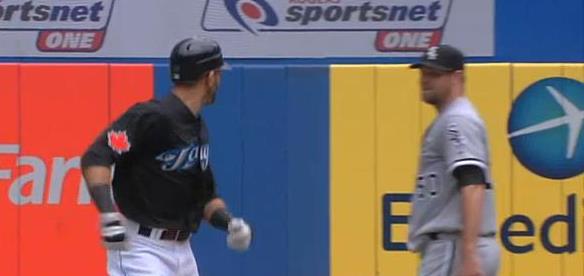
Update (8/11): Bautista says the team making accusations is the White Sox. (This was actually sussed out earlier by the Steal of Home blog, which not only fingered Chicago, but provided some screen caps of the possible man in white.)

Updated 2 (8/11): In Toronto to face the Blue Jays, A’s reliever Grant Balfour told the San Francisco Chronicle that he was aware of the rumors about the man in the white shirt, but has seen no evidence to support it. “If you’re [stealing signs like that], you’re going to wear it,” he said. “That’s the way it goes. Be prepared to get worn out. Go ahead, but know that that’s the unwritten rule.”

– Jason

Sign stealing

Sign-gate at the Rogers Centre, Day II: Are the Blue Jays Going Above and Beyond?

Well, things have officially gotten interesting. A day after Yankees catcher Russell Martin accused the Blue Jays of stealing New York’s signs, New York manager Joe Girardi injected some seriousness into the charge.

During the course of the Yankees’ 7-1 loss to Toronto, Girardi had Martin display complex sign sequences for pitcher Freddy Garcia even with the bases empty—a time during which catchers ordinarily utilize only the most basic signals. The only possible reason for this: the prospect that the Jays employ a comprehensive system for sign stealing, likely from somewhere beyond the field of play.

When questioned about it, Girardi didn’t hold much back.

“Sometimes we have inclinations that certain things might be happening in certain ballparks and we are aware of it and we try to protect our signs,” Girardi said in an ESPN.com report.

In response to a question about whether that could mean using foreign devices such as binoculars or even TV cameras, Girardi said, “Could be,” and added that “there are ballparks where you need to protect your signs.” The manager softened his stance somewhat by pointing out that he was “not accusing anyone” of impropriety.

Not directly, anyway.

Blue Jays manager John Farrell, of course, denied everything. “I have no idea what that might be referring to,” he said. “Honestly, why that would even come out, I don’t know. We play this game to compete every day and we don’t look to any other means than what takes place between the lines.”

Accusing a team of stealing signs from the basepaths is mild, usually serving merely as a preventative method against it happening again. When entire ballparks—and binoculars and relay systems and everything else associated with pilfering signs from beyond the field of play—are brought under scrutiny, things become significantly more charged. Rare is the player who won’t forgive a basepath sign stealer; even rarer is the manager willing to forgive an institutional breach of confidence such as the one to which Girardi alluded.

As referenced yesterday, this is hardly new territory, with the Phillies standing accused of similar tactics last season. They had a solid base on which to build; the Yankees themselves served as some of the first practitioners of off-field espionage. In 1905, back when they were still known as the Highlanders, the team rigged a hat-store advertisement on their outfield wall so that the crossbar in the letter “H” could be manipulated in accordance with the upcoming pitch. In 1909, Highlanders manager George Stallings rented an apartment behind the right-field fence of the team’s Hilltop Park, from which he had someone relay signs by flashing a mirror at the batter. (On cloudy days, a similar crossbar continued to come in handy—this time in a “Highlanders” sign.) When Detroit went to New York for a must-win series at the end of that season, Tigers manager Hughie Jennings—having heard the rumors and willing to take no chances—showed up to the ballpark early and, with some help from his team, tore down the scoreboard in which the New York spy—the guy relaying the signals—had been hiding.

A more modern implementation came courtesy of Billy Martin, during Game 1 of the 1976 World Series. A commotion was raised in the middle innings when three New York scouts were found in the ABC-TV booth, gathered around a television set and speaking into walkie-talkies. Cincinnati had previously granted permission for the scouts to assist with defensive alignments from on high, but watching them in action raised Red flags and they were removed from the premises.

Going public with his own complaints is a decent gambit for Girardi. Save for annoying Farrell and other members of the Blue Jays, there’s little downside to thinly veiled accusations—but by bringing the subject to the media, Girardi has insured vigilance not just from their own dugout, but from the public at large. Had the Blue Jays been stealing signs with a TV camera or some other such device, they’d be hard-pressed to continue the practice, at least in the short term.

The primary question with which we’re left: If Girardi feels that “certain things might be happening in certain ballparks,” where else might they be happening, and who else knows about it?

Which is all the Yankees really want.

– Jason

Related: Break Out the Binocs—There’s Thieving to be Done

Russell Martin, Sign stealing

Signs of the Times: Yanks Accuse Toronto of Signal Snatching

Russell Martin: Time for new signs.

It’s been a while since a good sign-stealing controversy erupted in the big leagues. That type of eruption, of course, is contingent on an eruption of offense, which is what the Blue Jays had against the Yankees on Thursday.

On its surface, Toronto’s 16-7 victory was little more than a solid whooping, as the Jays jumped on Bartolo Colon for eight first-inning runs and touched four New York relievers for at least a run apiece.

Then Russell Martin went and opened his mouth.

“You move your head one way it’s a fastball, you move your head the other way it’s a slider,” he said in an ESPN report. “It was pretty blatant.”

Martin was referring to Blue Jays baserunners, particularly the ones frequently camped at second, who he accused of looking in to his signs and signaling upcoming pitches to the men at the plate. These are the kinds of things that happen when one’s starting pitcher throws 42 pitches over two-thirds of an inning, resulting in six hits and eight runs (three earned).

Martin’s primary issue was that he (or anyone else in the dugout) didn’t catch on to the Jays’ system (if that’s indeed what it was) until the fourth inning, when he noticed Jose Bautista acting strangely (moving his head this way or that, perhaps) while at second base.

Turns out that Toronto has a bit of a history with the subject. From The Baseball Codes:

Marty Barrett played second base in Boston for nine seasons in the 1980s, every one of them with right fielder Dwight Evans. While playing the field, Evans liked to know the pitch that was coming in advance, to help him get an early break on balls hit his way, so Barrett would make a fist and put it behind his back. If his hand didn’t move, a fastball was imminent. If his arm wiggled, it would be something softer.

In Fenway Park, the bullpens for both teams are located in right field, allowing visiting relievers a clear view of Barrett’s machinations. The only club to pick up on his tactic, though, was the Toronto Blue Jays. Through much of the 1980s, bullpen coach John Sullivan would look over the fence at Barrett’s arm, then signal the hitter with a towel (draped over the fence meant fastball, off the fence meant curve). Sometimes, so as not to draw too much attention, Toronto pitchers would simply stand up or sit down, depending on the pitch type, in accordance with prearranged signals. During Barrett’s final two seasons as a full-time player in Boston, the Blue Jays went 13-0 in Fenway Park (as compared with 6-7 when the teams played in Toronto). “Haywood Sullivan [the Red Sox general partner] came down a couple of times and said, ‘I think they’re getting our pitch­ers’ pitches,’ ” said Bill Fischer, the Red Sox pitching coach at the time. “We would look at the videotape for hours, and we couldn’t find anything.”

“You’re taught to catch things on the field,” said Blue Jays manager Bobby Cox, who helmed the sign-stealing operation. “You watch body language with coaches at first and third, and runners with their body lan­guage when the hit-and-run and squeeze is on. There’s tip-offs and tells throughout a nine-inning ballgame. If you pay attention, you might catch something.”

Fischer eventually discovered the secret, but only after he joined Cox’s Braves staff in 1992, at which point the manager fessed up and told him that Toronto “had every pitch” the Red Sox had thrown.

The standard major league attitude toward these kinds of activities is that teams are expected to do whatever they can to get an edge within the boundaries of fair play, and if somebody’s getting his signs picked it means mostly that he needs better signs. Once a team is caught trying to pinch them, the activity is expected to cease (or at least be carried out more discreetly); should this happen, everybody tends to go on their merry way.

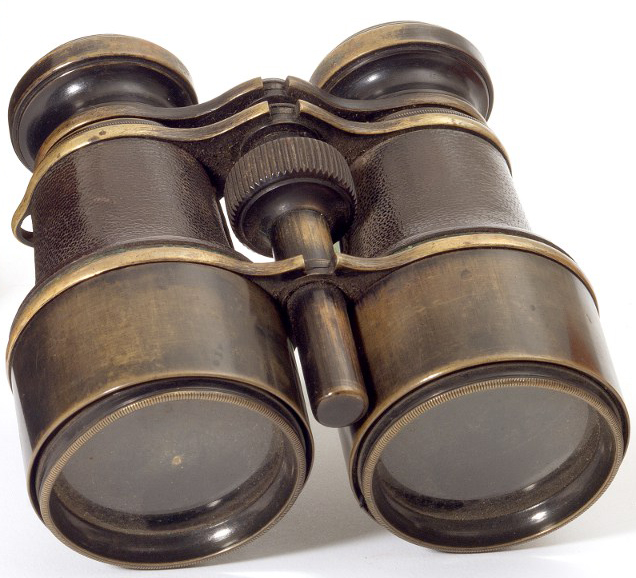
(This should not be confused with stealing signs via a telescope or any other equipment beyond one’s own observational power from field level—a tactic that is never sanctioned. When Phillies bullpen coach Mick Billmeyer was spotted pointing binoculars at Rockies catcher Miguel Olivo last year—followed shortly thereafter by Shane Victorino on the dugout phone, ostensibly to receive and relay whatever signs Billmeyer had picked up—the commissioner’s office stepped in to offer a watchful eye. The Yankees, in fact, had their own run-ins with the Phillies on this subject during Game 4 of the 2009 World Series, when catcher Jorge Posada visited pitcher CC Sabathia six times in the first inning, then eight more times in the fifth—because, said the rumors, New York had suspicions of Philadelphia stealing signs via in-house TV cameras.)

To his credit, the just-change-our-signs mentality is precisely the one Martin employed. “It’s up to us to catch it and change the signs,” he said. “I’m not blaming them for anything. . . . It’s one of those things you don’t really talk about, but it’s part of baseball. It’s always been.”

In an AP report, Yankees manager Joe Girardi detailed some of the ways to tell if a team might have your sign. “You watch some of the swings that clubs are taking,” he said. “Are they fooled on any of the pitches? Are they bailing when you’re throwing the ball in? There’s a lot of things that you watch for.”

Former Red Sox pitcher Al Nipper put it more bluntly in The Baseball Codes: “When you’re throwing a bas­tard breaking ball down and away, and that guy hasn’t been touching that pitch but all of a sudden he’s wearing you out and hanging in on that pitch and driving it to right-center, something’s wrong with the picture.”

In the fourth inning, Martin saw something along those lines, and responded by switching up his signs with pitcher Hector Noesi. The batter, Aaron Hill struck out swinging. (Changing signs is easier than it sounds; the signs themselves remain the same—only the indicator for which sign to pay attention to changes.)

Like Martin, Girardi failed to find fault with the Blue Jays for stealing his signs, if in fact that’s what they were doing.

The surest tell? When asked about it later, Toronto manager John Farrell didn’t flatly deny that it was happening, but claimed to be “unaware” of those types of activities.

Of course he was. Even Bobby Cox expressed outrage when asked about Toronto’s system utilizing Marty Barrett’s signals—about 20 years after the fact. He finally settled in and discussed the topic, but still refused to confirm many specifics.

His answers, however, left enough wiggle room to see exactly how much he knew. Which is all part of the espionage.

– Jason

John Danks, Jose Bautista, Showing Players Up

Frustration Night in Canada: Bautista Sparks Showdown of the Irritated

Jose, meet John. John, Jose.

If John Danks’ girlfriend broke up with him last season, when he won 15 games for the White Sox with a 3.72 ERA and finished seventh in the American League in WAR, he probably would have taken it a lot better than if she broke up with him sometime in the last two months.*

Which is to say, dealing with adversity is much easier when you’re on top of the world than it is when you’re getting your head kicked in every five days.

The latter scenario pretty aptly describes Danks this season, especially after giving up nine earned runs over four innings to Toronto on Sunday to run his record to 0-8 with a 5.25 ERA. Which is why it shouldn’t be too surprising that he’d show some thin skin when, having just retired the best hitter in baseball on a 3-2 pitch, said best hitter in baseball gave him an earful.

Never mind that Jose Bautista was cursing at himself, not Danks. He was cursing, and Danks was the pitcher, so of course Danks took it poorly. (Watch it here.)

Toughen up, one might tell Danks; Bautista didn’t mean to disrespect you. But think about it this way: Was Bautista frustrated by hitting a popup because he consistently expects better from himself, or was he frustrated because he had just seen two fat two-seamers from a pitcher who had given up four runs over the course of the previous two hitters, including a two-run homer to Corey Patterson—only to have watched the first for a called strike, then failed to hit the second past shortstop?

In other words, is Bautista that ferocious a competitor, or was he saying—in an extremely visible way—I can’t believe this chump just got me out?

It’s clearly possible that it’s the latter, which is all Danks needs to be justified in his reaction. Danks started shouting down Bautista from the moment he spiked the bat, and Bautista had a word or two in response.

“He was out there acting like a clown,” Danks said after the game. “He’s had a great year and a half—no doubt. He’s one of the best players in the league. But he’s out there acting like he’s Babe Ruth or something. . . . He isn’t that good to be acting like he needs to hit every ball out of the ballpark.”

Retaliation in the future: Likely.

This isn’t always the case, of course. Last May, Carlos Lee reacted similarly after popping up against Chris Carpenter, and heard about it from the St. Louis pitcher. One difference: Carpenter was 4-0 with a 2.80 ERA at the time, and though he was clearly frustrated in having just given up the game’s first run a batter earlier, he was (and still is) too good to take things as personally as he did (and does). Danks, at least right now, is nowhere near that point.

The lesson of the day: Play it safe and keep your frustrations to yourself, big leaguers, at least until you find your way back to the dugout.

– Jason

* I should probably note that I don’t have the foggiest idea if John Danks even has a girlfriend, let alone if he’s married, and certainly possess no information about his potential relationship issues outside of the purely hypothetical situation described above. I wish John Danks nothing but many years of avid bachelorhood or wedded bliss, whichever suits him better.

Kyle Drabek, Mike Trout, Rookie Hazing

Spring: A Time of Renewal, and Making Rookies Miserable

Spring training is a time for players to prepare for the season ahead. Typically that would mean on-the-field business … except that somebody keeps stocking clubhouses with rookies.

And veterans need to prepare their hazing chops just as much as their batting eye.

For a simple prank we turn to Dunedin, Fla., the spring home of the Toronto Blue Jays. Ricky Romero took some gum, blew a bubble, and stuck it to the cap of rookie Kyle Drabek. As is customary, none of Drabek’s teammates pointed it out, leaving him to bear the shame of the bubble-cap through much of the team’s workout.

The prank is as old as bubble gum itself. The fact that the Toronto Star meticulously documented it with a fabulous photo essay, however, makes this one particularly worth our while.

More serious business occurred in Arizona, where, during the Angels’ game with the A’s, a scoreboard message appeared imploring fans to call “Mike Trout directly with your baseball questions,” and included a phone number. Trout’s actual number.

The player who got it posted: Jared Weaver.

At 19, Trout is among the most hyped players in the minor leagues. Which doesn’t do a thing to alter his rookie status.

Or keep him from needing a new phone number.

(Thanks to reader James Ho for the Blue Jays tip.)

– Jason

Don't Showboat, Jose Bautista, Retaliation

Bautista’s Game-Winning Homer Conveys Message, then he Conveys it Again

Jose Bautista’s first home run Monday meant little on its own, save for being the slugger’s major league-leading 39th of the season.

His second home run Monday meant a lot more, at least to him.

The difference: What happened in between.

That would be the sixth-inning fastball that Yankees starter Ivan Nova sent spinning toward—and ultimately over—Bautista’s head.

The hitter took it as a response to his earlier bomb. Nova was more likely just wild, considering that it was his first start as a big leaguer. Bautista had words for the right-hander as he approached the mound, Nova didn’t back down at all and benches and bullpens quickly emptied onto the field.

Although no punches were thrown, the incident served as a prelude for an interesting response from Bautista after he hit another home run, in the eighth.

Baseball will tolerate a degree of showboating, so long as it’s in response to a Code violation. Bautista’s reaction to his second home run (the eventual game-winner, hit off of reliever David Robertson) started with a bat flip in conjunction with a glare toward the mound. It ended with one of the slowest home-run trots in the big leagues this season, and some fist pumping upon reaching the plate. (Watch it here.)

In addition is the notion that rookies must be tested, which, admitted Bautista, is what motivated his sixth-inning outburst, at least in part.

“I was just trying to see what kind of reaction I was going to get from him,” he said in the Bergen Record. “I was surprised to see he was pretty defiant. He was walking up toward me and flashing his hands up and started yelling.”

Part of Bautista’s motivation was to use Nova’s response to gauge intent. Despite the pitcher’s repeated assertion (in Spanish) that “I don’t want to hit you,” that, said Bautista, was “when I felt that the pitch was intentional.”

Bautista might have already been angry at a Toronto Star columnist who suggested that his power surge might be artificially fueled, using exactly zero pieces of evidence to back up his claim. (Bautista denied everything.)

Blue Jays fans can only hope that he continues to take out his anger on baseballs across the league.

– Jason