Ken Griffey Jr., Rookie Etiquette

Griffey Jr. Primed for 22nd Season. He Had to Learn his Rookie Lessons Somewhere

Reports out of Seattle have Ken Griffey Jr. healthy and raring to go for his 22nd big league season. Not bad for someone they call, “Kid.”
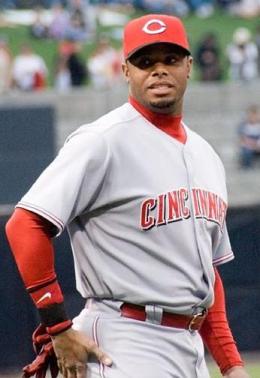
Griffey was a natural interview target for the book, having grown up around the game and seen first-hand how the unwritten rules have changed since his dad roamed major league outfields in the 1970s.

It was clear through the conversation that Griffey wasn’t just paying lip service to the Code; he believed in it, and understood it through all its permutations.

Of particular interest were his reminiscences about his rookie season. He came into the league as a 19-year-old amid unbelievable hype, just 22 months after being selected by the Mariners with the top overall pick of the 1987 draft. Even with his pedigree, even with his draft position and even with the hype, it didn’t take long for Griffey to learn his place in the pecking order.

The following quote from Jeffrey Leonard made the book; everything else is a Web bonus:

I had Jeffrey Leonard, Alvin Davis, Harold Reynolds, Dave Valle, Jim Presley, Mickey Brantley, Henry Cotto—I was around a bunch of good guys who said, “This is what we’re going to do—we’re going to show you how to play baseball. We know you know how to play, but we’re going to show you the right way to play the game.”

Jeffrey’s exact words to me were, “There’s going to be a lot of people kissing your ass. I won’t be one of them.”

He helped me at that critical time of being a teenager and not knowing. He was like, “Hey, you’re still going to sit up in the front of the bus as a rookie, but when I call you back, you’re going to come back and sit and talk to me. We’re going to go eat and talk about baseball. We’re going to the ballpark and we’re going to talk about baseball. You’re going to be right next to me all year.”

And sure enough, my locker was right next to him the whole year.

A rookie’s primary clubhouse goal, of course, is to blend into the scenery, a concept that Griffey understood as well as anyone. Still, his effervescence, personified by the backward cap that always seemed perched atop his head, appeared to actively fly in the face of Code convention.

Not so, he told us:

I grew up with what we now call old school, but I think I’m a hybrid—a kind of new school/old school. We’ve changed the game some, with the long pants and baggy uniforms, that type of stuff. You just try to make the game more fun. Some of the guys have their hats askew—you know, like me with my hat being backward.

People thought I was just trying to be different, but that’s not it. When I was a kid, I’d grab my dad’s hat. It was big, so whenever I started to run, the brim fell in front of me and I couldn’t see. But I always wanted to grab my dad’s hat, so I turned it around. I’ve been doing it since I was four.

I wasn’t trying to be different. When I finally explained it to people, they started laughing. Because, you know, when you’re a kid, what’s the one thing you want to do? You want to be just like your dad. You put on his shoes and walk around the house, you put on his pants and hold them up and walk around, and those are the things that I did—but my dad just happened to be a professional baseball player.

-Jason

Review

Two for Two in Reviews

We’re still more than six weeks away from the release date, but the second review is out. Seems like people like the book.

This one is from Booklist, the reviewing arm of the American Library Association. The review itself won’t be out until Feb. 1, but we have the advance scoop for you right here:

Turbow and Duca have filled a void with this entertaining, revealing survey of the varied, sometimes inscrutable unwritten rules that govern the way baseball is played by the pros. The authors add a lot of flavoring here by naming names and instances, both long past and more recent. Great stuff on how and when to retaliate, how to slide, how to give way to a relief pitcher, talking (or not) during a no-hitter, whether to join an on-field brawl (no question, you join in), and the ethics of cheating (former Orioles manager Earl Weaver once told struggling pitcher Ross Grimsley during a game: “If you know how to cheat, this would be a good time to start”). The authors—both write on baseball for various publications, and Duca is an official scorekeeper for Major League Baseball—lament a certain unraveling of baseball’s codes, due to changes in the game itself, while insisting that they’re still essentially intact. For committed fans who want to dig deeper.

— Alan Moores

Alan Moores: clearly a man of discriminating tastes. Thanks, Booklist.

– Jason

Barry Latman, Intimidation, Stan Williams

What Happens in Vegas Doesn’t Always Stay in Vegas

The Las Vegas Convention and Visitors Authority has announced an upcoming spring game between the Dodgers and Reds. It’s not particularly noteworthy news, but it was enough to remind me of a story that began during another spring training game in Sin City, and which also involved the Dodgers.

It featured Stan Williams, who is, hands down, my favorite crazy person in big league history. At 6-foot-5 and 230 pounds, and with a red-hot fastball, Williams was not only willing to throw baseballs at hitters, he seemed to enjoy it.

The right-hander enjoyed moderate success over a 14-year career, but it was his utter devotion to the art of intimidation that set him apart. He and Don Drysdale alone made the Dodgers of the early 1960s one of the most terrifying pitching staffs ever assembled.

The Baseball Codes devotes nearly 2,000 words to Williams, but we’ll focus here on the List, a collection of names he kept in a notebook, which he updated whenever a hitter offended his baseball sensibilities. Once noted, a name stayed put until Williams was able to exact on-field revenge, at which point it was crossed off, case closed.

The best List story started in Vegas, during a spring training game in 1961 between the Dodgers and Indians, when Williams was 24 years old and in his fourth year in the National League.

Suffice it to say that the pitcher cared less about a noon exhibition than about enjoying the fruits of Las Vegas the previous night, into the dawn.

When it came time to take the mound, Williams was far from sharp—so much so that when he bounced a pitch off the helmet of Cleveland’s Bubba Phillips, it was one of the few times in his career that such a result was not what he had intended. (Not only that, Williams told us, he was throwing so softly that “I wouldn’t have hurt him if I’d hit him in the neck.”)

Still, Cleveland pitcher Barry Latman took up for his teammate and drilled Williams in response. Tempers flared, and when Williams was quickly removed from the game by Dodgers manager Walter Alston, he wasted little time adding Latman’s name to the list.

Because they played in different leagues, however, Williams never got his chance to retaliate. As his career progressed, more names got crossed off than were added, until finally Latman’s was the only one left.

I’ll leave it up to readers of the book to find out what ultimately happened between Williams and Latman, but will offer this detail: The next time they met was a dozen years later, as teammates on the Triple-A Seattle Angels — the final stop for each in his respective playing career.

The early line here says that the upcoming Vegas game, to be played March 31, won’t offer anything nearly so entertaining.

– Jason

Babe Ruth, George Frazier, Jose Offerman, Ron Hassey, Umpire Relations

Offerman Neither the First Guy to Want to Hit an Ump, Nor the First Guy to Actually Do It

So Jose Offerman was banned for life from the Dominican Winter Baseball League after slugging an umpire last week while serving as the manager of the Licey Tigers. Our guess: It was merely an effort to maintain his reputation as an all-hit, no-field player.

Offerman, of course, reminds us that an entire section of baseball’s Code is devoted to umpire relations. The unwritten rules, of course, while doing nothing to discourage on-field disagreements with the men in blue, generally solicit more tact than was shown by the former Dodger.

Which doesn’t mean that guys don’t occasionally attempt to inflict a little damage of their own.

Former pitcher George Frazier told us about the time in 1984, when his batterymate, Indians catcher Ron Hassey, was rung up on a dubious called strike by umpire Joe Brinkman. Hassey’s response: when he came out to catch the bottom of the frame, he gave Frazier a signal to throw a fastball away, but set up on the inside part of the plate.

“I said, all right, maybe the hitter is peeking or something,” said Frazier, describing a well-known method for deterring hitters whose eyes might wander backward (a tactic that has its own section of the Code). “I throw a fastball away, Joe’s set up right there, and it hit him square in the mask. Oh my God—Hassey got tossed and Joe’s wanting to kill me. I said, ‘Hey, I just threw what I thought he called. Why are you mad at me? Joe’s still not happy about that deal.”

Something similar happened in 1999, when Devil Rays catcher Mike DeFelice failed to put a glove on a Wilson Alvarez fastball that more or less split the plate. The pitch hit plate ump John Shulock’s mask so hard it dented the bars. Once Shulock regained his senses, he remembered that Alvarez had questioned several of his calls throughout the game, and stormed the mound, “yelling and gesturing angrily,” according to the St. Petersburg Times.

Alvarez, of course, denied any intent, and Shulock was ultimately suspended three games for his “display of temper.”

Leave it to no less an authority than Babe Ruth, though, to affirm that occasional scare tactics against umpires can be effective—and that Offerman was hardly alone in his love of the right cross.

It’s well known that as a pitcher for the Red Sox, Ruth took part in a joint no-hitter. Ruth questioned umpire Brick Owens after walking the game’s first hitter, and was subsequently tossed. Reliever Ernie Shore then came in and retired 27 men in a row (including the runner he inherited, who was thrown out on the basepaths).

What’s less known is what Ruth actually did to get ejected.

“I still insist that three of the four (balls) should have been strikes,” wrote Ruth in the autobiographical The Babe Ruth Story. “I growled at some of the early balls, but when (Owens) called the fourth one on me I just went crazy. I rushed up to the plate and I said, ‘If you’d go to bed at night, you so-and-so, you could keep your eyes open long enough in the daytime to see when a ball goes over the plate.’ ”

At which point the ump threatened to toss Ruth.

The pitcher’s response: “Throw me out of this game and I’ll punch you right on the jaw.” Not one to be intimidated, Owens immediately gave him the thumb.

“I hauled off and hit him, but good,” wrote Ruth.

Good thing Ruth never got the managerial job he so desperately wanted, or he might have ended up like Jose Offerman. Which, as we know by now, is not necessarily a good thing.

– Jason

Carlos Delgado, Doug Mientkiewicz, Slide properly

Delgado Rounding First . . .

Major League baseball is reporting that the Blue Jays aren’t much interested in bringing back Carlos Delgado for a second stint with the club. General Manager Alex Anthopoulos has cited a desire to chase long-term success with a young corps of players, a strategy that doesn’t exactly embrace a fading 37-year-old slugger.

Delgado came to prominence with the Blue Jays as one of the game’s great first basemen, but his most significant appearance in The Baseball Codes has less to do with his hitting than with his baserunning. It concerns a specific play from 2004, in which Delgado took out Red Sox first baseman Doug Mientkiewicz with a forearm shiver. The following excerpt has more.

One problem with the play, at least to Mientkiewicz, was that he wasn’t playing first base at the time, but had volunteered to man second after Boston experienced an unforeseen shortage of players at the position. The infielder had, at that point, played all of one inning there in his seven-year major league career and was by no means comfortable.

There was also the fact that in Mientkiewicz’s opinion, such takeouts weren’t a regular part of Delgado’s repertoire. “I’d seen him veer off on double plays for five years and not even slide into second,” he said. “Yet he sees somebody playing second who’s never played there before and he took full advantage of it. If Aaron Rowand had knocked me on my ass I don’t think I’d have been that mad, because Aaron goes full tilt from the word go. . . . If I were to always see Carlos taking guys out at shortstop, I never would have said a word.”

When Mientkiewicz got up screaming, the pair had to be separated. Red Sox pitcher Derek Lowe drilled Toronto’s All-Star during his next at-bat, and Delgado was forced to avoid several other pitches during the course of the three-game series. (“Curt Schilling missed him once and came to me and apologized,” said Mientkiewicz.)

Not in the book but no less interesting is the following, from our interview with Mientkiewicz:

“I was mad for a split-second, but when I came back I said, “You know, he did what he was supposed to do.” But the fact that he doesn’t play that way all the time, that’s when I got mad. . . . I remember the remark I made to him: ‘You know, if you played in a game like this every day, you wouldn’t be 17 games back.’ . . . I never had a problem with Carlos before that, and I still talked to him afterward. But there are veteran guys in Boston, and every time he came up for the next four games, he got drilled. And he didn’t start a big ruckus—he just took his hit-by-pitch and went to first base.”

– Jason

Japanese baseball

Welcome to Japan, Edgar

Last week, former Padres second baseman Edgar Gonzalez—brother of San Diego star Adrian Gonzalez—ditched the big leagues for a contract with the Yomiuri Giants of Japan’s Central League.

There will be a number of things for him to learn, of course, apart from an increased appreciation of sushi. Baseball might be baseball, but baseball in Japan isn’t played quite like it is in the States.

The extensive practice habits of Japanese teams are well-noted, as is the fact that there are cheerleaders at games. But how, we wondered, are the unwritten rules different? What about baseball’s code in Japan surprises Americans who go there to play, and what about baseball’s code in America surprises Japanese players?

Most pertinently, with the influx of Asian players in the major leagues, have any foreign codes permeated domestic clubhouses?

It’s an interesting topic, but with so many American codes to deconstruct, we didn’t have space for an in-depth examination of the game’s morals on foreign shores.

That doesn’t mean we didn’t research the topic, however. The following are excerpts from interviews we did with an assortment of players who spent time in Japan. The goal isn’t to paint a complete picture, but to offer up a taste of what baseball there is like. (For a comprehensive look at the subject, check out “You Gotta Have Wa,” by Robert Whiting.)

Good luck, Edgar.

* * *

On the physicality of play:
Rex Hudler: “They didn’t come after me on double plays. They didn’t like to break up double plays. They weren’t real physical in their game. I was a physical guy, I liked contact. I had to ask the Americans on the other teams to come get me. I said, ‘come on, let’s make it fun, let’s make it exciting.’ ”

Rod Allen: “(Japanese infielder) Tad Iguchi’s first couple of months here he just about got killed because he didn’t know that the American players came in that hard at second base.”

On retaliation:
Mac Suzuki: “I never saw a guy hit a batter on purpose. Ever. Even if we got beat by 15-0, or whatever. When they do hit a batter (accidentally) they tip their cap. But I didn’t do it. [Suzuki, who is Japanese, learned baseball in the U.S. and came up through the American minor league system.] We almost got in a fight. I hit two hitters and I didn’t tip my hat, and they yelled at me. I almost got fired from the (Seibu) Lions.”

Allen: “Absolutely you get thrown at more. I charged the mound one day. I had run over the other team’s catcher—something else you don’t do over there—and their manager was very irate and very upset. I knew they were going to throw at me. The next time I got up, they threw at me but they missed. I had already prepared two innings ahead in my mind that, if they did throw at me, I was going to the mound.

“So, I did do that, and the guy ran. It was hilarious. I’m doing a lot of dodging and weaving through his teammates to get to where I wanted to get to. I chased him all the way to the warning track in left-center field. Nothing much happened when I caught him. There were some other guys there, pushing and shoving, there were no other punches thrown.

“Obviously, I got booed, kicked out of the game, and it’s still played on the blunder shows on the video boards all over Japan.”

On dealing with records:
Ken Macha: “The last game of the season my first year over there, the leadoff hitter on the other team was hitting .351. Our guy was hitting .350. Their player did not play. They needed to win that game to win the league; if they lost that game, the Giants would win the league.

“They walked our leadoff hitter every at-bat, so I came up with guys on base every time up. I told our player to just throw his bat at the ball and something might bloop in. He thought that wouldn’t be proper, so he just stood there and took the walk. And the other team just took a 9-0 loss—with the Giants sitting in the stands.”

On preparation:
Allen: “Everything is done to excess over there, whether it’s taking ground balls, throwing from the outfield, etc. Teams don’t take infield here, but over there, your pregame routine, you make five throws to second, five throws to third, five throws home, so by time you got to the game, your arm was pretty much gassed.

“Also, the younger players would have to practice at night. The hotel you are staying at, there would be a room set aside where the young players either had to bring their bats, or towels. If you are a position player, you take your bat and take swing after swing after swing—dry swinging. If you were a pitcher, you put a towel in your hand and simulated a bullpen session.”

On running up the score:
Goose Gossage (from “The Goose is Loose”): “Japanese teams delight in running up the score. Here in the states, when a team gets way ahead, it generally calls off the dogs. . . . Not so in Japan.

“In one of my first outings I found out about the Japanese way of doing things. The hawks were trailing something like 9-1 late in a game when Tabuchi sent me in for a little bit of work. The other team immediately proceeded to start bunting.

“With my big windup and delivery, I wasn’t exactly a model of nimbleness and grace coming off the mound, which the opponents quickly grasped. Time after time a batter would push the ball down the third-base line and beat my throw to the bag.

“I got pissed. The madder I became, the more the other team bunted. And, as runner after runner crossed home plate, the opposing players sat in their dugout roaring with laughter. They were having a ball at my expense.

“When I finally got the third out of the inning—after giving up six or seven runs—I came down into he Hawks dugout, slammed down my glove, and headed for the tunnel below the grandstand that connected the two dugouts. I was ready to kick ass. . . . Several hawks coaches came running up and restrained me before I could do anyone harm. They settled me down and explained they had no problem with the other team’s tactics.

“In America the other team would have been guilty of showing me up. There it was standard procedure.”

– Jason

Derek Jeter, Protect Teammates

Nuptuals Iminent for Jeter. Welcome to Another Section of the Code

News came out over the weekend that Derek Jeter will end his status as baseball’s most eligible bachelor. The Yankees shortstop will wed actress Minka Kelly on Nov. 5, according to Newsday.

Jeter might be a newby to the wedding game, but he won’t be blindsided when it comes to monitoring his wife’s interactions with his teammates. This is part of the clubhouse code, in which players protect each other from forces outside the clubhouse: management, media . . . and women.

The rule in question is designed to keep the worlds of wives and girlfriends at a safe distance, especially among players who have a toe in each pool. It’s the basis for wives and girlfriends having their own seating sections in a given ballpark, the better to reduce chances that they’ll inadvertently run into each other.

This isn’t to say that Jeter will be anything but faithful, but at the very least he’ll know enough to protect teammates who might not measure up to that standard. It is, after all, an unwritten rule.

The following excerpt from The Baseball Codes has more.

For ballplayers, protecting teammates from the women in their lives can be complex, especially when it comes to possible trysts on the road. The crux of the problem with this particular endeavor is that it involves ballplayers—the most visible people in virtually any public environment—trying to stay as invisible as possible. The bond between players is strong, however, and they do what they can to maintain each others’ anonymity.

It’s why players whose wives show up during road trips make clear to their teammates where on the town they’ll be that night, to avoid the chance of running into a married player on a “date” with someone other than his wife. (Mets pitcher Doug Sisk was once guilty of this when he brought his wife Lisa to the team’s hotel bar, where she saw a number of his married teammates getting friendly with strange ladies.)

This is why some players implement an ignorance rule at home. “My policy with my wife is this: don’t ask me,” said one longtime pitcher who vowed fidelity but didn’t want to incriminate his teammates. “First of all, I don’t want to lie to you. Second of all, I don’t want to tell you that this guy’s cheating on his wife. You’re her friend, you’re going to be sitting next to her at games, your heart will be breaking for her—you can’t do it. Please, just don’t ask me. Don’t ask me, because I don’t want to put you in that situation.”

Not everybody is so virtuous. Players have been known to prattle to their wives about the extra-marital adventures of their teammates in an effort to mask their own infidelities. Wives inevitably talk to each other, and when word gets out about where it all started, clubhouses can fracture. When a player is inexplicably traded over the off-season for less than full value, there’s a reasonable chance that he betrayed his teammates in this or another regard (or, in turn, that he was betrayed by a less-expendable star).

The best story we found on this topic was told by Negro Leagues star Buck O’Neil. But we don’t want to give too much away here. You’ll have to wait for that one until the book comes out.

– Jason

Bert Blyleven, Clubhouse pranks, Hotfoots, Jim Lefebvre, Joe Torre

Blyleven Just Short of Cooperstown, but a Charter Member of Hotfoot Hall of Fame

Once again, Bert Blyleven found himself on the cusp of Cooperstown. Once again, he came up short. Even if the fact that he won more than 19 games only twice and made only two All-Star teams over the course of a 22-year career is enough to deter Hall of Fame voters, there’s one area in which Blyleven was baseball’s undisputed king: the hotfoot.

There are myriad ways to set a teammate’s cleats on fire while he’s still wearing them, and Blyleven mastered them all. The following excerpt from The Baseball Codes has more:

If Cooperstown utilized the instigation of podiatric discomfort as part of its entry criteria, Bert Blyleven would have been enshrined five years after his 1992 retirement. How good was he? For a time, the fire extinguisher in the Angels’ clubhouse read, “In case of Blyleven. Pull.”

Ordinary hotfoot artists settle for wrecking their teammates’ cleats, but Blyleven was so good that he took the rare step of drawing the opposition into his line of fire. In 1990, the pitcher, then with the Angels, set his sights on Seattle manager Jim Lefebvre, who made the mistake of conducting an interview near the Anaheim dugout. Never mind that Lefebvre was there at the request of then-Angels analyst Joe Torre; Blyleven was deeply offended. There was, in the pitcher’s mind, only one appropriate response.

“I crawled behind him on my hands and knees,” Blyleven said. “And I not only lit one shoe on fire, I lit them both on fire.” Torre saw it all, but continued the interview as if nothing was happening. As Blyleven retreated to the dugout to enjoy the fruits of his labor, he was dismayed to see that Lefebvre refused to play along. “We all stood there and watched the flames starting,” said Blyleven. “The smoke was starting to come in front of (Lefebvre’s) face, but he was not going to back down. By god, he was going to continue this interview. And Joe was laughing, trying not to roll.”

Torre offered up an apology as soon as the interview wrapped, but Lefebvre was too busy trying to extinguish his feet to pay much attention. He also knew exactly who to blame. Blyleven, the following day’s starter for the Angels, found out later that Lefebvre offered $100 to anyone on his team who could hit a line drive off the pitcher’s face. Part of the reason the manager was so angry was that he was deeply superstitious about his shoes; in fact, he continued to wear the scorched pair for several weeks, despite the damage.

In the end, Lefebvre wasn’t the prank’s only dupe. “Bert really screwed me up with that one, because Lefebvre thought I was in on it and I wasn’t,” said Torre. “Lefebvre didn’t think it was very funny—they were brand-new shoes and he got embarrassed in public. Blyleven was nuts—absolutely nuts.”

– Jason

Bob Brenly, No-Hitter Etiquette, Randy Johnson

Randy Johnson Was Perfect; His Manager, Not so Much

Randy Johnson retired yesterday. The highlight of his soon-to-be-Hall of Fame career was the perfect game he tossed in 2004 — a great moment for Johnson, the Arizona Diamondbacks and baseball in general. His manager, Bob Brenly, however, didn’t enjoy things quite as much as the rest of us.

Read on, in the following excerpt from The Baseball Codes:

* * *

“Same seats, same thoughts—that’s the mantra,” said Bob Brenly, manager of the Arizona Diamondbacks when Randy Johnson threw his perfect game in 2004. “From about the fourth inning of that ballgame on I found myself sitting on the bat rack at Turner Field. (Second baseman) Matt Kata’s bat was sitting right next to my right leg, and before every pitch I would tap that bat just to knock wood for luck. The deeper we got into the game, I was afraid to stop doing it. I’m a firm believer in the baseball gods—you show them their due respect and they will reward you. So I didn’t move off that bat rack. I knocked on that bat on every pitch. My knuckles were raw by the end of the game, but I just felt that you can’t change anything.”

Of course, late in the 2-0 contest, Brenly wanted to insert a defensive substitute for left fielder Luis Gonzalez, but his superstition left him hesitant to disrupt the game’s rhythm. He also considered having a pitcher warm up as the 40-year-old Johnson’s pitch count climbed in the late innings, but didn’t want the pitcher to even glimpse such a thing.

“What should have been one of the easiest games to manage, I was losing my hair over,” he said. “I had never been involved in a game like that before, and I just didn’t want to do anything to screw it up. That was one of the most stressful games I’ve ever been involved with in my life.”

– Jason