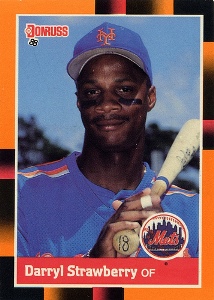
Darryl Strawberry, Don't Showboat, Retaliation

If Darryl Can Handle Al Nipper, He Can Certainly Handle Trump

The cast for the upcoming season 3 of Celebrity Apprentice was recently announced, and Darryl Strawberry is among the contestants.

Straw, of course, hopes to avoid many of the same conflicts that got him in repeated trouble over the course of his 17-season career. One thing’s certain: If he inspires boardroom attacks like he inspired ballpark attacks, things likely won’t go well.

Need an example? A passage deleted from the final edit of The Baseball Codes has more:

* * *

There are many reasons a pitcher may have to postpone punishment he’s dying to deliver. It’s often a matter of game situation; regardless of how inherently a pitcher feels an opponent deserves a fastball to the ribs, it’s simply not going to happen in the late innings of a close game, especially if it moves a runner into scoring position. If response to personal vendettas could hurt their teams, most pitchers are happy to handle business another day, another series—or, if it comes down to it, another season.

“How long do you wait?” asked one big-league manager. “As long as it takes. If it takes a month, you wait a month. If it’s the last game of a series and you’re not going to see that club again for awhile, you wait.”

Take Game 7 of the 1986 World Series, when Darryl Strawberry of the New York Mets hit a mammoth home run off Boston’s Al Nipper, the ball caroming off the center-field scoreboard at Shea Stadium. Strawberry proceeded to take one of the slowest home run trots in the history of postseason play, a deed that was unequivocally intended to send a message. That the message was more likely meant for Mets manager Davey Johnson—who pulled Strawberry from Game 6 in a late-game double-switch, outraging his volatile superstar—didn’t matter a bit to Nipper, who barely tried to hide his contempt for the moment and the player behind it.

Strawberry described the moment in his book, Darryl: “Okay, so I put it in his face when I pounded that homer in game seven and then took—what was it?—five or so minutes to walk around the bases while the fans went crazy. It was my first Series, my first Series game-winner, and my last home run of 1986. So maybe I wasn’t cool about it. But then I’m not always Mr. Cool.”

With that in mind, when the Mets and Red Sox next met—in St. Petersburg the following spring—it wasn’t much of a secret that Nipper sought payback. The ballpark was packed with media members from New York and Boston who weren’t so much hoping for fireworks as expecting them. This was the era before interleague play, and Nipper knew he wouldn’t get the chance to face Strawberry during the regular season.

With his first pitch, Nipper hit Strawberry on the right hip. It was hardly a blazing fastball, and, in proper retribution fashion, connected well below the shoulders. Still, it was enough to incite the batter to charge the mound, leading players from both teams to flood the field.

“There are times when, yes, you send a message and go, okay, we’re getting you right now, we’re letting everyone know,“ said Nipper. “And there are times when everyone knows you’re going to get him.”

(In fact, Nipper did get to face Strawberry again, as a member of the Chicago Cubs in 1988. In three at-bats, Strawberry was intentionally walked, reached on an error and, in his third at-bat . . . was hit by Nipper in the calf. This time Strawberry merely glared at the mound before taking his base.)

– Jason

Alex Johnson, Chico Ruiz, Clubhouse Etiquette

NBA Gun Talk Has Predecessor in MLB

Even with the details in dispute, rumors that Gilbert Arenas and Javaris Crittenton pulled guns on each other in the Washington Wizards’ locker room are disturbing. It’s easy (and incorrect) to dismiss the incident as indicative of NBA culture — partly because it’s happened in baseball, too.

The following is an excerpt from another chapter that didn’t make the final cut of The Baseball Codes, largely because there wasn’t too much more to say on the subject, but mostly because “don’t pull guns on people” is an unwritten rule of life, not just the major leagues.

It happened in 1971, and involved Alex Johnson and Chico Ruiz, teammates on the California Angels. Ruiz, claimed Johnson, threatened him in a gun within the confines of the clubhouse.

* * *

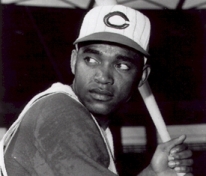
For his part, Johnson was no stranger to clubhouse violence. He scrapped with a variety of teammates, among the most notable of which was a drawn-out brawl with Angels outfielder Ken Berry. Another time, teammate Clyde Wright had to be restrained after threatening to hit Johnson with a stool. Johnson and Ruiz, however, had been close friends for years, ever since their two-year stint together on the Cincinnati Reds in the late-1960s. They were tight enough for Johnson to ask Ruiz to act as godfather to his daughter, Jennifer.

But in 1971, for reasons his teammates could never discern, Ruiz became a target for Johnson’s barbs. It was a regular occurrence around the Angels locker room that year to hear Johnson berating Ruiz with profanity and insults.

The two had both served as pinch-hitters the night of June 13, and were alone in the clubhouse at the time of the alleged incident. And with nobody to corroborate his story and Ruiz denying everything, an already disgruntled media turned even further against Johnson. One fed-up teammate said that if Ruiz did have a gun, his only mistake was not pulling the trigger. Shortly thereafter, Los Angeles Times columnist John Hall wrote that at least three players were “carrying guns and several others are known to have hidden knives — to use as protection in case of fights among themselves.”

Chico Ruiz

Three months later, Johnson was suspended from the team (owing less to his accusation against Ruiz and more to an additional string of belligerent encounters with teammates and a consistent failure to hustle). At a grievance hearing to challenge the suspension, Angels general manager Dick Walsh finally admitted that Ruiz had, indeed, waved a pistol at Johnson after both had been removed from the game in question, a revelation that served mostly to lend yet another level of dysfunction to the team’s clubhouse.

Ultimately, things didn’t go well for either man. Johnson was traded to the Indians after the season, and Ruiz, after being released during the winter, drove his car into a sign pole in the early morning hours of Feb. 9, 1972, and was killed immediately.

Few ballplayers turned up amid the mourners at his funeral. Johnson was one of them.

– Jason

A.J. Pierzynski, Kelvim Escobar, Tag Appropriately

Escobar: Hello, N.Y; Goodbye Annoying Catcher

The Mets just signed Kelvim Escobar to a one-year deal. At least in the National League he won’t have to deal with A.J. Pierzynski.

The following is an excerpt from the “Tag Appropriately” chapter of The Baseball Codes that didn’t make the final cut. (All told, 250,000 words from the initial manuscript were trimmed to about 100,000 for the final edition.) This tale involves as its primary characters Escobar, Pierzynski and Pierzynski’s infuriating personality.

* * * * *

In the deciding contest of the 2005 American League Championship Series it seemed as if Angels pitcher Kelvim Escobar disliked White Sox catcher A.J. Pierzynski more than he liked winning playoff games. In the eighth inning, with the game tied 3-3, two outs and a runner on first, Pierzynski hit a comebacker to Escobar, which ricocheted off the pitcher and toward the first-base line. The reliever pounced on the ball and tagged the runner . . . with an empty glove. The baseball, still in his throwing hand, never touched Pierzynski, who looked back at the pitcher as he ran past, as if to indicate that very point.

Escobar then threw to first in a futile attempt to make a play. After initially calling Pierzynski out, the umpiring crew deliberated, and decided he was safe after all. Joe Crede followed with a run-scoring single to give the White Sox the lead and, an inning later, the game and the series.

It was more than just a bone-headed move by Escobar, however. It was borne of equal parts anger and frustration with Chicago’s catcher.

“It had to be me in that situation,” said Pierzynski after the game in an Agence France Presse report, “because I’m the only person it would happen to.”

Pierzynski was the only person it would happen to at least in part because of his propensity for ending up in the middle of controversial plays that went the White Sox’s way.

During Game 2, in a 1-1 tie with two outs in the ninth inning, Escobar struck Pierzynski out, but umpires ruled that the ball hit the ground before Anaheim catcher Josh Paul caught it. Paul rolled the ball back to the mound and Pierzynski raced safely to first base as a stunned Angels defense looked on. Crede followed with a game-winning double that enabled Chicago to tie the series.

In Game 4, a second-inning Angels rally was killed when outfielder Steve Finley grounded into an inning-ending double play with runners on first and third. Pierzynski later admitted that his mitt tapped Finley’s bat, which should have been ruled catcher’s interference, sending Finley to first base and loading the bases for Adam Kennedy. It should have, but it involved Pierzynksi, and it wasn’t.

All of this might have been a bit more palatable for Escobar and the rest of the Angels had it been anyone but Pierzynski, whose frat-boy attitude and incessant chirping behind the plate made the catcher one of the least popular players in the league. (“If you play against him, you hate him,” said Pierzynski’s manager, Ozzie Guillen in ESPN the Magazine. “If you play with him, you hate him a little less.”)

Escobar was so angry that he tried to inflict a little physical pain in return for the collective emotional misery Pierzynski doled out to his team.

“Escobar wanted to hit him so hard that he forgot the ball was in the wrong hand,” said Guillen in Playboy. “If you look at the replay, you see he went after Pierzynski to hit him hard. If it were another player, it would have been different. He would have been tagged easy. But they want to beat the shit out of Pierzynski.”

– Jason

Late, Tim Raines, Unwritten-Rules

Raines in Hall? At Least he Understood the Code

Tim Raines deserves a spot in Cooperstown, wrote Rob Neyer today on ESPN.com. One of Neyer’s arguments had to do with the fact that Raines was an elite base stealer, yet his success rate was much higher than that of Lou Brock (and Rickey Henderson, for that matter).

Part of that differential had to do with the fact that Raines rarely ran to pad his stats, as did several of his contemporaries. A few years ago, we discussed the unwritten rule that forbids stealing bases with a big lead late in the game. Here’s what he had to say:

I remember the year that Rickey (Henderson) stole 130 bases; I remember Vince Coleman stealing over 100 bases. In those situations, guys just took off. They could be up 10 runs, down 10 runs, and they’d just take off for their own special reasons.

I’m sure some guys got hit for it, but that was the way they played that game. I just never played the game that way. I never really was one of those players who was concerned more about my numbers than the team. I didn’t play the game to stack up numbers, to be the all-time baserunning leader. I did it to win games. Every base I stole was toward winning ballgames. It wasn’t just me, it was about the team.

– Jason

Justin Duchscherer, Sign stealing, Unwritten-Rules

Duchscherer on Sign Stealing

Justin Duchscherer just re-upped with the A’s for one year at up to $5.5 million, with incentives, according to ESPN’s sources. The right-hander, an All-Star as a middle reliever in ’05 and again last year as a starter, spoke with me a couple years ago about how to deter opposing baserunners relaying the catcher’s signs:

That’s part of the game – people do it. Sometimes you’re out there and you’re giving up hits on good pitches, and you’re wondering what the heck’s going on. . . . If there’s a guy at second base, they’ll give a signal or something. (Ex-A’s catcher Jason) Kendall is always watching for stuff like that. He’ll say, “Tell that son of a bitch to stop looking in here.” Or we’ll change signs. He’ll do something to control the game and let them know that he knows they’re stealing our signs.

There was a time in Triple-A where the pitching coach thought a guy was stealing signs, and he had the catcher call for a fastball away and we threw one in. We got the message across pretty quick – he stopped stealing fricking signs. He didn’t get mad. Players know if they’re doing something wrong. If I was cheating and somebody go mad at me for it, I wouldn’t be mad at them for being mad at me for cheating.

– Jason

Chan Ho Park, Rookie Hazing, Unwritten-Rules

Park Sues Former Teammate; if Only He’d Considered the Tactic Sooner

Normally, big leaguers handle their grievances with each other on the field of play, not the courtroom. That didn’t stop Chan Ho Park, who filed suit against former teammate Chad Kreuter for allegedly failing to repay the full balance of a $460,000 loan.

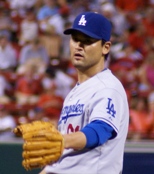
This is what the unwritten rules are for. Were Kreuter still active (he’s been out of the majors since 2003, and now coaches at USC), Park — who played last year with the Phillies — could have drilled him in the ribs and then sued him.

It’s not the first time Park has had problems with teammates. In 1996, his rookie year with Los Angeles, assorted Dodgers stole his clothes from his locker in advance of a road trip — a typical tradition when it comes to rookies. The idea is to get the youngsters to traverse airports and buses in garish getups or women’s clothing to demonstrate exactly where on the clubhouse pecking order they reside.

It wasn’t the clothes to which Park necessarily objected, but the treatment of his purloined outfit. Park’s suit was summarily shredded, its sleeves and pants legs removed. (And this after he served as the winning pitcher in a 13-inning victory over the Cubs, and drove in the winning run with a bases-loaded walk, to boot.)

Thing was, the suit had been given to him by his mother in Korea as a token of good luck. When he saw how it had been treated, Park pretty much lost his mind.

He threw a plate of food. He threw his chair. He screamed. He cursed. Then he collapsed in a heap of tears. None of this endeared him to his teammates.

The pitcher only made things worse when he got to the airport (still wearing his baseball pants), when he insisted that the airline fetch his luggage so he could put on another suit. Dodgers players went so far as to jump on the plane’s PA to announce that changing clothes onboard was against airline regulations. Park hardly cared.

If there’s a mitigating factor, it’s that the pitcher was new to the country and had little grasp of American baseball customs. (He also clearly had little grasp of American legal customs. Were he better versed, he might have filed a lawsuit for that incident, as well.) After speaking to his agent and others, he returned to the clubhouse contrite, and did his best to put the incident behind him.

“The guys who make a big fuss about it, who get mad at it, they’re usually the ones who don’t last too long,” said Doug Mientkiewicz (who himself was forced into female clothing by his Twins teammates as a rookie in 1998), about the tradition in general and not about Park in particular.

Park didn’t live down to that observation, however, spending six seasons with the Dodgers (plus another in ’08).

His ability as a banker, of course, appear to be less finely honed.

– Jason

Barry Larkin, Kangaroo Court, Ken Griffey Jr., Unwritten-Rules

Griffey Trade Didn’t Look So Good Early On

Yahoo Sports ranks Seattle’s trade of Ken Griffey Jr. to Cincinnati as the “supertrade” of the 2000s.

What they don’t mention in their story is that Griffey struggled so mightily out of the gate — batting just .217 in April, and .198 on May 4 — that teammate Barry Larkin used his version of the nuclear option to try to bust his slump. A mop-wigged Larkin fined him in kangaroo court for “imitating an All-Century Player.”

(Griffey ended up with 40 homers, 118 RBIs and a .271 batting average.)

– Jason

Don't Showboat, Jimmy Rollins, Steve Kline, Unwritten-Rules

As a Rookie, Rollins had Lessons to Learn

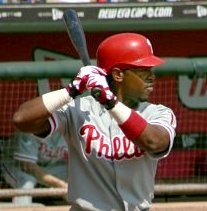
The Phillies picked up Jimmy Rollins’ option for 2011 Sunday, handing him $8.5 million to stick around for an extra year. Before he was an MVP, however, Rollins learned a hard lesson about the unwritten rules.

In the eighth inning of a May game against St. Louis during Rollins’ first spring as a big leaguer, the Cardinals brought in lefty Steve Kline to face him. The Phillies led 2-0, and it was Kline’s job to keep the deficit from escalating. It took him all of three pitches, however, before Rollins clubbed a two-run homer to double his team’s lead.

As he started off toward first, however, Rollins flipped his bat high into the air.

That was all it took to send Kline into a tizzy. As Rollins rounded the bases, the pitcher shadowed him with every step, screaming all the while. “I called him every name in the book, tried to get him to fight,” Kline told me. “He hit it pretty well, and I was upset about it. That’s what I was taught — not to be shown up. I don’t strike him out and fucking do a cartwheel on the mound.”

The pitcher stopped only when he reached Philadelphia third baseman Scott Rolen, who alleviated the situation by assuring him that members of the Phillies would take care of the situation internally.

“That’s fucking Little League shit,” said Kline after the game. “If you’re going to flip the bat, I’m going to flip your helmet next time. You’re a rookie, you respect this game for a while. . . . There’s a code. He should know better than that.”

That’s one part of the story. Kline recounted the details to me in 2007, six years after it happened. When asked if it was forgotten history by that point, the pitcher said coldly, “It’s not forgotten.”

Kline faced Rollins five more times after that at-bat, always in games closer than three runs; never once did he consider prioritizing personal revenge over potential victory. The pitcher retired a few months after we spoke, having gone unrequited in his on-field payback — which probably means that it’s still not forgotten.

As baseball sage Andy Van Slyke said of batter’s box showmanship, “You’re not making money to dance, you’re making money to hit home runs.”

– Jason

Milton Bradley

Milton Bradley to Seattle

I have no unwritten rules stories about Milton Bradley. (If you do, feel free to comment.)

He did once tell me, however, that his favorite restaurant was Roscoe’s Chicken and Waffles in Los Angeles. There is no Roscoe’s Chicken and Waffles in Seattle. (The closest thing I could find was this list, from Yelp.)

Bradley is a sensitive, thoughtful and, yes, calm person who in all my dealings with him (mostly while he was a member of the A’s) was a delight to be around. He also has a pretty serious anger-management issue, which has been his undoing in most of (if not all) the seven cities in which he’s played.

The thing is, he knows it, and has tried to address it at least sporadically. Perhaps the laid-back vibe of Seattle — and the change from Lou Piniella to Don Wakamatsu — will do him some good.

– Jason

Detroit Tigers, Jim Leyland, Joe Mauer, Justin Verlander, Minnesota Twins, Sign stealing, Sign tipping, Unwritten-Rules

Joe Mauer is a Great Hitter. Sign Tipping, Not So Much

So people are starting to pay attention to the unwritten rules. In a September 29 game against the Tigers, Minnesota’s Joe Mauer doubled against Justin Verlander. From his vantage point at second, he then read every sign Detroit catcher Gerald Laird put down. As Mauer took his lead, he proceeded to send a series of blatant signals prior to each pitch to the hitter, Jason Kubel, about what to expect.

The TV announcers were no different than most fans in this case, so predisposed with watching the primary action on the field that they missed the subtleties. Only in the pantheon of sign tipping, Mauer wasn’t doing much that could be described as “subtle.” Perhaps as a catcher he’s used to flashing blatant signals, but that’s hardly an excuse. Were discretion in sign delivery an official statistic, the guy never would have won the MVP.

Luckily, someone other than the announcers was paying attention, and took the time to repurpose the video for instructional purposes. Such is the beauty of YouTube.

Multiple instances of the same clip have cropped up, some with notably better video quality than the one below. I chose this one, though, because the user – Rolemodel2008 – took the time to embed a series of instructions about what to look for and when, and for the most part is right on the money.

This isn’t to say that Mauer is in the wrong; this kind of stuff happens all the time in the big leagues. The only surprise is that it took Detroit so long to catch on, not to mention the team’s lack of response (short of Laird becoming trickier in his signal calling).

“Some guys stood up there relaying location, and you could just tell,” Shawon Dunston told us during the course of interviews for the book. “I’d just go up to them and say, ‘Come on, now, you’ve got to be a little bit more discreet. It’s a little bit too obvious.’ They just give you a dumb look, but the next time the behavior had changed. They respected the game. You’ve got to get every edge — I don’t have a problem with that — but don’t be too obvious. And be prepared to get drilled if you get caught. Period. That’s how it is.”

Mauer’s next at-bat came with runners at second and third and one out; a perfect opportunity for Verlander to send a warning shot to the Twins. Instead, he got him to ground out to first on a 2-0 pitch, driving in a run.

One thing’s for sure: Were Verlander to have reacted, it wouldn’t have been on orders from Jim Leyland. “I don’t order pitchers to throw at guys,” he told us. “I don’t ever talk to the pitchers about throwing or not throwing at people. I kind of let the pitcher do whatever he’s got to do. That usually gets taken care of by itself – you don’t have to order anything. I’ve never told a pitcher a guy needs to be hit. Period.”

Check out the clip and decide for yourself.

– Jason