After Sunday’s Ozzie Guillen–Bryce Harper Hey, Are You Showing Me Up? staredown, some members of the Nationals brought a touch of levity to the situation.
On Monday, Edwin Jackson and Adam LaRoche had Harper sign a bat (not an unusual request in a big league clubhouse), then, without his knowledge, added the phrase “To my hero, Ozzie. Love you.” After slathering it with pine tar, and also without Harper’s knowledge, they sent it down the hall to the Marlins clubhouse as a sort of twisted peace offering.
(Why those two players? Jackson played under Guillen with the White Sox, and LaRoche—whose father, Dave, was a White Sox coach when Guillen played for them—has known the Miami manager since childhood. Both obviously harbor some fondness for the guy.)
Guillen received the bat with a laugh. The incident had already started to fade, but this was as happy a bow as one could have put on it. Still, not every such gesture is taken so lightly.
In 1987, after Mets slugger Howard Johnson had homered twice against St. Louis in two days, Cardinals manager Whitey Herzog suggested that corked bats might be involved. Johnson was in the midst of a breakout year—he had never hit more than 12 homers in any of his five major league seasons to that point, but his second blast against the Cardinals, on July 31, was his 26th in about four months. Herzog had the umpires check Johnson’s bat, which they determined to be clean.
It took just three days before Johnson found the perfect opportunity to respond. The Mets had wrapped up a series in Montreal, leaving town on Aug. 2. The next team to visit Olympic Stadium was none other than the Cardinals.
Knowing this, Johnson conspicuously left a bat in the visitors’ clubhouse, adorned with 20 wine corks dangling from strings. St. Louis pitcher Bill Dawley, who had served up one of Johnson’s home runs the previous week, wasn’t laughing.
“Very funny,” he said when the bat was discovered. “He’s going to get drilled.”
When Ozzie Guillen is positioned as a paragon of tact, it’s usually because one of two things has happened: we’ve entered bizarro world, or he’s being compared to somebody completely off the rails.
Sunday, it was the latter. Guillen’s managerial opponent was Davey Johnson of the Nationals, and the issue of the day was pine tar.
Apparently, Bryce Harper likes to use a lot of the stuff on his bats—more than the legal, 18-inch limit. The eyeball test puts that mark at about the bat’s logo, which makes the infraction relatively easy to spot from a distance.
Guillen noticed. Unlike Johnson, however—who just under a month ago got Rays pitcher Joel Perralta kicked out of a game and subsequently suspended for using the stuff—Guillen showed some restraint. After Harper’s first-inning at-bat, he quietly requested that the umpires make sure the problem was taken care of, in a way that nobody in the viewing audience would even notice. (Short of embarrassing Harper, it’s largely a moot point; unlike Perralta’s situation, the worst penalty Harper could have incurred had he been officially checked was being forced to get a new bat, which is ultimately what he did, anyway. This is partly because pine tar on a bat has less effect than it does on a ball, the theory being that the extra tack could add backspin, leading to extra distance on flyballs.)
The umpires followed through, much to the disgruntlement of Washington’s young superstar. When the left-handed-hitting Harper came to the plate in the fourth inning, he pointed his new bat toward the third-base dugout—something he does as a matter of course when settling into his stance—which happened to be where Guillen and his team were sitting. This time, though, Harper stared daggers as he did it. It was a clear message, and Guillen took it as such, although because nobody’s really talking, the context remains muddled.
Guillen, clearly feeling disrespected after having gone out of his way to keep his initial criticism low-key, spent the next few moments informing Harper about new ways he could violate his own anatomy, while waving a bat of his own. Johnson shouted right back from Washington’s bench. (Watch Guillen taking his grievances to the umps here.)
“Ozzie complained that the pine tar was too high up on Harper’s bat, so we changed it,” said Johnson after the game in an MLB.com report. “Then, he was still chirping about it. It got on the umpire’s nerves. It got on my nerves.”
Davey Johnson as the voice of well-intentioned reason. Bizarro world, indeed.
Johnson guessed that Guillen was trying to intimidate Harper, which could well have been the case. Of course, he’d have to have willfully ignored the 19-year-old’s history with such tactics, lest he consider that Harper tends to respond to bullying by taking extra bases as a runner, then stealing home.
After the game, Harper rose above the fray. “Yeah, I switched bats,” he said, “but I just didn’t feel comfortable with the first one, so I moved to the second one.” (Also, this: “[Guillen] is a great manager to play for, and he’s going to battle for you no matter what. That’s a manager you want to play for.”)
Guillen, for perhaps the first time, kept some of the details to himself. “I was just telling him how cute he was,” he said.
Left to break it all down was Marlins outfielder Logan Morrison.
“Ozzie did it the right way,” he said. “He said, ‘I don’t want to make a big deal about it,’ and he told him to watch out about that pine tar. . . . [Ozzie] did him a favor by not going out there and saying, ‘Hey, your pine tar is too high,’ to the umpire. . . . He did it in a way that wouldn’t show Harper up, and Harper showing him up was kind of a slap in the face, I guess.”
Ultimately, Morrison’s right. Fault Guillen for his response to Harper’s bat pointing, a display that seemed benign and would have been a simple matter to ignore, but when it came to handling the initial situation, he was the antithesis of Billy Martin having George Brett’s bat checked, or Johnson with Perralta’s glove. In other words, tone perfect.
Update (7-16):Guillen says that if Harper keeps this kind of thing up, “he might not make it.” I love Ozzie Guillen—love him—but from where I sit, however, Harper doesn’t have much to worry about in that regard, having consistently taken the high road through the course of whatever big league tests have come his way. Except for maybe his All-Star spikes. Not much humble-rookie about those.
Not to beat on the Maddon-Johnson pine tar affair too much (it may already be too late), but it’s given rise to at least one more interesting point. From Buster Olney’s column at ESPN.com:
When a player is traded and later faces his old teammates, his old team will change its signs, as a matter of course. It’s considered fair game to ask an incoming player for information about his previous team’s signs, or about how to pitch to batters on his old team, or about some other elements of that club. I’ve heard of teams specifically acquiring a player recently dumped by a rival largely for the information—especially catchers, who are the information highways of the sport.
But where is the line about what information you can use?
The key here, at least to me, is in a team’s ability to adjust. Catcher Bengie Molina went from the Giants to Texas in mid-season 2010, and when the teams met just over three months later in the World Series, the discussion was raised about how much advantage the Rangers might gain from his insider knowledge.
To judge by San Francisco’s five-game victory, not much. There’s a simple reason for that, at least as far as signs are concerned: They’re astoundingly simple to switch up. For all the gyrations a third-base coach goes through in delivering coded instructions to a baserunner, they typically don’t mean a thing until he hits his pre-designated indicator signal (such as, say, wiping across his belt buckle or touching his left shoulder), at which point the actual directive will follow. In this situation, changing signs can be as easy as switching the indicator.
Catchers’ signals are similar, in that many of the signs put down are subterfuge; the trick is knowing what to look for. It can be based on the count (a 3-1 count added together means the hot sign is the fourth one the catcher drops) or the number of outs or whether it’s an even- or odd-numbered inning. Sometimes the signs themselves are meaningless, and the pitcher is simply reading the number of pumps, or times the catcher flashes something. There are myriad possibilities, and for most players, changing from one to another is sufficiently simple to do multiple times during the course of a single game.
There’s also the reality that because many pitchers are particular about the signs they use, catchers have individual sets for different members of the pitching staff. This means that if a pitcher is traded, there’s a real possibility that he has little clue about what’s being used by any number of his former teammates.
This is a simplistic overview, of course, and teams can bring far more nuance to the practice—about which inside information may prove useful. Ultimately, though, I think there’s a straightforward answer to Olney’s question of whether sharing an ex-team’s signs is comparable to sharing intel about a pine tar habit: It isn’t. In Joel Peralta’s case, the fact that his pine tar was okay for the Nationals when he used it in Washington, but not okay for them once he left town, speaks to some hypocrisy. When it comes to signs, however, all teams use them, all players learn them, and they’re introduced with the understanding that, while they’re to be protected as closely as possible, they will inevitably have to be changed at some point.
If a former player hastens that inevitability, it’s simply part of the game.
It’s one thing to listen to voices outside the clubhouse maintain or refute the propriety of Davey Johnson’s decision to have Rays reliever Joel Perraltaejected from a game last week because he had pine tar on his glove.
Tampa Bay manager Joe Maddon publicly questioned the wisdom of the move, but his is obviously a biased opinion. Now we have some clarity from an unaffiliated source: Cleveland closer Chris Perez.
“If before every game if they stopped and checked everybody’s gloves or something there would be one or two guys on every team that would just get popped,” he said in an Associated Press report.
Which is exactly the point. Washington’s No. 4 starter, Edwin Jackson, spent three seasons in Tampa Bay under Maddon. Does he have any secrets Maddon might be able to exploit? Jonny Gomes was a member of the Nationals last season, but spent six years prior to that with the Rays. If he has any dirt on Washington, he could well have passed it along to his friends in Tampa. Would it be appropriate for Maddon to use this information punitively?
Of course not.
“It’s probably sticking in their craw a little bit,” said an anonymous former manager and executive in the Washington Post. “They love the guy. He pitched on short rest for the Nationals. They grew to respect him. Then the plug gets pulled on him
“I think the Rays are more mad about somebody calling them out,” said Perez. “It had to be somebody that knew—that used to play with them. I have old teammates that I could tell (manager) Manny (Acta) to call out, but I’m not going to. It’s not bush league, but it’s still not on the up and up.”
Perez clarified that he was not speaking specifically about the habits of any of his former Cardinals teammates, who were nonetheless quizzed in the AP story. The most outspoken of them was Kyle Lohse, who mirrored Perez’s opinions. “If you’re going to start throwing guys under the bus, then you’d better be sure there’s nobody on your own team doing it,” he said. “That’s all I have to say.”
What more fitting place than our nation’s capital for baseball’s latest incident involving high crimes and espionage, which we might as well call Pine Tar-gate right from the start because, well, somebody had to do it.
At one end of last night’s shenanigans was Rays reliever Joel Perralta, supplier of pine tar; at the other was Nationals manager Davey Johnson, who didn’t much care for the extra edge the substance may have afforded the opposing pitcher.
When Peralta came in to pitch the bottom of the eighth, Johnson asked plate ump Tim Tschida to check his glove. And with that, the right-hander was ejected before he even threw a pitch, for what Tschida later said was a “significant amount” of pine tar—a prelude to a likely 10-game suspension. On his way off the field, Peralta tipped his cap toward the visitors’ dugout, a sarcastic display that he later phrased in a Washington Post report as “Good for them.” (Watch it here.)
The moment held intrigue on several levels. One is the fact that the pitcher not only played for the Nationals, but absolutely blossomed for them, as well. At age 34, Peralta went from ERAs of 5.98 (with Kansas City in 2008) and 6.20 (with Colorado in ’09) to a splendid 2.02 mark for Washington in 2010. That season he led the team in WHIP, hits-allowed-per-nine-innings and strikeout-to-walk ratio.
We may now know the reason. Somebody in the Nationals organization obviously had inside information they were willing to share about Peralta’s extracurricular habits; on the coaching staff alone, Nationals bench coach Randy Knorr served as the team’s bullpen coach in 2010, and first base coach Trent Jewett managed Peralta in the minor leagues that same season.
Were either of these people—the Nationals insider who dropped a dime on Peralta, or the manager who was willing to exploit it—playing within the boundaries of the unwritten rules? The short answer is no, but comes with the caveat that Johnson clearly doesn’t care.
Davey Johnson
For proof of this, look no further than Game 3 of the 1988 National League Championship Series, when Johnson—then managing the Mets—asked the umps to check Dodgers reliever Jay Howell. Like Peralta 24 years later, pine tar was found on the laces of the right-hander’s glove. (Darryl Strawberry said that the extreme break on Howell’s pitches tipped Johnson off, but other sources fingered Mets minor league manager Tucker Ashford, who had played against Howell some years earlier.)
Unlike Tuesday’s game, that move appeared to be tactical; Johnson waited until Howell was trying to protect a 4-3, eighth-inning lead, with a full count on leadoff hitter Kevin McReynolds. Howell was summarily ejected, and his replacement, Alejandro Pena, quickly served up ball four, helping ignite a five-run Mets rally.
The Nationals organization also has a history with the topic. In 2005, then-manager Frank Robinson had umpires—oddly, Tschida was behind the plate in that game, as well—check Angels reliever Brendan Donnelly. He was tipped off by his outfielder, Jose Guillen, who had recently left Anaheim under acrimonious terms.
“There’s etiquette and there’s lack of etiquette,” said Donnely at the time, in a Washington Post report. Robinson’s behavior, he said, was “the latter.” Angels manager Mike Scioscia was furious, and threatened to “undress” Nationals pitchers in response. His reaction was not so far removed from that of Rays skipper Joe Maddon—who happened to be Scioscia’s bench coach at the time.
Maddon was peeved enough yesterday to order a retaliatory examination of his own; at the manager’s request, Tschida checked Washington pitcher Ryan Mattheus a half-inning after tossing Peralta, and found nothing amiss.
“Heads up,” Maddon sarcastically told reporters after the game, according to a MASN report, as he wiped his unblemished desktop with a paper towel. “The desk is a little sticky right there.”
His follow-up comments were pointed.
“Insider trading right there,” he said. “It’s bush. It’s bogus, man. That’s way too easy right there. If you had done some really good police work and noticed something, that’s different. But that’s way too easy. That was set up on a tee for them.”
Much of Madden’s disconcert concerns the substance in question. Pine tar is as benign a material as can be illegally found on a ballfield; it is so common that a bag of its powdered form, rosin, is kept atop every major league mound.
Unlike lubricants such as Vaseline or K-Y Jelly, which increase a pitch’s movement by decreasing friction as the ball rolls off a pitcher’s fingers—in effect, allowing it to squirt out rather than roll, with minimal backspin—pine tar adds tack. It’s primarily used by pitchers to get a feel for the ball on cold, wet nights, but—as may have been the case with Peralta, who was pitching in near-70-degree swelter—it can also add snap to a breaking ball.
Said 1997 AL Cy Young Award winner Jack McDowell: “The only [illegal substance] I ever saw was pine tar, and I guarantee 80 percent of the pitchers still use it.”
Apparently, Maddon agrees.
“You’re going to see brand new gloves throughout the major leagues, starting tomorrow—pitchers on every Major League ballclub,” he said after the game, suggesting that pitchers everywhere will be inspired by Tuesday’s events to lay low for a while.
“It’s kind of a common practice—people have done this for years,” he said. “To point one guy out because he had pitched here a couple of years ago, there was some common knowledge based on that. I thought it was cowardly. . . . It was kind of a (expletive) move. I like that word. (Expletive) move right there.”
Ultimately, Maddon is right: If Johnson wanted to play by the unwritten rules, he would either have ignored the pine tar on Peralta’s glove or handled the situation in a far less obvious manner. It’s a stretch to think that having the pitcher tossed even served to level the playing field, because it’s likely that both teams have one or more pitchers who search beyond the rulebook for a similar edge. (“Before you start throwing rocks,” said Maddon to Johnson, through the press, “understand where you live.”)
The standard bearer for Code-based reactions in this category is Tony La Russa, who, when confronted with the fact that Tigers pitcher Kenny Rogers clearly had a clump of pine tar on his left palm during the 2006 World Series, opted against having the pitcher checked—which would have almost certainly led to ejection and suspension—instead requesting only that the umpires make the pitcher wash his hands.
La Russa’s comment at the time: “I said, ‘I don’t like this stuff, let’s get it fixed. If it gets fixed, let’s play the game.’ . . . I detest any B.S. that gets in the way of competition.”
Johnson nailed his man on Tuesday, but it’s easy to feel like a touch too much of La Russa’s B.S. got in the way of Tampa Bay’s 5-4 victory. Then again, it is Washington D.C., a city whose political culture appears to have been built on the stuff.
Well, it sure looked like Jose Valverde spat onto the ball—or at least into his glove, which contained the ball—in Sunday’s game against Cincinnati. A clip distributed (over and over again via Twitter) by a Reds fan named Justin Tooley shows Valverde, on the mound facing Devin Mesoraco, pursing his lips and doing something that looks an awful lot like spitting into his glove.
Chatter around the Internet concerns the possibility of Major League Baseball taking action against him. The quick response: No chance.
The first reason for this is plausible deniability. Implausible as it might seem, Valverde might simply have been sneezing. There’s also the fact that his ensuing pitch was a high-and-tight four-seam fastball, not the typical diver that pitchers look for from spitters. As Yahoo’s Kevin Kaduknoted, “Valverde is well known for throwing a split-fingered fastball, which makes you wonder why he passed on throwing that pitch if he did indeed spit on the ball.”
Writer/pitcher Dirk Hayhurst (who’s graced these pages before) weighed in on his blog with the notion that spitting on the baseball is, in the pantheon of ball-doctoring methodology, “like trying to kill an antelope with a sharp stick.” He also ran down the assortment of goops found in bullpen bags across the land:
Sun screen combined with rosin make for on the fly finger Fixodent. Firm Grip, found in every training room, makes the ball hang from your finger tips. Well rubbed in shaving gel gives a little extra tack, but no to so much that your hands suck up dirt and dust like chicken getting battered for deep fry.
Vasilene does the opposite. The ball slides out of your hand like a splitter and drops significantly more. If Vaseline is to advanced for you, try Skin Lube, it’s the gunk trainers stick under tape wraps so players don’t chafe while playing. It doesn’t gleam like Vasilene so you can smear it under your hat bill with out worry.
Umps really watching you? Try Kramergesic or Red Hot. Burns a little, but it also leaves a nice slime in it’s wake. If you get asked about it, you can say it’s medicinal. Plus, a mixture of lube and sweat works far better than spit or snot . . . Unless you prefer snot, in which case, rub a little Red Hot in your nose and get it running good. Just don’t get it in your eyes or you’ll leave the game in tears regardless of your performance.
Heck, in the case of Ted Lilly, it wasn’t even about substances he used, but where he (allegedly) stood atop the mound. With all this stuff at his disposal, it doesn’t make a lot of sense for a pitcher to expectorate in obvious ways as the center of attention on a baseball diamond. (Then again, very little about Jose Valverde actually does make sense.)
If you’re wondering whether any of the pitchers who utilize those methods have been caught, the answer is a resounding yes—a lot of them do it, and it’s impossible that they could all avoid detection. Their collective penalty, outside of the rogue moundsman every decade or so whose viscous pursuits are so obvious as to leave no choice but punishment once they’re discovered : virtually nothing. Baseball has avoided punitive action with far more damning evidence in hand than Valverde just offered up. Take Red Munger, a pitcher for the Cardinals in the 1940s. From The Baseball Codes:
Munger was known by opponents and umpires alike to load up balls with tobacco juice. After umpire Larry Goetz called the second strike of an at-bat on one of Munger’s doctored pitches, the hitter complained that the pitch had been a spitter. “Yes it was,” Cardinals catcher Joe Garagiola recalled Goetz saying. “Strike two.”
A cheating pitcher may simply be a hornets’ nest that most umpires don’t appear inclined to poke. For something more recent, there’s this, also from The Baseball Codes:
In April 1973, Yankees outfielder Bobby Murcer exploded to the press after facing Cleveland’s greaseball king Gaylord Perry in the pitcher’s second start of the season, yelling: “Just about everything he throws is a spitter. . . . The more he knows you’re bothered by him throwing it the better he is against you. He’s got the stuff behind his ear and on his arm and on his chest. He puts it on each inning. I picked up the balls and they’re so greasy you can’t throw them.” Murcer went so far as to call commissioner Bowie Kuhn “gutless” for refusing to respond—and this was after the outfielder had recorded a three-hit game against Perry. When the pitcher was confronted with Murcer’s accusations, however, he said that Murcer hit “fastballs and sliders,” not spitballs. It would have been a more credible excuse had Perry been on the same page as his catcher, Dave Duncan, who in a separate contrived denial said that Murcer had hit “off-speed stuff.”
To further the argument, The New York Times hired an unnamed Yankees pitcher to chart Perry’s every pitch throughout the game, marking those he thought to be spitballs. When the resulting pitch chart was compared with a replay of the game, the Times noted that, before every pitch identified as a spitter by the Yankees operative, Perry tugged at the inside of his left sleeve with his right (pitching) hand—an action he did not take for the rest of his repertoire. Yankees second baseman Horace Clarke, according to the chart, struck out on a spitter that, on replay, was seen to drop at least a foot. In the fourth inning, Thurman Munson asked to see the ball twice during his at-bat—during which, said the chart, Perry threw four spitters. . . .
Partly in reaction to the uproar Perry caused, a rule was implemented in 1974 that removed the mandate for hard proof in an umpire’s spitball warning, saying that peculiar movement on a pitch provided ample evidence. It didn’t take long—all of six innings into the season—before Perry earned his first warning under the new rule. Not that it mattered; by the end of the season he had won twenty-one games, was voted onto the All-Star team, finished fourth in the Cy Young balloting, and was thrown out of exactly zero games for doctoring baseballs.
In fact, Perry wasn’t docked for throwing a spitter until 1982, when he was 43 years old and in his 21st big league season—eight years after his autobiography, Me and the Spitter, was published.
Hayhurst made the excellent point that some of the greatest pitchers of all time cheated. Greg Maddux’s name has come up repeatedly during the course of this particular conversation. Nolan Ryan, Don Drysdale and Whitey Ford either admitted to or were regularly accused of scuffing balls or loading them up. When Commissioner Ford Frick lobbied to have the spitball re-legalized in 1955, Pee Wee Reese responded with the classic comment, “Restore the spitter? When did they stop throwing it?”
So even if you don’t afford Valverde the benefit of the doubt; even if you’re outraged that a pitcher would resort to such underhanded tactics; try to get over it. You’ll be receiving no satisfaction from baseball’s response—if baseball responds at all.
Q: Are the Rockies cheating? Does it matter? Should they stop?
A: Don’t know, not really and, if applicable, yes.
The rumors took root nationally in July, when Giants broadcaster Jon Miller asserted that whispers around the league said the Rockies selectively delivered baseballs to the umpires at Coors Field—balls from the humidor when the opposition was hitting, dry balls when the Rockies were at the plate.
(The team took to storing game balls in a humidor several years back to help them retain moisture. As is evidenced by the early years of baseball in the altitude of Denver, dry baseballs travel a very, very long way when hit.)
The story got new legs over the weekend, when Tim Lincecum, on the mound in the opener of a crucial three-game set between the Giants and the Rockies, got a new ball from plate umpire Laz Diaz, rubbed it up, then tossed it back while uttering a phrase that could clearly be seen on the TV broadcast: “Fucking juiced balls. It’s bullshit.”
If that’s what the Rockies are doing, it’s just baseball.
It’s the same theory behind select home bullpens being much nicer than their counterparts on the visitors’ side, with perfectly sloped mounds as opposed to misshapen inclines that hinder the preparation process.
It’s why a grounds crew will occasionally manicure a field to suit the home team’s strength, be it speed (bake the ground in front of the plate to facilitate high chops), lack of speed (water the basepaths into mush, to slow down the opposition), bunting ability (Ashburn’s Ridge in Philadelphia sloped the baseline slightly inward, to help Richie Ashburn’s offerings stay fair) or preference of the starting pitcher (mounds can be slightly raised or lowered, depending on the stature of the guys using them).
If the Rockies are, indeed, cheating, they wouldn’t even be the first team to use a humidor to its benefit—although the 1967 Chicago White Sox did the reverse of what the Rockies are accused of. Because they had good pitching and an awful offense (they scored almost 200 runs fewer the league-leading Boston), the White Sox took to storing game balls in a humidified room, adding as much as a half ounce of water weight to each one. This hindered visiting hitters, but didn’t much affect the White Sox, who couldn’t hit, anyway.
There’s no reason to condemn Colorado for trying, but if they are cheating, there’s plenty of reason to put a stop to it—which is precisely what MLB did, ordering umpires to intervene in the process that delivers balls from the humidor to the field. (Up until now, it was handled entirely by Rockies employees.)
Which pretty much settles the score. Most cheating in baseball is fine, but if you get caught, you have to stop. Based on the 10-9 score the day after Lincecum’s “juiced balls” performance, it would appear that they have.
We’ve already seen the fine line between acceptable and unacceptable cheating in baseball this year, when Phillies bench coach Mick Billmeyer pulled out some binoculars to home in on the signs being put down by Rockies catcher Miguel Olivo. Billmeyer crossed the line of propriety clearly drawn by the Code, leaving the field of play and using external devices to further his cause.
Something similar has allegedly been happening for some time in Colorado, only this time the Rockies are the perpetrators.
Last Thursday on San Francisco radio station KNBR-AM, Giants announcer Jon Miller asserted that Colorado may well be doctoring baseballs. (Listen to it here.)
The Rockies employ a humidor to store their balls, for the purpose of keeping them moist and heavy, so as to help negate the thin-air effects of Coors Field. According to Miller, however, the team has possibly been integrating non-humidor balls into the late-inning selection, especially during games in which the Rockies trail.
“There’s a feeling that the Rockies are doing something with the humidor-stored baseballs, and sometimes late in games when the Rockies need help, that some non-humidor baseballs slip into the mix,” he said. “Nobody has been able to prove it.”
Central to Miller’s thesis is the July 6 game in which Colorado scored nine runs in the bottom of the ninth to beat the Cardinals, 12-9. Miller alleged that the Giants felt similarly last time they visited Coors Field. (The Rockies scored the final three runs of games against the Giants on July 1 and 2, both victories for Colorado.)
Still, this sort of home-field advantage (if that’s indeed what it is) is hardly new in baseball. In fact, if it happened at all, it wouldn’t even be the first illegally institutional authorized altering of baseballs.
In 1965, White Sox groundskeeper Gene Bossard stored baseballs in a humidified room, resulting in baseballs not unlike those found in the Rockies’ humidor. (Unlike the Rockies, Bossard was also known to freeze baseballs, to further deaden them.)
Whereas Colorado is trying to counteract the effects of its stadium, however, Bossard was looking to take advantage of the fact that the White Sox were a pitching-heavy team that could hardly hit dry baseballs, let alone wet ones, so deadening them hardly made a difference.
Bossard also kept the territory in front of the plate as bog-like as possible, the better to assist the array of grounders its sinkerball staff was bound to throw. (It was known, appropriately, as “Bossard’s Swamp.” If a sinkerballer was pitching for the visiting team, however, the White Sox grounds crew would actually mix gasoline with the clay around the plate and then set it on fire, the better to harden it.)
Bossard learned at the feet of his father, former Indians groundskeeper Emil Bossard, who was known to push back the portable fences at Cleveland’s Stadium by as many as 15 feet, depending on how much power the opposing team displayed.
“It’s gamesmanship,” said longtime manager Chuck Tanner. “It’s just what was done. You’d adjust to it. You’d bitch about it, but, you’d deal with it all the same.”
The Twins seized home-field advantage in the 1980s, by manipulating the air conditioning system in the Metrodome so that it blew out when the Twins batted, and in when the opposition came to the plate. (In 1987, remember, the Twins won the World Series without winning a single game on the road.)
This sort of list goes on and on. There was “Ashburn’s Ridge” in the 1950s, a sloped baseline that allowed Philadelphia’s excellent bunter, Richie Ashburn, to keep his offerings fair. (He won the batting title in 1955, hitting .338.)
Teams water down the infield to slow down fast opponents and alter the length of the grass to help or hinder a fast team (depending on whether they have one), among many other tricks.
The difference between most of these examples and what the Rockies allegedly did is that the field alterations are in play equally for both teams. Even though they might benefit the home club (or disadvantage the visitors), both teams must deal with the quirks equally.
Selectively feeding baseballs to the umpire hardly fits that bill.
It’s a difficult allegation to prove, but if the Rockies are doing it and know what’s good for them, they’ll adhere to the Code, which in this case says, once you’re caught cheating, stop.
A participant at one of my recent book readings asked why people make such a big deal about pitchers cheating (scuffing, spitballs, etc.), while hitters (corked bats) slide under the radar, relatively speaking. Are there, he asked, that many more cheating pitchers than hitters?
My answer was that spitball practitioners (and their ilk) ply their trade in the middle of the field, under full scrutiny of fans and media. This lends a level of intrigue to the proceedings.
Bat doctors, however, do their preparation in closed workshops, away from public view. There might seem to be more illicit pitchers than hitter, but my feeling is that some of that perception is due to the fact that they’re simply more prominent.
That theory got a boost this week, when it was revealed at one of the bats Pete Rose used in his run to 4,192 hits has cork in it.
The bat, owned by a collector, has been corroborated against a photo of Rose holding it during that time. The model—the PR4192—was made by Mizuno specifically for the chase.
This isn’t even the first time Rose has been so accused. Former Rose confidant Tommy Gioiosa, who blew the whistle on Rose’s gambling habits, long ago claimed that Rose admitted to him that he corked his bats during his final season.
Does this invalidate Rose’s record? Not a bit.
It’s only cheating, after all, if you get caught. And Rose didn’t get caught until 25 years after the fact.
Whether he should have corked his bats in the first place is a terrific conversation topic, with valid points to be made on both sides. The fact remains, however, that none of the numbers put up by the likes of Graig Nettles, Norm Cash or Albert Belle were ever drawn into question once they were caught using corked bats.
Nor should those of Rose.
Update: Examination of subsequent game-used Rose bats found no evidence of cork.
When Alex Rodriguez ran across the pitcher’s mound at the Oakland Coliseum last month, the majority opinion from the viewing public included the sentiment, “I didn’t realize that was considered problematic.”
This also holds true for the issue brought to light by Casey Blake yesterday, when he accused Cubs pitcher Ted Lilly of cheating by standing in front of the rubber, closer to home plate, when he pitched.
“I know he doesn’t have an overpowering fastball,” Blake said in the Los Angeles Times. “I know he’s trying to get as much of an edge as he can. But he moved in.”
The notion is simple: A 59-foot fastball has more zip upon reaching the plate than a 60-foot fastball. Lilly, however, pointed out after the game that pitchers who did this would be at a disadvantage, because they wouldn’t be able to drive off the rubber with their plant foot.
That’s not the opinion of some of the game’s greatest pitchers.
In his book Throwing Heat, Nolan Ryan addressed the subject:
On occasion I’ve pitched from about six inches in front of the rubber when I’ve needed the big strikeout. And I know I’m not the only one who’s done that.
You just rock up, step in the hole, and you’re half a dozen inches closer to the plate. Normally there’s enough dirt and stuff on the mound late in the game to cover things up, but you have to work the area to dig a hole to get your foot in.
Ryan wasn’t alone. Fellow Hall of Famer Whitey Ford talked about the subject in his own book, Slick.
I found that I could get away with . . . pitching in front of the rubber. I did that a lot and nobody ever caught on. If you covered the rubber up with dirt, it was easy to do. It’s just something nobody’s ever looking for. When I coached first base for the Yankees, I never remember checking to see if the pitcher had his foot in contact with the rubber when he delivered the pitch. Sometimes you could stand with both feet on the rubber, get your sign, and then when you pitched, your first step could be about three feet in front of the rubber. Talk about adding a yard to your fastball.
Heck, forget legendary pitchers. Orioles pitcher Brad Bergesen was cited by umpires for this very thing just yesterday.
Blake informed first-base umpire John Hirschbeck of Lilly’s proclivities, but was essentially brushed off; Hirschbeck told him that he couldn’t see anything out of line from his position behind the bag.
Umpires have a long history of leniency when it comes to matters of cheating, being traditionally reluctant to check baseballs for scuff marks or pitchers for foreign substances. It’s one of the reasons so few pitchers are caught.
When Hirschbeck didn’t move closer for a better view, and declined to ask his fellow umps for help, Blake grew visibly agitated, to the point that he had to be restrained by first-base coach Mariano Duncan.
(Hirschbeck, explaining his actions in the Times, said that sacrificing optimal position for making basic calls was not worth moving up to get a better view of Lilly. “I can’t stand on top of the bag,” he said. He also said that every umpire already has the authority to charge a pitcher with cheating, so there was no need to call them in for assistance.)
Blake, however, wasn’t the only one to notice.
As Rob Neyer pointed out at ESPN.com, the Twitter-sphere lit up with all things Lilly. Ex-pitcher C.J. Nitkowski started it off with this: “Watching some daytime MLB. Camera just zoomed in & didn’t realize it caught a pitcher cheating. Don’t ask me who/what. Tricks of the trade.”
He then followed up with, “Uh-oh Casey Blake is on to it. TV guys completely in the dark. I should start my analyst career.”
That left little doubt about who and what he was talking about. As Neyer described, the WGN crew of Len Kasper and Bob Brenly didn’t touch on the reason for the disruption—which could have been because they didn’t want to shovel dirt on their hometown pitcher.
On the Dodgers broadcast, however, Steve Lyons—himself an ex-player—said, “(Blake is) trying to say whether or not, maybe Ted Lilly isn’t even on the rubber. We’ve talked a lot about the fact that he stays way on one side of the rubber or the other, and Casey’s saying he’s about four inches off the rubber in front of it. Which can give you a significant advantage.”
“What we’d missed the first time around,” wrote Neyer, “and what the Cubs broadcast somehow never managed (or bothered) to show—was Blake turning to Hirschbeck and holding his hands four to six inches apart. And again, if anybody would have known, he would.”
From the standpoint of baseball’s Code, Lilly did nothing wrong. Most forms of cheating, after all, are acceptable—provided you knock it off once you’re caught.
(The pitcher’s post-game excuse—”I might have done it a couple times, just trying to gain my footing,” he said in the Times—doesn’t hold much water. Then again, it doesn’t have to. This is baseball.)
Blake, however, violated an unwritten rule by bringing Lilly’s shenanigans to light. That he addressed it after the game was certainly due to reporters’ questions about the disturbance he caused on the field. But making a show of it in the first place leaves something to be desired in the realm of baseball decorum. A subtle notification of the umpire—loud enough for Cubs first baseman Derrek Lee to overhear—would have gotten the job done, even without action from Hirschbeck.
Still, Lilly can expect that people will now be paying attention. If he has anything going in his favor, it’s that as flagrant as he might have been, he’s not anywhere close to Frederic “Germany” Schmidt, a pitcher in the 1800s who would actually sneak into ballparks at night before he pitched, dig up the rubber and move it closer to the plate.
 After Sunday’s Ozzie Guillen–Bryce Harper Hey, Are You Showing Me Up? staredown, some members of the Nationals brought a touch of levity to the situation.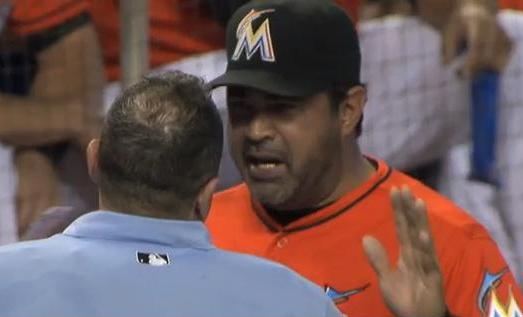



 The Baseball Codes
