Retaliation

Bad Blood Between the Rays and Red Sox? Say it Ain’t So

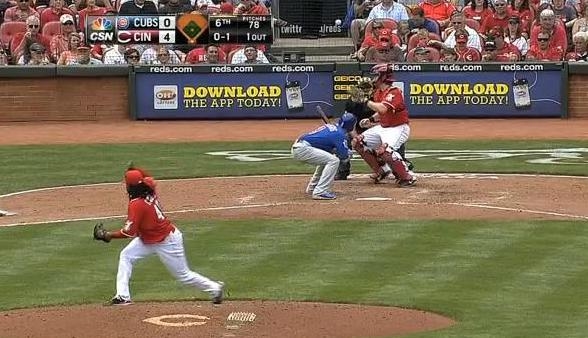
Rays-SoxAs soon as John Lackey drilled Matt Joyce in the back with a 90-mph fastball in the sixth inning of Monday night’s game, people were already speculating how far back the antagonism ran.

Did it date back to the second inning, when Joyce connected for a mammoth foul ball to right, then dropped his bat—“styled,” in the words of MassLive writer Evan Drellich—as if he’d just homered?

Did it date back to the first inning, when Joyce actually did homer?

Lackey did some yelling toward the Rays dugout after Joyce’s second-inning pimp show. After being hit, Joyce pointed toward Lackey amid a slurry of what is safe to assume was epithets, then got into a pushing match with Jarrod Saltalamacchia when the catcher cut off his path to the mound. That was when benches emptied, although no punches were thrown. (Watch it discussed on MLB Tonight, complete with clips.)

Joyce actually thought that it was none of the above.

“As far as I understood, he was pretty upset that I dropped my bat on that 3-0 swing,” Joyce said in a Tampa Tribune report, describing the count when he pulled his second-inning ball foul.  There is indeed an unwritten rule about restraint from swinging at 3-0 pitches, but it only applies late in blowout games—never in the second inning.

In case there was doubt about Joyce’s personal view of possible impropriety, it was cleared up by what he said next: “I was actually pretty upset myself I had such a good pitch to hit and missed it. I usually never drop the bat.”

In a close game (the Red Sox would win, 10-8, in 14 innings), Tampa Bay settled for a low-impact response—in the seventh inning, reliever Joel Peralta threw his first pitch, to Dustin Pedroia, high and tight. (Even that is up for interpretation; it was a 79 mph curveball.)

Beyond that, Lackey denied intent and was alternately defended by one manager (his own) and criticized by the other.

While the easy answer is that hostilities started with Joyce’s second-inning swing, the reality is that whenever something happens between these teams it’s almost expected. Their relationship over the last decade-plus has been testy enough to have inspired an entire section in The Baseball Codes; between 2000 and 2008, it seemed like every one of their meetings added another chapter to their collective book of spite, and things have hardly slowed from there. A condensed excerpt:

* August 2000: Boston’s Pedro Martinez hits Ger­ald Williams on the hand with his fourth pitch of the game. Williams charges the mound, shoving the much smaller Martinez to the ground and lands a glancing blow to his face. Benches empty, during which Boston’s Brian Daubach dives into the scrum, where Tampa players accuse him of taking cheap shots. The commissioner’s office eventually rules that Daubach acted appropriately, but by the time the game ends, Daubach has been thrown at by a succession of Devil Rays pitch­ers, starting with Dave Eiland—who wants to hit him so badly that, with two on and nobody out in the third inning, he sends his first pitch spinning toward Daubach’s head. The hitter manages to avoid that one, but can’t get out of the way of Eiland’s next pitch, which drills him in the body. Shortly therafter Eiland hits Nomar Garciaparra and is tossed from the game. His replacement, Cory Lidle, is himself ejected after throwing a pitch behind Daubach. Lidle’s replacement, Tony Fiore, lasts all of two pitches before finishing the job, drilling Daubach with his third offering and spurring another confrontation between the teams.

* September 29, 2000: Tampa Bay eliminates the Red Sox from the AL East race with an 8–6 victory. From the mound, Rays closer Roberto Hernandez waves a sarcastic bye-bye to the Tropicana Field visitors’ dugout.

* 2001: Over the course of the season, Devil Rays pitchers hit eleven Boston batters; Red Sox pitchers tag nine Tampa hitters.

* May 5, 2002: Devil Rays pitcher Ryan Rupe hits both Garciaparra and Shea Hillenbrand in the first inning, a day after each was instrumental in helping Boston overcome a 5–2, ninth-inning deficit. Boston’s Trot Nixon lets go of his bat on a swing, sending it flying toward the mound. Red Sox pitcher Frank Castillo responds by hitting Tampa’s Randy Winn. Both Castillo and Nixon are suspended.

* July 18, 2002: The day after Manny Ramirez scorches the Devil Rays with a home run and a double, he’s hit by Tampa starter Tanyon Sturtze. Boston’s Frank Castillo hits Tampa Bay second baseman Brent Abernathy in the third, and reliever Tim Wakefield hits him again in the fifth. In the ninth, Devil Rays reliever Esteban Yan just misses Ramirez’s head as the slugger ducks, and the ball glances off his shoulder. “You can’t act like what happened never happened,” says Derek Lowe in the Boston Herald. He also says, “Every year, why is it always this team?”

* September 9, 2002: Lowe keeps wondering after being ejected for hitting Devil Rays shortstop Felix Escalona with a pitch. The follow­ing night, Tampa Bay reliever Lee Gardner, pitching in the eighth inning of an 11–1 Boston runaway, is ejected for hitting second base­man Lou Merloni.

* September 27, 2004: Red Sox starter Bronson Arroyo keeps relations testy by hitting both Aubrey Huff and Tino Martinez in the third inning. Devil Rays pitcher Scott Kazmir retaliates by hitting Manny Ramirez and Kevin Millar in consecutive at-bats an inning later, emptying the benches. Kazmir is ejected.

* April 22–24, 2005: Five batters are hit in the first two games of a three-game series between the teams. In the third game, Arroyo hits Huff—7-for-10 lifetime against him—for the second time in as many seasons. An inning later, Devil Rays reliever Lance Carter throws a pitch behind Ramirez’s head, eliciting warnings for both benches. One pitch later, Ramirez belts a home run. Carter then throws at the head of the next hitter, David Ortiz, who has to be restrained by catcher Toby Hall. Dugouts empty, and Carter, Trot Nixon, Tampa Bay manager Lou Piniella and pitcher Dewon Brazelton are ejected. In the sev­enth, Arroyo hits leadoff batter Chris Singleton on the thigh, earning his own ejection. In a radio interview on WEEI after the game, Boston pitcher Curt Schilling blames Piniella: “Play­ers on that team are saying, ‘This is why we lose a hundred games a year, because this idiot makes us do stuff like this.’ ” A day later, also on the radio, Piniella says, “I have forgot more baseball than this guy knows.”

* March 27, 2006: After tagging out Tampa’s Joey Gathright at the plate during a spring-training game, Boston reliever Julian Tavarez stands on the baserunner’s arm, he says, so that Gathright couldn’t “throw a punch at me right away.” Tavarez then hits Gathright in the jaw while the outfielder is down on one knee. Gathright later says that Tavarez “hits like a woman.” Devil Rays outfielder Carl Crawford subsequently chal­lenges the pitcher to a post-game fight in the parking lot.

* June 5, 2008: The highlight of five hit batters on the night is Boston outfielder Coco Crisp’s charge of the mound after being drilled by right-hander James Shields of the Rays, who by this time have dropped the “Devil” from their name if not their attitude. Shields is responding to Crisp’s hard slide into second baseman Akinori Iwa­mura the previous night, which was itself a response to Tampa Bay shortstop Jason Bartlett using his leg to block Crisp’s headfirst slide into second. Shields misses with a roundhouse right, and Crisp— with 17 knockouts to his credit in 17 amateur boxing matches as a youth—is able to land one shot of his own before being overwhelmed by a scrum of Rays, primary among them Crawford and Johnny Gomes, who shower blows upon him. (After the game, Crisp says that the Rays were like “little girls, trying to scratch out my eyes.” Shields had already hit Dustin Pedroia in the first inning, and Boston’s Jon Lester responds by hitting Crawford, then Iwamura. Tampa Bay reliever Al Reyes closes the festivities by drilling Kevin Youkilis in Boston’s final at-bat.

* October 10, 2008: In Game 1 of the ALCS, Rays reliever Grant Bal­four sends a fastball toward the face of Boston outfielder J. D. Drew, which catches the slugger’s shoulder as he spins to avoid it. Barking ensues, and the seven-game series is so tight that even four more hit batters (two from each team) over the remaining games do little to raise the tension.

Things hardly ended there. There were the three times Tampa Bay’s Luke Scott was hit by Boston pitchers over a three-game span in 2012—the last of which ended up in a brawl. (Red Sox reliever Franklin Morales threw a fastball behind Scott’s back, then two inside, then finally drilled him in the leg. Earlier, Pedroia had been drilled, and a pitch thrown over Daniel Nava’s head.)

There were words last March, when Alfredo Aceves drilled Sean Rodriguez in the shoulder, one at-bat after he had homered.

All of which gives some context to Monday night’s dustup. Just another day at the office, it seems.

Update (6-12-13): The Rays still have opinions.
Retaliation

Matt Carpenter, Drilled Three Times: ‘I Wouldn’t Expect Anything Different.’ St. Louis Responds Accordingly

3When a pitcher clearly has no intention of hitting a batter, the act is unlikely to draw much in the way of rebuke. When it happens three times in the same game, however, to the same batter, you better believe that an eyebrow will be raised.

On Tuesday, Cardinals second baseman Matt Carpenter hit the trifecta against Arizona. More appropriately, Arizona hit the trifecta against Carpenter. None of the pitches came close to looking intentional.

* First time: Seventh inning,  St. Louis trailing by one run and a man on first with one out. Not a situation for a pitcher to make a statement, not to mention that the ball hit Carpenter’s hand as he was squaring to bunt.

* Second time: Ninth inning, one out in a tie game. Again, not a situation for a pitcher to make a statement.Carpenter was hit on the forearm with a pitch that darted inside at the last moment.

* Third time: This looked like the most intentional of the bunch, but drilling somebody on purpose in the 13th inning of a tie game is simply not done. (Watch them all here.)

There was no lingering disagreement between Carpenter and an angry D’Backs pitcher, because each of his HBPs came against a different guy. For each of the pitches the catcher was set up inside.

“That’s what they wanted to do to me and a couple of other left-handers,” said Carpenter, who was hit three times all last season, in the St. Louis Post-Dispatch. “I wouldn’t expect anything different. You miss in two spots. Either you miss over the plate or you miss and hit somebody. It’s just the way it is when you pitch inside.”

Still, a three-pack of HBPs is a three-pack of HBPs. The Cardinals, however, were walking a fine line when it came to payback on Wednesday. St. Louis already had a short bullpen due to a doubleheader last week; the 14 innings on Tuesday added additional strain. Also, Yadier Molina dropped his suspension appeal following his recent ump-bumping incident (itself laden with unwritten rules) and sat out Wednesday (which he would have done anyway, following Tuesday’s marathon).

All of which is to say that St. Louis, already undermanned, could hardly afford to have a pitcher or a catcher tossed in the name of fulfilling retaliatory expectations. Were there going to be payback, it had to be subtle.

And it was, right there in the first inning. When Carpenter’s second-base counterpart on the Diamondbacks, Willie Bloomquist, came up for his first at-bat on Wednesday, he was buzzed—a fastball came in just under his armpits—not drilled. The Cardinals left little doubt that they were paying attention.

Cardinals broadcasters Dan McLaughlin and Ricky Horton (a former big league pitcher himself) summed it up nicely on the telecast:

DM: There’s someone from Arizona who needs to properly, professionally get one in the ribs or the back, because Matt Carpenter was hit three times last night.

RH: I think that we just saw it.

DM: That’s not enough if I’m Matt Carpenter. What did that prove? You pitched inside. So what?

RH: Well, he came in way inside, with the idea. I think the message was sent. There was no pain to it, if that’s what you’re looking for.

DM: I want pain. [Laughs]

RH: I thought that’s where you were headed with that.

DM: Pain, Rick.

RH: Well you have the message and you have pain, Dan. You’ve sent the message and maybe you were a little light on the pain.

McLaughlin clarified that he was kidding about the pain, Horton added that a subtle message worked just fine in this situation, and everybody appeared to be happy to move on.

(St. Louis pitchers did hit Bloomquist in the seventh, and shortstop Didi Gregorius twice, but all seemed to lack intent. Gregorius was hit by a 74 mph slider with a runner on second and nobody out in a one-run game, Bloomquist was hit later that inning with two men on in a tie game, and Gregorius was hit again in the eighth with a splitter.)

Questions about delayed payback were answered on Thursday, when the Cardinals faced a 12-2 deficit in the sixth, and opted not to drill any Arizona hitters.

It all adds up to a lot of thought devoted to a series of unintentional events, but that’s the way the game is played.


Serious thanks to Cards fan Chris C. for the heads-up and broadcast transcription.

Intimidation, Retaliation

Chapman Goes Top Shelf, Twice; Cleveland Not Intimidated

Nick Swisher
Nick Swisher: Not delighted.

Head-high fastballs from Cincinnati pitchers were the order of the holiday weekend. First came Johnny Cueto on Sunday, riling up Chicago’s David DeJesus. A day later, Aroldis Chapman sent a 100 mph offering past—and well above—Nick Swisher, all the way to the screen. He followed that with an equally hot pitch that ran considerably closer to Swisher’s noggin.

Swisher can be seen on the telecast repeating the phrase, “Don’t do that” to the pitcher. After he flied out to left field, Swisher and Chapman exchanged words as he passed by the mound on his way back to the dugout. (Watch it all here.)

“The first one I saw go by and I was like, ‘Wow, that was pretty quick,'” Swisher said in a USA Today report. “And then that second one was a little too close for comfort—100 mph at someone’s head? Let’s be honest. That’s not exactly the best thing.”

Reds manager Dusty Baker wrote it off to wildness—“Is that the first time you’ve seen Aroldis throw one to the screen?” he asked—but it’s also plausible that it was Chapman’s version of strategic intimidation. (Last season Chapman struck out 122 while walking 23. Wildness does not appear to be an integral part of his makeup.)

Yes, even guys with 100-mph fastballs like to give themselves an extracurricular edge now and again. Just ask Nolan Ryan.

The first game in which Bobby Grich ever faced the flame-throwing strikeout king, in 1973, he laced a ball down the right-field line and made the mistake of verbally urging it to stay fair. The ball went foul, however, and Ryan ensured that Grich remembered the at-bat by putting his next pitch, a Chapman-esque fastball, up near his head. “I got the message,” Grich said.

During his rookie season, B.J. Surhoff took a big swing against Ryan, and ended up on his back as a result of the right-hander’s next offering. Mike Devereaux, same thing. Mike Aldrete bunted against him and was subsequently knocked down on consecutive pitches. Milt Thompson bunted and was hit in the ribs. Doug Jennings faked a bunt and was drilled. After avoiding an inside pitch, Bert Campaneris motioned for the pitcher to throw it over the plate, and was rewarded by being hit in the knee. The list goes on and on.

The purpose, primarily, was to keep the opposition uncomfortably on its toes. “The intimidation factor,” said Chris Speier, who wracked up 45 plate appearances against Ryan over the years, “was so high.”

“Quite honestly, there were a lot of guys who wouldn’t even play against [Ryan],” said Jerry Remy. “They’d just bail out. It was funny when you saw the lineups—there were a couple guys who, when he was pitching, you knew would not be in that lineup. They’d come down with a mysterious illness. I think because he was the most intimidating pitcher in the league.”

Dusty Baker not only acknowledged that syndrome, but labeled it: “Ryanitis.” It’s still unclear whether his closer is trying to foster his own brand of Chapmanitis, but it’s as good an explanation as any.

The modern game, however, holds far less tolerance for those willing to place a ball near a hitter’s head than it did during Ryan’s era.

Swisher handled things well, not even moving his feet before re-setting after the first wild pitch, then responding to the second one by putting good wood on a ball that was ultimately caught at the wall. The Indians as a team comported themselves accordingly when interviewed after Monday’s game, and on Tuesday responded on the field, with starter Zach McAllister drilling Brandon Phillips in the ribs in the fifth inning, an apparent response to Chapman’s antics.

Intimidation, after all, is in the eye of the beholder.

“You’re only intimidated if you allow yourself to be,” said Andy Van Slyke, about his showdowns with Ryan. “It’s really that simple. If he hit me, I’d go take first base and steal second base and tell him to go fuck himself. That’s how you’ve got to play this game.”

Fights, Johnny Cueto, Retaliation

Hot-Headed Ways For Hot-Headed Men to Behave Like Hotheads

Cueto-DeJesusJohnny Cueto believes in responding should an opposing player disrespect him.

The guy also possesses the unfortunate combination of thin skin and anger-management issues. The same man who kicked Jason LaRue into retirement with a ridiculous display during a fight in 2010 was at it again on Sunday. Apparently irked in the first inning by David DeJesus’ decision to step out of the batter’s box during an at-bat, Cueto responded by flinging a fastball over the outfielder’s head—like, three feet over his head—when he came to the plate five frames later. (Watch it here.)

Plate ump Bob Davidson quickly warned both benches, curtailing retaliatory activity for the rest of the game, but the discussion was just getting started. And most of it centered on baseball’s unwritten rules.

Start with Cubs pitcher Matt Garza, who lasted just four innings. His postgame diatribe to reporters was long and pointed. Excerpts, from a CSNChicago report:

  • “I think that’s kind of immature on his part and totally uncalled for. He’s lucky that retaliation isn’t in our vocabulary here.”
  • “That’s kind of BS on his part. Just totally immature. If he has something to say about it, he knows where to find my locker and definitely I’ll find his.”
  • “If Cueto has any problem, he can throw at me and I’ll definitely return the favor. I didn’t like that one bit.”
  • “I hope he hears this, because I really don’t care. If we want to retaliate, we could have and lost a bullpen guy, but we don’t need that. We play the game the right way.”
  • “He needs to cut it out, because I’ll stop it.”

This from a guy who claims to have no personal history with Cueto. The message was, essentially, play the game the right way, or we’ll take care of it—the right way, via the Code. Problem was, Garza’s use of the media to address Cueto was itself against the Code, and served to puzzle one of the unwritten rules’ greatest practitioners, Cueto’s manager on the Reds, Dusty Baker.

Cueto hasn’t spoken to reporters since the incident, but Baker quickly picked up the slack. Rather than limit the scope of his conversation to on-field retaliation (perhaps spurred by Garza’s “find my locker” comment), he took things straight to the back alley.

“Take care of it then,” he said in an MLB.com report. “I mean, [Cueto] couldn’t hit Wilt Chamberlain with that pitch. … You got something to say, you go over there and tell him. Johnny ain’t running. Know what I mean? A guy can say what he wants to say, but it’s better if you go over and say it to his face.”

The most interesting part of the situation was when Baker recalled how, during his own playing days, situations were resolved a bit more directly.

“I just wish, just put them in a room, let them box and let it be over with, know what I mean?” he said. “I always said this. Let it be like hockey. Let them fight, somebody hits the ground and then it’ll be over with. I’m serious about that. I come from a different school. Guys didn’t talk as much. You just did it.”

He wasn’t just talking, either. As a player, was at the center of just such a situation. During a game against Pittsburgh in 1981, his Dodgers teammate, Reggie Smith, grew increasingly riled over the inside pitching of rookie Pascual Perez (despite the fact that Smith wasn’t even playing, due to a shoulder injury). When Perez hit Bill Russell with a pitch in the sixth inning, then hit Baker four batters later, Smith really started barking.

Pirates third baseman Bill Madlock motioned to Smith as if to say that he’d have to get through him to reach the pitcher, but Perez was not looking for protection. After striking out Steve Garvey to end the inning, Perez pointed first at Smith, then toward the grandstand. The two quickly retreated to the tunnels of Three Rivers Stadium to settle things, followed closely by teammates and managers.

As the 16,000 fans in attendance watched a vacant ballfield, puzzled, and umpires raced in an effort to intervene, a baseball fight broke out. Which is to say that, for all the dramatic build-up, tempers quickly cooled and peacemakers in the crowd broke it up before a punch, apparently, could be thrown.

The ultimate point, however, said Pirates manager Chuck Tanner, was that there was no carry-over. “It was taken care of,” he said.

If that incident somehow did not meet Baker’s criteria of guys not talking as much, another of his teams was involved in an off-field fight—this one in which fighting actually occurred, with punches and everything. Except instead of involving opposing teams, it featured only participants from his own roster. It was 1973, and Baker played for the Atlanta Braves, under manager Eddie Matthews. From The Baseball Codes:

The way Davey Johnson, then a star second baseman for the Braves, tells it, after an initial verbal disagreement with Matthews, the manager invited him into his room and challenged him to a fight. Johnson, reluctant at first, changed his mind when Matthews wound up for a roundhouse punch, then knocked the older man down. Matthews charged back, and as the sounds of the scrape flooded the hallway, players converged on the scene. In the process of breaking things up, several peacemakers were soon bearing welts of their own.

“The next day at the ballpark we looked like we had just returned from the Revolutionary War,” wrote Tom House (a member of the team, who, true to the code of silence, left all names out of his published account). “Every­body had at least one black eye, puffed-up lips, scraped elbows, and sore hands. It had been a real knockdown battle.”

This was something that couldn’t be hidden from the press. Matthews called the team together, and as a unit they came up with a story about a game that got carried away, in which guys took good-natured beatings. Flimsy? Maybe. Accepted? Absolutely.

“You can ask Hank Aaron and others on that team,” Johnson said, laughing. “Eddie said his biggest regret [in his baseball career] was not having it out with me again. That one never got out. It never made the papers.”

The Cueto-Garza-DeJesus situation will probably never come close to that. But that’s kind of the point. The call-and-response nature of baseball’s unwritten rules—taking care of things on the field, as it were—exists to prevent this sort of thing. And, save for the occasional below-decks brawl every few decades or so, it works pretty well in that regard.

Bat tossing, Don't Showboat, Retaliation

Valdespin Pimps, is Plunked by Pittsburgh, Pouts

Valdespin 3Jordany Valdespin likes it flashy. The guy who made waves last year for comportment unbecoming of a rookie was at it again on Friday, hitting a second-deck homer at Citi Field, watching it, watching it some more, slowly sauntering toward first while dismissively flipping his bat, and only then settling into his home run trot.

The blast came in the ninth inning and served only to bring the Mets to within a 7-2 deficit against Pittsburgh. This may not have mattered when it came to the Pirates’ disdain for Valdespin’s display … but it sure didn’t help.

“When you hit the ball, you got to enjoy your hit,” Valdespin told the New York Daily News afterward. “Every time I hit the ball, homer or something, I enjoy that. Every hit, I’m enjoying, my family’s enjoying, my friends enjoying.”

Enjoyment, of course, comes at a cost. An evening of slurping whiskey sours can lead to dry heaves the next morning. An evening of pimping one’s meaningless homer can lead to Bryan Morris throwing a 94-MPH fastball into your arm the following day. (Watch it all here.)

Prior to Saturday’s game, Mets manager Terry Collins professed no idea of what was in store for Valdespin, although he told the New York Daily News that “fifteen years ago, the answer would’ve been yes [Pittsburgh would have thrown at Valdespin in retaliation]. … A lot of teams have long memories.”

To judge by his actions, however, Collins seemed certain of Pittsburgh’s response. He  inserted the targeted 25-year-old as a pinch-hitter with two outs in the seventh inning of a game in which the Mets trailed, 10-1—almost certainly to allow the Pirates a chance to respond directly, enabling both teams to move on without this particular dark cloud overhead.

When it happened, nobody in the Mets dugout appeared to take much issue (unlike Pittsburgh’s bench, which offered Morris hearty congratulations). Valdespin himself, however, was disgusted. He loitered near the plate (though he made no semblance of a move toward the mound) and sauntered slowly toward first. Afterward, he threw a fit in the dugout, hurling his helmet into a corner.

“Whether you like it or not, it’s just the way it is now,” David Wright told the Daily News, after Valdespin’s pimp, but before Pittsburgh’s retaliation. “I’d probably prefer a different way, but each guy has their own individual thing. I’m always with the theory that you don’t want to show anyone up. With that said, it is done a lot by a lot of people, not just by one individual.”

It is safe to assume that Wright is speaking for the team on this point. Valdespin has been causing organizational headaches since he was a minor leaguer—including issues with teammates at Single-A Savannah that led to a two-month exile in extended spring training, and a benching by Binghamton manager Wally Backman for a “lack of intensity,” according to a Metro WNY report.)

It is of particular organizational concern because situations like Friday’s can put Valdespin’s teammates in the crosshairs. (Because Valdespin did not start Saturday’s game, speculation had Wright becoming Pittsburgh’s target in his absence.)

In Newsday, David Lennon wrote that “Not once Saturday did any of the Mets say they don’t like to see one of their own get hit by a pitch—on purpose, no less. The discussion mostly involved talk about lessons learned and growing pains.” Collins was quoted as saying that “if nothing else, he grew by it, and that’s the most beneficial thing that could happen.”

In the New York Post, Wright soft-pedaled the message that, for Valdespin, “toning some of it down might be appropriate.”

Many in the sports world decry this form of baseball justice as unnecessary and brutal. Many of these same voices also bemoan the modern sporting landscape as having become too ego-focused, with too many look-at-me, eye-rolling moments to palate.

No matter how one feels about it, the dance done by the Mets and Pirates over the weekend is the best hope for professional American sports in this regard, a system of players keeping each other in check—no league mandates or threatened fines involved.  The game is to be played pride and respect, and players themselves ensure that this is so.

Whether Valdespin changes his behavior going forward is no sure thing. In 2011, his manager at Triple-A Buffalo, Tim Teuffel, said this about the outfielder: “Sometimes he looks at the ball when he hits it, doesn’t run as fast as his body will allow him. But I think he’s going to learn how to play the game a little bit more up here.”

For some people, information takes time to sink in. The lesson has been delivered; what Valdespin does with it is up to him. 


Retaliation

What’s the Best Kind of Homer? A Revenge Homer, of Course

Reynolds pimps
Catcher Derek Norris watches the ball. Pitcher Jarrod Parker watches the ground. Mark Reynolds watches Jarrod Parker.

That Mark Reynolds crushed a 457-foot homer off Oakland’s Jarrod Parker Monday should not come as a surprise. The guy had already hit one that far this season, has two of the 16 longest hit this season (according to ESPN’s Home Run Tracker) and has hit eight more than 400 feet in just over a month.

This one, however, was special. It was a revenge blast.

Reynolds was unhappy after Parker had drilled him in the shoulder in the first inning, two batters after Jason Kipnis and Asdrubal Cabrera had hit back-to-back homers. The action was sufficiently questionable for plate ump Angel Hernandez to warn both dugouts.

So after Reynolds connected in the fifth, he took several slow steps to first before starting to jog, a deliberate message. (Watch it here.)

He elaborated after the game, telling the Cleveland Plain Dealer, “I normally don’t pimp anything, but he hit me near the head. I don’t mind getting hit—it helps the on-base percentage—but when you come near the head. . . . I was on a mission right there, to hit a ball as far as I could, as kind of payback for hitting me almost in the head.”

It’s not like this kind of thing is new. In 2006, Albert Pujols responded to an earlier strikeout celebration by Oliver Perez by hitting a homer, then flipping his bat.

In 2004, Ken Griffey Jr. homered off of Josh Beckett, then stared into the Marlins dugout—a message to Jack McKeon, who had been fired in Cincinnati four years earlier, and blamed Griffey for it. (Tension in the ballpark quickly rose.)

Welcome to the pantheon, Mark Reynolds. You’re in some pretty heady company.

A.J. Pierzynski, Addison Reed, Retaliation

Pierzynski Drilled, Indignant and Just Maybe Scheming for Future Benefit

AJP (1)It didn’t take long—one at-bat, as a pinch hitter in the ninth inning Wednesday—for the A.J. Pierzynski roadshow, Texas Rangers edition, to roar to life.

After eight seasons with the White Sox, Pierzynski signed with Texas during the off-season, and in facing his old team for the first time was plunked on the right elbow by ex-teammate Addison Reed. Pierzynski didn’t much try to avoid it (indeed, he threw his elbow into it), and was saved from significant discomfort by the pad he was wearing. Reed appeared upset with himself from the moment it became apparent that pitch would connect with batter.

None of it mattered. The catcher started barking toward the mound as he trotted to first, clearly upset with the development. (Watch it here.)

“I was mad,” Piezynski said in a Chicago Tribune account. “(Reed) threw it up and in and shoulder high. It’s fine if you’re going to pitch me in, but don’t come up and in, shoulder high.” (Reed, White Sox manager Robin Ventura and catcher Tyler Flowers all offered standard denials of intent.)

Ultimately it made no difference, coming as it did with two outs in the ninth. Pierzynski did not score, and Chicago won, 5-2. The real reason any of this is of interest is that it’s A.J. Pierzynski, the man about whom his former White Sox manager, Ozzie Guillen, famously said, “If you play against him, you hate him. If you play with him, you hate him a little less.”

In honor of A.J. being A.J., I offer a selection from the original draft of The Baseball Codes, which did not make it into the final edit. It involves Pierzynski, some of the reasons why opposing players hate him, and another pitcher named Reed.

When Pierzynski was catching for San Francisco in 2004, the Giants built a 9-2 lead in the eighth inning of a game at Colorado. With the bases loaded and two out, Pierzynski poked his elbow pad into the path of a Steve Reed fastball, taking a dubious hit-by-pitch and driving in what would be the first of six runs in the inning that turned a Giants romp into a full-fledged blowout. Reed was incensed, saying later that the pitch would have been a strike had the Giants catcher not gotten in its way. There was even some debate as to whether it hit Pierzynski at all, with Reed and Rockies catcher Charles Johnson denying there was contact, and Pierzynski himself going so far as to say he never felt it hit him.

But the only opinion that mattered was that of plate umpire Bruce Dreckman, and when Dreckman sent Pierzynski to first, Reed exploded. He was thrown out of the game during the ensuing argument.

Pierzynski knew he had done wrong—willingly getting hit by a pitch that should not have hit him, in a game in which an extra run did not matter—and that Reed had been ejected as a result. He also knew that there would be a price to pay down the road.

With the game well in hand, Giants manager Felipe Alou offered to pull Pierzynski and save him from imminent retaliatory damage. The catcher, however, understood that if he didn’t get it that day, he’d be waiting—uncomfortably—until the time that the Rockies had a chance to even the score. So he demurred, opting get it over with quickly.

Trouble was, when Pierzynski came to bat in the ninth inning, it was against right-hander Allan Simpson, pitching in just his eighth major league game. With a 7.36 ERA, Simpson was far less worried about sticking up for his teammates than he was about simply getting out of the inning with a minimum of damage. (With Reed in the clubhouse, Simpson  may not even have been briefed about Pierzynski’s lack of propriety, or the appropriate response.)

Seeing a pitch to hit, Pierzynski doubled in the Giants’ 16th and final run of the game.

The catcher didn’t start the next day, the final game of the series, and by the time he made a ninth-inning appearance as a pinch-hitter, the 7-5 score was too close for Rockies pitcher Marc Kroon to take any action. (Also, because Pierzynski hadn’t been scheduled to hit, Rockies management may not have given advance notice to Kroon about what they’d like him to do.)

When the teams faced each other a month later, however, Rockies starter Aaron Cook wasted no time. When Pierzynski stepped to the plate for his first at bat, Colorado already held a 6-0 lead, and with little potential downside to allowing an extra baserunner, Cook hit Pierzynski in the leg with his second pitch.

Pierzynski may be insufferable, but he is also among the game’s wiliest players. He knew what was happening and why in 1992, and he likely knew it again on Wednesday. He may also be the only man in baseball to feign annoyance at an incidental action on the chance that such a precedent could help him or his team in the future.

Unless Pierzynski or somebody on the White Sox cares to discuss Wednesday’s events, of course, we’ll never know. The next time he faces Addison Reed, however, it seems likely that Wednesday’s events will be somewhere in the pitcher’s mind.

Retaliation

Here’s What I Think About You and your Timeout

Bryan Bullington

In the 1960s, Don Drysale gleefully drilled hitters who had the audacity to dig in on him. Seems that reports about the death of such mindsets have been premature.

The animated GIF above started making the rounds a couple days ago. Now, SportsGrid tells us that it’s former Royals/Blue Jays/Indians/Pirates pitcher Bryan Bullington (the No. 1 overall pick of the 2002 draft), currently of the Hiroshima Toyo Carp, showing an incredible level of distaste for opponents’ timeouts.

Sometimes pitchers must wait months to retaliate for something, sometimes moments.

Jonathan Sanchez, Retaliation, The Baseball Codes, Umpire Warnings, Umpires Knowing the Code

Toss Him Out! Let Him Play! The Importance of Understanding that not Every Situation is Exactly the Same

rsz_jonathan_sanchez (1)Jonathan Sanchez insists that the fastball he threw Friday—which nearly hit Cardinals first baseman Allen Craig in the head—was accidental. Sanchez was pitching inside, he said, quoting verbatim from the unofficial handbook of pitcher denials. The ball rose, he said. That was all.

Of course, given the pitcher’s recent struggles, not to mention his history with hot-headedness, questions abound. MLB certainly thought so, suspending him for six games on Saturday.

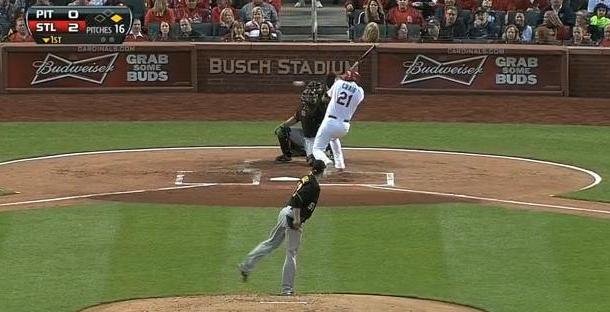
Sanchez opened Friday’s game against St. Louis by giving up back-to-back home runs to Matt Carpenter and Carlos Beltran, followed by a single by Matt Holliday. Sanchez sent his next pitch—apparently out of frustration—toward Craig’s head. (The ball ended up connecting with the spinning hitter’s shoulder.) Plate ump Tim Timmons didn’t hesitate, ejecting Sanchez without so much as a warning.

It was an abhorrent string of hitters in an abhorrent season of starts for Sanchez, who has thrown a total of only 11.3 innings over four outings, with a 12.71 ERA. Twenty-one hits and eight walks. He’s made it to the fifth inning only once. Well, of course he’s frustrated.

“You’ve got two home runs, and then you’ve got a line-drive single up the middle, and then the very first pitch is up around the shoulder and head area,” Timmons told a pool reporter at Busch Stadium. “He threw intentionally at him, and in that area I deemed that intentional, and he’s done. Very dangerous.”

“It surprised me,” Sanchez said in a Pittsburgh Tribune-Review report. “(Timmons) said it was obvious I wanted to hit him. I said no, I just missed my spot.”

Pirates manager Clint Hurdle was outraged at the quick hook, arguing vociferously enough to get tossed himself. After the game he said he was bringing his complaints to the commissioner’s office, although Sanchez’s ensuing suspension gave a pretty good indication about how much attention the commissioner was paying.

Any umpire who feels that a pitcher is intentionally head-hunting is justified in leveling ejections, with or without prior warnings. Timmons earned extra credit by keeping quiet after Cardinals pitcher Lance Lynn later hit Pirates outfielder Starling Marte not once but twice—each almost certainly incidental—even after warnings were issued. (One barely clipped Marte’s hand, the other sailed into his arm, just off the plate; the hitter barely tried to avoid either one.)

Lynn himself was brushed back by Pittsburgh reliever Jared Hughes in the eighth, avoiding a pitch that, because he was squatting while squared to bunt, came in head-high. Lynn ducked backward out of the way, ending up on his back in the batter’s box. Again, Timmons let it slide.

In the eighth, Cardinals pitcher Mitchell Boggs drilled Gaby Sanchez in the back. (This, too, may have been unintentional, given Boggs’s recent struggles and the fact that all three hitters he faced reached base.)

Watch a compendium of the action here. (In an unrelated Code note, watch Pirates catcher Russell Martin jump to get between batter and pitcher in the first clip, as A.J. Ellis wishes he had recently done.)

One takeaway from all this is that an umpire on top of his game can go a long way toward stemming future disturbances. Timmons and MLB seem to agree upon that even one head-hunting incident is too many, and there’s no better way to tamp down the practice than by making examples of pitchers who stray from the proscribed course.

By letting the rest of the game play out as it did—even what appeared to be an obvious message from Hughes to Lynn—Timmons further defused lingering resentment between the clubs. Neither of the weekend games between the team featured much of anything resembling Code-based drama, even with the ample opportunities presented by Pittsburgh’s 9-0 blowout on Sunday.

Ultimately, the situation appears to have been handled just right. The power of positive umpiring. 

Retaliation, Umpires Knowing the Code

Minor League Report: Head Hunter Skates, Twins Prospect Tossed

Miguel Sano card IIThe minor leagues exist in part as a proving ground for young players, an off-spotlight platform where they can learn from their mistakes. Baseball fundamentals comprise a significant portion of this learning, but there’s also a place for figuring out the ways of the game—specifically to this item, retaliation, and what is and is not appropriate.

Take, as an example, Palm Beach Cardinals pitcher Brandon Creath. Pitching in the Florida State League (Class-A Advanced) on Sunday, he threw a pitch at the head of Fort Myers Mircale third baseman Miguel Sano. According to Miracle manager Doug Mientkiewicz, the pitch was in response to an incident in Tuesday’s game between the same teams, when Sano hit a seventh-inning grand slam in Fort Myers’ 7-4 win.

“They were running their mouths at him,” Mientkiewicz said in an MiLB.com report. “Miguel hit a grand slam and kinda flipped his bat, and they took it the wrong way. He hit a big home run.”

Mientkiewicz—one of the staunchest Code adherents in the game during his 12 seasons as a big league first baseman—did not appear to be taking issue with the fact that the Cardinals retaliated, but rather how it went down.

“Hit him in the back,” he said. “I won’t like it, but it’s part of the game. Throw at his head and it messes with his future and I have a problem with it. It’s an embarrassment to the game of baseball.”

Sano didn’t take long to offer his own response, homering later in the at-bat. In so doing, however, he set up a situation in which it became clear that Creath wasn’t the only person needing to brush up on his unwritten rulebook. Sano rounded the bases with a flurry of fist-pumps and shouts toward the Palm Beach dugout, and plate ump Fernando Rodriguez ejected him before he reached the plate.

“I think, personally, it’s garbage,” Mientkiewicz said. “[Sano] did nothing wrong. He locks in and hits a home run. That’s what makes him so special.”

(It’s worth noting that two Palm Beach batters had been hit earlier in the game, which Mientkiewicz dismissed as accidental, and incidental to what eventually went down.)

While the most pertinent item here is head-hunting, that rule almost goes without saying. There’s never a valid reason for it, and every ballplayer who doesn’t inherently recognize that will be taught a lesson the moment his ignorance surfaces.

Umpires, however, have a more subtle task. Ball-strike-safe-out is the most prominent part of their job, but they also have a responsibility to understand recent events between the teams for which they’re responsible, in order to help them make informed judgments about whatever it is they’re seeing on the field.

Were Rodriguez up on his facts, he may well have ejected Creath, not Sano, and all of this would have been avoided.