Felix Pie, Mark Buehrle, Sign stealing

Sign Stealing on the South Side?

As White Sox pitcher Mark Buehrle headed to the mound for the sixth inning against Baltimore Wednesday, he had more than just pitching on his mind.

Perhaps it’s that he’d given up two runs to the Orioles in the previous frame. Maybe it was because outfielder Felix Pie was 5-for-7 with a walk to that point over the series’ two games, and Buehrle was fed up.

Or maybe he doesn’t like players stealing his team’s signs.

The Baltimore Sun reported that Buehrle started yelling at Pie (and, by proximity, it appears, Corey Patterson, as well) as he was heading back to the dugout—an exchange that several Orioles players confirmed had to do with the stealing of signs, and the ramifications therein.

How Pie was stealing them was more difficult to discern. He had walked in the fifth, then scored on Matt Wieters’ double, but was never stationed at second base to get a good look at the catcher or the pitcher’s grip on the ball. (While it’s possible to steal signs from first base, it happens far less frequently. Pie could conceivably have been signaling location from there based on the catcher’s setup.)

Prior to that moment, Pie had been all over the basepaths for Baltimore, but the only time he he had been stationed at second, Wieters followed with an inning-ending fly ball.)

Sign stealing from the field of play is an inextricable part of baseball, and occurs with both frequency and consistency throughout the season. The unwritten rules do nothing to prevent somebody from trying to gain this particular edge.

“Stealing signs is part of the game—that’s not the problem,” said Dusty Baker. “The problem is, if you get caught, quit. That’s the deal. If you get caught you have to stop.”

In Buehrle’s case, he or his teammates had clearly seen something amiss, and he took it upon himself to inform the opposition that it was time to put a stop to whatever it was they were doing. It was likely a repeat offense that spurred him to act.

Pie was lucky that it was Buehrle’s barbs that stung him, not his fastball.

“I’d just go up to them and say, ‘Come on, now, you’ve got to be a little bit more discreet—it’s too obvious,’ ” said shortstop Shawon Dunston, discussing his own methods of operation during his playing career. “They just give you a dumb look, but the next time the behavior changes. You’ve got to get every edge and I don’t have a problem with that, but don’t be too obvious. And be prepared to get drilled if you get caught. Period. That’s how it is.”

Jack Morris once took things a step further. Rather than waiting until an inning ended to deliver his message, he simply spun on his heel and, taking steps toward second, informed the started runner that he did not appreciate what was going on.

Then he said, “I’m throwing a fastball and it’s going at him. Make sure you tell him that.”

After doing precisely that, knocking the hitter down, Morris made a second trip toward the runner. “Did you tell him?” he yelled. “Did you?”

– Jason

Bobby Thomson, Sign stealing

Stolen Signs and the Shot Heard ‘Round the World

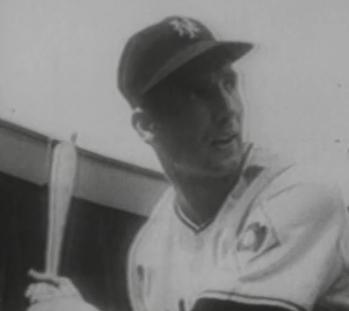
Bobby Thomson, who passed away yesterday, held an unusual place in baseball. Not a Hall of Famer, not even a superstar, he was nonetheless legendary, with his Shot Heard ’Round the World augmenting a long and successful career, during which he resided at the heart of the Giants’ batting order for his five best seasons.

Thomson will be forever linked to Ralph Branca, the Dodgers pitcher who served up the homer that’s kept them both famous. It was, and will always be, among the greatest moments in baseball history.

It’s also unique, in that its intrigue has grown over recent years, a half-century after it happened, as new information came out about the Giants’ proclivity for stealing signs that season, and questions arose about whether Thomson might have been signaled in advance of Branca’s fateful pitch.

None of it can detract from the gravity of the moment, or serve to deny Thomson his rightful place among baseball’s legends. Still, it’s a tale of Code-based intrigue, and brings new wrinkles to an otherwise well-worn story.

The original draft of The Baseball Codes offered a lengthier examination than was ultimately published. Today seems to be a good time to offer it up here.

Without question, the most infamous sign-relay system in baseball history—which inspired countless newspaper accounts and its own book-length examination—was the one used by the New York Giants at the Polo Grounds in 1951. That was the year of baseball’s greatest home run, Bobby Thomson’s “Shot Heard ’Round the World,” which capped the Giants’ return from a huge August deficit to beat the Brooklyn Dodgers in a three-game playoff and earned them a trip to the World Series.

The Giants’ system had been kept largely secret for a half-century, but was uncovered in 2001 by the Wall Street Journal’s Joshua Prager, who later wrote a book on the subject, “The Echoing Green.” Prager found that after a particularly rough stretch in mid-July 1951, New York manager Leo Durocher implemented a system with which the Giants expertly stole their opponents’ signs for the final 10 weeks of the season. During this stretch, New York went 40-14, after a solid if unspectacular 56-44 mark from April through July.

The Giants’ home ballpark, the Polo Grounds, offered the perfect setup for such a scheme, as the windows of the center-field clubhouse faced the field, giving a spotter a perfect sightline to the plate. It wasn’t exactly revolutionary to steal signs from that clubhouse—Bill Veeck alleged that as far back as John McGraw the team had someone looking through binoculars from that same vantage point, who would either raise or lower a shutter to signal the pitch.

The positioning was so favorable that even visiting teams used the setup to their advantage. Gene Mauch recalled that as a little-used infielder with the Cubs in 1948, he’d sit with a pair of binoculars in the Polo Grounds visitors’ clubhouse (located alongside the home locker room, it also had windows overlooking the field) and pick up the Giants’ signs. Mauch’s signal to Chicago’s hitters was a large can of peach nectar that he’d move back and forth across the sill—to the left for a curveball, to the right for a fastball and in the middle for a changeup. Because it was the Cubs, however, the signals were usually of little assistance. “I remember one game when Walker Cooper was catching and Dave Koslo was pitching (for the Giants) that I called every pitch,” he said in the Los Angeles Times. “I think we got three hits and one run.”

Mauch wasn’t the only Cub that season who knew his way around a spyglass. There was also Hank Schenz, who split duties with Mauch both at second base and behind the team’s binoculars. When Schenz, a journeyman, joined the Giants three seasons later, he appeared to be a good fit for the system that Durocher was about to install.

It was an electric signal that ran from the Polo Grounds’ clubhouse to the home bullpen. With it, someone sitting near the Giants’ locker-room window could press a button, which buzzed a bullpen phone. The system was simple and effective—no matter how hard anyone looked for an illicit signal coming from behind the center-field window, they wouldn’t see a thing. One buzz for fastball, twice for off-speed was the code.

Schenz was on the New York roster for the final two months of the season, during which he never came to the plate—possibly because he spent so many innings watching games from behind the clubhouse window. He was one of the first to man the buzzer, but much like his play on the field, his desire outstripped his talent, and he experienced occasional difficulties in properly decoding the opposition’s signals. The binoculars were soon passed to Herman Franks, a young coach whose days as a catcher had ended two seasons earlier (and who would go on to a long and storied career in sign thievery from the coaching ranks).

When the buzzer sounded, a bullpen member signaled the hitter, often with an indicator so subtle that it would go unnoticed by the opposition. Bullpen catcher Sal Yvars, for example, was said to occasionally tip fastballs simply by not moving at all. For something off-speed, he’d do something clearly visible from the plate, like stretch or toss a ball into the air.

(There is some debate about this. The Polo Grounds bullpens were 454 and 447 feet from home plate, making it questionable as to whether someone would be able to see a stretch or tossed baseball well enough to interpret it—to say nothing of the fact that, because of its notoriously bad drainage—the park’s site was actually shown to be lower than the adjacent Harlem River in an 1870’s map of the area—there was a significant dropoff to the outfield. The grade was so extreme that the managers in the dugouts could only see their outfielders from the waist up, which makes it even less likely that Yvars, at 5-foot-10, was easily visible from home plate. What’s beyond question is that the system—whatever it was—worked well.)

Durocher’s buzzer was of little use at first, as shortly after it was installed the Giants went on a 17-game road trip, during which time they dropped from eight games behind Brooklyn to 12 1/2 games back. New York was struggling as the Dodgers surged. “The Giants,” proclaimed Brooklyn manager Charlie Dressen, “is dead.”

The team returned to the Polo Grounds on Aug. 11, and a loss to open the homestand dropped them 13 ½ games back. This was the Giants’ first extended stretch with buzzer under hand, however—21 out of 24 games at home—and they subsequently took off, winning three straight from Philadelphia, then three more from the Dodgers. Three straight over Philly on the road. Two victories over Cincinnati, one from St. Louis and a four-game sweep of the Cubs gave New York 16 straight wins and brought the club to within five of the Dodgers.

The Giants never would have caught Brooklyn had they not won 14 of their final 18 road games in addition to their home success, but, as evidenced by Gene Mauch’s can of peach nectar with the Cubs, it’s clear that teams don’t need to be playing at home to steal signs from outside the field of play.

The Giants eventually tied the Dodgers atop the standings, and the season culminated in a three-game playoff. After splitting the first two, the Dodgers took a 4-1 lead into the ninth inning of game 3, setting up Thomson’s heroic home run to clinch the pennant. While since admitting to the sign-stealing scheme, however, the slugger has long denied—if sometimes half-heartedly—that he was tipped off to the pitch he hit out.

Branca was told about the Giants’ system in 1954, three years after Thomson’s homer, but never commented on it—even when a bylined article by Jimmie Piersall, then with the Washington Senators, in the May 1962 issue of Baseball Monthly, suggested that the hitter knew what was coming. (“Thomson says it never happened,” wrote Piersall, “but I’ll bet he could get an argument out of Ralph Branca, who threw the pitch.”)

It wasn’t until Prager reported on the entire affair that Branca broke his silence.

“When I heard those rumors and innuendoes, I made a decision not to speak about it,” Branca said in the Wall Street Journal. “I didn’t want to look like I was crying over spilled milk. Bobby and I are really, really good friends. He still hit the pitch.”

The baseball world is a bit poorer today.

– Jason

Binoculars, Charlie Manuel, Mick Billmeyer, Philadelphia Phillies, Shane Victorino, Sign stealing

Accusations Against Phillies Nothing New

Even as the Phillies were denying efforts to steal signs against the Colorado Rockies on Monday, people started to dig back a bit to look at their history with the subject.

They didn’t have to dig far.

Just last October, rumors of Philadelphia’s extra-curricular sign stealing swirled during the World Series, when, during Game 4 of the World Series, Yankees catcher Jorge Posada visited pitcher CC Sabathia six times in the first inning, then eight more times in the fifth. This didn’t do much to improve the quality of the product for those watching at home, but it might have been enough to thwart would-be sign thieves.

During the game, Posada also went into dexterous sign gymnastics with nobody on base, throwing down complex sequences normally utilized to stymie a runner on second.

Those rumors hit a head when Dodgers coach Larry Bowa went on ESPN950 radio in Philadelphia, and said this:

There’s rumors going around that when you play the Phillies, there’s a camera somewhere or bullpen people are giving signs, and catchers are constantly changing signs. That’s the rumor. Now is it [proved]? No. I’ve had three people come up to me, ‘Watch center field, they’ve got a camera. Some guys stand up by the fence and if their arms are up it’s a breaking ball.’ I didn’t see it, but other teams swear by it.

So I’m sure the Yankees personnel said, ‘Heads up, these guys like to give signs from second, they’ve got people in center field. So they were constantly changing signs. Posada was paranoid about it. CC was paranoid about it so they kept going out. They might have changed signs four times on one hitter. That’s the reason he went out. It wasn’t to say to him, ‘Settle down.’ It was, ‘Go to this sign.’

Bowa, a Philadelphia icon for his years with the team during his playing days, had no direct inside knowledge of the system (that he admitted to, anyway), but his speculation was enough to send Shane Victorino into a tizzy.

“I guess he knows something that I don’t know about, obviously,” Victorino said shortly after Bowa’s comments aired. “We play between the lines, and that’s what it’s about. For Bowa to come out and say something like that, if he doesn’t know what he’s talking about, if he doesn’t have cold, hard facts, he shouldn’t say something like that. It’s just not something that should be said. For you to pop off like that, I’m not happy.”

Victorino, of course, has been fingered as complicit in the most recent allegations against his team, largely because he was seen on the dugout telephone in conjunction with Mick Billmeyer’s spyglass proclivities from the Philadelphia bullpen.

Last October, Victorino backed up his statement by pointing to the fact that Philadelphia lost the first two of the first three Series games, saying, “Obviously if we’re stealing signs we would be doing better than what we’re doing right now.”

Well, okay. Except that sign stealing doesn’t guarantee victory, especially against a team as good as the Yankees; it merely massages the odds. One of the most notorious sign-stealing-from-beyond-the-outfield-wall teams of the 1960s was the Chicago Cubs—and look where it got them.

Another statement that didn’t hold much water came yesterday, when Phillies manager Charlie Manuel opted to go on the offensive and accuse the Mets of vague improprieties.

“Somebody maybe ought to check the Mets if they did that,” he told the New York Daily News, possibly in retaliation for the Mets leveling similar accusations against the Phillies in 2007. “Their (—-ing) home record is out of this world (14-8), and they’re losing on the road (4-8). Sometimes that’s a good indicator of getting signs and (crap). I’m not accusing them, but you look at that and—damn. We’re about the same home and road. I’m just saying their record is much better at home and they hit better.”

It’s nice that the Phillies are equally dominant at home (10-6) and on the road (10-7), but it must be pointed out that the recent controversy came on the road. It takes a special kind of chutzpah to pull that off, no matter what the Phillies’ actual intentions might have been.

Between Colorado, last year’s World Series and the 2007 Mets, it might be time for the Phillies to give it a rest.

You know, just in case they’re doing anything improper.

– Jason

Binoculars, Mick Billmeyer, Philadelphia Phillies, Sign tipping

Break Out the Binocs—There’s Thieving to be Done

The thing about the overwhelming majority of unwritten rules is their nebulous nature—the gray area in which acceptable behavior becomes entangled with less palatable fare, essentially creating a murky stew in which bad blood can reasonably fester on both sides.

Today’s news is much more clear-cut. Tracy Ringolsby reports for Fox Sports that the Philadelphia Phillies have been warned by Major League Baseball about their alleged tendency to steal signs from other clubs.

But wait a minute—this blog has consistently touted the propriety of sign stealing, with the caveat that once caught, the activity is halted. So why the big deal?

The Phillies, if one believes the rumors, were using binoculars to aid their cause. According to the unwritten rules, this is never okay. (It’s also prohibited by the written rules, which is why the league stepped in.)

The specific accusation points at bullpen coach Mick Billmeyer, alleging that he trained his lenses on Rockies catcher Miguel Olivo; Phillies center fielder Shane Victorino was subsequently seen on the bullpen phone, ostensibly receiving stolen signs to relay to the Phillies hitters.

Ringolsby reported that the New York Mets might have made a similar accusation after the Phillies battered Johan Santana for 10 runs in 3.2 innings on May 2.

The league called the evidence “inconclusive,” but has warned the Phillies and alerted the umpiring crew to pay close attention to the situation.

Billmeyer seems a perfect choice to run such a scheme. He knows catchers and their signs, having worked as Philadelphia’s minor league catching coordinator from 2000-03, and as the major league catching instructor from 2004-08.

Philadelphia’s excuse: Billmeyer wasn’t looking at Olivo, but at his own catcher, Carlos Ruiz. The only problem with that reasoning is that the Phillies were up to bat when the situation was brought to light on the game telecast, and Ruiz was in the dugout.

Assuming that the allegations are correct—that Billmeyer was picking off signals and relaying them via telephone to the Philadelphia dugout—how difficult would it be to then get word to the hitter?

Not very.

In the 1960s, New York Yankee Bob Turley would whistle from the bench when the upcoming pitch was different from the one that preceded it. (Had the previous pitch been a fastball, for example, Turley would whistle if the next pitch was to be a curve.)

Tigers manager Del Baker signaled Hank Greenberg with a system of “all right”s and “come on”s. (“All right, Hank, you can do it” indicated that a fastball was on the way, whereas “Come on, Hank” meant curve.)

The possibilities are limitless.

Similarly, it’s hardly the first time that a team has used foreign assistance to peek in on the opposition. In the late 1950s, the Milwaukee Braves stationed pitchers Joey Jay and Bob Buhl in the Wrigley Field bleachers, shirts off and dressed like fans. They’d train binoculars on the catcher, and signal the pitch with a rolled-up program.

In the 1970s, Cubs manager Herman Franks once stationed himself inside the WGN television truck outside the ballpark, using their feed to relay signals to coach Harry Lowrey via the dugout phone. (The experiment lasted all of one game, after Franks’ instructions interfered with the WGN producer’s instructions for his crew, and vice versa, serving mostly to screw everybody up. It was, after all, the Cubs.)

During the 1976 World Series, three scouts for the Yankees were spotted in the ABC-TV booth, huddled around a television and talking into walkie-talkies. Although no formal charges were filed, they were quickly removed from the premises.

If the Phillies are to accede to any piece of the Code now, it’s clear which part they should heed: They’ve been caught, and it’s time to stop.

Update: Watch the video as part of an MLB Network panel discussion here.

Update II: The accusations against Philadelphia were nothing new.

– Jason

Aaron Harang, Greg Maddux, Morgan Ensberg, Sign stealing

A New Angle on Sign Stealing

Morgan Ensberg was a big-leaguer for eight seasons, an All-Star in 2005. Now retired, he wants to join the media.

The first step in this endeavor is a blog, Morgan Ensberg’s Baseball IQ, on which he posts articles and interacts with fans. Yesterday, he wrote about the same Jerry Crasnick article I referenced for this site (in which Crasnick interviewed three prominent pitchers about the unwritten rules)—only Ensberg approached it from the standpoint of a hitter.

One thing he said—not in the article, but in response to a reader comment—caught my attention: “Stealing signs from second is mostly done out of the pitcher’s glove . . . not the catcher’s signs.”

This blew me away. In more than 200 interviews with big leaguers and ex-big leaguers as research for The Baseball Codes, not one of them mentioned this facet of sign stealing.

I quickly got Ensberg on the phone to discuss this most specialized of skills. Here’s what he said:

You’re leading off at second base; estimate you’re probably around 30 feet from the pitcher. If the pitcher hasn’t been taught to protect it, you can see everything that’s in his glove. You can see his hands, you can see his fingers, you can see the ball, you can see the seams.

Generally, pitchers will hold ball in same spot in the glove. On certain pitches you can see some red from the seam, but on other pitches you don’t see the seam. You might see something in the way he holds his glove. All this is just patterns. I’ve been at second base 100,000 times in my life, and learned to pick up patterns in the way a pitcher grips a baseball.

Greg Maddux gripped the majority of his pitches out of the same ball placement within the glove. He’d put the ball in the same spot, the seams in the same spot within his glove. He was able to develop what looked like a changeup grip 100 percent of the time, but as he started to pitch, he adjusted his grip and we wouldn’t be able to see what was being thrown.

Clearly he was aware that baserunners were trying to look into the glove, so he developed a thing where every single grip would start out as a changeup grip, and then he’d adjust it once he started his motion, and we’d lose it.

Pitchers can prevent this simply by angling their hands; instead of the knuckles of their glove hand facing the plate, they can turn them toward either first or third base to shield them from the runner at second.

Ensberg also addressed the notion that not every hitter wants to know what’s coming. Like, say, Ensberg himself. He described an instance of a pitcher’s tell that he once picked up from the plate.

Aaron Harang with the Reds used to have his glove straight up on a fastball and sideways on off-speed out of the windup, 100 percent of the time. You don’t get opportunities like this, ever. It was the most blatant example I’ve ever seen. I see his glove go fastball, first pitch, and he came in at 92, a four-seamer at chest height. I came out of my shoes, swinging and missing.

I thought, what are you doing? That ball’s up under my chin. I step back in. He goes into his windup and he does it again—fastball again, chest high. I come out of my shoes again, swinging and missing. Now I’m 0-2.

Third time, here it comes, same height, same everything. Three fastballs chest high, three swings, three misses. Go sit down. I’m walking back thinking, that’s embarrassing. You know the thing’s coming, you have zero discipline, you got too pumped up—you deserved that. It’s complete self-hate.

Great stuff from a guy who lived it.

– Jason

Justin Duchscherer, Sign stealing, Unwritten-Rules

Duchscherer on Sign Stealing

Justin Duchscherer just re-upped with the A’s for one year at up to $5.5 million, with incentives, according to ESPN’s sources. The right-hander, an All-Star as a middle reliever in ’05 and again last year as a starter, spoke with me a couple years ago about how to deter opposing baserunners relaying the catcher’s signs:

That’s part of the game – people do it. Sometimes you’re out there and you’re giving up hits on good pitches, and you’re wondering what the heck’s going on. . . . If there’s a guy at second base, they’ll give a signal or something. (Ex-A’s catcher Jason) Kendall is always watching for stuff like that. He’ll say, “Tell that son of a bitch to stop looking in here.” Or we’ll change signs. He’ll do something to control the game and let them know that he knows they’re stealing our signs.

There was a time in Triple-A where the pitching coach thought a guy was stealing signs, and he had the catcher call for a fastball away and we threw one in. We got the message across pretty quick – he stopped stealing fricking signs. He didn’t get mad. Players know if they’re doing something wrong. If I was cheating and somebody go mad at me for it, I wouldn’t be mad at them for being mad at me for cheating.

– Jason

Detroit Tigers, Jim Leyland, Joe Mauer, Justin Verlander, Minnesota Twins, Sign stealing, Sign tipping, Unwritten-Rules

Joe Mauer is a Great Hitter. Sign Tipping, Not So Much

So people are starting to pay attention to the unwritten rules. In a September 29 game against the Tigers, Minnesota’s Joe Mauer doubled against Justin Verlander. From his vantage point at second, he then read every sign Detroit catcher Gerald Laird put down. As Mauer took his lead, he proceeded to send a series of blatant signals prior to each pitch to the hitter, Jason Kubel, about what to expect.

The TV announcers were no different than most fans in this case, so predisposed with watching the primary action on the field that they missed the subtleties. Only in the pantheon of sign tipping, Mauer wasn’t doing much that could be described as “subtle.” Perhaps as a catcher he’s used to flashing blatant signals, but that’s hardly an excuse. Were discretion in sign delivery an official statistic, the guy never would have won the MVP.

Luckily, someone other than the announcers was paying attention, and took the time to repurpose the video for instructional purposes. Such is the beauty of YouTube.

Multiple instances of the same clip have cropped up, some with notably better video quality than the one below. I chose this one, though, because the user – Rolemodel2008 – took the time to embed a series of instructions about what to look for and when, and for the most part is right on the money.

This isn’t to say that Mauer is in the wrong; this kind of stuff happens all the time in the big leagues. The only surprise is that it took Detroit so long to catch on, not to mention the team’s lack of response (short of Laird becoming trickier in his signal calling).

“Some guys stood up there relaying location, and you could just tell,” Shawon Dunston told us during the course of interviews for the book. “I’d just go up to them and say, ‘Come on, now, you’ve got to be a little bit more discreet. It’s a little bit too obvious.’ They just give you a dumb look, but the next time the behavior had changed. They respected the game. You’ve got to get every edge — I don’t have a problem with that — but don’t be too obvious. And be prepared to get drilled if you get caught. Period. That’s how it is.”

Mauer’s next at-bat came with runners at second and third and one out; a perfect opportunity for Verlander to send a warning shot to the Twins. Instead, he got him to ground out to first on a 2-0 pitch, driving in a run.

One thing’s for sure: Were Verlander to have reacted, it wouldn’t have been on orders from Jim Leyland. “I don’t order pitchers to throw at guys,” he told us. “I don’t ever talk to the pitchers about throwing or not throwing at people. I kind of let the pitcher do whatever he’s got to do. That usually gets taken care of by itself – you don’t have to order anything. I’ve never told a pitcher a guy needs to be hit. Period.”

Check out the clip and decide for yourself.

– Jason