Jose Mesa, Omar Vizquel, Retaliation

Mesa-Vizquel: Just When We Thought it was Over, they Dragged us Back In

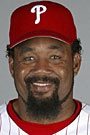
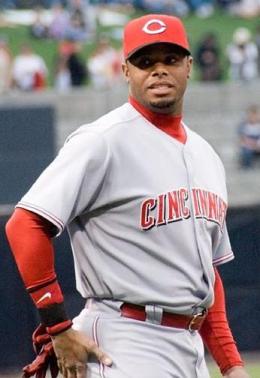
This is Part 2 of our excerpt from a passage that was ultimately cut from the final version of The Baseball Codes, concerning the protracted, on-field battle between Omar Vizquel and Jose Mesa.

Part 1 can be read here.

______________________________

Things became interesting in April 2002, when Vizquel’s biography, “Omar! My Life On and Off the Field,” was released. The shortstop didn’t waste time laying into Mesa within its covers—on the very first page, Vizquel talked about that fateful World Series Game 7, in which Cleveland’s closer could not finish off the Marlins:

“The eyes of the world were focused on every move we made. Unfortunately, Jose’s own eyes were vacant. Completely empty. Nobody home. You could almost see right through him. Jose’s first pitch bounced five feet in front of the plate, and as every Cleveland Indians fan knows, things got worse from there. Not long after I looked into his vacant eyes, he blew the save and the Marlins tied the game.”

That passage sent Mesa into a sustained rage, counting down the days until he’d next share a field with his former friend. Two months after the book came out, Cleveland visited Philadelphia, where the pitcher had signed as a free agent after the 2000 season.

In the ninth inning of their first post-memoir meeting, Mesa delivered a fastball into Vizquel’s back. Vizquel did not approach the mound. Neither man commented after the game—Mesa refused to talk and Vizquel left the building before the clubhouse opened to the media. But Cleveland manager Charlie Manuel was pretty clear about what happened. “Yeah, he meant to hit him,” he told reporters. “I think it was on purpose.”

Mesa was fined $500, and the feud seemed to settle as the clubs didn’t meet again that season—not to mention that Mesa had finally exacted a measure of revenge.

As the saying goes, however, there’s always next year. When 2003 rolled around, it didn’t take long for the rivalry to ignite anew.

Because Philadelphia and Cleveland weren’t scheduled to meet during the regular season, spring training provided Mesa his only opportunity. The teams met on March 11, but the reliever could only view it as an opportunity wasted after new Indians manager Eric Wedge (who by this point knew all about the tension between the two) short-circuited things by removing Vizquel before Mesa came into the late innings of the game.

So the pitcher took the only shot available to him—through the press.

“If I face him, I’ll hit him,” he told the Bucks County (Pa.) Courier Times. “I won’t try to hit him in the head, but I’ll hit him. And if he charges me, I’ll kill him. If I face him 10 more times, I’ll hit him 10 times. Every time.”

Vizquel clearly broke an unwritten rule by criticizing his former teammate in print, but with his comment, Mesa just as clearly broke a rule of his own—never admit to hitting a guy on purpose. The standby sentiment—“I was trying to pitch him inside and it sailed”—is fairly unassailable in baseball’s court of law . . . unless a pattern develops or the pitcher admits to his intentions.

Or, in this case, both.

By this time, Vizquel said publicly that he wasn’t trying to offend Mesa with his book, that he was simply trying to offer insight from a player’s perspective to his literary fans, and that he’d like to put the unpleasantness behind him.

Mesa’s response: “If he comes to apologize, I will punch him right in the face. And then I’ll kill him.”

Comments like this make reporters dance with glee. Media members bounced between clubhouses, getting reactions from each guy every time the other said anything on topic. Vizquel expressed slight regret; Mesa said Vizquel was stupid. Vizquel said he’d fight if that was what Mesa really wanted, comparing the potential bout to Roy Jones Jr. taking on a much bigger John Ruiz; Mesa said to bring it on. Vizquel retracted anything he previously said that could be construed as an apology. It didn’t matter that the Phillies and Indians weren’t going to see each other again until 2004. This sort of drama was too good not to play up.

Philadelphia general manager Ed Wade spoke to Mesa, knowing that his reliever would probably garner a long suspension if he backed up his words with actions. Baseball’s czar of discipline, Bob Watson, said he hadn’t seen anything like it since “Ball Four” came out and made Jim Bouton the object of scorn in clubhouses across the league. Phillies manager Larry Bowa intoned that Mesa was simply a fiery guy and didn’t truly mean what he said, saying, “They used to be great friends. I don’t know what happened, but it was personal.” (This didn’t stop Bowa from mirroring Wedge in that spring training game, intentionally keeping Mesa on the bench against the Indians until Vizquel had left the contest.) To shield himself from the heat, Mesa eventually said that the feud was over and he was ready to get back to playing baseball.

This is a lot of preventative maintenance for a situation that, according to the unwritten rulebook, should have been over after the first time Mesa drilled the shortstop.

Read Part 3 of the series here.

– Jason
Jose Mesa, Omar Vizquel, Retaliation

Luis Aparicio Loves Omar Vizquel. Jose Mesa, Not so Much

It’s not often that the greatest shortstop in a team’s history willingly un-retires his uniform number so that a newcomer can slap it on his back. In the case of the Chicago White Sox and Luis Aparicio, however, it seemed only obvious. That’s because the newcomer is actually an old-comer who’s new to the team, soon-to-be 43-year-old Omar Vizquel (only Tim Wakefield offers more senior status in the junior circuit), who last year surpassed Aparicio’s record for career hits by a Venezuelan—a title that Aparicio gladly conceded to his compatriot.

We also love us some Omar Vizquel in San Francisco. During the four seasons he spent with the Giants, he was the most consistently fun player to watch, as well as being among the most outgoing and honest players in the clubhouse.

(Quick sidebar: During an off-day interview I did with him shortly after his arrival in San Francisco, Vizquel asked if there was a nearby place we could grab lunch. When I suggested a Cambodian restaurant that was close to where we were, he was at first apprehensive, but gamely went along for the ride. He then ordered enough to feed a family of four, sampled everything and finished most of it.)

When it comes to the unwritten rules, Vizquel is most noteworthy for his ongoing affair with former teammate Jose Mesa. The two, once close friends, became estranged, then angry, then violent. To hear Vizquel tell it, he has little idea why his former pal is so pissed off.

To hear Mesa tell it . . . well, Mesa won’t tell it. Or at least he wouldn’t tell it to me, going from cordial to irate in an eyeblink, jumping off his clubhouse chair and screaming profanities as soon as Vizquel’s name was brought up.

The first draft of The Baseball Codes contained 2,700 words detailing their feud. It was good stuff, but we ultimately decided that the numerous code violations it contained couldn’t be broken out into individual chapters, so it served as an easy cut.

Which doesn’t make the story any less compelling. Suffice it to say that while 2,700 words of bonus material is waaaaay to long for a single blog post (heck, this introduction alone is pushing the limits of endurance), it might make for a good serial. And there’s only one way to find out.

Find the first part below. Updates daily thereafter.

– Jason

Baseball has an unwritten rule urging restraint from publicly ripping your teammates. There’s another unwritten rule that stipulates clubhouse dissent should be kept behind closed doors, away from the press. There’s an especially prevalent unwritten rule mandating that those associating with hot-headed Dominicans who throw 95 mph should do what they can to avoid pissing them off. Or at least there ought to be.

Once upon a time, Jose Mesa and Omar Vizquel were comrades. When Vizquel was traded from Seattle to the Cleveland Indians in 1994, he automatically gravitated toward Mesa, who had joined the club two seasons earlier. They were both from Latin America. They had lockers next to each other. They were companions on the road. Vizquel referred to the pitcher as one of his best friends, and was a frequent mealtime guest at Mesa’s house. He was trusted enough to drive Mesa’ kids to school.

It was an interesting way to begin a relationship that would one day devolve into the longest continual bout of over-the-top retaliation in big-league history.

Where it started to go wrong is anyone’s guess—Vizquel isn’t sure and Mesa won’t talk—but it was likely at Indians spring training in 1998.

Cleveland was coming off a heartbreaking loss to the Marlins in Game 7 of the 1997 World Series, in which Florida staged a ninth-inning rally against Mesa to tie it, then went on to win the contest—and the title—two innings later. As the world was to learn when Vizquel’s autobiography came out four years down the road, the shortstop was something less than impressed with Mesa’s effort that night.

In the interim, though, even Richard Dawson couldn’t have mitigated this feud.

The following spring, when Indians players arrived at training camp in Winter Haven, Fla., everything appeared to be fine. Players were loose, laughter came easily and there was no mistaking the sense of anticipation on a team that had largely the same cast returning from the outfit that, in its most recent game, came within two outs of a championship.

But something was eating at Mesa. Maybe he was internalizing the October defeat—certainly a deadly practice for any closer. Maybe teammates were needling him. Maybe too effectively. Maybe one of them was Vizquel.

When the Gold-Glove shortstop stepped to the plate against Mesa in an intra-squad game shortly after camp opened, their relationship began showing early signs of wear. Vizquel slapped a Mesa pitch over the left-field wall for a home run, then proceeded to goof his way around the bases—running sideways, waving his arms, generally making a spectacle of his trot. Were this a regular-season game, the shortstop would have been in flagrant violation of showing up the opposing pitcher. Such a display would have virtually guaranteed at least one fastball-inflicted bruise in ensuing at-bats. But this was a meaningless game against his own club, a simple workout in an empty stadium, and Vizquel’s actions could easily be taken as a guy in a good mood horsing around with his pals.

Mesa didn’t see it that way. And if there’s a common trait among hard-throwing pitchers, it’s that they have long memories when slighted. “I was just doing all this goofy stuff and he took it in the wrong way,” said Vizquel. “Some guys don’t like that kind of stuff, but it was just a practice game. I don’t really know (why he got so mad). I was just a little guy and he’s a real macho guy, and maybe he didn’t want to be shown up by a little guy like me.”

At that point, Mesa privately began to fume. Over the following months the pair’s rapport devolved, but in July, before it could reach a boiling point within the Indians’ clubhouse, Mesa was traded to the San Francisco Giants.

The next time the two saw each other was during the 2000 season; by that time the pitcher had moved on again, to the Seattle Mariners. The Indians jumped out to an 8-2 lead, and in the seventh inning Mesa was inserted into the game for some mop-up work. Vizquel was the fifth batter he faced.

The right-hander’s first pitch came high and tight, and Vizquel glared at the reliever. Mesa came back with a second fastball, just as hard and just as close, barely missing Vizquel’s right thigh. The shortstop—at 5-foot-9 and 165 pounds giving up six inches and 60 pounds to his opponent—started slowly toward the mound. The benches and bullpens emptied, with players streaming between the two, preventing punches from being thrown. Neither man was ejected and the at-bat continued.

With a 2-1 count, Vizquel grounded to second base to end the inning. This pleased Mesa, but it wasn’t enough. The pitcher waited for Vizquel along the first base line, and punctuated the ensuing stare-down with an index finger in the shortstop’s face. The confrontation was again intercepted by teammates before it could escalate, and again both benches emptied in the process. Both Mesa and Vizquel were led to their respective dugouts without further incident. That was how it began.  

Read Part 2 here and Part 3 here.

– Jason

Bryce Harper, Dusty Baker, Passing Rules Down

Bryce Harper, 17-yr. Old Phenom, Learns One of the Unwritten Rules

Our good friend and colleague, Jeff Fletcher, has written a wonderful piece for AOL Fanhouse on Bryce Harper, the 17-year old who dropped out of high school in Las Vegas, took the GED and enrolled in a community college to prepare for the June draft.

There’s even a part about the unwritten rules, that comes near the end of the story.

Another issue Harper will need to address this year is gaining some maturity. (College of Southern Nevada coach Tim) Chambers said Harper has some “bad body language” and occasionally does and says things on the field that he shouldn’t. Last fall he started to go to first on a pitch he thought was ball four, but it was called a strike. Next pitch, he hit a home run. After reaching the dugout, he said to one of the coaches, loud enough for the opponents to hear: “They should have walked me.”

Next time up, Harper got plunked.

“Those little things, he’s still learning,” Chambers said. “He didn’t mean to show them up. He was just giggling to our coach.”

Chambers is one of the unsung heroes of the game — the guys who teach young players the right way to play, before they reach the level of competition where playing the wrong way can be hazardous to their health.

Here what Dusty Baker told us on the subject of taking younger players under your tutelage and “paying it forward” :

“That’s how the game perpetuates itself, and I was always told,  well I wasn’t told this, I kind of made this up myself, but I tell people I was told it, to make it sound better, because I’m not some great philosopher, but – I honestly believe that what you learn in this game  is not yours to possess, but yours to pass on.  I believe, whether it is equipment, knowledge, or philosophy, that’s the only way the game shall carry on.  There’s not enough passing on now.  . . .  I urge my older guys to spend time with the young dudes so the game will continue when I’m gone and they are gone.  I believe that you have to talk, communicate, and pass on what was given to you. You can’t harbor it, you can’t run off to the woods and keep it for yourself, because it isn’t yours to keep.”

– Michael

Basepath Retaliation, Frank Catalanotto, Tony Phillips

Catalanotto: How to Recognize when a Baserunner is Trying to Rip Your Head Off

Welcome back to the big leagues, Frank Catalanotto! Or at least to the minors, with a chance to make the 24-man roster out of spring training!

The 35-year-old Long Island native signed with the Mets, with the chance to make the roster out of spring training, after spending last season with Milwaukee. New York likes him for his versatility, and although the Mets’ infielders are hardly green (only one on the current 40-man roster is as young as 25), should he make the team, his experience there will only help.

He told us about a lesson he learned on the topic of basepath retaliation when he was a rookie in 1997.

My rookie year, in 1997, I was playing second base with the Detroit Tigers, when we hit Tony Phillips. Sure enough, there was a ground ball to the left side, and I remember Tony came in real hard, knocked me almost into left field. It’s not that he wanted to hurt me personally, he didn’t even know me, but he wanted to send a message—hey, you get me, I’m going to get you back.

But Tony was very professional about it. He kind of helped me up, patted me on the butt, asked me if I was OK. Sometimes it’s part of the game and you know it’s going to happen.

– Jason

Ken Griffey Jr., Rookie Etiquette

Griffey Jr. Primed for 22nd Season. He Had to Learn his Rookie Lessons Somewhere

Reports out of Seattle have Ken Griffey Jr. healthy and raring to go for his 22nd big league season. Not bad for someone they call, “Kid.”

Griffey was a natural interview target for the book, having grown up around the game and seen first-hand how the unwritten rules have changed since his dad roamed major league outfields in the 1970s.

It was clear through the conversation that Griffey wasn’t just paying lip service to the Code; he believed in it, and understood it through all its permutations.

Of particular interest were his reminiscences about his rookie season. He came into the league as a 19-year-old amid unbelievable hype, just 22 months after being selected by the Mariners with the top overall pick of the 1987 draft. Even with his pedigree, even with his draft position and even with the hype, it didn’t take long for Griffey to learn his place in the pecking order.

The following quote from Jeffrey Leonard made the book; everything else is a Web bonus:

I had Jeffrey Leonard, Alvin Davis, Harold Reynolds, Dave Valle, Jim Presley, Mickey Brantley, Henry Cotto—I was around a bunch of good guys who said, “This is what we’re going to do—we’re going to show you how to play baseball. We know you know how to play, but we’re going to show you the right way to play the game.”

Jeffrey’s exact words to me were, “There’s going to be a lot of people kissing your ass. I won’t be one of them.”

He helped me at that critical time of being a teenager and not knowing. He was like, “Hey, you’re still going to sit up in the front of the bus as a rookie, but when I call you back, you’re going to come back and sit and talk to me. We’re going to go eat and talk about baseball. We’re going to the ballpark and we’re going to talk about baseball. You’re going to be right next to me all year.”

And sure enough, my locker was right next to him the whole year.

A rookie’s primary clubhouse goal, of course, is to blend into the scenery, a concept that Griffey understood as well as anyone. Still, his effervescence, personified by the backward cap that always seemed perched atop his head, appeared to actively fly in the face of Code convention.

Not so, he told us:

I grew up with what we now call old school, but I think I’m a hybrid—a kind of new school/old school. We’ve changed the game some, with the long pants and baggy uniforms, that type of stuff. You just try to make the game more fun. Some of the guys have their hats askew—you know, like me with my hat being backward.

People thought I was just trying to be different, but that’s not it. When I was a kid, I’d grab my dad’s hat. It was big, so whenever I started to run, the brim fell in front of me and I couldn’t see. But I always wanted to grab my dad’s hat, so I turned it around. I’ve been doing it since I was four.

I wasn’t trying to be different. When I finally explained it to people, they started laughing. Because, you know, when you’re a kid, what’s the one thing you want to do? You want to be just like your dad. You put on his shoes and walk around the house, you put on his pants and hold them up and walk around, and those are the things that I did—but my dad just happened to be a professional baseball player.

-Jason

Review

Two for Two in Reviews

We’re still more than six weeks away from the release date, but the second review is out. Seems like people like the book.

This one is from Booklist, the reviewing arm of the American Library Association. The review itself won’t be out until Feb. 1, but we have the advance scoop for you right here:

Turbow and Duca have filled a void with this entertaining, revealing survey of the varied, sometimes inscrutable unwritten rules that govern the way baseball is played by the pros. The authors add a lot of flavoring here by naming names and instances, both long past and more recent. Great stuff on how and when to retaliate, how to slide, how to give way to a relief pitcher, talking (or not) during a no-hitter, whether to join an on-field brawl (no question, you join in), and the ethics of cheating (former Orioles manager Earl Weaver once told struggling pitcher Ross Grimsley during a game: “If you know how to cheat, this would be a good time to start”). The authors—both write on baseball for various publications, and Duca is an official scorekeeper for Major League Baseball—lament a certain unraveling of baseball’s codes, due to changes in the game itself, while insisting that they’re still essentially intact. For committed fans who want to dig deeper.

— Alan Moores

Alan Moores: clearly a man of discriminating tastes. Thanks, Booklist.

– Jason

Barry Latman, Intimidation, Stan Williams

What Happens in Vegas Doesn’t Always Stay in Vegas

The Las Vegas Convention and Visitors Authority has announced an upcoming spring game between the Dodgers and Reds. It’s not particularly noteworthy news, but it was enough to remind me of a story that began during another spring training game in Sin City, and which also involved the Dodgers.

It featured Stan Williams, who is, hands down, my favorite crazy person in big league history. At 6-foot-5 and 230 pounds, and with a red-hot fastball, Williams was not only willing to throw baseballs at hitters, he seemed to enjoy it.

The right-hander enjoyed moderate success over a 14-year career, but it was his utter devotion to the art of intimidation that set him apart. He and Don Drysdale alone made the Dodgers of the early 1960s one of the most terrifying pitching staffs ever assembled.

The Baseball Codes devotes nearly 2,000 words to Williams, but we’ll focus here on the List, a collection of names he kept in a notebook, which he updated whenever a hitter offended his baseball sensibilities. Once noted, a name stayed put until Williams was able to exact on-field revenge, at which point it was crossed off, case closed.

The best List story started in Vegas, during a spring training game in 1961 between the Dodgers and Indians, when Williams was 24 years old and in his fourth year in the National League.

Suffice it to say that the pitcher cared less about a noon exhibition than about enjoying the fruits of Las Vegas the previous night, into the dawn.

When it came time to take the mound, Williams was far from sharp—so much so that when he bounced a pitch off the helmet of Cleveland’s Bubba Phillips, it was one of the few times in his career that such a result was not what he had intended. (Not only that, Williams told us, he was throwing so softly that “I wouldn’t have hurt him if I’d hit him in the neck.”)

Still, Cleveland pitcher Barry Latman took up for his teammate and drilled Williams in response. Tempers flared, and when Williams was quickly removed from the game by Dodgers manager Walter Alston, he wasted little time adding Latman’s name to the list.

Because they played in different leagues, however, Williams never got his chance to retaliate. As his career progressed, more names got crossed off than were added, until finally Latman’s was the only one left.

I’ll leave it up to readers of the book to find out what ultimately happened between Williams and Latman, but will offer this detail: The next time they met was a dozen years later, as teammates on the Triple-A Seattle Angels — the final stop for each in his respective playing career.

The early line here says that the upcoming Vegas game, to be played March 31, won’t offer anything nearly so entertaining.

– Jason

Babe Ruth, George Frazier, Jose Offerman, Ron Hassey, Umpire Relations

Offerman Neither the First Guy to Want to Hit an Ump, Nor the First Guy to Actually Do It

So Jose Offerman was banned for life from the Dominican Winter Baseball League after slugging an umpire last week while serving as the manager of the Licey Tigers. Our guess: It was merely an effort to maintain his reputation as an all-hit, no-field player.

Offerman, of course, reminds us that an entire section of baseball’s Code is devoted to umpire relations. The unwritten rules, of course, while doing nothing to discourage on-field disagreements with the men in blue, generally solicit more tact than was shown by the former Dodger.

Which doesn’t mean that guys don’t occasionally attempt to inflict a little damage of their own.

Former pitcher George Frazier told us about the time in 1984, when his batterymate, Indians catcher Ron Hassey, was rung up on a dubious called strike by umpire Joe Brinkman. Hassey’s response: when he came out to catch the bottom of the frame, he gave Frazier a signal to throw a fastball away, but set up on the inside part of the plate.

“I said, all right, maybe the hitter is peeking or something,” said Frazier, describing a well-known method for deterring hitters whose eyes might wander backward (a tactic that has its own section of the Code). “I throw a fastball away, Joe’s set up right there, and it hit him square in the mask. Oh my God—Hassey got tossed and Joe’s wanting to kill me. I said, ‘Hey, I just threw what I thought he called. Why are you mad at me? Joe’s still not happy about that deal.”

Something similar happened in 1999, when Devil Rays catcher Mike DeFelice failed to put a glove on a Wilson Alvarez fastball that more or less split the plate. The pitch hit plate ump John Shulock’s mask so hard it dented the bars. Once Shulock regained his senses, he remembered that Alvarez had questioned several of his calls throughout the game, and stormed the mound, “yelling and gesturing angrily,” according to the St. Petersburg Times.

Alvarez, of course, denied any intent, and Shulock was ultimately suspended three games for his “display of temper.”

Leave it to no less an authority than Babe Ruth, though, to affirm that occasional scare tactics against umpires can be effective—and that Offerman was hardly alone in his love of the right cross.

It’s well known that as a pitcher for the Red Sox, Ruth took part in a joint no-hitter. Ruth questioned umpire Brick Owens after walking the game’s first hitter, and was subsequently tossed. Reliever Ernie Shore then came in and retired 27 men in a row (including the runner he inherited, who was thrown out on the basepaths).

What’s less known is what Ruth actually did to get ejected.

“I still insist that three of the four (balls) should have been strikes,” wrote Ruth in the autobiographical The Babe Ruth Story. “I growled at some of the early balls, but when (Owens) called the fourth one on me I just went crazy. I rushed up to the plate and I said, ‘If you’d go to bed at night, you so-and-so, you could keep your eyes open long enough in the daytime to see when a ball goes over the plate.’ ”

At which point the ump threatened to toss Ruth.

The pitcher’s response: “Throw me out of this game and I’ll punch you right on the jaw.” Not one to be intimidated, Owens immediately gave him the thumb.

“I hauled off and hit him, but good,” wrote Ruth.

Good thing Ruth never got the managerial job he so desperately wanted, or he might have ended up like Jose Offerman. Which, as we know by now, is not necessarily a good thing.

– Jason

The Baseball Codes

Some Codes Transcend Baseball

I have always been fascinated by the fact that the island of Hispaniola includes the Dominican Republic, where nearly all major league shortstops are born; and Haiti, the first nation in the Western Hemisphere to throw off the chains of slavery, but a nation that has never produced a single major league baseball player.

And it won’t for quite a while longer.  More than 50 percent of the population of Port au Prince was under the age of 13 just one week ago.  The city, and by extension the nation, has lost a significant part of an entire generation.  We’re all about how baseball is a metaphor for life, and I would like to encourage all our readers to do whatever you can to help out — right now, when the need is greatest and your ability to affect it is still high.

If you’re not the donating type, maybe you’d like an experience of a lifetime — the San Francisco Giants and their players have teamed up to offer some amazing opportunities on the team Web site, as a fund-raiser for Haitian Relief.

Three auctions will be on-going for a week:

  • Batting practice off a Giants’ starting pitcher
  • 30 minutes of hitting instruction with Pablo Sandoval
  • A private meeting with Tim Lincecum

Find out more, here. If you’re the donating type, the Red Cross is working hard in Haiti; the Salvation Army has been there for years before the disaster, and Medecins sans Frontieres (Doctors Without Borders) was there before the quake, but all three of their hospitals were reduced to rubble in the quake.  Major League Baseball is giving via UNICEF.  All offer a way to give.

In our family, in addition to money, we’ve given our son, who is a member of the Marine Expeditionary Unit that will land Sunday morning and spend four to six months helping those who had virtually nothing, and lost even that this week. Give until it hurts just a little, even in these times.  You’ll feel better, and you will have exercised a little justified retaliation of your own, against poverty and misery — your own private brushback pitch.

– Michael