New York Yankees

Yogi Berra, RIP

Yogi 1

Baseball lost a great one when Yogi Berra, an unbelievably winning player with an even more unbelievably winning personality, passed away on Tuesday. In his memory, here’s a suitable passage from The Baseball Codes. The story is ostensibly about Berra’s teammate, Yankees pitcher Bob Turley, and his propensity for stealing the opposing team’s signs, but it ends up being about Yogi, because of course it does.

Turley’s relay system was simple—he’d whistle whenever a pitch was different from the last one. Hitters would start every at-bat looking for a curveball, and if a fastball was coming, so was Turley’s whistle. He’d then stay silent until something else was called. The pitcher was so good that when he went on the disabled list in 1961, manager Ralph Houk wouldn’t let him go home, instead keeping him with the team to decipher pitches. (Roger Maris, in fact, hit his sixty-first home run of 1961 on a pitch he knew was coming because third-base coach Frank Crosetti, doing his best Turley imitation after watching the pitcher for years, whistled in advance of a fastball.)

Eventually, people began to catch on. Among them was Detroit Tigers ace Jim Bunning, who grew increasingly angry as Turley whistled and the Yankees teed off during one of his starts. Finally, with Mickey Mantle at bat, Bunning turned to Turley in the first-base coach’s box and told him that another whistle would result in a potentially painful consequence for the hitter. Sure enough, Turley whistled on Bunning’s first pitch, a fast­ball at which Mantle declined to swing. With his second offering, Bun­ning knocked Mantle down. The on-deck hitter, Yogi Berra, could only watch in horror. When it was his turn to bat, Berra turned toward the mound, cupped his hands around his mouth, and shouted, “Jim, he’s whistling, but I ain’t listening.”

Berra was unique on the field and off, and it says something that the flood of obituaries and remembrances over the last day or so involve his kindness of spirit as much as or more than his baseball prowess. We lost a good one on Tuesday.

Retaliation

Carnage in Chicago, But it Ain’t Joe Maddon’s Fault

Rizzo drizzoThere are lots of ways to look at the weekend’s incidents in Chicago, which resulted in six hit batters, four ejections, an in-dugout apology, some strategic rethinking about ages-old Code courtesy that’s long been questioned but never usurped, and a one-sided war of words waged by Cubs manager Joe Maddon.

Start with Maddon, whose reasonable explanations for everything that happened did little to mask that he spent the weekend playing both sides of the debate, as aggrieved victim and as innocent perpetrator, depending on whether his team was being drilled or doing the drilling. Chicago’s Dan Haren plunking Matt Holliday in the helmet? An accident, and don’t dare insinuate otherwise. Cards reliever Matt Belisle drilling Anthony Rizzo? As clearly telegraphed a hit as a hit ordered by Tony Soprano, whose name Maddon dropped in his postgame press conference. Never mind that Rizzo leads baseball in being hit by pitches, or that Belisle was still knocking off rust in only his second appearance since June after returning from elbow issues. (Watch Haren and Belisle’s pitches here.)

Maddon, however, didn’t want to hear it. (“Of course not,” he said, when asked about Belisle’s pitch possibly being unintentional. “That is ridiculous.”)

There are facts to back up the manager’s viewpoint, of course. Haren obviously did not mean to drill Holliday, but these are the Cardinals, whose institutional need to settle scores is so ingrained as to have been described in detail in the book Three Nights in August. (The focus of that book, Tony La Russa, has since moved on, but Mike Matheny has maintained the brand in a reasonable fashion.)

And that pitch Belisle threw sure looked intentional, aimed directly at its mark from the moment it left his hand. Haren, in fact, spent two seasons under La Russa in St. Louis, and knew enough to apologize to Rizzo after hitting Holliday for the HBP he was all but certain was coming. “They always police things like that …” Haren said in an MLB.com report, saying that the Cardinals view retaliation as an intimidation tactic. “They might take it to the extreme a little bit with that stuff. I think everyone understands it. I guess at least they didn’t throw at his head.”)

The real intrigue became with the warning Maddon issued at the close of his diatribe: “We don’t start stuff, but we will finish stuff.”

That became clear on Saturday, when Cardinals second baseman Kolten Wong was hit twice (angrily spiking his bat after the second one, from reliever Fernando Rodney; watch it here). After warnings were issued, Cubs closer Hector Rondon furthered the tension by drilling pinch-hitter Greg Garcia to open the ninth, earning ejections for himself and Maddon.

“Obviously, we’re not trying to [hit anyone],” said Maddon, after the game.

Well, no. Not so obviously.

The denial of any intent for any action that can be justifiably read as antagonistic is part of the Code. But even were Maddon telling the truth, he had to realize that the chutzpah involved is overwhelming. Actually, he did.

“I know nobody wants to believe me,” he said. “You’re not going to believe me, all the Cardinal nation. God bless you, you’re not going to want to believe me, and I get it. There’s no way for me to sit here and even attempt to ameliorate your concerns. None of that was intentional, it just happens, it’s part of the game. Go ahead, lay it on me, man, I’m OK with it.”

Rondon drilled Garcia with a 96-mph fastball while his team held a four-run lead. Rodney is already known to go after people. It’s easy to explain away any one of Chicago’s three drillings that occurred after Maddon’s promise to “finish stuff,” but such blanket whitewashing is a stretch.

Perhaps it’s an indication that the Cubs are growing up as a franchise, that the mighty Cardinals finally see them as a threat and are responding in kind by breaking out big-boy tactics. It wouldn’t be a first. Chicago’s newfound success can be seen in Maddon’s own strategies; with his team in the heart of the wild-card chase the manager made clear his intention of placing the unwritten rules in a secondary position to winning games. In the eighth inning on Friday, he shut down his running game despite the Cardinals opting not to hold runners on first, on account of Chicago’s five-run lead. Maddon ended up having to warm up closer Hector Rondon in the ninth, on a day he would have liked to rest him entirely, and made it clear that he regretted the decision.

“The next time they [don’t hold our runners on base], we’re going to run,” he said. “I want everybody to know that. I never read that particular book that the Cardinals wrote way back in the day. I was a big Branch Rickey fan, but I never [read] this book that the Cardinals had written regarding how to play baseball. If you play behind us, and we’re up by five points in the ninth, we’re running. And you have every right to do the same thing.”

Sunday’s series closer featured no big leads for either team to exploit. It also featured no hit batters. For those of you scoring at home, it was the final time during the regular season that these teams will face each other. So be sure to mark your 2016 NL Central calendars for some quality Code-based action.
Gamesmanship, Retaliation

On the Merits of Asking For Time, and Reasoned Responses to Same

Weaver - Seager

Jered Weaver meltdowns tend to be memorable affairs. In 2011 it was a blowout with Detroit, after Carlos Guillen admired a homer while staring Weaver down.

Compared to that, Kyle Seager is a downright choirboy.

In the fifth inning yesterday, Seager did what Seager does, settling into the batter’s box while holding his left hand toward the umpire, asking for time while he adjusted and readjusted himself. It’s standard fare for the third baseman, but Weaver questioned him, and everything stopped. (It’s not like the Weaver hadn’t already faced the guy 35 times over the years. No, wait a minute … it’s exactly like that.) Weaver shouted at Seager. Seager shouted at Weaver. Then the hitter got back into the box and called time again.

So Weaver drilled him.

It was an 83 mph fastball, placed appropriately. Seager wasn’t the only one to get the message; plate ump Brian O’Nora tossed Weaver on the spot.

In Weaver’s defense, he doesn’t get upset over nothing. Back in 2011, Guillen had been the second Tigers hitter to pimp a homer on the day, and was clearly trying to show the pitcher up. Seager is similarly culpable; the fact that he gets away with asking for time with both feet planted firmly in the batter’s box doesn’t mean it should be done. Set feet are a universal signal for let’s play ball, and expecting personally tailored rules is certain to rile some people.

That said, Weaver’s reactions in both situations were poor—and undoubtedly compounded by the fact that he wasn’t pitching well in either game. On Wednesday he’d given up six hits, a walk and three runs in four-and-two-thirds innings, and would likely have topped 80 pitches had he made it to the end of the fifth. Seager was on the money when he told the Los Angeles Daily News, “If you hit me there it was pretty obvious what was going to happen, he was going to be out of the game. I guess he was tired of pitching.”

Score this one for Seager, as well as for the rest of the American League, which now fully realizes that Weaver’s head offers easy access when the chips are down.

Intimidation

Joaquin Andujar: RIP

Andujar

Sad news just in from the Dominican Republic: Former pitcher Joaquin Andujar—four-time All-Star and the rotation cornerstone of St. Louis’ world champs in 1982—has passed away. Part of his success was predicated on effective use of intimidation, which led to one of my favorite stories in The Baseball Codes, courtesy of former pitcher Mike Krukow. Andujar comes across as a bit of a villain in the tale, but there’s no mistaking that for the better part of a decade he was one of the best pitchers in the National League. Baseball lost a good one.

In 1984, the Giants found themselves in an ongoing feud with St. Louis pitcher Joaquin Andujar, who frequently tried to establish his menacing mound presence through early-innings use of brushback and knockdown pitches. That appeared to be his strategy on July 17, when he hit San Francisco’s second batter of the game, Manny Trillo. In retrospect, it wasn’t his best decision.

“Manny was a teammate of mine on three teams and a very good friend, and a guy you should not hit when I was the pitcher,” said Mike Krukow, on the mound for the Giants that day. “And when Andujar got him, I said, ‘Okay, boys, wear your batting gloves on the bench because we’re going to fight when this asshole steps up to the plate.’ ”

When Andujar came up two innings later Krukow didn’t hesitate, putting everything he had into a fastball aimed directly at his nemesis . . . and missed. The ball ran inside and backed Andujar up, but didn’t come close to damaging its intended target. This only made Krukow angrier. The pitcher snapped the return throw from catcher Bob Brenly, stalked across the mound, and glared at the hitter. Again he fired his best fastball at Andujar . . . and again he missed. At that point, home plate umpire Billy Williams interceded, levying a hundred-dollar fine and tell ing Krukow, “I gave you two, and that’s enough.”

The pitcher knew he was beaten. He hadn’t been able to hit Andujar when he had the chance, and now he was out of chances. So he seized his only remaining opportunity, dropped his glove and rushed the plate in a rare instance of the reverse mound-charge. Krukow was able to throw a quick punch at his counterpart before the two were separated.

Inexplicably, once the fight was broken up, neither pitcher was ejected. “Now, how about that?” said Krukow, still amazed decades after the fact. “Billy Williams says to me, ‘Now, that’s it, I’m going to leave you in the game. You’re not going to throw at him anymore?’ I said, ‘No, no. I’m all right. Everything’s cool. I got him.’ ”

The umpire allowed Krukow to return to the mound, still in the mid­dle of Andujar’s at-bat. At that point, said Krukow, the first thought that flashed through his mind was “Son of a bitch—I have another chance to get him!” It didn’t take long, however, for the right-hander to realize the ultimate futility of the situation; in addition to Williams’s warning was Krukow’s own fear of missing Andujar a third straight time. Instead, he bore down and struck his antagonist out.

Although Krukow did no immediate damage at the plate, his tactics certainly had an effect. When Andujar got back to the mound, his 13-7 record and 2.88 ERA were rendered meaningless; the would-be intimida­tor quickly unraveled, giving up four runs to the Giants in his next inning of work, and seven runs overall in just over four frames. It was his worst start of the season, almost certainly a result of the confrontation a half-inning earlier. “We exposed his macho,” said Krukow. “It was great.”

Unwritten-Rules

To Bunt or Not to Bunt, That is the Question

Hosmer

Lee Judge of the Kansas City Star just came out with the best, most reasoned piece on baseball’s unwritten rules in some time. It’s not because he staunchly defends them—to the contrary, he concludes that players should be allowed to aggressively chase stats any way they can, even during the course of a blowout, a position with which I disagree—but because he presents a comprehensive look into expectations during lopsided games.

In so doing, Judge refers to an Aug. 24 game between Kansas City and Baltimore, in which the Royals scored seven runs in the sixth inning to take a five-run lead. The key moment was Eric Hosmer coming to the plate for the second time in the inning, after all seven runs had scored … and trying to bunt for a hit. The Orioles were not happy about it, and expressed as much from their dugout.

The answer to whether Hosmer was right or wrong is what makes baseball’s Code so variable, and so difficult to understand by those not paying close attention. To wit:

  • While most agree that aggressive tactics like stolen bases and hit-and-runs should be abandoned during the late innings of blowouts, the definitions of how much and when have shifted over time. Only a few years ago, amid the steroid-fueled chaos unleashed upon box scores nightly, a five-run lead in the sixth would have barely registered. Now, however, with offense down, it now appears to be back in play.
  • Another thing that’s changed over the last few years is the prevalence of the defensive shift. Does the fact that Baltimore was playing the majority of its infield on the right side of the diamond—giving itself a clear defensive edge—negate Hosmer’s mandate to play non-aggressive baseball, which includes bunting for hits? The Orioles were playing like run prevention still mattered, and if their lack of willingness to give up aggressive defensive tactics has to carry some weight.
  • It’s not unlike the defense giving itself an advantage by failing to hold a runner at first during a blowout, knowing that, based on the Code, he won’t take off for second. The inequity of being able to play the first baseman in the hole rather than having him tethered to the bag, even while insisting that the opposing team not take advantage of it, is wildly lopsided. (The compromise position, as Judge points out, is to play the first baseman back, but not all the way back.)
  • Numerous factors are involved in the designation of what lead is too big and what point in the game is too late, including geography and bullpen availability. A big lead in San Francisco is far more sound than a big lead in a bandbox like Philadelphia. Similarly, if a team does not have its full complement of relievers available to protect a lead, it may try to pile on more than it otherwise would. As is usual in these types of situations, communication is paramount; letting the opposition know that one’s decision to eschew the Code is reasoned and not personal can go a long way toward avoiding bad blood.

Ultimately, I agree with Hosmer and Judge: Regardless of circumstance, if a team is willing to put on a defensive shift, it must be prepared to deal with the consequences of that shift. Run at will, boys.

Quick Pitching, Retaliation

Was Bowa Angry About a Quick Pitch or a Bat Flip? Does it Even Matter?

Bowa bites

Even as many tenets of baseball’s Code slip into the ether—witness the preponderance of bat flips and home plate scrums and Twitter-driven talk about no-hitters in progress—the quick pitch endures. The pitcher, having received a go-ahead from the plate umpire, hurriedly delivers ball to plate in hopes of surprising a batter who is not yet settled.

Batters do not like this. Neither does Larry Bowa.

On Tuesday, Mets reliever Hansel Robles quick pitched Darin Ruf, who, while technically in the batter’s box hadn’t yet settled in to await the delivery. Umpire Dan Bellino waved off the pitch, but Bowa, Philadelphia’s bench coach, exploded from the dugout, as did outfielder Jeff Franceour. (Ruf himself didn’t seem even mildly perturbed.)

Bowa stormed the field, directing his ire toward Mets first baseman Daniel Murphy—screaming “Fuck you” repeatedly and pointing toward his ribs as if to show Murphy where he’d soon be hit by a pitch. Murphy had tossed his bat after homering on Monday, but Bowa later denied that had anything to do with his rant.

“When you’re in the box, and the first thing you do is you check your stance, and your head’s down and you look up and the ball’s right here, someone’s going to get hurt,” said Bowa in a Newsday report. “And if it hits somebody in the face, they could get killed.”

The nonsense about Ruf’s life being endangered aside, Bowa did bring up an interesting point: Is it ever okay to quick pitch a guy? The Mets, according to the New York Post, “have been employing the tactic with some regularity.”

The quick pitch is against the written rules—8.05e, which says that “A quick pitch is an illegal pitch. Umpires will judge a quick pitch as one delivered before the batter is reasonably set in the batter’s box. With runners on base the penalty is a balk; with no runners on base, it is a ball. The quick pitch is dangerous and should not be permitted.”

The quick pitch—even those that meet criteria allowed by the rule book—is also against the Code. Baseball’s unwritten rules were established to maintain respect and fair play, and attacking an opponent while he’s unprepared is certainly not that. Wednesday came and went, however, with neither Murphy, nor anyone else from the Mets, getting plunked. Mets manager Terry Collins addressed Murphy’s bat flip by saying that he—along with the rest of baseball’s mainstream—no longer even notices such things. “You see it everywhere—I mean you see it everywhere,” he said in a NJ.com report. “And you see stars doing it. So I shrugged it off. Dan Murphy, that’s not even part of his makeup. He hit a homer and he took one second and tossed the bat aside. He didn’t really flip it up in the air or anything drastic.”

I love Bowa for his old-school sensibilities, but Collins is in the right on this one. Focusing on Murphy after a quick-pitch that he had nothing to do with, then decrying the pitch as potentially fatal, then denying that Murphy’s bat flip was unrelated to his anger does little more than paint Bowa as the crank he is. Visually threatening Murphy with physical violence makes the old coach seem unhinged. Sometimes acting the crank can make Bowa loveable. This time it just makes him wrong.

Bat Flipping

Even The Tolerant Have Little Use For Gusto When Down By Nine

Gomez shoutsCarlos Gomez is at it again. The man who was called out by Brian McCann more visibly than perhaps anybody, ever, was at it again on Tuesday—against McCann’s new team, the Yankees, no less. (The catcher wasn’t on the field for this one, though.)

Start with an RBI double in the first, in which Gomez tossed his bat and held his hands high, then dove recklessly into second, nearly taking out second baseman Brendan Ryan, who was striding away from him, toward the outfield.

Follow with a popup in the sixth, on a pitch near Gomez’s ankles, after which he slammed his bat to the ground in frustration. The New York dugout was all over him as he trotted to first. Gomez, never one to shy from confrontation, jawed back—he could be seen shouting “Shut up” on the replay—and benches quickly emptied. (No punches were thrown.)

On one hand, Gomez has long since made clear who he is and what he does, in which light it was obvious that his actions had nothing specifically to do with the Yankees. On the other hand, even tolerant teams can grow grumpy when down 9-0, as New York was at the time of Gomez’s histrionics. The same mindframe that warns against things like aggressive baserunning and pitchers nibbling when holding a large lead is true here, as well. In those moments, streamlining the process is a priority, and Gomez was not playing by those rules.

In addition to McCann, Gomez has blustered at Gerrit Cole and Joe Mauer and Ian Desmond. The guy is clearly going to have his say. Teams keep trying—and failing—to teach him lessons. Wonder who’s going to learn first?

Cheating, Houston Astros, Los Angeles Dodgers, No-Hitter Etiquette, Pine Tar

Did Fiers Cheat? Should Anyone Care?

Fiers glove

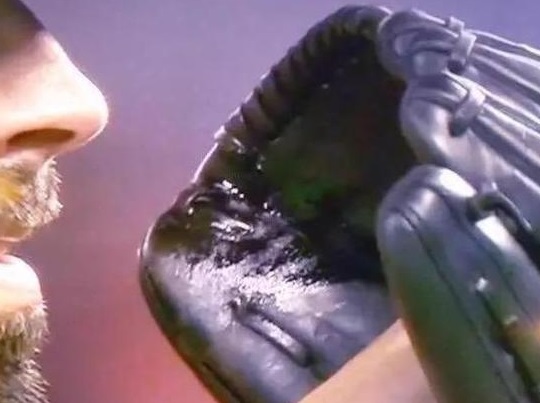
Mike Fiers’ no-hitter on Friday was as notable for his opponents’ reactions as for the event itself. Any no-hitter offers a significant degree of intrigue, but this one gained steam when the television broadcast appeared to show a shiny substance on Fiers’ glove in the ninth inning, assumed to be pine tar.

Rather than bemoan their fate at the hands of a possible cheater, however, the Dodgers took the appropriate path, issuing credit where it was due and downplaying any semblance of controversy.

“I don’t want to take anything away from his night,” Carl Crawford told the Los Angeles Times. Don Mattingly said, “I think it sounds like you’re whining if you look at it and talk about it,” and added (without accusation) that pine tar use is more or less accepted unless it’s “blatantly obvious.” (Fiers, for his part, denied everything.)

Regardless of whether Fiers was using a banned substance, those in the Los Angeles clubhouse know that they have pitchers among their own ranks who do that very thing—as does every club in baseball. And if every club does it, it’s not such a catastrophe. And if it’s not such a catastrophe, why paint it as such? Mattingly respected Fiers’ feat for what it was, exactly as he should have done.

Well played, Dodgers.

Gamesmanship

Location, Location, Location: On Intentionally Positioning Your Argument to Disrupt the Opposition

Scioscia chatsThe beauty of gamesmanship in baseball is the subtle and creative ways in which it can manifest. Wednesday in Chicago it was Angels manager Mike Scioscia, who undertook a discussion he should not have been having, for longer than was necessary and in a location on the field—in front of home plate—that prevented White Sox closer David Robertson from keeping warm in the interim.

Erick Aybar led off the ninth inning of a game in which his team trailed, 2-1, by striking out on a pitch in the dirt. Aybar reacted as if Chicago catcher Tyler Flowers never tagged him (which appears in replays to have been the case) and ran to first base. Plate ump Fieldin Culbreth immediately ruled, however, that Flowers made the tag. The play went to review (which should never have happened, because Flowers’ lack of a throw to first was predicated entirely on Culbreth’s out call), and after the call was upheld Scioscia emerged to argue the point. He stood nearly atop the plate to do so. (Watch it here.) When Robertson finally resumed pitching he allowed two quick singles and an RBI groundout that tied a game the White Sox eventually won in 13.

This is a classic move, which, noted the White Sox broadcast, Billy Martin used to do all the time. And why not? If the Angels manager can easily put the opposition at a disadvantage, why wouldn’t he? I once saw a Scioscia-led Angels team let a warm-up ball escape the bullpen and onto the field of play in the late innings (it rolled to a stop near the plate), thoroughly disrupting the rhythm of a game in which they were struggling. Accident? Possibly. It was a minor moment, but baseball is a game of rhythms, and this was a clear disruption.

It’s also hardly unique.

One of the most noteworthy enactments of such tactics came in the seventh game of the 1926 World Series, when St. Louis pitcher Grover Cleveland Alexander was called in from the bullpen to protect a 3-2 lead with the bases loaded and New York’s rookie shortstop, Tony Lazzeri, at the plate. Recognizing the antsiness of the young player, Alexander took his sweet time ambling to the mound, stopping to examine the gloves of center fielder Wattie Holm and shortstop Tommy Thevenow en route. Thoroughly disrupting Lazzeri’s rhythm, Alexander—39 years old and in his 16th big league season—struck him out and saved the victory for the Cardinals.

What Scioscia did on Wednesday was just as shrewd, and no less objectionable. Robertson called Scioscia “bush league” afterward, but if the White Sox are to take umbrage with anybody, it’s Culbreth, who could have ended the conversation before it began (arguing reviewed calls is grounds for ejection) or at least moved it away from the plate. Hell, either Robertson or Flowers could have requested as much. Scioscia even walked away from the plate for the second half of the discussion, and Robertson still didn’t throw a warmup.

The White Sox ended up winning the war, but that particular battle was all Mike Scioscia.