Casey Blake, Cheating, Pitcher's Rubber, Ted Lilly

Lilly Moving Up in the World. Literally.

When Alex Rodriguez ran across the pitcher’s mound at the Oakland Coliseum last month, the majority opinion from the viewing public included the sentiment, “I didn’t realize that was considered problematic.”

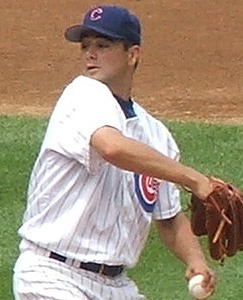
This also holds true for the issue brought to light by Casey Blake yesterday, when he accused Cubs pitcher Ted Lilly of cheating by standing in front of the rubber, closer to home plate, when he pitched.

“I know he doesn’t have an overpowering fastball,” Blake said in the Los Angeles Times. “I know he’s trying to get as much of an edge as he can. But he moved in.”

The notion is simple: A 59-foot fastball has more zip upon reaching the plate than a 60-foot fastball. Lilly, however, pointed out after the game that pitchers who did this would be at a disadvantage, because they wouldn’t be able to drive off the rubber with their plant foot.

That’s not the opinion of some of the game’s greatest pitchers.

In his book Throwing Heat, Nolan Ryan addressed the subject:

On occasion I’ve pitched from about six inches in front of the rubber when I’ve needed the big strikeout. And I know I’m not the only one who’s done that.

You just rock up, step in the hole, and you’re half a dozen inches closer to the plate. Normally there’s enough dirt and stuff on the mound late in the game to cover things up, but you have to work the area to dig a hole to get your foot in.

Ryan wasn’t alone. Fellow Hall of Famer Whitey Ford talked about the subject in his own book, Slick.

I found that I could get away with . . . pitching in front of the rubber. I did that a lot and nobody ever caught on. If you covered the rubber up with dirt, it was easy to do. It’s just something nobody’s ever looking for. When I coached first base for the Yankees, I never remember checking to see if the pitcher had his foot in contact with the rubber when he delivered the pitch. Sometimes you could stand with both feet on the rubber, get your sign, and then when you pitched, your first step could be about three feet in front of the rubber. Talk about adding a yard to your fastball.

Heck, forget legendary pitchers. Orioles pitcher Brad Bergesen was cited by umpires for this very thing just yesterday.

Blake informed first-base umpire John Hirschbeck of Lilly’s proclivities, but was essentially brushed off; Hirschbeck told him that he couldn’t see anything out of line from his position behind the bag.

Umpires have a long history of leniency when it comes to matters of cheating, being traditionally reluctant to check baseballs for scuff marks or pitchers for foreign substances. It’s one of the reasons so few pitchers are caught.

When Hirschbeck didn’t move closer for a better view, and declined to ask his fellow umps for help, Blake grew visibly agitated, to the point that he had to be restrained by first-base coach Mariano Duncan.

(Hirschbeck, explaining his actions in the Times, said that sacrificing optimal position for making basic calls was not worth moving up to get a better view of Lilly. “I can’t stand on top of the bag,” he said. He also said that every umpire already has the authority to charge a pitcher with cheating, so there was no need to call them in for assistance.)

Blake, however, wasn’t the only one to notice.

As Rob Neyer pointed out at ESPN.com, the Twitter-sphere lit up with all things Lilly. Ex-pitcher C.J. Nitkowski started it off with this: “Watching some daytime MLB. Camera just zoomed in & didn’t realize it caught a pitcher cheating. Don’t ask me who/what. Tricks of the trade.”

He then followed up with, “Uh-oh Casey Blake is on to it. TV guys completely in the dark. I should start my analyst career.”

That left little doubt about who and what he was talking about. As Neyer described, the WGN crew of Len Kasper and Bob Brenly didn’t touch on the reason for the disruption—which could have been because they didn’t want to shovel dirt on their hometown pitcher.

On the Dodgers broadcast, however, Steve Lyons—himself an ex-player—said, “(Blake is) trying to say whether or not, maybe Ted Lilly isn’t even on the rubber. We’ve talked a lot about the fact that he stays way on one side of the rubber or the other, and Casey’s saying he’s about four inches off the rubber in front of it. Which can give you a significant advantage.”

“What we’d missed the first time around,” wrote Neyer, “and what the Cubs broadcast somehow never managed (or bothered) to show—was Blake turning to Hirschbeck and holding his hands four to six inches apart. And again, if anybody would have known, he would.”

From the standpoint of baseball’s Code, Lilly did nothing wrong. Most forms of cheating, after all, are acceptable—provided you knock it off once you’re caught.

(The pitcher’s post-game excuse—”I might have done it a couple times, just trying to gain my footing,” he said in the Times—doesn’t hold much water. Then again, it doesn’t have to. This is baseball.)

Blake, however, violated an unwritten rule by bringing Lilly’s shenanigans to light. That he addressed it after the game was certainly due to reporters’ questions about the disturbance he caused on the field. But making a show of it in the first place leaves something to be desired in the realm of baseball decorum. A subtle notification of the umpire—loud enough for Cubs first baseman Derrek Lee to overhear—would have gotten the job done, even without action from Hirschbeck.

Still, Lilly can expect that people will now be paying attention. If he has anything going in his favor, it’s that as flagrant as he might have been, he’s not anywhere close to Frederic “Germany” Schmidt, a pitcher in the 1800s who would actually sneak into ballparks at night before he pitched, dig up the rubber and move it closer to the plate.

How would Casey Blake would deal with that?
 

Bengie Molina, Media

Molina Coverage Illustrates Line Between News and Opinion

The unwritten rules are designed to enforce respect on the ballfield, but they carry over into the media, as well. Criticism of players’ ability and effort is expected; they open themselves up to it when they agree to perform in public for vast sums of money.

Crossing into mocking, however, can ruffle some feathers. Jim Rome famously calling Jim Everett “Chris,” or labeling Eric Gagne a “piece of crap” for weeks on end, is one thing; part of a talk-show host’s job description is to incite.

When a sports-news show crosses that line, however, things can get touchy.

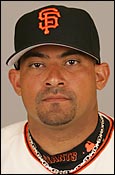
Earlier this month, ESPN showed a replay of Giants catcher Bengie Molina trying to score when Marlins pitcher Ricky Nolasco overthrew third base. A full minute of the 1:12 highlight package was devoted to Molina’s effort—including a slow-motion replay with a Chariots of Fire-esque theme playing in the background. Afterward, the anchor offered Molina a “slow clap,” he said, “just for making the effort.” (Watch it here.)

Molina was suitably offended. “When I was growing up, respect was the most important thing to my father,” he wrote on his blog. “That’s what he talked about every day . . . You respect your parents and your teachers and your fellow human beings.  . . . You can say I’m the slowest guy in baseball or in all of sports or in the entire world. I don’t take issue with that because I AM the slowest guy. I have always been the slowest guy. I can’t challenge that criticism. But ESPN’s intention was not to criticize but to humiliate.”

Henry Schulman, who handles the Giants beat for the San Francisco Chronicle, weighed in, writing, “The media don’t have to like certain players. They can criticize players, but to show that kind of disrespect to a player such as Molina, who has been a Major League catcher for more than 12 seasons, who owns a World Series ring, who shepherds what might be the best starting rotation in baseball, is beyond belief.”

The same concept holds true in mainstream news. It’s why Fox News goes to such lengths—believably or not—to claim that the high percentage of opinions on the network are delivered by pundits, not news anchors.

The distinction is an important one. It’s why when ESPN’s Pardon the Interruption mocked Molina’s speed last year after he was nearly run over by a racing sausage in Milwaukee—“Whose agility were you more impressed by,” asked a reader comment read aloud on the air, “Molina’s or the sausuge’s?”—nobody said a word.

“All I can do is play the way I always have—with respect and professionalism,” wrote Molina. “It’s shame that ESPN, a once great network, won’t have any idea what I’m talking about.”

– Jason

Sales

Now Hear This

The Baseball Codes is now officially available as an audio book.

Hear Michael Kramer (who, aside from reading mystery-thrillers and Christian fare, also narrated Joe Torre‘s The Yankee Years) read the text with his unbelievably sultry baritone.

Hear a sample (or buy the audio book) here.

– Jason

Adrian Beltre, Daisuke Matsuzaka, No-Hitter Etiquette

Beltre’s Dive Shows the Code at Work

The things one doesn’t do during a teammate’s no-hitter—like, say, talk about it—have been well discussed.

Saturday, Adrian Beltre exemplified what one one does do, as Daisuke Matsuzaka angled to hold the Phillies without a hit.

After Raul Ibanez led off the eighth inning with a walk, Carlos Ruiz smashed a line drive toward the hole on the left side. Beltre improbably snared it with a dive, then threw to first to double up Ibanez. (Watch it here.)

Although the play preserved the no-hitter for only one more batter—Juan Castro followed with a soft hit that fell just beyond the reach of shortstop Marco Scutaro—its intention was paramount.

“You get a little more aggressive because you’d rather have an E-5 than a hit in that situation,” Beltre told ESPNBoston.com. “You don’t get many chances to play behind a no-hitter, and you want to do whatever you can to prevent any little single.”

It’s small, but it’s noteworthy. Ballplayers altering their actions on the field solely out of respect for a teammate’s accomplishment—it’s the heart of the unwritten rules.

– Jason

Intra-Team Fights

Can’t We Just All Get Along?

It’s rare to see open displays of animosity between managers and players. Not that it doesn’t happen; there are all types in baseball and not everybody gets along. This sort of tiff, however, almost inevitably takes place behind closed doors. It’s one of the manager’s duties, after all, to promote a peaceful clubhouse environment—if not in fact than at least in perception.

Suddenly, however, we’ve been awash in such incidents.

It started last week with the open and ongoing feud between Marlins manager Fredi Gonzalez and shortstop Hanley Ramirez. It continued three days later when Mets skipper Jerry Manuel pulled John Maine from a game after only five pitches, causing his pitcher to openly rebel in the dugout.

To those episodes, we now add two more.

On Saturday, Albert Pujols went at it in the dugout with St. Louis manager Tony La Russa, after Ryan Ludwick was caught stealing for the final out of the eighth inning, leaving Pujols standing at the plate. It was lose-lose for the slugger; had Ludwick been safe, first base would have opened and Pujols would almost inevitably have drawn an intentional walk.

The slugger flipped both bat and helmet as he returned to the bench, then knocked two trays of gum against the wall. He’s clearly frustrated, having homered only once in May, and without an RBI in his last 10 games (a span during which he has only one extra-base hit).

During that time he also spent five games in the cleanup slot, the first time since 2003 that he’s batted anywhere but third in the lineup.

La Russa, according to the St. Louis Post-Dispatch, responded by saying, “I (expletive) know how to manage.”

On Monday, the Mets got their second angry exchange in a week, when closer Francisco Rodriguez had to be separated from bullpen coach Randy Niemann over an apparent disagreement about how frequently the reliever should be asked both to warm up and appear in games. (Rodriguez heated up on 10 separate occasions during New York’s 20-inning game against St. Louis in April; on Monday he warmed up twice in two innings before closing out the Yankees. Ten of his 21 appearances this season have come in non-save situations.)

The New York Times reported that “the confrontation occurred in full view of some of the fans sitting in right field,” and had to be broken up by other pitchers.

These showdowns seem to be coming in clusters, but they’re hardly unique. Managers and players clash all the time. Here are some of the more extreme examples:

  • 1929: White Sox rookie Art Shires—an avocational boxer—beats up his manager, Lena Blackburne, not once, but twice.
  • 1969: Minnesota manager Billy Martin pounds star pitcher Dave Boswell in a fight. This is hardly the only time Martin appears on this list.
  • 1977: After losing the Rangers’ starting second-base job during spring training, Lenny Randle confronts manger Frank Lucchesi behind the batting cage in Orlando and shatters Lucchesi’s cheekbone with punches. Shortly thereafter, he’s traded to the Mets.
  • 1977: The relationship between Martin, by this time at the helm of the Yankees, and Reggie Jackson, devolves into a shouting match in the visitor’s dugout at Fenway Park, on national TV. The pair has to be restrained from going after each other.
  • 1980: John Montefusco and Giants manager Dave Bristol go at each other behind closed doors after Montefusco accuses Bristol of having too quick a hook. Montefusco’s eye is blackened.
  • 1981: Cardinals manager Whitey Herzog grabs Gary Templeton in the dugout after seeing the player make an obscene gesture to the Busch Stadium crowd, and the two have to be separated. During the off-season, Templeton is traded to San Diego for Ozzie Smith.
  • 1985: Billy Martin’s arm is broken by Yankees pitcher Ed Whitson in a fight that moves from hotel bar to lobby to parking lot, and eventually resumes on the second floor, outside Whitson’s room.
  • 1992: Reds manager Lou Piniella and Rob Dibble go after each other in the middle of the clubhouse. (Watch it here.)
  • 1999: Bobby Bonilla, upset that Mets manager Bobby Valentine doesn’t order retaliation after teammate Robin Ventura is hit by Roger Clemens, confronts Valentine in the dugout. After being sent to the clubhouse, Bonilla rips down the lineup board and hurls it at Valentine’s office.
  • 2002: Barry Bonds and Jeff Kent scuffle in the Giants dugout. The team goes on to win the National League pennant.
  • 2006: Blue Jays manager John Gibbons and pitcher Ted Lilly have at each other in the clubhouse tunnel, just out of sight of TV cameras.

In the two most recent cases of manager-player discord, all parties hewed the unwritten rule that mandates a minimum of public discord, usually via denials that a problem even exists.

“I was hitting and we got thrown out stealing. I wanted to hit. That’s all it was,” said Pujols.

La Russa took it a step farther, saying, “There wasn’t anything special about (the incident). I didn’t pull him aside. I didn’t talk to him afterwards because he doesn’t do it excessively and I know he’s sincere. There are only two times I confront it. Does it happen excessively? Then I say, ‘That’s enough.’ And if I think it’s insincere.”

And the Mets’ Rodriguez? “We were just fooling around,” he said in the Times. “We were just kidding with each other.”

Of course they were.

– Jason

Jason Bay, Sergio Mitre, Umpire Warnings

To Warn, or Not to Warn: An Umpire’s Quandary

I’ve been talking to radio hosts across the country over recent weeks in support of The Baseball Codes, and a surprising number have brought up the topic of umpires, and their affect on the unwritten rules.

It can be profound. An ill-timed warning can prevent appropriate retaliation for a Code violation; instead of completing the disrespect-response cycle, they leave it open-ended, to be continued another day. Meanwhile, the offended party is left to stew, which often makes the situation worse than it would have otherwise been.

Sometimes, of course, umpires understand—and, importantly, tolerate—what’s going on, saving their warnings until after the aggrieved team has a chance to respond in kind.

Last night in New York, however, was not one of those times. In the sixth inning, Yankees reliever Sergio Mitre hit Jason Bay in the back with a pitch. There were two outs and nobody on base (the perfect situation for a pitcher with vengeance on his mind), and Bay had homered in his previous two at-bats. Umpire Marvin Hudson immediately issued warnings to both benches.

It all made sense, right up to the 75 mph breaking ball that drilled Bay. That kind of pitch is the least-likely weapon of choice for a pitcher looking to inflict a little pain—which, had the plunking been intentional, would have been precisely Mitre’s point.

Pitchers are expected to deny intention every time they hit a batter, but in Mitre’s case it was justified.

“It was a breaking ball that got away,” he said in the New York Daily News. “I don’t think a warning was needed from that pitch. It was just a breaking ball that backed up, and it just followed him. It was one of those balls where you try and get away, but it keeps following you. It was just a terrible breaking ball.”

The biggest downside for such a warning is that it lends the perception of intent to a pitch for which there wasn’t any. The Mets didn’t take it that way—no Yankees were hit in response (which could also have been due to the warning)—but it would have been tough to blame them if they did.

– Jason

Brett Carroll, Ozzie Guillen, Retaliation

Guillen Makes His Case for Early Retaliation

One of the beautiful aspects of the unwritten rules is the huge amount of interpretation involved—the gray area between the boundaries of what opposing managers or players might consider to be appropriate.

Leave it to Ozzie Guillen to stomp right through that gray area, leaving footprints all over the Code in the process.

The situation yesterday: Florida led the White Sox 7-0 in the fourth inning when Marlins outfielder Brett Carroll, who had just been unintentionally hit by a pitch, swiped second. Two outs later, with Carroll on third, Gaby Sanchez stole another base for the Marlins.

Guillen felt obliged to respond.

When Carroll next came to the plate, with one out in the fifth, he was drilled again—this time with purpose.

“This is baseball, you have to respect,” Guillen said after the game, addressing the situation. “We had to do something about it, and we did.”

There are two camps for considering Guillen’s actions.

  • Pro: A seven-run lead is almost universally considered sufficient to shut down the running game.
  • Anti: Most people in baseball consider the fourth inning to be too early for that to happen. The fifth is generally the first frame in which a manager considers a blowout score when plotting his team’s strategy; even then, many push it back to the sixth or seventh.
  • Pro: Guillen made the point that his team was last in hitting and runs scored in the American League. While that’s not quite accurate—Seattle hits worse, and four teams have scored fewer runs—lack of ability on either the offense or pitching staff is a valid consideration as it relates to comebacks. Granted, it makes more sense for the team on the positive end of a lopsided score to invoke this clause as an excuse for continuing to run while holding a sizeable lead than it does  the team trying to dig its way out of a hole.
  • Anti: The retaliatory strike, combined with Guillen’s postgame bemoaning of his club’s offensive struggles, smacks of frustration, not respect. The Code is about the motivation behind the deed as much as the deed itself, and frustration is rarely an acceptable call to action.
  • Pro: From Sox pitcher Freddy Garcia: “It’s 7-0, it’s not a good thing to steal a base. That’s no respect for the other team. Whatever happens happens, but it’s not showing respect. It’s 7-0 when you steal second and third. I think it’s bad baseball.”
  • Anti: Sox first baseman Paul Konerko, to ESPNChicago.com: “We were still holding the guy on base. Usually unless you have a double-digit lead you [can] steal a base.

One thing in Guillen’s favor is consistency. When asked about this very subject several years ago, his answer meshed perfectly with his actions yesterday: “To me the rule is, if you’re up by six, then you stop. If you’re up less than six you should be running, because any team in the American League can score 10 runs in one inning.”

Two innings after Chicago meted out retribution against Carroll, the Marlins responded in kind, drilling White Sox catcher A.J. Pierzynski in the right elbow. (Such is the curse of being A.J. Pierzynski; you end up targeted even when you’ve done nothing wrong.)

For his part, Pierzynski toed the line of the Code, denying to the Chicago Tribune that it had been intentional, and that pitcher Dan Meyer just “threw inside and it got away.”

The most true quote about the situation came from Konerko, who said, “As far as the unwritten rule, if you ask five different guys you are going to get five different answers.”

It’s true. And it’s beautiful.

– Jason

Don't Cross the Pitcher's Mound

Evidence Proves that A-Rod Wasn’t Alone

So somebody came up with evidence of a ballplayer other than Alex Rodriguez running across the mound during a game.

The Fleer Sticker Project dug into the telecast of Game 1 of the 1971 World Series between the Pirates and Orioles, and found Baltimore outfielder Don Buford—who’d just been thrown out at first—returning to the home clubhouse on the third-base side by way of the pitcher’s mound.

Pittsburgh’s pitcher was Dock Ellis, who was known to go to extremes (such as setting out to drill every batter he faced in a 1974 game against Cincinnati) to prove a point, but who never crowed particularly loudly about respect on the ballfield. (Heck, the guy wore curlers on the field despite widespread derision, simply because his straightened follicles provided a better means to harvest sweat when he wanted to load up a baseball.)

A-Rod defenders point to this as proof that their guy was hardly the first to do such a thing, but they’re essentially shooting themselves in the foot.

It was already clear that Rodriguez isn’t alone in this particular proclivity; this blog has already listed A.J. Pierzynski as another player who makes a habit of the act.

But the fact that one has to go back to 1971 to find photographic evidence of somebody doing it says more about the irregularity with which this sort of thing happens than any number of essays decrying Rodriguez’s audacity.

From the Fleer Sticker Project

– Jason

This Week in the Unwritten Rules

This Week in the Unwritten Rules

May 17
Dallas Braden debunks the axiom that says one shouldn’t change a thing while in the process of throwing a no-hitter. He did, during his—by accident.

May 18
Hanley Ramirez loafs after a booted ball, blames injury. Marlins manager Fredi Gonzalez doesn’t buy it.

May 19
Hanley Ramirez, anything but contrite, blows his situation into the stratosphere.

May 19
The Red Sox pull starter Josh Beckett for injury reasons without a trainer ever visiting the mound—giving their reliever unlimited time to warm up. The Yankees, unappreciative, protest the game.

May 20
Hanley Ramirez
finally apologizes; everybody exhales and moves on.

May 21
Mets starter John Maine is pulled after five pitches while being called a “habitual liar” about the state of his health. Except that’s exactly what he’s supposed to do.

– Jason

Jerry Manuel, John Maine, Pitchers Lie When Asked How they Feel

Maine, Pulled After Five Pitches, is Called a ‘Habitual Liar’ – But That’s What He’s Supposed to Do

It took all of five pitches for Mets manager Jerry Manuel to pull starting pitcher John Maine from yesterday’s start.

Maine has battled shoulder injuries in recent seasons, and has been far from effective this year, with a 1-3 record and 6.13 ERA. When the coaching staff reportedly saw him struggling to break 80 mph as he was warming up, they got reliever Raul Valdez ready even before Maine threw his first pitch.

Why? Because Maine makes a habit of  upholding one of the unwritten rules: When a manager asks an ailing pitcher how he feels, the pitcher lies.

“John is a habitual liar in a lot of ways as far as his own health,” said pitching coach Dan Warthen in the Newark Star-Ledger. “He’s a competitor and a warrior and he wants to go out there and pitch. But we have to be smart enough to realize this guy isn’t right. The ball isn’t coming out of his hands correctly.”

Five pitches is hardly time to gauge anything, but Warthen’s assertion that Maine is a liar places the pitcher firmly in the same category as nearly every one of his colleagues.

“All guys worth their salt probably do it,” said ex-Yankees pitcher David Cone about pitchers refusing to admit to injury or fatigue. “That’s why it’s hard for a manager to go out there. This is a lost art. Managers used to go to the mound and really talk to their pitchers and get a read before they make up their mind. Now, a lot of managers make up their mind before they go to the mound.”

Like, say, after five pitches.

There is a contrary argument to be made, of course, such as the one Buzz Bissinger uses to describe Tony La Russa in his book, Three Nights in August.

He had been around pitchers long enough to know what egotistical creatures they had to be because of the very nature of what they did, alone on that little hill with the outcome of the game in lockstep with their performance. “They’re starting pitchers,” he said. “They need to be heroes.” Now he didn’t even bother to ask a starter how he was feeling when he visited the mound, as the only one he had ever encountered in a quarter century who didn’t flat-out lie, admitted to being out of gas if he was out of gas, was Tom Seaver. The rest said they felt great even if they no longer had any feeling left in their arms.

For his part, Maine decried any possibility that he should have been removed from the game at that point, despite some soreness. “I feel something all the time,” he told the Star-Ledger. “We’re pitchers. Every pitcher does.”

Even if Manuel doesn’t enjoy hearing Maine take his gripes to the press, he has to appreciate one aspect about his disgruntled pitcher: the guy cares.

Jim Barr, who pitched in the big leagues for a dozen seasons in the 1970s and ’80s, and who currently serves as the pitching coach at Sacramento State University, explains the concept.

“If you start hearing a player say, ‘I’m done, I’m getting tired,’ it tells you he’s mentally giving up and he’s not real strong. I’d rather have a guy tell me, ‘Coach, I can get this guy.’ . . . That’s only going to help you later. If you’re always trying to find an out, then you’ll always say, ‘Yeah, my arm’s a little tight, better take me out.’ Then pretty soon you’ll find excuses for everything.”

If Maine was on such a short leash—based at least in part because the coaches didn’t believe him when he said he was ready to go—he likely had no business being on the mound in the first place.

According to some people, that is. John Maine is certainly not among them.

Update (May 22): The Mets placed Maine on the 15-day disabled list, calling up Elmer Dessens from Triple-A to take his roster spot, even before Maine was examined by a doctor.

– Jason