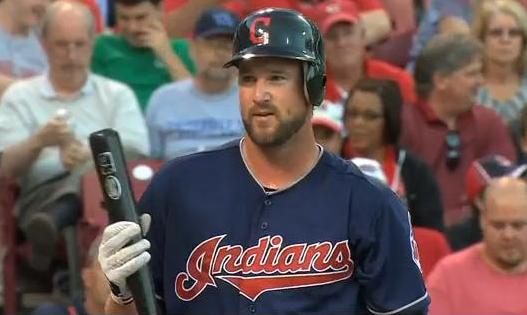
The last time we heard from Carlos Carrasco, the Indians pitcher was throwing at Billy Butler’s head, for the inconsequential reason that Melky Cabrera had just gone deep as the latest in a string of Royals to pound the right-hander.
That was in 2011. Since then he has been ejected (for throwing at Butler), suspended (also for throwing at Butler) and injured (he blew out his elbow during his next appearance, unrelated to throwing at Butler, except possibly karmically).
Well, ‘Los is back. His previous line, against Kansas City in ’11, featured seven runs on seven hits, including three homers, in 3.1 innings. His latest line—his first since the injury—against the Yankees on Tuesday, featured seven runs on seven hits, including two homers, in 3.2 innings.
Also, he threw another beanball.
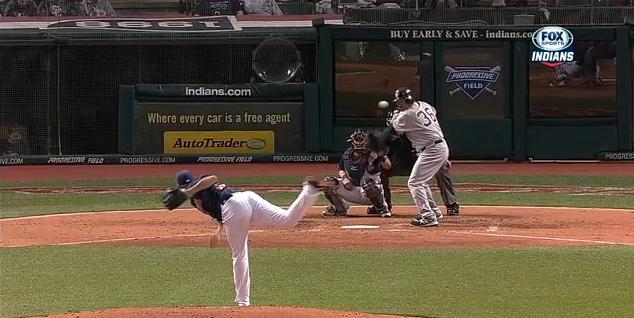
This one was at Kevin Youkilis, immediately after Robinson Cano—the latest in a string of Yankees to be pounding the right-hander—hit a two-run homer. The ball connected with the spinning Youkilis high on the shoulder, just below the neck. (Watch it here.)
Youkilis knew what was going on, and glared toward the mound. Plate ump Jordan Baker also knew what was going on, and ejected Carrasco on the spot. Considering that the pitcher earned six games last time he did something like this, more severe consequences are likely headed his way.
“I slipped (on the pitch that hit Youkilis),” said Carrasco after the game in the Cleveland Plain Dealer. “That’s the truth. I was throwing 95 to 96 the whole game. I slipped and threw 90 mph.”
Except that’s not the truth. As noted in the broadcast, Carrasco’s follow-through was just fine until it occurred to him that a touch of subterfuge might be beneficial, and he belatedly dropped toward the ground.
“[The pitch] was right in the middle of [Youkilis’] back after a home run,” said an unimpressed Joe Girardi in an MLB.com report.
(In another coincidence, Butler homered after being thrown at by Carrasco; in his following at-bat, Youkilis did, too.)
Carrasco tracked down manager Terry Francona after the game to apologize, but at this point, and with his record (which now stands at 0-1 with a 17.18 ERA), it probably won’t do much good, with either the team or the league.
On one hand, Carrasco’s the kind of guy who gives the unwritten rules a bad name. On the other, he’s a perfect example of why they exist—because even if the league didn’t tamp down on his tired act, teammates and opponents alike are certain to take care of it in their own way.
Update, 4-10: The Indians, apparently having heard enough, have demoted Carrasco to Triple-A.
Precisely one month after his slide, and three weeks after Cain drilled him, Holliday addressed the topic in an Insidestl.com report, calling it, among other things, “less than tough”:
[The pitch] seems on purpose. I wish that if he wanted to hit me, he would’ve just done it on the first pitch in the next game he had pitched. You know, if you’re going to do it, do it, get it out of the way. But to do it, I don’t remember what the score was but it was out of hand, that’s about it. I thought the timing of it was….I don’t want to get into it. I wasn’t thrilled about it. . . .
If you’re going to do it, I think that is when you do it. I wouldn’t be happy about it anytime. I just thought that in the situation that it actually did happen it was less than tough.
It might seem odd for Holliday to express displeasure with Cain’s delay weeks after the fact, when he could have done it immediately following the game in which it happened. To be fair, he was answering a question, not promoting an agenda, and it’s not like Cardinals players had much media time once they’d packed their bags for the winter upon returning to St. Louis.
It’s unlikely that this will further ill feelings come 2013, but also serves to remind us that another incident—one of Cain’s pitches slips, perhaps, or Holliday again takes out a middle infielder—will not be easily digested by the other side.
The hubbub surrounding Brandon Phillips’ accusations of racism helped obscure a profound truth about baseball’s unwritten rules: Teams will wait as long as is necessary to respond to events in which they feel they’ve been significantly wronged.
Phillips getting drilled Monday was at the heart of it, but had little to do with the genesis of the situation. It began on Aug. 3, when Reds closer Aroldis Chapman drilled Andrew McCutchen with a 101-mph fastball. The following day, Reds starter Mike Leake hit Josh Harrison, then descended the mound toward him to deliver a follow-up message.
Of concern to the Pirates was the fact that umpire Brian Gorman issued warnings after the latter incident. It was, I wrote at the time, “an unfortunate development that precluded—correction, delayed—any type of Pittsburgh response.”
The delay is now over. In the eighth inning Monday, Pittsburgh reliever Jared Hughes placed a fastball into Phillips’ left leg. It certainly looked intentional, although the surrounding factors—a 3-3 tie with one out in the eighth is not the prototypical moment for retaliation; a hitter like Phillips, who can run, is not an ideal target, especially with Joey Votto lurking two batters later; and catcher Rod Barajas reached out as if to catch a wayward pitch—suggest otherwise. (Watch it here.)
Phillips got in some jabs of his own, first picking up the baseball and tossing it toward Hughes—this is the act that is widely assumed to have precipitated Phillips’ post-game tweet claiming racism—then stealing second. (He did not score, and the game went 14 innings.)
As McCutchen jogged toward his dugout following the Reds’ half of the eighth, a clearly perturbed Phillips engaged him with a clear message for somebody on the Pittsburgh bench. That turned out to be Hughes, but by Tuesday the feuding participants reached an accord. Nobody was hit in last night’s game, and no fireworks are anticipated for the teams’ four meetings through the end of the season.
Sometimes even an inconsequential on-field action can merit retaliation—which will ideally be delivered in measures commensurate with the initial transgression. Which is to say, if a team must respond to a minor Code violation, here’s hoping they do it appropriately.
On Thursday, the Diamondbacks did.
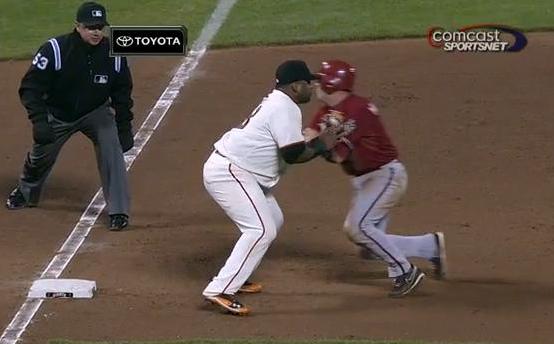
With runners at first and second and nobody out in the eighth inning of their game in San Francisco, Adam Eaton (this one, not this one) grounded a ball to first base, where Brandon Belt made a quick relay to third. The play caught Pablo Sandoval off guard; instead of backing up a step to touch the base for a force play, he turned to make a sweep tag. So too did the play surprise baserunner John McDonald, who, instead of sliding—which he almost certainly would have done had he expected it—staggered toward the base and into Sandoval.
Surprised by the contact, the husky third baseman followed McDonald into foul territory after tagging him, and was quickly restrained by umpire Greg Gibson and Arizona third base coach Matt Williams before dugouts emptied. No punches were thrown, Sandoval quickly calmed down, and everybody went back about their business. (Watch it here.)
Such a situation hardly merits a drilling (especially because umpires warned both benches immediately following the incident). More appropriate is what Arizona ended up doing: In the ninth inning, while holding a 6-2 lead, Paul Goldschmidt led off with a single and promptly stole second.
Sure, four runs in the ninth is hardly a basis for rubbing anything in, but it was clear by that point that the Giants would not be coming back: They had been no-hit into the seventh by Trevor Cahill, and Arizona had one of the league’s top closers in J.J. Putz available if needed, with only three outs to go.
The Diamondbacks made their point, and it couldn’t have been more perfect.
The real question after Thursday’s head-hunting and Friday’s suspension in Texas is why?
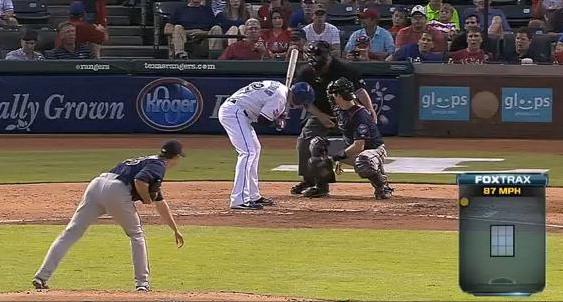
Not why Twins lefty Scott Diamond was ejected, then suspended for six games. That much was obvious: He threw at Josh Hamilton’s head. (Watch it here.)
No, the lingering uncertainty in the wake of it all concerns Roy Oswalt’s motivation for precipitating the affair with a third-inning fastball into Joe Mauer’s back. There were two outs. It was a 3-0 count. There was a runner on second. There was little question about the intent behind it.
Speculation has the runner, Ben Revere, flashing signs, which could understandably perturb Oswalt. Revere had also been on second when Mauer doubled in the first, which may have set some precedent. If nothing else, Mauer has been noted for his proclivity for this kind of activity.
It’s also possible that Oswalt was settling some unknown grudge, or that, with a base open and a 3-0 count, he was simply releasing a bit of pent-up aggression, happy to face the relatively punchless Ryan Doumit hitting next.
That last option is the least likely of the bunch, but still more plausible than Oswalt’s ultimate explanation, offered up after the game:
For some reason, I can’t keep the ball true on the left side. He’s been beating me away, away, away. I was trying to get him out in and just dropped my elbow. I don’t know the reason why the ball is coming back on the left side of the plate. I can keep it true on the right side. The left side I can’t really keep it true and I dropped my elbow and it kind of sailed on me.
A response from Diamond was expected. He probably would have gotten away with a warning had he been better about his execution. Instead of aiming for Hamilton’s hip, he sent a pitch up around the head, forcing the left-handed hitter to duck. Plate ump Wally Bell didn’t hesitate with his ejection.
“Any time in an umpire’s judgment that they go in the head area, we have to take care of business,” Bell said in a statement. “I felt at the time that he had to be ejected for it.”
Ron Gardenhire, who was also tossed, vigorously disagreed with the lack of warning, but it’s difficult to fault an umpire for tamping down immediately on what could be a very dangerous practice—let alone subsequent retaliatory shots. The league backed Bell up on Friday with its suspension.
For a series of actions that made increasingly less sense, it seems a fine way to put an end to all of it. Then again two Rangers were hit in the second inning Friday by Minnesota’s Samuel Deduno in the span of four batters. They were part of six straight baserunners allowed that pushed a 1-0 Texas lead to 5-0, so it could have just been a case of wildness. Then again, Deduno walked only one batter over five innings.
Two more games this weekend. Keep your eyes peeled.
When you’re a hitter who as recently as July 24 was batting just .229 and slugging well south of .400, it can feel good to hold target-worthy status, justification be damned.
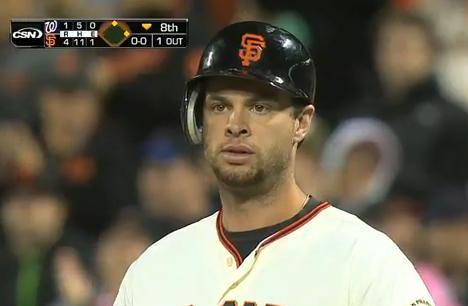
At least it did for Brandon Belt, who was by every indication hit intentionally by Padres lefty Clayton Richard on Sunday, in response for a Ryan Vogelsong pitch that ran into Carlos Quentin two innings earlier.
After the game, Belt was sporting a sizable welt above his hip, but he didn’t mind. “It’s kind of a compliment, I guess,” Belt, by that point having raised his average to .267, told the San Jose Mercury News. “It’s okay, it’s part of baseball sometimes.”
His picher didn’t agree.
“Go look at the video,” Vogelsong said in a San Francisco Chronicle report. “It was a two-seamer that ran off the plate. That guy hammers balls over the plate, then gets pissed when you throw the ball inside. It doesn’t make sense. Every time you hit a guy in this game, they think you did it on purpose. It’s tired.”
It’s worth noting that Quentin is tied for the league lead with 14 HBPs this year, led the American League last season with 23 for Chicago, and has collected 20 in two other seasons, so it shouldn’t have come as much of a shock.
Still, for some pitchers a hit teammate is a hit teammate, intention aside. The Giants and Padres next meet on September 20, in San Francisco.
Friday, Reds closer Aroldis Chapman drilled Andrew McCutchen with a 101-mph fastball. (Watch it here. Note: No rubbing.) On Saturday, Reds starter Mike Leake hit Josh Harrison, then walked toward him to deliver a follow-up message. (Watch it here.)
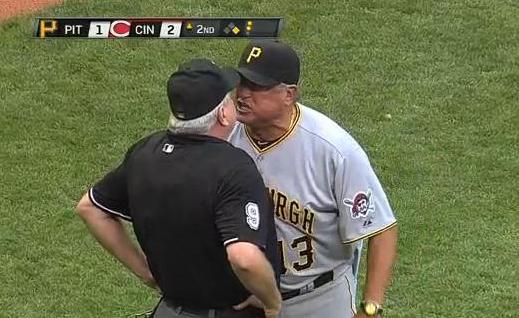
Umpire Brian Gorman warned both benches after the latter incident, an unfortunate development that precluded—correction, delayed—any type of Pittsburgh response. (When Pirates manager Clint Hurdle questioned the decision, Gorman promptly tossed him.) It was enough to lead Sunday’s starter, A.J. Burnett to point toward various Reds players from the dugout, the message being that accountability can sometimes be a painful thing, and he was willing to wait to enforce it.
Warnings may have been issued prior to Burnett’s Sunday start, or perhaps it was because it ended up being a close game until the ninth, or maybe it was because the Pirates had already dropped the first two games of the series to their NL Central rivals and were desperate for a victory, but the right-hander went 8 2/3, giving up only three hits and two runs in a 6-2 victory without hitting anybody (and despite two more Pirates, Rod Barajas and Starling Marte, getting hit themselves).
“No one in here has forgotten about what happened to ‘Cutch,” Burnett said in the Pittsburgh Post-Gazette. “We needed a big ‘W’ today.”
“There is a time and a place for [retaliation],” added Barajas. “Today was the time to win. We got that done.”
Pittsburgh did figure out one warning-proof way to make a statement, however. On Saturday, 6-foot-7, 245-pound reliever Jared Hughes tagged out baserunner Dioner Navarro (all 5-foot-9 of him) with a marked shove—a move that Dusty Baker later called “a bully move” in the Cincinnati Enquirer.
The notion of bullying is prominent in these teams’ shared history. It was raised Saturday by Pittsburgh bench coach Jeff Banister, who took over as manager after Hurdle’s ejection. “This is their turf, and they’re trying to bully us,” he said in an MLB.com report.
We’ve heard this story before. From The Baseball Codes:
[Dock Ellis] possessed a clear understanding of the power of intimidation, having seen it in action as his Pittsburgh Pirates teams terrorized the rest of the National League, bullying their way to three division titles and one World Series between 1970 and 1972. In ’73, though, things began to change—the Pirates inexplicably lost their bravado and many more games than expected, finishing below .500 and in third place in the National League East. When they opened 1974 by lurching into last place with a 6-12 record, Ellis took it upon himself to spur a roster-wide attitude adjustment.
He chose as his victims the Cincinnati Reds, themselves coming off two straight division titles and on their way to ninety-eight wins. If Pittsburgh’s new timidity tipped the balance of swagger in the National League against them, the prime beneficiary was Cincinnati. Ellis wanted to reverse that trend.
“[Other teams used to] say, ‘Here come the big bad Pirates. They’re going to kick our ass.’ Like they give up,” said Ellis in Donald Hall’s book, Dock Ellis in the Country of Baseball. “That’s what our team was starting to do. When Cincinnati showed up in spring training, I saw all the ballplayers doing the same thing. They were running over, talking, laughing and hee-haw this and that. Cincinnati will bullshit with us and kick our ass and laugh at us. They’re the only team that talk about us like a dog.”
When Ellis took the mound against Cincinnati on May 1, 1974, he had only one strategy in mind: to drill every batter that stepped in against him. The first was Pete Rose, who ducked out of the way when a first-pitch fastball sailed toward his head, then jumped forward to avoid the second pitch, which flew behind him. The third pitch, aimed at his rib cage, found its mark. Man on first, nobody out.
The second batter, Joe Morgan, caught Ellis’s first pitch with his kidney. First and second, nobody out. Third up: Dan Driessen. Ellis’s opening shot sailed high and inside for a ball. The second pitch found the middle of Driessen’s back.
The bases were now loaded, but the pitcher was hardly deterred. Cincinnati’s cleanup hitter, Tony Perez, took stock of the carnage and realized his only possible salvation was to stay light on his feet. He proceeded to dance around four straight offerings—including a near wild pitch that flew behind him and over his head—to draw a walk and force in the game’s first run. When Ellis went 2-0 to Johnny Bench, Pirates manager Danny Murtaugh couldn’t take any more and removed the pitcher from the game.
“[Ellis’s] point was not to hit batters,” wrote Hall. “His point was to kick Cincinnati ass.” His point was also to inspire his teammates, to instill a measure of toughness in a languor-prone Pittsburgh squad. It might be coincidence, but after that game—which the Reds won, 5–3—the Pirates went 82-62 and won the National League East for the fourth time in five years.
Trying to intimidate an upstart is hardly new in the pantheon of baseball—just ask Cole Hamels. How the upstart responds is what really matters.
The teams meet again for three in Cincinnati starting Sept. 10, and three more in Pittsburg two-and-a-half weeks later for the season’s final game. Mark your calendars.
Sometimes, a pitcher has to do what a pitcher has to do. When things aren’t going well for him, of course, those things he does don’t always turn out like he might otherwise expect.
During the course of the first three innings against the Royals yesterday, Jered Weaver threw pitches up and in, above the shoulders to both Alcides Escobar and Jeff Francoeur, and drilled Lorenzo Cain twice. Neither of the balls that hit Cain appeared to be intentional, but Weaver is a guy who has been known to get squirrely with the opposition, and a response was in order.
It came from Royals starter Luke Hochevar in the fourth. This being Luke Hochevar, of course, he had already given up eight runs, including a home run by Bobby Wilson to open the frame.
So when the right-hander drilled the next hitter, Mike Trout, on the left hand with a 3-0 fastball (the pitch was aimed at his thigh, but Trout dropped his arm before it could connect) it left little question about intent—especially for plate ump Bob Davidson, who ejected the pitcher on the spot. (Watch it here.)
Had Hochevar opted for pure retaliation rather than waiting until just after somebody took him deep, would he have gotten away with it? It seems likely, based on his comments after the game.
“I just asked [Davidson] why I was run and he said, ‘Because the guy before hit a home run, and then you hit the next guy,’ ” Hochevar said in the Los Angeles Times.
It just goes to show that when things go wrong, they go really wrong—pitch selection, pitch location, and when to execute a well-deserved retaliatory pitch that everybody in the stadium expects you to make.
By almost every account, Vicente Padilla’s beaning of Adrian Beltre yesterday was an accident. (Watch it here.) It came in the eighth inning of a 1-1 game, with an 0-2 count and a runner at third. But when a guy has made a career not just of drilling batters—he’s now hit 108 over his 14-year career, third-most of any active pitcher and tied for 64th all-time—but hitting them in the head, one can’t help but think negative thoughts.
Padilla was suspended in 2005 after drilling Vlad Guerrero, then brushing him back in a later at-bat, then drilling Juan Rivera after warnings had been issued—all within a span of two innings. He was suspended again in 2007 for throwing at Nick Swisher. He broke Aaron Rowand’s face with a pitch in 2010.
“I’ve seen him hit people that aren’t even a threat,” said one opponent in 2010. “You get a small, scrawny guy up at the plate and he’ll throw at him just for the hell of it. That’s how he pitches. That’s how he is.”
This is the guy who earned applause from Marlon Byrd when he was released by the Rangers in 2009—and Byrd was his teammate. The release, in fact, came about largely because of Texas players’ demands that Padilla hit fewer opponents, as the tactic frequently ended up members of the Rangers being drilled in response.
Case in point: That June, Padilla hit former teammate Mark Teixeira twice. The first response was Teixeira (cleanly) wiping out Elvis Andrus at second base (“setting off a celebration in the Yankee dugout” according to the New York Daily News). The second was A.J. Burnett coming very up and very in on Nelson Cruz.
Said Teixeria after that game:
The first two at-bats of my career [against Padilla in 2005, when the right-hander was with Philadelphia], I hit home runs. Third at-bat, I got hit. And every time I’ve faced him since there have been balls near my head, near my body. We were teammates for two years. I remember getting hit a lot because he was hitting other players.
Teixera went so far as to ask the pitcher to knock off that kind of behavior. Padilla’s response, according to the first baseman: “Nothing.”
That August, following an intervention by Rangers brass along those same lines, Padilla, facing the A’s, responded to a Scott Hairston homer by hitting Kurt Suzuki. After the A’s retaliated by drilling Michael Young, Padilla was seen laughing on the bench. He was designated for assignment within days.
It’s hardly a stretch to think that no pitcher has been universally less-liked since Padilla came into the league in 1999. All of which is a long way of saying that when it comes to the Code, retaliation is sometimes called for even in response to unintentional actions—but when it comes to Vicente Padilla, it seems merely to be a matter of course.
That Beltre appears to be in fine shape is good news, but probably has no bearing on whatever is to follow. Red Sox and Rangers meet again tonight. Stay tuned.
While people are fixating on Dusty Baker‘s explosive charge that Derek Lowe may have been drinking at the ballpark four years ago, the first thing that jumped out at me from the newly rekindled feud between the two, which has just now grabbed headlines some four years after it allegedly started, was this: Managers still order their pitchers to retaliate?
Apparently, yes.
Sure, most expect to see it when appropriate and applaud when it happens, but from the hundreds of interviews I’ve done on the subject, the overwhelming sentiment is that direct orders in that regard are a thing of bygone eras.
Not according to Baker.
“I told [Reds starter Mat] Latos to buzz [Lowe] and make him feel uncomfortable,” he said to the Cleveland Plain Dealer about a moment in Wednesday’s game.
Come again?
Baker said specifically that while he didn’t order a drilling, he did instruct his pitcher to send an obvious message. Suffice it to say, that message was received. Following Latos’ brushback, Lowe pointed his bat toward the Reds dugout, where he saw Baker wagging his finger at him. (Lowe initially thought it was a signal of denial; Baker corrected him by telling the Plain Dealer that “[Dikembe] Mutombo didn’t shake his finger to say, ‘I didn’t have anything to do with it.’ That means, ‘Don’t mess with me or my team.’ That’s what that means. So he better learn the sign lanugage.”)
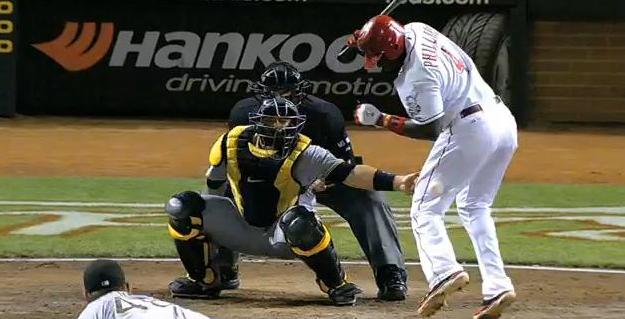
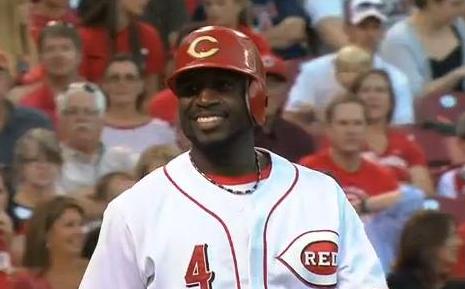
Brandon Phillips reacts to drilling.
A half-inning later, Lowe drilled Brandon Phillips in response. (Watch it here.) As an apparently amused Phillips grinned toward his dugout, plate ump Paul Nauert responded by warning both benches.
The origins of this feud are, at this point, pure speculation. Lowe offered only vague details.
“This goes back to my last year with the Dodgers [in 2008],” he said in a Cincinnati Enquirer report. “[Baker] made up some story. A lot of people got involved. People almost got fired over it. You can go ask him right now and he’ll say he has no idea what you’re talking about.”
Baker suggested that Lowe’s drilling of Joey Votto in 2009 was motivated by the mystery circumstance. In response to the pitcher saying he had no respect for him, Baker said this, again from the Enquirer: “Man, I don’t care. A lot of people don’t respect me. He don’t respect himself. The word was whatever he did and said probably there was a good chance he was drinking at the ballpark and he don’t remember what he said or what he did. OK.”
Baker and his team had a chance to retaliate for Votto’s drilling in ’09—Lowe, then with Atlanta, faced the Reds once more that season, and emerged unscathed. (The final score of that follow-up game was 3-1, Cincinnati, a margin perhaps too thin for Baker to be settling scores. Then again, a brushback like Latos ultimately delivered hardly matters in that regard.)
Either because it’s personal and not team-related, or because Lowe handled things sufficiently on his own, there was no follow-up action from the Indians when the teams played on Thursday.
Baker has been known to possess a long memory when it comes to this type of thing; in an interview for The Baseball Codes, he said, “You can’t carry stuff over unless you’ve got a long history with a guy.” This certainly qualifies as long history, but without details there’s little point even in speculating about the cause.
In the end, I keep coming back to the same question: Managers really order retaliation from their pitchers in 2012? Like many of the details in this particular drama, it merits further exploration. Ultimately, of course, we’re only going to find out as much as people are willing to talk about, which has already been more than we’re used to. Stay tuned.
 The last time we heard from Carlos Carrasco, the Indians pitcher was throwing at Billy Butler’s head, for the inconsequential reason that Melky Cabrera had just gone deep as the latest in a string of Royals to pound the right-hander.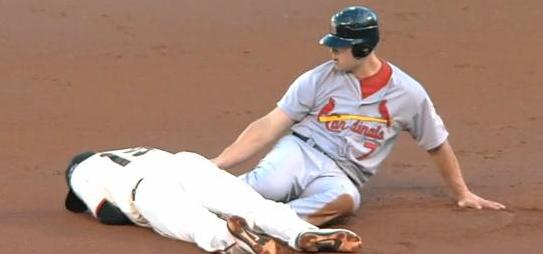


 The Baseball Codes