Rick Porcello, Umpire Warnings

When Umpires Strike, Blatant-Retaliation-for-Questionable-Offenses Division

There are two directions an umpire can go in instances of retaliation that occur under his watch.

He can let the situation play out, offering the other team a chance to respond before bringing down the hammer with warnings.

Or he can go quick-draw in an effort to immediately tamp down further inflammatory actions.

In the latter scenario, the offended party will inevitably be displeased about being handcuffed in its response. Which is exactly what happened to the Indians over the weekend.

It started with Asdrubal Cabrera mashing a ball down the line, an an all-or-nothing shot certain to clear the fence. He watched it fly, to see whether it went fair or foul.

It went foul. As did Tigers pitcher Rick Porcello, who by appearances felt shown up by Cabrera’s lingering presence in the batter’s box. He put his next pitch behind Cabrera’s back.

The Cleveland shortstop glared toward the mound, but his progress in that direction was stopped by plate ump Paul Schrieber, who issued quick warnings to both benches. Indians manager Manny Acta was not pleased. (Watch it here.)

“When that happens, you don’t need a warning to throw the guy out of the game,” he said in a Fox Sports report. “If you do not throw the guy out of the game then you should not issue a warning because then we’re not getting our shot.”

If only everyone was so clear, concise and correct. The manager has every right to expect a chance to respond to such a blatant Code violation—or, alternatively, have the ump collect a pound of flesh on his behalf. This doesn’t happen every time, of course; ever since umpires were instructed to tighten their trigger fingers, countless players and managers have been upset at lost retaliatory opportunities.

Acta, however, verbalizes his frustration better (read: more candidly) than most.

He was forced to specifically instruct pitcher Ubaldo Jimenez to avoid responding; it was still early in the game and he didn’t want to burn his bullpen. (His message was effective—Jimenez refrained from taking action, but that’s not always the case. Joe Torre recalls a time when he managed the Braves, in which he told pitcher Ray King Donnie Moore to leave well enough alone at the tail end of a volatile situation—before recognizing the situation for what it was. “‘I have no chance. I’m talking to a deaf man,” he said of the conversation. “I walked back to the dugout and he hit Graig Nettles. You can talk until you’re blue in the face, but it’s guys defending each other. That’s what it’s about.”)

Acta also talked about the nature of Cabrera’s blast (“The guy was just standing there looking at a foul ball. It was a foul ball. That was all”) and the blatant nature of the drilling (“Everybody, including the vendors in the stadium, knew that he threw at him”), but it was his touchstone summary of the Code and some of its modern interpretations that was truly impressive. The gems included:

  • A mini-treatise on the relative safety of retaliation for AL pitchers, as well as the inherent risks: “Guys who do that in the American League, all they’re doing is putting their team in jeopardy because they don’t hit. Guys in the National League who hit guys are the guys that show me something because they have to get up to the plate.”
  • A polemic on the inter-team chumminess of modern players: “None of these guys want to fight. The game has changed so much, it’s a joke. All we’ve got to do is watch BP (batting practice). They’re all hugging and laughing (with opponents). Look on the bases, how you’ve got three, four guys (on opposite sides) talking to each other.”
  • A sidebar on players’ softness (directed toward Porcello), pointing out one player who did not fit that bill—Francisco Rodriguez. While with the Mets, the closer took exception to comments made by Yankees pitcher Brian Bruney about his animated nature, and confronted him before a game. Acta: “You want to know who’s tough? Frankie Rodriguez is tough. He didn’t like what some guy did a couple years ago, he went out at stretch time. . . . That’s being tough, not throwing a ball at a guy and not even facing the guy. If you have to get up to the plate (to hit), then maybe I can see you being tough.”

Porcello offered standard denials about the pitch getting away from him, but if even the vendors could read his intent it doesn’t hold much water.  The teams meet again on Sept. 5. Hold onto your hats.

– Jason
Retaliation

How to Pick Your Battles and When: A Farewell to Logan Morrison

Baseball has seen its share of retaliation this season, lowlighted by Jered Weaver and Carlos Carrasco throwing at players’ heads after being offended on the field.

This week, however, saw a different kind of retaliation—less fiery, but more bureaucratic and far more profound. Logan Morrison offended members of the Florida Marlins front office, and they appeared to respond in kind.

In short: A charity bowling tournament in which Morrison was supposed to participate was canceled because the team’s community foundation failed to sell enough lanes in advance. Morrison, disappointed, responded by boycotting a subsequent photo session with season ticket holders.

The lesson: Don’t mess with management. Later that day, despite ranking second on the team with 17 homers and third with 60 RBIs, Morrison was optioned to Triple-A New Orleans. The team cited his .249 batting average as the reason.

There are a couple unwritten rules in play here, one of them stating that offbeat players must be truly established before unleashing the full force of their personalities. Morrison fits that bill.

He’s made enough waves on Twitter during his short career that team president David Samson suggested that he cool it down. Earlier in the season, the second-year player told reporters that the firing of hitting coach John Mallee had been ordered by team owner Jeffrey Loria (drawing a direct rebuke from Loria himself). Just last week, Morrison leveled another round of criticism at Marlins shortstop Hanley Ramirez—compounding his confrontation with the shortstop in June.

The same day Morrison was demoted, his clubhouse confidante (and fellow Ramirez critic) Wes Helms—who had advised his protege against attending the photo session—was released. (Helms was hitting just .191 in a very limited role, but the timing of the move was, at the least, curious.)

Case in point regarding the correlation between status and freedom of speech: team veep Jeff Conine, Mr. Marlin himself, said earlier this season that he’d “probably” trade Ramirez if given the choice. The repercussions (aside from an angry response from Ramirez): None.

For a lesson on how to abide by this particular piece of Code, turn to Giants closer Brian Wilson, who didn’t come by his quirks recently—he just knew how to hide them as a younger player.

“I had the beard in 2007, but they made me shave it when I had to go to Triple-A . . .” he said in an interview late last season. “I wasn’t allowed to have the mohawk in the minor leagues. I got it two weeks after I was called up in ’06, and the full-on one came in 2009.”

By which point he was coming off an All-Star season in which he finished second in the National League in saves. Soon thereafter came the beard as we now know it.

Marlins catcher John Buck, among others, suggested that Morrison tone things down. Another of Morrison’s teammates had it exactly right when he suggested, in a Palm Beach Post article, that the outfielder’s timing was off.

“In five years, when you’re a stud, that’s when you can get away with that,” said the player, who went unnamed. “It was a perfect time for (the Marlins to demote Morrison) because we’re out of (the race). I’ll tell you what, though: If we’re close to the Braves right now, I’ll bet you they don’t make that move.”

The other unwritten rule in play here—and this goes for all walks of life, not just baseball—is to be careful with whom one picks one’s battles. Team management is rarely a good place to start.

For a historic lesson, look to Chicago in 1939, when recently acquired Cubs shortstop Dick Bartell, arriving for a spring training game, insulted an overweight man struggling to get through a ballpark turnstile.

Bartell didn’t know it at the time, but the man, Ed Burns, was one of the team’s official scorers, and made life miserable for Bartell—a starter in the first ever-All-Star Game six years earlier—by charging him with questionable errors throughout the season, and charging errors on the other team that could have gone for hits for Bartell. From The Baseball Codes: “The error parade got to be such an institution that at that winter’s baseball writers’ dinner, a baby bootie was brought onstage with the pronouncement ‘A boot for Bartell.’ Throughout the evening, a parade of shoes was pre­sented for the audience, each slightly larger than the last, and all with the same statement: ‘Another boot for Bartell.”

Bartell hit .238 that season, 48 points below his career mark, and for the first time in eight years his fielding percentage was below the league average. Although Burns later apologized, Bartell was shipped out following the season for spare parts.

Morrison is young enough and talented enough to avoid that fate, but—no matter how correct he may actually be—he clearly has some stark lessons to learn.

– Jason

Jason Motte, Retaliation, Ryan Braun, Tony La Russa

Hey Jered Weaver, this is Where Message Pitches are Meant to be Delivered

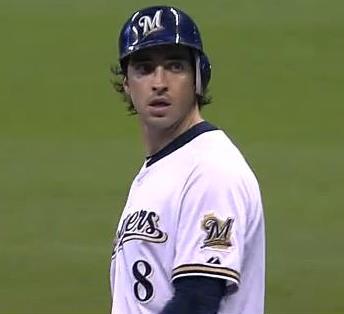
Ryan Braun: not happy with the way things played out.

As far as retaliation goes, it was awkward, it was ugly and if it wasn’t embarrassing to more than one party, then by all rights it should have been.

But at least it got the job done, within the boundaries of reason.

In the bottom of the seventh inning last night, Cardinals reliever Jason Motte wanted to deliver a message to Milwaukee. Brewers reliever Takashi Saito had drilled Albert Pujols a half-inning earlier, in his tender left wrist. It was clearly unintentional, as the rising fastball hit Pujols only after the hitter pulled his hands in to his chest and was spinning toward the backstop.

Sometimes intent doesn’t make a lick of difference. When Pujols goes down, reparations are frequently in order.

Never mind that it was a 7-7 score; when Ryan Braun led off the home half of the inning, Motte got right to it. And whiffed. Braun evaded Motte’s 98 mph inside fastball, which should, for practical purposes, have ended the hostilities. The pitcher had his shot and missed his mark.

This was plate ump Rob Drake‘s moment to step in and put an end to things. Players frequently appreciate some leeway when it comes to umpires’ warnings, at least to the point that each side is allowed their due shot. Drake, however, missed that mark by a mile.

Allowed a second chance, Motte drilled Braun in the ribs with a 97 mph four-seamer. Braun looked stunned after the first effort; when the second one found purchase without a peep from Drake he was downright flabbergasted.

Even at that point, Motte failed to get booted. (He did end up hitting the showers, but only because Tony La Russamade a pitching change. Based on La Russa’s history with these things, it seems likely that Motte started the inning solely because has the best fastball on the team, with the plan being to pull him after one hit batter. “We threw two balls in there real good just to send a message,” the skipper said afterward, in a semi-denial. “If he ducks them, it’s all over and we don’t hit him.”)

Only after Milwaukee skipper Ron Roenicke came out for a chat with Drake—presumably to fill the ump in on all he was missing—were warnings issued to both benches. (It was odd timing on Roenicke’s part; unless he was looking to get Motte retroactively bounced from the game, his discussion served little purpose beyond costing his own pitchers a chance to respond on Braun’s behalf.)

“That was ridiculous,” said Brewers catcher Jonathan Lucroy in the Milwaukee Journal-Sentinel. “We didn’t hit Albert Pujols on purpose. Are you kidding me? In that situation? If we wanted to put him on base, we would have walked him. That’s ridiculous. . . . We shouldn’t get punished for something we weren’t trying to do on purpose. Look at the situation. If we were getting beat by a lot or we were beating them by a lot and that happens, maybe we did it on purpose.  I mean, come on. We weren’t trying to hit anybody. It’s unbelievable.”

Lucroy is entitled to his opinion, but it’s tough to fault a pitcher for protecting his superstar. That Milwaukee’s best player led off the next inning made the timing perfect. That Motte was given two chances by an apparently clueless ump, however, is worth getting ticked off about. If the situation has anything working in its favor, it’s that, unlike Jered Weaver and Carlos Carrasco, Motte came nowhere near his target’s head.

The teams meet again today, then again at the end of the month.

– Jason

Appropriate Retaliation, Carlos Guillen, Jered Weaver, Retaliation

How Not to Retaliate, No Matter How Much a Guy Deserves it, Anaheim Edition

Yesterday’s Jered WeaverCarlos Guillen histrionics seemed to mesmerize the nation. I wrote about it for Sports Illustrated.com, tying it in to last week’s Carlos CarrascoBilly Butler fiasco. Both had the same trigger—a player watching a home run longer than the pitcher would have liked—and wildly inappropriate retaliation: head-high fastballs. (Watch Weaver-Guillen here.)

Also included: A quick roundup of other Code violations recently in the news.

Click over to SI for a nicely formatted version and a full-color photograph of Weaver and Guillen. Or, if you’re lazy, just scroll down.

– Jason

Jered, meet Carlos. Carlos, Jered.

Insult me once, shame on you. Insult me twice, duck and cover.

In Detroit on Sunday, Angels pitcher Jered Weaver took matters into his own hands after two incidents of Tigers showboating after hitting home runs. Weaver stewed after Magglio Ordoñez paused to admire his two-run homer in the third, going so far as to say something to Miguel Cabrera about it after retiring him for the inning’s third out.

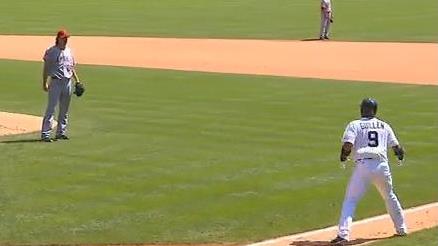
Whatever message Cabrera relayed in the Detroit dugout did not earn Weaver the respect to which he felt entitled. In fact, it had the opposite effect. In the seventh inning, Carlos Guillen watched his blast for several beats, flipped his bat, then made glaring eye contact with Weaver as he took five slow steps toward first followed by two sideways hops. Only then did he start his trot — by which point he was already halfway up the line.

“I’ve never done that before like that,” Guillen said in an MLB.com report. “The way he reacted to Magglio, he’s my teammate. We’re a team.”

Weaver immediately began shouting at Guillen and home plate umpire Hunter Wendelstedt quickly stepped in and warned both benches against retaliation.

Weaver wasted little time ignoring him. The guy can’t be faulted much for wanting to take care of things quickly; he had already thrown 110 pitches and wasn’t going to be in the game much longer no matter what happened. The message he sent with his very next pitch, however, was anything but perfect. If Ordoñez and Guillen violated baseball’s unwritten rules with their increasingly provocative displays of showmanship, Weaver one-upped them with a 92-mph fastball aimed at the head of Alex Avila.

That Avila ducked under it was beneficial not just for himself, but for Weaver as well. Had the pitch connected, one of the AL’s top Cy Young candidates would now be bearing a label he might never be able to shed.

The move was all the more quizzical considering that just two days earlier, nearly identical circumstances precipitated nearly identical results — and a similar outcry against the pitcher.

The hitter was Kansas City’s Melky Cabrera, who after launching a grand slam off Indians starter Carlos Carrasco, watched it sail before he ran. Carrasco, already on the line for seven runs in 3 1/3 innings, threw his next pitch at — and over — the head of Billy Butler.

Carrasco was ejected and benches emptied. Royals outfielder Jeff Francoeur could be seen gesturing angrily toward his hip as he yelled at Carrasco, indicating where the pitch should have gone.

“I understand the game,” Francoeur told the Cleveland Plain-Dealer. “If he thought [Cabrera] pimped the home run, fine. Hit [Butler] in the side. Don’t hit him in the head. That’s why I was yelling at him.”

Francoeur was spot on. Several Royals, including Butler himself, said that an appropriately placed retaliatory pitch would have raised nary a hackle on their bench. Instead, Carrasco is now a marked man.

The same can be said for Weaver. The Angels and Tigers won’t see each other again this season unless they meet in the playoffs. The next time they do, however, Weaver will have to do some explaining to his teammates should Detroit pitchers decide that his action merits further response.

*****

Weaver and the Tigers’ twin showmen weren’t the only ones taking a run at the unwritten rulebook during the course of Sunday’s game. Justin Verlander was in the middle of a no-hitter when Erick Aybar led off the eighth inning with a bunt.

There are situations in which the unwritten rules forbid such a display. Had the Tigers’ 3-0 lead been a few runs greater, Aybar’s endeavor would have been universally assailed by Code adherents. As it was, even as he brought the tying run into the on-deck circle, he still surprised many.

The concept holds that a no-hitter deserves nothing less than a hitter’s best effort to break it up. In many cases, bunting does not qualify.

The best-known instance of this came in 2001, when Padres catcher Ben Davis ruined Curt Schilling’s perfect game with a bunt single in the eighth inning. Part of the reason Diamondbacks manager Bob Brenly was so vocally upset about the play is that bunting for hits was not part of Davis’ offensive repertoire; the one against Schilling was the first of his career.

Aybar, however, has 41 bunt hits since the beginning of the 2009 season. Not to mention the fact that he didn’t actually break up the no-hitter, as Verlander was charged with a throwing error on the play. Three batters later, Macier Itzuris punctured Verlander’s balloon by singling — on a full swing.

If Verlander is upset with anybody, it should be Guillen. The Code stipulates that nothing should change when a pitcher is racing toward perfection. There are many ways to view this rule, but one of the pitcher’s own teammates intentionally initiating bad blood with the opposition and disrupting the flow of the game is inexcusable.

Guillen likely hasn’t heard the last of this from the Angels. If he’s lucky, he won’t hear it from within his own clubhouse, as well.

Elsewhere in the unwritten rules:

• In Boston, John Lackey continues to lead the league in on-field gesticulations made in response to mistakes by his fielders. Spurred primarily by two miscues from shortstop Marco Scutaro — one of which was charged an error — Lackey alternately pounded his glove and threw his hands into the air as he gave up three first-inning runs to Tampa Bay on July 16.

• Also in Boston, Red Sox reliever Alfredo Aceves hit Kansas City’s Billy Butler on July 26 — possibly in response to a brushback pitch thrown to Dustin Pedroia earlier in the game; or possibly because Butler had homered, doubled and singled in the game. It also could have been unintentional. No matter; Blake Wood then drilled Adrian Gonzalez in apparent retaliation, both benches were warned and everybody went on their merry way. (Well, Boston went on its merry way in a 13-9 victory, in which Royals outfielder Mitch Maier was forced to take the mound.)

• In Florida, Mr. Marlin himself, Jeff Conine (currently a special assistant to the team president) said on the radio that Hanley Ramirez doesn’t play as hard as he should, and if it was up to Conine he’d probably trade the shortstop. Five days later Ramirez shot back in the Miami Herald, calling Conine “chicken” for not saying it to his face, and proclaiming that he would “make it to the Hall of Fame being in a Marlins uniform.”

• In Kansas City, Royals shortstop Alcides Escobar was on the business end of a hard slide by Tampa Bay’s Sam Fuld, and ended up taking spikes to the shin. “That’s a dirty slide, man,” he told the Kansas City Star.

• In Atlanta, Journal-Constitution columnist Mark Bradley recalled the time the retired former Braves ace Greg Maddux waited through parts of two seasons before he could retaliate against then-Diamondbacks pitcher Andy Benes.

Appropriate Retaliation, Carlos Carrasco, Retaliation

How Not to Retaliate When Getting Your Ass Kicked, Cleveland Edition

Duck, Billy, duck!

In baseball, retaliation is expected. Ill-timed stolen bases, drilled teammates, questionable slides: They all qualify for reciprocal strikes.

In the case of Melky Cabrera, showboating fits this particular bill. The Royals outfielder hit a grand slam against the Indians on Friday, then admired it in a manner battle-tested to effectively get under the skin of opposing pitchers. (Watch a little bit of hit here.)

At this point in the story, Indians pitcher Carlos Carrasco had three options: wait for the next time he faced Cabrera, when he could teach him a lesson; drill the following hitter, Billy Butler, because pissed-off teammates are frequently even more effective than direct retribution; or ignore the matter entirely.

Carrasco chose none of the above. What he did sort of resembled the second option, but although he threw at Butler, in so doing he violated an unwritten rule that holds far more weight than Cabrera’s theatrics.

The Cleveland right-hander threw at Butler’s head. It was a reaction borne of clear frustration: Cabrera’s blast served as the fourth, fifth, sixth and seventh runs Carrasco had given up in 3.1 innings. Two of those runs had come in the first, courtesy of a Butler home run.

That the pitch didn’t connect—Butler ducked underneath it—saved Carrasco even more trouble than he’d just earned, but not much. (Watch it here.)

Plate umpire Scott Barry immediately ejected the pitcher. Indians catcher Lou Marson cut off Butler in case he had thoughts of settling things then and there, and the benches quickly emptied. No punches were thrown, but as players filtered back to their dugouts, Carrasco got into a shouting match with Jeff Francoeur, who angrily pointed toward his hip, indicating where the pitch should have gone.

“I understand the game,” said Francoeur afterward in the Cleveland Plain Dealer. “If he thought [Cabrera] pimped the home run, fine. Hit [Butler] in the side. Don’t hit him in the head. That’s why I was yelling at him.”

Francoeur’s opinion was spot on. Several Royals indicated that an appropriate drilling of Butler—in the hip or thigh, well below the shoulders—would have been readily accepted. (“Be a man—throw at his back, not his head,” said Alex Gordon in the Kansas City Star.)

Even more importantly, just as such an action could have served to set Cabrera straight by angering his own teammate, Carrasco’s stupidity has put a similar onus on the Indians. Kansas City has every right to retaliate, but because of the DH it’ll be another member of the Indians who wears one on Carrasco’s behalf. There will likely never be a mention of it in the press, but when it happens it won’t be met kindly within Cleveland’s clubhouse.

After Carrasco’s display, Indians pitching coach Tim Belcher cornered him and elucidated the repercussions of what he’d done.

“We don’t condone those types of things,” said Cleveland manager Manny Acta after the game, in the Plain Dealer. “Whether the ball got away from him or not, we don’t condone throwing at people’s heads. That’s a dangerous situation.”

For his part, Butler responded in the best way he could; five innings later, he hit his second homer of the day. (The poor guy seems to be a magnet for this kind of thing; earlier in the week Butler was drilled by Red Sox reliever Alfredo Aceves, possibly in response to a brushback pitch thrown earlier to Dustin Pedroia.)

“I barely got out of the way,” he said after the game in the Star. “It was right at my head, and there was no way around it. I usually don’t react that way. If I get hit, I get hit. I don’t have anything to say. But in that situation, I’m going to open my mouth.”

The Indians, shockingly, perhaps felt further need to respond to Cabrera; when he came up with the bases loaded in the fifth, reliever Chad Durbin greeted him with a high, inside fastball. Even in the Royals clubhouse, players acknowledged that the center fielder will be instructed to speed up future home run trots.

Both the initial parties issued standard denials, with Carrasco saying the fastball got away from him (although he did admit to having noticed Cabrera’s pimp work), and Cabrera insisting that disrespecting the pitcher was the furthest thing from his mind.

That, of course, is hogwash. The Royals will almost certainly notify him of that at the next available opportunity.

– Jason

Jeff Wilpon, Retaliation

Owner Gets Ornery: Wilpon Clamors for Mets Retaliation

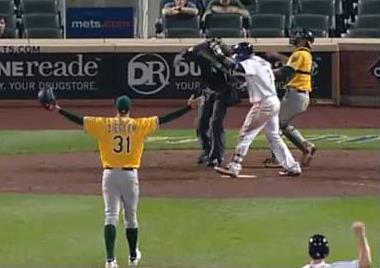
Brad Ziegler can't believe he just hit Justin Turner.

It started on Wednesday, when Mets second baseman Justin Turner was hit by a pitch with the bases loaded in the 13th inning, driving home the winning run against the A’s. The problem with the play, as far as the A’s were concerned, was that Turner made no effort to avoid the pitch, which barely grazed his jersey. (Watch it here.)

Whether this had any bearing in what happened next is uncertain,  but in Turner’s first at-bat Thursday, A’s right-hander Graham Godfrey hit him in the leg—something seen by many in the New York clubhouse as clear retaliation.

There are many problems with this scenario, primary among them being the written rules of the game. Rule 6.08(b)(2) says that a batter takes first base after being hit by a pitch unless he “makes no attempt to avoid being touched by the ball.” Turner rotated his torso—barely—which was apparently enough for plate umpire Fieldin Culbreth. And in a situation like this, if the umpire has no beef, the opposition shouldn’t, either.

Perhaps it was an attempt by new A’s manager Bob Melvin to set a tone with the team. (Unlikely.) Or maybe it was Godfrey, all of three games into his big league career, trying to establish some bona fides in the Oakland clubhouse. (He’s no stranger to hitting guys, having done so 38 times over four-plus minor league seasons.)

Or maybe it was strictly incidental, no more than a case of rookie nerves or a pitch that got away. This is how the Mets treated it, opting to ignore the incident and get on with what would be a 4-1 victory.

One guy, however, was less than pleased. According to ESPN New York, Jeff Wilpon—the team’s COO, and son of owner Fred—took to the team’s clubhouse following the game and admonished his players for their timidity. He said, according to the New York Times, that he would cover pitchers’ fines for such actions. Unlike the ominous tone set by ESPN, the Times called Wilpon’s interaction “playful.”

No matter how he meant it, this is a dangerous road to travel. There’s a reason that modern managers and coaches tend to shy away from directly ordering retaliatory action. They don’t want to be responsible for unforeseen consequences, and they—having all played the game at various professional levels—understand that most big league pitchers understand appropriate retaliatory tactics (and that if they don’t, their teammates will inevitably instruct them in such).

Jeff Wilpon primarily supervises the construction of buildings, in his role as executive vice president of his father’s real estate company. He is not a baseball man, at least to the point at which he has any business ordering his players to do anything on the field. He clearly likes the gunslinger mentality of retaliating for retaliation’s sake, but hasn’t likely considered the negative repercussions. Should the A’s respond to Wilpon’s response, the likely target would shift from Turner to somebody like Jose Reyes or David Wright.

Picture for a moment Reyes getting sidelined for six weeks due to a cracked rib suffered at the wrong end of a retaliatory fastball—disabling him straight through the trade deadline.

Leave retaliation to the pros, Mr. Wilpon. You just put a target on your team, as far as any examination the league might take when it comes to any future bad exchanges of bad blood.

Also realize that in 1998, your manager was suspended while at the helm of the Angels for his part in retaliating against Kansas City after Royals infielder Felix Martinez sucker-punched Anaheim’s Frank Bolick during a game.

Terry Collins is able to recognize retaliation-worthy offenses. Let him. Stay in the owner’s box, where you belong.

– Jason

Retaliation, Ted Lilly

There’s a New Sherrif in Town … and his Name is Lilly

Through the array of baseball’s frontier justice so far this young season, the game has seen one unquestioned king of bad-assery, one primary purveyor of retaliation.

Raise your hand if the first name that came to mind in that regard was Ted Lilly.

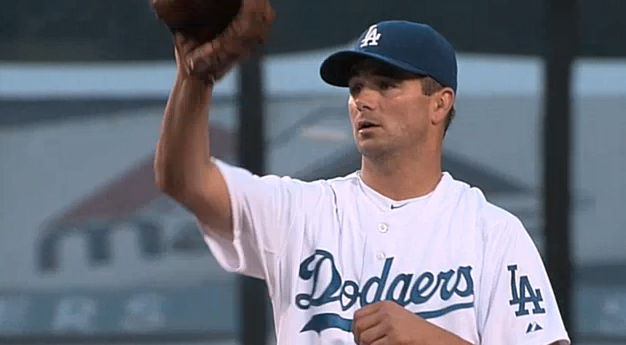
Lilly has taken the lead from the No. 3 slot in the Dodgers rotation to single-handedly ensure that nobody takes liberties with his ballclub.

Tim Lincecum hit ex-teammate Juan Uribe twice, on separate occasions. (The second time, during the sixth inning of a tie game, was Lincecum’s final pitch of the night and was clearly unintentional.)

Lilly’s response: Pitching the following day, he hit Buster Posey in his first two at-bats the following day.

Warnings were issued after the second one, and although Giants manager Bruce Bochy had to be ordered back into the dugout by umpire Greg Gibson, no retaliation was in the offing. Posey had no comment afterward on the intent of the pitches; Lilly said he was just trying to pitch “hard in on (Posey’s) hands.” Of course he was.

(For what it’s worth, Lilly didn’t walk a hitter that night, and has averaged only five hit batters per season over the course of his career. Posey opted for legal retaliation after the second drilling, swiping second base for the first regular-season steal of his career.)

Last Monday, Braves pitcher Tim Hudson put a 91 mph fastball behind Jerry Sands’ head, after Sands had doubled and hit a sacrifice fly in his first two at-bats of the game—and his career—all the while serenaded by Dodger Stadium chants of “Je-RRY, Je-RRY.”

Braves manager Fredi Gonzalez later admitted that the pitch was meant to send a message to the surging rookie, but came in higher than intended. Hudson gestured apologetically toward the Dodgers dugout after throwing it.

Lilly’s response: The next inning, he threw a ball behind Nate McLouth. Still, after the game, Hudson sent Sands a make-peace offering—a signed baseball. Sands accepted it, calling it a “classy move.” Lilly was hardly so forgiving.

When asked if he was protecting Sands, he said, via MLB.com: “More than that, I guess, I was disappointed with the pitch Huddy threw. All of you guys know he’s as good as it gets keeping the ball down.”

Lilly’s making $33 million over three years from the Dodgers. He was brought in to stabilize the rotation. Looks like he’s giving it some guts, as well.

– Jason

Bill Hall, Cole Hamels, Nyjer Morgan, Retaliation

Spring: A Time of Hope—and Retaliation

Nyjer Morgan, at the height of last year's problems.

Spring training is a grand old time for pitchers to let off some steam. Be they perturbed by an event from the game in front of them or harboring long memories from seasons past, the allure of repercussion-free retaliation (who cares if runs score during an exhibition game?) is felt at least a few times each season.

Look no farther than this week’s matchup between Cole Hamels and Bill Hall.

Hall, now with the Astros, was unhappy that Hamels appeared to be quick-pitching him, throwing the ball before he was fully ready. (How this tactic would help Hamels prepare for the regular season, I’m not sure.)

So Hall stepped out in an effort to slow Hamels. The pitcher’s response was to send his next offering inside, which was sufficient to send Hall from zero to boiling. According to the Houston Chronicle, he had to be restrained by plate ump Laz Diaz.

After the game, Hall called Hamels a “marked man”—not so much, he explained later, as it pertains to the left-hander’s physical wellbeing, but to the on-field respect he receives. Translation: Expect Hall to show Hamels up at the earliest available opportunity.

From the Chronicle:

I don’t know if he was mad because he gave up a homer (to Carlos Lee in the previous at-bat) or if he was mad because the umpire gave me time. But I’m not going to let him speed-pitch me. Obviously, he threw a pitch in, and I’m not going to let him disrespect me either. He kind of said something that I didn’t like too much. It’s over with. He’s definitely a marked man for me now, so when I do some damage off him, I’m going to let him know I did some damage off him. I can guarantee that.

I don’t feel like I do a lot of things to have pitchers mad at me for doing things on the field. I feel like I play the game the right way. But if you disrespect me, I’m going to do my best to disrespect you back. Obviously not in a way to disrespect the game, but obviously I’m going to let him know when I face him.

Well, okay. Houston opens with three games at Philadelphia, starting April 1. With Hamels scheduled to be Philadelphia’s No. 4 starter, however, Hall will likely have to wait until September—September!—for a chance to disrespect him back.

Elsewhere in the Grapefruit League, Nyjer Morgan was hit by Ricky Nolasco and wasted no time in accusing the pitcher of intent. Then again, after Morgan’s protracted saga against the Marlins last season—partial tally: he separated the shoulder of catcher Brett Hayes in a play at the plate; he reacted to being hit the following day by stealing two bases with his team down big (as clear an insult to the Marlins as could be delivered); he charged the mound when he was hit again later in retaliation for the stolen bases—one could hardly blame Nolasco.

Again, this is spring training—a time when many of these sorts of grudges get handled like this.

Rather than go on a near-meltdown-level tirade like last season, however, Morgan should be commended for his level-headed approach this time around. Instead of getting bothered, he stole second, advanced to third, then scored. (Watch the drilling here.)

From MLB.com):

“No question, without a doubt,” said Morgan when asked if he felt Nolasco hit him on purpose Sunday. “It’s obvious because of what happened last year. Obviously, they haven’t turned the page. But I’m going to be a stronger player, better person. I’m not going to react to it. I felt better by going out there and being able to steal that bag, getting myself over to third and generating a run. I felt more satisfied after that than staring at him and putting on my mean mug.”

The “mean mug,” of course, is a time-tested part of on-field intimidation. It’s what Morgan does with the rest of his body that truly counts.

He’s off to a good start.

Update: Yahoo’s David Brown recently spoke to Florida’s Logan Morrison for his Answer Man column. Included in the conversation was the following exchange:

DB: Can there be peace between the Marlins and Nyjer Morgan?

LoMo: Yeah, absolutely there can be. You want me to expound on that?

DB: Please.

LoMo: Just don’t steal second base and third down by 10 runs.

DB: He was just fighting for that run. Trying to get back into the game.

LoMo: You could call it that.

DB: Nobody overreacted?

LoMo: I’m going to say everybody overreacted. … But … there’s baseball etiquette and baseball rules that need to be followed and they weren’t followed.

Update 2: Nolasco continues to deny intent.

– Jason