Review

The First Big, Sunday Book Review: The New York Post Approves

The first big one is in, and the New York Post seems to have enjoyed The Baseball Codes. That is, if recounting no fewer than 13 stories from the book indicates enjoyment.

From reviewer Larry Getlen:

As veteran sportswriters Turbow and Duca lay out in this remarkably well-researched book, filled with intricate details of plays from the past 100 years, the Code has affected careers, long-boiling team rivalries, World Series victories, and the game’s most hallowed feats in surprising ways.

We’re now batting 1.000 when it comes to positive reviews (hey, what do you know, a baseball metaphor!), but this is the first one to devote more than a single paragraph to the endeavor (an indicator that we must be getting close to the release date).

As of tomorrow, we’re nine days out. Welcome to March, everyone.

– Jason

The Baseball Codes

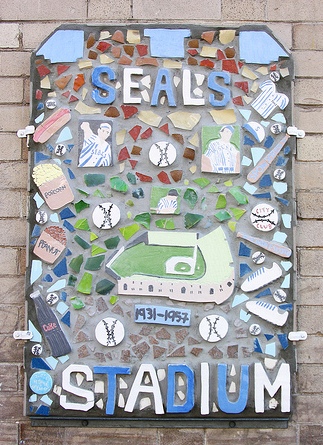
Digging for History When None is Apparent: The Search for Seals Stadium’s Home Plate

Okay, this doesn’t have much to do with the unwritten rules, unless one wants to view it from the perspective that the essence of the Code is to preserve the essential tenets of baseball’s past. In that case, so too does this page, in a way.

Todd Lappin took the time to examine aerial photos of Seals Stadium—the Giants’ first home in San Francisco, and the ballpark where Joe DiMaggio played as a member of the San Francisco Seals before he joined the Yankees—to figure out where, exactly, home plate would have been amid the shopping center that now stands on the site.

It’s essentially trivia at this point, but for people like me, who love the history of the game, from statistics and stories all the way to real estate, it’s a labor of love that’s utterly appreciated.

– Jason

Review

The Baseball Codes: Resonating Well with the Artist/Poet/Cartoonist Demographic

Jim Behrle is an artist in Manhattan. And a baseball fan. And a lover of quality literature. How do we know this? Because he loved this book:

Exhaustive. This book is for the real fan who wants to know the unknowable: how players police themselves. The answer is simple: spikes-high and high and inside. The authors somehow got the chattiest of all former major leaguers to spill the beans. What transpires thereafter is a crime and punishment infringement by infringement. Players are by nature very sensitive. And there is no consensus agreement between them on when retribution is necessary or how unwritten rules should be enforced. But here’s a book that attempts to spell it out and illuminate the different philosophies behind when to retaliate. Strong Buy. A baseball dork’s delight. Nolan Ryan figures prominently. Good to pull of the shelf that summer night after your favorite player gets hit between the shoulder blades with a fastball. Very aptly shows how the game is changing—and depicts baseball as it was as an old school game of tit-for-tat. Truly enjoyable hot stove reading for this gentle correspondent. Loved the Rays-Sox scoop—great to finally get the story on all that nonsense.

Thank you, Mr. Behrle. Come back any time.

– Jason

Ken Griffey Jr., Tiger Woods

Griffey’s Words of Wisdom for a Young Tiger Woods

Tiger Woods’ mea culpa today called to mind something Ken Griffey Jr. told us several years ago, when Woods was not yet known as anything but a world-beating golfer.

The question had to do with passing down baseball’s code from generation to generation, but Griffey veered off course and drew Woods—who as a young professional moved into Griffey’s Orlando neighborhood—into the discussion.

They’re words of wisdom. Had Tiger payed closer attention, the clip below might never have been necessary.

When Tiger moved down (to Orlando), he’d come over and my wife would cook for him. You want to make sure that the next generation of athletes understands what’s going on. Tiger asked me a question: “How do you deal with media?” I told him, “I’m not the one you need to talk to. The person you’re going to have to talk to is Michael (Jordan), because I wear a uniform and I don’t stand out that much. I’m not 6-foot-6 or 6-foot-7. Everybody knows that bald head anywhere.”

A couple of days later, that’s when he played golf with Michael and was on the Oprah Winfrey Show. I told him, “You wear street clothes to play a sport, and people are going to notice you wherever you go. Me, I’ve got a chance because they’re going to look at me and say, ‘Is that him, or isn’t it?’ Unless they’re really true baseball fans, they’re not going to know.” I told him, “I’m not going to sit there and sugarcoat things. You’re going to like some things, and dislike some things.”

The biggest thing is getting the right people by you. People you can trust all the time. It’s not easy. I’ve got the same friends from when I was 12. When I moved out to Seattle, they moved out there. When I moved to Orlando, they moved again. I’m still in Orlando, but when I went to Cincinnati, they came up to visit me—they said, “Nooooo, not gonna move there,” but that’s okay.

– Jason

Frank Thomas, Retaliation

Thomas Knew When to Hold ’em, Knew When to Fold ’em

After 19 seasons and 521 home runs, Frank Thomas called it a career this week. He’ll be remembered for back-to-back MVP awards, a batting championship and the crazy levels of fear he inspired in American League pitchers for nearly two decades.

Thomas also left the big leagues with an astronomical baseball IQ. He understood the unwritten rules, and how, as the centerpiece of almost every team he played for, he inevitably wore a target on his back. The following story, taken from the final version of The Baseball Codes, illustrates as much:

It’s rare for a hitter to request retaliation on his own behalf, largely because most pitchers don’t need to be told. They judge appropriate response by any number of things, none more immediate than the reaction of their offended teammate. During a game in 2006, for example, A’s pitcher Joe Blanton hit Blue Jays third baseman Troy Glaus to lead off the second inning. (It appeared to be inadvertent, although Glaus had hit two home runs in the previous meeting between the teams 10 weeks earlier.) As it happened, Oakland’s designated hitter, Frank Thomas, led off the following inning for the A’s, and the first pitch from Toronto starter Ted Lilly hit him in the back—clear retaliation—and drew warnings for both benches from umpire Jeff Nelson.

As one of the best players in the American League over the course of the previous decade, Thomas was no stranger to being the unwitting subject of similar retaliatory measures. He didn’t so much as look at Lilly after getting hit, just trotted to first base as if he had drawn a walk.

“That’s happened to me 30, 40 times,” he said later. “Nowadays it’s what you expect. (Glaus) is their big guy, their big slugger, and we got him. He was the first one up in the inning, and I was the first one up the next inning. I knew I was going to wear it. You just take it and move on down to first. That’s baseball.”

Thomas’ attitude informed the reaction on the A’s bench. Because the slugger was calm about the matter, so too were his teammates; had he reacted differently, the situation could have been far more volatile. “We all saw what happened, but Frank took it calmly, so we took it calmly,” said Oakland third base coach Ron Washington. “If Frank had taken it with an uproar, we’d have taken it with an uproar. We have to wait for the reaction of the guy who it happened to. If Frank had charged him, there would have been a fight. If Frank had raised some hell going down to first base, we’d have raised some hell. But Frank took it calmly and went on down there, the umpire checked everything and we played baseball.”

Of course, such iron-clad protection does have its downsides. One member of the A’s posited that Lilly’s retaliatory strike against Thomas threw the pitcher off his rhythm, which appears to be true: six of the next 11 batters reached base, including a Jay Payton home run. “When he hit Big Frank, he wasn’t so sure that Big Frank wasn’t coming out to get him,” said the Athletic. “He thinks he helped his team by hitting Big Frank, but I’ll tell you what—his heart was pumping a mile a minute until he realized that Frank was just going to take first base. And after that, Lilly couldn’t find the strike zone. He was all over the place.”

– Jason

Jose Mesa, Omar Vizquel, Retaliation

Mesa, Vizquel Shake Hands, Make Up. Except for the Shaking Hands Part. And the Making Up

This is the third and final segment of our  series detailing the ludicrously extended on-field feud between Omar Vizquel and Jose Mesa. Really, it’s just our way of wishing Omar luck in his new gig with the White Sox.

You can also read Part 1 and Part 2.

__________________________________________________

“I thought he had taken care of business last year,” Vizquel told the Cleveland Plain Dealer after Mesa drilled him for the second time in two chances, and the first after Vizquel criticized him in print. “He hit me last year. And he hit me when he was with Seattle before the book came out. I don’t know what that was all about.”

Vizquel would continue to not know, because although Mesa proclaimed the feud to be over, he didn’t really mean it.

The next time the two met was in April, 2006; Mesa was with the Colorado Rockies, and despite the fact that Vizquel was disguised in the colors of the San Francisco Giants, the pitcher still managed to recognize him when he stepped to the plate.

The right-hander’s greeting: another fastball into the back.

This was the third straight time Mesa had plunked Vizquel. The protests of Giants manager Felipe Alou were met with deaf ears and a complete absence of warnings by the umpiring crew. After the game, plate ump Jeff Nelson went so far as to say that he had no previous knowledge of the bad blood between the players. And although the shortstop voiced his displeasure (going so far as to joke with media that he’d wear shin guards to the plate in the future), he once again chose to head to first base rather than a confrontation at the mound.

(It’s not like Vizquel was afraid to charge. In 1998 he went after White Sox pitcher Jim Parque after the lefty sailed a pitch over his head, for which he served a two-game suspension. Of course, at 5-foot-11 and 170 pounds, Parque was virtually the same size as the shortstop, and far smaller than the imposing Mesa.)

This was all clearly fueled by a lack of closure on Mesa’s part. Any confusion about why Vizquel wrote what he did never abated; at the time the interviews were done for this story, the two had yet to speak to each other on the topic. (And Mesa certainly wasn’t speaking to reporters about it.)

“I think that was one of the things that bothered him so much—that I didn’t even talk to him about it,” said Vizquel. “I don’t think that I should. He doesn’t want to let it go. It’s still inside him, but it’s time to move on.”

As for the Giants’ response to Mesa’s attack, because it occurred in a 5-4 game (which the Giants would win 6-4 after scoring a run in the ninth), they were forced to keep their bullets chambered until the following day. Even worse form than a lack of retaliation, of course, would be to let ill-timed retaliation come at the expense of a victory.

The man to eventually handle the team’s business was San Francisco starter Matt Morris, who wasted no time in hitting Rockies slugger Matt Holliday in the first inning. It was a clear purpose pitch, and everybody with any sense of the situation was aware of its meaning.

Everybody, it seems, but plate umpire Travis Reininger. Reininger, a fill-in replacement from Triple-A, immediately warned both benches in an effort to stem the beanball tide.

For Morris, however, the problem with hitting a guy intentionally and absorbing an ump’s warning is that he was then forced into an uncomfortable attempt at precision, staying well off the plate lest he he hit a batter by accident. Which is exactly what he did, just two hitters later.

It was, in fact, just his eighth pitch of the game. Morris hit Rockies catcher Eli Marerro with a fastball, and was promptly tossed. The pitcher, well acquainted with the deny-everything rule about which Mesa seemed ignorant, offered up a quick disavowal when it came to Holliday. But when the subject of the Marerro pitch came up, he grew passionate.

“Why would I . . . after a warning, get thrown out of the game?” he asked reporters. “That’s the last thing I wanted. It’s unfortunate they think that way. The last thing I wanted to do was be taken out of the game. You wait five days to pitch, and to do that after a warning just doesn’t make any sense.”

Even some Rockies took up for Morris.

“Holliday was hit on purpose, but Eli’s wasn’t on purpose, and right then and there they blew the call,” said Rockies reliever Ray King—who was himself thrown out when he hit Vizquel in the eighth inning. “They shouldn’t have thrown Matt Morris out right there. It wasn’t intentional. We hit their guy the other day, they hit our guy. It’s over with. The umpires tried to take control of the game and they blew it by tossing Matt Morris right there, and that takes away from the game.”

It was, in the opinion of King and many others around baseball, another example of umpires legislating the Code out of existence—which is fine, until an excess of built-up pressure with no release valve leads to something far uglier than a simple fastball to the thigh.

In the San Francisco locker room, the bottom line was less about Morris’s ejection, which caused the Giants to burn through eight-plus innings of bullpen work, than the fact that the umpiring crew claimed no prior knowledge of Mesa’s ongoing vendetta. After all, the Giants’ starter was ejected after eight pitches and two maybe-he-meant-to, maybe-he-didn’t hit batters. Mesa remained undisciplined after his no-doubter from the night before.

When it came time for MLB’s discipline czar, Bob Watson, to dole out punishment, the Giants finally got their day in court. Although Morris was fined—along with Alou and pitching coach Dave Righetti, who were ejected along with him—none of the three was suspended. Mesa, however, was tagged for four games, which probably sent some signals that his antics were wearing thin with the folks at league headquarters.

This was fully evident when he and Vizquel next met, on Aug. 5. That day, in the bottom of the eighth inning of a 1-1 game, with a runner on second base—that’s right, first base was open—Mesa actually pitched to Vizquel, not at Vizquel. That the shortstop grounded out to second base, advancing the runner to third, was almost incidental.

The battle, as far as anyone could tell, was over. (The two met twice more that season, with Vizquel grounding out and singling to right field; each time he drove in a run.)

And the real take-home from this whole exchange? Vizquel said it best, speaking with the Cherry Hill Courier Post in 2003: “I guess you have to wait until you retire before you write a book.”

– Jason

Jose Mesa, Omar Vizquel, Retaliation

Mesa-Vizquel: Just When We Thought it was Over, they Dragged us Back In

This is Part 2 of our excerpt from a passage that was ultimately cut from the final version of The Baseball Codes, concerning the protracted, on-field battle between Omar Vizquel and Jose Mesa.

Part 1 can be read here.

______________________________

Things became interesting in April 2002, when Vizquel’s biography, “Omar! My Life On and Off the Field,” was released. The shortstop didn’t waste time laying into Mesa within its covers—on the very first page, Vizquel talked about that fateful World Series Game 7, in which Cleveland’s closer could not finish off the Marlins:

“The eyes of the world were focused on every move we made. Unfortunately, Jose’s own eyes were vacant. Completely empty. Nobody home. You could almost see right through him. Jose’s first pitch bounced five feet in front of the plate, and as every Cleveland Indians fan knows, things got worse from there. Not long after I looked into his vacant eyes, he blew the save and the Marlins tied the game.”

That passage sent Mesa into a sustained rage, counting down the days until he’d next share a field with his former friend. Two months after the book came out, Cleveland visited Philadelphia, where the pitcher had signed as a free agent after the 2000 season.

In the ninth inning of their first post-memoir meeting, Mesa delivered a fastball into Vizquel’s back. Vizquel did not approach the mound. Neither man commented after the game—Mesa refused to talk and Vizquel left the building before the clubhouse opened to the media. But Cleveland manager Charlie Manuel was pretty clear about what happened. “Yeah, he meant to hit him,” he told reporters. “I think it was on purpose.”

Mesa was fined $500, and the feud seemed to settle as the clubs didn’t meet again that season—not to mention that Mesa had finally exacted a measure of revenge.

As the saying goes, however, there’s always next year. When 2003 rolled around, it didn’t take long for the rivalry to ignite anew.

Because Philadelphia and Cleveland weren’t scheduled to meet during the regular season, spring training provided Mesa his only opportunity. The teams met on March 11, but the reliever could only view it as an opportunity wasted after new Indians manager Eric Wedge (who by this point knew all about the tension between the two) short-circuited things by removing Vizquel before Mesa came into the late innings of the game.

So the pitcher took the only shot available to him—through the press.

“If I face him, I’ll hit him,” he told the Bucks County (Pa.) Courier Times. “I won’t try to hit him in the head, but I’ll hit him. And if he charges me, I’ll kill him. If I face him 10 more times, I’ll hit him 10 times. Every time.”

Vizquel clearly broke an unwritten rule by criticizing his former teammate in print, but with his comment, Mesa just as clearly broke a rule of his own—never admit to hitting a guy on purpose. The standby sentiment—“I was trying to pitch him inside and it sailed”—is fairly unassailable in baseball’s court of law . . . unless a pattern develops or the pitcher admits to his intentions.

Or, in this case, both.

By this time, Vizquel said publicly that he wasn’t trying to offend Mesa with his book, that he was simply trying to offer insight from a player’s perspective to his literary fans, and that he’d like to put the unpleasantness behind him.

Mesa’s response: “If he comes to apologize, I will punch him right in the face. And then I’ll kill him.”

Comments like this make reporters dance with glee. Media members bounced between clubhouses, getting reactions from each guy every time the other said anything on topic. Vizquel expressed slight regret; Mesa said Vizquel was stupid. Vizquel said he’d fight if that was what Mesa really wanted, comparing the potential bout to Roy Jones Jr. taking on a much bigger John Ruiz; Mesa said to bring it on. Vizquel retracted anything he previously said that could be construed as an apology. It didn’t matter that the Phillies and Indians weren’t going to see each other again until 2004. This sort of drama was too good not to play up.

Philadelphia general manager Ed Wade spoke to Mesa, knowing that his reliever would probably garner a long suspension if he backed up his words with actions. Baseball’s czar of discipline, Bob Watson, said he hadn’t seen anything like it since “Ball Four” came out and made Jim Bouton the object of scorn in clubhouses across the league. Phillies manager Larry Bowa intoned that Mesa was simply a fiery guy and didn’t truly mean what he said, saying, “They used to be great friends. I don’t know what happened, but it was personal.” (This didn’t stop Bowa from mirroring Wedge in that spring training game, intentionally keeping Mesa on the bench against the Indians until Vizquel had left the contest.) To shield himself from the heat, Mesa eventually said that the feud was over and he was ready to get back to playing baseball.

This is a lot of preventative maintenance for a situation that, according to the unwritten rulebook, should have been over after the first time Mesa drilled the shortstop.

Read Part 3 of the series here.

– Jason

Jose Mesa, Omar Vizquel, Retaliation

Luis Aparicio Loves Omar Vizquel. Jose Mesa, Not so Much

It’s not often that the greatest shortstop in a team’s history willingly un-retires his uniform number so that a newcomer can slap it on his back. In the case of the Chicago White Sox and Luis Aparicio, however, it seemed only obvious. That’s because the newcomer is actually an old-comer who’s new to the team, soon-to-be 43-year-old Omar Vizquel (only Tim Wakefield offers more senior status in the junior circuit), who last year surpassed Aparicio’s record for career hits by a Venezuelan—a title that Aparicio gladly conceded to his compatriot.

We also love us some Omar Vizquel in San Francisco. During the four seasons he spent with the Giants, he was the most consistently fun player to watch, as well as being among the most outgoing and honest players in the clubhouse.

(Quick sidebar: During an off-day interview I did with him shortly after his arrival in San Francisco, Vizquel asked if there was a nearby place we could grab lunch. When I suggested a Cambodian restaurant that was close to where we were, he was at first apprehensive, but gamely went along for the ride. He then ordered enough to feed a family of four, sampled everything and finished most of it.)

When it comes to the unwritten rules, Vizquel is most noteworthy for his ongoing affair with former teammate Jose Mesa. The two, once close friends, became estranged, then angry, then violent. To hear Vizquel tell it, he has little idea why his former pal is so pissed off.

To hear Mesa tell it . . . well, Mesa won’t tell it. Or at least he wouldn’t tell it to me, going from cordial to irate in an eyeblink, jumping off his clubhouse chair and screaming profanities as soon as Vizquel’s name was brought up.

The first draft of The Baseball Codes contained 2,700 words detailing their feud. It was good stuff, but we ultimately decided that the numerous code violations it contained couldn’t be broken out into individual chapters, so it served as an easy cut.

Which doesn’t make the story any less compelling. Suffice it to say that while 2,700 words of bonus material is waaaaay to long for a single blog post (heck, this introduction alone is pushing the limits of endurance), it might make for a good serial. And there’s only one way to find out.

Find the first part below. Updates daily thereafter.

– Jason

Baseball has an unwritten rule urging restraint from publicly ripping your teammates. There’s another unwritten rule that stipulates clubhouse dissent should be kept behind closed doors, away from the press. There’s an especially prevalent unwritten rule mandating that those associating with hot-headed Dominicans who throw 95 mph should do what they can to avoid pissing them off. Or at least there ought to be.

Once upon a time, Jose Mesa and Omar Vizquel were comrades. When Vizquel was traded from Seattle to the Cleveland Indians in 1994, he automatically gravitated toward Mesa, who had joined the club two seasons earlier. They were both from Latin America. They had lockers next to each other. They were companions on the road. Vizquel referred to the pitcher as one of his best friends, and was a frequent mealtime guest at Mesa’s house. He was trusted enough to drive Mesa’ kids to school.

It was an interesting way to begin a relationship that would one day devolve into the longest continual bout of over-the-top retaliation in big-league history.

Where it started to go wrong is anyone’s guess—Vizquel isn’t sure and Mesa won’t talk—but it was likely at Indians spring training in 1998.

Cleveland was coming off a heartbreaking loss to the Marlins in Game 7 of the 1997 World Series, in which Florida staged a ninth-inning rally against Mesa to tie it, then went on to win the contest—and the title—two innings later. As the world was to learn when Vizquel’s autobiography came out four years down the road, the shortstop was something less than impressed with Mesa’s effort that night.

In the interim, though, even Richard Dawson couldn’t have mitigated this feud.

The following spring, when Indians players arrived at training camp in Winter Haven, Fla., everything appeared to be fine. Players were loose, laughter came easily and there was no mistaking the sense of anticipation on a team that had largely the same cast returning from the outfit that, in its most recent game, came within two outs of a championship.

But something was eating at Mesa. Maybe he was internalizing the October defeat—certainly a deadly practice for any closer. Maybe teammates were needling him. Maybe too effectively. Maybe one of them was Vizquel.

When the Gold-Glove shortstop stepped to the plate against Mesa in an intra-squad game shortly after camp opened, their relationship began showing early signs of wear. Vizquel slapped a Mesa pitch over the left-field wall for a home run, then proceeded to goof his way around the bases—running sideways, waving his arms, generally making a spectacle of his trot. Were this a regular-season game, the shortstop would have been in flagrant violation of showing up the opposing pitcher. Such a display would have virtually guaranteed at least one fastball-inflicted bruise in ensuing at-bats. But this was a meaningless game against his own club, a simple workout in an empty stadium, and Vizquel’s actions could easily be taken as a guy in a good mood horsing around with his pals.

Mesa didn’t see it that way. And if there’s a common trait among hard-throwing pitchers, it’s that they have long memories when slighted. “I was just doing all this goofy stuff and he took it in the wrong way,” said Vizquel. “Some guys don’t like that kind of stuff, but it was just a practice game. I don’t really know (why he got so mad). I was just a little guy and he’s a real macho guy, and maybe he didn’t want to be shown up by a little guy like me.”

At that point, Mesa privately began to fume. Over the following months the pair’s rapport devolved, but in July, before it could reach a boiling point within the Indians’ clubhouse, Mesa was traded to the San Francisco Giants.

The next time the two saw each other was during the 2000 season; by that time the pitcher had moved on again, to the Seattle Mariners. The Indians jumped out to an 8-2 lead, and in the seventh inning Mesa was inserted into the game for some mop-up work. Vizquel was the fifth batter he faced.

The right-hander’s first pitch came high and tight, and Vizquel glared at the reliever. Mesa came back with a second fastball, just as hard and just as close, barely missing Vizquel’s right thigh. The shortstop—at 5-foot-9 and 165 pounds giving up six inches and 60 pounds to his opponent—started slowly toward the mound. The benches and bullpens emptied, with players streaming between the two, preventing punches from being thrown. Neither man was ejected and the at-bat continued.

With a 2-1 count, Vizquel grounded to second base to end the inning. This pleased Mesa, but it wasn’t enough. The pitcher waited for Vizquel along the first base line, and punctuated the ensuing stare-down with an index finger in the shortstop’s face. The confrontation was again intercepted by teammates before it could escalate, and again both benches emptied in the process. Both Mesa and Vizquel were led to their respective dugouts without further incident. That was how it began.  

Read Part 2 here and Part 3 here.

– Jason

Bryce Harper, Dusty Baker, Passing Rules Down

Bryce Harper, 17-yr. Old Phenom, Learns One of the Unwritten Rules

Our good friend and colleague, Jeff Fletcher, has written a wonderful piece for AOL Fanhouse on Bryce Harper, the 17-year old who dropped out of high school in Las Vegas, took the GED and enrolled in a community college to prepare for the June draft.

There’s even a part about the unwritten rules, that comes near the end of the story.

Another issue Harper will need to address this year is gaining some maturity. (College of Southern Nevada coach Tim) Chambers said Harper has some “bad body language” and occasionally does and says things on the field that he shouldn’t. Last fall he started to go to first on a pitch he thought was ball four, but it was called a strike. Next pitch, he hit a home run. After reaching the dugout, he said to one of the coaches, loud enough for the opponents to hear: “They should have walked me.”

Next time up, Harper got plunked.

“Those little things, he’s still learning,” Chambers said. “He didn’t mean to show them up. He was just giggling to our coach.”

Chambers is one of the unsung heroes of the game — the guys who teach young players the right way to play, before they reach the level of competition where playing the wrong way can be hazardous to their health.

Here what Dusty Baker told us on the subject of taking younger players under your tutelage and “paying it forward” :

“That’s how the game perpetuates itself, and I was always told,  well I wasn’t told this, I kind of made this up myself, but I tell people I was told it, to make it sound better, because I’m not some great philosopher, but – I honestly believe that what you learn in this game  is not yours to possess, but yours to pass on.  I believe, whether it is equipment, knowledge, or philosophy, that’s the only way the game shall carry on.  There’s not enough passing on now.  . . .  I urge my older guys to spend time with the young dudes so the game will continue when I’m gone and they are gone.  I believe that you have to talk, communicate, and pass on what was given to you. You can’t harbor it, you can’t run off to the woods and keep it for yourself, because it isn’t yours to keep.”

– Michael