What with all the brouhaha surrounding the Astros’ banging of a trash can to alert hitters to upcoming pitches, I’m continually reminded about stories I researched for The Baseball Codes. One of them provides a cautionary warning even for teams who recognize when their signs are being illicitly pinched. That’s because no matter how precautious a team might be, they can only take as many preventative measures as their pitcher will allow.
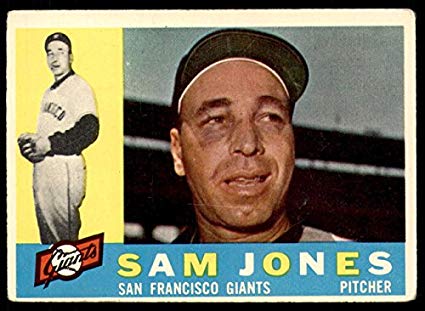
Somehow, Giants ace Sam Jones—who finished second in the Cy Young voting in 1959—got lit up every time he pitched in Chicago that year. Against the rest of the league that season, Jones was 21-12 with a 2.54 ERA, and struck out a batter every 1.25 innings. At Wrigley Field he was 0-3 with an 8.53 ERA and struck out a batter every six innings. It wasn’t long before San Francisco players identified what was behind the discrepancy.
“We just got wise and looked up, and sure enough, in the scoreboard there was a big empty square,” said Giants pitcher Mike McCormick. “Same scoreboard they have today, where they hand-place the numbers. There was somebody sitting up there in an empty square—one foot in the window was a fastball, two feet was a curveball, no feet was a changeup. You let a major-league hitter know what’s coming and he might not hit it all the time, but it certainly makes him a better hitter.”
That somebody was Cubs traveling secretary Don Biebel, who earlier that season had been installed as the man in the center-field scoreboard. Armed with binoculars, he signaled hitters by sticking his shoe into an open frame used to post scores. Contrary to McCormick’s recollection, it was the placement of his foot, not the number of feet, that bore a message. To the left of the square meant fastball, to the right a curve. Just an inch or two of sole was all it took.
This system particularly affected Jones, who had trouble handling anything but the simplest signs. This kept Giants manager Bill Rigney from making the signals more complex in an effort to stymie would-be thieves. So he had to deal with it another way.
At age 42, Giants outfielder Hank Sauer was the oldest player in the National League and had spent almost seven of his 15 years in the big leagues as a member of the Cubs. He knew the sort of things that went on at Wrigley Field, and, at 6-foot-4 and 200 lbs., was one of the last guys a traveling secretary hidden in the scoreboard wanted to cross. As the Cubs continued to batter Jones, Rigney sent his slugger to the scoreboard to get some answers.
“Between innings, I saw (first base coach Wes) Westrum and Hank Sauer and Bill Rigney get over in the corner of the dugout, and they were chatting,” said Biebel. “Sauer went out of the dugout and up the ramp, and I told the groundskeeper, who was in the scoreboard with me, ‘You better lock that thing up—I think we’re going to have some company.’ About 10 or 15 minutes later, well, here comes Sauer along the back fence of the bleachers. He walks all the way out there and he starts pounding on our little door, shouting, ‘Let me in!’ He pounded for awhile, but when he finally knew he wasn’t going to get in, he turned around and left.”
Part of the reason that the Cubs were able to get away with something so blatant, reasoned Biebel in an MLB.com report, was that “Everybody knew we were getting the signs and we still finished in fifth place.”
The Astros are another story. Two World Series in three seasons will do that for a club. Every day brings new revelations about just how far they’ve been willing to go. Now we just wait for reaction from the league office.
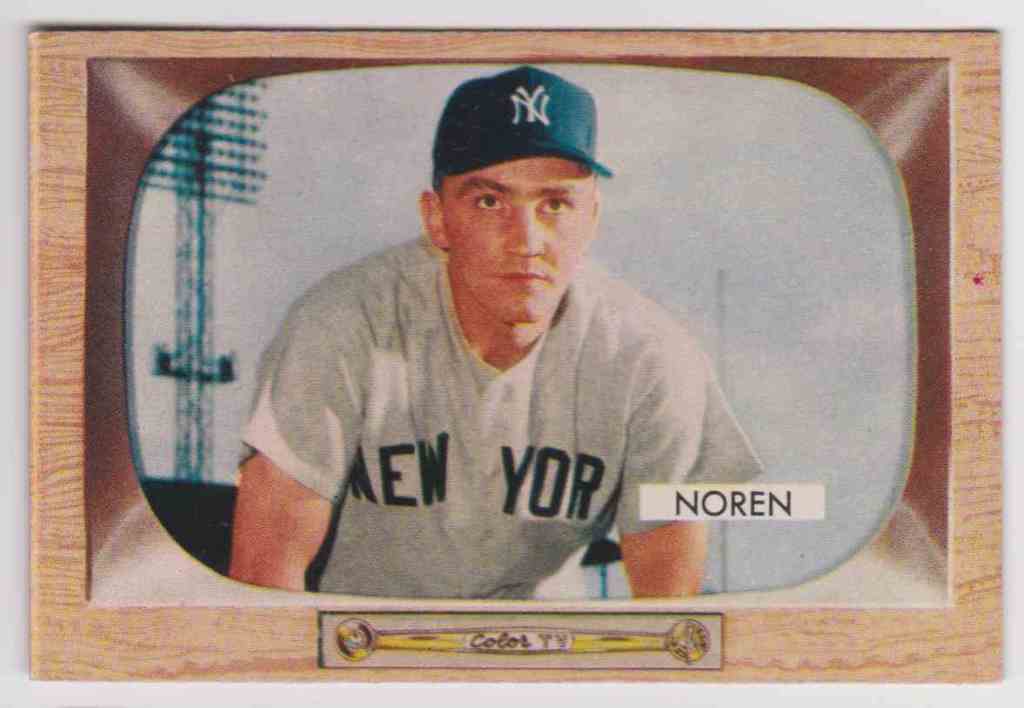
Irv Noren died over the weekend, just shy of his 95th birthday. He played for 11 big-league seasons, notably winning World Series with the Yankees in 1952, 1953 and 1956, and earning a spot on the American League All-Star team in 1954.
He was significant to me as the third base coach for the Oakland A’s in the early 1970s under Dick Williams, and, for a time, Alvin Dark. I visited his home in Southern California as part of my research for “Dynastic, Bombastic, Fantastic,” and he regaled me with detailed stories of his time in the Bay Area. (As I departed, he handed me a copy of an old photograph, taken during his minor league days with the Hollywood Stars, alongside a teenage batboy named Sparky Anderson.)
From the book:
“Noren was Dick Williams’ guy. The two had grown up together in Pasadena, and though they were separated by four years as schoolkids, they stayed close through their professional lives. Both were signed by the Brooklyn Dodgers, Noren in 1946 (following a one-season stint in the National Basketball League, a precursor to the NBA) and Williams a year later. When Williams was assigned to Fort Worth of the Texas League in 1948, he moved into Noren’s house. Noren advanced to the big leagues with Senators and then the Yankees, where he was an All-Star and won three World Series. After four more stops as a player, he became player-manager of the Hawaii Islanders of the Pacific Coast League (where he implemented a $50 fine for any player irresponsible enough to show up too sunburned to play). After Williams was fired as manager of the Red Sox in 1969, he promised Noren that he would reserve a spot for him on his next coaching staff. Sure enough, when Finley hired Williams in 1971, Noren was one of the manager’s first calls.”
Actually, only part of the above made it into the final copy. I detailed a fair amount of Noren’s journey with the A’s, but much of it—mostly having to do with the team’s transition from Williams to Alvin Dark—was cut for reasons of length. Noren’s tenure in Oakland ended with a mid-season dismissal in 1974, and the old coach was insistent on making sure the record was correct when it came to his perception of things. So I give you an unpublished excerpt from “Dynastic, Bombastic, Fantastic”:
Despite having played with Noren on both the Cardinals (1957-58) and the Cubs (1959), Dark got off to a rocky start with him at the beginning of the [1974 season]. Noren had been one of the front-runners to replace Dick Williams, and it was assumed that Dark’s hiring would not sit well with him. (The reality, of course, was that Noren’s long friendship with Williams virtually eliminated him from the competition before it even started.) Noren’s case was not helped when he was nowhere to be found upon Dark’s arrival in Mesa for spring training. It was easy to leap to conclusions, but Noren said that hurt feelings had nothing to do with his absence.
“I was really sick the day that spring training opened,” he said, looking back. “The doctor didn’t want me to fly or drive. I called Alvin and [A’s owner Charlie Finley] and said, ‘I’m sorry, I can’t report—I’m in bed.’ Alvin thought I wanted his job, and that I was pissed off because I didn’t get it. I had no inkling at all about wanting his job. I was just sick. I had the doctor write me out a note and reported three days later.”
Over the season’s first six weeks, Dark’s suspicions of his third-base coach ballooned to the point that he thought Noren was ignoring signs in order to make the manager look bad. Dark’s instructions for bunts and stolen bases were summarily overlooked to such a degree that he took the problem to Finley. The Owner, seeking solutions, theorized that perhaps Dark’s signs were too complex. He asked for a demonstration.
Dark explained to him about things like the indicator sign, before which everything else is subterfuge, and the complex methods with which the indicator can be utilized. Finley asked for the entire routine. Alvin did it, wiping across his chest, tapping his way down his arms, touching his wrist, his chin, his ear. It was all standard fare—but not for Finley.
“No wonder he misses signs,” said the Owner. “Your signs are too complicated. Make it simple. Touch your hat for a bunt. Touch your earlobe for a steal.” With a sigh, Dark explained that signs—his and every other manager’s—must be complex lest they be too easily deciphered.
Noren’s explanation, offered decades after the fact, was a bit different.
“Alvin came in and wanted me to use his signs, not my signs, so I had to learn a whole new set in a very short amount of time,” he said, looking back at Dark’s crash-course introduction to the club. “He also wanted me to relay signs to the guy on deck, which made things especially complicated. I missed the sign on the hit-and-run one time, and Alvin got mad. I said, ‘Alvin, I’m doing the best I can.’ ”
Noren paused to think about the lunacy of it all. “I’m going to do that to players?” he said, referring to the reports that Dark thought he’d been missing signs intentionally. “These guys won two World Series and I get along great with them. I’m going to screw them up because I don’t like the manager? Come on.”
Nonetheless, Dark was so disillusioned with the coach that he eventually tried to shift first base coach Jerry Adair to Noren’s position on the third base line. Adair demurred, pointing out that he was not a third-base coach, never mind that the team had won two straight championships with Noren giving the signals.
…
Noren appeared doomed from season’s start. He was popular with the players—a number of whom, including Bando, Hunter, Rudi and Lindblad, came out for a promotion at his liquor store in Arcadia, Calif., timed to coincide with an A’s trip to nearby Anaheim—and many were upset by his sudden departure. (The fact that he owned a liquor store may also have soured him in the eyes of the teetotaling Dark, despite the fact that Noren did not drink, either.)
The coach knew something was wrong before the game, when sportswriter Jim Street of the San Jose Mercury News, who was married to Noren’s daughter, Debbie, informed him that he had seen A’s minor league coach Bobby Hofman getting off a plane at the Oakland airport that afternoon. Throughout the game, Noren said, Dark refused to so much as glance in his direction. “Every pitch I’d look into the dugout for a sign, and he’d just look away,” he said. After the bottom of the seventh inning, Noren’s wife beckoned him to her seat in the stands. She was sitting with Debbie, whose husband had just confirmed the news. “It’s you,” she said. “You’re getting fired.” Noren’s rage was given two innings to build, and when Dark called him into his office after the game to deliver the news, the coach unleashed a bitter tirade. “I’m not a fighter, but I was ready to fight,” he said, looking back. “I tore into him. Alvin just sat there and didn’t say a word.”
Sure enough, Noren (who was fired along with fellow coach Vern Hoscheit) was replaced by Hofman. It was his last big league coaching job.
Ken Rosenthal and Evan Drellich of the Athletic have posted an enormous piece detailing illegal sign stealing within the Astros organization. According to their sources, the club placed a camera somewhere beyond the center field fence in Minute Maid Park to deliver a video feed of the opposing catcher to a monitor in the tunnel alongside the home dugout. When the signal for a breaking ball or offspeed pitch was given, spotters would bang on a trash can loudly enough for the hitter to hear it.
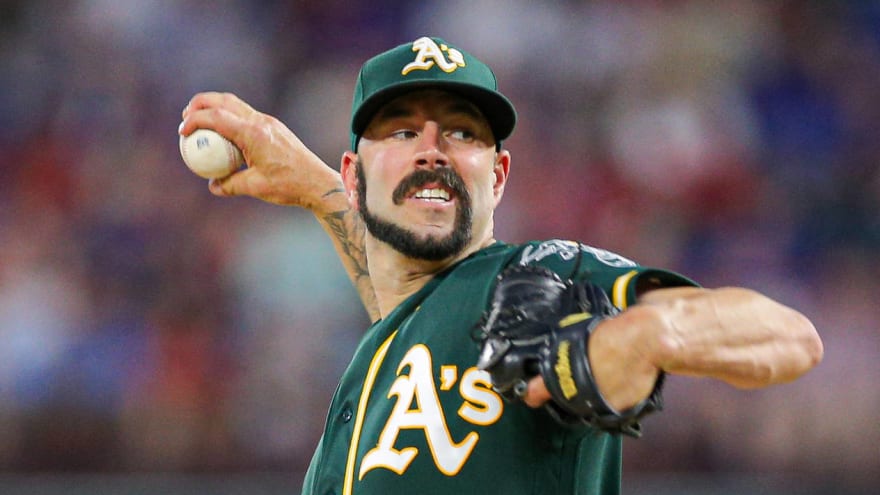
We’ve covered the concept of sign stealing extensively in this space over the years, from players nabbing a catcher’s signals while leading off from second base (totally legal), to those like the Astros who (allegedly) utilize devices in their pursuit. (Totally not legal.) To me, the most interesting part of this story is a primary source for Rosenthal and Drellich: A’s pitcher Mike Fiers, who played for the Astros from 2015 to 2017.
“I just want the game to be cleaned up a little bit because
there are guys who are losing their jobs because they’re going in there not
knowing,” he explained in the article. “Young guys getting hit around in the
first couple of innings starting a game, and then they get sent down. It’s
(B.S.) on that end. It’s ruining jobs for younger guys. The guys who know are
more prepared, but most people don’t.”
Fiers said that he informed his teams subsequent to the Astros—the Tigers and A’s—what to look for when traveling to southeast Texas. Perhaps thanks in part to Fiers’ warnings, the A’s went 4-5 at Minute Maid Park in 2019—not bad against the putative best team in baseball, and a better mark than they had while playing the Astros in Oakland.
This all brings up a number of issues, primary among them being why, if Houston has been doing this so obviously for so many years, more opponents have not called them out. The easy answer is that the Astros are hardly alone in this type of pursuit, and if another club has its own skeletons to protect, the prospect of quid pro quo (the term of the moment, it seems) provides sufficient discouragement. It’s why teams so rarely cry about pine tar use from the opposing pitcher: They don’t want to invite examinations of their own staff.
In the early going, the A’s organization has backed Fiers … to a point. GM David Forst, contacted by the San Francisco Chronicle, said that he was aware of “concerns among our staff and players,” and that “our players have voiced concerns about what other teams are doing.” Even then, though, he hedged his bet.
“It’s not about it being Houston or a team in our division,” Forst said. “You want the playing field to be level. I have to trust the people in MLB will get involved and address it.”
A player like Fiers speaking publicly about underhanded dealings by a former team carries real risk. The pitcher is 34 years old and going into the second year of a two-year contract. He’s a nine-year vet coming off his best season, and has shown a willingness to sport the least conventional facial hair in big league history. If he puts up another solid campaign in 2020, it’s safe to assume that his services will be highly valued in the free-agent marketplace. Maybe.
It’s not difficult to picture a team that bears its own secrets—whether it’s pitchers loading up baseballs or something along the lines of the Red Sox Apple Watch scandal from 2017—wanting to avoid potential headaches from a do-gooder gumming up the works with something so silly as morality. Suddenly, Fiers’ ongoing ability to pitch a baseball is not the only consideration for teams that consider signing him.
Baseball has seen this happen before. In The Baseball Codes, there’s an entire chapter on sign stealing via things like spyglasses and cameras. It opens with a story about a pitcher named Al Worthington, whose Giants team was doing that very thing in the 1950s. Worthington disapproved, and took corrective steps by threatening to publicly out manager Bill Rigney if he didn’t correct course. Cornered, Rigney acceded, and it might have cost his team a spot in the playoffs. I spoke with Worthington some 50 years after the fact, and his stance hadn’t softened a bit. “Once [Rigney] quit stealing signs, I felt good about that, ” he told me. “I didn’t think he should be doing that anyway. That’s not honest.”
The resulting story is a great lesson about what can happen to players who place a higher premium on morality than on victories, guys who want only to win the right way. Below is the entire excerpt. It’s long, but it tells a great and very relevant tale.
Allan Worthington was a quality pitcher, a right-hander who came up with the New York Giants in 1953 and moved with them to San Francisco five years later. By 1959, he was not only one of their most trusted bullpen members, but one of the most reliable relievers in the major leagues.
Then, over the course of a single season, everything changed. He was traded twice within a span of six months, playing for three teams in 1960 alone, and shortly thereafter quit the game altogether, at age thirty-one. Worthington was neither a bad character nor a headcase. He was throwing as well as he ever had. In fact, he had only one problem, which was enough to sour him in the eyes of more than one ballclub: Al Worthington wasn’t a cheat.
At the tail end of the 1959 season, San Francisco was battling the Dodgers and Braves for the National League pennant, holding first place into the season’s final week. In an effort to gain an edge on its competition, the club asked former coach and proven sign stealer Herman Franks, who had left the Giants the previous year, to return and set up an espionage system. His resulting handiwork had various members of the organization, armed with binoculars, placed in the far reaches of San Francisco’s Seals Stadium to pick up signs and relay them to the dugout. When Worthington first heard about the operation, he was appalled.
The pitcher had seen a similar system over the first four years of his career, when the Giants played in New York’s Polo Grounds before moving west. Although it bothered him, he was never certain enough about his standing on the team to speak his mind. In 1958, however, Worthington found religion at a Billy Graham rally at San Francisco’s Cow Palace, and from that point forward refused to tolerate inequities on the field.
When he found out about Franks’s scheme in ’59, Worthington pulled Giants manager Bill Rigney aside and demanded that the practice cease, threatening to abandon the team if it didn’t. Rigney was stuck: Worthington was a valuable member of the bullpen, and losing him would be a blow. The binoculars were shelved, and the Giants immediately lost three straight to the Dodgers (and seven of their last eight), to finish four games back in the National League.
At that point, of course, Worthington’s fate hardly hinged on the team’s success; when the season ended, the Giants couldn’t get rid of him fast enough, trading him to the Red Sox for spare parts prior to the 1960 campaign. Boston in turn shipped him to the White Sox that September. Chicago, only three games behind the Orioles, was looking to bolster its bullpen, but nobody in the organization bothered to ask the Giants about their new acquisition. This would have been beneficial, considering that the White Sox used a sign-stealing system even more complex than the one in San Francisco. When the team played at home, Chicago’s pitching instructor and former Tigers standout, Dizzy Trout, watched the opposing catcher from inside the recently installed Comiskey Park “exploding” scoreboard—a pyrotechnic exhibition unlike any seen in baseball up to that time. Trout then triggered a light hidden amid many others in the center-field display that signaled hitters to the type of pitch about to be thrown—blinking meant breaking ball, solid meant fastball. It could be seen from both the plate and the White Sox dugout along the third-base line, but not from the visitors’ dugout near first. The scheme was incredibly effective, helping the Sox build a 51-26 record (.662) at home that year, even as they struggled to a 36-41 mark (.468) on the road.
The benefit hardly outweighed the detriment in Worthington’s eyes. It was illicit behavior, and by the time he arrived in Chicago, the pitcher was already practiced in his response. Shortly after learning of the system, the right-hander informed manager Al Lopez in a hotel lobby in Kansas City that he wanted nothing to do with it, that he “didn’t want to play for a team that cheats.”
“As a player it was none of his business what we were doing,” said Lopez. “But I did say, ‘Show me in the rule books where it’s wrong.’ I told him I respected his religious beliefs. I said I hoped he would respect mine, and that my religious beliefs would not permit me to do anything I thought wrong.”
“Al Lopez said that it wasn’t cheating . . . ,” said Worthington. “I thought later, Well, if it’s okay to do it, why don’t they tell everyone?”
Lopez sent Worthington to speak with general manager Hank Greenberg, which only made things worse. Greenberg, after all, freely admitted to his own preferences for receiving pilfered signs during his Hall of Fame playing days with Detroit. “Baseball is a game where you try to get away with anything you can,” he said. “You cut corners when you run the bases. If you trap a ball in the outfield, you swear you caught it. Everybody tries to cheat a little.”
After less than a week with the White Sox, Worthington was fed up enough to quit, going home to Alabama and enrolling at Samford University. The team’s official explanation was that he left over a salary dispute. This was the first time the White Sox had been challenged about a system that had been in use for years. It had originally been implemented by Frank Lane, the team’s general manager four years before Greenberg came along, as a response to the abundant stories about other clubs’ use of similar schemes. According to Sam Esposito, a utility infielder with the Sox, it started when Lane brought his complaints to two of the team’s third basemen—future Hall of Famer George Kell and his backup, Bob Kennedy. Esposito said that the pair devised a system far more devious— not to mention effective—than the then-standard practice of having a coach peer at the opposing catcher through binoculars from the bullpen, and manually signal the hitter by placing (or removing) a towel atop the fence.
That type of system was easily identified. The way Esposito tells it, Kell and Kennedy’s plan to use the scoreboard light couldn’t have been more effective. “It was hump city . . . ,” he said. “You’d be sitting in the bullpen or dugout, the pitcher would be winding up, in his motion, and our hitter would still be looking up at center field, waiting for the light to come on. Sherm Lollar loved the light, Walt Dropo loved it. Nellie Fox wouldn’t use it. Nellie was a slap hitter, and he was afraid if he knew it was a fastball that he’d muscle up on the pitch and end up hitting a long fly ball, one of those warning-track outs.”
“I doubt if there is one club that hasn’t tried it at one time or another in recent years,” wrote White Sox owner Bill Veeck in his autobiography, Veeck—As in Wreck. “There is absolutely nothing in the rules against it.”
Though most ballplayers admit that the stealing of signs is pervasive within the game and accept it as an unavoidable facet of a complex sport, even those who embrace the practice have a difficult time defending those who go beyond the field of play to do it. Any sign deciphered via a mechanical device (usually binoculars or hidden video feeds) is roundly denounced. Don Lee, a reliever with the Los Angeles Angels in the early 1960s, could stand up in some well-placed bullpens and, with his naked eye, read the catcher’s signs from beyond the outfield wall. When he relayed those signs to hitters by placing his hand (or not placing his hand) atop the fence, it was generally considered acceptable because he was picking them up unaided. (“Sounds impossible, but he was able to do it,” said his teammate, catcher Buck Rodgers. “I was there. I was a beneficiary.”) Stick a telescope in Lee’s hands, however, and he’d have a roster full of enemies in the opposing dugout the instant he was caught. “Bootling information to the batter through a hidden observer equipped with field glasses is a dastardly deed,” wrote Red Smith in 1950. “But the coach who can stand on the third-base line and, using only his own eyes and intelligence, tap the enemy’s line of communication, is justly admired for his acuteness.”
Even Al Worthington was willing to admit as much. “Sign stealing is as old as baseball,” he said. “You watch a coach from the dugout and you try to figure out the signs he’s giving to the batter, but it’s the coach’s job to hide them from you. . . . There’s nothing wrong with that. But to spy with binoculars . . . that’s cheating.”
The White Sox, unable to trade Worthington after word got out about his moral stance, banished him to the minors for the next two years. The pitcher was claimed by Cincinnati in the Rule 5 draft prior to the 1963 season, and after being sold to Minnesota in 1964 spent six productive seasons with the Twins, leading the American League in saves in 1968, at age 39.
Here’s hoping that Fiers’ journey, whatever it might be, is smoother than that.
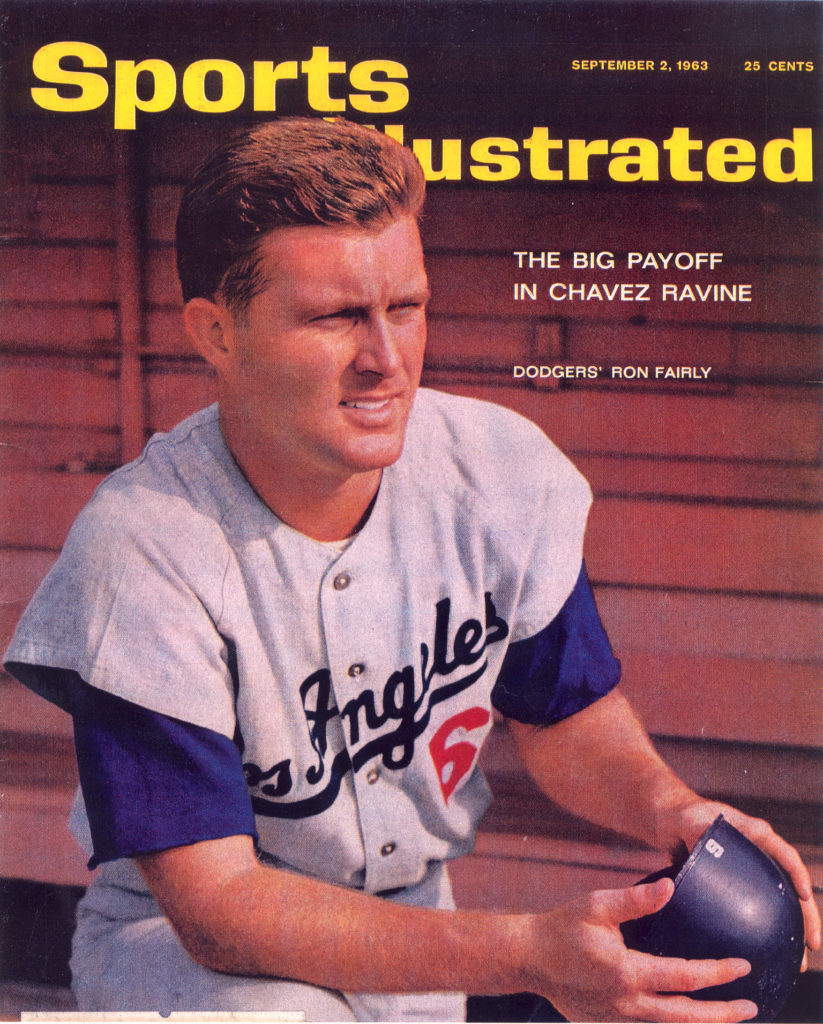
Longtime big league player and broadcaster Ron Fairly passed away on Wednesday at age 81. He played for six teams, primarily the Dodgers, starting in 1958, making two All-Star teams over a 21-season career (including in 1977, at age 38) and being a part of three World Series winners.
Fairly sat for an extensive interview for The Baseball Codes in which he proved himself to be unyieldingly old-school. The conversation took place in 2008, four years before Yasiel Puig’s debut with the Dodgers, back when bat flipping and excessive posturing was still relatively taboo, when Barry Bonds was more outlier than influencer. Even by those standards, Fairly’s outlook provided a charming glance into the way comportment once was held within baseball, and the type of man for whom such things mattered.
You don’t embarrass, you don’t show up the other team. And you don’t make fun of them by hitting a home run and flipping the bat and doing a twirl or jumping up in the air. … It used to be that when you hit a home run, you didn’t do anything—you just ran around the bases. By hitting the ball out of the ballpark, you’d done all the damage you needed to do. You’d hit a home run, so run around the bases and get off the field. That’s changed. Today it’s a more fancy, more showboat-type of play. Take an easy play and make it look a little tougher than it really is. That changed probably when they started doing the sports highlight shows. They don’t put routine plays on the air—only if someone makes a fancy play of some sort. It’s become habit with a lot of players. Instead of just making the play and throwing the guy out, they have to do something to make the play appear to be more difficult than it really is. The best example I can give you is, if you think back just a few years ago, watching Alan Trammell field a ball at shortstop and throw somebody out, versus watching some of the same type of plays today. I thought Alan Trammell’s fundamentals were as good as anyone I’ve ever seen. He was a fantastic shortstop. And he didn’t feel the need to be fancy.
He also offered some philosophy about pitchers intentionally throwing at batters.
There has to be a reason to knock you down. Good golly, if you’re making out after out after out, why in the world would they throw at you? You’re an out man! Why would they throw at you and wake you up? It’s when you’re doing something against the opposing team like hitting the ball out of the ballpark, like getting base hits with runners in scoring position, when you’re doing something to hurt them like driving in runs—then they’ll turn around and say, “Well, let’s find out a little bit more about this guy.” Then you’re liable to be knocked down. The idea is to see how you react to being knocked down. If it doesn’t bother you, they’ll turn around and say, “Well, if it doesn’t bother him, we’re not going to do that. We’ve got to figure out a different way to get him out.” …
Don Drysdale was the best at protecting his hitters. Don said, “You go up and swing as hard as you want to, because if they throw at you they’re only going to do it once. I’ll take care of it.” Don always said it was two for one—two of theirs for every one of ours—so I never had to say a word to anybody, ever.
In addition to playing alongside one of the sport’s great enforcers in Drysdale, Fairly played against the only guy in Drysdale’s class when it came to that sort of stuff:
I talked to opponents all the time [while playing first base]. There were some guys who didn’t like it, like Bob Gibson. I said, “Hi, Bob. How are you tonight?” And he says, “Why don’t you shut the fuck up?” That was the last time I talked to Bob at first base.
In the years since that interview, I’ve used the phrase “He’s an out man!” countless times. From a personal standpoint, I remember Fairly best as a Giants broadcaster in the late-1980s and early 1990s. He was a capable describer of game action, even though his stories—and there were a lot of them—tended to be about the Dodgers. (Then again, why wouldn’t they, considering that he spent his first dozen seasons in LA, which included four World Series.)

 The Baseball Codes