Bryan Anderson, Nyjer Morgan, Running Into the Catcher

Morgan’s Takeout Attempt Stirs Frustration in Both Dugouts

It’s said that in the middle of a bang-bang play, where rational thought is subverted in favor of pure instinct, a man’s true colors can be seen.

If this is true, it doesn’t reflect well on Nyjer Morgan.

In the eighth inning of Saturday’s game against St. Louis, Morgan should have scored from first base on a Willie Harris double—which would have been the Nationals’ fourth run of the inning and 12th run of the game, and which would have given them a seven-run lead.

That Morgan was waived around in the first place, with his team holding a six-run lead, was acceptable, as he was so clearly safe that first baseman Albert Pujols, serving as the cutoff man, didn’t even bother to throw home.

However, with catcher Bryan Anderson venturing up the line toward first, his back to the plate and moving away from the play, Morgan inexplicably lowered his shoulder and went out of his way to barrel into him.

So far out of his way, in fact, that he never touched the plate. When Nats catcher Ivan Rodriguez, who had just scored, grabbed Morgan at the edge of the cutout and spun him around to double back, he violated the rule stipulating that players can not be touched by a teammate in the middle of a play. The run was subsequently wiped off the board. (Watch it all here.)

That, however, was the least of Washington’s worries.

How serious was the display? One of a manager’s primary responsibilities is to shield his players from undue scrutiny, refraining from leveling public blame even when he’s making a pastime of tearing them apart behind closed doors.

Nationals manager Jim Riggleman didn’t even offer a pretense of protecting Morgan. After apologizing to both Anderson and Tony La Russa after the game, he delivered a number of choice sentiments about his center fielder to the press. Among them, as reported by Nationals Daily News, was that Morgan did an “unprofessional thing,” and, indicating that lessons will be learned, that “you’ll never see it again” from him.

Most interestingly, Riggleman chose not to skirt the fact that La Russa will almost certainly be motivated to retaliate, and went so far as to say that he’d do the same thing were it his player at the wrong end of the collision.

“I can’t minimize [the incident], because if I take the approach that there’s nothing wrong with it, we’re gonna get people hurt on the field,” he said. “There’s gotta be retaliation. If Nyjer was playing today, he’d get hit. If an opposing player did that to my catcher and came to the plate, he’d get hit.”

At least Riggleman had his player’s interests in mind on Sunday, when he pulled him from the lineup for the teams’ final meeting until 2011 (at which point there’s a decent chance that La Russa will no longer be involved).

In the interim, the St. Louis manager appreciated Riggleman’s approach.

“They handled it internally, and they made it clear to us that it was a mistake,” he said in an MLB.com report. “The Nats did what they had to do to defuse it. Guys make mistakes. I made it a point not to say anything after the game. I didn’t say a word.”

Communication can go a long way in this type of situation. In 2006, Twins manager Ron Gardenhire apologized to Red Sox skipper Terry Francona after Torii Hunter swung at a 3-0 pitch with his team holding an 8-1 lead in the eighth inning. An act that any pitcher could justify as retaliation-worthy was subsequently nullified, and no further action was taken.

In this case, we won’t know until next season how much weight Riggleman’s apology will hold.

We do know, however, that an off-season is hardly too long to wait for someone with retaliation on his mind.

– Jason

No-Hitter Etiquette

Don’t Talk During a No-Hitter—a Rule That Never Gets Old

In this, the Year of the No-Hitter, there’s been an awful lot of talk about appropriate etiquette during the course of one.

In this space alone, we’ve discussed pulling a pitcher (not once, but three times); changing things up, and in more than one way; sending a pinch-hitter to break one up, even when the game’s out of hand; bunting to break one up (twice); umpires’ roles—particularly as they pertain to robbing a pitcher of a perfect game; and what constitutes appropriate behavior, up to and including extra efforts. Mostly, however, we’ve discussed discussing them—in broadcasts, on message boards (in various permutations), on blogs and on Twitter.

This week, the concept came up again, twice. In the aftermath of Rich Harden being pulled from his own no-hitter, HardballTalk’s D.J. Short took serious grief on his own message boards for posting entries as the game unfolded, thus inexorably jinxing the efforts of the Rangers pitching staff.

Or so certain posters would have us believe. A small sampling:

So you’re a professional baseball writer, huh? And you use that hyphenated word while the event is still in progress?

Changing the title after the fact doesn’t undo the jinx you laid on the Rangers with your irresponsible use of the term “no-hitter” during the game. There are a thousand or so ways to dance around the term and still get the point across. Maybe someday, after you’ve been around a while, you’ll understand that the people who care enough about this game to read this blog know that, and respect and honor that tradition, and fear the consequences of violating it.

I would say that anyone that says jinxes don’t exist should probably be writing about somehing other than baseball.

Short took it in stride, publishing a good-natured screed about why, exactly, such things are essentially a bunch of hokum.

“My apologies if you hate it, but I just refuse to believe that if I mention the event in progress—as I did here on the blog on Tuesday night—it will have some cosmic effect on the actual game on the field,” he wrote. “That’s positively bananas.”

To back up his point, Short mentioned that similar HardballTalk coverage was offered for the five no-hitters already in the books this season, none of which were broken up. Add in MLB Network’s breakaway live coverage when no-hitters reach the late innings, and Twitter, and the panoply of message boards, and the possibilities for a jinx are manifold.

Short: “We live in a world where no-hitters in progress are mentioned more frequently than ever before, yet we have had more no-no’s this season than there have been since 1990.”

It’s a great point, and it’s clearly on the writer’s mind for personal reasons.

Not so for FanHouse’s Ed Price, who dropped nearly 1,000 words on no-hitter etiquette based on nothing more timely than the fact that it’s an interesting story.

On one hand, he wrote, John Flaherty of the YES Network, a former big league catcher, mentioned Javier Vazquez’s would-be no-hitter on the air (something Flaherty admits he would never have done from the dugout).

On the other hand, Tampa Bay Rays broadcaster Dewayne Staats refrained from using the phrase during the entirety of Matt Garza’s no-no on July 26.

“I framed it in every way possible without actually saying it,” he told the St. Petersburg Times. “Fans start to catch on that something is happening. At one point, I said, ‘Garza has faced the minimum and has allowed only one baserunner and that came on a walk.’ So I’m essentially saying it without saying it.”

The reasons for not mentioning it are clear: Listeners respond to the concept of jinxes, much like the readers of HardballTalk. This goes all the way back to Red Barber, who, broadcasting the first televised World Series in 1947, mentioned on the air that Yankees pitcher Bill Bevens was working on a no-hitter.

“There was a hue and cry that night,” said the broadcaster. “Yankee fans flooded the radio station with angry calls and claimed I had jinxed Bevens. Some of my fellow announcers on sports shows that evening said I had done the most unsportsmanlike broadcast in history.”

For those broadcasters who do mention it, however, the reasoning is even more simple.

“If you want people to stay tuned, you should probably mention, ‘Hey, hang in there, don’t go anywhere—guy’s throwing a no-hitter,’ ” said player-turned-broadcaster Steve Lyons.

Of course, points out FanHouse, that doesn’t always work. Two batters after Flaherty mentioned the phrase “no-hitter” on June 6, Vazquez allowed his first hit of the night—a home run.

“People get fired up—’Oh, you jinxed it . . .’ ” said Flaherty. “But I’m not that powerful.”

– Jason

Felix Pie, Mark Buehrle, Sign stealing

Sign Stealing on the South Side?

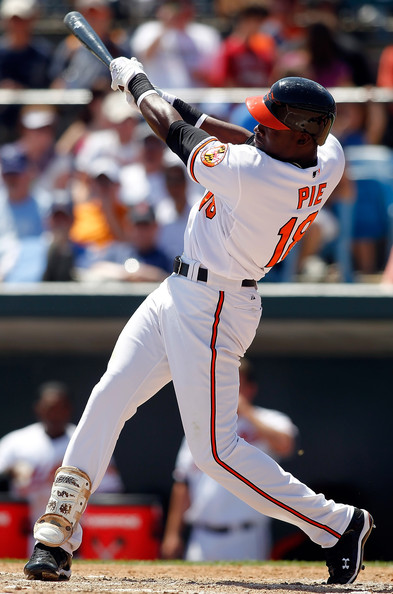
As White Sox pitcher Mark Buehrle headed to the mound for the sixth inning against Baltimore Wednesday, he had more than just pitching on his mind.

Perhaps it’s that he’d given up two runs to the Orioles in the previous frame. Maybe it was because outfielder Felix Pie was 5-for-7 with a walk to that point over the series’ two games, and Buehrle was fed up.

Or maybe he doesn’t like players stealing his team’s signs.

The Baltimore Sun reported that Buehrle started yelling at Pie (and, by proximity, it appears, Corey Patterson, as well) as he was heading back to the dugout—an exchange that several Orioles players confirmed had to do with the stealing of signs, and the ramifications therein.

How Pie was stealing them was more difficult to discern. He had walked in the fifth, then scored on Matt Wieters’ double, but was never stationed at second base to get a good look at the catcher or the pitcher’s grip on the ball. (While it’s possible to steal signs from first base, it happens far less frequently. Pie could conceivably have been signaling location from there based on the catcher’s setup.)

Prior to that moment, Pie had been all over the basepaths for Baltimore, but the only time he he had been stationed at second, Wieters followed with an inning-ending fly ball.)

Sign stealing from the field of play is an inextricable part of baseball, and occurs with both frequency and consistency throughout the season. The unwritten rules do nothing to prevent somebody from trying to gain this particular edge.

“Stealing signs is part of the game—that’s not the problem,” said Dusty Baker. “The problem is, if you get caught, quit. That’s the deal. If you get caught you have to stop.”

In Buehrle’s case, he or his teammates had clearly seen something amiss, and he took it upon himself to inform the opposition that it was time to put a stop to whatever it was they were doing. It was likely a repeat offense that spurred him to act.

Pie was lucky that it was Buehrle’s barbs that stung him, not his fastball.

“I’d just go up to them and say, ‘Come on, now, you’ve got to be a little bit more discreet—it’s too obvious,’ ” said shortstop Shawon Dunston, discussing his own methods of operation during his playing career. “They just give you a dumb look, but the next time the behavior changes. You’ve got to get every edge and I don’t have a problem with that, but don’t be too obvious. And be prepared to get drilled if you get caught. Period. That’s how it is.”

Jack Morris once took things a step further. Rather than waiting until an inning ended to deliver his message, he simply spun on his heel and, taking steps toward second, informed the started runner that he did not appreciate what was going on.

Then he said, “I’m throwing a fastball and it’s going at him. Make sure you tell him that.”

After doing precisely that, knocking the hitter down, Morris made a second trip toward the runner. “Did you tell him?” he yelled. “Did you?”

– Jason

Don't Showboat, Jose Bautista, Retaliation

Bautista’s Game-Winning Homer Conveys Message, then he Conveys it Again

Jose Bautista’s first home run Monday meant little on its own, save for being the slugger’s major league-leading 39th of the season.

His second home run Monday meant a lot more, at least to him.

The difference: What happened in between.

That would be the sixth-inning fastball that Yankees starter Ivan Nova sent spinning toward—and ultimately over—Bautista’s head.

The hitter took it as a response to his earlier bomb. Nova was more likely just wild, considering that it was his first start as a big leaguer. Bautista had words for the right-hander as he approached the mound, Nova didn’t back down at all and benches and bullpens quickly emptied onto the field.

Although no punches were thrown, the incident served as a prelude for an interesting response from Bautista after he hit another home run, in the eighth.

Baseball will tolerate a degree of showboating, so long as it’s in response to a Code violation. Bautista’s reaction to his second home run (the eventual game-winner, hit off of reliever David Robertson) started with a bat flip in conjunction with a glare toward the mound. It ended with one of the slowest home-run trots in the big leagues this season, and some fist pumping upon reaching the plate. (Watch it here.)

In addition is the notion that rookies must be tested, which, admitted Bautista, is what motivated his sixth-inning outburst, at least in part.

“I was just trying to see what kind of reaction I was going to get from him,” he said in the Bergen Record. “I was surprised to see he was pretty defiant. He was walking up toward me and flashing his hands up and started yelling.”

Part of Bautista’s motivation was to use Nova’s response to gauge intent. Despite the pitcher’s repeated assertion (in Spanish) that “I don’t want to hit you,” that, said Bautista, was “when I felt that the pitch was intentional.”

Bautista might have already been angry at a Toronto Star columnist who suggested that his power surge might be artificially fueled, using exactly zero pieces of evidence to back up his claim. (Bautista denied everything.)

Blue Jays fans can only hope that he continues to take out his anger on baseballs across the league.

– Jason

No-Hitter Etiquette, Rich Harden, Ron Washington

No-Hitter in Hand, Harden Pulled

Removing pitchers in the middle of no-hitters is getting to be downright commonplace these days.

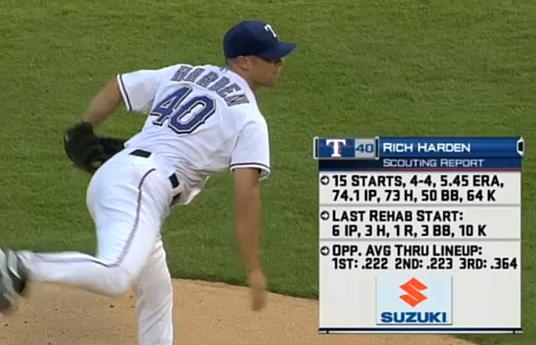
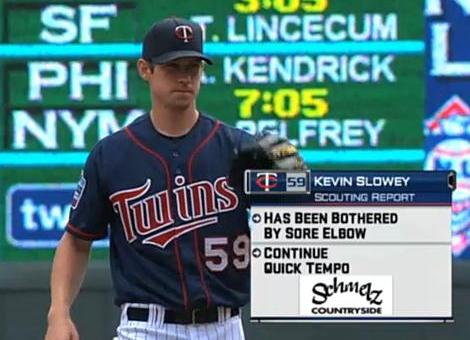
Eight days after Twins manager Ron Gardenhire raised eyebrows for removing pitcher Kevin Slowey after 106 pitches over seven no-hit innings, Rangers manager Ron Washington did something similar with Rich Harden yesterday.

In Slowey’s case, he had recently been shelved due to elbow soreness, and his long-term effectiveness was more important to his manager than a longshot chance at finishing a no-hitter with an elevated pitch count.

Harden did Slowey one better, throwing his gem in his first start off the disabled list. A seventh-inning walk to Michael Cuddyer raised his pitch count to 111, with Jim Thome at the plate and the tying run on deck. It was all Washington needed to see.

Harden had no chance of throwing 150 pitches on the day—which is what it would have taken to complete the game at the pace he had set—and already possessed a storied injury history.

As pointed out in the Wall Street Journal, oddities about the moment were plentiful.

•  Slowey was watching the action from the Minnesota bench.
•  The plate umpire was Jim Joyce, himself at the center of a no-hitter controversy earlier this year when he incorrectly ruled that what would have been the final hitter of Armando Galarraga’s would-be perfect game reached base safely.
•  New Rangers owner Nolan Ryan—he of seven (full) no-hitters—was watching the game from the front row.

There may be no more prominent opponent of strict pitch counts than Ryan. Ron Washington is acutely aware of this. That he made the move anyway speaks to his conviction about the subject.

“He threw 111 pitches,” Ryan said of Harden in an MLB.com report. “He kept his stuff the whole time, but Ron didn’t have a choice but to take him out. You have to protect the player and do what’s best for the team. Ron did the right thing and Rich knew it.”

The no-hitter was broken up in the ninth, when Joe Mauer singled against close Neftali Feliz. If Harden needed a shoulder to cry on, Kevin Slowey was just down the hall.

– Jason

Don't Help an Opponent, Francisco Cervelli, Vince Coleman, Willie McGee

Stop! In the Name of Glove

There was a bit of hubbub in New York last week when Francisco Cervelli, normally a catcher for the Yankees, showed up at third base.

The clamor had less to do with Cervelli’s ability to make plays than the tools he used to make them. Midway through the game, TV cameras homed in on his Wilson model glove, smartly embroidered with the words “Wright No. 5.”

There is a Wright who wears No. 5 and plays third base in New York with a Wilson glove, but his home games aren’t at Yankee Stadium. It’s David Wright, the longtime third baseman for the Mets.

What, asked reporters later, was Cervelli doing with that glove?

“We have the same [glove] company,” Cervelli said in an MLB.com report. “That’s what they sent me, so I’ve got to use it. That’s my glove. I don’t know, maybe later when I’ve got more years in the big leagues, they’ll put my name on it. I don’t really care.”

It’s a far cry from Vince Coleman, whose actual glove was once used by an opponent. It was 1991, and Giants outfielder Willie McGee had his equipment stolen from the visitors’ locker room at Shea Stadium, so he turned to ex-teammate Coleman for backup. Using one of Coleman’s gloves, he recorded three putouts on the day.

(McGee was significantly happier with the result than were Coleman’s teammates on the Mets, who later fined him $10 per catch in kangaroo court.)

Cervelli’s tale also ended up in the Mets clubhouse, albeit a more circuitous route. Although he’s only played three innings at third base so far this season, he regularly takes ground balls there before games. When he left his glove on the turf when the Yankees plaed at Citi Field earlier this year, clubbies mistakenly returned it to Wright’s locker.

“He got confused and said, ‘I’m so sorry,’ ” said Cervelli. “I want him to sign my glove when the season’s done. I’m going to send it to him.”

– Jason

Brett Gardner, Jeremy Bonderman, Retaliation

Living it Up in New York

Sometimes the umpires know when to let ’em play.

Detroit starter Jeremy Bonderman drilled New York’s Brett Gardner with his first pitch of Wednesday night’s game, clear retaliation for Gardner’s takeout slide that injured Carlos Guillen on Monday. (Watch it here.)

(“If anyone over there thought it was a clean slide, we had a different opinion on that,” said Johnny Damon afterward, putting to rest any doubt about Bonderman’s intentions. That the response came two days later might be explained by the diagnosis that came down in the interim, confirming that what had been thought to be merely a ding was a deep bone bruise that would need weeks to heal.)

An immediate warning was issued by umpire Eric Cooper, in an effort to keep things from spiraling out of control.

Except that Miguel Cabrera then had to go and hit a pair of homers, possibly inspiring Yankees reliever Chad Gaudin to hit him in the ribs with a 91 mph fastball.

There was, apparently, sufficient doubt behind the intent for Gaudin to be allowed to stay in the game. (Tigers manager Jim Leyland disagreed, getting tossed after arguing for the merits of warning enforcement. “They’re going to the playoffs—we’re not going anywhere,” he said to Cooper, in comments picked up on the Fox Sports Detroit telecast and reported in the Detroit Free Press. Somebody is going to get hurt.”)

It evened out somewhat, when Detroit’s Enrique Gonzalez put a pitch behind Derek Jeter‘s back, and ran inside to both Robinson Cano and Mark Teixeira (each of whom hit first-inning homers).

After Cooper declined to identify Gaudin’s pitch as having intent, it would have been difficult for him to implicate Gonzalez on similar charges. There was also the fact that by drilling Cabrera, Gaudin had reignited a controversy that by all rights should have died. The Tigers were entitled to a response, and Cooper gave it to them.

* * *

One of the most entertaining pieces of any tit-for-tat beanball war is the creativity involved in blanket denials that come sweeping in from both sides. (Ozzie Guillen might be the only big league manager to steadfastly refuse to play the game—”Maybe people don’t believe that, but every time I get something done, I let you guys know who did it,” Guillen said about the concept of retaliation in the Chicago Sun-Times. ”And I got a lot of money paid to Major League Baseball because I say, ‘Yes, I did it’ “—although his admissions end up being far more amusing than anything he could fabricate.)

Yankees manager Joe Girardi did his part in the Bronx, insisting that Gaudin’s drilling of Cabrera made little strategic sense, eventually leading as it did to Girardi burning both David Robertson and Mariano Rivera in a game that New York would win, 9-5.

The players involved similarly chimed in:

  • “I don’t know. I don’t care,” said Cabrera in an MLB.com report, in response to a question about whether he felt he had been hit on purpose.
  • “I don’t know if it was [intentional] or not. That’s not for me to judge. It doesn’t really matter,” said Gardner about the pitch that hit him.
  • “I think guys can tell when you’re doing it on purpose. I didn’t,” said Gaudin, in denial. “This is baseball. It happens.”
  • “Next question,” said Bonderman, declining to discuss his pitch to Gardner. Of course, Bonderman was been suspended to start the season after drilling Minnesota’s Delmon Young at the end of last year.

Admission of intent, of course, is tantamount to signing your own suspension notice, so denials are status quo.

Although he was short with his answer, Bonderman opted for the most noble solution to the problem. While the public would enjoy a full dissertation on his actual motivation, the consequences for frankness in this situation won’t allow it. (Just ask Ozzie Guillen.) So rather than lying about the pitch in question getting away, Bonderman simply refused to discuss it.

Which is just fine by us.

– Jason

Bobby Thomson, Sign stealing

Stolen Signs and the Shot Heard ‘Round the World

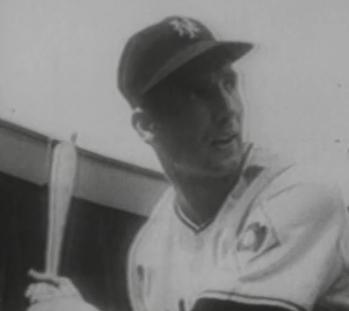
Bobby Thomson, who passed away yesterday, held an unusual place in baseball. Not a Hall of Famer, not even a superstar, he was nonetheless legendary, with his Shot Heard ’Round the World augmenting a long and successful career, during which he resided at the heart of the Giants’ batting order for his five best seasons.

Thomson will be forever linked to Ralph Branca, the Dodgers pitcher who served up the homer that’s kept them both famous. It was, and will always be, among the greatest moments in baseball history.

It’s also unique, in that its intrigue has grown over recent years, a half-century after it happened, as new information came out about the Giants’ proclivity for stealing signs that season, and questions arose about whether Thomson might have been signaled in advance of Branca’s fateful pitch.

None of it can detract from the gravity of the moment, or serve to deny Thomson his rightful place among baseball’s legends. Still, it’s a tale of Code-based intrigue, and brings new wrinkles to an otherwise well-worn story.

The original draft of The Baseball Codes offered a lengthier examination than was ultimately published. Today seems to be a good time to offer it up here.

Without question, the most infamous sign-relay system in baseball history—which inspired countless newspaper accounts and its own book-length examination—was the one used by the New York Giants at the Polo Grounds in 1951. That was the year of baseball’s greatest home run, Bobby Thomson’s “Shot Heard ’Round the World,” which capped the Giants’ return from a huge August deficit to beat the Brooklyn Dodgers in a three-game playoff and earned them a trip to the World Series.

The Giants’ system had been kept largely secret for a half-century, but was uncovered in 2001 by the Wall Street Journal’s Joshua Prager, who later wrote a book on the subject, “The Echoing Green.” Prager found that after a particularly rough stretch in mid-July 1951, New York manager Leo Durocher implemented a system with which the Giants expertly stole their opponents’ signs for the final 10 weeks of the season. During this stretch, New York went 40-14, after a solid if unspectacular 56-44 mark from April through July.

The Giants’ home ballpark, the Polo Grounds, offered the perfect setup for such a scheme, as the windows of the center-field clubhouse faced the field, giving a spotter a perfect sightline to the plate. It wasn’t exactly revolutionary to steal signs from that clubhouse—Bill Veeck alleged that as far back as John McGraw the team had someone looking through binoculars from that same vantage point, who would either raise or lower a shutter to signal the pitch.

The positioning was so favorable that even visiting teams used the setup to their advantage. Gene Mauch recalled that as a little-used infielder with the Cubs in 1948, he’d sit with a pair of binoculars in the Polo Grounds visitors’ clubhouse (located alongside the home locker room, it also had windows overlooking the field) and pick up the Giants’ signs. Mauch’s signal to Chicago’s hitters was a large can of peach nectar that he’d move back and forth across the sill—to the left for a curveball, to the right for a fastball and in the middle for a changeup. Because it was the Cubs, however, the signals were usually of little assistance. “I remember one game when Walker Cooper was catching and Dave Koslo was pitching (for the Giants) that I called every pitch,” he said in the Los Angeles Times. “I think we got three hits and one run.”

Mauch wasn’t the only Cub that season who knew his way around a spyglass. There was also Hank Schenz, who split duties with Mauch both at second base and behind the team’s binoculars. When Schenz, a journeyman, joined the Giants three seasons later, he appeared to be a good fit for the system that Durocher was about to install.

It was an electric signal that ran from the Polo Grounds’ clubhouse to the home bullpen. With it, someone sitting near the Giants’ locker-room window could press a button, which buzzed a bullpen phone. The system was simple and effective—no matter how hard anyone looked for an illicit signal coming from behind the center-field window, they wouldn’t see a thing. One buzz for fastball, twice for off-speed was the code.

Schenz was on the New York roster for the final two months of the season, during which he never came to the plate—possibly because he spent so many innings watching games from behind the clubhouse window. He was one of the first to man the buzzer, but much like his play on the field, his desire outstripped his talent, and he experienced occasional difficulties in properly decoding the opposition’s signals. The binoculars were soon passed to Herman Franks, a young coach whose days as a catcher had ended two seasons earlier (and who would go on to a long and storied career in sign thievery from the coaching ranks).

When the buzzer sounded, a bullpen member signaled the hitter, often with an indicator so subtle that it would go unnoticed by the opposition. Bullpen catcher Sal Yvars, for example, was said to occasionally tip fastballs simply by not moving at all. For something off-speed, he’d do something clearly visible from the plate, like stretch or toss a ball into the air.

(There is some debate about this. The Polo Grounds bullpens were 454 and 447 feet from home plate, making it questionable as to whether someone would be able to see a stretch or tossed baseball well enough to interpret it—to say nothing of the fact that, because of its notoriously bad drainage—the park’s site was actually shown to be lower than the adjacent Harlem River in an 1870’s map of the area—there was a significant dropoff to the outfield. The grade was so extreme that the managers in the dugouts could only see their outfielders from the waist up, which makes it even less likely that Yvars, at 5-foot-10, was easily visible from home plate. What’s beyond question is that the system—whatever it was—worked well.)

Durocher’s buzzer was of little use at first, as shortly after it was installed the Giants went on a 17-game road trip, during which time they dropped from eight games behind Brooklyn to 12 1/2 games back. New York was struggling as the Dodgers surged. “The Giants,” proclaimed Brooklyn manager Charlie Dressen, “is dead.”

The team returned to the Polo Grounds on Aug. 11, and a loss to open the homestand dropped them 13 ½ games back. This was the Giants’ first extended stretch with buzzer under hand, however—21 out of 24 games at home—and they subsequently took off, winning three straight from Philadelphia, then three more from the Dodgers. Three straight over Philly on the road. Two victories over Cincinnati, one from St. Louis and a four-game sweep of the Cubs gave New York 16 straight wins and brought the club to within five of the Dodgers.

The Giants never would have caught Brooklyn had they not won 14 of their final 18 road games in addition to their home success, but, as evidenced by Gene Mauch’s can of peach nectar with the Cubs, it’s clear that teams don’t need to be playing at home to steal signs from outside the field of play.

The Giants eventually tied the Dodgers atop the standings, and the season culminated in a three-game playoff. After splitting the first two, the Dodgers took a 4-1 lead into the ninth inning of game 3, setting up Thomson’s heroic home run to clinch the pennant. While since admitting to the sign-stealing scheme, however, the slugger has long denied—if sometimes half-heartedly—that he was tipped off to the pitch he hit out.

Branca was told about the Giants’ system in 1954, three years after Thomson’s homer, but never commented on it—even when a bylined article by Jimmie Piersall, then with the Washington Senators, in the May 1962 issue of Baseball Monthly, suggested that the hitter knew what was coming. (“Thomson says it never happened,” wrote Piersall, “but I’ll bet he could get an argument out of Ralph Branca, who threw the pitch.”)

It wasn’t until Prager reported on the entire affair that Branca broke his silence.

“When I heard those rumors and innuendoes, I made a decision not to speak about it,” Branca said in the Wall Street Journal. “I didn’t want to look like I was crying over spilled milk. Bobby and I are really, really good friends. He still hit the pitch.”

The baseball world is a bit poorer today.

– Jason

Kevin Slowey, No-Hitter Etiquette, Ron Gardenhire

Pulling Slowey Nothing to Get Worked Up Over

It was a big deal Sunday, in a novelty kind of way, when Ron Gardenhire pulled Kevin Slowey from his start, despite the fact that his pitcher had not given up a hit to the A’s.

By almost all counts, it was the correct thing to do. It was Slowey’s first start since being skipped in the rotation due to elbow soreness, and he was on a short leash from the outset. He had thrown 106 pitches when he was pulled.

Some decry the concept of pitch counts in the modern game, but Slowey’s removal was not without precedent.

In 1997, Pittsburgh’s Francisco Cordova was lifted after 121 pitches and nine innings of no-hit ball against the Astros; reliever Ricardo Rincon worked one hitless frame and the Pirates won it in the 10th.

In the first combined no-hitter in National League history, Atlanta’s Kent Mercker was pulled after six innings in a 1991 game. It was just his second start of the year, after 44 relief appearances, most of which lasted just a single inning and none of which stretched beyond two. (Mark Wohlers and Alejandro Pena combined to shut down the Padres over the final three frames.)

Pitchers have been pulled from no-hitters because it’s early in the season (Anaheim’s Mark Langston was allowed only seven innings and 98 pitches against the Mariners in his first start of the 1991 campaign, which was reasonable after he got in only 16 innings of spring training work due to a lockout) and late (A’s pitcher Vida Blue threw five frames of no-hit ball against the Angels on the final day of the 1975 season before being removed to stay fresh for the playoffs.)

Then there was San Diego’s Clay Kirby, who was pulled from his 1970 no-hitter by manager Preston Gomez for a pinch hitter, because the Padres were losing and needed an offensive boost.

Gardenhire is in good company. If anyone still doubts his strategy, the bottom line is this: Slowey is still healthy enough to give it another go in his next start, and that counts more than anything.

– Jason

– Jason

Alex Avila, Armando Galarraga, Brendan Ryan, Chris Carpenter, Gerald Laird, Teammate Relations

Dugout Dispute Dogs Detroit

When Chris Carpenter upbraided St. Louis shortstop Brendan Ryan in the Cardinals dugout last week, not quite out of view of TV cameras, many people wrote it off as a notoriously hot-headed pitcher overreacting to a situation that was hardly dramatic. (Ryan was late to the field for the bottom of the first inning because he had been hitting in the cage as the first three batters in the Cardinals lineup made quick outs. He then compounded matters by grabbing the wrong glove and having to wait for the correct one to be delivered. Watch it here.)

Carpenter is in clear possession of a sharp-edged personality, so it was easy to pile on. When Tigers pitcher Armando Galarraga did something remarkably similar yesterday, however, it became clear that this type of behavior is not necessarily reserved for the people from whom we most expect it.

After all, in watching his perfect game spoiled by a blown call, Galarraga showed more class and restraint than could reasonably be expected. So to see him flustered—completely undone over what was apparently some confusion with his catcher over pitch selection—served to illustrate what kind of line even the most collected pitchers walk under trying circumstances.

In Galarraga’s case, he had words near the bench with catcher Alex Avila at the end of the second inning of Detroit’s game against the White Sox, entering the dugout pointing and yelling. The Tigers’ other catcher, veteran Gerald Laird, stepped in to defend his would-be protégé, and tempers quickly escalated. (Watch it here.)

At least Carpenter made an effort to carry on his conversation away from prying eyes (although he ultimately didn’t make it far enough into the dugout tunnel to succeed). Galarraga’s dispute was totally undisguised.

Avila, Galarraga and Laird all described it afterward as just a few heated moments, but only Laird cut to the crux of the matter when identifying what exactly prompted him to intercede in a fight that wasn’t initially his.

“For [Galarraga] to come in and try to embarrass him in front of his teammates like that, I just didn’t think that was the right time to do it,” he told MLB.com.

In that regard, Laird is spot on. Players have angry words with teammates all the time—behind closed clubhouse doors. Opening it up for public scrutiny goes directly against the Code, which has an entire section devoted to protecting secrets of the trade.

In another odd twist, Fox Sports Detroit, which was televising the game in Michigan, opted not to air footage of the fight, nor did broadcasters Mario Impemba and Rod Allen ever mention it.

One unwritten rule of the media involves editing essential pieces out of a story at risk of credibility. By failing to reference the day’s key storyline, FSD appears to care more about appeasing the home team than informing fans.

FSD executive producer John Tuohey took responsibility, reported the Detroit News, saying that had the fight occurred during game action, rather than between innings during a commercial break, it would have made the air.

It’s a weak argument. Comcast SportsNet Chicago aired the entire affair, and it didn’t seem a bit out of place. People understand that things happen while other things are on the air. That’s what replays are for.

The Tigers won the game, so at least something went right for them.

– Jason