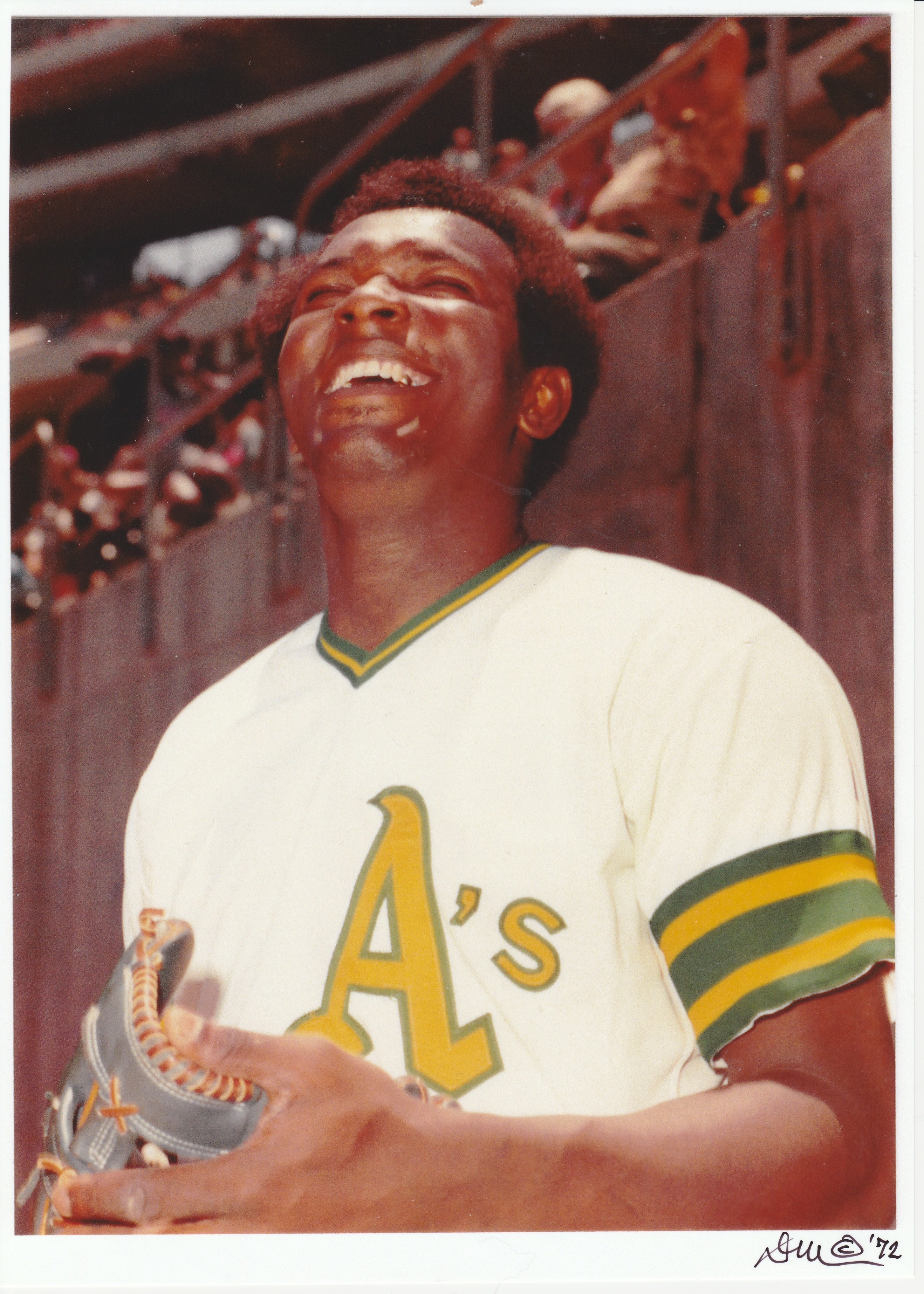
I was devastated to hear the news yesterday about Vida Blue’s passing. He’d been ill for some time, having shown up to the A’s recent reunion of the 1974 championship team needing a wheelchair and cane to aid his diminished mobility, with people close to him now saying that he was holding on as tightly as he could specifically to make that event.
Photo by Doug McWilliams, Nat’l Baseball Hall Of Fame / Library
Vida was a towering figure during my preteen Giants fandom in the late-1970s and early ’80s, shepherding their ascent from laughingstock to respectability. I was too young at the time to understand just how impactful the man had been on baseball’s landscape prior to his arrival in San Francisco.
Now, having written Dynastic, Bombastic, Fantastic, about the Swingin’ A’s of the 1970s, I now know better. Vida played an outsized role on those three-time champions, having taken the baseball world by storm in 1971, butting heads with Charlie Finley during a ruined 1972, and rebounding to place three top-10 Cy Young finishes over the next four years amid whirling rumors of being traded or sold outright, and watching the rest of the roster depart at the dawn of the free agency era while he was left to languish in Oakland.
I’ve spoken to Vida at ballparks, at symposiums and in classrooms. He even took to calling me on occasion to fact-check some conversation he was in the middle of having (usually, it seemed, with a date he likely wanted to impress). The four hours I spent with the man over lunch at the Claremont Hotel in Berkeley back in 2015, however, while researching Dynastic, was the most concentrated and wonderful dose of Vida one could hope for. That’s where he gave me the line that I chose to head the book’s epilogue: “We were the team everybody wanted to come see: the freaks with the mustaches, with the long hair, that took batting practice in black shoes but came out to play in white shoes.”
He also noted the A’s primary colors during his run with the team: Wedding Gown White, Fort Knox Gold, Kelly Green and Vida Blue.
Photo by Doug McWilliams, Nat’l Baseball Hall Of Fame / Library
Although Vida ended up having a nice career, he proved unable to sustain his early dominance. There are many reasons for this, including overuse during that 1971 campaign and his subsequent holdout in 1972. None are more prevalent than a spiraling drug problem that saw Blue not only suspended for the 1984 season following a cocaine conviction, but serving three months of jail time at the beginning of that year. He rejoined the Giants in 1985 and hung on for a couple more seasons.
Blue’s career was one of what-ifs. Nobody was more aware of this detail than Vida himself. “I blew it …” he told The Washington Post in 2021. “I can honestly, openly say I wish I was a Hall of Famer. And I know for a fact this drug thing impeded my road to the Hall of Fame … so far.”
That’s not how I like to remember him. I prefer to consider the young, cheerful wunderkind who took the American League by storm in 1971. To that end, I offer an extended excerpt from Dynastic:
The real story of 1971 was Vida Blue. Six feet tall and 190 well-packed pounds, the left-hander threw devastatingly hard and with disarming ease. His windup featured a uniquely high leg kick that brought his right knee almost to his chin, and a delivery in which he reached so far back with the baseball that his knuckles nearly scraped the dirt. He’d made his debut as a 20-year-old call-up the previous September, and pitched a one-hitter against Kansas City in his second-ever big league start. Blue couldn’t throw anything but fastballs, but that was enough—the ones that didn’t drop like bowling balls exploded so ferociously upon reaching the plate that hitters swore they saw them rise. Two starts after baffling the Royals he no-hit the Twins. “We never even saw the ball,” marveled Minnesota’s Harmon Killebrew afterward, “but we sure heard it good.”
Blue’s marvelous September earned him the nod to pitch the Presidential Opener in 1971, but the magic didn’t last. The young lefty surrendered four runs in one and two-thirds innings, and Oakland lost, 8–0. Things, however, would quickly improve.
In Blue’s second start of the season he set a franchise record with 13 strikeouts over six shutout innings of a rain-shortened game. His third start was a two-hitter over Milwaukee. His fourth start was an 11-strikeout victory over the White Sox. Vida, who had spent his winter working on a curveball, was somehow even better than he’d been the previous September. Following his disastrous opening assignment the lefty won 10 straight, compiling a 1.03 ERA while spinning nine complete games in 12 starts.
“There are some guys you go hitless against and it doesn’t bother you,” noted Baltimore outfielder Paul Blair. “What you tell yourself is, Well, I got a piece of him, or at least I fouled one off. But this guy makes you go 0-for-4 and you feel humiliated. He doesn’t give you a single thing. He strips you naked right there in public. Trying to hit that thing he throws is like trying to hit dead weight.”
By early May the country was paying attention. Sports Illustrated compared Vida to Sandy Koufax. (“That’s funny,” responded Blue, “I don’t look Jewish.”) Soon he would grace the covers of Time and Newsweek, publications that didn’t ordinarily cover sports, and hold down guest spots on NBC’s Today Show and The Dick Cavett Show. Talk began in earnest about his chances of winning 30.
On May 28, more than 35,000 people crammed into Fenway Park (capacity: less than 34,000; average: 16,000) to watch Vida pitch. On June 1, he attracted more than 30,000 to Yankee Stadium for a game that would have otherwise drawn about 12,000, and the A’s suffered through a pregame clubhouse so crowded with media that Dick Williams called a team meeting just to clear the room. Back home 47 percent of all Bay Area TVs tuned in as Blue won his 12th, another complete game. By that point Charlie Finley was seeing dollar signs in everything his young star touched. Vida, scheduled to pitch only once during an eight-day homestand, was given Catfish Hunter’s slot on June 17, which served the dual purpose of providing Blue with an extra home date and knocking him from his previously scheduled spot ten days hence, which corresponded with Bat Day at the Coliseum. “We didn’t want him to pitch on a promotion day,” Williams explained. “He’s enough of a promotion himself.”
Vida’s sheer exuberance could not be suppressed. During games in which he didn’t pitch he sat in the dugout and listened to Williams rant about on-field mistakes, then would approach the skipper, a smile on his face, to say things like, “I’m going to tell Greenie [second baseman Dick Green] what you all said about him. I’m going to tell him as soon as he gets off the field.” Reggie Jackson called the pitcher a “dugout instigator, like the rest of us, but always in an innocent way.” Vida wore a Joe Namath–model New York Jets jersey while tossing footballs with clubhouse kids before games, then proceeded to run them ragged. “George, you my man, get me a soda pop,” he’d call out. “Steve, how ’bout wringing out my shirt here? Chuck, get me a dry sweatshirt.” Chuck, of course, also went by Mr. Dobson and was at the time of the request the starting pitcher for that night’s game. The right-hander politely declined. “Oh,” said Vida. “I knew I’d go too far.”
…
By the middle of July 1971, Blue’s 17-3 record and majors-leading totals in wins, shutouts, strikeouts, and ERA earned him the starting nod in the All-Star Game. Every one of his victories had been a complete game. Even his no-decisions were spectacular: on July 9, Blue struck out 17 Angels over 11 shutout innings, but the A’s didn’t win until the 20th. Said Jackson, “You can even get the Babe out of his grave and he’d look at Vida and say, ‘The man’s too much.’”
Photo by Doug McWilliams, Nat’l Baseball Hall Of Fame / Library
Blue’s 18th win was a one-hit shutout of the Tigers in his first start after the All-Star break. It was also his 18th complete game of the season, and the innings were taking a toll. The lefty exceeded his career-high of 171⅔ innings by the second week of July, and two weeks later he passed 200. In Blue’s first attempt at his 20th victory, on July 30, he gave up four earned runs in six innings—only the third time all season he’d allowed that many—and lost. “I’ve never been more tired,” he complained afterward.
The pitcher, at first delighted by the accolades, grew overwhelmed by them. His attention was drawn taut by the national media, then segmented to slake the public’s thirst, one feature story at a time. “I wake up and then I’m at the ballpark,” Blue said, head spinning. “I’m pitching. Then it’s all over. I’m back in the dressing room and writers are all around me. Then I’m on an airplane. I’m in a hotel. I’m at the ballpark. Now I’m back in Oakland. Now Mr. Finley is giving me a car, and my mother and my brother and my sisters are there. Now lights are flashing. Now I’m pitching again.” No one ever said being a phenom was easy.
Blue’s roommate, Tommy Davis, took to screening calls for him at home. Vida signed so many autographs that he began using his right hand in order to save his left one for pitching. Over the course of the summer he went from “I want to sign ’em all . . .” to “You got to sign, you just got to . . .” to “You don’t got to sign. You don’t got to do nothing but die.” Still, he signed. By August, Vida was lamenting that “I sometimes feel like I’m going to crack up mentally.”
The interview Blue gave to reporters following his 20th victory, on August 7, was so dour as to be described as “hostile” by one reporter. Somebody asked whether the win would help Vida remove the monkey from his back, and the pitcher gripped his head. “There was no monkey on my back,” he yelped. “There just was the pressure, that pressure.” Somebody brought up the specter of 30 wins, and Vida snapped. “There you go again,” he yelled, slapping a table. “There’s that’s damn pressure.”
Vida won his 22nd with 10 starts left in the season, and though he’d have to succeed at an absurd pace to reach 30, people still held out hope. By the end, however, he was just a gassed pitcher trying to get by. Blue was blasted out of starts earlier than ever and won only twice more, ultimately finishing second to Detroit’s Mickey Lolich in victories.
Still, the kid had been spectacular. Vida’s final line: 39 starts, 24-8 record, 1.82 ERA, 24 complete games, eight shutouts, 301 strikeouts, and 88 walks in 312 innings pitched.
***
In the process, Vida became the youngest player ever to win the Cy Young or MVP Award, let alone both in the same season. He was the jolt of fresh, young energy that baseball needed, but burned too bright, too fast, and could not sustain it.
None of that diminishes the man’s place in baseball history, nor will it make him any less missed. The sport is already poorer without him. RIP, Vida.
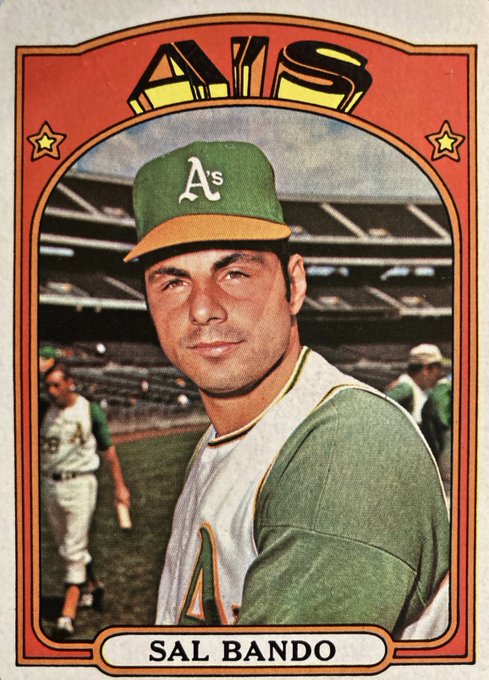
Sal Bando passed away over the weekend. The unquestioned leader of the Swingin’ A’s team about which I wrote in Dynastic, Bombastic, Fantastic, his viewpoint and memories was essential to my ability to tell that tale. What kind of guy was Captain Sal? He picked me up from the airport in Phoenix, hung out with me for a day, answering all my questions—even the difficult ones—then returned me to the departure gate, saving me the price of a rental car.
On a team studded with Hall of Famers, Bando experienced the most in-sport success of any Athletic, following his 11 years with the A’s (four All-Star appearances, three top-5 MVP finishes) with five years with the Brewers. In 1974, when Bando was 30, he was mentioned as a possibility to become player-manager of the A’s after Dick Williams stepped down. That never happened, in Oakland or anyplace else, which mattered little in light of the fact that he spent eight seasons as the Brewers GM in the 1990s.
As Reggie Jackson wrote in his 1984 autobiography, “Sal Bando was the godfather. Capo di capo. Boss of all bosses on the AOakland A’s. We all had our roles, we all contributed, but Sal was the leader and everyone knew it.”
One of my favorite passages from Dynastic pertained to Bando’s influence on the 1973 playoffs against Baltimore:
Vital to the A’s was Bando’s presence in the field. Not his fielding—his presence. Prior to the series, Bowie Kuhn issued an edict aimed squarely at Dick Williams, banning a repeat of the manager’s traveling roadshow from the ’72 World Series. Managers would be restricted to one mound visit per inning the Commissioner said; any more would automatically trigger a pitching change. Williams took it in stride, saying with a wink, “That doesn’t mean my third baseman can’t go out there.” He meant it, too. Bando visited the mound multiple times each inning to work his particular brand of magic on Catfish Hunter, reminding the right-hander to concentrate on the first pitch of a given at-bat, to not be afraid to waste a pitch, to maintain his arm slot, to watch his mechanics or to just focus goddammit. It was not so different than the moment in Game 2 of the 1972 World Series when Bando stomped toward Hunter and screamed, “What’s wrong with you? Are you trying to lose this game?” Williams went so far as to laminate the team’s scouting report for the third baseman to carry in his pants pocket for easy cross-checking. It was an unnecessary gesture. “I know them backwards and forwards,” said Bando after the game. “We’ve had so many meetings about Baltimore I know it by heart.”
“Take [Bando] away and that team was nothing,” the A’s former traveling secretary Jim Bank said shortly after Bando left the team. Pitching coach Wes Stock agreed. “If there was one guy who made a difference,” he told me, “there’s no doubt in my mind it was Sal Bando.”
Gaylord Perry passed away yesterday at age 84. The Hall of Famer played 22 years for eight teams, winning 314 games, earning two Cy Young Awards, and sparking endless conversations about his propensity to load up the baseball with Vaseline. He learned the pitch in 1964, three seasons into what was to that point a pedestrian career, from Giants teammate Bob Shaw, and used the pitch for the next two decades to great effect, in the process becoming one of the sport’s most colorful figures.
Given that The Baseball Codes devoted an entire chapter to cheating, Perry’s presence loomed large in the book. Here, in his memory, is an excerpt of the most noteworthy passage.
In April 1973, Yankees outfielder Bobby Murcer exploded to the press after facing Cleveland’s greaseball king Gaylord Perry in the pitcher’s second start of the season, yelling: “Just about everything he throws is a spitter. . . . The more he knows you’re bothered by him throwing it the better he is against you. He’s got the stuff behind his ear and on his arm and on his chest. He puts it on each inning. I picked up the balls and they’re so greasy you can’t throw them.” Murcer went so far as to call commissioner Bowie Kuhn “gutless” for refusing to respond—and this was after the outfielder had recorded a three-hit game against Perry. When the pitcher was confronted with Murcer’s accusations, however, he said that Murcer hit “fastballs and sliders,” not spitballs. It would have been a more credible excuse had Perry been on the same page as his catcher, Dave Duncan, who in a separate, contrived denial said that Murcer had hit “off-speed stuff.”
To further the argument, The New York Times hired an unnamed Yankees pitcher to chart Perry’s every pitch throughout the game, marking those he thought to be spitballs. When the resulting pitch chart was compared with a replay of the game, the Times noted that, before every pitch identified as a spitter by the Yankees operative, Perry tugged at the inside of his left sleeve with his right (pitching) hand—an action he did not take for the rest of his repertoire. Yankees second baseman Horace Clarke, according to the chart, struck out on a spitter that, on replay, was seen to drop at least a foot. In the fourth inning, Thurman Munson asked to see the ball twice during his at-bat—during which, said the chart, Perry threw four spitters.
But Perry wasn’t just a practiced spitballer—he was also a practiced spitball deceiver. One of the strengths of the pitch, according to virtually everybody who has been suspected of throwing it, is that making a hitter believe it’s coming is nearly as valuable as actually throwing it. “The more people talk and write about my slick pitch, the more effective I get,” wrote Perry in his autobiography, Me & the Spitter. “I just want to lead the league in psych-outs every year.” To this end, Perry turned into his era’s version of 1950s spitball artist Lew Burdette—all fidgets, wipes, and tugs once he stood atop a mound.
“Perry’s big right hand started to move and people started to boo,” wrote Gerald Eskenazi in the Times, about its charted game. “First he touched his cap, sliding his fingers across the visor, bringing them down along the right side of his head, stopping behind his ear. Then the hand went across his uniform, touching his chest, his neck. Was all this to create a diversionary action? Was he simply having fun? . . . ‘I did the same things I always did,’ Perry said later, suppressing a smile. ‘If people want to read things into it, so be it.’ ”
Partly in reaction to the uproar Perry caused, a rule was implemented in 1974 that removed the mandate for hard proof in an umpire’s spitball warning, saying that peculiar movement on a pitch provided ample evidence. It didn’t take long—all of six innings into the season—before Perry earned his first warning under the new rule. Not that it mattered; by the end of the season he had won twenty-one games, was voted onto the All-Star team, finished fourth in the Cy Young balloting, and was thrown out of exactly zero games for doctoring baseballs.
It wasn’t until 1982, when Perry was forty-three and in his twenty-first season in the big leagues, that he was finally disciplined for loading up a baseball, when he earned a $250 fine and ten-day suspension after throwing two allegedly illegal pitches as a member of the Mariners—the first such punishment for this type of activity since Nelson Potter in 1944. By that point, Perry had become the most frequently accused spitballer in big-league history, and did little to dispel the notion: Not only was his autobiography suggestively titled, but it came out in 1974, nearly a decade before he retired; his North Carolina license plate read SPITTER; when his five-year-old daughter was asked by a TV reporter in 1971 whether her daddy threw a greaseball, she quickly replied, “It’s a hard slider.”
Although Perry claimed, upon his book’s release, that he didn’t throw the spitter any more, Twins manager Gene Mauch was quick to respond, saying, “But he doesn’t throw it any less, either.”
In 1991, after 314 wins over twenty-two seasons, Perry was inducted into the Hall of Fame. George Owens of the Utica Observer-Dispatch described the ceremony: “When Rod Carew was inducted into baseball’s Hall of Fame, Panamanian flags waved. When Ferguson Jenkins was inducted, Canadian flags were flown. When Gaylord Perry was inducted, it began to rain.”
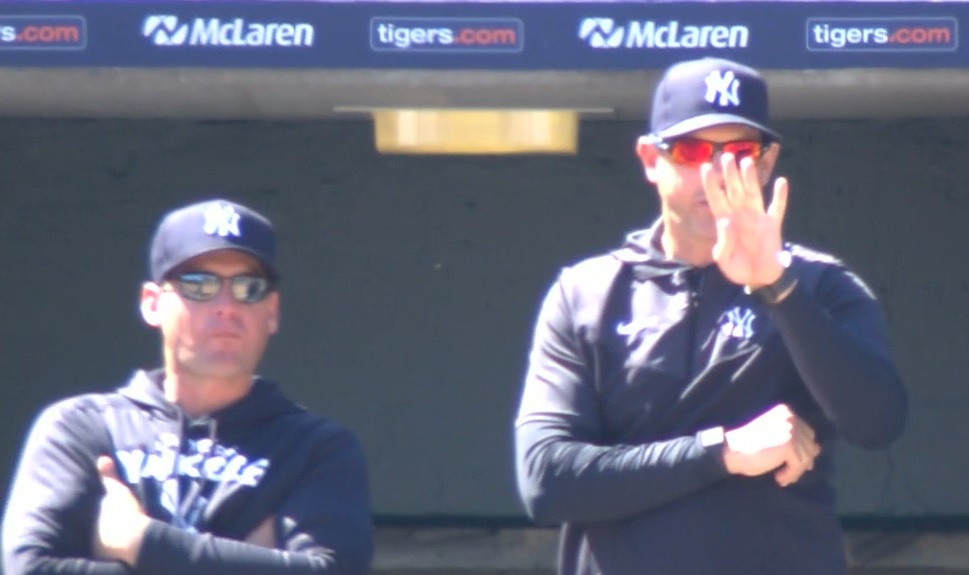
As if Yankees manager Aaron Boone hasn’t had his fill of his own team’s fans calling for his hide, Tigers fans have now joined the chorus. Boone’s sin: Trying to win a ballgame.
There is, of course, more to the story.
On Wednesday, Miguel Cabrera picked up three hits, bringing his career total to 2,999. On Thursday the slugger was unsuccessful in his first three attempts at reaching the elusive number. For Cabrera’s fourth at-bat, Boone had him intentionally walked. Some people did not like that at all.
"Yankees suck!" chants broke out at Comerica Park after Aaron Boone decided to intentionally walk Miguel Cabrera
At issue was Boone’s perceived lack of respect when it came to letting an icon reach a milestone on his own terms. Trouble is, that’s not the way baseball works. The Yankees Tigers led 1-0 with two outs and first base open, with a favorable lefty-on-lefty matchup waiting on deck in Austin Meadows. It was the correct move … even if it didn’t work out, given that Meadows doubled to extend Detroit’s advantage.
The move also had precedent.
In 1968, as Don Drysdale was in the midst of compiling his then-record consecutive scoreless-innings streak, he loaded the bases against the Giants with nobody out in the ninth inning. Dodgers manager Walter Alston opted to play his infield at double-play depth, willing to sacrifice a run—and Drysdale’s record—for a pair of outs. Why? LA led 2-0, and those outs were vital. “I wouldn’t have expected anything but that from Walt, who had his priorities in order,” Drysdale said later.
It wasn’t even the first time this kind of thing came up around somebody’s 3,000th hit. After George Brett collected hit number 3,000 hit against the Angels in 1992, action was stopped for five minutes as the future Hall of Famer was mobbed by teammates. As I wrote in The Baseball Codes: “Literally moments after the game resumed, Brett, in the middle of a conversation with first baseman Gary Gaetti, was unceremoniously picked off first base.”
Jarring? Yes. Practical? Also yes. The Angels trailed by three in the seventh inning, and baserunner removal was paramount on pitcher Tim Fortugno’s mind.
We can even use opposite examples to enforce the point, even within the Yankees vs. Tigers idiom. In September 1968, Denny McLain faced Mickey Mantle, who, nine days from retirement, had been stuck at 534 home runs—tied on the career list with Jimmy Foxx—for nearly a month. McLain wanted to help Mantle climb the ladder. Also from The Baseball Codes:
Before the game, McLain decided to do his hero a favor. Recalled Tigers catcher Jim Price, “Denny told me, ‘Let him hit one.’ ” Price relayed the good news when Mantle stepped into the batter’s box, at which point the Yankees star extended his bat over the plate to indicate just the spot in which he’d like to see a pitch. McLain delivered, and Mantle connected for a homer. Said Price, “Denny stood out there on the mound and clapped.” Mantle had his milestone, and McLain had his joy.
The difference between McLain’s approach and Boone’s? With the season nearly over, the Tigers were comfortably in first place and held a 6-1 lead with nobody on base in the eighth inning. McLain had plenty of leeway to aid Mantle without sacrificing his team’s chance at victory. Such could not be said for the Yankees yesterday.
Hell, it’s not like Boone’s decision even cost Cabrera a chance at 3,000. The guy already had three opportunities during the game, and he’ll get more again today. And tomorrow. And for literally 150 more games through the rest of the season.
As Curt Schilling said after Padres catcher Ben Davis famously broke up his perfect game with a bunt: “The bottom line is, unwritten rules or not, you’re paid to win games. That’s the only reason you’re playing in the big leagues.”
What with all the celebrations on baseball fields over recent years, you’d be excused for thinking that we’ve entered a new era of the sport’s unwritten rules. Turns out you haven’t seen anything yet.
Since The Baseball Codes came out in 2010, I’ve been faithfully documenting the evolution of this part of the sport, which has changed more in the last decade-plus than during any other point in baseball history. Yesterday put a cap on all of it.
In football and basketball, taking one’s foot off the gas late in blowout games means resting the starters. In baseball it means stop trying to score quite so aggressively via bunting or taking extra bases. The topic is so prevalent and contentious (how big a lead is enough? What inning is late enough?) that I devoted the first chapter of The Baseball Codes to it.
Yesterday, Giants manager Kapler addressed the issue and turned the entire paradigm on its head.
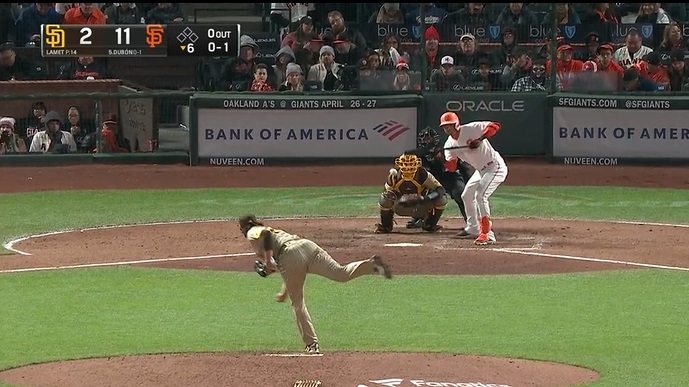
The setup: With San Francisco leading the Padres 10-1 in the second inning, Steven Duggar stole second base. With the lead 11-2 in the sixth, Mauricio Dubon bunted for a leadoff single—a play, he told Padres first baseman Eric Hosmer, that was signaled from the dugout.
There is an argument to be made that the second inning is too early to call off the dogs, but by the sixth, with the Padres on their fourth pitcher of the game, things were different.
San Diego was upset. Manager Bob Melvin barked from the dugout. Third base coach Mike Shildt had some words for the Giants, which led to the ejection of first base coach Antoan Richardson. (At least one positive development came from the exchange.)
Phil Garner once told me that during his days as a freewheeling manager, his approach to this kind of situation was simple: “It’s your job to stop me. If you can’t stop me, then I’m playing until I feel comfortable. And if I don’t feel comfortable with a ten-run lead, then by God I’m running.”
Until now, this was a standard response from the don’t-stop-playing camp. Kapler took it to another level.
Kapler, of course, is the famously analytical former player who helms the famously analytical Giants. Which is precisely how he approached this situation. In offering support for Duggar and Dubon, the manager laid it out for reporters after the game.
“Our goal is not exclusively to win one game in a series, it’s to try to win the entire series,” he said. “Sometimes that means trying to get a little deeper into the opposition’s pen. I understand that many teams don’t love that strategy, and I get why. It’s something we talked about as a club before the season. We were comfortable going forward with that strategy. It’s not to be disrespectful in any way. It’s because we feel very cool and strategic that it’s the best way to try to win a series. By ‘cool’ I mean calm. We’re not emotional about it. We’re not trying to hurt anybody. We just want to score as many runs as possible, force the other pitcher to throw as many pitches as possible. If other clubs decide that they want to do the same thing to us, we’re not going to have any issue with it.”
Gabe Kapler says he supports Mauricio Dubon's decision to bunt in the sixth inning despite the Padres' objections pic.twitter.com/6yFiJeDwMf
Kapler’s sentiments have merit, mostly because he’s right. Baseball is in a different place than it was when he played in the 2000s, which itself was in a different place than when Garner managed the Brewers in the 1990s. If forcing an opponent to burn through a couple extra bullpen arms gives you an advantage tomorrow, well, that’s good strategy. And if the Giants can send their division rival on to its next series with a pitching deficit, that’s even better strategy.
Even as on-field celebrations became the norm, baseball maintained one inviolable aspect of enforcement: Respect. As long as you’re celebrating with your guys and not against their guys, you’re okay. As long as you play with the notion that your opponent is worthy and that, when the tables are turned, you’re content to absorb whatever you’ve just dished out, at least nobody can call you a hypocrite.
Hell, Kapler said as much during his press conference, but there’s more to it than that. He laid out a sound statistical argument that in the modern era, with a revolving door of gas-throwing relievers at the bottom of every staff, running up the score is your best bet to assure long-term success. He also noted that Dubon is playing for a roster spot, and the more he can exhibit a well-rounded offensive repertoire, the better his chances.
You don’t have to agree with any of it, but no matter how one approaches the topic, even sceptics must admit that there’s nothing at all disrespectful about those sentiments. This is just the beginning. Welcome to the new world.
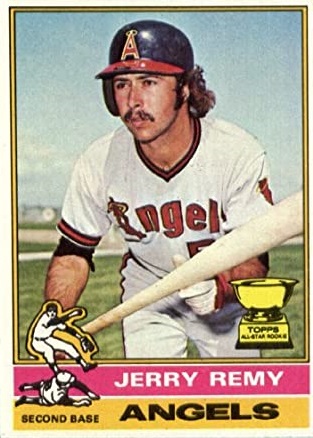
Jerry Remy passed away on Saturday, far too early at age 68, after battling cancer for decades. He was a Boston institution and an endless supply of great baseball stories. We interviewed Remy for The Baseball Codes during a Red Sox trip to Oakland, and he did not disappoint. One of the great stories he told that day recounted a 1975 game during his rookie year with the Angels, against the Red Sox, of all teams.
It was the top of the eighth inning and the Angels led, 5-2. An error, a walk, a single and two bunts—the latter a squeeze—increased the lead to 7-2, and brought Remy to the plate with runners at second and third. I’ll let him take it from here:
Dick Williams was the manager. We had a big lead, but he wanted to rub it in a little bit and called for another squeeze. I knew that it was the wrong thing to do, but you do what the manager says. So the next day they tried to hit me with the first four pitches of an at-bat. They missed all four times.
After the game, Dick said to me, “I guess I got you thrown at.”
I said, “I guess you did.”
What was Williams’ motivation? His first managerial gig had been in Boston, and despite winning the pennant his first time out, he’d been fired midway through his third season. He wanted to rub it in, and sacrificing a rookie or two along the way was a small price to pay. For Remy, the good soldier, it was just another thing one does on a baseball diamond.
Remy was deservedly beloved by the Red Sox and their fans. RIP.
When Red Sox pitcher Eduardo Rodriguez left the mound yesterday, it was as a hero to his team. By the time he reached his dugout he had something else to think about.
Rodriguez went six innings for the Sox, holding Houston to three runs on five hits while picking up the win in a 12-3 victory in Game 3 of the ALCS. The last of his 18 outs came courtesy of a Carlos Correa ground out. It was the third time on the day Rodriguez had retired Correa, who didn’t even breach the infield.
On his way down the mound, Rodriguez pointed to his wrist. It was a subtle gesture, but unmistakable. It wasn’t Correa’s time.
Red Sox pitcher Eduardo Rodríguez mocked Carlos Correa’s “it’s my time celebration” after getting him out for the third time tonight, and Boston manager Alex Cora was not happy about that pic.twitter.com/POGnfMMm6i
Correa is a self-professed keeper of clock, particularly during the playoffs. He made this clear after hitting a seventh-inning homer in Game 1, when he threw his bat, admired the blast and, looking into his own dugout, pointed exuberantly at his wrist while shouting, “It’s my time!” His teammates had urged him to do it, he explained to reporters later.
So it only made sense that Rodriguez gently mocked the man after besting him in Game 3.
Boston manager Alex Cora wanted no part of it.
As soon as he saw the display, Cora began yelling, “No!” and “Don’t do that!” When Rodriguez reached the dugout, the manager took a moment to speak directly into his ear. After the game, Cora laid it all out for reporters.
“We don’t act that way,” he said. “We just show up, we play and we move on. He knows. I let him know. We don’t have to do that. If we’re looking for motivation outside of what we’re trying to accomplish, we’re in the wrong business. The only motivation we have is to win four games against them and move on to the next round.”
There are a couple of ways to look at this. Under the modern baseball landscape, Correa is allowed to celebrate. He wasn’t showing up the pitcher or the Red Sox. He faced his own dugout while doing his wrist thing. It was strictly an internal matter, and entirely acceptable under the auspices of Let the Kids Play.
As far as I know, Cora made no public comment about Correa’s actions. He did not seek on-field retribution. He was willing to let the Astros be the Astros, and devote his attention to the playing of baseball.
Now we know that when it’s his guy doing the thing, it’s different.
At this point, even the old-school holdouts who still decry shenanigans like Correa’s must accept that this is the way baseball is now played. Alex Cora appears to be among their ranks. The Astros clubhouse is not his business. The Red Sox clubhouse is. And when one of his guys does something about which he disapproves—it should be noted that Rodriguez’s showboating was directed toward the opposition, unlike Correa’s initial salvo—he has every right to address it.
After Correa’s home run in Game 1, we got a telling statement from Hansel Robles, the pitcher who gave it up. “It did not bother me,” he told ESPN about the slugger’s It’s my time gesture. “Correa is one of the best hitters in baseball; you cannot make mistakes against him. But I did think for a moment … the standing at home plate … pointing to the watch … sometimes some of that stuff is a bit overboard. But let me tell you something, I have no reason to be mad at Correa. I am the one who made the pitch. In that at-bat, he did his job; I did not do mine.”
Don’t like it, but no hard feelings. Seems in line with the tenor of his manager.
Alex Cora has every right to set whatever expectations he wants for his players. If they don’t like it, if they rebel, if he loses the room, then he won’t be long for his job. In the meantime, the guy is on the cusp of the World Series, which on its own counts for quite a bit. His team is playing his brand of baseball, which is exactly how it should be.
Ray Fosse passed away yesterday after a 16-year battle with cancer. The thing is, nobody in Oakland knew anything about it until August, when, facing renewed assault from the disease, the ex-catcher could hide it no longer and had to step away from his broadcast duties for the team. Even his colleagues had no idea. I last spoke to Ray in June for a feature I was writing, and he offered no clue about having to endure what must have been a considerable personal struggle.
I’ve listened to Fosse on A’s broadcasts since the 1980s, and got to know him while researching Dynastic, Bombastic, Fantastic: Reggie, Rollie, Catfish, & Charlie Finley’s Swingin’ A’s. I traveled around the country to interview most of the team’s players for the book, but not Ray, who was happy to repeatedly carve out time for me before games at the Oakland Coliseum. Over the course of that summer I found myself repeatedly headed to the ballpark to hunker down for 30 or 45 minutes in Ray’s office, talking about the good old days.
Fosse was an interesting cat. He played in the big leagues for a decade and was a two-time All-Star. He won a pair of World Series with the A’s, but is best known for the collision with Pete Rose during the 1970 All-Star Game that resulted in a separated shoulder that hampered him through the rest of his career.
From Dynastic:
As a prep, the Marion, Illinois, native had turned down Bear Bryant’s pitch to play football at the University of Alabama in favor of baseball at Southern Illinois. Fosse was eventually selected seventh overall by Cleveland in the first-ever player draft in 1965, six slots after the A’s took Rick Monday. A power hitter with a rocket arm, he won Gold Gloves and made All-Star appearances his first two full seasons, in 1970 and 1971. The most notable moment of his career, however, was also its least fortunate. During the 1970 All-Star Game in Cincinnati, with the score tied 4–4 in the bottom of the 12th inning, Pete Rose decided to win the game in front of his hometown fans. Taking off from second base on Jim Hickman’s single, Rose didn’t break stride around third. The throw home from Royals center fielder Amos Otis sailed wide, forcing Fosse several steps up the third-base line to field it. Rose led with his left shoulder as he barreled into Fosse, knocking the catcher backward and sending the ball ricocheting toward the third-base dugout. Rose scored, the National League won, and Fosse said his shoulder “felt as though it had been mangled.” When X-rays came back negative, Fosse, despite being unable to raise his left arm, opened the second half behind the plate for Cleveland, batting cleanup. The catcher, who collected 16 homers and 45 RBIs before the injury, accounted for only two and 15, respectively, in the second half. The following April, eight months after the injury, further X-rays detected the fracture through which Fosse had been playing.
Fosse ended up being an excellent defensive catcher for many years to come, but was never able to recapture the hitting touch he lost in that collision.
That wasn’t Fosse’s only notable injury. While helping to break up a clubhouse fistfight between Reggie Jackson and Billy North in June 1974, he was thrown backward into a locker partition and ended up with injuries to his C6 and C7 vertebrae, which impacted a nerve in his throwing shoulder. Misdiagnosed at first as having a separated cervical disc, he spent a week in traction at Merritt Hospital, 20 hours per day with a strap wrapped around his jaw and neck, pulling his head upward in an effort to alleviate pressure on his spine. Then he took six weeks off, hoping to heal naturally. Then he had surgery—which he scheduled himself at UCSF—to fix the problem.
After coming back that August, Fosse batted .185 with only one homer in 32 games. This led to one of my favorite comeback stories from those A’s teams. Charlie Finley wanted to omit Fosse from the playoff roster against Baltimore, but manager Alvin Dark, understanding the importance of a stout defensive presence, was adamant about his inclusion. (In the three months Fosse spent on the disabled list Oakland’s team ERA was 3.21; after he came back, it was an even 2.50.)
Fosse responded by hitting a game-sealing homer (after having already singled and doubled) in Game 2, which the A’s won behind a complete-game shutout from Ken Holtzman. (Notably, Holtzman’s 2.19 ERA when Fosse caught was nearly two points lower than it was with everybody else.)
This set the scene for the postgame press conference. From Dynastic:
After the game Fosse was shepherded to a media session in the exhibition hall between the Coliseum and the adjacent Coliseum Arena, home to the NBA’s Golden State Warriors. As usual, the Owner did his darndest to turn it into The Charlie Finley Show, bursting into the room and screeching, “Yeeeeeeah, Fosse—that’s my boy,” almost as soon as the questions for the catcher had begun. In his hand was a glass that had until very recently been filled with champagne. Once every head in the room had spun his way, Finley enthused, “It wasn’t the bat, it was the Fosse that swung it!” There was no moment, it seemed, beyond opportunity for the Owner to draw attention to himself. Fosse was incredulous. “Then why didn’t you want to play me from the beginning?” he yelled. It was an instinctive response. Finley didn’t even bother to answer. He didn’t have to. He’d already taken what he wanted.
The A’s won their third straight championship that season (and their second with Fosse). Finley sold him back to Cleveland after the 1975 campaign.
Fosse had worked on A’s radio broadcasts since 1986, and on their TV broadcasts since 1988. He will be missed by Bay Area baseball fans, and especially so by those who got to know him even a little.
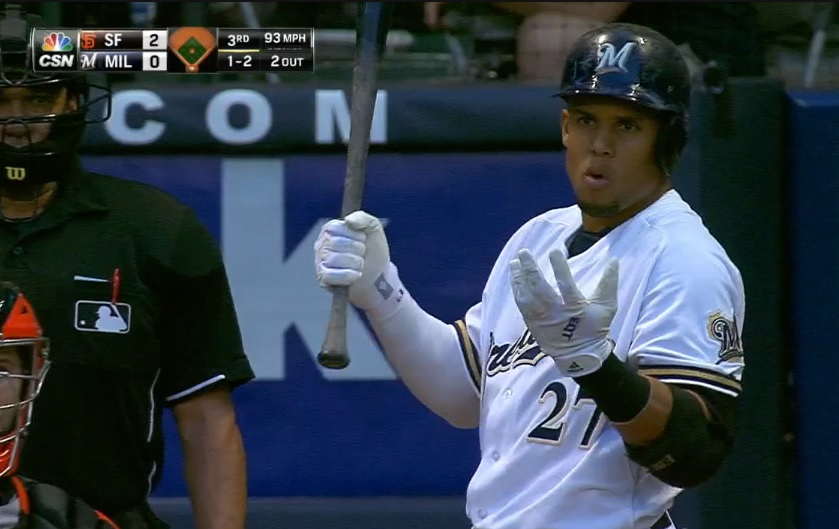
Carlos Gomez officially announced his retirement in Milwaukee over the weekend, and man are we sad to see him go. The guy played for six teams over 13 seasons, made a couple of All-Star rosters, had good speed and some power, played a solid outfield. But we loved him around these parts because there’s no player we covered more on the unwritten-rules beat.
Really, it’s not even close.
Gomez played with his own sense of panache, which in the days before on-field celebrations were common, tended to rub opponents the wrong way. Really, he was just ahead of his time. Also, he was frequently too fiery so for his own good.
His most notorious incident came in 2013, in in a game against Atlanta . Gomez, the game’s second batter, homered against Paul Maholm. This satisfied him for very particular reasons: About three months earlier Maholm had drilled Gomez in the knee with a fastball, which Gomez felt was intentional given that he’d battered Maholm to that point in his career. After hitting his homer, Gomez watched it for so long that catcher Brian McCann shouted at him to get his ass out of the batter’s box. This spurred Gomez to shout himself, at McCann and a number of other Braves, as he rounded the bases. Upon reaching third, he pointed at his knee. This was clearly all in service to revenge.
Thanks to that day, we now know that McCann harbors little tolerance for such shenanigans … and precious little patience. Rather than waiting for Gomez to cross the plate before lighting into him, the catcher planted himself about 15 feet up the third base line, completely blocking the runner’s path. When Gomez approached, he gave him an earful. It was a surreal scene.
From my post the next day:
McCann shouted [Gomez] down without ceding the baseline, players from both teams stormed the field, Reed Johnson landed a punch to Gomez’s noggin, and the ensuing scrum carried everybody to the backstop. Gomez was ejected shortly thereafter, and left the field without ever touching the plate. (The umps invoked Rule 7.06[a], which says that an “obstructed runner shall be awarded at least one base beyond the base he had last legally touched before the obstruction,” and allowed him to score.) Watch it all here.
“I’ve never seen anything like it in my baseball career, whether it be the big leagues, minor leagues or little leagues,” said Braves manager Fredi Gonzalez.
He spurred a clash with Pittsburgh by showboating on what turned out to be a luck-induced triple. (“If you’re going to hit a home run, you can watch it,” said Gerritt Cole, the pitcher who served it up. “If you’re going to hit a fly ball to center field, don’t watch it.”)
There was the time that Gomez nicked Joe Mauer with a bat flip after a home run, then, with his back turned, gave Mauer jazz hands when the catcher mentioned that he might want to be more careful in the future. Never mind that the homer came when his team trailed 15-0.
There was the time that Gomez heard from somebody in the Astros system … or from somebody who heard from somebody in the Astros system … that Collin McHugh wanted to drill him for some reason or other, and then, when McHugh threw an inside pitch (which didn’t come close to hitting Gomez), he got all puffy about it, spurring benches to clear.
It wasn’t going to be a thing. Kevin Kiermaier slid home against the Blue Jays on Monday, and in so doing managed to inadvertently knock loose the card on which Toronto catcher Alejandro Kirk kept his team’s game plan for Tampa Bay hitters. Kiermaier looked down, saw the thing, snatched it up as subtly as possible and returned to his dugout.
The Blue Jays weren’t pleased. They wanted their card back, and sent a bat boy to the Rays dugout to ask for its return. Why the bat boy and not an actual team member? Who knows? Did low-keying the personnel decision affect Tampa Bay’s response? Well, whoever had it on the Rays’ bench refused to give it up, so maybe.
From where I sit, this one is easy to legislate. Kiermaier stole Toronto’s signs in the truest sense of the word. His actions were pure gamesmanship, and if Toronto decides that it wishes to not have its signs stolen in the future, it should do a better job of protecting them. (Like, for real. My kid’s travel ball team wears wristbands with plays in them and has managed to not lose a single card in three years. It ain’t that tough. Then again, Kiermaier himself said that just last week he lost his own card while sliding into second, and Tigers infielder Niko Goodrum tried to grab it. So who knows, maybe this some sort of epidemic we’re just learning about now.)
At first, this appeared to be a non-issue. Keirmaier stumbled through a postgame monologue about how he didn’t even know what it was when he picked it up and then he gave it to the Tampa Bay equipment manager and boy golly it was all just so confusing at the time. Very little of what he said was believable, but still, Rays manager Kevin Cash met with Jays manager Charlie Montoyo before Tuesday’s game, apologized for the whole affair and returned the card. Montoyo called it “agua under the bridge.”
Spoke w/ Kiermaier. These are his comments.
Around 5:20 pm, Kevin Cash came out to speak with Charlie Montoyo ab… twitter.com/i/web/status/1…— Arash Madani (@ArashMadani) September 21, 2021
Fine. I wasn’t even gonna post about it. And then the Jays had to go and do something stupid like drill Kiermaier in response.
It happened in the eighth inning when, with Tampa Bay leading, 7-1, Ryan Bourecki planted a 93-mph heater into Kiermaier’s back. The pitcher was ejected (as was Toronto pitching coach Pete Walker, who just about lost his mind when Borucki got the thumb, despite that being the most obvious outcome). Benches emptied, though no punches were thrown.
Bourecki later called it a mistake, something that nobody in the Rays dugout—particularly Kiermaier or Cash—believed. Twitter agrees with them:
Every pitch of Ryan Borucki's career tracked by Statcast. You're god damn right it was intentional. pic.twitter.com/mhk3SiIBuV
“I hope we play those guys [in the playoffs], I really do,” Kiermaier said. “I hope we play them. The motivation’s there.”
Just wait to see what happens if the Rays are eliminated and the Jays move on. Who wants to bet on some of Toronto’s state secrets being spilled to whatever team they end up playing? Even if the card is entirely specific to Tampa Bay, there are certainly things to learn for any willing opponent.
The Rays could have been chivalrous and returned the card immediately, and it would have been a nice story. This is the big leagues, though, where teams scramble to gain any advantage within the rules (and sometimes beyond). Thinking that Tampa Bay—or any team—would do otherwise is simply folly for Toronto.






 The Baseball Codes