Let The Kids Play, Retaliation

David Bell Didn’t Like What Chris Archer Did To The Point That He’s No Longer Making Sense

Bell argues

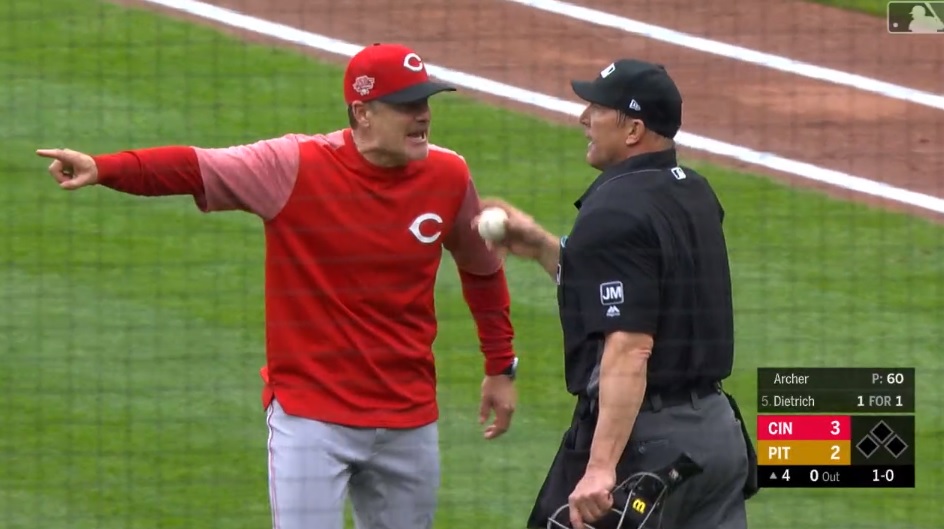
Reds manager David Bell got to talking with reporters on Tuesday about his team’s Let-the-Kids-Play fight with the Pirates, for which he was ejected and ultimately suspended, and unfortunately for those following along, his comments didn’t make a whole lot of sense. All quotes from the Dayton Daily News:

  • “[Derek] Dietrich clearly didn’t do anything wrong because he wasn’t ejected or suspended. If MLB has a problem with what Derek did then there needs to be a rule against what he did.”

There is a rule against what he did—it’s unwritten, and it’s been around for about as long as baseball itself. We have recently been lulled into thinking that it’s no longer enforced, which seemed to be fine until we realize that  guys like Chris Archer still inhabit pitcher’s mounds. MLB promotional slogans aside, the reality is that some players still don’t appreciate showboating. Dietrich can pimp any homer any way he’d like; he just has to cop to the possibility that he’ll piss somebody off in the process.

To Bell’s other point, a lack of prohibition against a given act in the rulebook doesn’t automatically make that act acceptable. Had Dietrich, unprovoked, decided to approach the Pittsburgh bench and spit tobacco juice onto Clint Hurdle’s cleats, he wouldn’t have broken any rules. He’d still be an asshole, though.  

  • “I had one intention [in coming out to argue the call] and that was to defend our team and to defend our hitter and to get Archer ejected.”

Never mind that that’s technically three intentions. Trying to get Archer ejected without a warning for throwing a pitch that didn’t come close to hitting a batter is, to put it exceedingly mildly, a stretch.

  • “I felt my only course of action was to get their pitcher ejected for intentionally trying to hurt our player.”

It’s unclear how throwing a ball below the belt and well behind a hitter in any way constitutes intent to injure. By this point in the conversation Bell is in full-fledged protect-my-guy mode, and appears to be spitting out whichever authoritarian argument reaches his brain first.

  • “Whether they throw at their heads or their backs or their legs, it is all the same to me. For that to be OK, or even somewhat acceptable that it wasn’t at his head, to me that is a very dangerous approach.”

This is where Bell really goes off the rails, because drawing false equivalences can be downright dangerous. What Archer did was clearly not the same as throwing at an opponent’s head. What Archer did was not even the same as drilling a guy in the ribs. Any modern pitcher who intentionally rifles a ball above somebody’s shoulders becomes an automatic pariah among his peers, and rightly so. Chris Archer does not remotely fit that bill, at least to judge by his approach to Dietrich.

  • “I don’t know what those [unwritten] rules are. All I know is this is pretty simple—our hitter hit a home run and didn’t do anything against major league rules or the umpire’s rule or anybody’s else’s rules. But everybody in the ballpark knew he was going to have to stand up there and possibly get hit with a fastball, maybe hit in the head and done damage.”

Waitaminute. If everybody in the ballpark knew that retaliation was imminent, Dietrich must have done something pretty obvious to inspire it. One needn’t approve of Archer’s response to acknowledge this reality.

David Bell is well respected around the sport, deservedly so, and I agree with him that pitchers have no business seeking physical retribution for an act so simple as showboating. But that’s an awfully high horse he’s decided to mount in Dietrich’s defense—so high that he appears to have lost all contact with what’s actually happening below. Defending his players is part of the guy’s job, but over the last couple of days Bell may have been throwing himself into his work with just a touch too much vigor.

Let The Kids Play, Retaliation

Pirates, Reds Argue Whether We’re Actually Ready To Let The Kids Play

Puig fights

So it seems that we’re now talking in matters of degrees. We’re going to let the kids play and flip themselves silly and celebrate in all sorts of ways that would have gotten them drilled by a previous generation of pitchers, and baseball is going to be better for it.

At least until somebody acts exactly like MLB has promoted in its own promotional campaigns and we’re reminded that red-assed pitchers maybe don’t watch too many commercials and somebody does something stupid and we’re right back to where we started.

We’re talking of course, about Pittsburgh’s Chris Archer in the role of the Red-Ass, and Cincinnati’s Derek Dietrich in the role of the Kid (never mind that he’s 29, only six months younger than Archer—a marketing slogan is a marketing slogan), and Yasiel Puig as the enforcer of a player’s right to showboat. (Who better, amiright?)

A quick recap: In the second inning of yesterday’s game, Dietrich yammed a monster homer clear into the Allegheny, then stood in the box watching it for what even by let-the-kids-play standards seemed like an exceedingly long time.

Pittsburgh catcher Francisco Cervelli was the first to express displeasure, waiting as Dietrich crossed the plate to deliver some words of rapprochement, to which the runner did not respond. (According to Puig, Cervelli also warned that retaliation was coming, which, if true, surely played no small part in what was to come.)

Archer continued his team’s messaging during Dietrich’s next at-bat, sending a pitch to the backstop, just behind the hitter’s rear end. Dietrich barely had to flinch to avoid it. Plate ump Jeff Kellogg immediately warned both benches. This is where things got interesting.

While Dietrich was downright passive in his response, Reds manager David Bell tore from the dugout to argue the warning, followed closely by a number of Reds players and coaches, notably Puig. Almost instantly, fists were thrown. (Again: notably Puig.) Cincinnati’s Bell, Puig and reliever Amir Garrett were ejected, as were Pittsburgh’s Felipe Vazquez and Keone Kela.

There’s a lot to unpack here. On one hand, Archer delivered a clear and harmless message, sent well behind the batter, below his belt. Annoying maybe, but hardly impactful. (“When someone is throwing at someone, they are trying to inflict pain or possibly hurt someone or send a message,” Dietrich said after the game, overblowing the details by a considerable margin.)

On the other hand, it was clear hypocrisy on Archer’s part, the idea being that a pitcher like him—a showboat in his own right—has no business getting angry when an opponent dishes out some of his own. And make no mistake: Archer’s emotional displays are prevalent to the point that his own team released a promo video about them before the game.

Or, take Bell, whose argument with Kellogg was that by acting so quickly, the umpire denied the Reds a chance to respond. Unless his argument was that Archer should have been ejected without warning. Either of which are nonsense, given that it was the Reds who started it, and that Pittsburgh’s answer didn’t even involve drilling a guy. What did Bell want to do? Escalate the situation by having one of his pitchers hit a Pirate? Send a similar message without fear of ejection? To what end?

Ultimately, of course, it won’t matter. If Bell or any member of his team is bent on responding, they’ll have no problem waiting until the next time the teams meet at the end of May. It’d be stupid, but that’s their prerogative.

There’s also the idea that, according to the unwritten rules, the aggrieved party in this type of situation dictates his team’s response. Had Dietrich made a mad dash for the mound, it would have made sense for his teammates to follow. But Dietrich didn’t do a thing. When Bell came out to argue, Puig seized the opportunity, vaulting the dugout rail to confront Archer on the field. Puig, of course, has never been much for the unwritten rules. This alone will earn him a suspension.

If you really want to get into the woods, examine the postgame sentiments of Vazquez, one of those ejected. “[Dietrich] shouldn’t have done that,” he said in a Pittsburgh-Post Gazette report. “That’s against the principles. If you do something like that you’re going to pay for it. We’re trying to play the game the right way by respecting it. Joey [Votto] can do it because he’s been here a long time. But a guy like him isn’t supposed to do that. He hasn’t earned the right. It was a little too much. We all knew it was going to be far but you’re not supposed to wait until the ball hits the ground to start running. You aren’t supposed to do that.”

The idea of veterans earning various rights not granted to their less-seasoned contemporaries is ages-old in baseball and, if expressed 20 years ago, wouldn’t be surprising. But in a landscape where an abundance of voices are calling for freer reign—to let the kids play—it’s an odd message. By Vazquez’s logic, the kids should be hamstrung, just like they always were, remaining reserved in their actions until such time as they’re sufficiently tenured to loosen up. That is, until they’re no longer kids.

Then again, Vazquez (née Rivero), as a Venezuelan national, is taking a decidedly counter approach to that espoused by a great many Latino players, who generally tend to default toward more celebratory practices, not fewer.

Ultimately, did Dietrich learn any lessons? To judge by the homer he hit six innings later, almost to the same spot as the first, no. He stood and admired that one, too.

The best thing to come out of this was @stormchasernick’s response to Cut4’s suggestion about art.

Reds-Pirates, May 27. Mark it on your calendars.

Update, 4-09-19: Archer has been suspended for five games, Puig for two and Bell for one. The Archer penalty in particular, which will only force him to bump back a start for a day or two, shows that MLB viewed his actions as relatively inconsequential. Which makes sense, given that he didn’t come close to hitting anybody.

Update, 4-11-19: David Bell’s talking, but he’s not making much sense.

No-Hitter Etiquette

April Is The Season To Pull Pitchers In The Middle Of No-Hitters

Bauer bumps

In the let-the-kids-play world of new school baseball, the acceptance of bat flips and related celebrations isn’t the only thing turning the unwritten rules on their ear. Once, not so long ago, it was shocking to see a pitcher pulled in the middle of a no-hitter. Now we’ve now seen it happen twice in the span of a week.

Yesterday it was Trevor Bauer, who through seven innings and 117 pitches had allowed no hits to Toronto. The right-hander had racked up eight strikeouts and six walks (plus a 31-pitch third inning), and though he’d thrown as many as 147 pitches in a game back in college, Cleveland manager Terry Francona was not going to let him get anywhere near that number again.

On Monday it was Baltimore’s David Hess, who was yanked by manager Brandon Hyde in the middle of the seventh after only 82 pitches. His recent workload, however, included 42 pitches on opening day, four days earlier.

Hyde is a rookie skipper, only 45 years old. Francona is managing in his 19th big league season. What they have in common is the perspective that at such an early junction of the season, it simply doesn’t make sense to put unnecessary stress on a pitcher’s arm.

One need look no further than Johan Santana for a cautionary tale. The left-hander, on a Hall-of-Fame track to that point in his career, tossed a 134-pitch no-hitter for the Mets in 2012. He was left in by manager Terry Collins solely to pursue the first no-hitter in Mets history despite having missed the previous season following shoulder surgery, and despite Collins having proclaimed a 115-pitch limit for him before the game. Santana’s ERA, 2.38 through 11 starts to that point, was 8.27 in his 10 starts thereafter. After that, he never pitched in the big leagues again.

Nobody wants to revisit that kind of decision. Pitchers were pulled in the middle of no-hitters twice last year in Oakland alone—once for the A’s (Sean Manaea) and once for an opponent (Nathan Eovaldi, then with the Rays). Overuse is a risk that managers are no longer willing to stomach.

“I didn’t want to take him out …” Francona told reporters after the game about his decision to remove Bauer. “I told him I hate it. He goes, ‘I hate it too, but I know it’s the right thing.’ I care too much about him and this organization to hurt somebody. I would have loved to have seen it because I don’t doubt that he would have kept pitching and probably not given up a hit the way he was throwing. I just have an obligation to do the right thing even when it’s not the funnest thing to do.”

Leave fun to the bat-flippers, I guess. New-school baseball can be so confusing.

Basepath Etiquette, Play Clean

‘Manny Being Manny’ Happened Again, And Like Usual, It Doesn’t End Well For Anybody

Machado's bat III

Was Leo Durocher right? Do nice guys really finish last? As it happens, reputation matters in baseball. Coming readily to mind is Bill Lee’s story about pitching to Al Kaline, late in the Hall of Famer’s career, when the left-hander felt that umpires would give the slugger the benefit of the doubt on anything close. When Lee complained about it, he received an all-time response from the plate ump: “Son, Mr. Kaline will let you know it’s a strike by doubling off the wall.”

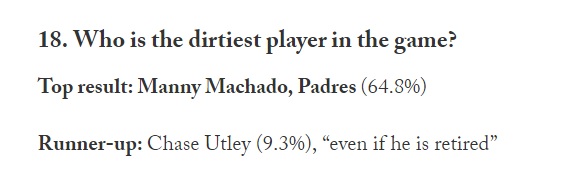
Reputations, of course, can work in the opposite direction, as well. Last week The Athletic ran a poll of big leaguers, asking them about which fellow players were overrated, underrated, intimidating and the like. They also asked who was the dirtiest. The results for the latter question weren’t too surprising.


Machado dirty

So when Machado—a guy known for kicking opponents during the playoffs, spiking middle infielders, hitting catchers with backswings, getting annoyed at routine plays and fighting with pitchers for little reason—does something with even a hint of controversy, we can only expect umpires to respond accordingly.

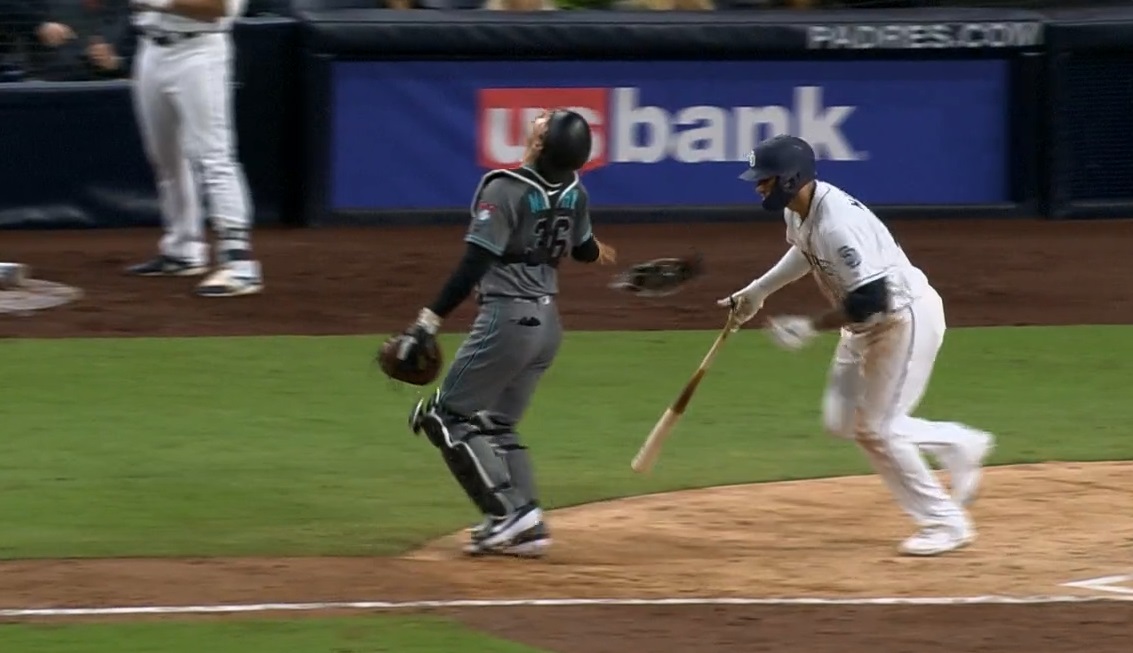
On Tuesday, Machado’s reputation bit him during a routine popup against Arizona. Head down, he nearly collided with Diamondbacks catcher John Ryan Murphy, who was tracking the ball just up the first base line a few steps from the plate. Then Machado tossed his bat gently toward Ryan’s feet. Then Ryan dropped the ball in foul territory. Umpire Bill Welke called Manny out anyway, for interference, a decision that led to Padres manager Andy Green getting tossed when he came out to argue.

Machado’s defenders say that his head was down and he was running toward first in the only lane available to him. They say that he more or less dropped the bat where he would have had Green been nowhere near him. They say that Green had no business dropping a ball that was still very catchable. And they’re right. But it doesn’t mean that the play wasn’t dirty.

The part about nearly bumping the catcher is easily excused. Machado did have his head down before heading up the line, wide of Ryan. If contact was made, it’s just as likely that Ryan ran into Machado as the other way around.

Where Manny put the bat, however, is up for interpretation. For somebody inclined to believe that the guy does not always have the best interests of his opponents at heart, it’s easy to see how he might have meant to place it in an area where the chances of the catcher tripping over it were greatest. After all, he took care to drop it on the opposite side of Ryan, almost reaching around his opponent to do so. He looked up and assessed the situation before acting. Malice aforethought is entirely plausible, and, given Machado’s history, is even likely. When it came to Welke, that’s what mattered.

The interference call was hardly pro-forma. Rule 6.01(a)(10) states in part that “when a catcher and batter-runner going to first base have contact when the catcher is fielding the ball, there is generally no violation.” Perhaps Welke would have called it differently had a different player done it.

But this was Manny Machado, and Manny Machado has a reputation, and Bill Welke knows all about it.

So when an umpire asks himself “What would Manny do?” and the answer is “something he shouldn’t be proud of,” it can’t come as much of a surprise when the subsequent ruling reflects as much.

At this point in his career, Manny has nobody to blame but himself.

Showing Players Up

How To Piss Off A Yankee In Two Easy Steps

Jimenez stomps

Given that the unwritten rules are all about respect, and given that bat flips have now passed from the realm of disrespectful and into “just something ballplayers do” …

… we must look elsewhere to find signs of insouciance on a ballfield vibrant enough to piss fellow players off.

Ladies and gentlemen, we bring you Joe Jimenez, Detroit’s resident fat fucking fuck.

In the eighth inning of last night’s game against the Yankees, Jimenez hit Luke Voit on the hand—a clearly unintentional act during a 1-1 game that nonetheless served to fire up New York’s first baseman. Voit was mad in part because he’s already been drilled in the elbow once this young season. He was mad because, with 10 players on the injured list (including Giancarlo Stanton, Luis Severino, Aaron Hicks, Miguel Andujar, Dellin Betances and CC Sebathia), the Yankees’ roster already resembles a ward at Bellevue Hospital. He was mad because getting hit hurts and hands are easy to break and he didn’t want to become No. 11.

So, okay, Voit took his base and seemed content to serve as his team’s lead run.

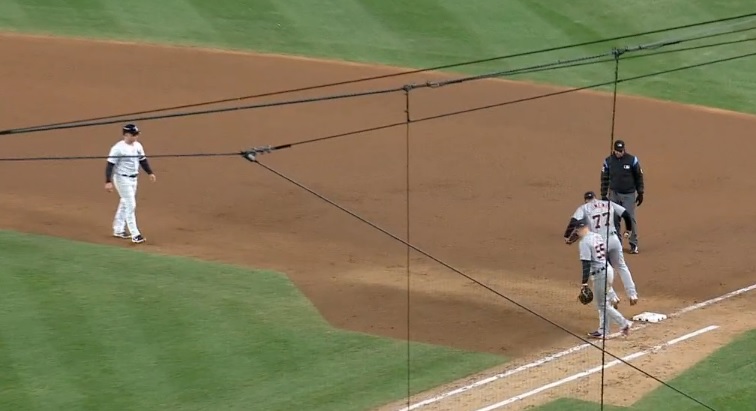
Until the next batter, Gleyber Torres, lined one to the mound. Voit was so far off the bag when Jimenez caught it on the fly that the pitcher was able to run it to first base himself to complete the inning-ending double-play … which he emphasized with a two-footed stomp on the bag, the likes of which we ordinarily see at the plate as a winning run scores.

Voit was displeased. Lip-readers on Twitter assure me that in the aftermath he called the pitcher a “fat fucking fuck.”

The point here being that if bat flips and fist pumps are no longer sufficient to annoy anybody this side of Madison Bumgarner (who himself paused in the box after homering against the Dodgers yesterday), players are gonna have to get creative.

Joe Jimenez might not have meant to rile his opponent—it was a big play in a tight game, offering plenty of reason for excitement—but that’s precisely what he did. It’s not the kind of thing that should get anybody drilled, even by the most red-assed Yankee, but it’ll certainly be remembered the next time these teams face each other … which, wouldn’t you know it, is this very afternoon.

Retaliation

Timing Matters When It Comes To HBPs, As The Guy Hitting After Bryce Harper Can Attest

Hoskins drilled

Baseballs slip from pitchers’ hands all the time, inadvertently contacting batters as a matter of accident. When it’s cold and windy and grip is poor, this is especially true. It was certainly true Sunday night in Philadelphia, as the Phillies and Braves combined for 15 walks and three hit batters.

When the timing of one of those hit batters is questionable, however, every mitigating factor flies out the window. Which is why the Phillies were so angry at Braves reliever Shane Carle.

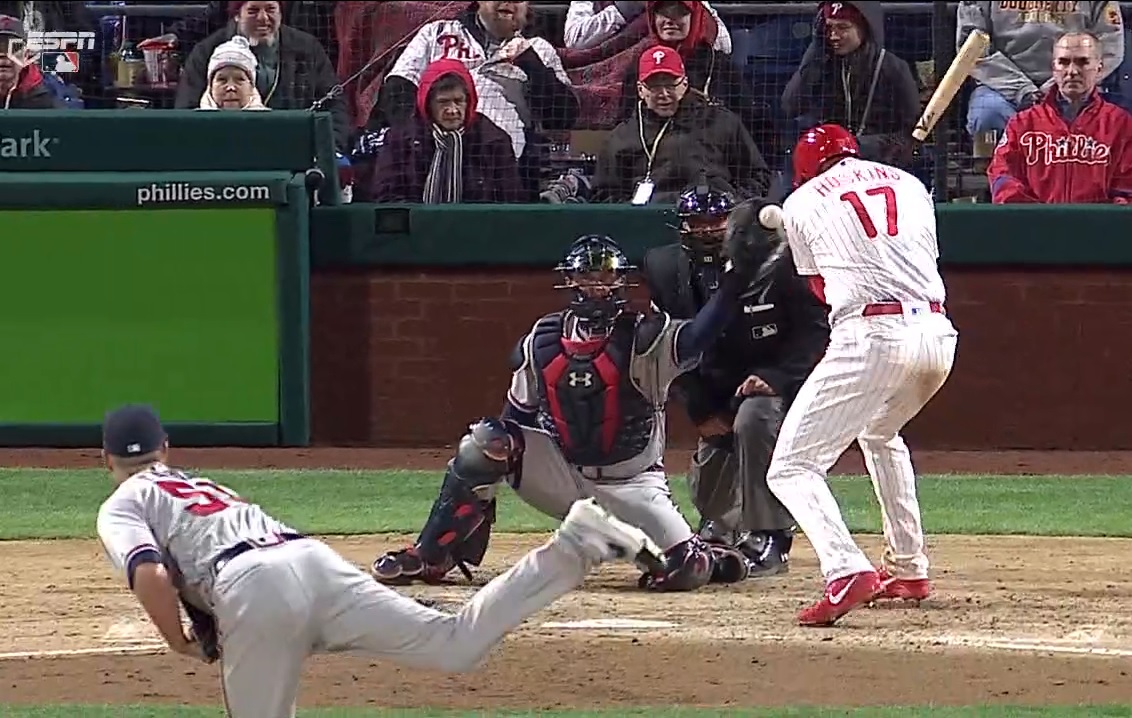
When Carle drilled Rhys Hoskins in the seventh inning, it followed a Bryce Harper and subsequent celebration with his teammates just outside the dugout. It might have been that Harper’s homer put the Braves into a 4-1 hole after they’d already lost the first two games of the series while giving up 18 runs. Nobody could blame them for frustration.

The other source of Philadelphia’s ire was that the pitch came in nearly head-high, eventually striking Hoskins on the shoulder.

The rest is details.

Never mind that Harper and Phillies starter Jake Arietta said that they didn’t think it was intentional, sentiments echoed by Braves manager Brian Snitcher and catcher Brian McCann. Carle had drilled Philadelphia’s cleanup guy right after being taken deep.

Hoskins got up yelling, clearly furious. It was the third time in two games against Atlanta that pitches had come close or actually hit him. Plate ump Rob Drake agreed, ejecting Carle.

After the game, Phillies manager Gabe Kapler unloaded.

“It really pisses me off when balls go underneath Rhys Hoskins’ chin,” he told the media, referencing the fact that Hoskins wears a C-flap on his helmet after having his jaw broken by a fouled bunt attempt last season. “It really bugs me. … He’s one of our leaders. He is, in many ways, the heartbeat of our club. It really bothers me when it happens.”

This matters less in a one-game sample than it does when considering that these teams—each of them hoping for full resurgence after long fallow periods—play each other 16 more times this season. Should Braves pitchers take liberties with the inside corner against Philadelphia, even without trying to hit anyone, they have to know that they’re playing with fire. The same can likely be said for members of the Phillies staff.

Here’s hoping that nothing comes of it, but boy it’s gonna be fun to watch.

They Bled Blue

They Bled Blue Gaining Momentum

LA TimesSo the Los Angeles Times brought up They Bled Blue in a compendium of new and upcoming baseball books. None of the nine books mentioned got more than a couple paragraphs, but the crux of the TBB section was this:
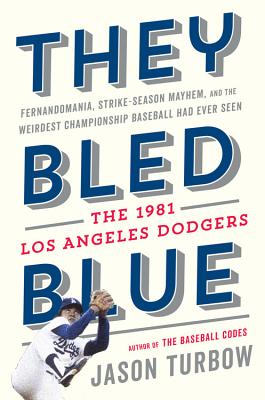
“Turbow admits ‘it might not benefit my credibility as the author of this book to admit that I am a lifelong Giants partisan, but it’s true.’ Which explains why the first line from the first chapter reads: ‘Tommy Lasorda was always a shill.’ ”

Please. The former sentiment (from the acknowledgements section, after the story had wrapped up) has nothing to do with the latter. This isn’t some fan blog. Authentic reporting is essential to doing my job well. Jerry Reuss’ comment on the book—”Hands down the most accurate portrayal of events and personalities of the 1981 Dodgers that I’ve seen”—supports the point.

Never mind that the quote about Lasorda makes it sound like I’m slagging the guy. In fact, the opposite is true. Here’s the entire paragraph from which the sentence was culled:

“Tommy Lasorda was always a shill. Long before he became a fount of managerial enthusiasm and brand fealty, he was a shill. Back when he was a career minor league pitcher, and then a scout, and then off to manage in remote minor league outposts like Pocatello and Ogden, in the employ of the Dodgers nearly every step of the way, even then he was a shill. The guy loved his team and wasn’t shy about letting the world know it.”

The point was that Lasorda never stopped promoting the Dodgers, for virtuous reasons. That was the first paragraph of the book’s first chapter, the rest of which builds on supporting that thesis.

Book reviews aren’t easy, and it’s not fair to expect a reporter to give cover-to-cover treatment to all nine books in a column. I just want to make sure that Dodgers fans out there know they’re getting an even shake from me. This was a team worth reading about.

They Bled Blue

Publisher’s Weekly Likes They Bled Blue. Like, A Lot

TBB cover small

The latest review for They Bled Blue is in, from Publishers Weekly, and it’s a barn-burner. In part:

“With a heady mix of reportage, biography, and classic play-by-play coverage, Turbow meticulously traces the arc of the team’s rise from the late 1970s postseason failures to the fateful, strike-filled season where the team defeated the New York Yankees in the World Series. Turbow’s reports of behind-the-scenes shenanigans show the cracks in Garvey’s squeaky-clean image and reveal Lasorda’s obsession with celebrities and Steve Howe’s cocaine addiction. But, as Turbow writes, “Whatever those Dodgers did before taking the field was strictly ancillary. It was what they did with cleats that mattered.” Fluidly written and expertly paced, this exciting look at a turbulent team will thrill baseball enthusiasts of all stripes.”

Heading to LA to record the audiobook in April, and looking forward to the official release of everything in June. There’ll be lots on the docket then, from readings to appearances. Can’t wait to share it all.

Retaliation

Edwards Gets Chatty About Retaliation

Carl Edwards Jr.

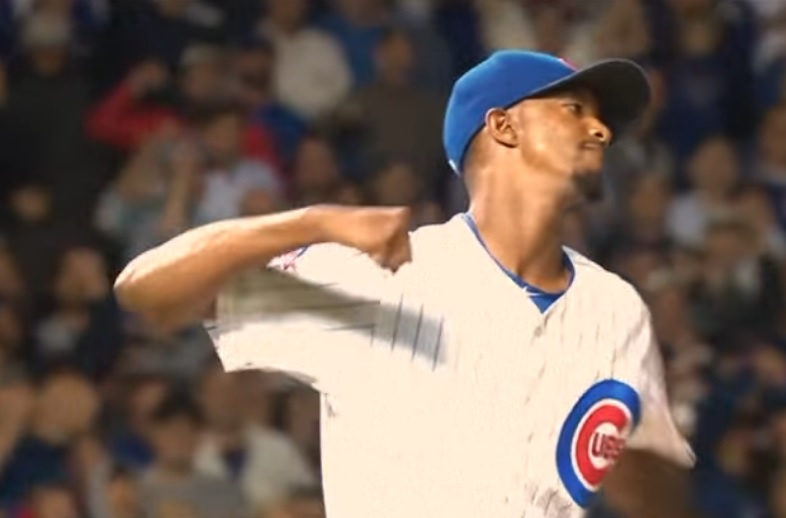
Maybe Carl Edwards Jr. needs more time to work into midseason form. He’s having an outstanding spring, posting a 1.93 ERA and striking out more than a batter per inning for the Cubs, but one part of his game shows clear signs of rust: After drilling Seattle’s Austin Nola on Tuesday, he came out afterward and admitted to reporters that he meant to do it.

Kris Bryant and Willson Contreras had hit by pitches earlier in the game—Bryant’s been hit three times in 36 plate appearances this spring, Contreras three times in 31 plate appearances—and, Edwards said, he’d had enough. Via MLB.com’s Jordan Bastian:

“Yeah, I did. It’s just, honestly, it’s like the nature of the game, spring training or not. It’s just you get to a point where you’re kind of tired of the guys getting hit. I mean, those are our big guys. That’s 25-man roster. Those are guys that are going to help us win championships, help us win ballgames. And, you know, all due respect, but it’s the nature of the game. And it just gets to a point where you just get tired, you know? Yes, it was Willy and a couple innings before it was KB.”

The idea is that Edwards’ response will serve to curtail teams from taking similar liberties in the future with Chicago’s middle-of-the-order guys. It also suggests that a 40-man guy or non-roster invitee might not have received similar protection from the reliever.

Except that Seattle’s pitchers, Cresbitt and Mills, are both non-roster players, targeted for the minor leagues. The entire Mariners lineup, in fact, was Triple-A-level at best, considering that the big leaguers had already departed for Japan. Stepping in against wild youth during March games can be a crapshoot, and Edwards’ message pitch probably held little resonance for guys who weren’t trying to drill anyone in the first place.

At the very least, the right-hander let the rest of the Cubs roster know that he’s looking out for their best interests. Maybe—like Dock Ellis, who drilled three straight Reds players to open a game in 1974—he simply felt too much complacency on a team with playoff aspirations. Where he went wrong was talking about it. From The Baseball Codes:

When a pitcher confesses to hitting a batter intentionally, it’s an admission that, at best, strikes an odd note with the view­ing public. People inside baseball understand appropriate doses of retalia­tion, but the practice represents a level of brutality that simply doesn’t translate in most people’s lives.

This is the reason that such admissions leave the commissioner’s office little choice but to levy punishment. It’s why Frank Robinson—one of the most thrown-at players of his generation and in possession of a deep understanding of baseball’s retaliatory code—was so heavy-handed when he served as Major League Baseball’s director of discipline, long after his playing career had ended. It’s why Jose Mesa was suspended for four games in response to hitting Omar Vizquel after saying he would do pre­cisely that, even though he wasn’t even thrown out of the game in which it happened. It’s why normally outspoken White Sox manager Ozzie Guillen responded with nothing more than a knowing smile when asked whether he’d ordered one of his pitchers to throw at his former outfielder Carlos Lee during a 2006 spring-training game. It’s why, after Dock Ellis famously and intentionally hit three batters in a row to open a game in 1974, Pirates catcher Manny Sanguillen proclaimed to the media that he had never seen anybody so wild, despite having been briefed by Ellis about his plan prior to the game. It’s why, when Mickey Lolich of the Tigers and Dave Boswell of the Twins exchanged beanballs in a 1969 con­test, each said afterward that his ball had “slipped.”

If the defendant confesses to a crime, the hanging judge has little choice but to act. Don’t be surprised when MLB hands down a suspension for Edwards in the coming days.